


Should I Use the Same Fragrance at the Entrance and Living Room When Hosting Guests?

Should I Use the Same Fragrance at the Entrance and Living Room When Hosting Guests?

★ Hosting dinner · cooking smells, open kitchens and the hour before people arriveCandle ₹379 · reed ₹749 · Boond ₹899 · Sukoon ₹1,899 · free shipping above ₹499A portion funds girl-child education
★ SOSA · when people are coming over
You cannot fragrance your way out of a fried-onion kitchen. You can, however, clear it and then put something clean on top — and the timing is the recipe
★ ★ ★ ★ ★
★★★★★
"Biryani for eight and I was panicking about the smell. Extractor through cooking, windows wide for twenty minutes, then the diffuser. The living room was completely clear by the time they sat down."
Nandini R. Dinner party, Hyderabad
Air, then scent
★★★★★
"My kitchen opens into the living room. Told me to keep fragrance out of the dining area entirely while people eat, which I had never considered. It was right."
Imran Q. Open kitchen, Mumbai
Nothing at the table
★★★★★
"The bit that helped: turn it on an hour before, off when guests arrive. The room holds it and nothing competes with the food."
Shalini D. Hosts often, Pune
On early, off at 8
★★★★★
"Twelve people in a small 2BHK. The advice was less fragrance, more airflow — the room was going to get warm regardless. Completely correct."
Gaurav L. 12 guests, Delhi
Less, not more
★★★★★
"Same scent at the entrance and the living room so the flat reads as one place. Small thing, made it feel considered."
Ritika S. Entrance + living, Bengaluru
One signature
★★★★★
"Frying happens. Twenty minutes of proper cross-ventilation afterwards does more than any product, and then the product actually works."
Harish M. Fried food, Chennai
Cross-ventilate
★★★★★
"Biryani for eight and I was panicking about the smell. Extractor through cooking, windows wide for twenty minutes, then the diffuser. The living room was completely clear by the time they sat down."
Nandini R. Dinner party, Hyderabad
Air, then scent
★★★★★
"My kitchen opens into the living room. Told me to keep fragrance out of the dining area entirely while people eat, which I had never considered. It was right."
Imran Q. Open kitchen, Mumbai
Nothing at the table
★★★★★
"The bit that helped: turn it on an hour before, off when guests arrive. The room holds it and nothing competes with the food."
Shalini D. Hosts often, Pune
On early, off at 8
★★★★★
"Twelve people in a small 2BHK. The advice was less fragrance, more airflow — the room was going to get warm regardless. Completely correct."
Gaurav L. 12 guests, Delhi
Less, not more
★★★★★
"Same scent at the entrance and the living room so the flat reads as one place. Small thing, made it feel considered."
Ritika S. Entrance + living, Bengaluru
One signature
★★★★★
"Frying happens. Twenty minutes of proper cross-ventilation afterwards does more than any product, and then the product actually works."
Harish M. Fried food, Chennai
Cross-ventilate
Candle: scent in the room in 15–20 minutes · Sukoon: about 20 minutes from cold A reed diffuser needs 24–72 hours — the wrong buy when guests arrive tonight Ventilate first · fragrance is the finishing layer, never the cover-up


Founder Diaries · Home Fragrance · Hosting Dinner
By Sonal Sahani · ISIPCA Versailles 10 min read Updated August 2026
Yes, the same one. Not because matching is tidy, but because of how a nose actually works: it reports change and it discards constants, so two different scents in adjoining spaces are registered as a transition every single time anybody walks from one to the other. A guest crossing your hall into your sitting room will notice the handover, will not be able to name it, and will file the flat under busy rather than considered. One scent across connected space is exactly what makes a good hotel corridor feel expensive, and in most Indian flats it also means buying less rather than more.
Quick answers — read this first
The answer: yes — the same scent across your entrance, hall and living room, wherever those spaces open into each other.

Why: a nose reports change and discards constants. Two scents in adjoining rooms are noticed as a transition at every crossing, which reads as busy. One scent everywhere becomes a property of the building and stops being noticed at all — which is the point.

The exception: a room with a door that stays shut. A bedroom, a bathroom or a guest room can and should be different.

The practical part: one machine in the living room usually scents a small entrance adequately, so this is often an argument against buying a second one. Where the hall is genuinely separate, a reed there from ₹749 in the same family is better than a second diffuser.
The short answer
Short answer: yes. Use one fragrance across the entrance, hall and living room if those spaces are connected. The nose reports change rather than levels, so two scents meeting at a doorway get noticed as a handover every time somebody crosses it, and a noticed handover reads as busy and slightly cheap.
The pick: one Hotel Collection scent at ₹299 for 15ml running in the living room, which in most Indian flats will reach a small entrance on its own. Where the hall is genuinely separate, a reed diffuser there from ₹749 in the same family is better than a second machine — and note honestly that the reed line has its own scents and cannot run Hotel Collection oil, so match the family rather than the bottle.
Shop: Hotel Collection 15ml ₹299, 100ml ₹999, 300ml ₹1,799 at about ₹6 per millilitre. Sukoon ₹1,899 for 270–320 sq ft with three 15ml scents included; Boond ₹899 for a second zone. Reed diffusers from ₹749 for 50ml and ₹1,249 for 130ml — allow 24 to 72 hours before a reed is working properly. Free shipping above ₹499.
Straight answer
Should the entrance and the living room smell of the same fragrance when guests come over?
1. Yes, if the two spaces are connected — and in most Indian flats they are. One scent across the entrance, the hall and the living room. Not a coordinating pair, not a related pair. The same bottle.

2. The reason is that your nose is a change detector rather than a level meter. It habituates to anything constant within minutes and reserves its attention for what alters. Two scents meeting at a doorway create an alteration, and it fires every time a person crosses. Ten crossings in an evening is ten small announcements that the house has been arranged.

3. One scent, held steadily, does the opposite. It stops being noticed and starts being assumed. That is the whole trick behind a hotel corridor: nothing changes between the lift, the landing and your room door, so the scent stops reading as fragrance and starts reading as the building.

4. The exception is any room with a door that stays shut. A bedroom, a bathroom, a guest room. No air continuity, no transition, and a closed door is a legitimate scent boundary. Those rooms can and should be different.

5. Practically, this is usually an argument against a second purchase. A Sukoon at ₹1,899 in a living room rated for 270–320 sq ft will normally reach a small entrance on its own. Try that before you buy anything else.

6. If the hall is genuinely separate, put a reed diffuser there from ₹749 rather than a second machine. Honest caveat: the reed line has its own scents and does not run Hotel Collection oil, so you cannot have literally the same scent in both. Match the family — clean and woody with clean and woody — and that is close enough for a nose walking through.

A portion of every order supports girl-child education through Nanhi Kali.

TL;DR: yes, the same one. A nose reports change rather than levels, so two scents meeting at a doorway get noticed as a handover at every crossing. One scent across connected spaces stops being noticed and starts reading as the building — which is the effect you actually want. Rooms with doors that stay shut are the exception.
SOSA Hotel Collection
One bottle, not a coordinating pair
SOSA Hotel Collection ₹299 / 15ml
Seven hotel-inspired scents, water-based, for ultrasonic diffusers, three to six drops per tank. The advice on this page is deliberately unglamorous: buy one of them and run it everywhere the air moves freely, rather than buying two and arranging them by room. A single scent held steadily across connected space is what hotels spend a great deal of money achieving, and in a 900 square foot flat you can achieve it with one 15ml bottle at ₹299. The Ritz-Carlton-inspired Quiet Luxury — white tea, bergamot and cedar — is the one I would choose for a whole-flat scent, because it is the most broadly acceptable of the seven and nothing about it wears out.

Why a nose only reports change

Every argument on this page comes out of one fact about olfaction, and it is the fact that most home fragrance advice quietly ignores. The olfactory system is a change detector. It is built to notice the arrival of something new in the air and to stop reporting anything that stays constant, and it does the second of those things remarkably fast — a matter of minutes for most materials. This is why you cannot smell your own home, why a perfume seems to vanish an hour after you put it on while everyone else can still detect it perfectly well, and why smoke alarms exist. The system was not designed to tell you how a room smells. It was designed to tell you when a room started smelling different, because that is the information with survival value. Once you take that seriously, a great deal of scenting advice inverts.

1
THE MECHANISM
Two scents at a doorway is an event, and events get noticed
Follow the consequence through a real evening. You have jasmine in the hall and cedar in the sitting room. A guest walks in, registers jasmine, and habituates to it within a couple of minutes. Then they walk through to the sitting room, and the change from one to the other fires their attention all over again. Then they go back to the hall for their phone, and it fires again. Then somebody arrives late and the door opens, and the two bodies of air mix in the doorway, and now there is a third smell that is neither of the ones you chose. Over three hours that is a dozen small announcements that the house has been worked on. None of your guests will describe it that way. They will simply have the impression of a flat that is trying, and trying is the thing that costs a room its composure. The commercial version of this problem is instructive. Department stores are the most heavily scented interiors most of us walk through, and they are also the ones nobody describes as smelling expensive, precisely because each counter has its own scent and the transitions come every eight feet. The nose spends the whole visit reporting handovers. Nothing settles, nothing recedes, and the overall impression is of effort rather than of quality — which is the exact opposite of what a hotel achieves with the same technology and a great deal more discipline.
2
THE MODEL
A hotel corridor is expensive because nothing changes in it
Take the thing this whole product category is imitating and look at what it actually does. Walk out of a lift on the ninth floor of a well-run hotel, along a corridor, past a service door and into your room. The scent does not change once. Not at the lift lobby, not at the corridor, not at the threshold of your room. That is not laziness or cost-saving. It is a deliberate specification, and it is the single biggest reason the place feels considered rather than decorated. Because nothing alters, your nose stops reporting the scent within about ninety seconds of arriving, and from that moment it is no longer perceived as fragrance at all. It has become a property of the building, like the temperature or the quality of the light. You cannot make a scent feel like part of a place by making it stronger. You can only do it by making it constant. Constant across the space, and constant across visits — the same scent the next time your guests come, and the time after that, so it accumulates into something they associate with you. A flat that smelled of one thing in March and another in April has a nice diffuser. A flat that has smelled of white tea and cedar for two years has a smell of its own, and that is a completely different achievement, available for ₹299 a bottle.
3
THE EXCEPTION
A closed door is a real boundary, and you can use it
The rule has a clean limit and it is worth knowing exactly where it falls. The reason two scents in adjoining spaces cause trouble is air continuity. If the air is shared, so is the scent, and any difference between the two becomes a gradient a walking person moves through. Where a door stays shut, none of that applies. A bedroom, a bathroom, a study, a guest room with the door closed — these are genuinely separate atmospheres and they can hold whatever you like without any transition being perceived, because the person crossing is crossing a threshold rather than a gradient, and a threshold is understood as a change of place rather than as a change of smell. So the practical map is this: one scent for everything with open air between it — entrance, hall, living room, and the dining area if there is no wall — and free choice in every room with a door. The bedroom is the obvious place to use that freedom. Evening Calm at ₹799 — Himalayan lavender and chamomile — behind a closed door is a completely different proposition from the same scent leaking into a sitting room, where it would fight with everything. A guest bathroom is the other place: small, closed, and the one room where a constant low-level scent from a 50ml reed diffuser at ₹749 earns its keep with no effort at all.
The test for whether two spaces are one space: stand in the doorway between them with the door open. If you can feel any air movement at all, or if a smell from one reaches you in the other, they are one space and they get one scent. It is a five-second test and it settles the question better than a floor plan does.

Which spaces are one space, and which are not

A map of a typical Indian flat, with the question answered for each pairing. The deciding factor in every row is whether air moves between the two spaces, not whether they are architecturally distinct. Note how often the answer is 'you do not need a second product' — that is the honest outcome of this argument more often than not.

One scent or two
Where a fragrance boundary works, and where it just gets noticed
The pairing Same scent? Why What that means you buy
Entrance and living room ★ Yes, always, where they connect Shared air and constant crossings. Two scents here produce a handover every time somebody walks through, and the handover is what gets noticed Usually one Sukoon at ₹1,899 and one 15ml bottle at ₹299. Often nothing extra at all
Living room and open dining area Yes — one scent, and none of it during the meal No wall means one volume. But food changes the brief: whatever is running should stop before people eat The same bottle, on the 2H timer, so it ends as the food arrives
Living room and open kitchen Yes, and make it the driest one you own 1 Hotels-inspired Forest Suite sits at a different address in the nose from food, so it coexists rather than competing One bottle at ₹299, chosen for dryness rather than for charm
A separate hall or landing Same family, not necessarily the same bottle If it is genuinely round a corner with no air continuity, a reed can hold it — but reeds are a separate line with their own scents A 50ml reed diffuser from ₹749, set up two to three days early
Living room and bedroom, door shut No — use the freedom A closed door is a real boundary. No gradient, no transition, and the bedroom wants a different register anyway Evening Calm reed at ₹799, or a Boond at ₹899 with a second bottle
Guest bathroom No, and it should be quiet Small, closed, and the one room where a constant low background genuinely helps without anybody thinking about it A 50ml reed from ₹749. Nothing that needs a socket or a routine
Shop this guide
One scent across the flat, in three products
The SOSA principle
You cannot make a scent feel like part of a building by making it stronger. You can only do it by making it constantacross the rooms, and across the years.
A flat that smelled of one thing in March and another in April owns a nice diffuser. A flat that has smelled of the same thing for two years has a smell of its own.

One machine, one bottle, and the reed problem

Start with what this argument saves you, because it is unusual for a fragrance page to end in a smaller basket. The Sukoon at ₹1,899 is rated for 270–320 square feet, and in the overwhelming majority of Indian flats a sitting room within that range will also supply a small entrance, because the entrance is typically eight or ten feet of shared air rather than a room. So before you buy anything for the hall, run the machine you have for an evening and stand in your own doorway with fresh nostrils — come in from outside rather than judging from the sofa, since you will have habituated to your own room within minutes of sitting in it. If there is a legible trace at the door, the job is done and you should not spend another rupee. That is the answer for most readers of this page, and I would rather say so than sell a second machine. Where it is not enough, the failure is almost always placement rather than power. A diffuser pushed into a far corner behind a sofa is scenting a corner. Move it to the side of the room nearest the entrance, at waist height or above, out of the path of a fan or an AC vent, and the same four drops will reach considerably further. Cool mist falls rather than rises, so height genuinely matters here in a way it does not for a candle. If the flat is large or genuinely open-plan, the honest fix is more tank rather than more drops, which is what the Megh at ₹3,499 with its six litres exists for.

Then the reed problem, which I want to state plainly because it is the one place where the advice on this page runs into a limit in the range. SOSA reed diffusers are a separate alcohol-free line with their own scents. They do not contain Hotel Collection oil and you must never put Hotel Collection oil into a reed — it is water-based and formulated for an ultrasonic plate, and it will not travel up a reed in any case. So if you have a hall that is genuinely round a corner, with no air continuity and no socket, you cannot achieve literally the same scent in both places. What you can achieve, and what works perfectly well for a nose walking through a door, is the same family. Clean, woody and dry in the living room pairs with Mountain Breeze at ₹849 — Himalayan pine, sage and cedar — in the hall without any seam a guest would detect. A brighter citrus register pairs with Morning Freshness at ₹749, which is Malabar lemon, peppermint and eucalyptus. What you must not do is put a coffee-and-vanilla reed in the hall and a white tea in the sitting room, because those two are in different worlds and the doorway between them will be the most noticeable thing in your flat. And the timing caveat that catches people out: a reed needs 24 to 72 hours before it is working properly, because the oil has to travel up the reeds and the room has to reach equilibrium. Set it up on the Wednesday for a Saturday dinner. Buying one on the afternoon of the party is the single most common disappointment in this category, and it is not the product's fault.

Then consistency over time, the constraints and the principle. The second half of 'constant' is constant across visits, and it is the half almost nobody does. Buying a different scent every time you finish a bottle feels like variety and it is actually the thing preventing your home from having a smell of its own. A scent becomes associated with a place only through repetition, which is why the smell of a grandmother's house is so specific and so durable in memory — it never changed. If you host the same friends four times a year and they meet a different fragrance each time, they have met four products. If they meet the same one, by the third visit they have met your home. That is worth more than novelty, and it is why I would rather sell somebody one 300ml 300ml refill at ₹1,799 and about ₹6 per millilitre than six different 15ml bottles. Buy the 15ml at ₹299 first to find the one, then commit to it. On the constraints: the Hotel Collection runs in the Sukoon, the Boond and the Megh only, never in reeds and never in the waterless Vaayu at ₹11,999, which takes its own undiluted oil. Never put raw essential or carrier oils into an ultrasonic, and rinse the tank when you change scent. And the principle: a signature is not a stronger smell. It is the same smell, in every connected room, for long enough that people stop noticing it and start expecting it.

A noticed scent is a product. An unnoticed one, held steadily across every room and every visit, is a building.
— Sonal Sahani, SOSA

The SOSA edit

In buying order for somebody trying to make a whole flat read as one place. The most useful row here is the first, because for a great many readers the correct purchase after reading this page is nothing at all — the machine they already own is reaching further than they think. The last row is the limit of what the range can do, stated rather than glossed over.

The SOSA edit
One scent across connected space, in buying order
Buy What it is When it earns its place Price
0. Nothing — test what you own first ★ Run the machine you have, then walk in from outside and smell your own doorway with fresh nostrils Before any second purchase. A Sukoon rated for 270–320 sq ft usually supplies a small entrance on its own
1. Hotel Collection 15ml One water-based scent for ultrasonic machines. The Ritz-Carlton-inspired Quiet Luxury is the broadest of the seven One bottle, everywhere the air moves. Not a coordinating pair — the same bottle ₹299
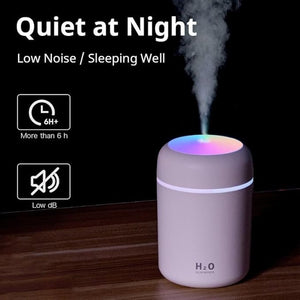
2. Sukoon 500ml for 270–320 sq ft, steady/2H/4H timers, auto shut-off, three 15ml scents included The machine that covers a living room and its entrance together, which is the whole argument of this page ₹1,899
3. A 50ml reed diffuser Alcohol-free, no socket, months of running. A separate line with its own scents Only where a hall is genuinely round a corner. Same family as your diffuser scent, and set up two to three days early from ₹749
4. 300ml refill About ₹6 per millilitre against roughly ₹20 at 15ml Once you have chosen the one scent and intend to keep it. Consistency across years is half the effect ₹1,799
5. Boond for a closed room A 300ml ultrasonic taking the same three to six drops per tank Behind a door, where a different scent is legitimate. A bedroom, a study, a guest room ₹899
The honest limit: reeds do not run Hotel Collection oil The reed range is a separate alcohol-free line with its own five scents, and Hotel Collection oil must never go into it Stated here rather than discovered later. Match the family across the two products, since matching the bottle is not possible
Honest notes for buyers: fragrance is the last step, not the first — it layers on air that is already clean and moving, and it will not cover cooking, damp or a room that has been shut for weeks. Timing matters as much as product: a candle scents a room in fifteen to twenty minutes and a Sukoon in about twenty, which is why both work when people are arriving tonight, while a reed diffuser needs a day to three days before it is doing its job properly — it is the wrong buy for a deadline and the right buy for a room you want to hold a steady scent for months. SOSA does not make a room spray for the home; the sprays in the range are formulated and sized for a car. The Hotel Collection is water-based and runs in the Sukoon, Boond and Megh only — not in reeds, and not in the waterless Vaayu. Reed diffusers are a separate alcohol-free line with their own scents. Candles must be attended and put out before guests leave a room unattended. The Hotel Collection scents are SOSA's own interpretations inspired by the world's finest hotels; SOSA is an independent Indian fragrance house, not affiliated with or endorsed by any hotel brand. A portion of every order supports girl-child education through Nanhi Kali.
SOSA reed diffusers
For a hall that is genuinely its own room
SOSA reed diffusers from ₹749
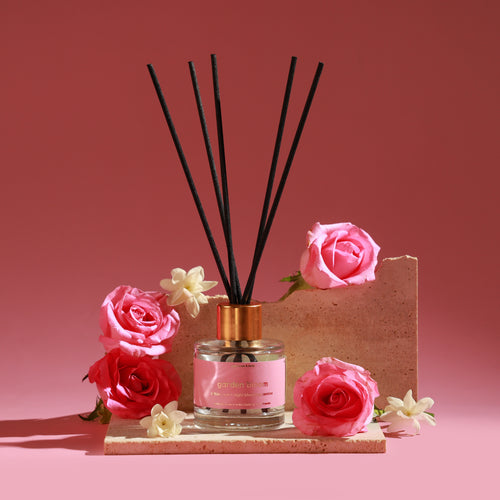
Alcohol-free, no socket, no routine, months of running. The honest caveat, stated before you buy rather than after: the reed line is a separate range with its own scents and it does not run Hotel Collection oil, so 'the same scent' across a diffuser and a reed is not possible. What is possible is the same family. Mountain Breeze — Himalayan pine, sage and cedar, from ₹849 — sits beside a cedar-and-white-tea diffuser scent without a seam. Morning Freshness at ₹749 is the fresher option. Allow 24 to 72 hours before a reed is doing its job, so set it up days before the dinner rather than on the afternoon.
SS
ISIPCA
Versailles
A note from Sonal

I get asked for scent pairings a great deal — one for the hall, something complementary for the sitting room, a third for the dining area — and I almost always talk people out of it. The pairing instinct comes from thinking about fragrance the way you think about cushions, where variety within a scheme reads as considered. Air does not work like that, because you cannot see it and you can only detect it changing. Two cushions in different fabrics sit together happily. Two scents in adjoining rooms produce a moment, and moments repeated a dozen times an evening stop being charming.

The rooms I have walked into that smelled genuinely expensive were all doing the same dull thing: one scent, held at a low level, everywhere the air went, and clearly the same one as last time. Nothing about that is clever, and it is available to anybody with one bottle at ₹299 and the discipline not to buy a second kind. Where I would spend money instead is on staying with it — a 300ml refill at ₹1,799 rather than six different 15ml bottles over a year. The people who come to your home will not remember which scent you chose. They will remember that your home smells like something, and that it always has.

Everything is made and supported from Pune, and a part of every order funds girl-child education through Nanhi Kali. You get a home that smells like somewhere you chose; a girl gets a classroom. That equation has always felt right to me.

Frequently asked questions

Should the entrance and living room have the same fragrance?
Yes, wherever the two spaces share air, which in most Indian flats they do. A nose reports change rather than levels, so two different scents meeting at a doorway get noticed as a handover at every crossing. One scent held steadily stops being noticed and starts reading as the building.
Can I use different scents in different rooms at all?
Yes, in any room with a door that stays shut. A bedroom, a bathroom, a study or a guest room is a genuinely separate atmosphere and there is no gradient for anybody to walk through. The rule only applies to spaces that share air.
Do I need a second diffuser for the entrance?
Usually not. The Sukoon is rated for 270–320 sq ft and a sitting room within that range normally supplies a small entrance on its own. Run it, then come in from outside and smell your own doorway with fresh nostrils before spending anything.
Can I put Hotel Collection oil in a reed diffuser to match my rooms?
No. The Hotel Collection is water-based and formulated for ultrasonic machines only, and the reed range is a separate alcohol-free line with its own scents. You cannot have literally the same scent in both, so match the family instead — Mountain Breeze at ₹849 beside a cedar diffuser scent, for example.
How long before a dinner should I set up a reed in the hall?
Two to three days. A reed needs roughly 24 to 72 hours for the oil to travel up the reeds and the room to reach equilibrium, so buying one on the afternoon of a party is the most common disappointment in this category. For a same-day deadline, a candle or a diffuser is the right product.
One flat, one scent
The same bottle everywhere the air goesand the same one next time
The Hotel Collection is ₹299 for 15ml, ₹999 for 100ml and ₹1,799 for 300ml at about ₹6 per millilitre, with the Pack of 7 at 15ml at ₹1,799 against ₹2,093 singly. The Sukoon is ₹1,899 for 270–320 sq ft with steady, 2H and 4H timers and three 15ml scents of your choice included, and the Boond is ₹899 for a room with a door. Reed diffusers are a separate alcohol-free line from ₹749, and need 24 to 72 hours to work. A portion of every order supports girl-child education through Nanhi Kali.
Shop the Hotel Collection → See the Sukoon · ₹1,899
Continue the read
More from SOSA
Editorial standards & sources
About this guide: Written by Sonal Sahani, ISIPCA Versailles-trained founder and perfumer at SOSA Home & Body, on why connected rooms should carry one fragrance rather than a coordinated pair, how olfactory habituation makes a scent boundary something guests notice at every crossing, why a hotel corridor reads as expensive precisely because nothing in it changes, and why this argument usually means buying less rather than more.

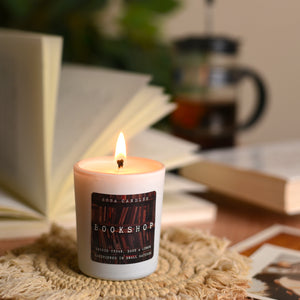
Facts verified August 2026: Timings in this guide: a scented candle puts noticeable fragrance into a normal room in roughly 15–20 minutes; a Sukoon ultrasonic diffuser reaches a steady level in about 20 minutes from cold; a reed diffuser needs roughly 24–72 hours for the oil to travel the reeds and the room to settle, so it is not a same-day solution. SOSA products and prices: Sukoon 500ml ultrasonic diffuser ₹1,899 (270–320 sq ft, 16–18h on low, 9–12h high, 30–50 ml/h, 2.4MHz cool mist, 7-colour LED, remote, steady/2H/4H timers, BPA-free, auto shut-off, includes three 15ml Hotel Collection scents of your choice); Boond 300ml ₹899; Megh 6-litre ₹3,499; waterless Vaayu ₹11,999 (up to 1000m³); Aangan ₹25,999; Meenar ₹38,500. Hotel Collection water-based fragrance 15ml ₹299, 100ml ₹999, 300ml ₹1,799, Pack of 7 at 15ml ₹1,799 / 100ml ₹5,999 / 300ml ₹10,799; dose 3–6 drops per tank. Reed diffusers (separate alcohol-free line): Morning Freshness from ₹749, Garden Bloom and Evening Calm from ₹799, Fresh Brew and Mountain Breeze from ₹849; 130ml from ₹1,249; duos from ₹1,498; 300ml refills ₹2,399. Scented candles: Bookshop 80g ₹379 (~15–18 hours), Bookshop + Cozy Corner ₹664 (~30–36 hours), Amber Rose 130g ₹599 (~25–30 hours) and 220g ₹799 (~40–50 hours), ceramic jar candles ₹949, Pure Calm wax melt set ₹854. Free shipping above ₹499. SOSA does not make a room or linen spray for the home — the sprays in the range are car perfumes. The Hotel Collection scents are SOSA's own interpretations; SOSA is not affiliated with or endorsed by any hotel brand. Prices subject to change — see the live product pages.
Torna al blog