



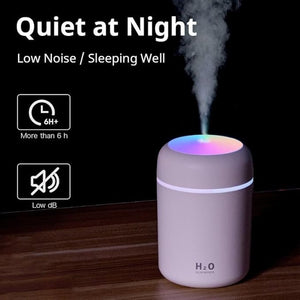

Why the smell gets stronger: inside a box, production outruns leakage. The headspace saturates. A closed cabinet holds far more concentrated air than an open rack.
Why it arrives as a wave: the door swing physically displaces that headspace into the hall in a single push.
2. Because production outruns leakage inside the box. Four or six pairs of shoes worn today are still releasing moisture and short-chain fatty acids — the by-products of bacteria metabolising trapped sweat. That output is continuous. The leak rate through a few millimetres of door gap is small. Whenever the source rate exceeds the removal rate, concentration rises until the two balance, and in a closed shoe cabinet that balance point is very high. This is the same reason a closed flat at 0.2–0.5 air changes an hour smells stale while a cross-ventilated one does not — the cabinet is just a much smaller, much worse version of it.
3. Because opening the door releases the whole headspace at once. A swinging door sweeps a volume of air ahead of it. Open a saturated cabinet and you are not gently equalising it with the room; you are pushing its contents out in one movement, straight into the hall at chest height. That is why the smell arrives as a distinct wave rather than a background hum, and why it seems to appear at the exact moment you are taking your shoes off.
4. Because the box itself has become a reservoir. Particle board, the melamine edge, and especially fabric or felt shelf liners absorb the acids and re-release them slowly for days. Empty the cabinet completely and it will still smell of shoes. That is not your imagination; it is sorption, the same mechanism that makes curtains hold cooking smell. Any fix that only addresses the shoes and not the interior surfaces will underdeliver.
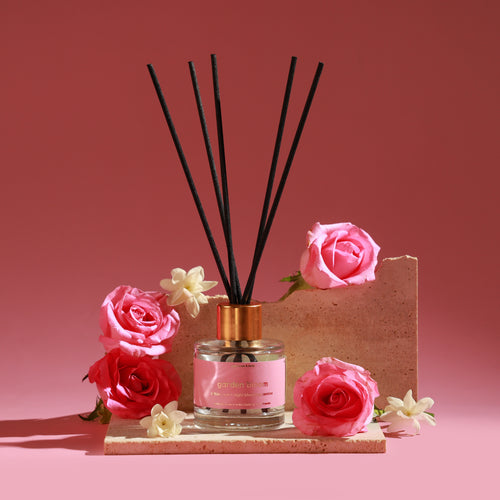
5. And this is not a fragrance problem yet. Vent the box, dry the shoes, wash the interior. Then an entrance is genuinely one of the best places in a home for scent, and a reed diffuser from ₹749 is the right format for it — nothing to switch, nobody standing there to switch it.
Made in India, composed by an ISIPCA Versailles-trained perfumer — and a portion of every order supports girl-child education through Nanhi Kali.
Why closing the door made it worse rather than better
The instinct to shut the smell away is reasonable and it is also backwards, because it misreads what a smell is. Odour is not a substance sitting still that can be put behind a barrier; it is a vapour in constant motion, produced continuously by a live process and dispersing wherever the air goes. Put a wall in front of it and you do not stop the production — you only slow the dispersal. Slowing dispersal while production continues is the definition of concentration. The air inside a shut cabinet holding damp shoes ends up many times stronger than the air of the hall, which is why a well-fitted cabinet can smell worse on opening than an open rack ever does. The open rack is being continuously diluted by the room; it just smells slightly of shoes all the time instead of powerfully of shoes twice a day.
The second thing enclosure does is raise the temperature and humidity inside. An unventilated box against an internal wall runs a degree or two warmer than the room and holds the moisture evaporating out of the shoes instead of letting it go. Both of those accelerate the bacteria doing the work: warmth speeds their metabolism and moisture is what they need to keep going at all. So the cabinet is not a neutral store. It is an incubator with a door on it. A shoe left on an open rack in moving air is drying between wears and the bacterial activity is falling; the identical shoe in a closed box stays damp and the activity continues overnight. This is the reason two people with the same shoes and the same feet can have completely different entrances.
Three ways it gets out, and one reason it stays
 Step fourFrom ₹749The door gap runs the full perimeter of every door in the unit, and behind it are the hinge recesses, the plinth gap at floor level and, on most flat-pack units, a thin back panel that does not seal against the wall. Warm air inside the box rises and finds the upper gaps; cooler hall air is drawn in at the plinth. That is a small, permanent convection loop running twenty-four hours a day, which is why the entrance smells of shoes even on a day when nobody has opened the cabinet at all. You cannot seal this out, and you should not try — the answer is the opposite direction entirely.
Symptom to cause: reading the cabinet
Match the pattern of when you smell it, not just what you smell. The timing tells you which of the three release paths you are dealing with, and they need different responses.
| What you notice | Most likely cause | How to confirm it | What actually fixes it |
|---|---|---|---|
| A wave that arrives the moment the cabinet door opens ★ | Saturated headspace displaced by the door swing | Open the door with your face away, count to five, then lean in — the wave has passed | Ventilate the box permanently: vents top and bottom, louvred doors, or leave it ajar |
| A constant low shoe note in the hall even when nobody opens the cabinet | Continuous convection leakage through the perimeter and plinth gaps | Shut the cabinet for a full day without opening it and see whether the hall still smells | Dry the shoes — the leak is not the problem, the interior concentration is |
| Empty cabinet still smells of shoes | Sorption into the board and shelf liners — a secondary reservoir | Remove everything, leave it open a day, then smell the bare interior at close range | Wash the interior, replace fabric or felt liners, dry completely before reloading |
| Worse in humid weather or during monsoon | Moisture is the rate control for the bacteria producing the acids | Compare the same cabinet in a dry week and a wet one | Never store a damp shoe; dry outside the box for a full day and night first |
| Smell noticeably worse in the afternoon than the morning | The box has warmed through the day, raising both evaporation and bacterial activity | Touch the inside of the cabinet at 4pm and compare with the hall wall | Move the unit off a wall that gets solar gain, and add vents so heat does not build |
| Damp, earthy or mushroom-like note, sometimes with staining on the back panel | Mould on the cabinet back or the wall behind it — a health issue, not an odour | Pull the unit away from the wall and inspect the back panel, plaster and floor | Find the moisture source and remove the growth. Fragrance has no place here. |
| If none of these fit: check whether the cabinet sits directly on a tiled floor that gets mopped. A plinth standing in mop water twice a day wicks moisture upward into the board and keeps the whole unit damp. | |||
Reeds · always-on roomsFrom ₹749Shop →  Sukoon · when you want a switch₹1,899Shop →
  Hotel Collection · the scentFrom ₹299Shop →
The order of operations
First, empty it and deal with what is inside. Take everything out — shoes, liners, the plastic bag of old chappals at the back, the umbrella. Pull the insoles out of every closed shoe and set the lot in moving air for a full day and night. Wash the insoles in warm soapy water and dry them completely. Wash the cabinet interior with a mild detergent solution, wipe it down, and then leave the doors wide open for a full day so the board dries through. Bin fabric or felt shelf liners rather than washing them; they are cheap and they are the most saturated thing in the unit.
Second, change the box so it stops concentrating. The goal is a deliberate air path, not a better seal. Drill a row of holes near the bottom of each door and another near the top so warm air can leave and cooler air can enter — a proper convection path rather than a leak. Louvred or slatted doors do the same thing by design and are worth specifying if you are having a unit made. If drilling is not an option, leave one door genuinely ajar rather than shut, and pull the unit two or three centimetres off the wall so the back can breathe. Then bring the hall into the household ventilation routine: when you open windows for the daily five to ten minutes of cross-draught, open the entrance to the flow as well.
Third, add the scent — and the top of the cabinet is a good place for it. Once the box below is clean and vented, the cabinet top is close to ideal: roughly chest height, in the airflow path of the opening front door, out of reach of children and away from any cooking. That is where I would stand a reed diffuser. Six reeds for a normal hall, fewer if it reads as loud when you walk in — the reed count is the volume dial. For profile, dry and woody beats sweet at a threshold: Mountain Breeze at ₹849 for 50ml, or Morning Freshness at ₹749 if you want something brighter and cooler. If the entrance opens directly into a large living space and you want the whole volume scented before guests arrive, the Sukoon at ₹1,899 with a Hotel Collection scent from ₹299 covers roughly 270–320 sq ft. The two liquids are not interchangeable.
What to do, in order
Three of these four steps are carpentry and laundry rather than shopping. They are also where the smell actually goes.
| Step | What to do | When | Cost |
|---|---|---|---|
| 1. Remove the source | Empty the unit, dry every pair with insoles out, wash the insoles, wash the interior and dry it wide open for a day | Before anything else | ₹0 |
| 2. Move the air | Bring the entrance into the daily five-to-ten-minute cross-ventilation rather than leaving it a dead pocket | Daily, five to ten minutes | ₹0 |
| 3. Deal with what holds it | Drill vents top and bottom of each door, bin felt liners, pull the unit off the wall, never store a damp shoe | Weekly to monthly | ₹0 |
| 4. Then the always-on layer ★ | A SOSA reed diffuser — a permanent hall background standing on top of the cabinet, in the airflow of the opening front door | 50ml 6-8 weeks · 130ml 14-18 | from ₹749 |
| 5. Or the on-demand layer | Sukoon with a Hotel Collection scent — a full-volume pre-arrival scent when the entrance opens straight into the living room | Run it when you want it | ₹1,899 |
Versailles
People email me about this one more than almost anything else, usually phrased as a complaint about the cabinet being new and expensive. The cost of the unit is irrelevant; a beautifully made shut box is a better concentrator than a cheap one, not a worse one. The design goal for shoe storage is airflow, not containment, and almost nothing sold in India is designed that way because a solid door looks tidier in a showroom.
The bit I want people to take away is that the smell is a live bacterial process fed by moisture, and enclosure feeds it. Warm, damp, dark, still — that is the specification for growing the bacteria that make short-chain fatty acids out of your foot sweat. Every effective fix is a way of removing one of those four conditions, and the easiest one to remove is the moisture.
And then, genuinely, scent the entrance. It is the highest-value fragrance location in a home because a first impression is formed in a single breath and there is no second chance at it. I would use a reed diffuser on top of the cabinet, dry and green rather than sweet, and I would keep it quiet enough that a visitor notices the room rather than the product. A portion of every order funds a girl's classroom through Nanhi Kali.
Frequently asked questions
- Why the flat smells of shoes on entry — the door-opening slug explained.
- Ventilating the rack itself — drilled vents, ajar doors, damp shoes.
- Why monsoon makes it far worse — wet shoes into a sealed box.
- Should a diffuser go on top of it? — the honest sequencing.
- Brand: the SOSA founder story.
SOSA products & prices (verified August 2026): Hotel Collection water-based ultrasonic diffuser fragrance 15ml ₹299 · 100ml ₹999 · 300ml ₹1,799 · Pack of 7 (15ml, all fragrances) ₹1,799; refills 100ml from ₹999. Seven scents: The Ritz-Carlton-inspired (white tea · bergamot · cedar), Westin-inspired (white tea · aloe · cedar), 1 Hotels-inspired (cedarwood · vetiver · green leaves), The St. Regis-inspired (amber · violet · woods), Shangri-La-inspired (jasmine · green tea · white tea), Four Seasons-inspired (citrus · floral · sandalwood), W Hotels-inspired (citrus · pepper · amber). Diffusers: Boond 300ml ₹899 · Sukoon 500ml ₹1,899 · Megh 6L ₹3,499. Water-based, phthalate-free, composed to IFRA standards for home diffusion; 3–6 drops per tank. Made in India, Pune. The Hotel Collection scents are SOSA's own interpretations inspired by the world's finest hotels; all hotel names are trademarks of their respective owners and are used only to describe the scent style — SOSA is an independent Indian fragrance house, not affiliated with or endorsed by any hotel brand. Prices and availability subject to change — see the live product pages.