
 Morning Freshness ₹749
 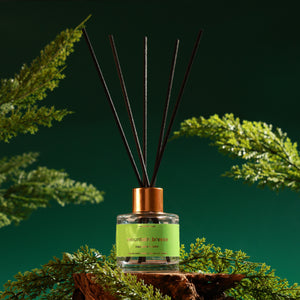 Mountain Breeze ₹849
 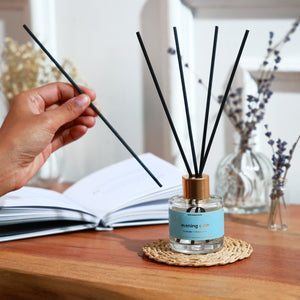 Evening Calm ₹799
  Oil refill 300ml ₹2,399
 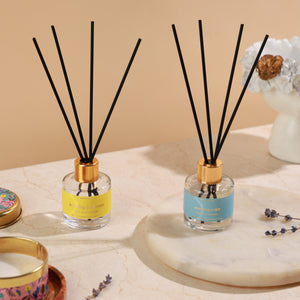 Day & Night duo ₹1,498
It changes your flipping, not your shopping. Reeds saturate and stall in heavy air. Flip weekly as standard, twice a week when it is heaviest — gloves on, both ends coated.
It does not change the oil. The composition, its strength position and its safety are the same in a coastal flat as anywhere else. Salt air is a problem for metal, not for oil in closed glass.
Do not size up to fix it. A 130ml at ₹1,249 buys 14–18 weeks instead of 6–8. At the same six reeds it projects identically. Reeds are the volume control.
2. It usually lengthens the bottle rather than shortening it. Slower release means the reservoir drains more gently, so a heavy stretch can push a 50ml towards the long end of 6–8 weeks. Warmth pulls the other way, which is why the two together rarely produce a dramatic figure in either direction.
3. It changes how often flipping earns its keep. In heavy air reeds sit saturated — the wet line high and dark, the reed doing less work than it looks like it is doing. Weekly is the standard; twice a week is worth it in the heaviest stretches. Gloves on, lift, invert, so both ends are coated.
4. It makes the reeds the part that wears. This is why we use fibre rather than rattan. Rattan is a natural cane whose pores swell and clog where the air stays heavy for months; when that happens the bottle stops wicking and people blame the oil. Fibre does not close up the same way, and we tested it through 85% humidity before selling a bottle.
5. It does not change the oil. The composition, the CCT carrier, the strength position, the safety profile: all identical in a coastal flat. Salt-laden air is a genuine nuisance for metal fittings and window hardware; it is not doing anything to fragrance oil sealed in glass.
6. It does not change reach. Coverage comes from exposed reed surface, not from the weather and not from bottle size. A quiet room is answered by a second source in a second room, never by a larger bottle in the same one.
7. And a reed diffuser does nothing to the humidity itself. It adds no water and removes none — neutral, not corrective. Ultrasonic machines add moisture by design, which is a real consideration here.
Everything is composed and handmade in small batches in Pune, tested through 45°C summer heat and 85% monsoon humidity, and a portion of every order supports girl-child education through Nanhi Kali.
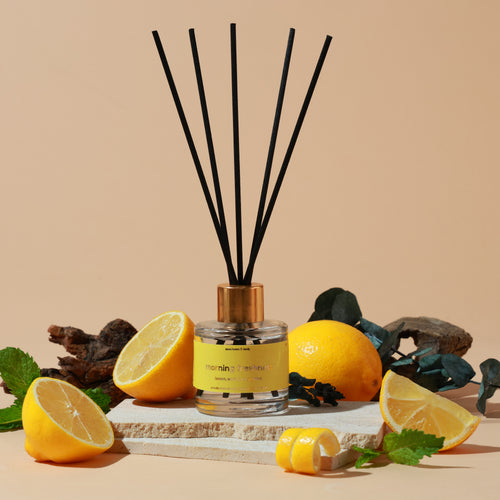
Part one — what coastal air genuinely changes
The useful way to answer this is to separate what really does change from what people assume changes and does not. Everything on the first list happens at the reed surface; nothing on it happens inside the bottle.
 Mountain Breeze₹849 · 50mlLift one reed out and look for the boundary between the oil-soaked part and the dry part. High and dark, with a quiet room, means saturated and stalled — the reed is full but not releasing, and a flip is what it wants. Barely above the oil line means it is not wicking properly and the reeds need refreshing. Normal wet line but a quiet room means airflow or your own nose, not the reeds. In a coastal flat the first of those three is much the commonest, which is why I say flip weekly as standard and twice a week at the heaviest. Gloves on, lift the set, invert, put them back so both ends are coated. It is the only maintenance a reed diffuser has.
Part two — the changed and the unchanged, side by side
Seven things people ask about, sorted into what coastal air touches and what it leaves alone. Directions of effect only.
| The thing | Does coastal air change it | What is actually happening | What to do about it |
|---|---|---|---|
| How strong the room reads ★ | Yes — softer | Slower exchange at the reed surface | Six reeds in, out of the draught, judge it in week three |
| How long the bottle lasts | Yes — often a little longer | Slower release drains the reservoir gently | Nothing. Warmth pulls the other way; expect the range |
| How often flipping helps | Yes — more often | Reeds sit saturated and stall in heavy air | Weekly as standard; twice weekly at the heaviest |
| The reeds over several months | Yes — they are the part that wears | Fibre resists clogging; rattan would not | Refresh every few months. Not sold separately — an honest gap |
| The oil in the bottle | No | Sealed CCT carrier, alcohol-free, unchanged | Keep it out of direct sunlight, which does matter |
| How far it reaches | No | Reach comes from exposed reed surface, always | Want more rooms? A second bottle, not a bigger one |
| The humidity itself | No — and neither does the diffuser | A reed diffuser adds no water and removes none | If the flat is damp, that is a building matter, not this |
| The honest caveat: these are directions rather than magnitudes, and I will not put a number on any of them. Longevity figures — 6–8 weeks at 50ml, 14–18 at 130ml, both at six reeds — are typical ranges that move with warmth, airflow and how often the room is opened, and in a coastal flat warmth and humidity are pushing against each other all day. What I can promise is what is on the "no" rows: nothing about the oil, the strength position or the reach of a SOSA reed diffuser is different because you live near the water. | |||
Morning Freshness · bright and dry near the water₹749Shop → 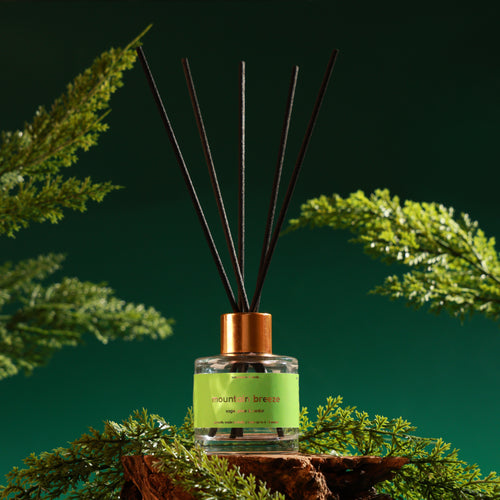 Mountain Breeze · dry cedar when the flat feels close₹849Shop →
 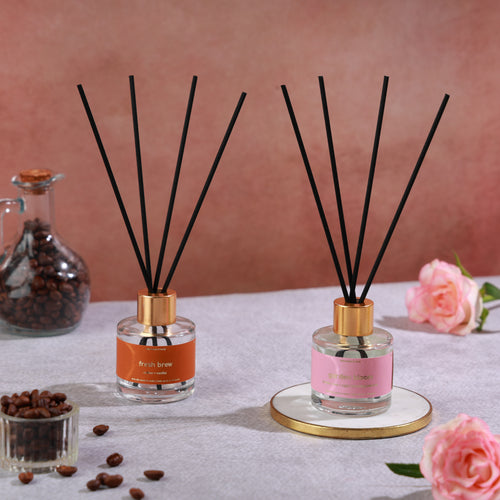 Oil refill 300ml · the oil is the stable part₹2,399Shop →
Part three — what a reed diffuser will not do about the coast
Now the half of the answer that costs me sales, because the reason people ask this question is often not the one they typed. A reed diffuser does not reduce humidity, dry a room, prevent damp or do anything corrective about moisture at all. It adds no water and removes none — neutral, absent from the question entirely. Choosing it because it will not make a heavy flat heavier is correct reasoning. Hoping it will help is not. SOSA sells no dehumidifier and no air purifier, and I am not going to let a bottle of oil stand near a moisture problem and hope you draw a flattering conclusion.
The same discipline applies to smell. A reed diffuser adds a fragrance that sits alongside whatever is already in your air; it removes, neutralises, absorbs, masks and purifies nothing. In a coastal flat what accumulates is real — a cupboard shut for a fortnight, a bathroom wall that never quite dries, shoes by a door that faces the weather. Fragrance layered on any of that makes a third smell nobody designed, and the fragrance is what gets blamed. If a musty smell returns a day or two after a proper clean, it is telling you something is still wet — a ventilation and building matter rather than a shopping one. Find the source, dry or repair it, air the flat hard when the outside air is at its driest, and only then is a bottle worth having.
The third thing I will not sell you is a machine to solve a coastal problem. An ultrasonic diffuser works by aerosolising water, so it adds moisture to the room by design — Boond at ₹899, Sukoon at ₹1,899, and most of all the six-litre Megh at ₹3,499, which runs about 100 hours and covers only ~215 sq ft, less than a Sukoon's 270–320. It is a runtime and humidity machine, never a coverage upgrade. All three are good products for someone who wants scent on demand and accepts the water knowingly. None is an answer to heavy coastal air, and buying the largest because the runtime figure looks impressive is the mistake this page exists to prevent.
Part four — your coastal flat, and what to buy
Six coastal situations, with the flipping schedule alongside, because on this page the habit matters more than the purchase.
| Your coastal flat | What I would buy | Flipping habit | What not to do |
|---|---|---|---|
| Streets from the water, windows open much of the day ★ | Morning Freshness 50ml ₹749, six reeds | Weekly, twice weekly at the heaviest | Standing it in the through-draught from the window |
| The flat already feels close and heavy | Mountain Breeze 50ml ₹849 — dry and green | Weekly | Choosing a sweet base and then blaming the weather |
| The room reads too quiet with six reeds in | A second bottle for a second room, not a bigger one | Weekly, both bottles | Buying 130ml expecting more reach. It buys weeks |
| Bedroom and hall, one order | Day & Night duo ₹1,498, 2 × 50ml | Both on the same day, gloves on | Running two unrelated scents either side of a doorway |
| Bottle full, room silent, reeds soaked to the top | Nothing. Flip them and wait a week | Twice this week, then weekly | Ordering a replacement for a bottle that is working |
| You know the scent and are on your third bottle | Oil refill 300ml ₹2,399 into your own glass | Unchanged — refresh reeds every few months | Expecting reeds in the box. It is oil only |
Versailles
The reed decision was made before the fragrance decisions. We tested rattan and fibre side by side through 85% humidity, and rattan failed in the way that ruins a customer's opinion of a whole category — the cane's pores swell shut, the bottle stops wicking, the room goes silent, and everyone concludes the oil was weak. It was never the oil.
What that testing also taught me is on this page: heavy air slows release from the reed surface, so the same bottle reads quieter and lasts longer. Both halves are normal, and I would rather write it than let someone in a seaside flat believe they were sent a poor batch.
The gap I keep naming: we do not sell replacement reeds on their own, and near the coast that is the part that matters most. Reeds wear; oil does not. Until we fix it, refresh yours every few months, keep spares dry, flip weekly with gloves and twice weekly when the air is at its heaviest. Made in small batches in Pune, and a part of every order funds a girl's classroom through Nanhi Kali.
Frequently asked questions
- Does Chennai heat make the oil evaporate faster? — the two forces pulling opposite ways.
- A bedroom that is cool and damp at once — the format decision, made by elimination.
- Fresh without turning sweet and a 2BHK without the daily spray.
- Why can't I smell my reed diffuser? — the diagnosis page, from the wet line up.
- Brand: the SOSA founder story.
SOSA range, specifications and prices used in this guide (verified from the live store, 27 August 2026): Reed diffusers — alcohol-free, phthalate-free, paraben-free and IFRA-compliant compositions on a heat-stable coconut-derived (CCT) carrier, low-VOC, in a refillable glass bottle with six fibre reeds; flip weekly. 50ml lasts 6–8 weeks and 130ml lasts 14–18 weeks; there is no 100ml reed diffuser size. Morning Freshness (Malabar lemon · peppermint · Nilgiri eucalyptus) 50ml ₹749 · 130ml ₹1,249; Garden Bloom (British rose · night-blooming jasmine) ₹799 · ₹1,299; Evening Calm (Kashmir lavender · chamomile) ₹799 · ₹1,299; Fresh Brew (Coorg coffee · Kerala vanilla) ₹849 · ₹1,349; Mountain Breeze (Himalayan pine · sage · Indian cedar) ₹849 · ₹1,349. Duo sets ₹1,498–₹1,598 for 2 × 50ml and ₹2,498–₹2,598 for 2 × 130ml. Oil-only refills 300ml ₹2,399 · 500ml ₹3,499 — the glass vessel and reeds are not included, and replacement reeds are not sold as a separate product. Machines: Boond 300ml ₹899 (~150 sq ft, about 6 hours a fill) · Sukoon 500ml ₹1,899 (270–320 sq ft, 16–18 hours on low, three 15ml fragrances included) · Megh 6L ₹3,499 (~215 sq ft — a runtime and humidity machine that covers less than a Sukoon, never a coverage upgrade) · waterless Vaayu ₹11,999 · Safar ₹3,999 (a car and travel product) · Aangan ₹25,999 · Meenar ₹38,500. The water-based Hotel Collection for ultrasonic machines (15ml ₹299 · 100ml ₹999 · 300ml ₹1,799 · pack of seven 15ml ₹1,799) cannot be used in a reed bottle or a Vaayu. Below ₹749: jar candles ₹379, Sandalwood or Smoked Oudh candle ₹449, wax melts ₹474 (a burner is required and not included), mugs ₹474, bubble and taper candles ₹569, Amber Rose candle ₹599, ceramic trinket dish and candle two-pack ₹664. A reed diffuser adds fragrance to a room. It does not clean, purify or filter air, remove or neutralise cooking, damp or smoke smells, reduce humidity, or change how anyone feels. A reed diffuser adds no moisture to the air; ultrasonic machines work by aerosolising water and therefore do. A persistent musty smell indicates moisture that needs finding and drying, and SOSA sells no dehumidifier or air purifier. Ventilate or extract first; add fragrance second. Evaporation rate rises with warmth and falls with humidity, and airflow carries scent away from the bottle — so performance varies with season, ventilation, ceiling height and room use; longevity figures are typical ranges, not guarantees. Not noticing a constant fragrance is ordinary olfactory adaptation; the reliable checks are leaving the room and returning, or asking someone who has just arrived. Strength figures are positions on SOSA’s own internal scale, not an industry standard. Fragrance oil is flammable — keep bottles away from open flame and out of direct sunlight, and out of reach of children and pets. Composed and handmade in small batches in Pune, India; tested through 45°C summer heat and 85% monsoon humidity. Free shipping above ₹499. A portion of every order supports girl-child education through Nanhi Kali. Prices subject to change — see the live product pages.