Why Does My Study Smell Closed Even Though I Sit in It All Day?

Why Does My Study Smell Closed Even Though I Sit in It All Day?

★ The smell that arrives in the first minute of the AC and fades · and the one that never leavesCandle ₹379 · reed ₹749 · Boond ₹899 · Sukoon ₹1,899 · free shipping above ₹499A portion funds girl-child education
★ SOSA · find the cause, then scent the room
An air conditioner runs a cold wet coil in a warm room. What grows there is blown at you on start-up, and no fragrance fixes it
★ ★ ★ ★ ★
★★★★★
"The vinegar smell for the first sixty seconds. Washed the filter, which I had never once done in four years. Gone completely."
Nikhil B. AC filter, Hyderabad
Free fix · filter
★★★★★
"I genuinely thought the room was dirty. It was the coil. One service and the whole thing stopped, and I had been about to spend far more on scent."
Ritika S. AC service, Noida
Told to service first
★★★★★
"Asked whether a diffuser would help a room that already felt clammy. Was told plainly that it adds water to the air and would make it worse. Respect."
Prasad V. AC room, Mumbai
Told not to buy
★★★★★
"Fan on and it feels fine, AC on and it feels closed. The explanation was recirculation versus exchange and it made instant sense."
Ishita G. Understood the cause
Fan vs AC
★★★★★
"Study I sit in all day and never noticed. My wife did. Ten minutes of cross-draught at lunch, and now a Boond in the corner."
Manav D. Boond ₹899
Study, Pune
★★★★★
"Guest room, spotless, still musty. It was simply never opened. Now it gets twenty minutes a week and a reed, and it is ready whenever."
Tara J. Guest room reed
₹749 · always ready
★★★★★
"The vinegar smell for the first sixty seconds. Washed the filter, which I had never once done in four years. Gone completely."
Nikhil B. AC filter, Hyderabad
Free fix · filter
★★★★★
"I genuinely thought the room was dirty. It was the coil. One service and the whole thing stopped, and I had been about to spend far more on scent."
Ritika S. AC service, Noida
Told to service first
★★★★★
"Asked whether a diffuser would help a room that already felt clammy. Was told plainly that it adds water to the air and would make it worse. Respect."
Prasad V. AC room, Mumbai
Told not to buy
★★★★★
"Fan on and it feels fine, AC on and it feels closed. The explanation was recirculation versus exchange and it made instant sense."
Ishita G. Understood the cause
Fan vs AC
★★★★★
"Study I sit in all day and never noticed. My wife did. Ten minutes of cross-draught at lunch, and now a Boond in the corner."
Manav D. Boond ₹899
Study, Pune
★★★★★
"Guest room, spotless, still musty. It was simply never opened. Now it gets twenty minutes a week and a reed, and it is ready whenever."
Tara J. Guest room reed
₹749 · always ready
A cool-mist diffuser adds 30–50 ml of water an hour — the wrong machine for a damp room Dry the room, find the water, then scent it. In that order, and not before Candles and reeds add no moisture · candles from ₹379, reeds from ₹749


Founder Diaries · Home Fragrance · Air Conditioning & Closed Rooms
By Sonal Sahani · ISIPCA Versailles 11 min read Updated August 2026
The word even in that question is doing something interesting, because it assumes that being in a room is a form of looking after it. It is the opposite. A room with a person in it all day is being loaded rather than aired: you are a continuous source of warmth, moisture, carbon dioxide and skin, the door is shut because you wanted quiet, and nothing is leaving. The second half of the answer is stranger and more useful. You are the one person in the household who ought not to be able to smell that room at all, because you adapt to it within minutes of sitting down. So the fact that you can smell it is not a complaint. It is a measurement, and it means the room has got past your own nose, which takes some doing.
Quick answers — read this first
Occupancy is not ventilation: a seated adult continuously adds warmth, water vapour, carbon dioxide and shed skin to a room, and a study door is usually shut for quiet. Eight hours of that with no exchange is loading, not airing.

Why your own report is valuable: olfactory receptors adapt within minutes of entering a room and a constant household smell becomes undetectable to its residents in about a fortnight. If you can still smell your own study, it has broken through your adaptation.

What is in a study specifically: books and paper hold moisture and release it slowly; electronics run warm and off-gas; a laptop fan blows warm air across dust; cups; and an upholstered chair holding eight hours a day of you.

Free fixes: a break every two hours with the door and a window open, the desk cleared of cups at the end of every day, and a fan to keep the air moving even when the door has to stay shut.
The short answer
Short answer: because sitting in a room is not the same as ventilating it. You are the largest continuous source in the room and the door is shut, so the study accumulates for eight hours while nothing removes anything. Ten minutes of door-and-window exchange every two hours resets it, and costs nothing.
The part worth knowing: you habituate to a room within minutes of entering it, so you are the worst-placed person in the house to judge your own study. The fact that you can smell it anyway means it is well past the level a visitor would notice, which is why this particular complaint should be acted on rather than dismissed.
Shop, after the air is moving: the Boond at ₹899 is the 300ml machine for a study and the Sukoon is ₹1,899 with steady, 2H and 4H timers and three 15ml scents included. The Hotel Collection is ₹299 for 15ml at three to six drops per tank; a Bookshop candle is ₹379. Free shipping above ₹499.
Straight answer
Why does my study smell closed even though I sit in it all day?
1. Because you are the load, not the remedy. A seated adult is a continuous source of warmth, water vapour, carbon dioxide and shed skin. Eight hours of that in a room with the door shut is eight hours of production against no removal at all, and the shut door is usually there because you wanted quiet rather than because you thought about the air.

2. And you are the one person who cannot assess it. Olfactory receptors adapt fast: you stop reporting a constant smell within minutes of entering a room, and a constant smell at home becomes invisible to its residents within about a fortnight. Everybody else who opens that door gets the full reading.

3. Which makes your own complaint unusually valuable, and you should act on it. For you to be smelling your own study, the room has to be producing enough to overcome your own adaptation. That is a real finding, not fussiness, and it means a visitor would find it obvious.

4. A study also holds a particular set of objects, and they add up. Books and paper take up and release moisture and carry their own smell; electronics run warm and off-gas gently for years; a laptop fan blows warm air over settled dust all day; there are usually cups; and the chair is upholstered and has had you in it for a thousand hours.

5. So: a break every two hours with the door and a window open, at ₹0. Ten minutes, twice or three times a day, with two openings rather than one. Clear the cups at the end of the day rather than the start of the next one. And keep a small fan running even when the door has to stay shut, because still air layers and a stirred room does not develop the pocket of warmth behind the monitor that you are actually smelling.

A portion of every order supports girl-child education through Nanhi Kali.
TL;DR: sitting in a room is not ventilating it. You are the biggest continuous source in the study and the door is shut for quiet, so eight hours of production meets no removal. You also habituate within minutes, which means the fact that you can smell it at all is the finding. Ten minutes of door-and-window exchange every two hours, cups cleared, a fan running — all free.
SOSA Boond
The size that suits a room with one person in it
SOSA Boond ₹899
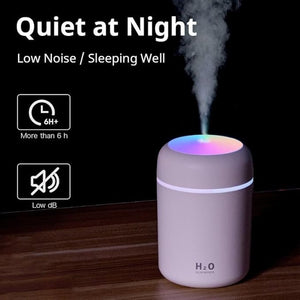
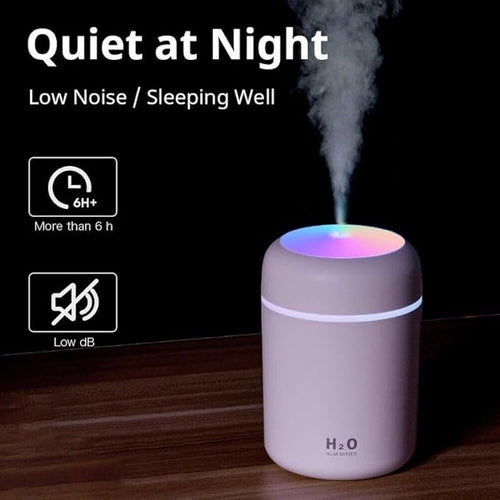
A 300ml ultrasonic diffuser for a study, a home office or a small bedroom, running the same water-based Hotel Collection bottles at the same three to six drops per tank — the dose is per tank rather than per litre, so the smaller machine costs you nothing in fragrance and puts less into the air each hour. In a room you sit in for eight hours the argument for the small machine is not the price. It is that you will habituate to anything constant within the hour, so less, stopped and restarted, is worth more to you than more, running all day.

Occupancy is a load, not a service

There is a quiet assumption underneath this question and it is worth pulling out into the light, because once you see it the answer follows immediately. People believe, without ever having decided to believe it, that a room in use is being looked after — that presence is a kind of maintenance, and that the rooms which go wrong are the ones nobody enters. The guest room down the corridor certainly goes wrong for that reason. But a study goes wrong for the exact opposite one, and the mechanism is not neglect. It is occupancy without exchange, which is a heavier load than an empty room ever carries.

1
THE LOAD
You are the largest continuous source in the room, for eight hours at a stretch
So take the room as an accounting problem and put yourself on the correct side of it. A seated adult is warm, and warmth drives every slow release in the room slightly faster. A seated adult exhales water vapour continuously and gives off more from the skin, which is why a closed study feels close by four in the afternoon in a way it did not at nine. A seated adult sheds skin cells all day, which settle and become part of the dust that everything else in the room is sitting on. None of this is unhygienic and none of it is unusual; it is simply what a body in a small volume does, and it does not stop because you are concentrating. Now add the door. A study door is shut for a reason that has nothing to do with air — you wanted quiet, or a call was happening, or the rest of the house is loud at that hour — and it stays shut for the whole working day. So the room has one continuous producer in it and no removal mechanism whatsoever, and the result is not that the study smells of anything dramatic. It is that everything in the room that releases anything slowly has had eight uninterrupted hours to build up, with a warm body in the middle of it speeding all of them along. That is the smell people describe as closed, and closed is an accurate word for it: it is not dirt, it is not damp, it is the smell of air that has been used and not replaced. The correction is not cleaning. It is opening, and the reason nobody does it is that opening a study door defeats the purpose of a study.
2
THE WITNESS
You are the worst-placed person in the house to judge it, which is why your report matters
Now the part that makes this page different from every other nose-blindness argument you will read, because the usual version has you as the person who cannot smell their own home and a visitor as the one who can. Here you are both. Olfactory receptors adapt to a constant stimulus within minutes of exposure, and over roughly a fortnight a constant household smell becomes genuinely undetectable to the people who live with it while every visitor still receives it at full strength. In a study you re-run that adaptation every single morning: you walk in, you get about ninety seconds of an honest reading, and then your nose quietly withdraws the report and gives you nothing for the rest of the day. Which means that noticing your own study smells closed is a genuinely difficult thing to have done, and it tells you something specific: the level in that room is high enough to keep breaking through an adaptation that is working against you all day. Treat it as a reading rather than a mood. If you can smell it, anybody who opens that door without warning is getting considerably more than you are. There is also a free instrument in this, and it is the most useful thing on the page: your nose resets in about ten minutes outside the room. Walk out, make tea, stand on the balcony, do not think about it, and come back in — the first breath through the doorway is your honest measurement, and it is the only one you will get that day. Take it before you have opened anything, and take it again after ten minutes of two-sided exchange, and you will know exactly how much of the problem is air and how much is object.
3
THE OBJECTS
Paper, warm electronics, a laptop fan and a chair with a thousand hours in it
Then the specifics, because a study is not a generic sealed room and the things in it are unusually good at this. Books and paper are hygroscopic — they take moisture out of the air and give it back, and in the process they hold and slowly release the smell of everything they have been near, which is why a shelf of books is one of the strongest and most characteristic smells in any home and why it gets much stronger in monsoon. A study usually has more paper per cubic metre than any other room in the flat. Then the electronics: a desktop, a monitor, a router, a printer, a laptop charger — all of them running warm, all of them off-gassing plasticisers and flame retardants gently for years, and all of that accelerating with temperature, which is exactly what they are producing. The laptop fan deserves its own sentence, because it is the only piece of active air movement in most studies and what it is doing is drawing air across a warm heatsink packed with a season's dust and blowing it back into your face at desk height for eight hours a day. That warm-dust smell is instantly recognisable once somebody points at it, and a can of compressed air or a service once a year removes it entirely. Then the cups: half a centimetre of cold milky coffee left overnight in a warm closed room is a small culture, and a study usually has two or three. And finally the chair, which is upholstered, has had a warm body in it for a thousand hours, and is doing exactly what a sofa does in a living room — textiles are where a room keeps its memory, and the chair is the textile that is closest to you and least likely to be washed. The order of work is: clear the cups, vacuum the chair with an upholstery head and wash the cover if it has one, blow the dust out of the laptop, and open the room properly twice a day. Then think about fragrance.
The measurement to take tomorrow morning: leave the room for ten minutes without opening anything, come back, and pay attention to the first breath through the door. That single breath is the only honest reading your own nose will give you all day.

The study, object by object

Everything in a working room that contributes to the closed smell, what each one is actually doing, how to confirm it, and what it costs to deal with. The first row is you, because you are the largest item on the list and the one nobody counts. Four of the six fixes are free and the other two are a vacuum head and a can of air.

Object by object
What is in a study, and what each thing contributes
What is in the room What it contributes How to confirm it What to do
You, for eight hours ★ Warmth, water vapour, carbon dioxide and shed skin, continuously, behind a shut door The room is worse at four in the afternoon than at nine in the morning, every day Ten minutes of door-and-window exchange every two hours. Two openings, not one. ₹0
Books, files and loose paper Hygroscopic — they take up and release moisture and hold the smell of everything they have been near Much stronger in monsoon; strongest when you put your face near a shelf Do not stack paper against an outside wall; keep shelves off the floor; air the room, which is the only thing that reaches paper. ₹0
The desktop, monitor, router and chargers Warm plastics off-gassing slowly, and the warmth accelerating everything else in the room A faint warm-plastic note that is strongest an hour into the working day Switch off at the end of the day rather than leaving everything on standby overnight in a shut room. ₹0
The laptop fan Drawing air across a dusty warm heatsink and blowing it back at desk height all day A recognisable hot-dust smell that arrives a few minutes after the machine wakes up Compressed air into the vents, or a service once a year. The single most satisfying fix on this list
Cups, and what is at the bottom of them Cold milky coffee in a warm closed room is a small culture by the following afternoon Obvious once you look, invisible once you have stopped seeing them Cups out at the end of every day rather than the start of the next. ₹0
The chair Upholstery holding a thousand hours of body warmth and skin oils, released slowly back into a small room Sit down, then put your face near the backrest. It is not subtle Vacuum with an upholstery head, wash the cover if it has one, and put a cushion in the sun for two hours
Shop this guide
For a working room, once it is being opened twice a day
The SOSA principle
Being in a room is not looking after it. A person is the largest continuous source a small room hasand the only occupant whose nose has stopped reporting on it.
Which is why noticing your own study smells closed is a finding rather than a complaint. To reach you at all, it has had to get past an adaptation that has been working against you since nine in the morning.

Intermittent beats constant in a room you never leave

Start with the free work, in the order that gets the most out of the least. A ten-minute break every two hours with the study door open and a window open at the same time — two openings, not one, because one window is ventilation and two is exchange. Three of those in a working day is thirty minutes and it changes the room completely, and it happens to be a reasonable thing to do for your eyes and your back as well. If the door genuinely cannot be opened during calls, do it at the top of every second hour between them, and do the longest one at lunch. Then keep a small fan running inside the closed room even though a fan brings in no new air. That sounds contradictory and it is not: what still air does in a small occupied room is layer, so that a pocket of warm used air sits behind the monitor and around your head while the corner by the door is fine, and it is that pocket you are smelling when you lean back. Stirring the room does not fix the exchange problem but it removes the local concentration, and it is free if you already own a fan. Then the housekeeping that is specific to this room and takes four minutes: cups out at the end of the day, the bin emptied even though it only has paper in it, the laptop vents blown out, and the chair vacuumed with an upholstery head at the weekend.

Then the fragrance decision, which in a study is genuinely different from every other room in this group, and the difference is not the dose. It is the schedule. You will habituate to anything constant in that room within the hour, because you never leave it — so a scent running steadily all day is, from your side of the door, a scent you paid for and cannot detect after eleven in the morning. The room will smell pleasant to anybody who walks in, which is worth something, but you are the person who is there and you get almost nothing. So a study is the one room where I would deliberately run fragrance intermittently rather than continuously: the 2H timer on a Boond at ₹899 or a Sukoon at ₹1,899, started at the beginning of a work block rather than left on, and stopped long before you have stopped noticing it. A change of state is what a nose actually reports, so the scent doing its work is the scent that arrives, not the scent that is present. The same logic makes a Bookshop candle candle at ₹379 an unusually good fit here — lit at the start of a piece of work, scent in the room in fifteen to twenty minutes, put out when you get up, and never running while you are not in the room. It must be attended and put out, which in a study is not a drawback because you are sitting three feet from it. On the scent itself: three drops of something dry rather than four of something soft. The Hotel Collection has nothing sweet anywhere in it, which in a room where you are trying to hold a thought for four hours is a specification rather than an omission.

Then the constraints and the principle. Nothing in a bottle will exchange the air in your study, and a scent added to a closed working room is added on top of everything the room has accumulated rather than instead of it. Fragrance is the last step here as it is everywhere: cups, chair, laptop, door and window first, and only then a machine. On the products: the Hotel Collection is water-based, runs in the Sukoon, the Boond and the Megh at three to six drops per tank, and does not go into a reed diffuser, which is a separate alcohol-free line with its own scents, or into the waterless Vaayu at ₹11,999. Rinse the tank when you change scent and keep raw essential and carrier oils out of an ultrasonic entirely. Keep the machine off the desk and away from the laptop, a metre clear of the bookshelves, on a surface you can wipe — paper and damp are a poor combination and a study is mostly paper. If you would rather have nothing to switch on at all, a reed diffuser from ₹749 holds one level for months, though it will be invisible to you by the second week and is really being bought for whoever else opens the door. And the principle: in a room you never leave, the scent that works is the one that starts, not the one that stays.

You get about ninety seconds of an honest reading each morning. After that your nose stops reporting and the room carries on producing, which is the whole of this problem in two sentences.
— Sonal Sahani, SOSA

The SOSA edit

In the order the work should be done for a room with one person in it and the door shut. The first three rows cost nothing and between them account for most of the smell. The last row is the honest one about what a scent can and cannot do for somebody who has already habituated to their own room.

The SOSA edit
A study that smells closed, in the order it should be dealt with
Do this What it is Why it comes here in the order Cost
1. Ten minutes every two hours ★ Door open and a window open at the same time — two openings, three times a working day You are producing continuously and nothing is removing anything. This is the only step that removes ₹0
2. Cups, chair, laptop vents Cups out nightly, upholstery head over the chair weekly, compressed air into the laptop vents once or twice a year The three sources people never suspect in a working room, and the hot-dust one is the most satisfying to remove ₹0, mostly
3. A fan running inside the closed room Any small fan, on low, to stop the air layering around your head It does not exchange anything, but it removes the warm pocket behind the monitor that you are actually smelling ₹0
4. Boond with Hotel Collection 15ml 300ml ultrasonic for one occupant, three drops of one of the dry scents, on the 2H timer After the air moves. Run it at the start of a work block, not all day — you will not detect anything constant after an hour ₹899 + ₹299
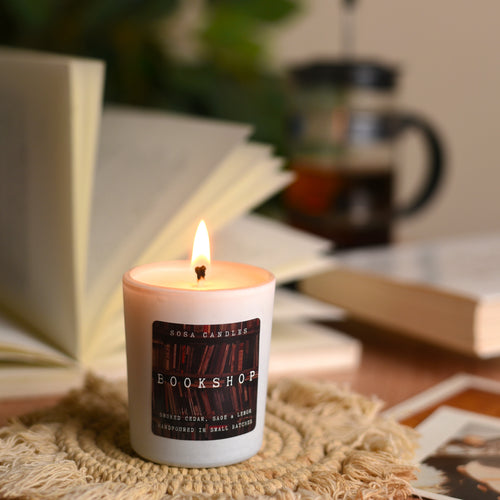
5. Bookshop candle 80g 15–18 hours of burn, scent in the room in 15–20 minutes, must be attended and put out The best fit for a working room because it is inherently intermittent. Lit at the start of a task, out when you get up ₹379
The honest limit A constant scent is invisible to the person who never leaves the room, however much you spend on it Printed rather than implied. In a study the schedule matters more than the product, and adding drops is the wrong response
Honest notes for buyers: fragrance is the last step, never the first. It layers on air that is already clean and moving, and it will not remove a source — not damp, not a dry drain trap, not a loaded sofa, not a filter that needs washing. Deal with the cause, change the air, then scent the room. On timing: a candle puts scent into a room in fifteen to twenty minutes and a Sukoon reaches a steady level in about twenty, while a reed diffuser needs a day to three days before it is doing its job — the wrong buy for a deadline and the right buy for a room you want to hold one level for months. SOSA does not make a room or linen spray for the home; the sprays in the range are car perfumes. A cool-mist ultrasonic adds 30–50 ml of water an hour to the air, so it is the wrong machine for a room you are trying to dry out. The Hotel Collection is water-based and runs in the Sukoon, Boond and Megh only — not in reeds and not in the waterless Vaayu. Reed diffusers are a separate alcohol-free line with their own scents. Candles must be attended and put out. The Hotel Collection scents are SOSA's own interpretations inspired by the world's finest hotels; SOSA is an independent Indian fragrance house, not affiliated with or endorsed by any hotel brand. A portion of every order supports girl-child education through Nanhi Kali.
SOSA Hotel Collection · 15ml
Three drops, on a timer, at the hour you choose
SOSA Hotel Collection · 15ml ₹299 / 15ml
Seven water-based scents at three to six drops per tank. In a working room I would run one of the dry ones — the 1 Hotels-inspired Forest Suite is cedarwood, vetiver and green leaves; the Ritz-Carlton-inspired Quiet Luxury is white tea, bergamot and cedar. Nothing in the collection is sweet, and in a room where you are trying to concentrate for four hours that absence is a specification rather than a shortfall. Buy the 15ml at ₹299 before the 300ml 300ml refill at ₹1,799; at three drops a small bottle still runs for weeks.
SS
ISIPCA
Versailles
A note from Sonal

I work from a room in Pune with too many books in it and a door that stays shut, so this is not a page I wrote from a distance. The thing that took me longest to accept is that the room is worse because I am in it, not despite my being in it, and that all the tidying in the world does not address that, because the problem is not untidiness. It is eight hours of a warm body in a sealed volume with a great deal of paper in it. The morning I finally connected the hot-dust note to the laptop fan I had been blaming the carpet for about a year.

The other thing I would say to anybody who has typed this question is that they should trust themselves. You are structurally the worst-qualified person to smell your own study, and you smelled it anyway, which means the room is well past the point where a visitor would notice. That is worth acting on the same week. And when you get to the fragrance part, run it in short bursts rather than continuously, because in a room you never leave, the arrival is the whole of the effect. I light a candle at the start of a long piece of work and put it out when I stand up, and I get more out of ₹379 in that room than I would out of a machine running quietly at nothing all day.

Everything is made and supported from Pune, and a part of every order funds girl-child education through Nanhi Kali. You get a home that smells like somewhere you chose; a girl gets a classroom. That equation has always felt right to me.

Frequently asked questions

Why does my study smell closed when I am in it all day?
Because occupancy is a load rather than a service. A seated adult continuously adds warmth, water vapour, carbon dioxide and shed skin to the room, and the door is shut for quiet, so there is production all day and no removal at all. Everything in the room that releases slowly builds up, with a warm body speeding it up.
If I cannot smell my own home, why can I smell my own study?
Because the level in the room is high enough to keep breaking through your adaptation. Receptors adapt within minutes and a constant household smell becomes undetectable to residents in about a fortnight, so for you to be noticing it at all, anybody opening that door is getting considerably more.
How do I check what my study actually smells like?
Leave it for ten minutes without opening anything — make tea, stand outside — and pay attention to the first breath as you come back through the door. Your nose resets in roughly that time and that single breath is the only honest reading you will get all day. Repeat it after ten minutes of cross-ventilation.
Does a fan help if I cannot open the study door?
It does not exchange any air, but it does stop the air layering. In a small occupied room a pocket of warm used air collects around your head and behind the monitor, and that pocket is usually what you are smelling when you lean back. Stirring the room removes it. Open the door properly at the top of every second hour anyway.
Should I run a diffuser all day in my home office?
No. You habituate to anything constant within about an hour in a room you never leave, so a scent running all day is one you stop detecting by mid-morning. Use the 2H timer on a Boond at ₹899 at the start of a work block, or light a Bookshop candle at ₹379 and put it out when you get up. The arrival is the effect.
A room with one person in it and the door shut
Open it every two hoursthen let the scent arrive rather than sit there
The Boond is ₹899 for a study-sized room and the Sukoon is ₹1,899 for 270–320 sq ft, both with timers and the same three to six drops per tank. The Hotel Collection is ₹299 for 15ml, ₹999 for 100ml and ₹1,799 for 300ml at about ₹6 per millilitre, with nothing sweet anywhere in the range. The Bookshop candle is ₹379 for 80g and must be attended and put out. Free shipping above ₹499, and a portion of every order supports girl-child education through Nanhi Kali.
See the Boond → ₹899 Shop the Hotel Collection
Continue the read
More from SOSA
Editorial standards & sources
About this guide: Written by Sonal Sahani, ISIPCA Versailles-trained founder and perfumer at SOSA Home & Body, on why sitting in a room all day loads it rather than airs it, what a seated adult contributes to a small sealed volume over eight hours, why the occupant is the worst-placed person in the house to assess their own study and why their report is therefore worth acting on, what books, warm electronics, a dusty laptop fan and an upholstered chair each add, and why a working room is the one place where intermittent fragrance beats constant fragrance.

Facts verified August 2026: Diagnostic facts used in this guide: a closed room accumulates what it cannot exchange, so cross-ventilation needs two openings rather than one; a drain's U-bend water seal evaporates in roughly two to four weeks of disuse and then admits sewer gas, which is corrected by pouring water down the drain; microbial growth in fabric and on surfaces accelerates above about 60% relative humidity, and Indian monsoon indoor humidity commonly runs 80–95%, which is the one situation where ventilating on a wet day can import moisture rather than remove it; an air-conditioner's cold, wet evaporator coil and filter grow biofilm that is blown into the room on start-up; textiles adsorb cooking aerosol and body oils and re-release them for weeks; and olfactory adaptation makes a constant household smell undetectable to its residents within about a fortnight while visitors still perceive it. Timings: a scented candle scents a normal room in roughly 15–20 minutes, a Sukoon ultrasonic diffuser reaches a steady level in about 20 minutes from cold, and a reed diffuser needs roughly 24–72 hours. SOSA products and prices: Sukoon 500ml ₹1,899 (270–320 sq ft, 16–18h on low, 9–12h high, 30–50 ml/h, 2.4MHz cool mist, remote, steady/2H/4H timers, BPA-free, auto shut-off, includes three 15ml Hotel Collection scents of your choice); Boond 300ml ₹899; Megh 6-litre ₹3,499; waterless Vaayu ₹11,999 (up to 1000m³); Aangan ₹25,999. Hotel Collection water-based fragrance 15ml ₹299, 100ml ₹999, 300ml ₹1,799, Pack of 7 at 15ml ₹1,799; dose 3–6 drops per tank. Reed diffusers (separate alcohol-free line): Morning Freshness from ₹749, Garden Bloom and Evening Calm from ₹799, Fresh Brew and Mountain Breeze from ₹849; 130ml from ₹1,249; duos from ₹1,498; 300ml refills ₹2,399. Scented candles: Bookshop 80g ₹379, Amber Rose 130g ₹599 and 220g ₹799, Smoked Oudh 130g ₹449, ceramic jar candles ₹949, Pure Calm wax melt set ₹854. Free shipping above ₹499. SOSA does not make a room or linen spray for the home. The Hotel Collection scents are SOSA's own interpretations; SOSA is not affiliated with or endorsed by any hotel brand. Prices subject to change — see the live product pages.
Retour au blog