


What Fragrance Makes an Expensive Apartment Feel Even More Premium?

What Fragrance Makes an Expensive Apartment Feel Even More Premium?

★ For the ninety seconds a buyer spends deciding how a property feelsVaayu ₹11,999 · Aangan ₹25,999 · Sukoon ₹1,899 · free shipping above ₹499A portion funds girl-child education
★ SOSA · property viewings & premium presentation
A property being shown should not smell of a fragrance. It should smell like a building that is looked after, and nothing else
★ ★ ★ ★ ★
★★★★★
"I had been buying whatever smelled expensive. The advice was the opposite — pick the one nobody could dislike and run it lower than you think. My viewings feel different now."
Rohit Menon Luxury residential, South Mumbai
Quiet Luxury · low
★★★★★
"Asked which scent for a ₹6 crore listing and got a question back about whether the flat had been aired and the traps filled. It had not. That call was worth more than the machine."
Anjali Rao Property consultant, Bengaluru
Told to air it first
★★★★★
"The waterless part matters more than I expected. Marble floors, empty flat, no water going into the air, nothing to wipe up afterwards."
Karan Shah Premium apartments, Worli
Vaayu · no dampness
★★★★★
"Two hours before, on low, in the entrance. The flat has arrived at its level by the time the lift opens. That timing was the whole lesson."
Sneha Iyer Villas, Koregaon Park
T-2h on low
★★★★★
"A buyer once asked what the fragrance was, which I took as a win until it was explained to me that it means it was too strong. Now nobody asks."
Vikram Malhotra Golf Course Road, Gurgaon
Dialled it down
★★★★★
"Four scents came with the machine, which meant I could try them in different flats before deciding what my listings smell like."
Farah Qureshi Sea-facing, Bandra
Vaayu · four scents
★★★★★
"I had been buying whatever smelled expensive. The advice was the opposite — pick the one nobody could dislike and run it lower than you think. My viewings feel different now."
Rohit Menon Luxury residential, South Mumbai
Quiet Luxury · low
★★★★★
"Asked which scent for a ₹6 crore listing and got a question back about whether the flat had been aired and the traps filled. It had not. That call was worth more than the machine."
Anjali Rao Property consultant, Bengaluru
Told to air it first
★★★★★
"The waterless part matters more than I expected. Marble floors, empty flat, no water going into the air, nothing to wipe up afterwards."
Karan Shah Premium apartments, Worli
Vaayu · no dampness
★★★★★
"Two hours before, on low, in the entrance. The flat has arrived at its level by the time the lift opens. That timing was the whole lesson."
Sneha Iyer Villas, Koregaon Park
T-2h on low
★★★★★
"A buyer once asked what the fragrance was, which I took as a win until it was explained to me that it means it was too strong. Now nobody asks."
Vikram Malhotra Golf Course Road, Gurgaon
Dialled it down
★★★★★
"Four scents came with the machine, which meant I could try them in different flats before deciding what my listings smell like."
Farah Qureshi Sea-facing, Bandra
Vaayu · four scents
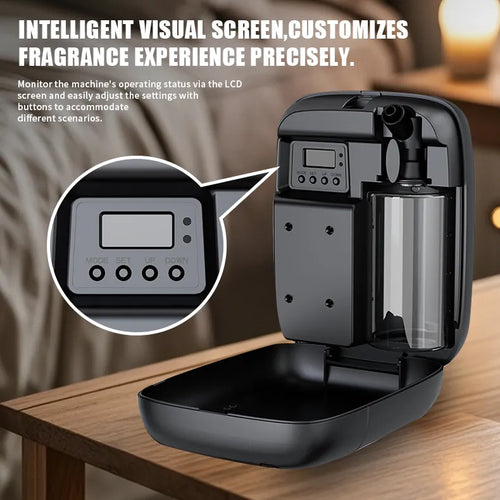
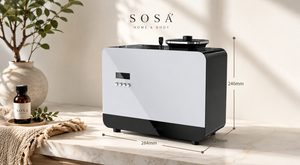
Vaayu: waterless cold-air nebulisation · no water, no heat, no dampness · under 38 dB 1000 m³ (≈2,000–3,000 sq ft) · 400ml tank ≈75 days · app + 1h/4h/8h/24h timers · key-lock 0.9 kg and smaller than a shoebox — one machine can serve a whole portfolio of listings


Founder Diaries · Property Viewings · What a Luxury Home Should Smell Like
By Sonal Sahani · ISIPCA Versailles 11 min read Updated September 2026
This is a more interesting question than it looks, because the answer is not a bottle, it is a set of rules about which materials survive being put into air. Certain registers read as expensive in a room and certain registers read as cheap, and the division has almost nothing to do with what the ingredients cost. Dry woods, tea, restrained citrus and amber sit on one side. Sweetness, fruit and strong florals sit on the other, and they stay there however fine the material is. There is also a second mechanism that matters more than the first, which is that expensive-smelling spaces hold a level while inexpensive-smelling ones spike at the door and fade. Get both right and the St. Regis-inspired Old-World Glamour becomes the best evening answer this range has.
Quick answers — read this first
What reads as expensive in a room: dry woods, tea, restrained citrus, vetiver and amber. Cool, low, unhurried.

What reads as cheap: sweetness, fruit, strong florals and anything sharp — regardless of what the material cost. Sweet in air reads as confectionery, not as luxury.

The mechanism most people miss: level, not peak. Expensive spaces hold a consistent low level for hours; inexpensive ones spike at the threshold and fade by the second bedroom.

The pick: the St. Regis-inspired Old-World Glamour — amber, violet and woods — for an evening viewing of a large formal apartment. The Ritz-Carlton-inspired Quiet Luxury stays the safer daytime default.
The short answer
Short answer: a dry one, run low and held steady. Dry woods, tea, restrained citrus and amber read as expensive in a room; sweetness, fruit and heavy florals read as cheap in a room whatever they cost in a bottle. The register decides the impression, not the price of the ingredients.
The pick: the St. Regis-inspired Old-World Glamour — amber, violet and polished woods — is the plushest of the seven and the right answer for an evening viewing of a large formal apartment. The Ritz-Carlton-inspired Quiet Luxury remains the safer daytime default, and it is the one to use if you are only going to own one.
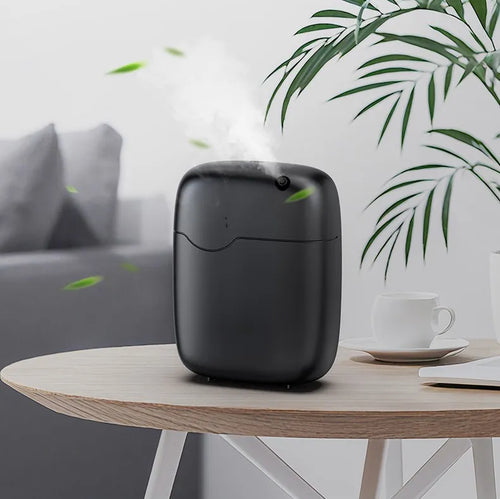
Shop: the Vaayu at ₹11,999 holds a consistent level across up to 1000 m³ with adjustable intensity and 1h/4h/8h/24h timers, waterless and under 38 dB, supplied with four hotel-inspired scents. The Hotel Collection water-based bottles for ultrasonic machines are ₹299 at 15ml and ₹1,799 at 300ml. Free shipping above ₹499.
Straight answer
What kind of fragrance makes an expensive apartment feel even more premium?
1. A dry one. Woods, tea, vetiver, restrained citrus and amber are the materials that read as expensive when they are diffused into a room. They are cool rather than warm-sweet, they hold their shape at low concentrations, and they suggest an interior rather than a product.

2. Nothing sweet, and this is not about quality. Vanilla, caramel, tonka, sugared florals and ripe fruit read as confectionery in air. A very fine sweet material in a large room still reads as a shop, which is why nothing in the seven Hotel Collection scents is sweet.

3. Level beats peak, and this is the mechanism most people miss. Expensive spaces smell consistent from the door to the far bedroom and for the whole length of a visit. Inexpensive ones announce themselves at the threshold and have gone by the second room. That difference is produced by the machine and the timing, not by the fragrance.

4. Absence outranks presence. A flat with no cooking, no damp, no drains and no dust in the air is already most of the way to smelling expensive before anything is switched on, which is why the free work is worth more than the purchase.

5. For an evening viewing of a large formal apartment, the St. Regis-inspired Old-World Glamour at its lowest setting. Amber, violet and polished woods — the plushest and slowest of the seven, and the one that suits lamps, dark wood and a formal plan.

6. For everything else, and for daylight, the Ritz-Carlton-inspired Quiet Luxury. White tea, bergamot and cedar. Cooler, safer and harder to object to, which at eleven in the morning matters more than plushness does.

A portion of every order supports girl-child education through Nanhi Kali.

TL;DR: dry woods, tea, restrained citrus and amber read as expensive in a room; sweetness, fruit and strong florals read as cheap however costly the material. The second mechanism matters more: expensive spaces hold a low level for hours while cheap ones spike at the door. The St. Regis-inspired Old-World Glamour for an evening viewing, the Ritz-Carlton-inspired by day.
The St. Regis-inspired · Old-World Glamour
The plushest of the seven, and the one for lamps and dark wood
The St. Regis-inspired · Old-World Glamour from ₹299
Powdery violet, warm amber and polished woods — the slowest and richest composition in the collection. Amber is a room material before it is a skin material: heavy, low in volatility, slow to disperse and reluctant to leave, which is exactly the behaviour a large formal apartment asks for at seven in the evening. The violet supplies a soft, faintly dusty quality that reads as upholstery and old panelling rather than as perfume, and the woods keep it dry, which is the whole difference between plush and sweet. Run it at the lowest setting the machine has. This is the one scent in the range where restraint is not optional.

Why some materials read as expensive in a room

The instinct is to reach for costly ingredients, and it is the wrong instinct because a room is not a bottle. Diffused into air at low concentration and held there for hours, a material is judged by an entirely different standard than the same material on skin: what matters is how it behaves at constant low level, in a large volume, with no body heat to lift it and no wearer to give it a context. Some of the most expensive materials in perfumery fall apart under those conditions, and some very ordinary ones become the reason a room feels considered. The materials that survive have three things in common — they are dry, they are heavy enough to stay put, and they do not resemble anything edible.

1
THE MATERIALS
Dry, heavy and inedible — the three properties that read as expensive
Take them in turn, because each is doing different work. Dry means the absence of sugar and syrup in the composition: cedar, vetiver, sandalwood, tea, dry amber and a citrus that has been kept restrained rather than allowed to go juicy. Dryness reads as adult and considered, and it is the register of every good hotel lobby, every architect's office and every well-run private club, which is not a coincidence — those are all spaces trying to signal exactly what a premium apartment is trying to signal. Heavy means low volatility: materials that leave a surface reluctantly, disperse slowly and hold a level for hours rather than flaring and vanishing. Amber and woods do this, which is why they are the backbone of ambient fragrance and why a composition built only on light citrus is gone from the far end of a flat within twenty minutes. And inedible is the rule people find hardest to accept, because sweet materials are lovely and expensive to buy: vanilla, caramel, tonka, praline and ripe fruit read in air as confectionery, and confectionery in a large room reads as a shop, a taxi or a serviced apartment. That is a fact about how the nose categorises smells in spaces rather than a judgement about quality. It is also why nothing in the seven Hotel Collection scents is sweet — the composition brief was hospitality rather than home comfort, and hospitality is dry.
2
THE MECHANISM
Level, not peak — the difference that does most of the work
Now the part that matters more than the scent choice, and that almost nobody addresses. Spaces that smell expensive are consistent: the same quiet level in the hall, in the living room and in the far bedroom, unchanged from the moment the buyer arrives to the moment they leave. Spaces that smell cheap spike at the threshold and fade. That spike-and-fade pattern is the signature of a spray, a plug-in, or a machine switched on ten minutes before the doorbell, and buyers read it correctly even when they could not describe what they were reading: a smell that is dramatic at the door and absent in the third room is obviously an event rather than a property of the building. Holding a level is a mechanical problem with a mechanical solution — enough coverage for the volume, a low intensity setting, and enough lead time for the level to settle before anybody arrives. The Vaayu covers up to 1000 m³ from one unit, which is the specification that lets a whole apartment sit at one quiet level rather than being scented room by room at three different strengths. And an even level at low intensity uses less fragrance than an uneven one at high intensity, which is one of the rare cases where the better result is also the cheaper one. The corollary is worth stating: if you can tell which room the machine is in, the machine is set too high, whatever it costs and whatever is in it.
3
THE PART THAT IS FREE
Absence beats presence, and by a distance
The third mechanism is the largest and it costs nothing at all, which is why it appears in every one of these pages in a different form. The absence of competing smells matters more than the presence of a good one. A flat with no cooking, no damp, no drains, no dust and no closed air in it is already most of the way to smelling expensive before anything is switched on. That is not a consolation for people who will not spend ₹11,999, it is the actual ranking: I would rather show a well-aired flat with nothing running than a stale one with the finest composition in the world layered on top, and so would any buyer, because the second smells of two things and the first smells of one. The reason is straightforward. Fragrance does not replace a smell, it joins it, and the nose is very good at separating a compound impression into its parts even when the person cannot name them. What a buyer then perceives is not a beautiful room but a room with something in it and something over the top of it, which is the precise perceptual signature of a cover-up and reads as one whether or not anything is being covered. So the order is fixed: change the air, deal with the sources, resolve anything that is a defect rather than a smell, and only then add a level. Every rupee spent on fragrance in a flat that has not been aired is buying a worse result than the free version of the same evening.
The clearest way I can put the whole page: expensive is a register and a level, not a price. Dry materials, held low and steady across the whole flat, in air that has nothing else in it.

The registers, ranked by how expensive they read

Not the seven scents this time but the six fragrance registers a property might plausibly be given, ranked by how they land in a room rather than how they land on skin. The third column is the mechanism — what the materials actually do in air — and the fourth is where the SOSA range sits, including the registers it deliberately does not make.

Registers in a room
What reads as expensive in a property, and what reads as cheap
Register Typical materials What it does in a room Reads as Where SOSA sits
Dry woods and tea ★ Cedar, vetiver, white tea, restrained bergamot Holds a level for hours at low concentration, stays cool, never turns sugary as it settles Expensive, considered, architectural Ritz-Carlton-inspired, Westin-inspired, 1 Hotels-inspired
Amber and powder Amber, violet, polished woods The slowest and heaviest register — settles low and stays long after the machine stops Plush and formal. Right in the evening, heavy at eleven in the morning St. Regis-inspired · Old-World Glamour
Dry spice over amber Citrus, black pepper, amber Bright and prickling at the top with real staying power underneath Hotel lobby. Noticeable, which is the risk at a viewing W Hotels-inspired · Lobby Bar
Soft floral over wood Citrus, soft florals, sandalwood Gracious and warm, held in place by the sandalwood base Hospitality rather than residence. Divides opinion more than the rest Four Seasons-inspired · Warm Welcome
Light spa-clean Aloe, light tea, marine-adjacent freshness Lovely for a minute and gone by the second bedroom in anything large Clean, but slightly serviced-apartment if it is all you have Westin-inspired, used correctly in small flats
Sweet and gourmand Vanilla, caramel, tonka, ripe fruit Reads as confectionery in air, and accumulates rather than holding steady Cheap in a room, whatever the material cost Not made in the diffuser range — nothing sweet in the seven
Shop this guide
The evening setup for a formal apartment
The SOSA principle
Expensive spaces are consistent and low. Cheap ones are dramatic at the door and gone by the third room.
Which means the machine and the start time do more for the impression than the choice of bottle does — and that the free work, on air with nothing else in it, does most of all.

Level, not peak — and the evening exception

Start with the evening exception, because it is the one place I would move off the default and the reasons are worth understanding. A large formal apartment shown at seven in the evening is a different perceptual object from the same apartment at eleven in the morning: the lamps are on rather than the daylight, the plan reads as enclosed rather than open, and the buyer has come from a day of work rather than from a morning of errands. That situation suits a heavier register, and the St. Regis-inspired Old-World Glamour — amber, violet, polished woods — is the plushest composition in the range and the only one I would describe as opulent. It belongs in an apartment with formal proportions, dark joinery, stone and a proper entrance hall, and it does not belong in a bright 1,100 sq ft flat at midday, where it will read as heavy and slightly stuffy. Run it lower than you would run anything else: amber's low volatility means it keeps building for a long time after the mist stops, so a setting that feels correct at T-2h can be too much at T-0. If you are only going to own one scent, own the Ritz-Carlton-inspired instead — it is the safer answer at any hour, in any plan, with any buyer, and the plush one is a second purchase for a particular kind of property rather than a first.

Then the practical business of holding a level, which is where the perception is actually produced. Two things create evenness: coverage that comfortably exceeds the volume, and lead time. Coverage first — a machine rated for up to 1000 m³ in a 2,400 sq ft flat is working well within itself, and a machine working within itself at a low setting produces a flat, consistent field, while a small machine at full output produces a strong zone near it and very little at the far end. That is the mechanism behind the spike-and-fade pattern, and it is also why buying coverage is a better use of money than buying intensity. Lead time second: start two hours before rather than twenty minutes before, using the 4h timer so the decision is made once rather than every Saturday. Placement matters more here than in a scented home, because an empty premium apartment has hard floors, few soft furnishings and long sight lines, and air moves through it quickly: put the machine at waist height or above in the entrance zone, out of the direct path of an air-conditioning vent, and let the flat's own circulation do the distribution. A machine on the floor scents the floor. A machine in front of a vent produces a strong, uneven plume and a composition stripped of its top notes.

Then two constraints and one honest limit. The constraint that matters most in an expensive apartment is water: an ultrasonic machine puts 30 to 50 millilitres of water an hour into the air, and in a closed flat with stone floors, particularly in monsoon, that is the wrong direction to be pushing the room. The Sukoon at ₹1,899 is a good machine for an occupied bedroom or your own office and the wrong instrument for a vacant listing; the Vaayu at ₹11,999 atomises undiluted oil to a dry residue-free mist and adds nothing but fragrance, which is why it is the machine this cluster recommends. The second constraint is silence — under 38 dB matters far more in an empty flat than it would in a furnished one, because an unfurnished apartment is acoustically hard and a buyer standing in a bare living room hears everything in it. And the honest limit: nothing here will tell you that a premium fragrance raises an offer, shortens a listing or makes a buyer pay more, because there is no defensible figure for any of that. What is true is smaller and worth having — scent changes how a space feels on arrival and how memorable a visit is, and it sits alongside photography, lighting and styling as presentation rather than persuasion. Above roughly 3,000 m³, a sales gallery or a clubhouse, the Aangan at ₹25,999 is the correct machine; in an apartment it would be more than the property needs.

A very fine sweet material in a large room still smells like a shop. Register decides the impression, not what the ingredients cost.
— Sonal Sahani, SOSA

The SOSA edit

For a property where the brief is specifically to feel more premium rather than simply to smell clean. The first row is free and outranks everything under it, which is the same conclusion this page reaches by a different route.

The SOSA edit
Making an expensive apartment feel more expensive, in order
Buy What it is When it earns its place Price
1. Air with nothing else in it ★ No cooking, no damp, no drains, no dust — achieved by ventilation and cleaning Always first. Absence of competing smells does more for a premium impression than any fragrance ₹0
2. SOSA Vaayu Up to 1000 m³ from one machine, adjustable intensity, timers, waterless, under 38 dB Because evenness is what reads as expensive, and evenness is a coverage problem rather than a scent problem ₹11,999
3. Ritz-Carlton-inspired · Quiet Luxury White tea, bergamot and cedar — dry, cool and the safest of the seven Daytime viewings, every property type. Own this one first if you own only one from ₹299
4. St. Regis-inspired · Old-World Glamour Amber, violet and polished woods — the plushest and slowest composition in the range Evening viewings of large formal apartments with lamps, stone and dark joinery. Run lower than the rest from ₹299
5. SOSA Aangan Up to 3,000 m³, 800ml, HVAC or standalone, programmable, under 42 dB A sales gallery, a clubhouse or a very large villa. Not an apartment — that would be overselling ₹25,999
Not made: anything sweet No vanilla, caramel, tonka or gourmand note in the seven diffuser scents Printed rather than implied. In a room, sweetness is the fastest way to make a costly flat read cheap
Honest notes for buyers: fragrance is the last step in preparing a property, never the first, and it must never be used to cover a defect. Damp, a leak, drains, smoke or anything structural is a material fact about a property: find it, fix it or disclose it. Scent a listing that is genuinely sound. On the machines: the Vaayu at ₹11,999 is waterless cold-air nebulisation — no water, no heat and no dampness — covering up to 1000m³ or roughly 2,000–3,000 sq ft, with a 400ml tank lasting about 75 days, Bluetooth app control, 1h/4h/8h/24h timers, under-38dB running, auto-stop and a key-lock, at 0.9 kg and smaller than a shoebox, so one machine can serve a whole portfolio. The Aangan at ₹25,999 covers up to 3,000m³ for sales galleries and clubhouses. The ultrasonic Sukoon, Boond and Megh are water-based and add 30–50 ml of water an hour to the air, which makes them the wrong choice for a closed or humid vacant property. A reed diffuser needs 24–72 hours to establish, so it suits a listing shown over months rather than a viewing tomorrow. A candle must be attended and put out, which rules it out of an unoccupied property. SOSA does not make a room spray for the home; the sprays in the range are car perfumes. The Hotel Collection scents are SOSA's own interpretations inspired by the world's finest hotels; SOSA is an independent Indian fragrance house, not affiliated with or endorsed by any hotel brand. A portion of every order supports girl-child education through Nanhi Kali.
SOSA Vaayu · coverage and intensity
A consistent level from the hall to the far bedroom
SOSA Vaayu · coverage and intensity ₹11,999
Up to 1000 m³, roughly 2,000–3,000 sq ft, from a single machine with adjustable intensity and 1h/4h/8h/24h timers. Coverage is what buys evenness, and evenness is what reads as expensive: one machine with enough range to hold a whole flat at one quiet level beats three small ones producing three different intensities in three rooms. Waterless cold-air nebulisation, so nothing damp and no residue on stone or polished wood. Under 38 dB, which in an empty apartment with hard floors and no soft furnishings is the difference between a machine you can hear and one you cannot. Freestanding, wall or HVAC mounted, 0.9 kg, with a key-lock so the level stays where you set it.
SS
ISIPCA
Versailles
A note from Sonal

The thing that surprises people when I explain this is that price and perception come apart almost completely once a material goes into air. Some of the most costly things in a perfumer's cupboard are useless in a room, and several of the materials that make a space feel expensive are unremarkable to buy. A room is a slow, cold, large, unglamorous environment: no body heat, no movement, no wearer, and hours rather than minutes. What survives that is dry, heavy and quiet, which is why every good hotel lobby you have ever walked into smells faintly of wood and tea and nothing else.

So when a broker asks me for something that will make a ₹9 crore apartment feel like a ₹9 crore apartment, my honest answer disappoints them at first. It is not a more expensive fragrance. It is a duller one, held lower and more evenly, in a flat where nothing else is competing. The plush amber and violet bottle exists for the evenings when a formal apartment can carry it, and I like it very much in that setting. But most of the impression is made by the air being clean and the level being constant, and both of those are within reach of anybody willing to open the windows the day before.

Everything is made and supported from Pune, and a part of every order funds girl-child education through Nanhi Kali. You get a space that smells like somewhere considered; a girl gets a classroom. That equation has always felt right to me.

Frequently asked questions

What fragrance makes an expensive apartment feel more premium?
A dry one, run low and evenly. Woods, tea, restrained citrus and amber read as expensive in a room; sweetness, fruit and heavy florals read as cheap however costly the material. For an evening viewing of a large formal apartment the St. Regis-inspired Old-World Glamour is the plushest of the seven; the Ritz-Carlton-inspired is the safer daytime default.
Why does sweetness read as cheap in a room?
Because in air, at low concentration and over hours, sweet materials are categorised by the nose as confectionery rather than as interior. That is a fact about how spaces are read rather than a judgement about quality, and it holds for very fine sweet materials too. Nothing in the seven Hotel Collection scents is sweet.
Is a stronger scent more luxurious?
The opposite. Expensive-smelling spaces are consistent and low; inexpensive-smelling ones spike at the door and fade. If you can tell which room the machine is in, the setting is too high. Coverage buys evenness and evenness is what reads as premium — the Vaayu covers up to 1000 m³ from one unit for exactly that reason.
Should I use a different scent for an evening viewing?
It is the one occasion I would. A large formal apartment at seven, with lamps on and dark joinery, carries the amber-and-violet St. Regis-inspired well, and it should be run lower than anything else because amber keeps building after the machine stops. In daylight, and in smaller flats, stay with the Ritz-Carlton-inspired.
Does a premium fragrance increase what a buyer will pay?
There is no defensible evidence for that and this site will not claim it. What is honestly claimable is that scent changes how a space feels on arrival and how memorable a visit is, which puts it in the same category as photography, lighting and styling: presentation rather than persuasion.
Register, level and clean air
Dry, low and consistentand nothing else in the air with it
The SOSA Vaayu at ₹11,999 holds one quiet level across up to 1000 m³ or roughly 2,000–3,000 sq ft, waterless and residue-free, with adjustable intensity, 1h/4h/8h/24h timers, a key-lock and under-38 dB running, supplied with four hotel-inspired scents. The seven Hotel Collection fragrances are SOSA's own interpretations inspired by the world's finest hotels, from ₹299 in water-based bottles for the ultrasonic machines. Free shipping above ₹499, and a portion of every order supports girl-child education through Nanhi Kali.
See Old-World Glamour → from ₹299 The SOSA Vaayu · ₹11,999
Continue the read
More from SOSA
Editorial standards & sources
About this guide: Written by Sonal Sahani, ISIPCA Versailles-trained founder and perfumer at SOSA Home & Body, on why dry woods, tea, restrained citrus and amber read as expensive when diffused into a room while sweetness and heavy florals read as cheap regardless of material cost, why a consistent low level does more for a premium impression than any single fragrance, why the absence of competing smells outranks the presence of a good one, and when the plush St. Regis-inspired register is the right evening choice.

Facts verified August 2026: Product facts used in this guide. SOSA Vaayu ₹11,999: waterless cold-air nebulising diffuser, atomises undiluted fragrance oil to a dry residue-free nano-mist, coverage up to 1000m³ (approximately 2,000–3,000 sq ft), 400ml refillable tank lasting up to about 75 days per fill, Bluetooth app plus onboard control, 1h/4h/8h/24h timer scheduling, adjustable intensity, under 38 dB, DC 12V/1A at 5W, 165 × 80.5 × 215 mm and 0.9 kg, freestanding or wall/HVAC mounted, auto-stop and key-lock, CE, RoHS and SGS certified, supplied with four hotel-inspired fragrances. SOSA Aangan ₹25,999: HVAC-connected or standalone commercial nebulising diffuser, coverage up to 3,000m³ (roughly 8,000–10,000 sq ft), 800ml reservoir, metal body, programmable schedules, under 42 dB. Ultrasonic machines are water-based and consume 30–50 ml of water an hour: Sukoon ₹1,899 (500ml, 270–320 sq ft, 16–18 hours on low, 3–6 drops per tank, steady/2H/4H timers, three 15ml Hotel Collection scents included), Boond ₹899 (300ml), Megh ₹3,499 (6 litres). Hotel Collection water-based fragrance 15ml ₹299, 100ml ₹999, 300ml ₹1,799, Pack of 7 at 15ml ₹1,799 against ₹2,093 bought singly; the Vaayu and Aangan take their own undiluted oil rather than these water-based bottles. Reed diffusers (separate alcohol-free line) from ₹749, requiring 24–72 hours to reach their working level. Scented candles from ₹379, scenting a room in roughly 15–20 minutes but requiring attendance. Free shipping above ₹499. Timings: a nebulising diffuser reaches a working level within minutes and a stated viewing level well inside two hours. This guide makes no claim that fragrance affects a property's price, offer level or time on market; it is presentation, in the same category as photography, styling and lighting. Fragrance must never be used to conceal a material defect. SOSA is not affiliated with or endorsed by any hotel brand. Prices subject to change — see the live product pages.
Retour au blog