Founder Diaries · The Business Case · Branding, Repeat Listings & Economics
By Sonal Sahani · ISIPCA Versailles 10 min read Updated September 2026
The honest answer is no, and the reason is the same reason nobody bills a vendor for their camera. A staging expense is something consumed by the listing it is spent on — the clean, the shoot, the hired sofa, the flowers. All of them end when the listing does, and none of them are yours afterwards. A ₹11,999 machine that goes into the boot and prepares the next eleven properties is not in that category, whatever line of the spreadsheet it is currently sitting on. That distinction has a practical consequence rather than an academic one, and it appears the moment you put a preparation charge in front of a seller.
Quick answers — read this first
No. It is equipment, not a staging expense. A staging expense is consumed by the listing it is spent on. A machine bought once and used across every property is not, so charging it to one listing is wrong to that seller and wrong in your own accounts.
The consumable is the oil, and it is genuinely small. A 400ml tank runs about 75 days continuously; a listing consumes a few hours of running per viewing. Attributable per property, but a few hours out of roughly eighteen hundred.
The practical consequence: if you bill sellers for preparation, be able to say exactly what they are paying for. A seller charged for a machine you keep will object, and reasonably. A seller charged a small consumable cost will not.
The short answer
Short answer: no — treat it as equipment.
A staging expense is consumed by the listing; equipment is bought once and used across all of them. The
Vaayu at ₹11,999 travels between properties and is still yours when each one sells, which puts it on the same side of the line as a camera, a lockbox or a set of measuring tools.
The split: the machine is a one-off business purchase; the fragrance oil is the consumable and is the only part that can fairly be attributed to a property. Because a 400ml tank runs for about 75 days and a viewing takes a few hours of running, the per-listing amount is small enough that most firms fold it into a general presentation charge.
Shop: the
Vaayu is ₹11,999 with a 400ml tank lasting about 75 days, coverage to 1000 m³, timers, a key-lock and four hotel-inspired scents included; the
Aangan is ₹25,999 for a sales gallery. Hotel Collection water-based bottles for ultrasonics are ₹299 for 15ml and ₹1,799 for 300ml. Free shipping above ₹499.
Straight answer
Should professional fragrance be treated as a property-staging expense?
1. Split the question in two, because it contains two different purchases. There is a machine and there is the fragrance that goes through it, and they belong in different places on your books and on any invoice a seller sees.
2. The machine is equipment. It is bought once, it is carried between listings, it is unaffected by whether any particular property sells, and it is still in your possession afterwards. Attaching ₹11,999 to one listing overstates that listing's cost and understates every subsequent one.
3. The oil is the consumable, and it is the part that can honestly be attributed. A 400ml tank runs for roughly 75 days of continuous operation. A viewing takes a few hours of running. The per-listing share is real but very small.
4. The practical consequence is about what you say to a seller, not about a ledger. If you bill for preparation, you should be able to name every line. A seller who is charged for a machine you keep will object, and they will be right. A seller charged a modest consumable will not.
5. Set the two budgets separately and stop moving money between them. An equipment decision is taken once a year against your business. A preparation decision is taken per listing against that property. Mixing them is how a firm ends up unable to say what anything cost.
6. We are a fragrance house rather than accountants. This is a business judgement about how to present and allocate a cost, not tax advice, and your accountant's treatment of a small capital item should govern.
A portion of every order supports girl-child education through Nanhi Kali.
TL;DR: no — the machine is equipment rather than a staging expense, because a staging expense is consumed by the listing it is spent on and a ₹11,999 machine is not. The oil is the consumable and it is genuinely small; the practical point is that a seller billed for equipment you keep will object, and should.

The part of this that is genuinely a per-listing cost
Hotel Collection · 300ml refill ₹1,799
The machine is equipment. The fragrance is not.
A 400ml tank in the Vaayu runs for about 75 days continuously, and a listing consumes perhaps three or four hours of running per viewing — so the consumable attributable to any one property is a few hours out of roughly eighteen hundred. If you bill sellers for preparation, that is the number you can defend line by line, and it is small enough that most firms fold it into a general presentation charge rather than itemise it. Sizes for the water-based bottles that run in an ultrasonic: ₹299 for 15ml, ₹999 for 100ml, ₹1,799 for 300ml at about ₹6 per millilitre.
Where the line actually falls
The test is simple enough to apply in a second, and it has nothing to do with the size of the number. Ask what is left of the purchase after the listing ends. If the answer is nothing, it was a staging expense. If the answer is an object in your possession that will be used on the next property, it was equipment. A deep clean leaves nothing — the first family who cook in the flat undo it. A photographic shoot leaves images that belong to one property and to no other. Hired furniture leaves on a van. Flowers last four days. All of those are consumed. The machine is not, and neither is your camera, your lockbox or the measuring laser in your bag.
1
THE DEFINITION
Consumed by the listing, or carried to the next one
The distinction is worth stating properly because it is doing real work here rather than functioning as bookkeeping etiquette. A staging expense is one whose entire benefit is captured by a single property. It is spent into that flat, it is exhausted there, and if the sale falls through the money has gone with it. That is true of a deep clean, a photography and videography package, a floor plan, furniture hire, floral, and the labour of a stylist. Every one of those is bought for one address and dies at that address. Equipment is the opposite: the benefit is spread across every property you will ever prepare, which is precisely why it feels cheap in the aggregate and expensive in the moment. A ₹11,999 machine looks like a large number beside a single listing's preparation budget and looks like nothing at all beside three years of viewings. Attaching it to one property therefore does two wrong things simultaneously: it makes that listing look far more expensive to prepare than it was, and it makes every subsequent listing look free, which is the sort of distortion that leads a firm to conclude it cannot afford something it has already bought. The cleanest way to hold it in your head is the camera test. Nobody bills a seller for a camera and everybody bills for the shoot. The machine is the camera and the fragrance is the shoot, and the fact that the shoot happens to cost very little does not move it to the other side of the line.
2
THE CONSUMABLE
What the oil actually comes to, per listing, in hours rather than in guesses
Since the fragrance genuinely is attributable, it is worth doing the arithmetic rather than waving at it.
A 400ml tank in the Vaayu is rated for up to about 75 days of continuous running, which is on the order of eighteen hundred hours. A viewing consumes the machine running from about two hours before the appointment until the end of the slot, so call it three or four hours per viewing. Even a property shown ten times over its life is consuming somewhere in the region of thirty to forty hours out of that tank. Set against the tank's cost, the per-listing figure is small — small enough that the arithmetic is less useful as a billing input than as a sanity check on how the whole thing should be treated.
Two practical points follow. First, if you do want a per-property number, derive it in tank-hours rather than by dividing your annual fragrance spend by your listing count, because your office and your own testing consume oil too and should not be charged to a seller. Second, the same logic explains why the water-based ultrasonics are priced the way they are and why the dose there is per tank rather than per litre: the
Hotel Collection bottles are ₹299 for 15ml, ₹999 for 100ml and ₹1,799 for 300ml at about ₹6 per millilitre, at three to six drops per tank, which is a consumable cost most firms would not bother itemising either. The honest summary is that the fragrance side of this is a rounding line and the machine side is a capital decision, and those need different conversations.
3
THE INVOICE
A seller who is charged for something you keep will object, and they will be right
Here is the part that actually affects you, and it is a relationship question rather than an accounting one. If you bill sellers for preparation — and plenty of premium firms do, either as a fee or as a recovery against the eventual proceeds — you must be able to say what every line is for without hesitating. That is not a compliance requirement, it is what makes the charge survive being questioned in month four by a vendor whose property has not moved and who is reading the invoice properly for the first time. Against that standard, the lines behave very differently. A deep clean, a shoot, a floor plan and hired furniture are all easy: they are visible, they were done to this property, and the seller can see the result. A machine is not. If a seller discovers they contributed ₹11,999 towards a piece of equipment that has since been used in six other listings and is currently sitting in your car, the objection is entirely reasonable and you will not have a good answer. The version that does survive scrutiny is a small consumable charge, or no fragrance line at all and the cost absorbed as part of your own standard of presentation, which is how I would do it. I should say plainly that we make fragrance and are not accountants: how a small capital item is treated in your books, and whether it is written off in one year or over several, is a question for whoever prepares your returns. What is on this page is a judgement about how to allocate and how to explain, and I am confident about that half of it.
The test I would apply before putting any line on a seller's invoice: if this vendor asked me in month four exactly what they paid for and where it is now, would the answer embarrass me? Equipment fails that test. A consumable does not.
Every preparation line, sorted
Each line a premium listing might attract, placed on one side of the equipment-and-expense divide, with a note on where it ends up when the property sells and how I would present it to the person paying. The last two rows are the ones this page exists for.
Expense or equipment
Which preparation lines are consumed, and which come home with you
| The line |
Bought once or per listing? |
Where it is when the listing ends |
How I would present it |
| The machine ★ |
Once, for the business |
In your boot, preparing the next property |
Equipment. Never on a seller's invoice, in any share |
| The fragrance oil |
Per listing, in hours of running |
Consumed — a few hours out of a tank's eighteen hundred |
The only fragrance line that can fairly be attributed, and it is small |
| Deep clean |
Per listing |
Undone by the first family who cook in the flat |
A staging expense, easily explained and easily justified |
| Photography and video |
Per listing |
Images that belong to this address and no other |
A staging expense. Visible, dated, and the easiest line to defend |
| Floor plan |
Per listing |
A drawing of one property |
A staging expense, and a durable one within that listing |
| Furniture hire and styling |
Per listing, per month |
Back on a van, sale or no sale |
A staging expense, and the first line to review on a slow listing |
| Floral |
Per viewing |
Gone in four days |
A staging expense, and the shortest-lived line on the sheet |
| Your camera, lockbox, measuring laser |
Once |
In your bag |
Equipment — and nobody has ever billed a seller for these, which is the whole argument |
Shop this guide
Equipment and consumable, separated
The SOSA principle
Ask one question of any preparation line: what is left of it after the listing ends? If the answer is an object in your possession, it was never a staging expense, whatever column it is sitting in.
A ₹11,999 machine looks large beside one listing's preparation budget and looks like nothing beside three years of viewings. That gap is the whole of the misclassification.
What to put on a seller's invoice, and what not to
Start with the practical arrangement, because most of the value here is in setting things up once so the question stops recurring. Keep two budgets that never borrow from each other: an equipment budget reviewed once a year against the business, and a per-listing preparation budget applied to every property you take on. The equipment budget is where the Vaayu at ₹11,999 sits, alongside your camera and your lockboxes, and it is decided on the basis of how many viewings you run rather than on the value of any one instruction. The per-listing budget covers the clean, the shoot, the styling and the consumable fragrance, and it should be a number you would apply without hesitation to the least valuable listing in your book — because a preparation standard you only apply to the good ones is not a standard, it is a preference. Keeping them separate also solves a subtler problem, which is that equipment decisions made inside a listing budget always lose. Set against a single property's preparation, ₹11,999 is a large and unattractive number. Set against your business, it is a fixed cost that spreads across every viewing you will run for the next three years, and it is the only line on a preparation sheet that is not consumed by the listing it is spent on. Same number, entirely different decision, and the difference is purely which budget you asked.
Then the invoice itself, which is where this becomes a conversation rather than a category. My recommendation is to carry the fragrance cost yourself and not to put it in front of a seller at all. It is small, it is difficult to evidence in a way a vendor finds satisfying, and it buys you something more valuable than the recovery: the ability to say that the presentation standard is yours and comes with the instruction. If you do bill for preparation, keep the lines visible and consumed — clean, photography, floor plan, styling, floral — and let those speak for themselves. If a fragrance line has to appear, describe it as a consumable and keep it modest. What you should never do is spread the machine across a set of listings as a share, however defensible the arithmetic looks, because the seller's objection is not arithmetic — it is that they paid towards an asset they will never own and cannot inspect. The same principle applies to the Aangan at ₹25,999 if you run a sales gallery: that is a fixture in your own commercial space, funded by the business, and it does not belong on a unit-level cost sheet for the flats being sold out of it.
Then the boundaries, and the sentence that governs the whole subject. We are a fragrance house. Everything on this page is a judgement about how to allocate and how to explain a cost, not tax advice, and the treatment of a small capital item in your books — whether it is expensed in the year or written down over several — is a question for your accountant rather than for me. On the products, so the practical constraints sit in one place: the Vaayu takes its own undiluted oil rather than the water-based Hotel Collection bottles, which run in an ultrasonic — the Sukoon at ₹1,899, the Boond at ₹899 or the Megh at ₹3,499 — at three to six drops per tank, and those machines add 30 to 50 ml of water an hour, which makes them right for your own office and wrong for a closed vacant property. A reed diffuser from ₹749 is a genuine per-listing consumable for a long-marketed property, since it needs 24 to 72 hours to establish and then sits there for months. A candle needs attending, so it does not belong in an empty flat at all. And we do not make a room spray for the home. Above all of it, and it outranks every question of allocation: fragrance is the last step in preparing a property and it must never be used to conceal a defect. Damp, a leak, a drain, smoke damage or anything structural is a material fact — find it, fix it or disclose it. There is no accounting treatment that makes covering one acceptable.
Nobody has ever billed a vendor for the camera. They bill for the shoot, because the shoot is consumed and the camera goes home in the bag.
— Sonal Sahani, SOSA
The SOSA edit
Sorted by which budget the purchase belongs to rather than by price, because that is the decision this page is about. The first row is a business purchase and the second is the only genuine per-listing one.
The SOSA edit
Equipment budget and listing budget, separated
| Which budget |
What it is |
How to treat it |
Price |
| Equipment: SOSA Vaayu ★ |
₹11,999 once — waterless, 1000 m³, 400ml tank, timers, key-lock, 0.9 kg |
Your books, your boot, your standard of presentation. Never apportioned to a seller |
₹11,999 |
| Consumable: fragrance oil
|
A few hours of running per viewing, out of a tank rated for about 75 days |
The one fragrance line that can honestly be attributed to a property, and it is a rounding line |
from ₹299 |
| Equipment: SOSA Sukoon
|
₹1,899 for your own office — 500ml, 270–320 sq ft, three 15ml scents included |
Water-based, so an occupied office rather than a closed listing. A business cost, not a client one |
₹1,899 |
| Per listing: a reed diffuser
|
From ₹749, alcohol-free, 24–72 hours to establish, then months of running |
The one product here that genuinely is a staging expense — it is placed in a property and stays with it |
from ₹749 |
| Equipment: SOSA Aangan
|
₹25,999 for up to 3,000 m³, HVAC or standalone, for a sales gallery or clubhouse |
A fixture in your own commercial space. It does not belong on a unit-level cost sheet |
₹25,999 |
| Not a line at all: a share of the machine |
₹11,999 divided across the listings it was used in |
Printed rather than implied. The seller's objection is not the arithmetic, it is paying towards an asset they cannot inspect |
— |
Honest notes for buyers: fragrance is the last step in preparing a property, never the first, and it must never be used to cover a defect. Damp, a leak, drains, smoke or anything structural is a material fact about a property: find it, fix it or disclose it. Scent a listing that is genuinely sound. On the machines: the
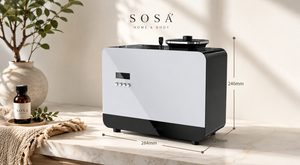
Vaayu at ₹11,999 is waterless cold-air nebulisation — no water, no heat and no dampness — covering up to 1000m³ or roughly 2,000–3,000 sq ft, with a 400ml tank lasting about 75 days, Bluetooth app control, 1h/4h/8h/24h timers, under-38dB running, auto-stop and a key-lock, at 0.9 kg and smaller than a shoebox, so one machine can serve a whole portfolio. The
Aangan at ₹25,999 covers up to 3,000m³ for sales galleries and clubhouses. The ultrasonic
Sukoon,
Boond and
Megh are water-based and add 30–50 ml of water an hour to the air, which makes them the wrong choice for a closed or humid vacant property. A
reed diffuser needs 24–72 hours to establish, so it suits a listing shown over months rather than a viewing tomorrow. A candle must be attended and put out, which rules it out of an unoccupied property. SOSA does not make a room spray for the home; the sprays in the range are car perfumes. The Hotel Collection scents are SOSA's own interpretations inspired by the world's finest hotels; SOSA is an independent Indian fragrance house, not affiliated with or endorsed by any hotel brand. A portion of every order supports girl-child education through Nanhi Kali.
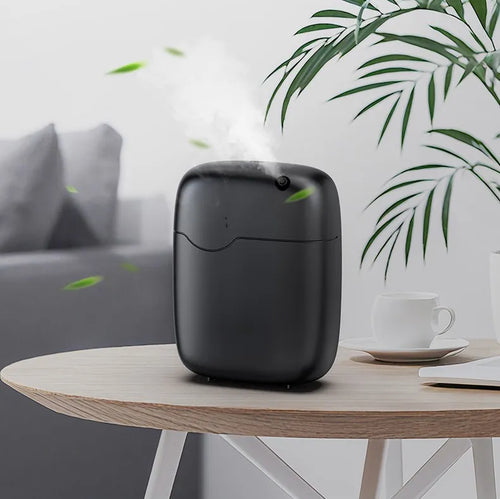
The line that belongs on your balance sheet, not the seller's
SOSA Vaayu · bought once, used everywhere ₹11,999
Nobody bills a vendor for the camera. They bill for the shoot, because the shoot is consumed and the camera goes home in the bag — and a 0.9 kg waterless diffuser is on exactly the same side of that line. It is bought once, it is carried between properties, it is still yours when the flat has been sold to somebody else, and charging any single seller for it would mean charging them for an asset they will never own. Up to 1000 m³, 400ml tank, Bluetooth with 1h/4h/8h/24h timers, under 38 dB, auto-stop, key-lock, CE, RoHS and SGS certified, four hotel-inspired scents included.
A note from Sonal
This question arrives more often than you would expect, and almost always from firms that are doing everything else well. What is usually underneath it is not a bookkeeping puzzle at all — it is somebody looking for permission to spend ₹11,999 by finding a listing to put it against. I would gently suggest that is the wrong way round. If the machine is worth having it is worth having because of the number of viewings you run, and if it is not worth having on that basis then no individual property is going to rescue the decision. Buy it out of the business or do not buy it.
The half of this I feel strongly about is the invoice. A seller who has waited five months and is finally reading a preparation charge properly is entitled to a straight answer on every line, and the only lines that give you one are the lines that were consumed in their property. I would carry the fragrance cost myself and say that this is simply how properties handled by the firm are presented. It costs very little, it removes an awkward conversation entirely, and it means the standard belongs to you rather than being something the vendor bought and could therefore decline.
Everything is made and supported from Pune, and a part of every order funds girl-child education through Nanhi Kali. You get a space that smells like somewhere considered; a girl gets a classroom. That equation has always felt right to me.
Frequently asked questions
Is a professional scent machine a staging expense or equipment?
Equipment. A staging expense is consumed by the listing it is spent on — a clean, a shoot, hired furniture, flowers. A machine bought once and carried between properties is not consumed, so charging it to any single listing overstates that property's cost and understates every one after it.
Can I charge a seller for scenting their property?
You can fairly charge for the consumable, which is the fragrance itself, and it is a small figure. You should not charge for the machine or any share of it. A seller who discovers they contributed towards equipment that is now in your car and has been used in six other listings will object, and reasonably.
How do I work out the fragrance cost for a single listing?
In hours of running rather than by dividing an annual spend. A 400ml tank in the
Vaayu runs for about 75 days continuously; a viewing consumes roughly three or four hours. Even a property shown ten times uses a very small share of a tank.
Should the machine go on the listing budget or the business budget?
The business budget, reviewed once a year against how many viewings you run. Equipment decisions taken inside a single listing's preparation budget always lose, because ₹11,999 looks large beside one property and looks like very little beside three years of viewings.
Is this tax advice?
No. We make fragrance, not accounts. This is a judgement about how to allocate and how to explain a cost. Whether a small capital item is expensed in the year or written down over several is a question for whoever prepares your returns.
Equipment, not an expense
Bought once, used everywhere — and still yours when the flat has sold
The Vaayu is ₹11,999 for up to 1000 m³, with a 400ml tank lasting about 75 days, Bluetooth and 1h/4h/8h/24h timers, under-38 dB running, auto-stop, a key-lock and four hotel-inspired scents included. The Aangan is ₹25,999 for up to 3,000 m³. Hotel Collection water-based bottles for ultrasonics are ₹299 for 15ml, ₹999 for 100ml and ₹1,799 for 300ml. Free shipping above ₹499, and a portion of every order supports girl-child education through Nanhi Kali.
See the Vaayu · ₹11,999 Shop refills →
Continue the read
More from SOSA
Editorial standards & sources
About this guide: Written by Sonal Sahani, ISIPCA Versailles-trained founder and perfumer at SOSA Home & Body, on whether professional fragrance should be treated as a property-staging expense, why a machine bought once and carried between listings is equipment rather than an expense consumed by a property, how to derive the genuinely attributable consumable cost in tank-hours, and what can fairly appear on a seller's preparation invoice.
Facts verified August 2026: Product facts used in this guide. SOSA Vaayu ₹11,999: waterless cold-air nebulising diffuser, atomises undiluted fragrance oil to a dry residue-free nano-mist, coverage up to 1000m³ (approximately 2,000–3,000 sq ft), 400ml refillable tank lasting up to about 75 days per fill, Bluetooth app plus onboard control, 1h/4h/8h/24h timer scheduling, adjustable intensity, under 38 dB, DC 12V/1A at 5W, 165 × 80.5 × 215 mm and 0.9 kg, freestanding or wall/HVAC mounted, auto-stop and key-lock, CE, RoHS and SGS certified, supplied with four hotel-inspired fragrances. SOSA Aangan ₹25,999: HVAC-connected or standalone commercial nebulising diffuser, coverage up to 3,000m³ (roughly 8,000–10,000 sq ft), 800ml reservoir, metal body, programmable schedules, under 42 dB. Ultrasonic machines are water-based and consume 30–50 ml of water an hour: Sukoon ₹1,899 (500ml, 270–320 sq ft, 16–18 hours on low, 3–6 drops per tank, steady/2H/4H timers, three 15ml Hotel Collection scents included), Boond ₹899 (300ml), Megh ₹3,499 (6 litres). Hotel Collection water-based fragrance 15ml ₹299, 100ml ₹999, 300ml ₹1,799, Pack of 7 at 15ml ₹1,799 against ₹2,093 bought singly; the Vaayu and Aangan take their own undiluted oil rather than these water-based bottles. Reed diffusers (separate alcohol-free line) from ₹749, requiring 24–72 hours to reach their working level. Scented candles from ₹379, scenting a room in roughly 15–20 minutes but requiring attendance. Free shipping above ₹499. Timings: a nebulising diffuser reaches a working level within minutes and a stated viewing level well inside two hours. This guide makes no claim that fragrance affects a property's price, offer level or time on market; it is presentation, in the same category as photography, styling and lighting. Fragrance must never be used to conceal a material defect. SOSA is not affiliated with or endorsed by any hotel brand. Prices subject to change — see the live product pages.