




Reason two: scenting before a wash is pure waste — the fragrance the fabric took up leaves with the wash water.
Reason three: nobody perceives fragrance as covering a smell. A visitor gets both at once, which reads worse than the original problem on its own.
Reason four: once fabric is clean, it becomes an asset — it holds your chosen scent and re-releases it gently for hours. That only works if it is empty first.
2. Scenting before a wash is money down the drain. If curtains are going into the machine on Sunday, any fragrance those curtains absorbed during the week leaves with the wash water. The same is true of cushion covers, throws and bedding. There is no version of this where the fragrance survives the cleaning, so you have paid for evaporation and laundry.
3. It reads worse to anyone walking in. People imagine fragrance sitting on top of an odour like a lid. That is not what a nose does. A visitor arriving into a scented room with a live source perceives two distinct things at once and the combination is more unpleasant than the original, because it also reads as an attempt to hide something. The original stale note at least reads as neglect; the combination reads as concealment.
4. It destroys your own ability to tell whether cleaning worked. Halfway through a weekend of washing covers and airing cushions, the only reliable measurement you have is your first breath back into the room after thirty minutes outside. Start a diffuser and that measurement is gone — you cannot tell whether the room improved or whether you simply added something louder. Keep the room unscented until the cleaning is finished and verified.
5. Wait, and the fabric starts working for you. This is the part worth waiting for. Clean porous material holds a pleasant scent as readily as it held the stale one and gives it back gently over hours, which is exactly the mechanism behind a home that smells consistent rather than intermittently perfumed. A reed diffuser or a Sukoon in a room with clean fabric performs noticeably better than the same product in a room with dirty fabric.
Made in India, composed by an ISIPCA Versailles-trained perfumer — and a portion of every order supports girl-child education through Nanhi Kali.
Why sorption does not discriminate
The reason fabric is a reservoir in the first place is that its internal surface area is enormous relative to its size, and volatile molecules that touch that surface tend to stay on it. That process has no preferences. It does not evaluate whether a molecule is pleasant. A cushion cover exposed to fried onion and to Kashmir lavender takes up both, at rates that depend on the molecules and the fibre rather than on anyone's intentions. Everything true of odour absorption is equally true of fragrance absorption, and that single symmetry is the entire argument for cleaning first. It is also, incidentally, the reason home fragrance works at all in a clean room — the fabric holds and slowly returns what you put in.
The second half of the argument is about what a nose actually does with two smells at once. Perception does not work like painting over a wall. Presented with a stale background and a rose fragrance, you do not perceive rose; you perceive a specific and rather unpleasant third thing, and you perceive it as an attempt. This is why scented-over cooking smells and scented-over bathroom smells are so recognisable and so disliked. It is also why the honest advice in this whole category has to be the same regardless of who is giving it: fragrance is additive, never subtractive. It puts molecules in. It takes none out. Anything sold to you on the basis that it removes, neutralises or eliminates an odour by scent is being described wrongly.
Three ways scenting first actively backfires
 Step fourFrom ₹749Run a diffuser in a living room with a saturated sofa and curtains and the fragrance does not sit in the air waiting to be admired. Most of it is absorbed by the porous material in the room, because that is what porous material does. You now have a reservoir holding both the original odour and the new fragrance, and it will release them together for days. The mixture is not something you chose and it cannot be undone by switching the diffuser off, because the fabric carries on regardless. This is the single most common way people make a room worse while trying to improve it.
Symptom to cause: when people ask this question
The reason people want to scent first is usually one of the situations below. Each has a better answer than fragrance, and in two of them fragrance is genuinely the wrong tool entirely.
| What you notice | Most likely cause | How to confirm it | What actually fixes it |
|---|---|---|---|
| Guests arriving in two hours and the sofa smells ★ | A live fabric reservoir with no time for a proper reset | Press a cushion hard and smell what comes out of the foam | Cross-ventilate ten minutes, sun the cushions, run scent last for the final hour |
| Mid-way through a weekend of cleaning | Half the reservoirs clean, half still loaded — the worst moment to scent | Judge on the first breath back after thirty minutes outside | Finish and dry everything, verify the room, then start the diffuser |
| Curtains and covers are going in the machine this week | Anything the fabric absorbs now is about to be washed out | Check what is on the laundry list for the next fortnight | Wait until they are back on and dry, then start scenting |
| You want to know whether the cleaning worked | Fragrance removes your only measuring instrument | Leave for thirty minutes and judge the first breath back, unscented | Keep the room unscented until it passes that test |
| A musty note you were hoping to cover | Moisture, and possibly mould — a health issue, not an odour | Check walls behind furniture, window reveals, under sinks, ceiling corners | Find the moisture source and remove the growth. Do not fragrance this. |
| A drain-like note you were hoping to cover | A dry P-trap or a failed seal — a plumbing job | Run water down every drain you rarely use and see if it stops | Restore the water seal or get the trap fixed. Fragrance is not the answer. |
| If none of these fit: the honest sequence is always source, air, fabric, then scent. If you find yourself wanting to reverse the last two steps, it is worth asking what the fragrance is actually being asked to do. | |||
Reeds · always-on roomsFrom ₹749Shop →  Sukoon · when you want a switch₹1,899Shop →
  Hotel Collection · the scentFrom ₹299Shop →
The correct sequence, hour by hour
While you are cleaning: ventilate, do not scent. Open two windows on opposite sides for the duration, or put a fan in a window blowing outwards, which pulls the room's air out behind it rather than pushing street air in. A closed flat exchanges only about 0.2 to 0.5 of its air an hour and cross-ventilation takes that to 3 to 8, so this is doing far more work than anything you could add. Cleaning also raises humidity — wet floors, damp covers, a running machine — and humidity both slows drying and makes odour easier to perceive, so air movement is the priority all day.
When you have finished: wait for dry, then verify. Everything must be completely dry before you do anything else — covers refitted onto damp foam and curtains rehung with damp headers create worse problems within days, especially in monsoon. Once the last item is dry, run the honest test: leave the flat for thirty minutes, come back, and judge your first breath. If the room reads neutral, you are done and ready. If it does not, something is still loaded, and adding fragrance now would only hide the fact.
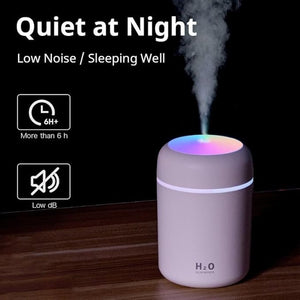
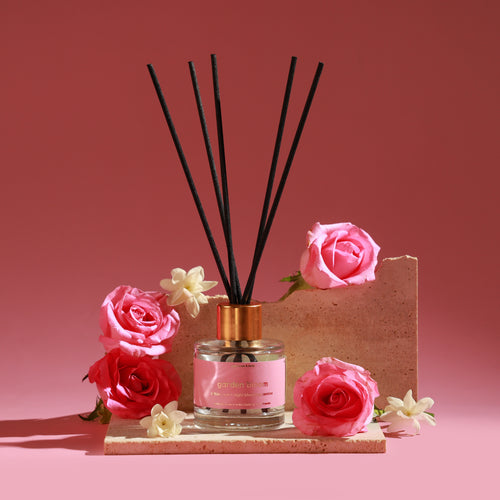
Then, and only then, start the ambient layer. With genuinely clean fabric in the room, both products work better than they otherwise would, because the same porous material that was fighting you now holds your scent and returns it slowly. A reed diffuser from ₹749 is the choice for a room that should simply always smell settled with nothing to operate; six reeds for full strength, four in a bedroom, two or three in a small bathroom, and replace the reeds rather than the liquid when the throw drops, since reeds clog over months. The Sukoon at ₹1,899 with 3–6 drops of a water-based Hotel Collection scent from ₹299 covers roughly 270–320 sq ft and gives you a switch instead. The two liquids are not interchangeable — oil-based reed fragrance does not go in a machine, and water-based machine fragrance does not go in a reed bottle.
The order that works
This blog is really about one line in the table below: fragrance is step four. Everything above it costs nothing, and skipping any of it makes step four perform worse.
| Step | What to do | When | Cost |
|---|---|---|---|
| 1. Remove the source | Deal with any live source first — a wet trap, a damp wall, a drain — because scent over a source reads worse | Before anything else | ₹0 |
| 2. Move the air | Cross-ventilate throughout the cleaning; a fan blowing out of a window clears a flat fastest | Daily, five to ten minutes | ₹0 |
| 3. Deal with what holds it | Wash and fully dry every cover, curtain and throw; air the cores; verify with the thirty-minute test | Weekly to monthly | ₹0 |
| 4. Then the always-on layer ★ | A SOSA reed diffuser — a constant background that clean fabric will hold and re-release gently all day | 50ml 6-8 weeks · 130ml 14-18 | from ₹749 |
| 5. Or the on-demand layer | Sukoon with a Hotel Collection scent — scent on demand once everything is dry; covers roughly 270–320 sq ft | Run it when you want it | ₹1,899 |
Versailles
The commercially convenient answer to this question would be "either, why not both". The correct answer is after, and it costs me sales to say so, because a customer who scents a loaded room concludes that the fragrance was weak and buys nothing again. A product used in the wrong order fails, and the person blames the product. I would rather explain the order once.
The symmetry is the thing to remember. Everything that makes fabric a problem — the porosity, the surface area, the slow two-way release — is the same property that makes home fragrance work at all. A clean sofa is not a neutral object; it is a slow-release device that holds whatever you give it. Give it the stale version and that is what you get back. Give it the clean version and you have a room with a consistent character for very little ongoing effort.
And there are three smells I will not sell fragrance for, in any order. Mould or visible damp, which is a health issue and needs the moisture found and the growth removed. A drain or sewer smell, which is a dry trap or a failed seal and needs a plumber. And anything gas-like or burning, which is an emergency, not an odour. If your room smells of any of those, close this page and deal with it. A portion of every order funds a girl's classroom through Nanhi Kali.
Frequently asked questions
- How often soft furnishings need cleaning — a cadence you will actually keep.
- Building a living-room signature — what to do once the fabric is clean.
- The smell came back after cleaning the sofa — covers versus cores.
- Sofa, curtains or rug — how to tell — isolating one reservoir at a time.
- Brand: the SOSA founder story.
SOSA products & prices (verified August 2026): Hotel Collection water-based ultrasonic diffuser fragrance 15ml ₹299 · 100ml ₹999 · 300ml ₹1,799 · Pack of 7 (15ml, all fragrances) ₹1,799; refills 100ml from ₹999. Seven scents: The Ritz-Carlton-inspired (white tea · bergamot · cedar), Westin-inspired (white tea · aloe · cedar), 1 Hotels-inspired (cedarwood · vetiver · green leaves), The St. Regis-inspired (amber · violet · woods), Shangri-La-inspired (jasmine · green tea · white tea), Four Seasons-inspired (citrus · floral · sandalwood), W Hotels-inspired (citrus · pepper · amber). Diffusers: Boond 300ml ₹899 · Sukoon 500ml ₹1,899 · Megh 6L ₹3,499. Water-based, phthalate-free, composed to IFRA standards for home diffusion; 3–6 drops per tank. Made in India, Pune. The Hotel Collection scents are SOSA's own interpretations inspired by the world's finest hotels; all hotel names are trademarks of their respective owners and are used only to describe the scent style — SOSA is an independent Indian fragrance house, not affiliated with or endorsed by any hotel brand. Prices and availability subject to change — see the live product pages.