


Should a Luxury Villa Smell Different From a Premium City Apartment?

Should a Luxury Villa Smell Different From a Premium City Apartment?

★ For the ninety seconds a buyer spends deciding how a property feelsVaayu ₹11,999 · Aangan ₹25,999 · Sukoon ₹1,899 · free shipping above ₹499A portion funds girl-child education
★ SOSA · property viewings & premium presentation
A property being shown should not smell of a fragrance. It should smell like a building that is looked after, and nothing else
★ ★ ★ ★ ★
★★★★★
"I had been buying whatever smelled expensive. The advice was the opposite — pick the one nobody could dislike and run it lower than you think. My viewings feel different now."
Rohit Menon Luxury residential, South Mumbai
Quiet Luxury · low
★★★★★
"Asked which scent for a ₹6 crore listing and got a question back about whether the flat had been aired and the traps filled. It had not. That call was worth more than the machine."
Anjali Rao Property consultant, Bengaluru
Told to air it first
★★★★★
"The waterless part matters more than I expected. Marble floors, empty flat, no water going into the air, nothing to wipe up afterwards."
Karan Shah Premium apartments, Worli
Vaayu · no dampness
★★★★★
"Two hours before, on low, in the entrance. The flat has arrived at its level by the time the lift opens. That timing was the whole lesson."
Sneha Iyer Villas, Koregaon Park
T-2h on low
★★★★★
"A buyer once asked what the fragrance was, which I took as a win until it was explained to me that it means it was too strong. Now nobody asks."
Vikram Malhotra Golf Course Road, Gurgaon
Dialled it down
★★★★★
"Four scents came with the machine, which meant I could try them in different flats before deciding what my listings smell like."
Farah Qureshi Sea-facing, Bandra
Vaayu · four scents
★★★★★
"I had been buying whatever smelled expensive. The advice was the opposite — pick the one nobody could dislike and run it lower than you think. My viewings feel different now."
Rohit Menon Luxury residential, South Mumbai
Quiet Luxury · low
★★★★★
"Asked which scent for a ₹6 crore listing and got a question back about whether the flat had been aired and the traps filled. It had not. That call was worth more than the machine."
Anjali Rao Property consultant, Bengaluru
Told to air it first
★★★★★
"The waterless part matters more than I expected. Marble floors, empty flat, no water going into the air, nothing to wipe up afterwards."
Karan Shah Premium apartments, Worli
Vaayu · no dampness
★★★★★
"Two hours before, on low, in the entrance. The flat has arrived at its level by the time the lift opens. That timing was the whole lesson."
Sneha Iyer Villas, Koregaon Park
T-2h on low
★★★★★
"A buyer once asked what the fragrance was, which I took as a win until it was explained to me that it means it was too strong. Now nobody asks."
Vikram Malhotra Golf Course Road, Gurgaon
Dialled it down
★★★★★
"Four scents came with the machine, which meant I could try them in different flats before deciding what my listings smell like."
Farah Qureshi Sea-facing, Bandra
Vaayu · four scents
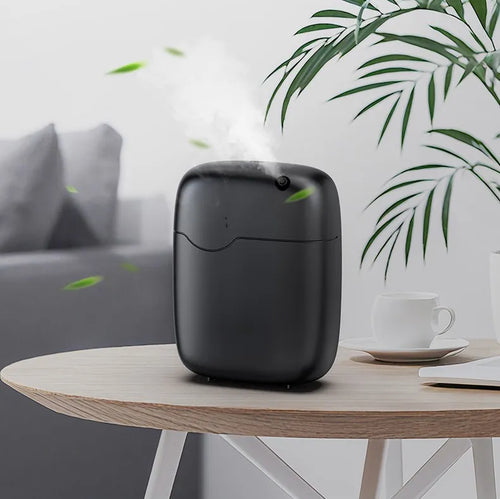
Vaayu: waterless cold-air nebulisation · no water, no heat, no dampness · under 38 dB 1000 m³ (≈2,000–3,000 sq ft) · 400ml tank ≈75 days · app + 1h/4h/8h/24h timers · key-lock 0.9 kg and smaller than a shoebox — one machine can serve a whole portfolio of listings


Founder Diaries · Property Viewings · What a Luxury Home Should Smell Like
By Sonal Sahani · ISIPCA Versailles 11 min read Updated September 2026
Yes, and I want to be careful about why, because the usual answer to this question is a decorating answer and it is not a good one. A villa should not be given an earthier fragrance because villas feel earthy. It should be given one because a villa is a different physical object: it touches the ground, it exchanges air with a garden, and it has volumes a flat does not have. A city apartment is sealed, air-conditioned and stacked on top of other apartments it shares plumbing and a lobby with, which gives it an entirely different set of problems. Those differences decide both the scent and the machine plan, and once you see them the choice between Forest Suite and Quiet Luxury stops being a matter of taste.
Quick answers — read this first
Short answer: yes, but for physical reasons. A villa already receives green, damp, earthy air from a garden; a sealed high-rise flat receives recirculated indoor air and whatever the building's plumbing stack and lift lobby contribute.

Villa: the 1 Hotels-inspired Forest Suite — cedarwood, vetiver and green leaves — because it agrees with what is already coming through the doors instead of fighting it.

City apartment: the Ritz-Carlton-inspired Quiet Luxury or the lighter Westin-inspired White Tea Serenity — cool, clean, and correct in air that has nowhere to go.

Machine: a villa is a zoning problem — multiple floors, double-height volumes and doors to the outside. A flat usually is not: one Vaayu at ₹11,999 handles most premium apartments as a single volume.
The short answer
Short answer: yes. Not because one is grander than the other, but because a villa exchanges air with soil, planting and rain while a city apartment is sealed and recirculating. A heavy indoor scent argues with a garden coming through the doors; a green, dry, woody one agrees with it. In a sealed flat the opposite holds and a cool, clean register is correct.
The picks: the 1 Hotels-inspired Forest Suite — cedarwood, vetiver and green leaves — for a villa; the Ritz-Carlton-inspired Quiet Luxury for a premium city apartment, with the Westin-inspired White Tea Serenity for flats under about 1,200 sq ft. Both run low, from two hours out.
Shop: the Vaayu at ₹11,999 covers up to 1000 m³, is waterless with no dampness added, has a 400ml tank lasting about 75 days, 1h/4h/8h/24h timers, app control, a key-lock and under-38 dB running at 0.9 kg. A villa with a separate floor or wing may need two; the Aangan at ₹25,999 covers up to 3,000 m³. Free shipping above ₹499.
Straight answer
Should a luxury villa be scented differently from a premium city apartment?
1. Yes, and the reason is air exchange rather than atmosphere. A villa is in constant slow conversation with the outdoors: doors to a garden, windows that are actually opened, planting against the walls, wet soil after rain. A high-rise flat is sealed, air-conditioned and recirculating, and in many towers the windows are never opened at all because of the wind.

2. So the villa already has a scent, and it is green. Damp earth, cut grass, leaf litter, jasmine or frangipani over a wall, the petrichor that arrives ten minutes before the rain does. That background is a genuine asset and the fragrance should sit with it rather than across it.

3. Which makes the villa answer the driest and greenest of the seven. The 1 Hotels-inspired Forest Suite — cedarwood, vetiver and green leaves. It reads as a continuation of what is outside rather than as an argument with it.

4. The city flat has the opposite problem: it inherits smells it did not make. A shared plumbing stack, a neighbour's kitchen through the utility window, the lift lobby's own scenting, corridor carpet, a car park two floors below. The job there is a cool, clean register that reads as air rather than as an addition: the Ritz-Carlton-inspired Quiet Luxury.

5. Humidity behaves differently, and it decides the machine. A ground-contact villa takes moisture from the slab and the soil; a fifteenth-floor flat takes it from the air conditioning being off. Neither wants a machine adding 30 to 50 millilitres of water an hour, which is why the waterless Vaayu at ₹11,999 suits both.

6. And the machine plan differs more than the scent does. A villa is a zoning problem — two floors, a double-height hall, doors that open outward. A premium flat usually is not: one machine, one volume, one setting.

A portion of every order supports girl-child education through Nanhi Kali.

TL;DR: yes, for physical reasons rather than aesthetic ones. A villa exchanges air with soil, planting and rain, so the green, dry 1 Hotels-inspired Forest Suite agrees with what is already arriving; a sealed city apartment recirculates and inherits its building's smells, so the cool Ritz-Carlton-inspired Quiet Luxury is correct there. The villa is a zoning problem, the flat is not.
The 1 Hotels-inspired · Forest Suite
The bottle that agrees with a garden
The 1 Hotels-inspired · Forest Suite from ₹299
Cedarwood, vetiver and green leaves. A villa is already receiving a green, damp, slightly mineral background through every door that opens onto planting, and the mistake in a villa is choosing a fragrance that has to fight it. This one does the opposite: vetiver is a root material and reads as earth without reading as soil, cedar supplies a dry spine that holds a level in a large volume, and the green leaf note at the top continues the line the garden started rather than interrupting it. It is also the driest scent in the range, which matters in a ground-floor property where humidity is already high. ₹299 for 15ml, ₹999 for 100ml and ₹1,799 for 300ml; four hotel-inspired scents ship with the Vaayu, which takes its own undiluted oil rather than these water-based bottles.

Four physical differences that decide the answer

It is worth separating this question from the version of it that gets asked in interiors magazines, where the answer is always that a villa should feel earthy and a penthouse should feel sleek. That is a mood board rather than an argument, and it will let you down in a real property, because the two building types differ in ways you can measure: how much outside air they take in, what that air is carrying, where their moisture comes from, and who else is contributing to it. Four differences, and each of them has a consequence you can act on the evening before a viewing.

1
DIFFERENCE ONE
The villa already has a scent, and it comes in through the doors
This is the one that decides the bottle. A villa is never a sealed object. There are doors onto a garden or a courtyard that get opened, windows that are used because the air outside is worth having, planting close enough to the walls to matter, and in most Indian villa developments a good deal of soil, grass and irrigation within a few metres of the living room. What that produces indoors is a real and quite specific background: green and slightly bitter from cut foliage, mineral and damp from wet earth, occasionally floral from whatever is flowering over a wall, and after rain, the petrichor that arrives before the first drop does and is one of the more powerful smells in domestic life. That background is not a problem. In a property being sold it is an asset, because it is the reason somebody is buying a villa rather than a flat. So the fragrance brief in a villa is unusual: you are not scenting an empty canvas, you are adding a note to a composition that already exists, and the only sensible move is to add something in the same key. A dry, green, woody register does that — cedar and vetiver read as continuous with soil and foliage, so the buyer registers one coherent atmosphere rather than two competing ones. A heavier indoor register does not. Put a plush amber into a room with a garden door open and you get a genuinely unpleasant effect: two unrelated smells at similar strength, neither of which is winning, and the nose treats that as clutter. It is the same reason a heavy scent in a seaside property fails, and the reason a warm floral in a monsoon garden reads as cloying when the identical bottle would be fine indoors in Delhi in December.
2
DIFFERENCE TWO
A city apartment inherits smells it did not make
Now the flat, whose problem is not what it has but what arrives. A premium apartment in a tower is sealed by design — fixed glazing or windows nobody opens because of the wind at the fortieth floor, air-conditioning as the only real ventilation, and long stretches with no air exchange at all in a listing that is between occupants. Into that comes a set of smells produced by other people. A shared plumbing stack carries the building's drainage past your listing, and a dry trap in an unused bathroom is an open door onto it. A neighbour's kitchen exhausts into the same shaft or the same utility balcony, and at half past seven that is not subtle. The lift lobby is frequently scented by the building's own management, often generously, so the buyer arrives already carrying somebody else's fragrance in their nose. Corridor carpet, a basement car park, a gym two floors down, a restaurant at podium level — all of it belongs to the building rather than to the flat, and all of it forms part of the impression. The consequence is that in a flat, a great deal of the work is about isolation and air change rather than about fragrance at all: fill every trap, shut the utility door, run cross-ventilation while you can, and only then think about what the flat itself should smell of. And the fragrance that suits a sealed volume is the cool, clean, low-persistence one, because in air that has nowhere to go, anything heavy accumulates rather than settling. The Ritz-Carlton-inspired register is right here for exactly the reason the greener one is right in a villa: it agrees with the conditions rather than fighting them.
3
DIFFERENCES THREE AND FOUR
Volume per machine, and where the water is coming from
The last two are practical rather than aesthetic and they change the machine plan rather than the bottle. The first is distribution. A villa's problem is almost never coverage in cubic metres, it is that the cubic metres are arranged badly: two or three floors connected by an open stair, a double-height living volume that pulls everything upward, a family room at the far end of a long plan, and doors to the outside that periodically vent the whole thing to the garden. A machine rated to 1000 m³ standing in a double-height hall is not under-powered — it is feeding a chimney, because warm air rises through the stairwell and takes the fragrance with it, leaving the ground floor thin and the landing overdone. The fix is placement and zoning rather than intensity: keep the machine off the stair axis, site it in the volume where people will actually stand, and where a floor or a wing is genuinely separate, use a second machine rather than turning the first one up. In a flat none of this applies. A 2,000 to 3,000 sq ft apartment on one level with a normal ceiling is the single easiest scenting problem in residential property, and one machine treating it as one volume is the correct and complete answer. The second is humidity, and it is a machine argument rather than a scent one. A ground-contact villa gets moisture from the slab, from soil against the plinth, from irrigation and from a garden that has been watered — which in monsoon can make a ground floor persistently damp. A high-rise flat gets it from being shut with the air-conditioning off, which is why a closed listing in Mumbai in August smells the way it does. Both are cases where you want a machine that adds no water at all, which is the plain physical case for waterless nebulisation over an ultrasonic. And in both building types the same rule holds and does not bend: if the damp is structural rather than atmospheric — a stain along a skirting, a bubbling paint line, a smell that returns within hours of airing — that is a defect and a material fact about the property. Find it, fix it or disclose it. Do not scent it.
The way I would summarise the whole comparison: in a villa you are joining a conversation that is already happening outside. In a flat you are the only voice in the room, and everything you add stays there.

Villa against apartment, factor by factor

The comparison set out properly, with the physical difference in the first column and the consequence for how you actually prepare each property in the last. Notice that the scent choice is the second-to-last row rather than the first: it is downstream of everything above it, which is why two properties of identical value and identical size can want different answers.

Villa against apartment
What actually differs, and what each difference means
What differs The villa The premium city apartment What it means for the viewing
Air exchange with outside ★ Constant and slow — garden doors, usable windows, planting against the walls Near zero. Sealed glazing, air-conditioning as the only ventilation, windows rarely opened The villa is already receiving a scent and you are adding to it. The flat has only what you put in it, and it stays
The background smell already present Green, mineral, damp earth, cut grass, petrichor after rain, whatever flowers over the wall Whatever the building supplies: the plumbing stack, a neighbour's kitchen, the lobby's own scenting, car park In a villa, agree with the background. In a flat, isolate it — traps filled, utility door shut, then decide
Where moisture comes from The slab and the soil. Ground contact, irrigation, and monsoon at grade The air-conditioning being switched off in a sealed box for a fortnight Both are reasons not to add 30–50 ml of water an hour with an ultrasonic machine
How the volume is arranged Badly, for scenting: two or three floors, an open stair, a double-height hall that acts as a chimney Well: one level, normal ceiling, a plan a buyer walks in twenty seconds The villa is a placement and zoning problem. The flat is one machine, one volume, one setting
What the neighbours contribute Very little. A generator, a road, somebody else's garden A great deal, and none of it is yours to control A flat needs more diagnosis before scenting. A villa needs more thought about where the machine stands
The scent that follows 1 Hotels-inspired Forest Suite — cedarwood, vetiver, green leaves. Dry and green Ritz-Carlton-inspired Quiet Luxury, or Westin-inspired White Tea Serenity under 1,200 sq ft Chosen from the conditions rather than from the price. A ₹10 crore flat and a ₹10 crore villa want different bottles
The machine that follows One Vaayu placed off the stair axis, or two where a floor or wing is genuinely separate One Vaayu in the entrance zone, treating the flat as a single volume Same machine, ₹11,999, different plan. Waterless in both cases, for opposite reasons
Shop this guide
Two properties, two bottles, one machine
The SOSA principle
A villa is in conversation with a garden. A flat is in conversation with a building. Both conversations are already under way before your machine is switched on.
Which is why the same fragrance can be correct in one and slightly wrong in the other at identical size and identical price. The scent is chosen from the conditions, not from the valuation.

The two setups, and the mistakes each type invites

The villa setup first, because it is the one people get wrong. Site the machine in the volume where the buyer will stand and talk, not in the entrance hall, and keep it off the axis of an open staircase. A double-height hall with a stair in it behaves like a flue: warm air rises, the fragrance goes with it, and you end up with a first floor landing that is stronger than the room you were trying to treat. Waist height or above, at the edge of the room rather than in a circulation path, away from a ceiling fan and out of the direct throw of a cassette unit. Then the garden doors, which are the villa's real variable: decide in advance whether they will be open or closed during the viewing and prepare for that, because a room prepared closed and then thrown open loses its level in about four minutes. My preference is to have them open — the garden is the product, and a villa shown sealed has given away its advantage — which means running the machine from two hours out with the doors shut and then opening them fifteen minutes before, so the room has a level to fall back to rather than one climbing while the buyer is in it. Where the house has a genuinely separate upper floor or wing, a second Vaayu at ₹11,999 is the honest answer. Two machines on low in two volumes reads as one house. One machine on high in a stairwell reads as a device, and it will also be noticeably stronger on the landing than anywhere a buyer wants to stand.

Then the apartment, where the sequence matters more than the placement. A sealed flat must be diagnosed before it is scented, because most of what is wrong with the air in a premium apartment was not produced by the apartment. Run water down every trap — guest bathroom, utility, kitchen, balcony floor drain, the one behind the washing machine nobody remembers — because a dry U-bend is a direct opening onto the building's soil stack and it is the commonest single reason an expensive flat smells wrong. Shut the utility door and keep it shut. Get whatever cross-ventilation the flat allows for a couple of hours the day before, even if that is only two windows on opposite walls for a short period, and run every air-conditioning unit for half an hour while you are alone in the property rather than while the buyer is arriving, because the first ten minutes of an unused cassette is hot dust. Only after all of that does the machine go on: lowest usable setting, entrance zone, two hours before, on the 4h timer. One Vaayu covers a 2,000 to 3,000 sq ft flat as a single volume and there is no reason to complicate it. If the flat is small — under about 1,200 sq ft — the Westin-inspired White Tea Serenity is the lighter and better choice, and a Sukoon at ₹1,899 is a legitimate machine for a single occupied room, though it is water-based and does not belong in a closed listing through monsoon.

Two things that apply to both, and then the limit. The first is that neither building type changes the level: low, settled and started early is correct in a villa and in a flat, and the differences described on this page are about which bottle and how many machines rather than about how much. The second is that the free work does most of the job in both cases and looks different in each: in a villa it is the garden doors, the plinth, the generator room and whether anything is composting near a window; in a flat it is the traps, the stack, the utility and the lift lobby. Walk both properties with your nose before you walk them with a machine. And the limit, which is the same line the whole cluster is built on: a villa on ground contact in monsoon and a sealed flat shut for six weeks are the two property types most likely to have a genuine damp problem rather than an atmospheric one, and a fragrance must never be used on either. A stain that returns, a smell that comes back within hours of airing, a bubbling skirting, a musty wardrobe on an external wall — those are material facts about the property. Find them, fix them or disclose them. A machine that makes a damp villa smell of cedar for ninety minutes has not solved anything; it has simply delayed the moment the buyer's surveyor finds it, and the buyer will remember that the flat smelled expensive on the day they were misled. reed diffusers from ₹749 need 24 to 72 hours to establish and suit a villa shown over months; a candle from ₹379 must be attended and put out, which rules it out of any property standing empty between appointments; and Sukoon, Boond and Megh are water-based and belong in occupied rooms rather than closed ones.

Choose the scent from the conditions rather than from the valuation. A garden and a sealed box are different problems, whatever the two properties cost.
— Sonal Sahani, SOSA

The SOSA edit

Two columns of advice compressed into one buying order, for an agent who handles both types. The machine is the same purchase in each case; what changes is the bottle and the number of zones. The last row is the machine most people ask about for a villa and should usually not buy.

The SOSA edit
Villa and apartment, in buying order
Buy What it is Which property it is for Price
1. The walk-through with your nose ★ Traps filled and the utility shut in a flat; garden doors, plinth and drainage checked in a villa Both, the day before. It costs nothing and it removes the two commonest reasons an expensive property smells wrong ₹0
2. SOSA Vaayu Waterless, up to 1000 m³, timers, app control, key-lock, 0.9 kg, four hotel-inspired scents included Both. In a villa because the slab is damp, in a flat because everything you add stays in the room ₹11,999
3. 1 Hotels-inspired · Forest Suite Cedarwood, vetiver and green leaves — the driest of the seven The villa. It continues the line the garden started rather than arguing with it from ₹299
4. Ritz-Carlton-inspired · Quiet Luxury White tea, bergamot and cedar — cool, clean and the least nameable of the seven The sealed city apartment. Westin-inspired White Tea Serenity instead under about 1,200 sq ft from ₹299
5. A second Vaayu An identical machine for a separate floor, wing or annexe The villa only, and only where a door or a level genuinely divides the house. Never as a substitute for correct placement ₹11,999
Usually refuse: SOSA Aangan Up to 3,000 m³, HVAC-connected or standalone, for 8,000–10,000 sq ft A genuinely vast villa, a clubhouse or a sales gallery. Not a 4,000 sq ft villa and never an apartment ₹25,999
Honest notes for buyers: fragrance is the last step in preparing a property, never the first, and it must never be used to cover a defect. Damp, a leak, drains, smoke or anything structural is a material fact about a property: find it, fix it or disclose it. Scent a listing that is genuinely sound. On the machines: the Vaayu at ₹11,999 is waterless cold-air nebulisation — no water, no heat and no dampness — covering up to 1000m³ or roughly 2,000–3,000 sq ft, with a 400ml tank lasting about 75 days, Bluetooth app control, 1h/4h/8h/24h timers, under-38dB running, auto-stop and a key-lock, at 0.9 kg and smaller than a shoebox, so one machine can serve a whole portfolio. The Aangan at ₹25,999 covers up to 3,000m³ for sales galleries and clubhouses. The ultrasonic Sukoon, Boond and Megh are water-based and add 30–50 ml of water an hour to the air, which makes them the wrong choice for a closed or humid vacant property. A reed diffuser needs 24–72 hours to establish, so it suits a listing shown over months rather than a viewing tomorrow. A candle must be attended and put out, which rules it out of an unoccupied property. SOSA does not make a room spray for the home; the sprays in the range are car perfumes. The Hotel Collection scents are SOSA's own interpretations inspired by the world's finest hotels; SOSA is an independent Indian fragrance house, not affiliated with or endorsed by any hotel brand. A portion of every order supports girl-child education through Nanhi Kali.
SOSA Vaayu · waterless
The machine that suits both, for different reasons
SOSA Vaayu · waterless ₹11,999
In a villa the argument is the slab: ground-contact floors, planting against the walls and a garden that has just been watered give you a building that is already dealing with moisture, and an ultrasonic machine adding 30 to 50 millilitres of water an hour is working against the property. In a fifteenth-floor flat the argument is the opposite and lands in the same place: sealed, air-conditioned, no ventilation for days, and every millilitre you add stays in the room. Waterless cold-air nebulisation solves both because it adds nothing but fragrance. Up to 1000 m³, a 400ml tank lasting about 75 days, 1h/4h/8h/24h timers with app control, auto-stop, a key-lock, under 38 dB and 0.9 kg, so it moves between a villa on Saturday and a flat on Sunday.
SS
ISIPCA
Versailles
A note from Sonal

I like this question because the honest answer is yes, and most of the time when somebody asks me whether two things should be different my answer is no. But the difference is not the one people expect. They expect me to say a villa should feel warmer and more grounded and an apartment should feel crisper, which is a sentence about taste and would be equally true reversed. What is actually true is duller and more useful: a villa has a door onto soil and a flat does not, and everything else follows from that single fact. I have stood in a great many villas in Pune and Goa half an hour after rain, and there is no fragrance I make that improves on what is already coming through that door. The most a machine should be doing in that room is agreeing with it quietly.

The flat is the harder case, and the one where I would spend more of the preparation time. A sealed apartment has no way of correcting itself. Whatever is in it stays in it, including the things that arrived from four floors below, and a fragrance added on top of an un-diagnosed flat is a fragrance added on top of a problem. So my instruction for a tower is nearly always the same: fill every trap, shut the utility, run the air conditioning before anybody arrives rather than while they do, and then put a cool, quiet, unremarkable scent underneath all of it at a level you would struggle to describe. That is a very different afternoon's work from the villa, and the only thing the two have in common is the machine.

Everything is made and supported from Pune, and a part of every order funds girl-child education through Nanhi Kali. You get a space that smells like somewhere considered; a girl gets a classroom. That equation has always felt right to me.

Frequently asked questions

Should a villa and a city apartment be scented differently?
Yes, for physical reasons. A villa exchanges air with a garden, soil and rain, so a dry green register — the 1 Hotels-inspired Forest Suite, cedarwood, vetiver and green leaves — agrees with what is already arriving. A sealed apartment recirculates, so the cooler Ritz-Carlton-inspired Quiet Luxury is the better choice there.
Why does a heavy fragrance fail in a villa?
Because it has to compete with a background it cannot win against. Wet earth, cut grass and planting are strong, recent and coming through an open door, and a plush indoor scent at similar strength produces two unrelated smells rather than one atmosphere. Green and dry continues the line instead.
Do I need two machines for a villa?
Only where a floor, a wing or an annexe is genuinely separated by a door or a level. A second Vaayu at ₹11,999 is the right answer in that case. What a villa usually needs first is better placement: keep the machine off the axis of an open staircase, which behaves like a flue and sends everything to the landing.
What is the commonest smell problem in a premium high-rise apartment?
A dry drain trap. An unused bathroom, utility or balcony drain leaves an open path onto the building's soil stack, and it is the single most frequent reason an expensive sealed flat smells wrong. Run water down every trap, including the one behind the washing machine, and keep the utility door shut.
Is the waterless machine really necessary in both?
It is the right instrument in both for opposite reasons. A ground-contact villa is already managing moisture from the slab and the soil; a sealed flat retains everything you put into it. An ultrasonic adds 30 to 50 millilitres of water an hour, which neither property wants, and the Vaayu adds none.
A garden on one side, a lift lobby on the other
Green and dry for the villacool and clean for the flat
The SOSA Vaayu at ₹11,999 suits both: waterless cold-air nebulisation with no water, no heat and no dampness, coverage up to 1000 m³, a 400ml tank lasting about 75 days, Bluetooth app control with 1h/4h/8h/24h timers, auto-stop, a key-lock, under-38 dB running and 0.9 kg in a body smaller than a shoebox, supplied with four hotel-inspired scents. The Hotel Collection is ₹299 for 15ml, ₹999 for 100ml and ₹1,799 for 300ml. Free shipping above ₹499, and a portion of every order supports girl-child education through Nanhi Kali.
See the SOSA Vaayu · ₹11,999 The seven scents → from ₹299
Editorial standards & sources
About this guide: Written by Sonal Sahani, ISIPCA Versailles-trained founder and perfumer at SOSA Home & Body, on why a luxury villa and a premium city apartment genuinely want different fragrances — air exchange with a garden against a sealed recirculating box, moisture from a slab against moisture from switched-off air-conditioning, a stairwell that behaves like a flue against a single-level plan — and why the scent should be chosen from the conditions rather than from the valuation.

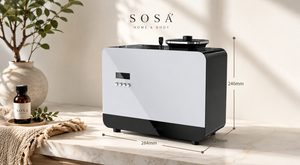
Facts verified August 2026: Product facts used in this guide. SOSA Vaayu ₹11,999: waterless cold-air nebulising diffuser, atomises undiluted fragrance oil to a dry residue-free nano-mist, coverage up to 1000m³ (approximately 2,000–3,000 sq ft), 400ml refillable tank lasting up to about 75 days per fill, Bluetooth app plus onboard control, 1h/4h/8h/24h timer scheduling, adjustable intensity, under 38 dB, DC 12V/1A at 5W, 165 × 80.5 × 215 mm and 0.9 kg, freestanding or wall/HVAC mounted, auto-stop and key-lock, CE, RoHS and SGS certified, supplied with four hotel-inspired fragrances. SOSA Aangan ₹25,999: HVAC-connected or standalone commercial nebulising diffuser, coverage up to 3,000m³ (roughly 8,000–10,000 sq ft), 800ml reservoir, metal body, programmable schedules, under 42 dB. Ultrasonic machines are water-based and consume 30–50 ml of water an hour: Sukoon ₹1,899 (500ml, 270–320 sq ft, 16–18 hours on low, 3–6 drops per tank, steady/2H/4H timers, three 15ml Hotel Collection scents included), Boond ₹899 (300ml), Megh ₹3,499 (6 litres). Hotel Collection water-based fragrance 15ml ₹299, 100ml ₹999, 300ml ₹1,799, Pack of 7 at 15ml ₹1,799 against ₹2,093 bought singly; the Vaayu and Aangan take their own undiluted oil rather than these water-based bottles. Reed diffusers (separate alcohol-free line) from ₹749, requiring 24–72 hours to reach their working level. Scented candles from ₹379, scenting a room in roughly 15–20 minutes but requiring attendance. Free shipping above ₹499. Timings: a nebulising diffuser reaches a working level within minutes and a stated viewing level well inside two hours. This guide makes no claim that fragrance affects a property's price, offer level or time on market; it is presentation, in the same category as photography, styling and lighting. Fragrance must never be used to conceal a material defect. SOSA is not affiliated with or endorsed by any hotel brand. Prices subject to change — see the live product pages.
Retour au blog