



My House Smells and I Cannot Find the Source — How Do I Track It Down?

My House Smells and I Cannot Find the Source — How Do I Track It Down?

★ Paint, new furniture, a previous tenant, and the room you cannot explainCandle ₹379 · reed ₹749 · Boond ₹899 · Sukoon ₹1,899 · free shipping above ₹499A portion funds girl-child education
★ SOSA · find the cause, then scent the room
New flats smell of chemistry that is still leaving. That is a waiting problem with a ventilation answer, and scenting it early only buries the evidence
★ ★ ★ ★ ★
★★★★★
"New sofa, chemical smell, and I was ready to send it back. Told it was off-gassing and would take weeks with the windows open. It did, and it went."
Rohit S. New furniture
Told to wait
★★★★★
"Paint smell in a brand-new flat. Cross-ventilation daily for three weeks rather than anything I could buy."
Aditi V. Free fix · ventilation
New flat
★★★★★
"Previous tenant's flat, and it was the kitchen cupboard interiors nobody had washed. Wiped them out and it was my flat after that."
Nithin G. Found the source
Free fix
★★★★★
"One room out of four, and I could not work out why. Turned out to be the only room with a bathroom attached and an unused drain in it."
Sarita B. The one bad room
Dry trap
★★★★★
"Asked what to buy for a flat I had moved into the day before. Was told to buy nothing for a fortnight. I came back after the fortnight."
Aryan T. Told to wait
Came back later
★★★★★
"Once it had settled, one scent everywhere rather than a different one per room. That is what made it start feeling like my home."
Jyoti M. One signature scent
15ml ₹299
★★★★★
"New sofa, chemical smell, and I was ready to send it back. Told it was off-gassing and would take weeks with the windows open. It did, and it went."
Rohit S. New furniture
Told to wait
★★★★★
"Paint smell in a brand-new flat. Cross-ventilation daily for three weeks rather than anything I could buy."
Aditi V. Free fix · ventilation
New flat
★★★★★
"Previous tenant's flat, and it was the kitchen cupboard interiors nobody had washed. Wiped them out and it was my flat after that."
Nithin G. Found the source
Free fix
★★★★★
"One room out of four, and I could not work out why. Turned out to be the only room with a bathroom attached and an unused drain in it."
Sarita B. The one bad room
Dry trap
★★★★★
"Asked what to buy for a flat I had moved into the day before. Was told to buy nothing for a fortnight. I came back after the fortnight."
Aryan T. Told to wait
Came back later
★★★★★
"Once it had settled, one scent everywhere rather than a different one per room. That is what made it start feeling like my home."
Jyoti M. One signature scent
15ml ₹299
Find the source first · two windows for twenty minutes beats any product for a closed smell Fragrance is the finishing layer. It does not remove damp, a dry drain or a loaded sofa Sukoon ₹1,899 · 270–320 sq ft · 16–18 hours per fill · three 15ml scents included


Founder Diaries · Home Fragrance · New Flats, New Furniture & Hard Cases
By Sonal Sahani · ISIPCA Versailles 12 min read Updated August 2026
The reason this is hard is not that the source is well hidden. It is that most people search by wandering around sniffing, which produces impressions rather than evidence, and impressions cannot be compared with one another. What works instead is boring and it works reliably: you have four variables you can control — where you are, when you look, what you shut away, and what you change — and used one at a time they will corner almost any household smell in under a week. This page is that method, followed by the ranked list of what it usually turns out to be. It sells nothing until the end, because there is nothing to sell during a hunt.
Quick answers — read this first
The four variables: Location — walk every room from the corridor, walk low, and put your nose to individual objects; a smell that changes with position has a place. Time — note whether it is worse in the morning, in the evening, after rain, after cooking, after a shower or after the flat has been shut; a smell with a schedule has a trigger. Isolation — close doors and test rooms one at a time, and bag or remove a suspect object for two days. Elimination — change one thing and wait, rather than six things at once.

The ranked suspects in an Indian home: dry drain traps, the bin, the fridge, the washing machine, fabric, the AC filter, damp — and, last but real, something dead or decaying behind or under an appliance.

The rule: no fragrance during a hunt. It removes the signal you are following, and if the cause is damp, a cool-mist machine adds 30–50 ml of water an hour to it.
The short answer
Short answer: stop sniffing and start testing. Vary one thing at a time — position, hour, what is shut away, what has been changed — and write down what happens. A smell that changes with position has a place; a smell that changes with the hour has a trigger; a smell that survives both has a source that never stops.
The suspects, most to least common: a dried-out drain trap; the bin itself rather than the rubbish in it; the fridge, its drawer and its door seal; the washing machine gasket and drawer; loaded fabric — sofa, mattress, curtains, carpet; the air-conditioner filter; damp in a wall or a floor; and something dead or decaying behind or under an appliance, which is uncommon but real and is the one case where nothing else will work.
What not to do: do not scent the house while you are looking. Fragrance during a diagnosis removes the only instrument you have, and if the cause is damp a cool-mist ultrasonic makes it worse by adding 30–50 ml of water an hour. Buy afterwards — a Bookshop candle at ₹379, a Sukoon at ₹1,899 or a reed diffuser from ₹749, once the room is genuinely clean.
Straight answer
My house smells and I cannot find the source. How do I actually track it down?
1. Stop searching and start testing. Wandering around sniffing produces impressions, and impressions cannot be compared with each other from one day to the next. You need results you can write down, which means changing one variable at a time and recording what happened.

2. Location. Walk every room from the corridor rather than from inside it. Enter, read the first four seconds, leave. Then walk the whole flat again at knee height and floor level, because your nose lives at five and a half feet and most sources do not. Then put your nose directly to individual objects — the sofa seat back, the mattress, the curtain hem, the bin lid, the fridge drawer, the washing machine gasket. A smell that changes with position has a place.

3. Time. Log when it is worse. Morning, evening, after rain, after cooking, after somebody has showered, after the flat has been shut for a day. Three lines a day for three days. A smell with a schedule has a trigger, and the trigger is usually easier to identify than the source.

4. Isolation. Shut doors and test rooms one at a time, and bag or remove any suspect object for two days to see whether the room changes. Removing the thing is a far better test than smelling the thing, because your nose adapts within minutes and a room takes two days to answer.

5. Elimination. Change one thing and then wait. Doing six things in one weekend is the commonest reason people never find out what it was, and the second commonest reason it comes back.

6. Do not put fragrance in the house while you are doing any of this. It removes the signal you are following. If the cause turns out to be damp, a cool-mist diffuser adds 30 to 50 millilitres of water an hour to it.

A portion of every order supports girl-child education through Nanhi Kali.
TL;DR: use four variables one at a time: location — walk from the corridor, walk low, nose to individual objects; time — log morning, evening, after rain, after cooking, after closure; isolation — shut doors, bag a suspect for two days; elimination — change one thing and wait. Then work the ranked list, from drain traps to something decaying behind an appliance. No fragrance while you are looking.
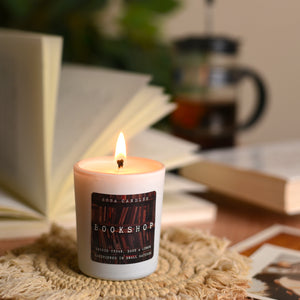
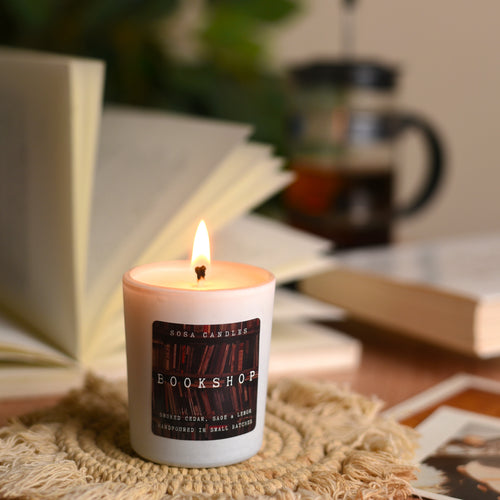
SOSA Bookshop candle · 80g
For afterwards, and only afterwards
SOSA Bookshop candle · 80g ₹379
Scent in a normal room in fifteen to twenty minutes and roughly fifteen to eighteen hours in the jar. The reason it appears on a page about diagnosis is that it is the cleanest illustration of the rule: a candle is a legitimate purchase for a room that is already clean and a mistake in a room that is not. If you light one during a hunt you will not be able to tell whether your fix worked, which is the entire cost of the decision. Once the source is gone, it is the fastest thing SOSA makes. Attend it, keep it clear of curtains and draughts, and put it out.

Four variables, used one at a time

The method matters more than the nose. An untrained nose is a perfectly good detector and a terrible instrument, because it adapts within minutes, cannot hold a memory of yesterday's intensity, and reports categories rather than quantities. So you do not improve the search by smelling harder. You improve it by arranging the situation so that a difference appears. Everything below is a way of manufacturing a difference: the same nose, in two positions, or at two hours, or with one object present and then absent. That is why the log is not optional. Three lines a day, written down at the time, will beat any amount of standing in a doorway trying to decide whether it is worse than it was on Tuesday, and the whole hunt is usually over within a week.

1
LOCATION AND TIME
A smell that changes with position has a place; one with a schedule has a trigger
Location first, in three passes rather than one. Pass one: enter each room from the corridor, read the first four seconds, and walk out again — because your nose adapts in minutes and the only honest reading you get in a room is the first one. Do not linger. Do the rooms in a different order the next day so you are not always reading the last one with a nose already loaded from the previous four. Pass two: walk the whole flat again low, at knee height and then at floor level, along skirtings, into corners, under beds, behind headboards, under the fridge and the washing machine, behind doors that stand open against a wall. Your nose lives at five and a half feet and a remarkable proportion of household sources live in the bottom two feet, which is why most people never find them. Pass three: stop smelling rooms and start smelling objects, with your nose an inch from the thing. The seat back and underside of the sofa cushion, the mattress at the centre rather than the edge, the curtain hem, the underside of the bin lid, the fridge's vegetable drawer and door seal, the washing machine gasket folded back, the AC filter, the inside of the wardrobe, the towel on the rail. Then time. Log whether it is worse in the morning, in the evening, after rain, after cooking, after somebody has showered, or after the flat has been shut for a day — because a smell with a schedule has a trigger, and a trigger is usually easier to identify than a source. Rain implicates water in the building fabric. A shower implicates a shaft or a shared wall. Closure implicates air exchange or a drain. Cooking implicates a path or a deposit. And a smell with no schedule at all is telling you something too: it is continuous, which narrows the list considerably.
2
ISOLATION AND ELIMINATION
Shut the doors, bag the suspect, then change one thing and wait
Isolation is the step that converts a suspicion into a fact, and it is entirely free. Shut every internal door in the flat for two hours, then open and enter them one at a time from the corridor, reading only the first four seconds of each. A room with its own source will declare itself, because you have just given each room two hours to accumulate in a controlled way and then sampled all of them with the same nose in the same ten minutes. If that points at a room, isolate objects inside it the same way: put the suspect item out on a balcony, into a sealed bag, or into another room entirely, and leave it for two days. Removing a thing is a far better test than smelling it, because your nose adapts in minutes and a room takes days to answer honestly. A cushion, a rug, a pair of curtains, a laundry basket, a bin, a pair of shoes, a plant pot with waterlogged soil — all of these can be taken out and reintroduced. Then elimination, which is the discipline part. Change one thing. Then wait two days. Then decide. Doing six things in one weekend is the single commonest reason people never learn what it was, and the second commonest reason it comes back three months later. If you wash the sofa covers, clean the AC filter, empty the fridge, bleach the drains and buy a candle on the same Saturday and the flat is fine on Monday, you have bought yourself nothing except a repeat performance, because you cannot maintain what you cannot name. Order the changes cheapest and fastest first, which conveniently is also most likely first: drains, bin, fridge, washing machine, filter, fabric. Write the date beside each one.
3
THE LAST SUSPECT
Something dead or decaying, and why it belongs on the list
This is the part of the page nobody enjoys and it stays in, because leaving it out is how people spend three months and a great deal of money on a problem that had a different shape entirely. Sometimes the answer is that something is decaying out of sight, and when that is the answer nothing else will work — not cleaning, not ventilation, not fabric washing and certainly not fragrance. The usual locations are behind or underneath heavy appliances that never move: behind the refrigerator, under the washing machine, inside or behind a kitchen cabinet base, in the gap behind a wardrobe against an external wall, in a false ceiling, in an air-conditioner's drainage tray or its outdoor unit, and in ducting. The usual occupants are a rodent, a lizard, a bird that got into a shaft, or an insect population in a wall cavity. Far more often it is not an animal at all but something ordinary and forgotten: a vegetable that rolled under the fridge, a leaking bag of onions or potatoes at the back of a cupboard, water standing in an appliance tray, a bottle of milk behind a car seat, a forgotten lunch box in a bag. The tells are specific and worth knowing. It is continuous rather than scheduled, it does not respond to ventilation, it is often localised to a small area and gets stronger as you approach the floor, and in the case of a decaying animal it typically builds over several days, peaks, and then declines over one to three weeks in the way nothing else on this list does. The search is physical rather than olfactory: pull out the fridge and the washing machine, empty the base cabinets, look behind and under everything that has not moved in a year, and check the AC drain tray and the balcony. It is unpleasant work and it is usually over in an hour.
The reason this suspect is last on the list and still on it: it is uncommon, and it is the one case where every other fix on this page will fail. If you have worked the list and nothing has changed, move the appliances before you spend anything.

The ranked suspect list for an Indian home

In rough order of how often each turns out to be the answer, with what it smells like, the free test that confirms it and what the fix costs. Work down the list rather than across the flat — the first four account for the clear majority of cases and none of them costs anything to eliminate.

The ranked suspects
Most to least common, with the confirming test for each
Suspect What it smells like The free test The fix
1. A dried-out drain trap ★ Sharp, faintly sulphurous, hard to place, often strongest on returning to the flat Pour a mug of water down every floor drain, basin and unused shower, then return in ten minutes ₹0. The U-bend seal evaporates in two to four weeks of disuse; refill it weekly in any unused bathroom
2. The bin Sour, sweetish, worse in the evening and in warm weather Take the bin out of the flat entirely for two hours and re-enter ₹0. Wipe the bin itself, not only the liner — the container is usually dirtier than the rubbish
3. The fridge Stale, faintly fermented, escapes each time the door opens Nose to the vegetable drawer and along the door seal, then check the back of every shelf ₹0. The drawer, the seal, and anything older than a week. Check the drip tray at the back
4. The washing machine Sour, damp, mildewy, and it transfers to clothes that were just washed Fold back the rubber gasket and smell inside the fold; then smell the detergent drawer ₹0. Door and drawer left open between washes, gasket wiped dry, a hot maintenance cycle empty
5. Fabric — sofa, mattress, curtains, carpet Old cooking, bodies, closed rooms. Fine standing up and stale when you sit down Sit down and put your nose to the seat back; lift a rug corner and smell the floor beneath ₹0–low. Wash covers, vacuum with an upholstery head, two hours of sun. Fabric is where a room keeps its memory
6. The AC filter Vinegar, old socks or a dirty towel, strongest in the first minute after start-up Stand at the vent as you switch it on. If it is worst then and fades, it is the unit ₹0. Filter out and washed every two to four weeks in season; the coil needs a service
7. Damp in a wall, floor or cupboard Earthy, musty, cellar-like. Worse two days after rain and through monsoon Is it worse after rain? Compare with the same room on another floor if you can Repair, not purchase. Above roughly 60% RH growth accelerates, and monsoon indoor RH runs 80–95%
8. Something dead or decaying out of sight Continuous, sweetish and heavy, localised, stronger near the floor. Builds, peaks, then fades over one to three weeks Pull out the fridge and washing machine, empty base cabinets, check the AC drain tray ₹0 and an unpleasant hour. Uncommon — and the one case where nothing else on this list will work
Shop this guide
For the week after the hunt, not the week of it
The SOSA principle
Fragrance during a hunt is not neutral. It is sabotage, because the smell you are trying to cover is the only instrument you have.
Change one thing, wait two days, write the date beside it. Six changes in one weekend teaches you nothing, which is why the problem returns.

The week, the log, and the part nobody wants to read

Here is the week, laid out, because a plan people can follow beats a principle they agree with. Day one is free and settles most cases: a mug of water down every floor drain, basin and unused shower in the flat; the bin emptied and the container itself wiped out; the fridge's vegetable drawer and door seal cleaned and anything older than a week discarded; the washing machine gasket folded back, wiped dry, and the door and detergent drawer left standing open. Those four take under an hour between them, cost nothing, and between them are the answer more often than everything else on the list combined. Then wait two days and read the flat again in the morning, from the corridor. Day three, if it is still there: the air-conditioner filter out and washed, every internal door shut for two hours and then entered one at a time, and the low walk through the whole flat at knee and floor level. Day five: fabric — cushion covers, throws and bedlinen into the wash, curtains if they can go, the sofa vacuumed with an upholstery head, a mattress or a rug put in two hours of sun. Day seven: if nothing has changed at all, stop looking for a smell and start moving furniture, because at that point you are looking for an object rather than a condition. Throughout, the ventilation is not a step, it is the background: two openings on opposite or adjacent walls for twenty minutes twice a day, because one window is ventilation and two is exchange, and a flat that cannot clear in twenty minutes of genuine cross-draught has a source rather than a stale-air problem. The exception, and it matters here: on a wet monsoon day with indoor humidity already at 80 to 95 per cent, opening up imports moisture rather than removing it, so ventilate on the dry hours instead.

Then the log, which is the difference between a hunt and a year of complaining. Three lines a day for a week, written at the time rather than remembered: the room, the hour, the weather, and what happened in the two hours before. Add a number out of five even though it is subjective, because a run of numbers reveals a pattern that a run of adjectives never does. Add the date of every change you make, on its own line, so that when something improves you can look back and see what it followed. This sounds excessive for a household smell and it is the single most effective thing in this article, because it solves the problem that makes the whole business so frustrating: you cannot remember an intensity. You can remember that Tuesday was bad, but you cannot compare Tuesday with the previous Thursday, and without that comparison you have no way of telling whether anything you did worked. Recruit a second nose while you are at it. Ask somebody who does not live in the flat to walk in and say what it reminds them of rather than whether it smells bad — the first question yields a category, the second yields politeness. Sour, sharp, earthy, sweetish, chemical, dirty-towel and rotting are different families with different shortlists, and an unprepared visitor's word is frequently the most useful data point of the week. And use your own three-day reset: after any trip away, the first four seconds through your own front door are the closest you will get to smelling your home the way a guest does. Write down what arrives before it disappears, which it will, within minutes.

Which leaves the rule this page is built on, and then the part where something can honestly be sold. Do not put fragrance into the house while you are looking. Not a candle, not a diffuser, not incense, not a plug-in, and not a bowl of coffee beans. Every hour of scented air is an hour of evidence destroyed, and the specific harm is not aesthetic: you will make a change on Wednesday and be unable to tell on Friday whether it worked, which means you will either abandon a fix that was working or keep one that was not. There is a second and worse version if the answer turns out to be damp, because a cool-mist ultrasonic adds 30 to 50 millilitres of water an hour to the air and is the wrong machine entirely for a room you are trying to dry — which is why I would rather a reader in the middle of a hunt bought nothing from me at all. Afterwards is different, and afterwards is when the commercial answer is straightforward: fragrance is a finishing layer on air that is already clean and moving, and a room whose source has been dealt with is exactly what it is for. For a single evening, the Bookshop candle at ₹379 or the Amber Rose candle at ₹599 for 130g, attended and put out. For a room you want changed at the same hour every day, the Sukoon at ₹1,899 with steady, 2H and 4H timers and three 15ml Hotel Collection scents included, at three to six drops per tank rather than per litre, or a Boond at ₹899 for a single room at the same dose. For a level that holds for months with no routine, a reed diffuser from ₹749, allowing 24 to 72 hours before it is doing its job. And the absences, printed rather than discovered: SOSA makes no room or linen spray for the home, the sprays in the range being car perfumes; the water-based Hotel Collection runs only in the Sukoon, Boond and Megh and never in a reed or the waterless Vaayu; and nothing sold anywhere will remove a source.

You cannot maintain what you cannot name. A flat that came right after six changes in one weekend will go wrong again, and you will have no idea why.
— Sonal Sahani, SOSA

The SOSA edit

The hunt in order, and then the products that belong after it. Everything above the line is free and takes a week; everything below it is for a flat that has already come right. The last row is the thing I most want a reader in the middle of this to not do.

The SOSA edit
The hunt, and what comes after it
Step What it is When it is the answer Cost
1. Day one: drains, bin, fridge, washing machine ★ A mug of water down every trap; the bin wiped not just relined; the drawer and door seal; the gasket folded back and dried First, always. Under an hour between them, and more often the answer than everything below combined ₹0
2. Day three: filter, closed-door test, low walk AC filter washed; every door shut two hours then entered one at a time; a pass at knee and floor level When day one did not settle it. The closed-door test localises; the low walk finds what your nose is standing above ₹0
3. Day five: fabric Covers, throws and bedlinen washed, curtains if possible, sofa vacuumed with an upholstery head, mattress or rug in two hours of sun For anything that smells of old cooking or closed rooms, and for the fine-standing, stale-sitting case ₹0
4. Day seven: move the appliances Behind and under the fridge and washing machine, base cabinets emptied, AC drain tray, false ceiling, balcony If nothing has changed at all. At this point you are looking for an object rather than a condition ₹0
5. Afterwards: a candle or the Amber Rose 15–20 minutes to scent a room; 15–18 hours at 80g, 25–30 at 130g, 40–50 at 220g. Attended and put out For a single evening in a room that is already clean. The fastest thing here, and the wrong thing during a hunt ₹379 / ₹599
6. Afterwards: Sukoon or a reed 500ml with steady/2H/4H timers and three scents included, or an unplugged level that holds for months For a room whose source is dealt with. The reed needs 24–72 hours, so never for tonight ₹1,899 / from ₹749
Do not: scent the house while you are still looking And no cool-mist machine at all if the hunt is pointing at damp — it adds 30–50 ml of water an hour Printed rather than implied. The smell is the instrument, and covering it ends the investigation
Honest notes for buyers: fragrance is the last step, never the first. It layers on air that is already clean and moving, and it will not remove a source — not damp, not a dry drain trap, not a loaded sofa, not a filter that needs washing. Deal with the cause, change the air, then scent the room. On timing: a candle puts scent into a room in fifteen to twenty minutes and a Sukoon reaches a steady level in about twenty, while a reed diffuser needs a day to three days before it is doing its job — the wrong buy for a deadline and the right buy for a room you want to hold one level for months. SOSA does not make a room or linen spray for the home; the sprays in the range are car perfumes. A cool-mist ultrasonic adds 30–50 ml of water an hour to the air, so it is the wrong machine for a room you are trying to dry out. The Hotel Collection is water-based and runs in the Sukoon, Boond and Megh only — not in reeds and not in the waterless Vaayu. Reed diffusers are a separate alcohol-free line with their own scents. Candles must be attended and put out. The Hotel Collection scents are SOSA's own interpretations inspired by the world's finest hotels; SOSA is an independent Indian fragrance house, not affiliated with or endorsed by any hotel brand. A portion of every order supports girl-child education through Nanhi Kali.
SOSA Sukoon
The finishing layer, for a room already put right
SOSA Sukoon ₹1,899
500ml BPA-free tank, 270–320 sq ft, 16–18 hours per fill on low at 30–50 ml/h against 9–12 on high, a 2.4MHz cool-mist plate, a remote, auto shut-off, steady, 2H and 4H timers, and three 15ml Hotel Collection scents of your choice included, at three to six drops per tank rather than per litre. One specification is a warning rather than a feature on this page: it puts 30 to 50 millilitres of water an hour into the air, so if your hunt ends in damp this is the wrong machine and I would rather say so than sell it to you. For a dry room whose source has been dealt with, it is the right one.
SS
ISIPCA
Versailles
A note from Sonal

I get this letter more than any other and it almost always contains the same sentence: I have cleaned everything and it is still there. Cleaning everything is the problem rather than the solution, because a flat cleaned all at once tells you nothing about which part of it was the answer. What I ask for instead is a week and a piece of paper. Drains and bin and fridge and washing machine on day one, then two days of doing nothing at all so the flat has a chance to say whether that worked. Most correspondence ends there, and it ends with somebody having spent nothing, which is a perfectly good outcome for a fragrance company to be responsible for.

The part I insist on, and the reason this page has so little in it to buy, is that you must not scent a house you are still investigating. I would rather lose a sale than have somebody light one of my candles on the Wednesday and lose the ability to tell, on the Friday, whether the thing they did on Tuesday worked. And if the trail is pointing at damp, please do not buy an ultrasonic from me — it puts thirty to fifty millilitres of water an hour into a room you are trying to dry, and that is the wrong machine for the job however much I would like to sell it. Find it, fix it, air the place properly, and then come back. A clean room takes fragrance beautifully. A room with something wrong in it takes fragrance and gives you two smells.

Everything is made and supported from Pune, and a part of every order funds girl-child education through Nanhi Kali. You get a home that smells like somewhere you chose; a girl gets a classroom. That equation has always felt right to me.

Frequently asked questions

How do I find the source of a smell in my house?
By varying one thing at a time and writing down what happens. Location: walk each room from the corridor and read the first four seconds, then walk the flat again at knee and floor level, then put your nose to individual objects. Time: log whether it is worse morning, evening, after rain, after cooking or after closure. Isolation: shut doors and test rooms one by one, and remove a suspect object for two days. Elimination: change one thing and wait.
What is the most common cause of an unexplained smell in an Indian home?
A dried-out drain trap. The U-bend water seal that stops sewer gas entering a room evaporates in roughly two to four weeks of disuse, and a guest bathroom nobody opens will vent into the flat. A mug of water down every floor drain, basin and unused shower costs nothing and works within ten minutes. After that: the bin, the fridge and the washing machine.
I have cleaned everything and the smell is still there. What now?
Stop cleaning and start isolating. Shut every internal door for two hours, then enter the rooms one at a time from the corridor and read only the first four seconds of each. Then walk the flat low. If nothing has changed after a week, move the fridge and the washing machine and empty the base cabinets — at that stage you are looking for an object rather than a condition.
Could the smell be something dead behind an appliance?
It is uncommon, and it is real, and it is the one case where nothing else works. The tells are that it is continuous rather than scheduled, unresponsive to ventilation, localised, stronger near the floor, and that it typically builds over several days, peaks and then declines over one to three weeks. Far more often it turns out to be a vegetable under the fridge or water standing in an appliance tray.
Can I use a diffuser or candle while I look for the source?
No, and this is the one instruction on the page I would call non-negotiable. Fragrance removes the signal you are following, so you will not be able to tell whether any of your fixes worked. If the cause turns out to be damp, a cool-mist ultrasonic also adds 30 to 50 millilitres of water an hour to it. Scent the room afterwards, when the air is clean and moving.
Find it first
A week and a piece of paperthen, and only then, a fragrance decision
The whole method costs nothing: drains, bin, fridge and washing machine on day one, the filter and the closed-door test on day three, fabric on day five, and the appliances moved on day seven. Afterwards, the Bookshop candle is ₹379 and scents a room in fifteen to twenty minutes, the Sukoon is ₹1,899 for 270–320 sq ft with steady, 2H and 4H timers and three 15ml scents included, and reed diffusers start at ₹749 and need 24 to 72 hours to establish. Free shipping above ₹499, and a portion of every order supports girl-child education through Nanhi Kali.
Shop candles · from ₹379 See the Sukoon · ₹1,899
Continue the read
More from SOSA
Editorial standards & sources
About this guide: Written by Sonal Sahani, ISIPCA Versailles-trained founder and perfumer at SOSA Home & Body — a systematic method for tracking down an unidentified household smell using four controllable variables, location, time, isolation and elimination; the ranked suspect list for an Indian home from dried-out drain traps through the bin, fridge, washing machine, fabric, air-conditioner filter and damp to something decaying behind an appliance; and why introducing fragrance during a diagnosis removes the only signal the household has to follow.

Facts verified August 2026: Diagnostic facts used in this guide: a closed room accumulates what it cannot exchange, so cross-ventilation needs two openings rather than one; a drain's U-bend water seal evaporates in roughly two to four weeks of disuse and then admits sewer gas, which is corrected by pouring water down the drain; microbial growth in fabric and on surfaces accelerates above about 60% relative humidity, and Indian monsoon indoor humidity commonly runs 80–95%, which is the one situation where ventilating on a wet day can import moisture rather than remove it; an air-conditioner's cold, wet evaporator coil and filter grow biofilm that is blown into the room on start-up; textiles adsorb cooking aerosol and body oils and re-release them for weeks; and olfactory adaptation makes a constant household smell undetectable to its residents within about a fortnight while visitors still perceive it. Timings: a scented candle scents a normal room in roughly 15–20 minutes, a Sukoon ultrasonic diffuser reaches a steady level in about 20 minutes from cold, and a reed diffuser needs roughly 24–72 hours. SOSA products and prices: Sukoon 500ml ₹1,899 (270–320 sq ft, 16–18h on low, 9–12h high, 30–50 ml/h, 2.4MHz cool mist, remote, steady/2H/4H timers, BPA-free, auto shut-off, includes three 15ml Hotel Collection scents of your choice); Boond 300ml ₹899; Megh 6-litre ₹3,499; waterless Vaayu ₹11,999 (up to 1000m³); Aangan ₹25,999. Hotel Collection water-based fragrance 15ml ₹299, 100ml ₹999, 300ml ₹1,799, Pack of 7 at 15ml ₹1,799; dose 3–6 drops per tank. Reed diffusers (separate alcohol-free line): Morning Freshness from ₹749, Garden Bloom and Evening Calm from ₹799, Fresh Brew and Mountain Breeze from ₹849; 130ml from ₹1,249; duos from ₹1,498; 300ml refills ₹2,399. Scented candles: Bookshop 80g ₹379, Amber Rose 130g ₹599 and 220g ₹799, Smoked Oudh 130g ₹449, ceramic jar candles ₹949, Pure Calm wax melt set ₹854. Free shipping above ₹499. SOSA does not make a room or linen spray for the home. The Hotel Collection scents are SOSA's own interpretations; SOSA is not affiliated with or endorsed by any hotel brand. Prices subject to change — see the live product pages.
Retour au blog

