Founder Diaries · Clinics & Medical Centres · Monsoon Damp & Humidity
By Sonal Sahani · ISIPCA Versailles 13 min read Updated November 2026
A damp smell in monsoon is water, and the only useful work is finding out where the water is and stopping it. So this page is in three parts and they are strictly in order: find the water, then dry the air, then dry the fabric. Everything in the first part is free or nearly free, the second part costs between nothing and about ₹20,000 depending on what you find, and the third part is a seasonal rota rather than a purchase. Two things on this page will contradict advice you will read everywhere else, including elsewhere on this site. The first is that in monsoon, opening a window usually makes it worse, because outdoor relative humidity in an Indian monsoon runs between eighty and ninety-five per cent and you are importing water rather than removing it. The second is that an ultrasonic diffuser adds thirty to fifty millilitres of water an hour to the air, which makes it the wrong machine for a damp building, and I sell three of them.
Quick answers — read this first
Free, this week: a hygrometer reading written down at nine, one and six for seven days in the worst room · the air-conditioning drain pan and condensate line checked for standing water and fall · the external wall behind every cupboard and record rack looked at, with 50mm of clear air left behind it · nothing cardboard left on a floor · the mop store emptied of wet textile and the linen trolley kept out of it · the plastic-sheet test taped to the suspect wall for 24 hours.
Do not: open the windows to air the building out in July, which imports moisture at 80 to 95 per cent outdoor relative humidity and condenses it on your coldest surfaces.
Do not run an ultrasonic diffuser in a damp room:
Sukoon,
Boond and
Megh are water-based and put 30 to 50 ml of water an hour into the air, which is the wrong direction entirely.
Costed, if the readings justify it: condensate line re-laid or pan cleared ₹1,500–₹6,000 · split pipe insulation re-lagged ₹800–₹3,000 a run · a refrigerant dehumidifier for the record room or basement store ₹12,000–₹20,000 · external render and the pipe penetration sealed ₹2,000–₹8,000.
And fragrance, which is last and often not this season: the waterless
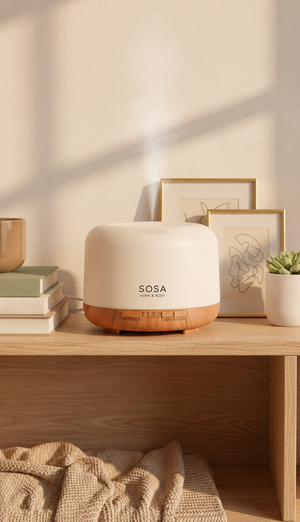
Vaayu at ₹11,999 adds no water at all. It is housekeeping and presentation, with no clinical claim of any kind.
The short answer
Short answer: a clinic that smells damp in monsoon has water getting in or water not getting out, and the order of work is to find the water, then dry the air, then dry the fabric. Buy a hygrometer for about Rs 500 and write readings down before deciding anything, because above roughly sixty per cent relative humidity surfaces and textiles start to hold a smell and Indian monsoon indoor readings run far higher. Opening windows in monsoon usually makes it worse, because outdoor humidity is eighty to ninety-five per cent, and an ultrasonic diffuser is the wrong machine in a damp building because it adds thirty to fifty millilitres of water an hour.
The order, and why: measurement first, because damp is the one smell complaint where a number beats an opinion and a hygrometer costs about Rs 500. Then the water sources in cost order: the air-conditioning drain pan and condensate line, the split or sweating pipe insulation in the ceiling void, the terrace or sunken slab above the worst room, the external wall around a pipe penetration, rising damp at the base of a ground-floor wall, and the mop store full of wet textile. Then the air, where a correctly run air conditioner removes more water than most clinics realise. Then the fabric. Fragrance is after all of it and in a bad monsoon the honest answer is next season.
The last line, costed: the
Vaayu at Rs 11,999 is waterless cold-air nebulisation with no standing water tank and adds no water to a room, which is the only reason it belongs in this conversation at all — up to 1000 m³, 400ml lasting about seventy-five days, app and 1h/4h/8h/24h timers, under 38 dB, key-lock. The water-based
Sukoon at Rs 1,899,
Boond at Rs 899 and
Megh at Rs 3,499 are explicitly not the machines for a damp building. Free shipping above Rs 499, and no fragrance here treats, cleans or dries anything.
Straight answer
My clinic smells damp during monsoon. What should I actually do about it?
1. Measure it for a week before you decide anything, because this is the one smell complaint where a number settles the argument. A hygrometer from about ₹500 in the worst room, read at nine in the morning, one in the afternoon and six in the evening, written on a sheet taped to the wall. Above roughly sixty per cent relative humidity, surfaces and soft materials begin to hold a smell; indoor monsoon readings in Pune, Mumbai, Kochi and Kolkata routinely sit between seventy-five and ninety. Knowing whether your record room reads 68 or 88 is the difference between a rota and a dehumidifier, and it also tells you whether what you have is a seasonal air problem or water coming in from somewhere, which are not the same job.
2. Find the water, in this order, because the cheapest finds are also the commonest. The air-conditioning drain pan and condensate line first: standing water in a pan under a wet coil, or a condensate pipe laid with no fall, is the single most frequent source and it is also what makes
the air conditioning smell musty at start-up. Then the insulation on chilled-water and refrigerant pipework in the ceiling void, which splits and then sweats all day into the void above your cabins. Then the terrace, parapet or sunken toilet slab immediately above whichever room is worst. Then the external wall around an air-conditioning pipe penetration, which is the cheapest and most common find of all and takes a tube of sealant. Then rising damp at the base of a ground-floor external wall, worst between six hundred and nine hundred millimetres above the floor. Then a leaking flush or supply nipple inside a boxed duct. And last the mop store and the linen trolley, which are simply kilos of wet textile in a cupboard with no air.
3. Do not open the windows, and this is the one page on this site where I say that. Outdoor relative humidity in an Indian monsoon runs between eighty and ninety-five per cent and the outdoor dew point is frequently above the surface temperature of your coldest indoor surfaces. Open up an air-conditioned clinic in July to air it out and you import moisture and then condense it on a chilled-water pipe, the underside of a slab, or the external wall behind a record cupboard. In monsoon the envelope stays shut, the air conditioning does the drying, and the extract fans do the removing from the wet rooms.
4. Then dry the air, and most of that is free. A grossly oversized split cools the room fast, cuts out, and never runs long enough to pull the water out, so you end up with a room at 23 degrees and eighty per cent humidity that feels cold and smells damp. Lower fan speed and a slightly higher setpoint make the unit run longer and remove more water, which costs nothing and is counter-intuitive enough that most clinics have it the other way round. Where the readings stay above seventy in a record room, a basement store or a physiotherapy room, a refrigerant dehumidifier at ₹12,000 to ₹20,000 removing ten to twenty litres a day is the correct machine, with a pumped drain or a named person emptying the bucket daily.
5. Then dry the fabric, as a seasonal rota rather than a purchase. Upholstered seating, curtains, the dressing-room curtain, physiotherapy couch covers, cloth files and anything cardboard. Cardboard on a damp floor is a smell within a week. Fifty millimetres of clear air behind every cupboard on an external wall, nothing stored directly on the floor of a store room, seat covers off and laundered on a monsoon cycle, and the mop store emptied and dried every single night.
6. And fragrance is last, and in a bad monsoon the honest answer is often not this season. If a room is reading eighty-five per cent, do not scent it; dry it. When the building is dry, the
Vaayu at ₹11,999 holds the public areas at one low background through the opening hours, and the only reason it belongs in this conversation at all is that it is waterless and adds no water to the air. That is presentation and housekeeping, with no clinical effect of any kind, and a diffuser is not an air purifier. A portion of every order supports girl-child education through Nanhi Kali.
TL;DR: measure it with a ₹500 hygrometer for a week. Find the water: drain pan, condensate line, split pipe insulation, the slab above, the pipe penetration, rising damp, the mop store. Do not open windows in monsoon at 80 to 95 per cent outdoor humidity. Run the air conditioning longer and slower to dry the air. Dehumidifier where readings stay above seventy. An ultrasonic adds 30 to 50 ml of water an hour and is the wrong machine here.
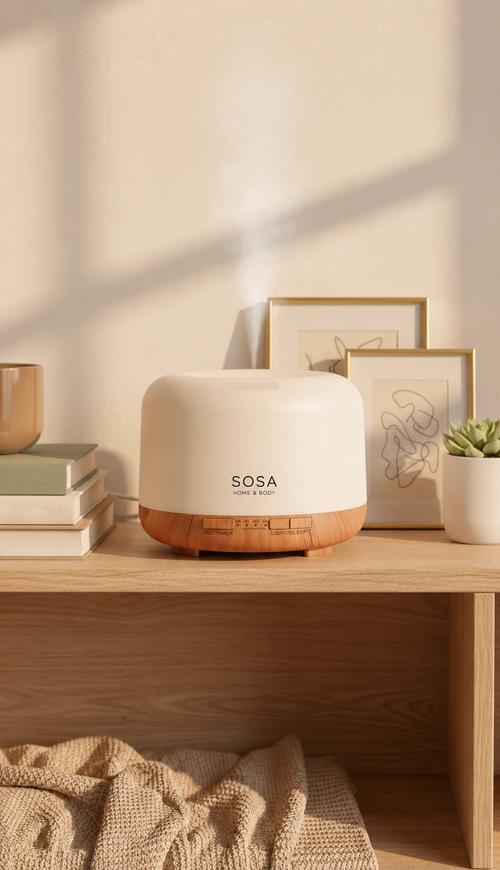
Damp is water, and water has a location
SOSA commercial scenting from ₹899
There is no version of a monsoon damp smell that fragrance addresses, and I would rather write that at the top of the page than halfway down it.
Find the water, dry the air, dry the fabric. A hygrometer is ₹500, the drain pan and the pipe penetration cost a tube of sealant and an afternoon, and a dehumidifier where the readings justify it is ₹12,000 to ₹20,000 — which is the machine this problem actually wants. When the building is dry, the waterless
Vaayu at ₹11,999 holds a low background in the public areas and adds no water to the air. The water-based
Sukoon,
Boond and
Megh are the wrong choice in a damp building and I would tell you so before you ordered one. Free shipping above ₹499.
Find the water: the free survey, in cost order
The survey below is free apart from a hygrometer, and I have put it in cost order rather than in order of severity, because in monsoon work the cheapest finds are genuinely the commonest. The thing to hold onto while you do it is that damp is not an atmosphere, it is a quantity of water with a source and a path, and that every source on this list leaves a mark somebody can see. Take a torch, because half of these are above a ceiling or behind a cupboard, and take the hygiene of the exercise seriously enough to write it down: a reading, a date, a location and a photograph on a phone. What that record buys you is the ability to tell a contractor what you have found rather than asking him what he thinks, which in monsoon is worth several thousand rupees of diagnostic time. If what you actually have is a room that is stale rather than damp, with a normal humidity reading, then this is the wrong page and the room-to-room map is the right one.
1
STEP ONE
Measure it, then find the water in cost order
A hygrometer from about ₹500, in the worst room, read three times a day for a week and written on a sheet. Above roughly sixty per cent relative humidity, materials in a room start holding and releasing a smell; monsoon indoor readings in coastal and western India commonly sit between seventy-five and ninety. A number also tells you which problem you have: a room reading sixty-eight with a damp smell has a localised source, and a room reading eighty-eight has an air problem as well. Then the sources, cheapest and commonest first. One: the air-conditioning drain pan and condensate line. Open the unit, look for standing water in the pan, and check the condensate pipe actually falls all the way to its discharge rather than looping up over a beam, which is extremely common in retro-fitted clinics. Two: the lagging on chilled-water and refrigerant pipework in the ceiling void. Split or missing insulation means a cold pipe sweating into the void above your cabins for twelve hours a day, and you will see the staining on the ceiling tile below it. Three: the floor above. Stand under the worst room's ceiling and ask what is directly above it — a terrace, a parapet upstand, a planter, or the sunken slab of a first-floor toilet, all of which leak in monsoon and none of which announce it. Four: the external wall where the air-conditioning pipework passes through it, which in my experience is the single most common find in the whole list, costs a tube of sealant and an hour, and has been letting water track down the inside of the wall for years. Five: rising damp at the base of a ground-floor external wall with no damp-proof course, which shows as a tide mark between six hundred and nine hundred millimetres up and as blown paint or salt bloom. Six: a weeping flush valve or supply nipple inside a boxed duct behind a toilet, which you find by opening the access panel that has never been opened. Seven: the mop store, the linen trolley and the cleaning cupboard, which between them hold several kilos of wet textile in a space with no air in it. And the test that settles a wall argument for nothing: tape a three hundred millimetre square of clear plastic sheet tightly to the suspect wall and leave it twenty-four hours. Condensation trapped underneath means water is coming through the wall; condensation on the room side means the water is in the air.
2
STEP TWO
Dry the air, and the window instruction that reverses in monsoon
This is the one page on this website where I tell you not to open the windows, and it is worth understanding why rather than taking it on trust. Outdoor relative humidity during an Indian monsoon runs between eighty and ninety-five per cent, and the outdoor dew point is routinely above the surface temperature of the coldest things inside an air-conditioned clinic: a chilled-water pipe, a bare duct, the underside of a slab, a tiled wall, the external wall behind a record cupboard. Open the building up to air it out in July and you are not removing moisture, you are importing it and then condensing it on those surfaces, where it sits and does exactly what you are trying to stop. In monsoon the envelope stays shut during opening hours, the air conditioning does the dehumidifying, and the extract fans remove air from the wet rooms, which is where
the extract map earns its place.
Then the counter-intuitive part, which is free. An air conditioner removes water from air only while it is running with a wet coil, so a grossly oversized split that cools the room in nine minutes and cuts out never gets the water out: the room ends up cold and damp, at twenty-three degrees and eighty per cent, and everybody turns it colder, which makes it worse. Lower the fan speed, raise the setpoint a degree, and let the unit run for longer, and it will take more water out of the room than it did before while using less electricity. Where you have a unit with a dry or dehumidify mode, that is what it is for.
And where the readings will not come down, buy the right machine. A refrigerant dehumidifier removing ten to twenty litres a day, at ₹12,000 to ₹20,000, is the correct purchase for a record room, a basement store, a ground-floor physiotherapy room or a store with no ventilation — on a pumped drain, or with one named person emptying the bucket daily, because a dehumidifier with a full bucket is a decoration.
3
STEP THREE, AND THE WRONG MACHINE
Dry the fabric, and why an ultrasonic is the wrong purchase in a damp building
Fabric is where a damp smell gets stored, and the monsoon rota is a rota rather than a purchase. Upholstered waiting-room seating is the second largest surface in your building and the hardest to dry; perforated or wipeable seating at the next refit is roughly the same money and solves it permanently. Curtains, the dressing-room curtain, physiotherapy couch covers and towels go on a shorter laundry cycle for the season. Cloth-bound files and anything made of cardboard will hold a smell within a week on a damp floor, so nothing is stored directly on the floor of a store room and nothing cardboard lives against an external wall. Leave fifty millimetres of clear air behind every cupboard and rack on an external wall, which costs nothing and stops the one surface that cannot dry. The mop store is emptied and dried every single night and the linen trolley does not live in it.
And now the part that costs me money to write. An ultrasonic diffuser is a humidifier that happens to carry fragrance. The water-based
Sukoon at ₹1,899,
Boond at ₹899 and
Megh at ₹3,499 work by putting water into the air, and they consume thirty to fifty millilitres of water an hour doing it. In a building whose entire problem is water, that is the wrong direction, and in a room reading eighty-five per cent relative humidity it is actively unhelpful. Those three machines are honest in a single dry administrative cabin with a named person emptying and drying the tank daily, and they are the wrong purchase for a damp clinic in July. The
Vaayu at ₹11,999 is waterless cold-air nebulisation with no reservoir and adds no water to a room at all, which is a housekeeping fact rather than a claim of any kind, and it is the only machine of mine I would put in a building that has had a damp season. An alcohol-free
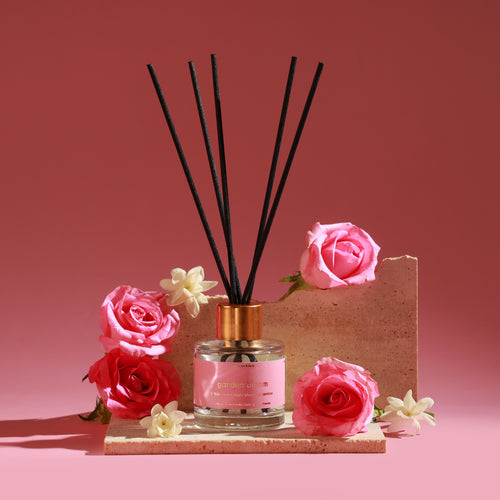
reed diffuser from ₹749 holds no water either and suits one dry cabin.
The instruction I would put on the monsoon sheet: no fragrance goes into any room reading above seventy per cent until the reading comes down, and no water-based diffuser goes into this building during monsoon at all.
Where the water is actually coming from
The sources in the order I check them, with the test that confirms each one and what the correction costs. Print it, take a torch, and photograph what you find so that you are telling a contractor what is wrong rather than asking him. Note that the two cheapest rows are the two commonest.
Print this
Eight places the water is, and how to confirm each
| Where the water is |
What you will see |
The test |
Cost of the fix |
| The drain pan and condensate line ★ |
Standing water in the pan under a wet coil, or a condensate pipe looping up over a beam instead of falling all the way to discharge |
Open the unit and look. Then follow the pipe end to end with a torch |
₹1,500–₹6,000 to clear or re-lay |
| The pipe penetration in the external wall |
Cracked render or failed sealant where the refrigerant pipework passes through the wall, with a stain tracking down inside |
Look at it from outside in the rain, and feel the inside face of the wall below it |
₹2,000–₹8,000, often a tube of sealant |
| Pipe insulation in the ceiling void |
Split or missing lagging on a chilled-water or refrigerant run, sweating all day, with a stained ceiling tile directly below |
Lift the tile under the stain. The pipe will be wet to the hand |
₹800–₹3,000 a run to re-lag |
| The slab or terrace above |
A terrace, a parapet upstand, a planter or a sunken first-floor toilet slab directly over whichever room is worst |
Stand in the worst room and ask what is above it, then go and look at it |
₹6,000–₹40,000, a real budget line |
| Rising damp at the wall base |
A tide mark six hundred to nine hundred millimetres up a ground-floor external wall, blown paint, salt bloom and a cupboard against it |
The plastic-sheet test taped to the wall for 24 hours: condensation underneath means water through the wall |
₹0 to move the cupboard · treatment is a contractor |
| A weeping valve inside a duct |
A flush valve or supply nipple leaking slowly inside a boxed duct behind a toilet, with the access panel never opened |
Open the access panel. The toilet page covers the traps and the rest |
₹500–₹2,500 a fitting |
| The mop store and the linen trolley |
Several kilos of wet textile in a cupboard with no air in it, and a trolley parked in the same cupboard overnight |
Open the door at eight in the morning and use your nose |
₹0, and a drying rack from about ₹900 |
| Never |
Opening the windows to air the building out in monsoon, or running a water-based ultrasonic diffuser in a damp room |
Outdoor humidity is 80 to 95 per cent, and an ultrasonic adds 30 to 50 ml of water an hour |
— |
Shop this guide
The waterless one, and nothing that adds water
The SOSA principle
Damp is a quantity of water with a source and a path, and every source on the list leaves a mark somebody can see. A ₹500 hygrometer and a torch will get you further in a week than any machine. And the machine this problem actually wants is a dehumidifier, which I do not sell.
The two commonest finds are the cheapest: a condensate pipe that does not fall, and a cracked seal where the air-conditioning pipework goes through the external wall.
Drying the air, drying the fabric, and the wrong machine
Give the survey one week and the drying one month before you decide anything about fragrance, and run the month as a sheet rather than an intention. Week one: hygrometer readings three times a day in the two worst rooms, the drain pan and condensate line checked on every indoor unit, and the external pipe penetrations looked at from outside. Week two: the ceiling void above the worst rooms opened in three places with a torch, the plastic-sheet test on any suspect wall, and the access panel behind the toilet opened. Week three: the air-conditioning settings changed to lower fan and a degree warmer so the units run longer and dry more, and every cupboard on an external wall pulled fifty millimetres clear. Week four: the fabric rota, the mop store dried nightly, and nothing cardboard left on a floor. At the end of that month, re-read the hygrometer. If the worst room has come from eighty-five to sixty-five, you have found the water and the rest is a rota. If it has not moved, you have a source you have not found yet or a genuine building problem, and that is a contractor conversation rather than a fragrance one. I would keep the sheet either way, because next June you will want to know what you did.
On the money, and there is less of it than people expect. The two commonest finds on the whole page are also the two cheapest: a condensate line re-laid so it actually falls, at ₹1,500 to ₹6,000, and a tube of sealant and some render around the pipe penetration in the external wall, at ₹2,000 to ₹8,000. Re-lagging a sweating pipe run in the ceiling void is ₹800 to ₹3,000. A refrigerant dehumidifier removing ten to twenty litres a day, where the readings stay above seventy in a record room or a basement store, is ₹12,000 to ₹20,000 and is the one piece of equipment this problem genuinely wants. The expensive row is the slab or the terrace above the worst room, which can run from ₹6,000 for a parapet detail to ₹40,000 for a proper waterproofing job, and which is a capital item with a monsoon window rather than something to squeeze into this season. What I would resist is spending on the fabric before the water: new seating in a room that is still wetting itself from above is money spent twice. And the hygrometer at ₹500 stays on the wall permanently, because the second-best thing it does is tell you next monsoon whether this one was unusual.
And then fragrance, which is last and which in a bad monsoon is honestly next season. If a room is reading above seventy per cent relative humidity, do not scent it. Dry it. A scent laid over damp is the clearest case of covering a signal that there is, because the damp smell is the thing telling your housekeeping team that there is water where there should not be. When the building is dry, the Vaayu at ₹11,999 holds the public areas at one low, steady background through the opening hours. The reason it is the only machine of mine I would put into a building that has had a damp season is narrow and factual: it is waterless cold-air nebulisation with no reservoir, so it adds no water to a room, where the water-based Sukoon at ₹1,899, Boond at ₹899 and Megh at ₹3,499 consume thirty to fifty millilitres of water an hour and put it into the air. Those three are honest in a single dry administrative cabin with one named person emptying and drying the tank daily and they are wrong for a damp clinic, and an alcohol-free reed diffuser from ₹749 holds no water either. Coverage up to 1000 m³ with the sum done properly — area divided by 10.76, multiplied by ceiling height, counting only the volumes a door closes; a 400ml fill lasting about seventy-five days, so four refills a year; app plus 1h/4h/8h/24h timers; under 38 dB; auto-stop; key-lock. Public areas only, and consultation and examination rooms, treatment and procedure rooms, day-care surgery, dressing rooms, sample collection, laboratories, dispensing, sterile stores, imaging, oncology day-care and paediatric clinical areas stay fragrance-free with their doors shut. It is presentation and housekeeping, it dries nothing and it treats nothing.
In monsoon the usual advice reverses: keep the building shut, run the air conditioning longer and slower, and do not put a water-based machine into a room whose problem is water. I sell three water-based machines and none of them belongs in your clinic in July.
— Sonal Sahani, SOSA
The SOSA edit
The monsoon work compressed into tiers for a budget meeting, in the order a facility manager can actually run it. The only SOSA product in the table is in the fifth tier, and the machine the fourth tier wants is one I do not sell.
The SOSA edit
Measure, find, dry, and only then consider scent
| Tier |
What is in it |
When it earns its place |
Cost |
| 1. Measure it ★ |
A hygrometer in the two worst rooms, read at nine, one and six for a week, written on a sheet taped to the wall |
This week. Damp is the one complaint where a number beats an opinion |
About ₹500 |
| 2. Find the water |
Drain pan and condensate fall, pipe penetrations in external walls, lagging in the ceiling void, the slab above, rising damp, the duct behind the toilet, the mop store |
This week and next, with a torch and a phone camera |
₹0 to find · ₹1,500–₹8,000 to fix most of it |
| 3. Dry the air for nothing |
Windows kept shut during monsoon hours, fan speed lowered and setpoint raised a degree so the units run longer and remove more water, dry mode used where there is one |
Immediately. It costs nothing and most clinics have it the other way round |
₹0 |
| 4. The right machine |
A refrigerant dehumidifier removing 10 to 20 litres a day for the record room, basement store or physiotherapy room, on a pumped drain or with a named person on the bucket |
Where the readings will not come below seventy. This is the machine the problem wants, and I do not sell it |
₹12,000–₹20,000 |
| 5. Vaayu — waterless, and last |
No reservoir, adds no water to a room, up to 1000 m³, 400ml lasting about 75 days, app and timers, under 38 dB, key-lock |
Only once the readings are down and the source is fixed. Public areas, opening hours, one low setting |
₹11,999 |
| Not on the list at any price |
An ultrasonic diffuser in a damp building, windows opened to air out at 80 to 95 per cent outdoor humidity, or scent in a room reading above seventy per cent |
Never. Sukoon, Boond and Megh add 30 to 50 ml of water an hour, which is the wrong direction |
— |
Honest notes for buyers: this page is about water in a building and how it affects what the building smells of. It is not a damp survey, a waterproofing specification or advice on mould remediation, all of which belong to a civil contractor or a surveyor who can see the property, and any health question arising from damp belongs to your own clinical and infection-control leads. SOSA does not sell dehumidifiers and the dehumidifier recommended here is not a SOSA product. On fragrance itself, fragrance in a medical facility is housekeeping and presentation, never treatment. Nothing here claims that a fragrance reduces anxiety, aids recovery, improves sleep, cleans or disinfects air, or has any clinical effect whatsoever, because it does not and a diffuser is not an air purifier. Scenting belongs to the entrance, reception, shared waiting areas, inter-departmental corridors and administrative rooms. Consultation and examination rooms, treatment and procedure rooms, day-care surgery, dressing rooms, blood- and sample-collection rooms, laboratories, pharmacy dispensing, sterile stores, imaging rooms, oncology day-care and paediatric clinical areas should be left fragrance-free. A persistent smell is information about a dry drain trap, a bin, a soiled-linen route or an air-conditioning drain pan: find it and fix it rather than covering it. On the machines: the
Vaayu at ₹11,999 is waterless cold-air nebulisation with no standing water tank, covering up to 1000m³ or roughly 2,000–3,000 sq ft, with a 400ml tank lasting about 75 days, app control, 1h/4h/8h/24h timers, under-38dB running, auto-stop and a key-lock for public areas. The
Aangan at ₹25,999 covers up to 3,000m³ and connects to HVAC for a whole floor or an atrium. The ultrasonic
Sukoon,
Boond and
Megh are water-based, hold standing water and add 30–50 ml of water an hour to the air, which suits a single administrative cabin with a named person emptying and drying the tank daily and is unsuitable for public clinical property. An alcohol-free
reed diffuser needs 24–72 hours to establish and suits a small lobby rather than a large waiting hall. Candles are not appropriate in a healthcare facility because an open flame is a fire-safety matter. SOSA does not make a room spray. The Hotel Collection scents are SOSA's own interpretations inspired by the world's finest hotels; SOSA is an independent Indian fragrance house, not affiliated with or endorsed by any hotel brand. A portion of every order supports girl-child education through Nanhi Kali.
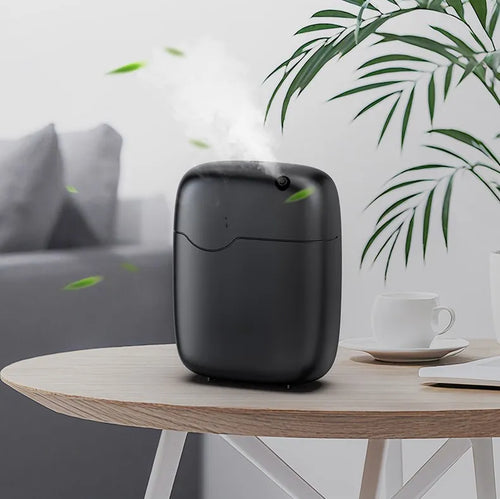
Waterless, and the only machine of mine for a building that has had a damp season
SOSA Vaayu ₹11,999
Everything above this on the page is water, and the machine this problem wants is a dehumidifier rather than anything I make. The single reason the Vaayu belongs in this conversation is narrow and factual: it is waterless cold-air nebulisation with no reservoir, so it adds no water to a room, where a water-based ultrasonic puts thirty to fifty millilitres an hour into the air and is the wrong direction in a damp building. Up to 1000 cubic metres, a 400ml fill lasting about seventy-five days, app control with timers, under 38 dB, auto-stop, key-lock. Public areas only, once the readings have come down, and it dries nothing and treats nothing.
A note from Sonal
The call that taught me this came in a July from an operations lead in Kolkata who wanted the heaviest thing I made, for a ground-floor diagnostic wing that smelled of damp. I asked what the humidity was reading and she did not know, which was fair, because almost nobody does. She bought a hygrometer that week, and the record room came back at eighty-nine per cent, and the cause turned out to be a condensate pipe that had been looped over a beam by whoever installed the second cassette, so it had been draining backwards into the pan for two years. It cost about three thousand rupees to re-lay. She did eventually buy a machine, the following February, and told me she would have been very annoyed with me if I had sold her one in July.
I have had the window conversation more times than any other on this subject, and it is always the same shape. Somebody has been told to air the building out, which is good advice for eleven months of the year, and in monsoon it is importing water at eighty-five per cent outdoor humidity and condensing it on the coldest surface in the room. The instruction genuinely reverses for the season and almost nothing written about Indian buildings says so clearly. The other thing I have stopped being shy about is telling a clinic that an ultrasonic is the wrong machine for them, which costs me a sale of between nine hundred and three and a half thousand rupees every time I say it. A diffuser that works by putting water into the air does not belong in a building whose problem is water, and that is not a claim about health or air quality, it is simply what the machine does.
I would rather lose a monsoon order and be the person you call in February than sell you something in July that makes your record room worse. Everything is made and supported from Pune, and a part of every order funds girl-child education through Nanhi Kali. You get a space that smells like somewhere looked after; a girl gets a classroom. That equation has always felt right to me.
Frequently asked questions
Should I open the windows to get rid of a damp smell in monsoon?
Usually not, and this is the one situation where the normal advice reverses. Outdoor relative humidity in an Indian monsoon runs between eighty and ninety-five per cent, and the outdoor dew point is often above the surface temperature of your coldest indoor surfaces, so opening up an air-conditioned clinic imports moisture and then condenses it on chilled pipework, slab soffits and external walls. Keep the envelope shut during opening hours, let the air conditioning do the drying, and make sure the extract fans in the wet rooms are actually running.
Where is the water usually coming from in a clinic that smells damp?
In the order I check it: the air-conditioning drain pan and a condensate line that does not fall all the way to discharge; failed sealant or render where refrigerant pipework passes through an external wall; split insulation on pipework in the ceiling void; the terrace, parapet or sunken toilet slab directly above the worst room; rising damp at the base of a ground-floor wall; a weeping valve inside a boxed duct; and the mop store with several kilos of wet textile in it. The first two are the commonest and also the cheapest to correct.
Is an ultrasonic diffuser a bad idea in a damp clinic?
Yes, and I sell three of them. An ultrasonic works by putting water into the air and consumes thirty to fifty millilitres an hour doing it, so in a building whose problem is water it is the wrong direction. The Sukoon, Boond and Megh are honest in a single dry administrative cabin with one named person emptying and drying the tank daily. For a building that has had a damp season, the waterless Vaayu adds no water at all, which is a statement about how the machine works rather than any claim about air quality.
What humidity reading should a clinic be aiming for?
Below about sixty per cent is where materials and textiles stop holding and releasing a smell, and that is the practical target for a record room, a store or a physiotherapy room. Indian monsoon indoor readings commonly sit between seventy-five and ninety, so a hygrometer at about five hundred rupees read three times a day for a week is the first thing to buy. If the figure will not come below seventy after the sources are corrected, a refrigerant dehumidifier removing ten to twenty litres a day is the right equipment for that room.
Can we use fragrance until monsoon is over?
I would not, and the reason is practical rather than moral. A damp smell is the signal telling your housekeeping team that there is water somewhere it should not be, and covering it removes the one piece of information that would have got the condensate pipe re-laid. Do not scent a room reading above seventy per cent at all. When the readings are down and the source is corrected, a low background in the public areas is a presentation decision, and in a bad monsoon the honest answer is often to leave it until the season has passed.
Find the water first
A hygrometer, a torch and a week — and in July the honest answer is often next season
The Vaayu is ₹11,999: waterless cold-air nebulisation with no standing water tank, so it adds no water to a room, covering up to 1000 m³ or roughly 2,000–3,000 sq ft, a 400ml tank lasting about seventy-five days for four refills a year, Bluetooth app control with 1h/4h/8h/24h timers, under 38 dB, auto-stop and a key-lock for public areas, supplied with four hotel-inspired fragrances. The water-based Sukoon, Boond and Megh add 30 to 50 ml of water an hour and are not for a damp building. Free shipping above ₹499, and a portion of every order supports girl-child education through Nanhi Kali.
See the Vaayu · ₹11,999 All commercial scenting
Continue the read
More from SOSA
Editorial standards & sources
Product facts used in this guide. SOSA Vaayu Rs 11,999: waterless cold-air nebulising diffuser, no water reservoir, coverage up to 1000m3 (approximately 2,000-3,000 sq ft), 400ml refillable tank lasting up to about 75 days per fill, Bluetooth app plus onboard control, 1h/4h/8h/24h timer scheduling, adjustable intensity, under 38 dB, DC 12V/1A at 5W, 165 x 80.5 x 215 mm and 0.9 kg, freestanding or wall or HVAC mounted, auto-stop and key-lock, CE, RoHS and SGS certified, supplied with four hotel-inspired fragrances. SOSA Aangan Rs 25,999: HVAC-connected or standalone commercial nebulising diffuser, coverage up to 3,000m3 (roughly 8,000-10,000 sq ft), 800ml reservoir, metal body, programmable schedules, under 42 dB. Ultrasonic machines are water-based, hold standing water and consume 30-50 ml of water an hour: Sukoon Rs 1,899 (500ml, 270-320 sq ft, 16-18 hours on low, three 15ml Hotel Collection scents included), Boond Rs 899 (300ml), Megh Rs 3,499 (6 litres). Hotel Collection water-based fragrance 15ml Rs 299, 100ml Rs 999, 300ml Rs 1,799. Alcohol-free reed diffusers from Rs 749, requiring 24-72 hours to reach their working level. Free shipping above Rs 499. Coverage arithmetic: cubic metres equal floor area in square feet divided by 10.76 and multiplied by ceiling height in metres, counting only the volumes that are actually scented. This guide makes no medical, therapeutic or clinical claim of any kind for fragrance: a diffuser does not purify, disinfect or clean air, and does not treat, calm or affect any patient or condition. Fragrance is housekeeping and presentation. Clinical areas should be left fragrance-free, and a persistent odour should be traced to its source and corrected rather than covered. SOSA is not affiliated with or endorsed by any hotel brand. Prices subject to change - see the live product pages.

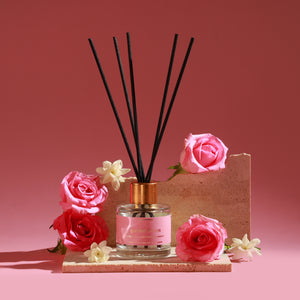

 Reeds · one dry cabinfrom ₹749Shop →