




You do not perfume a cooking smell away — you extract it. The kitchen is won at the exhaust, the lid and the cloth. Fragrance is the last, small step, and only ever on air that is already clear.
Remove it at source: exhaust on before you cook, window open, lids on pots, grease wiped the same day, bin emptied.
Then, and only then: a clean, non-food note — a Morning Freshness lemon-mint reed on a far counter.
The honest bit: no diffuser removes cooking odour. Only airflow and cleaning do.
Every Indian kitchen has its signature lingering smell — the ghost of last night's tadka, the fish that was fried on Sunday, the pressure-cooker dal that filled the whole flat. And every one of us has, at some tired moment, reached for a spray to cover it. It never works. What you get is the cooking smell and a chemical floral on top, which is a worse room than the one you started with. The reason is simple and worth stating plainly: fragrance is additive, not subtractive. It puts molecules into the air; it cannot take the offending ones out.
So the whole job of removing a cooking smell happens before fragrance is even in the conversation. Do it well and the room clears in ten or fifteen minutes. Skip it and no product on earth will save you.
1. Extract early and leave it running. Switch the chimney on before the oil heats, and let it run ten minutes past when you finish. Most people turn it off too soon, just as the odour is still lifting off surfaces.
2. Cross-ventilate. Open a window and, if you can, a door on the far side. Moving air carries odour out; a closed kitchen simply holds it. This is the single fastest fix there is.
3. Keep lids on. An open simmering pot releases many times the odour of a covered one. Lids are free odour control you already own.
4. Wipe grease the same day. Airborne oil lands on tiles, the hob and the extractor filter, then re-releases smell for days. A warm, mild-detergent cloth on surfaces after cooking is the difference between a fresh kitchen tomorrow and a stale one.
5. Deal with bin, sink and cloths. A damp bin, a clogged drain and a wet dishcloth are three quiet odour sources. Empty, rinse and hang to dry.
Only now does scent earn its place. And its role is not rescue — it is signal. A clean, light fragrance in a freshly cleared kitchen tells your nose the work is done, the way a wiped counter tells your eyes. The scent I reach for is deliberately un-foody: Malabar lemon and mint. Citrus and mint say "clean" in a way that never competes with, or gets confused for, cooking.
| The problem | What removes it | What fragrance does |
|---|---|---|
| Active cooking odour / smoke | Exhaust + open window | Nothing useful — keep scent low while cooking |
| Grease film re-releasing smell | Wiping surfaces & filter | Nothing — this is a cleaning job |
| Bin / drain odour | Empty, rinse, clear | Nothing — source-control only |
| A cleared kitchen going flat between meals | — | A clean citrus-mint note keeps it fresh |

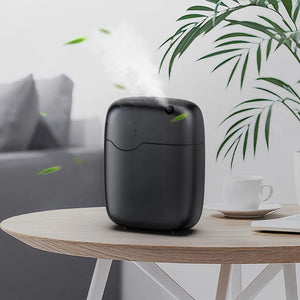
If your kitchen opens into the living or dining area, the cleared air has more room to fill, and a passive reed alone may feel thin. That is where a Sukoon earns its keep — a larger tank to hold a light note over a joined space, run for a while after you have cooked and ventilated. In a humid coastal flat, where you would rather not add the mild moisture an ultrasonic gives off, the waterless SOSA Vaayu holds the same clean note across the floor without a drop of added damp.