Founder Diaries · Clinics & Medical Centres · Department by Department
By Sonal Sahani · ISIPCA Versailles 12 min read Updated September 2026
Physiotherapy is the one department in a polyclinic where the smell question has an honest physical answer rather than a presentational one. People are working hard in a small room, often for forty minutes, often face-down; there is used linen at a rate no other department produces; there is a hydrocollator full of hot water that somebody is supposed to descale; there is gel, there is vinyl, and there is very often an extract fan that was specified for an office. Which means this page is about air changes and towel counts, and fragrance appears at the end of it, at the reception desk only. The cubicles themselves stay clear, and I will explain why at some length.
Quick answers — read this first
The order of work: extract and air changes first, then linen turnover, then the hydrocollator, then the vinyl and the mats, then the gel and paper waste. Fragrance comes sixth.
The sources, named: exertion in a small room, used towels and couch covers, a hydrocollator tank that has not been drained and descaled, vinyl bolsters and mats wiped but not washed, ultrasound gel and the paper-roll bin, and shoes in a gym area.
Where fragrance goes: the physiotherapy reception and waiting only, with the 1 Hotels-inspired
Forest Suite — dry woods rather than a light white tea. The
Vaayu at ₹11,999 is waterless, which matters in a department that already owns one standing-water tank. The cubicles are rooms where patients undress and lie down, so they stay fragrance-free.
The short answer
Short answer: with ventilation and linen turnover, not with fragrance. A physiotherapy department has a genuine, identifiable odour source — several of them — and each one has a physical fix. Air changes and a working extract first, then one towel and one couch cover per patient rather than per session, then the hydrocollator drain-and-descale schedule.
Where fragrance belongs: the physiotherapy reception and waiting area only. One
Vaayu at ₹11,999, waterless — which matters in a department that already has a hydrocollator tank on somebody's rota — with the 1 Hotels-inspired
Forest Suite, cedarwood, vetiver and green leaves. Dry woods hold their own beside warm human smells where a light white tea is overrun by four o'clock.
Shop: the
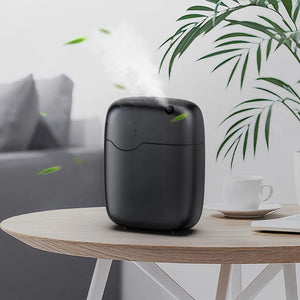
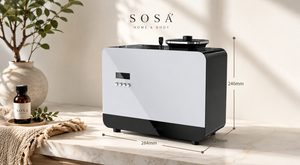
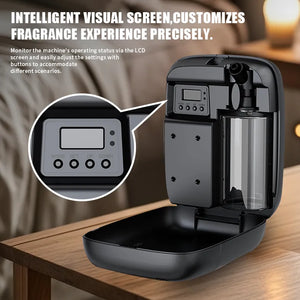
Vaayu ₹11,999 (waterless, no standing water tank, up to 1000 m³, 400ml lasting about seventy-five days, app plus 1h/4h/8h/24h timers, under 38 dB, auto-stop, key-lock, four hotel-inspired scents included). An alcohol-free
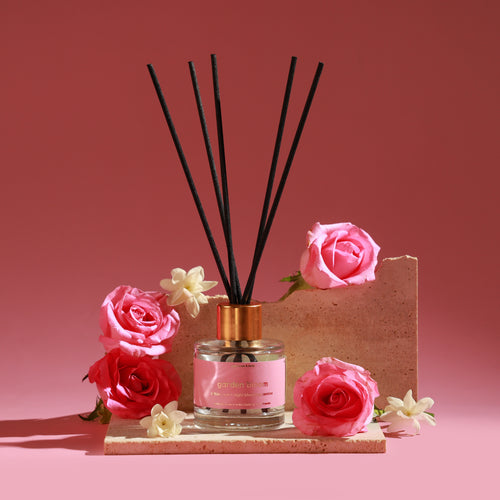
reed diffuser from ₹749 suits the physiotherapist's office. The cubicles get nothing. Free shipping above ₹499.
Straight answer
How should a physiotherapy department inside a polyclinic handle odour?
1. Start with the extract, because this department is almost always under-ventilated. Physiotherapy rooms are frequently carved out of a plan late, they are small, they are occupied by people exerting themselves, and the extract is often sized as though it were an office. Have the air changes measured. If a cubicle has no extract at all and no openable window, that is the finding, and it is the whole of the problem in about a third of the departments I have walked.
2. Then linen, which is the second half of it. One clean towel and one clean couch cover per patient, not per session and not per morning. A lidded, bagged linen trolley that leaves the department at fixed times rather than at the end of the day. And the trolley parked where it does not share air with the waiting area.
3. Then the hydrocollator. A tank of standing hot water holding moist heat packs is the most under-inspected object in the department. It needs draining, cleaning and descaling on a written schedule with a named owner, and the packs themselves need replacing when the covers stop coming clean.
4. Then the vinyl and the mats. Bolsters, wedges, exercise mats and plinth tops get wiped between patients and washed almost never, and vinyl holds what is wiped into it. A weekly wash schedule and a replacement date does more for this department than anything you can plug in.
5. Then gel and paper waste. Ultrasound gel bottles with crusted nozzles, the paper-roll bin that only gets emptied at close, and in a gym area, shoes. All three are free to fix.
6. Only then fragrance, and only at the reception and waiting end. The
Vaayu at ₹11,999, waterless, at the front of the department, with a dry woody scent rather than a light one. The cubicles stay fragrance-free: they are rooms where patients undress, lie down and often lie face-down breathing through a face hole a foot from the floor.
A portion of every order supports girl-child education through Nanhi Kali.
TL;DR: with ventilation and linen turnover first, because physiotherapy has a real odour source rather than a presentational one. Extract and air changes, then one towel and one couch cover per patient, then the hydrocollator drain-and-descale schedule, then the vinyl and mats, then gel and paper waste. Fragrance is sixth and belongs at the reception end only — dry woods rather than a light scent — and the cubicles themselves stay fragrance-free.

Dry woods, for a department that smells of people
1 Hotels-inspired · Forest Suite ₹299 / 15ml
Cedarwood, vetiver and green leaves — bone dry, low in the nose, and the one I reach for at the front of a physiotherapy department once the extract and the linen rota have been sorted out.
Dry woods occupy a different address from warm, damp, human smells, so they stand beside them rather than argue with them. A light white tea in the same reception is simply overrun by four o'clock, which is how a facility ends up turning the intensity up and making everything worse. None of this is a substitute for the extract fan. If the department still smells at four, the answer is air changes and towels, not a different bottle. Water-based 15ml at ₹299 for the ultrasonics; the
Vaayu runs its own undiluted oil.
The sources, named one at a time
Most of this cluster is about buildings that smell of nothing much and want to keep it that way. Physiotherapy is different, and pretending otherwise would be no use to anybody who runs one. It is a department where people sweat on purpose, in small rooms, in close contact with a therapist, on surfaces that are wiped rather than washed, generating more used linen per patient than any other part of an outpatient facility — and it usually sits at the end of a corridor in the part of the plan with the worst air. That is a genuine odour source with six components, and every one of them has a physical fix. None of the six is fixed by fragrance, and a department that scents on top of them ends up smelling of two things instead of one.
1
THE SIX
Bodies, linen, the hydrocollator, the vinyl, the gel and the shoes
Take them in order of how much they contribute, which is not the order people expect. Linen is first, and it is first by a distance. A physiotherapy department generates more used towels and couch covers per patient than anywhere else in an outpatient building, and the failure mode is always the same: a towel or a couch cover being used for a session rather than for a patient, and a linen bag sitting open in a corner of a cubicle until the end of the day. Warm, damp, used linen in a closed room at two in the afternoon is the smell everybody in that department has stopped noticing. Second, the hydrocollator — a stainless tank of hot water holding moist heat packs, which by design is standing water at a comfortable temperature with organic material in it, and which in a great many departments has not been drained, cleaned and descaled on any schedule at all. It is the single most under-inspected object in physiotherapy and the one I ask about first. Third, vinyl: bolsters, wedges, plinth tops and exercise mats get a wipe between patients and a wash almost never, and the piping and seams hold what the wipe pushes into them. Fourth, the room itself — a cubicle of six or eight square metres with a curtain instead of a door, a patient working hard in it for forty minutes, and an extract that was sized as though the room were an office. Fifth, ultrasound gel and the paper-roll bin: a crusted nozzle on a bottle that has been in use since March, and a bin of used paper roll and gel-wiped tissue that gets emptied at close rather than at midday. Sixth, shoes, in any department with a gym area and a shoes-on policy. That is the whole inventory, and the total cost of addressing all six is a rota, a bag, a bin schedule and possibly an extract fan.
2
THE AIR
Occupancy, air changes and the reason it is fine at nine and bad at four
Then the ventilation, which is where the department either works or does not.
A physiotherapy cubicle is an unusual room in air-change terms: high metabolic output, low volume, frequently no openable window, and very often a curtain rather than a door, which means the cubicle's air is the department's air. If your physiotherapy area smells acceptable at nine in the morning and unpleasant by four in the afternoon, you do not have a fragrance problem and you do not have a cleaning problem — you have an air-change problem that accumulates through the day, and the accumulation is exactly what the curve of that complaint looks like. The diagnostic is straightforward and it costs a service visit: have the supply and extract measured against the occupancy the department actually runs, not the occupancy on the drawing.
The three findings I see most often are an extract fan that was disconnected during a fit-out and never reconnected, a supply grille that is throwing air into a curtain rather than into the room, and a department that has added two cubicles since commissioning without anybody touching the air side. The fixes are a fan, a set of vanes and a rebalance, and all three are cheaper than the machine this website sells. Where there genuinely is no route for an extract, the honest answer is a scheduled air-out — every cubicle opened, curtain back, door open, for ten minutes at the changeover between morning and afternoon lists — which costs nothing and is the single most effective thing I have seen a physiotherapy department do.
A space that is fine in the morning and stale by evening is the general version of this problem and it applies here more sharply than anywhere else in the building.
3
THE CUBICLE
Why the rooms themselves stay fragrance-free, even here
Which leaves the question people expect this page to answer with a yes, because physiotherapy feels less clinical than a procedure room and the cubicles are where the smell actually is.
The cubicles stay fragrance-free, and the reasons are the same ones that apply to every other clinical room in the building, with one extra that is specific to this department. A patient in a physiotherapy cubicle is asked to undress, at least partly. She lies down, often for forty minutes, frequently face-down with her face in a breathing hole a foot or so above the plinth, which is to say at the height where a cold-air mist has already settled. She cannot easily leave, and she is often in pain, which is not a state in which anybody wants a strange smell introduced without being asked. The therapist, meanwhile, is working in close physical contact for the whole session and is one of the few clinicians in the building who spends forty unbroken minutes in one small room — anything you put into that air, she receives eight times a day, every day.
And there is the point that makes fragrance actively counterproductive in this particular department: the smell in a physiotherapy cubicle is the department's own quality signal. It is how the senior therapist knows the linen rota has slipped, how the housekeeping supervisor knows the hydrocollator is overdue, how anybody knows the extract has failed. Covering that removes the one indicator the department has, and it removes it from the people best placed to act on it.
Clinical treatment areas are not scented and this is one of the cases where the rule earns itself rather than merely being applied.
The question I ask a physiotherapy lead before anything else: who drains and descales the hydrocollator, and when did they last do it? If nobody can answer that in under ten seconds, you have found the smell and you have not spent anything.
Air changes and linen turnover, which is most of the answer
The six sources, what each one actually is, the fix, who owns it and what it costs. Five of the six are free or nearly free, and the sixth is a service visit. The fragrance row is at the bottom, which is where it belongs in this department rather than a rhetorical gesture.
Physiotherapy odour
Six sources, six fixes, and where fragrance actually sits
| Source |
What is happening |
The fix |
Who owns it |
Cost |
| 1. Used linen ★ |
Towels and couch covers used per session rather than per patient, and a linen bag open in a cubicle all day |
One towel and one cover per patient; bagged, lidded trolley out at fixed times |
The physiotherapy lead, in writing |
₹0 to a trolley |
| 2. Air changes |
A small room, high exertion, a curtain instead of a door, and extract sized for an office |
Measure supply and extract against real occupancy; rebalance; or a ten-minute air-out at list changeover |
Facilities and the AMC vendor |
A service visit |
| 3. The hydrocollator |
A tank of standing hot water with packs in it, drained and descaled on no schedule at all |
A written drain, clean and descale schedule with a named owner; replace packs whose covers will not come clean |
Named person, weekly |
₹0 |
| 4. Vinyl and mats |
Bolsters, wedges, plinth tops and exercise mats wiped between patients and washed almost never |
A weekly wash on a rota, seams and piping included, and a replacement date rather than a replacement crisis |
Housekeeping |
₹0 to replacement |
| 5. Gel and paper waste |
A crusted ultrasound gel nozzle, and a paper-roll bin emptied at close rather than at midday |
Wipe the nozzle daily, date the bottle, empty the bin at midday and at close |
Therapists and housekeeping |
₹0 |
| 6. Fragrance, at reception only |
Dry woods at the front of the department, once the five rows above are genuinely done |
One Vaayu, low, at the waiting end. Nothing in the cubicles |
Facilities |
₹11,999 |
Shop this guide
The physiotherapy setup, in three products
The SOSA principle
A physiotherapy department is one of the few places in a clinic where the smell is doing a job. It is how the senior therapist finds out the linen rota has slipped and the hydrocollator is overdue.
Which is why the cubicles stay clear, why the extract and the towel count come first, and why the machine belongs at the reception end or nowhere.
Fragrance sixth, at reception only, and never in a cubicle
Once the five physical rows are genuinely done, there is a real case for scenting the front of the department, and it is worth stating precisely what that case is. A physiotherapy reception and waiting area is a public seating volume like any other in the building, patients sit there for ten or fifteen minutes before and after a session, and a department that has just fixed its linen and its air deserves a front end that reads as looked after rather than merely acceptable. That is presentation and housekeeping. It is not an effect on anybody, it does nothing clinical, a diffuser is not an air purifier and it does not clean or disinfect air — and in this department more than any other, saying so plainly is the difference between a facility manager and a therapist being on the same side of the conversation. The scent choice is where this page departs from the rest of the cluster. The default across a medical facility is the lightest of the seven, the Westin-inspired White Tea Serenity. At the front of a physiotherapy department I would use the 1 Hotels-inspired Forest Suite instead — cedarwood, vetiver and green leaves. Dry woods occupy a different address in the nose from warm, damp, human smells, so they stand beside whatever drifts forward from the cubicles rather than arguing with it, whereas a light white tea is simply overrun by four in the afternoon and the department responds by turning the intensity up, which makes everything worse. Nothing sweet, nothing gourmand, nothing anybody could name.
Then the machine and its placement, and the reason the category choice is unusually clear here. This department already owns a tank of standing water that somebody has to drain, clean and descale. Adding a second standing-water tank, on a different rota, with a different owner, is how both of them end up neglected. The Vaayu at ₹11,999 holds no water at all — it atomises undiluted oil to a dry residue-free mist — which in this specific department is the strongest housekeeping argument in the range, and I want to be precise that it is a housekeeping argument rather than an infection-control one. The ultrasonic Sukoon at ₹1,899, Boond at ₹899 and Megh at ₹3,499 are water-based, hold standing water and put 30–50 ml of water into the air every hour, which makes them honest for the physiotherapist's own office behind a door with a named owner and wrong for the public end of a department like this one. Place the Vaayu at the reception and waiting end, wall-mounted at 1.8 to 2 metres on the Vaayu bracket, out of the way of plinths and trolleys and out of reach, with at least three metres of clear run to the nearest cubicle entrance and never pointing down the cubicle aisle. If the cubicles have curtains rather than doors, the machine goes on the far side of the reception desk and you accept a smaller scented zone, because a curtain is not a boundary and pretending it is one is how a cubicle ends up scented. Under 38 dB, quieter than the department's own air conditioning, on the opening hours through the app or the 1h, 4h, 8h and 24h onboard timers, stopping with the last appointment.
Then the discipline that keeps it honest after month one, and the product limits. The rule to write into the standard operating procedure is that the intensity never goes up because the department smells — it goes up only if a person who walks in cold cannot register it at all, and it usually goes down. A physiotherapy department is the easiest place in a clinic to slide into using fragrance as a substitute for the linen rota, because the rota is inconvenient and the dial is not. If the front of the department starts smelling of something at three in the afternoon, the answer is the towel count, the trolley, the hydrocollator or the extract, in that order, and it is never the dial — covering a smell whose cause you have not found removes the signal that told the department something had slipped, and in a physiotherapy department that signal is the only monitoring the linen rota has. Where a clinic should spend first puts this in the wider order, and the pre-purchase checklist is the short version. On the products: the Vaayu and Aangan run their own undiluted oil rather than the water-based Hotel Collection bottles, which are for the ultrasonic machines at three to six drops per tank; an alcohol-free reed diffuser from ₹749 needs 24 to 72 hours to establish and is barely noticed past about a metre, which makes it right for the physiotherapist's office and useless in a waiting area; candles are not appropriate in a healthcare facility because an open flame is a fire-safety and insurance matter, and in a department full of towels and paper roll that hardly needs elaborating; and SOSA does not make a room spray, so the morning-spray habit that many physiotherapy departments have is not something we can supply and not something I would recommend, since it is a twenty-minute product in a twelve-hour department.
The dial is convenient and the linen rota is not. Which is exactly why a physiotherapy department that reaches for the dial stops finding out when the rota has slipped.
— Sonal Sahani, SOSA
The SOSA edit
In working order for a physiotherapy department inside a polyclinic. Four of the six rows cost nothing and the fifth is a service visit, which is the honest shape of a department with a real source. The fragrance row is fifth on purpose, and the last row prints what we will not sell you for a cubicle.
The SOSA edit
Physiotherapy odour, in working order
| Do this |
What it is |
When it earns its place |
Cost |
| 1. One towel and one couch cover per patient ★ |
Not per session, not per morning. Bagged, lidded linen trolley leaving the department at fixed times |
First. It is the largest single contributor and it costs a rota |
₹0 |
| 2. Measure the extract against real occupancy |
Small rooms, high exertion, curtains instead of doors, and extract often sized as though it were an office |
Second. This is the fix for a department that is fine at nine and bad at four |
A service visit |
| 3. A written hydrocollator schedule |
Drain, clean and descale on a date with a named owner; replace packs whose covers will not come clean |
Third. It is the most under-inspected object in the department |
₹0 |
| 4. Wash the vinyl and the mats weekly |
Bolsters, wedges, plinth tops and exercise mats, seams and piping included, with a replacement date rather than a crisis |
Fourth, on a rota that somebody signs |
₹0 to replacement |
| 5. Vaayu at the reception end, dry woods |
Waterless — no second standing-water tank in a department that already has a hydrocollator. Up to 1000 m³, key-lock, under 38 dB, opening hours only |
Fifth, once rows one to four are genuinely done. Never pointed down the cubicle aisle |
₹11,999 |
| Not for a cubicle: anything at all |
Patients undress and lie down, often face-down at plinth height, and the therapist is in that room forty minutes at a time |
The cubicle smell is the department's own quality signal. We do not sell a product for that room |
— |
Honest notes for buyers: fragrance in a medical facility is housekeeping and presentation, never treatment. Nothing on this page claims that a fragrance reduces anxiety, aids recovery, improves sleep, cleans or disinfects air, or has any clinical effect whatsoever, because it does not and a diffuser is not an air purifier. Scenting belongs to the entrance, reception, shared waiting areas, inter-departmental corridors and administrative rooms. Consultation and examination rooms, treatment and procedure rooms, day-care surgery, dressing rooms, blood- and sample-collection rooms, laboratories, pharmacy dispensing, sterile stores, imaging rooms, oncology day-care and paediatric clinical areas should be left fragrance-free. A persistent smell is information about a dry drain trap, a bin, a soiled-linen route or an air-conditioning drain pan: find it and fix it rather than covering it. On the machines: the
Vaayu at ₹11,999 is waterless cold-air nebulisation with no standing water tank, covering up to 1000m³ or roughly 2,000–3,000 sq ft, with a 400ml tank lasting about 75 days, Bluetooth app control, 1h/4h/8h/24h timers, under-38dB running, auto-stop and a key-lock for public areas. The
Aangan at ₹25,999 covers up to 3,000m³ and connects to HVAC for a whole floor or an atrium. The ultrasonic
Sukoon,
Boond and
Megh are water-based, hold standing water and add 30–50 ml of water an hour to the air, which makes them suitable for a single administrative cabin with a named person emptying and drying the tank daily, and unsuitable for public clinical property. An alcohol-free
reed diffuser needs 24–72 hours to establish and suits a small lobby rather than a large waiting hall. Candles are not appropriate in a healthcare facility because an open flame is a fire-safety matter. SOSA does not make a room spray. The Hotel Collection scents are SOSA's own interpretations inspired by the world's finest hotels; SOSA is an independent Indian fragrance house, not affiliated with or endorsed by any hotel brand. A portion of every order supports girl-child education through Nanhi Kali.
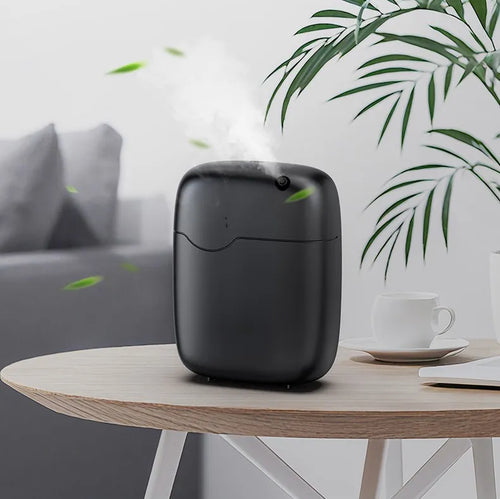
The purchase that comes sixth, not first
SOSA Vaayu · waterless ₹11,999
In a physiotherapy department this machine is the last line of a six-line plan, and it belongs at the reception and waiting end of it rather than among the cubicles. There is a second reason it is the right category here and it is pure housekeeping: a physio department already owns a hydrocollator, which is a tank of standing hot water that somebody has to drain and descale. Adding a second standing-water tank to that department, on a different rota, with a different owner, is how both of them end up neglected. The Vaayu holds no water at all. Up to 1000 m³, 400ml for about seventy-five days, app and onboard timers, under 38 dB, key-lock, auto-stop, four hotel-inspired scents included.
A note from Sonal
I have walked a number of physiotherapy departments with a clipboard and the finding is almost comically consistent. In one polyclinic outside Pune the department had been asking for a scenting quotation for eight months, and the actual problem was a hydrocollator that nobody could name an owner for and a linen bag that lived open in cubicle three until six in the evening. We changed the linen rule to one towel per patient, put a lid and a bag on the trolley, gave the tank to a named person on a Tuesday schedule, and the department stopped asking about fragrance for four months. When they came back it was about the waiting area, which is the conversation I actually wanted to have.
What I would say to any physiotherapy lead reading this is that the smell in your cubicles is doing something for you. It is the only continuous monitoring your linen rota, your tank schedule and your extract fan have, and it reports to the people best placed to act on it within about a day of anything slipping. Put a fragrance on top of that and you have bought yourself a department that smells pleasant for three weeks and then smells of two things, and you have taken the instrument away from the senior therapist who was using it. Fix the six sources, scent the front, leave the cubicles alone, and the whole thing costs less than the quotation you were expecting.
Everything is made and supported from Pune, and a part of every order funds girl-child education through Nanhi Kali. You get a space that smells like somewhere looked after; a girl gets a classroom. That equation has always felt right to me.
Frequently asked questions
How should a physiotherapy department inside a polyclinic handle odour?
With ventilation and linen turnover first. One clean towel and one clean couch cover per patient rather than per session, a bagged and lidded linen trolley leaving at fixed times, extract measured against real occupancy, a written hydrocollator drain-and-descale schedule, weekly washing of vinyl and mats, and gel bottles and paper bins dealt with daily. Fragrance comes sixth and only at the reception end.
Should physiotherapy cubicles be scented?
No. Patients undress and lie down in them, often face-down with their face at plinth height where a cold-air mist has already settled, frequently in pain and unable to leave — and the therapist spends forty unbroken minutes in that small room eight times a day. The cubicle smell is also the department's own signal that the linen rota or the extract has slipped.
Our physio area smells fine in the morning and bad by four. What is that?
An air-change problem that accumulates through the day, and the shape of the complaint is the diagnosis. Have the supply and extract measured against the occupancy the department actually runs rather than the drawing. Where no extract route exists, open every cubicle for ten minutes at the changeover between the morning and afternoon lists. It costs nothing and it works.
What should we do about the hydrocollator?
Give it a name and a date. It is a tank of standing hot water holding packs, it is the most under-inspected object in most physiotherapy departments, and it needs draining, cleaning and descaling on a written schedule. Replace packs whose covers will not come clean. If nobody can say who owns it in under ten seconds, you have probably found your smell.
Which fragrance suits a physiotherapy reception?
The 1 Hotels-inspired Forest Suite — cedarwood, vetiver and green leaves — rather than the lighter default used elsewhere in a clinic. Dry woods sit at a different address from warm human smells, so they hold their own at four in the afternoon where a light white tea is overrun. Run it low, at the waiting end only, never down the cubicle aisle.
A department with a real source
Extract, towels, the tank — and then, sixth, the reception
The Vaayu is ₹11,999: waterless cold-air nebulisation with no standing water tank, which matters in a department that already owns a hydrocollator, covering up to 1000 m³ from a 400ml tank lasting about seventy-five days, with Bluetooth app control and 1h/4h/8h/24h timers, under 38 dB, auto-stop, a key-lock and wall or HVAC mounting, supplied with four hotel-inspired fragrances. Free shipping above ₹499, and a portion of every order supports girl-child education through Nanhi Kali.
See the Vaayu · ₹11,999 Forest Suite · from ₹299
Continue the read
More from SOSA
Editorial standards & sources
About this guide: Written by Sonal Sahani, ISIPCA Versailles-trained founder and perfumer at SOSA Home & Body, on odour in a physiotherapy department inside a polyclinic — naming the six real sources from used linen and the hydrocollator tank to vinyl bolsters, ultrasound gel and shoes, setting out the air-change and linen-turnover work that fixes them, and placing fragrance sixth, at the reception end only, with the cubicles themselves left fragrance-free.
Facts verified August 2026: Product facts used in this guide. SOSA Vaayu ₹11,999: waterless cold-air nebulising diffuser, atomises undiluted fragrance oil to a dry residue-free nano-mist with no water reservoir, coverage up to 1000m³ (approximately 2,000–3,000 sq ft), 400ml refillable tank lasting up to about 75 days per fill, Bluetooth app plus onboard control, 1h/4h/8h/24h timer scheduling, adjustable intensity, under 38 dB, DC 12V/1A at 5W, 165 × 80.5 × 215 mm and 0.9 kg, freestanding or wall or HVAC mounted, auto-stop and key-lock, CE, RoHS and SGS certified, supplied with four hotel-inspired fragrances. SOSA Aangan ₹25,999: HVAC-connected or standalone commercial nebulising diffuser, coverage up to 3,000m³ (roughly 8,000–10,000 sq ft), 800ml reservoir, metal body, programmable schedules, under 42 dB. Ultrasonic machines are water-based, hold standing water and consume 30–50 ml of water an hour: Sukoon ₹1,899 (500ml, 270–320 sq ft, 16–18 hours on low, 3–6 drops per tank, steady/2H/4H timers, three 15ml Hotel Collection scents included), Boond ₹899 (300ml), Megh ₹3,499 (6 litres). Hotel Collection water-based fragrance 15ml ₹299, 100ml ₹999, 300ml ₹1,799, Pack of 7 at 15ml ₹1,799 against ₹2,093 bought singly; the Vaayu and Aangan take their own undiluted oil rather than these water-based bottles. Alcohol-free reed diffusers from ₹749, requiring 24–72 hours to reach their working level. Free shipping above ₹499. Coverage arithmetic: cubic metres equal floor area in square feet divided by 10.76 and multiplied by ceiling height in metres, counting only the volumes that are actually scented. This guide makes no medical, therapeutic or clinical claim of any kind for fragrance: a diffuser does not purify, disinfect or clean air, and does not treat, calm or affect any patient or condition. Fragrance is housekeeping and presentation. Clinical areas should be left fragrance-free, and a persistent odour should be traced to its source and corrected rather than covered. SOSA is not affiliated with or endorsed by any hotel brand. Prices subject to change — see the live product pages.