Founder Diaries · Clinics & Medical Centres · The Full-Year Cost, Line by Line
By Sonal Sahani · ISIPCA Versailles 14 min read Updated November 2026
This page is written so a procurement lead can rebuild the sum rather than take my word for it, which means every line is either a published price, a published specification, or something I have marked as an estimate.
For one Vaayu in one branch: the machine is ₹11,999 one-off, which is ₹2,400 a year amortised over five years or ₹4,000 over three. A 400ml fill lasts about seventy-five days on clinic opening hours, so four to five fills a year, which is about two litres of fragrance oil per unit per year. Electricity at 5W over a twelve-hour day is about twenty-two units, so ₹175 to ₹260 at Indian commercial tariffs. The work is five refill visits of ten minutes and a weekly two-minute wipe, so under three hours of existing housekeeping time a year. That is everything except the oil price, and the oil price is the one input you must hold as a written quotation rather than from any web page, mine included. Excluding oil, the run rate is about ₹3,000 a year per unit. Including it, the honest answer is a band rather than a figure, and the width of the band is the oil.
Quick answers — read this first
The firm lines, from published prices and specifications: Vaayu ₹11,999 one-off, up to 1000 m³, 400ml tank, about 75 days per fill on clinic hours, 5W at DC 12V/1A, under 38 dB, 0.9 kg.
Aangan ₹25,999, up to 3,000 m³, 800ml reservoir, under 42 dB. Alcohol-free reeds from ₹749.
Sukoon ₹1,899,
Boond ₹899. Free shipping above ₹499. All prices subject to change — check the live product pages before you put them in a sheet.
The annual sum per unit, excluding fragrance oil: machine amortised ₹2,400 at five years · electricity about ₹220 · labour under three hours inside existing housekeeping hours, which is under ₹500 if your finance lead insists on costing it · no filters, no cartridges, no water, no installation, no AMC visit.
About ₹3,000 a year.The one estimated line: fragrance oil, about two litres per unit per year. Multiply by your written quotation. Across a plausible range of quoted oil prices the all-in figure for one unit lands somewhere around ₹12,000 to ₹20,000 a year, and that spread is an illustration of the arithmetic rather than a price.
Per square foot: on a 3,000 sq ft clinic with one unit, roughly ₹4 to ₹6 per square foot of plan area per year, or about ₹11 to ₹15 per square foot of the public area you are actually scenting. State which denominator you used, because the two get quoted interchangeably and differ by about three times.
The short answer
Short answer: for one Vaayu at Rs 11,999, the annual cost excluding fragrance oil is about Rs 3,000 - the machine amortised at Rs 2,400 over a five-year life, about Rs 220 of electricity at 5W over a twelve-hour day, and under three hours of existing housekeeping time for five refill visits and a weekly wipe. Fragrance oil runs to about two litres per unit per year at four to five 400ml fills, and that price must come to you as a written quotation rather than from a web page. All in, one unit lands somewhere around Rs 12,000 to Rs 20,000 a year, and the width of that band is entirely the oil.
How to rebuild the sum: machine price divided by your depreciation life, plus 5W multiplied by your daily opening hours multiplied by your operating days divided by 1,000 multiplied by your commercial tariff, plus two litres of oil at your quoted price, plus the housekeeping minutes at your loaded hourly rate. Firm inputs are the machine price, the 400ml tank, the 75-day fill, the 5W draw and the free-shipping threshold above Rs 499. Estimated inputs are the fill life at a higher intensity setting, your tariff, your loaded labour rate, your depreciation policy and the oil price. Mark the estimates in your own sheet.
Per branch and per square foot: a 3,000 sq ft clinic on one unit is roughly Rs 4 to Rs 6 per square foot of plan area per year, or about Rs 11 to Rs 15 per square foot of actually scented public area. A 6,000 sq ft centre on two units is about the same per square foot because machines scale with volume. A 10,000 sq ft centre is lower per square foot because a larger share of it is clinical and stays fragrance-free. Four branches on one Vaayu each is Rs 47,996 of capital and one purchase order. Prices subject to change.
Straight answer
How much does it cost to scent a medical centre for a full year?
1. The machine, amortised, which is the largest line and the easiest one. The
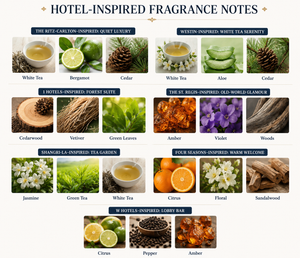
Vaayu is ₹11,999 one-off, inclusive of four hotel-inspired scents in the box. Your finance lead decides the life, not me: on five years that is ₹2,400 a year, on three it is ₹4,000, and if your policy is to expense it in the year of purchase then year one carries the whole ₹11,999 and every following year carries nothing. There is no annual licence, no subscription, no service contract and no cartridge lock-in attached to it, which is worth checking explicitly against any competing quotation you hold, because those three things are where a cheap machine becomes an expensive decade.
2. The fragrance oil, which is the only genuinely variable line. The tank is 400ml and a fill lasts about seventy-five days on clinic opening hours, which is four to five fills a year, which is about two litres per unit per year. That volume figure is firm and you can check it against your own machine inside the first quarter. The price per fill is not something you should take from this page or any other: ask for the Vaayu's undiluted oil priced per 400ml fill and per litre, in writing, with a validity date, and note that the published
Hotel Collection bottles at ₹299, ₹999 and the ₹1,799
300ml refill are the water-based range for the ultrasonic machines rather than the Vaayu's own oil, so a Vaayu budget built from those numbers will be wrong.
3. Electricity, which is a rounding error and should be shown anyway. The Vaayu draws 5W on DC 12V/1A. A twelve-hour day over three hundred and sixty operating days is 4,320 hours, which is 21.6 units — call it twenty-two units a year. At ₹8 to ₹12 a unit on an Indian commercial tariff that is ₹175 to ₹260 a year. Show it in the sheet even though it is small, because a committee that cannot see the electricity line will ask about it, and because showing a number that small is the quickest way to end a conversation about running costs.
4. Labour, and who actually does the work. Five refill visits a year at about ten minutes each, plus a two-minute wipe of the outlet and the housing weekly, is roughly two and a half hours a year. That sits on an existing housekeeping sheet against one named person, and at a loaded attendant rate it costs under ₹500 a year if you insist on costing it at all. The timer schedule and the intensity setting belong to facilities, in the app, once, written down. The oil reorder belongs to procurement, on a date, not to whoever notices the machine is empty.
The question of who owns the refill works that out properly, and if no name exists the correct decision is not to buy.
5. What is not in the sum, which matters as much as what is. A standalone Vaayu needs a socket and a shelf: no contractor, no shutdown, no access hatch, no ceiling work, no AMC visit, no filter, no cartridge and no water. If you are costing an
Aangan tie-in at ₹25,999 then installation does appear — an access position on the supply duct, your AMC vendor present for an hour, and a schedule programmed — and that should be budgeted as a small facilities job rather than a product purchase.
The procurement checklist has the questions in the order a purchase committee asks them.
6. The total, honestly, as a band rather than a figure. Excluding oil, one unit is about ₹3,000 a year. Including oil at the range of prices I have seen quoted, one unit lands somewhere around ₹12,000 to ₹20,000 a year — and I am presenting that as an illustration of the arithmetic, not as a price, because the only number that will make it true is the one on your quotation. On a 3,000 sq ft clinic that is roughly ₹4 to ₹6 per square foot of plan area per year. Four branches on one unit each is ₹47,996 of capital, one purchase order and four named owners. Free shipping above ₹499, prices subject to change, and a portion of every order supports girl-child education through Nanhi Kali.
TL;DR: one
Vaayu is ₹11,999 one-off, about ₹2,400 a year amortised over five, about ₹220 of electricity, under three hours of housekeeping time, and about two litres of fragrance oil per year across four to five 400ml fills. Excluding oil, about ₹3,000 a year. Including oil, a band — and the oil price must be a written quotation, not a web page.
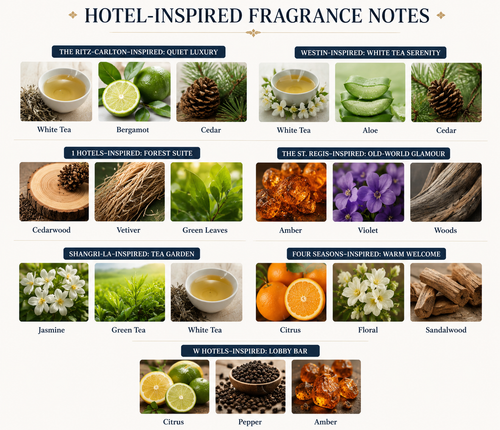
Four to five fills a year, per unit
SOSA fragrance refills from ₹999
The tank is 400ml and a fill lasts about seventy-five days on clinic opening hours.
That is four to five fills a year, or roughly two litres of oil per unit per year, and it is the only genuinely variable line in the annual sum. The volume is firm and you can verify it on your own machine inside one quarter. The price is not: ask for the
Vaayu oil per 400ml fill and per litre in writing, with a validity date, and note that the water-based
Hotel Collection bottles are for the ultrasonic machines rather than the Vaayu. Free shipping above ₹499.
Build the sum before anybody quotes you, which costs nothing
The reason to build this sheet yourself before you take a supplier call is that it changes what you are able to ask for. A procurement lead who arrives with the arithmetic already done asks one question — what is the oil per 400ml fill and per litre, in writing, with a validity date — and the conversation is over in four minutes. A procurement lead who arrives without it gets a total, and a total is the one form of a price you cannot audit. Everything you need is published. The machine price, the tank size, the fill life, the wattage, the noise figure, the coverage and the free-shipping threshold are all on the product pages. Your own tariff is on your last electricity bill. Your own depreciation policy is in your finance manual. Your loaded housekeeping rate is in your payroll. The only gap in the sheet is the oil, and that gap is deliberate on my part, because I would rather leave a visible blank in your spreadsheet than fill it with a figure I cannot stand behind as a quotation. Below are the three groups of inputs, split by how firm they are, and the one thing I would not let a vendor leave out of a quotation.
1
GROUP ONE
The firm inputs, published and checkable
These are the numbers you can take straight from the product pages and specifications, and they are the bulk of the sheet.
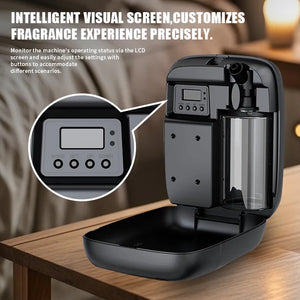
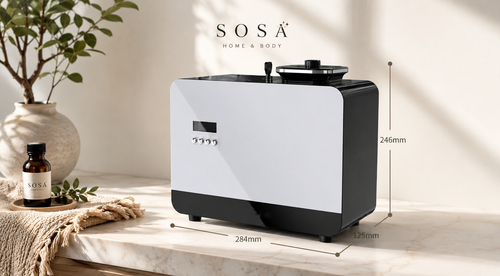
Vaayu ₹11,999 one-off, supplied with four hotel-inspired fragrances. Up to 1000 m³ of coverage, which is roughly 2,000 to 3,000 sq ft. A 400ml refillable tank. About seventy-five days per fill on clinic opening hours. 5W at DC 12V/1A. Under 38 dB. 165 × 80.5 × 215 mm and 0.9 kg. Freestanding, wall or HVAC mounted. Auto-stop and key-lock. CE, RoHS and SGS certified. Aangan ₹25,999, HVAC-connected or standalone, up to 3,000 m³, an 800ml reservoir, metal body, programmable schedules, under 42 dB. Alcohol-free reeds from ₹749.
Sukoon ₹1,899 at 500ml and
Boond ₹899 at 300ml, both water-based and both holding standing water.
Hotel Collection water-based fragrance at ₹299 for 15ml, ₹999 for 100ml and ₹1,799 for 300ml, for the ultrasonic machines. Free shipping above ₹499.
One qualification on all of it: prices change, so check the live product pages on the day you build the sheet and put the date in the sheet. A quotation with no date on it is an estimate wearing a better suit.
2
GROUP TWO
The inputs that are yours, not mine
Four lines in the sum belong to your own organisation and no supplier should be filling them in for you. The depreciation life. Five years gives ₹2,400 a year on the Vaayu and three years gives ₹4,000, and if your policy is to expense assets under a threshold in the year of purchase then year one carries ₹11,999 and years two to five carry nothing but oil and electricity. That single choice moves the headline annual figure by more than sixty per cent, so it should be settled with your finance lead before anybody argues about the oil. The electricity tariff. Twenty-two units a year is firm; what a unit costs you is on your bill, and Indian commercial tariffs across the cities I sell into run wide enough that I would not guess. The loaded labour rate. Two and a half hours a year is firm; what an hour of housekeeping attendant time costs loaded is your payroll's number, and my own view is that under three hours a year belongs absorbed into an existing sheet rather than costed as a line, because costing it invites somebody to propose a contract for it. And your operating days. A clinic open three hundred and sixty days a year and one closed on Sundays are twelve per cent apart on electricity and about the same on fill life.
3
GROUP THREE
The one estimated input, and what to demand in writing
The fragrance oil is the only line I will not put a number against, and I want to be explicit about why rather than vague about it.
The volume is firm: 400ml per fill, about seventy-five days per fill on clinic opening hours, so four to five fills a year, so about two litres per unit per year. You can verify that on your own machine inside a single quarter by marking the date on the tank. The price is a commercial quotation that depends on the scent, the pack size you order in, whether you are ordering for one branch or four, and the day you ask.
So ask for it in this exact form: price per 400ml fill, price per litre, minimum order quantity, lead time, and a validity date, on a letterhead. Then two estimates to mark in your own sheet. First, the seventy-five-day fill life is a figure for a low setting on clinic hours — run the intensity higher and it shortens, which is one of several reasons not to run it high. Second, the
Aangan has an 800ml reservoir covering up to 3,000 m³, and you should not assume that doubles the seventy-five days, because consumption scales with the volume being dosed rather than with the tank; ask for the Aangan's consumption figure separately and in writing.
Holding a consistent level from opening to closing is the page on what the setting does to all of this.
The instruction I would give a procurement lead: build the sheet with the oil line blank, send it to the vendor, and ask them to fill in one cell. A vendor who sends back a total instead has told you something useful about how the rest of the relationship will go.
Every line in the annual cost, and whether it is firm
One Vaayu in one branch, for one year. The third column is the one most cost sheets leave out and the one a purchase committee should look at first: whether the number is a published price, a specification, your own policy, or an estimate somebody should be asked to replace with a quotation.
Print this
The annual sum for one unit, with every input graded
| The line |
How it is calculated |
Firm or estimate? |
Per unit, per year |
| Machine, amortised ★ |
₹11,999 divided by your depreciation life. Five years, three years, or expensed in year one — your finance policy decides |
Price firm and published. Life is your own policy |
₹2,400 at five years |
| Fragrance oil |
Four to five 400ml fills a year, about two litres, multiplied by your quoted price per fill or per litre |
Volume firm. Price is an estimate until it is on a letterhead with a date |
Quote it, do not guess it |
| Electricity |
5W × 12 hours × 360 days ÷ 1,000 = 21.6 units, multiplied by your commercial tariff |
Wattage firm and published. Tariff is on your own bill |
₹175–₹260 |
| Labour, refilling |
Five visits a year at about ten minutes each, by one named person on an existing sheet |
Firm. Who should own it
|
Under one hour |
| Labour, weekly wipe |
Two minutes on the outlet and housing, fifty-two times, on the same sheet as the rest of housekeeping |
Firm |
Under two hours |
| Other consumables |
There are none. No filter, no cartridge, no water, no descaling, no annual service kit and no subscription |
Firm. Worth checking explicitly against a competing quotation |
₹0 |
| Installation and delivery |
A socket and a shelf for a standalone Vaayu. Free shipping above ₹499. An Aangan tie-in does add an access position and an AMC hour |
Firm for standalone. Budget a tie-in as a small facilities job |
₹0 standalone |
| Not in this sum |
Anything presented as a return — footfall, retention, satisfaction scores, revenue. No figure is offered on any of them here |
Not estimated, not claimed. A facility that smells looked after reads as one, and that is the whole claim |
— |
Shop this guide
The capital line, the recurring line, and the large-volume case
The SOSA principle
Excluding fragrance oil, one unit runs at about ₹3,000 a year. Including it, the honest answer is a band, and the width of the band is the oil price. Which is exactly why you should hold that one number as a written quotation with a validity date, and leave the cell blank until you do.
Twenty-two units of electricity. Two and a half hours of housekeeping time. Two litres of oil. A machine divided by five. There is no fifth thing, and any quotation with a fifth thing in it needs explaining.
Per branch, per square foot, and across four branches
Take the three facility sizes I am asked about most and run the same sum across them, because the per-square-foot figure behaves in a way people do not expect. A 3,000 sq ft clinic with 3m ceilings has a plan volume of about 836 m³; once the consultation cabins, the procedure room, the laboratory and the collection room come out, the public volume is commonly 350 to 450 m³, which is comfortably one Vaayu. Machine at ₹2,400, electricity at ₹220, labour absorbed, oil at two litres: all in, somewhere around ₹13,000 to ₹18,000 a year depending on the oil quotation, which is ₹4 to ₹6 per square foot of plan area. A 6,000 sq ft centre over two floors is usually two units, one per floor lobby, so the capital is ₹23,998 and the annual roughly doubles — which lands at about the same figure per square foot, because the machines scale with the volume rather than with the floor plate. A 10,000 sq ft centre comes out lower per square foot, around ₹3, and the reason is worth knowing: the bigger the facility, the larger the share of it that is clinical and therefore fragrance-free, so the scented volume grows more slowly than the plan. The 10,000 sq ft sizing page does that arithmetic in full, and the 3,000 sq ft page does the smaller one.
Now the denominator problem, which is the single commonest way these figures get misquoted in a board paper. Per square foot of what? On that 3,000 sq ft clinic, ₹15,000 a year over the plan area is ₹5 per square foot. Over the public area you are actually scenting — say 1,200 sq ft of entrance, reception, shared waiting, corridors and administration — the same ₹15,000 is ₹12.50 per square foot. Both are true, they differ by about three times, and I have seen both quoted in the same meeting as though they were the same number. Decide which one your organisation uses, write the denominator next to the figure, and keep it consistent across branches, because the clinical share of plan area varies enormously between a diagnostics-heavy centre and a consultation-heavy polyclinic and a per-plan-square-foot comparison between the two is close to meaningless. My own preference is to report both with the labels attached, and to add the cost per patient visit, which on a hundred visits a day over three hundred days comes out at around fifty paise. And then to say immediately what that fifty paise does and does not tell you: it tells you what presentation costs. It tells you nothing about whether anybody noticed, came back, scored you higher or spent more, and I have no study to offer on any of those.
Four branches, which is where this cluster earns its place, because the arithmetic changes shape rather than just scale. Four clinics on one Vaayu each is ₹47,996 of capital on a single purchase order, twenty 400ml fills a year, about eight litres of oil annually, and a steady-state run rate somewhere around ₹48,000 to ₹80,000 a year across the group depending on the oil price. Three things follow from consolidating it. The oil becomes an annual order with a scheduled delivery rather than four reactive ones, which is the only point in this sum where the price is genuinely negotiable, so ask for the per-litre figure at eight litres rather than at two. The capital goes through once with one specification, which means one scent, one setting and one SOP across the group rather than four slightly different decisions taken by four centre heads — the four-branches question is why that matters and the SOP page is what it looks like written down. And the budget line stops being an argument: it sits in facilities alongside housekeeping and the maintenance contract, not in marketing, which the budget-line question sets out at length. Where a branch needs an Aangan at ₹25,999 instead — a double-height atrium, a mall-format concourse, more than 1000 m³ of public volume — put it in the same sheet with its own consumption figure quoted separately, because the 800ml reservoir dosing up to 3,000 m³ will not simply last twice as long as a 400ml one dosing 1000 m³.
Excluding the fragrance oil, a unit costs about ₹3,000 a year to run and I can show you every rupee of it. Including the oil, the honest answer is a band — and anybody who gives you a single confident figure for the oil without a letterhead and a date has given you an estimate and called it a price.
— Sonal Sahani, SOSA
The SOSA edit
The same sum as five tiers in the order procurement should work through them, with the two free tiers at the top where they belong and the thing that should never appear in a cost sheet at the bottom.
The SOSA edit
Build it, quote it, then sign it
| Tier |
What is in it |
When it earns its place |
Cost |
| 1. Build the sheet yourself ★ |
Machine price divided by your depreciation life, 5W by your hours by your tariff, two litres of oil, the housekeeping minutes — with the oil cell left blank |
Before any supplier call. It changes the question you are able to ask |
₹0 |
| 2. Get the oil quoted properly |
Price per 400ml fill, price per litre, minimum order quantity, lead time and a validity date, on a letterhead, at your real annual volume |
Immediately after the sheet. It is the only variable line and the only negotiable one |
₹0 |
| 3. One unit, one branch |
Vaayu — waterless, no standing water tank, up to 1000 m³, 400ml ≈ 75 days, app and 1h/4h/8h/24h timers, under 38 dB, auto-stop, key-lock, four scents included |
Public volume inside 1000 m³, which is most clinics. About ₹3,000 a year before oil |
₹11,999 |
| 4. Two units, one branch |
Two Vaayu units, one per public volume, on the same scent and the same schedule — a two-floor centre or a lobby and a far waiting hall |
Where the volumes a door closes come to two. Per floor or per building
|
₹23,998 |
| 5. Aangan — the large volume |
HVAC-connected or standalone, up to 3,000 m³, 800ml reservoir, metal body, programmable, under 42 dB. Ask for its consumption figure separately |
Above 1000 m³ of public volume, or a public-only AHU. Which of the two
|
₹25,999 |
| Never in a cost sheet |
A total with no breakdown, a subscription or cartridge lock-in, an undated price, or a benefit line for footfall, retention or satisfaction |
Never. A total is the one form of a price you cannot audit, and no study is being quoted here because there is none worth quoting |
— |
Honest notes for buyers: on this page specifically, every figure is marked as a published price, a published specification, your own policy input, or an estimate. The machine price, tank size, fill life, wattage, noise figure and coverage are published and subject to change, so check the live product pages on the day you build your sheet and date the sheet. The fragrance-oil price is an estimate in anybody's hands until it reaches you on a letterhead with a validity date, and no return on footfall, retention, satisfaction scores or revenue is claimed or costed anywhere here. In general, fragrance in a medical facility is housekeeping and presentation, never treatment. Nothing here claims that a fragrance reduces anxiety, aids recovery, improves sleep, cleans or disinfects air, or has any clinical effect whatsoever, because it does not and a diffuser is not an air purifier. Scenting belongs to the entrance, reception, shared waiting areas, inter-departmental corridors and administrative rooms. Consultation and examination rooms, treatment and procedure rooms, day-care surgery, dressing rooms, blood- and sample-collection rooms, laboratories, pharmacy dispensing, sterile stores, imaging rooms, oncology day-care and paediatric clinical areas should be left fragrance-free. A persistent smell is information about a dry drain trap, a bin, a soiled-linen route or an air-conditioning drain pan: find it and fix it rather than covering it. On the machines: the
Vaayu at ₹11,999 is waterless cold-air nebulisation with no standing water tank, covering up to 1000m³ or roughly 2,000–3,000 sq ft, with a 400ml tank lasting about 75 days, app control, 1h/4h/8h/24h timers, under-38dB running, auto-stop and a key-lock for public areas. The
Aangan at ₹25,999 covers up to 3,000m³ and connects to HVAC for a whole floor or an atrium. The ultrasonic
Sukoon,
Boond and
Megh are water-based, hold standing water and add 30–50 ml of water an hour to the air, which suits a single administrative cabin with a named person emptying and drying the tank daily and is unsuitable for public clinical property. An alcohol-free
reed diffuser needs 24–72 hours to establish and suits a small lobby rather than a large waiting hall. Candles are not appropriate in a healthcare facility because an open flame is a fire-safety matter. SOSA does not make a room spray. The Hotel Collection scents are SOSA's own interpretations inspired by the world's finest hotels; SOSA is an independent Indian fragrance house, not affiliated with or endorsed by any hotel brand. A portion of every order supports girl-child education through Nanhi Kali.
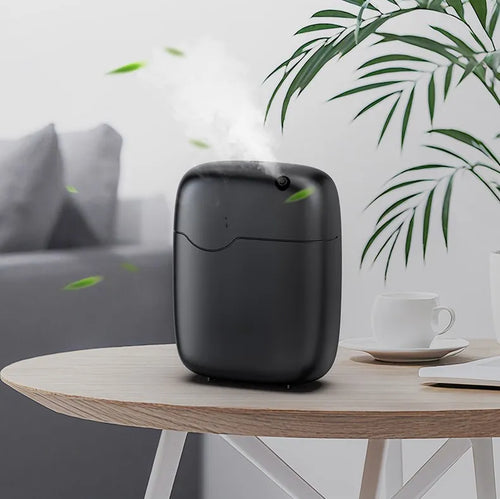
The capital line, and what it does not carry
SOSA Vaayu ₹11,999
One-off ₹11,999, supplied with four hotel-inspired fragrances. Up to 1000 m³, a 400ml tank lasting about seventy-five days, 5W at DC 12V/1A, under 38 dB, auto-stop, key-lock, 0.9 kg at 165 × 80.5 × 215 mm. No annual licence, no subscription, no service contract, no cartridge lock-in, no filter and no water — which is worth checking line by line against any competing quotation, because those are where a cheap machine becomes an expensive decade. Amortised over five years it is ₹2,400 a year. Public areas only, on low, for the opening hours, with no clinical claim of any kind.
A note from Sonal
The first time a procurement lead asked me to send a full-year cost rather than a price, I sent him a price with the running costs in a paragraph underneath, and he sent it back. He wanted the wattage, the operating hours, the tariff he should assume, the fill volume, the fill life, the labour minutes and the depreciation life in separate cells, because he intended to change four of them to his own organisation's numbers and he could not do that with a paragraph. It took me an afternoon to rebuild it the way he wanted and it is the version I have sent ever since. The lesson was not about spreadsheets. It was that a supplier who gives you a total has made a decision on your behalf about your own depreciation policy and your own electricity bill, and has quietly hidden the one number in the sum that is actually an estimate.
Which is why the oil cell on my own sheet is blank, and I would rather explain the blank than fill it. Four to five fills a year at 400ml each, about two litres a unit, is a volume I will stand behind and you can check it on your own machine in a quarter by writing the date on the tank. The price per litre at four branches and eight litres a year is a commercial conversation that should end on a letterhead with a date, and anybody who gives you a confident single figure for it without one has given you an estimate and called it a price. I would also rather be the vendor who points out that the published water-based bottles are for the ultrasonic machines and not for the Vaayu than the one who lets a procurement team build a four-branch budget on the wrong product line and discover it in March.
The last thing I would say about cost sheets is about the line that is not in mine. I do not cost a return, because I do not have one to cost. Everything is made and supported from Pune, and a part of every order funds girl-child education through Nanhi Kali. You get a space that smells like somewhere looked after; a girl gets a classroom. That equation has always felt right to me.
Frequently asked questions
How much does it cost to scent a medical centre for a full year?
For one Vaayu at Rs 11,999, the annual run rate excluding fragrance oil is about Rs 3,000: the machine amortised at Rs 2,400 on a five-year life, about Rs 220 of electricity at 5W over a twelve-hour day, and under three hours of existing housekeeping time for five refill visits and a weekly wipe. Fragrance oil adds about two litres per unit per year across four to five 400ml fills, at a price you should hold in writing. All in, one unit lands somewhere around Rs 12,000 to Rs 20,000 a year, and the spread is the oil. Prices change - check the live product pages.
How do I calculate it for my own facility?
Machine price divided by your depreciation life, plus 5W multiplied by your daily opening hours multiplied by your operating days divided by 1,000 multiplied by your commercial tariff, plus about two litres of oil at your quoted price, plus the housekeeping minutes at your loaded rate. Firm inputs: the machine price, the 400ml tank, the roughly 75-day fill, the 5W draw, the coverage and the free-shipping threshold above Rs 499. Your inputs: depreciation life, tariff, operating days, labour rate. Estimated input: the oil price, and the fill life if you run the intensity above low.
Which figures here are estimates rather than quotations?
One, principally: the fragrance-oil price, which is a commercial quotation and should reach you on a letterhead with a minimum order quantity, a lead time and a validity date. Two secondary ones: the roughly 75-day fill life assumes a low setting on clinic opening hours and shortens at a higher intensity, and the Aangan's 800ml reservoir dosing up to 3,000 cubic metres should not be assumed to last twice as long as a 400ml tank dosing 1,000 - ask for its consumption figure separately. Every published price is also subject to change.
What is the cost per square foot?
On a 3,000 sq ft clinic with one unit, roughly Rs 4 to Rs 6 per square foot of plan area per year, or about Rs 11 to Rs 15 per square foot of the public area actually being scented. State which denominator you used, because they differ by about three times and both get quoted interchangeably. A 10,000 sq ft centre comes out lower per plan square foot, because a larger share of a bigger facility is clinical and stays fragrance-free, so the scented volume grows more slowly than the floor plate.
What does it cost across four branches?
Four clinics on one Vaayu each is Rs 47,996 of capital on a single purchase order, twenty 400ml fills a year, about eight litres of oil, and a steady-state group run rate somewhere around Rs 48,000 to Rs 80,000 a year depending on the oil quotation. Consolidating is worth doing for three reasons: the oil becomes one scheduled annual order where the per-litre price is actually negotiable, the specification goes through once so all four branches run the same scent and setting, and the whole thing sits in one facilities budget line.
Build the sheet, then quote one cell
About ₹3,000 a year per unit before oil — and the oil belongs on a letterhead, not on a web page
The Vaayu is ₹11,999 one-off: waterless cold-air nebulisation with no standing water tank, up to 1000 m³ or roughly 2,000–3,000 sq ft, a 400ml tank lasting about seventy-five days for four to five fills a year, 5W at DC 12V/1A, Bluetooth app control with 1h/4h/8h/24h timers, under 38 dB, auto-stop and a key-lock, supplied with four hotel-inspired fragrances. The Aangan is ₹25,999 for up to 3,000 m³ on an 800ml reservoir. No subscription, no cartridge lock-in, no service contract. Free shipping above ₹499, prices subject to change, and a portion of every order supports girl-child education through Nanhi Kali.
See the Vaayu · ₹11,999 See the refills
Continue the read
More from SOSA
Editorial standards & sources
Product facts used in this guide. SOSA Vaayu Rs 11,999: waterless cold-air nebulising diffuser, no water reservoir, coverage up to 1000m3 (approximately 2,000-3,000 sq ft), 400ml refillable tank lasting up to about 75 days per fill, Bluetooth app plus onboard control, 1h/4h/8h/24h timer scheduling, adjustable intensity, under 38 dB, DC 12V/1A at 5W, 165 x 80.5 x 215 mm and 0.9 kg, freestanding or wall or HVAC mounted, auto-stop and key-lock, CE, RoHS and SGS certified, supplied with four hotel-inspired fragrances. SOSA Aangan Rs 25,999: HVAC-connected or standalone commercial nebulising diffuser, coverage up to 3,000m3 (roughly 8,000-10,000 sq ft), 800ml reservoir, metal body, programmable schedules, under 42 dB. Ultrasonic machines are water-based, hold standing water and consume 30-50 ml of water an hour: Sukoon Rs 1,899 (500ml, 270-320 sq ft, 16-18 hours on low, three 15ml Hotel Collection scents included), Boond Rs 899 (300ml), Megh Rs 3,499 (6 litres). Hotel Collection water-based fragrance 15ml Rs 299, 100ml Rs 999, 300ml Rs 1,799. Alcohol-free reed diffusers from Rs 749, requiring 24-72 hours to reach their working level. Free shipping above Rs 499. Coverage arithmetic: cubic metres equal floor area in square feet divided by 10.76 and multiplied by ceiling height in metres, counting only the volumes that are actually scented. This guide makes no medical, therapeutic or clinical claim of any kind for fragrance: a diffuser does not purify, disinfect or clean air, and does not treat, calm or affect any patient or condition. Fragrance is housekeeping and presentation. Clinical areas should be left fragrance-free, and a persistent odour should be traced to its source and corrected rather than covered. SOSA is not affiliated with or endorsed by any hotel brand. Prices subject to change - see the live product pages.

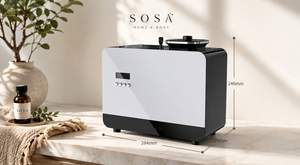
 Aangan · above 1000 m³₹25,999Shop →