

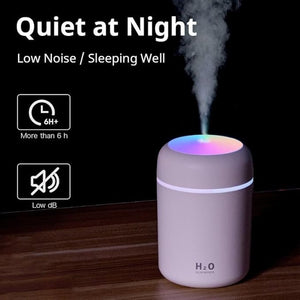

An ultrasonic machine: a setting, not a guess. Start it well before people arrive rather than as they walk in. The Sukoon ₹1,899 has steady, 2H and 4H timers plus a remote; the Boond ₹899 runs about six hours a fill in roughly 150 sq ft.
A candle: lit last, and honest about its radius. A flame is a warm source scenting the pool of air around itself, so it belongs among the seating, not at the front door. Sandalwood ₹449, jar candles from ₹379.
Lead time cannot fix size or position. Starting an undersized or badly placed source earlier gives a longer period of the same disappointing result. Sizing and position first; timing once those are right.
2. A newly opened bottle behaves differently from a settled one. There is a lift over the first days as dry reeds saturate and the lightest notes leave, then a settle over the first weeks, then a long plateau that holds to the end. The plateau is the product. Opening a new bottle a good while before an occasion gives you the settled version rather than the departing top notes.
3. An ultrasonic machine's lead time is a setting, and the setting is the point. The Sukoon at ₹1,899 gives steady, 2H and 4H plus a remote; the Boond at ₹899 runs roughly six hours a fill over about 150 sq ft. Start it while you are still preparing, not as the bell goes, so the fragrance is even across the room rather than a visible plume beside the machine.
4. A candle's lead time is a match, and its radius is small. Not a criticism; it is what a candle is. It warms and scents the pool of air immediately around it, so it earns its place on the low table among the seating and wastes itself on a hall console. Sandalwood ₹449, other jars ₹379. Heatproof surface, supervision, never beside a diffuser bottle.
5. Closing doors shortens every lead time in the house. A source reaches an even concentration sooner in a smaller volume. If you are short of lead time, take air away rather than adding fragrance.
6. Lead time is not a substitute for sizing or position. Starting a source earlier does not make it bigger. If one passive bottle is serving an open living-dining zone, two extra hours change very little; another source in the second volume changes a lot.
Everything is composed and handmade in small batches in Pune, tested through 45°C summer heat and 85% monsoon humidity, and a portion of every order supports girl-child education through Nanhi Kali.
Part one — three formats, three kinds of lead time
"How long before?" produces contradictory answers online because the people answering own different objects. A lead time is the interval between starting a source and the room reaching an even concentration, and each format has a different relationship with the word starting. One of them cannot be started at all.
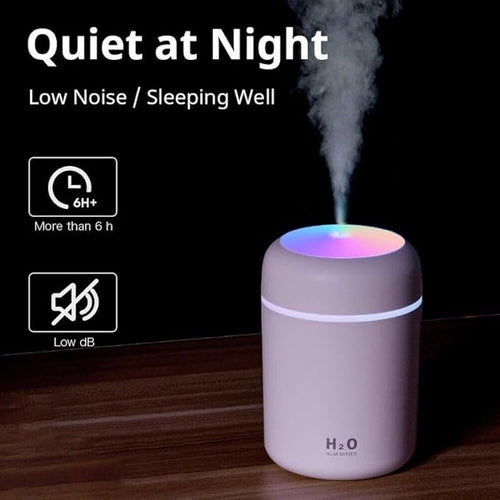
 Sukoon 500ml₹1,899 · 270–320 sq ftAn ultrasonic machine has a piezo disc and a small fan, so it distributes rather than waiting to be distributed. That shortens its lead time considerably against a passive source — but does not abolish it, because a plume leaving an outlet still has to spread through the room's air. Started as the doorbell goes, a machine is a visible object producing a visible mist beside the sofa; started while you are still laying the table, it is a room that smells of something. The Sukoon gives steady, 2H and 4H settings and a remote for 270–320 sq ft; the Boond covers about 150 sq ft for roughly six hours a fill. Both add a little moisture, their carrier being water.
Part two — when each format should already have been started
Six formats, read left to right: when the start should have happened, what state the source is in when the door opens, and what actually governs its lead time. The starred row is the one where the honest answer is "not today".
| Format | When the start should have happened | State when the door opens | What sets its lead time | Price |
|---|---|---|---|---|
| Reed diffuser 50ml / 130ml ★ | Weeks ago — there is nothing to start today | On its plateau, if it has been running a while | Reed count, last flip, position, room volume | ₹749–₹1,349 |
| A reed diffuser opened this morning | Too late to be settled; open it well ahead next time | In its early lift, with the lightest notes leaving | The days-then-weeks settling curve of a new bottle | ₹749–₹1,349 |
| Boond 300ml ultrasonic | While you are still preparing the room | Running, with about six hours in the tank | Fan output against roughly 150 sq ft of air | ₹899 |
| Sukoon 500ml ultrasonic | Set the 2H timer well before anyone arrives | Even across the room, with hours still to run | The timer setting, room volume, doors open or shut | ₹1,899 |
| Safar cold-air, personal scale | Shortly before, in the small space it is meant for | Running on one of three speeds, auto-off pending | 1/2/3-hour auto-off; a 20ml unit about 6.9cm tall | ₹3,999 |
| A jar candle | Last, once people are nearly due | A warm pool of scent around itself and little beyond | Nothing but the match — and a very short radius | ₹379–₹664 |
| The honest caveat: these describe how each mechanism behaves, not what anyone will say — no lead time buys a comment, and I would not sell you one. Two limits worth repeating: a diffuser adds fragrance and removes nothing, so ventilate before starting anything; and an earlier start does not enlarge an undersized source. Safar is a personal-space device for a car, desk, bedside or small room and will not fill a living room. The Megh at ₹3,499 runs about 100 hours but covers only about 215 sq ft — a runtime and humidity machine, never a coverage upgrade — and the Vaayu at ₹11,999, with 1/4/8/24-hour timers for up to 1000m³, is a large-home product for which SOSA does not currently sell a separate cold-air refill oil. | ||||
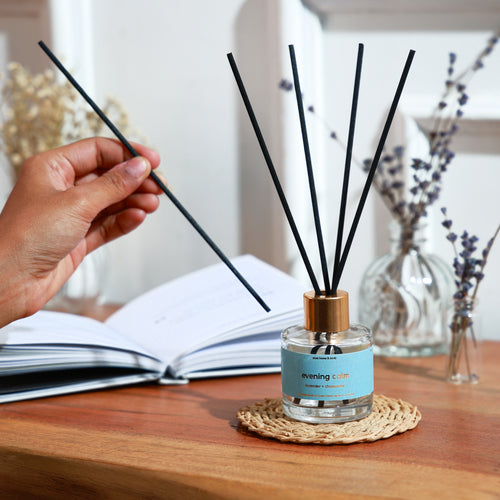 Evening Calm · continuous, no start₹799Shop →
  Sukoon · steady, 2H and 4H₹1,899Shop →
  Sandalwood · lit last, placed close₹449Shop →
Part three — what an earlier start cannot buy
Lead time is useful and it is also the variable people over-trust, because it is the only one that costs nothing. So here is where it stops working. An earlier start cannot make a source larger. Emission per hour is fixed by the object: on a reed diffuser by exposed reed surface, on a machine by its output at whatever intensity you have chosen. If that rate is too low for the volume of air in the space, starting two hours earlier gives you a longer period of the same result rather than a stronger one. The room reaches its steady state and stays there. Beyond that point, time buys nothing.
Nor can an earlier start survive an air-exchange problem. If a balcony door is on the latch or two windows are open on opposite walls, the room is being flushed steadily and no domestic source outpaces that; the steady state simply settles lower. Closing a door is worth more than an extra hour, every time. And an earlier start cannot correct position: a bottle in a dead corner behind a photo frame is still in a dead corner two hours later. The order to fix things in is room, then position, then timing — timing is the polish on a setup that is already right, not a repair for one that is not.
The last limit leads somewhere. If your real requirement is scent present for one evening and absent for the rest of the week, no amount of clever timing gets you there with a passive source, because a reed diffuser has no switch to time. Asking a passive format to fill a room the moment a door opens is asking it to do an active job — not a defect, a mismatch. The honest route is a machine, sized to the space: Sukoon ₹1,899 for roughly 250–320 sq ft, Boond ₹899 for about 150 sq ft, Safar ₹3,999 for a desk, bedside, small room or car — a cordless 20ml unit about 6.9cm tall, not a living-room device. Most hosting homes end up with both: reeds running continuously in the bedrooms, a machine on a timer where people gather.
Part four — your format, and when to start it
Seven situations, each with the start that matches the mechanism you own. The cost column is mostly empty on purpose; lead time is free.
| What you own | When to start it | Why then | Cost |
|---|---|---|---|
| A reed diffuser that has been running for weeks ★ | No start. Flip all six reeds and move it, today | Its lead time has elapsed; position is the live variable | ₹0 |
| A new bottle you were saving for the occasion | Open it well before the date, not on the morning | A settled bottle rather than one in its first lift | ₹0 |
| An ultrasonic machine with timers | On the 2H setting, well before anyone arrives | Even across the room instead of a plume by the sofa | ₹0, if you already own it |
| A candle and nothing else | Last, and on the table people will sit around | Short radius; placed far away it heats an empty corner | ₹379–₹449 |
| An open-plan living-dining with one bottle | Timing will not help. Add a second source instead | Two connected volumes need two sources, not more hours | ₹799 + ₹849 = ₹1,648 |
| A bedroom, study or nursery, all week | Nothing to start. That is the point of the format | Continuous, silent, unattended, 6–8 weeks a 50ml | ₹749–₹849 |
| You want it on for the evening and off after | Buy a timer, then start it on the timer | A reed diffuser cannot be turned on at any hour | ₹1,899 |
Versailles
The most common message I get before a festival week is some version of this question, and for a long time I gave a number because a number is what people want. It was the wrong kindness. A number implies that every source starts, and one of the three things in most Indian homes does not.
What I say now is: tell me what you own, and I will tell you whether timing is even one of your levers. For a reed diffuser it usually is not, and that is genuinely fine — it is the format you choose precisely so that nothing has to be remembered. For a machine, timing is the entire reason it costs more than a bottle.
The candle is where I have changed my mind most. I used to treat it as a small diffuser. It is not; it is a local source with a short reach, and placed accordingly it is very good at something narrow. Made in small batches in Pune; a part of every order funds a girl's classroom through Nanhi Kali.
Frequently asked questions
- Before they arrive, or once they are here? — the case for settled rather than arriving.
- The two-hour clock — what each half-hour can change.
- Tonight's checklist — item by item, with what you own.
- Strong scent only when entertaining — designing for occasional use.
- Brand: the SOSA founder story.
SOSA range, specifications and prices used in this guide (verified from the live store, August 2026): Reed diffusers — alcohol-free, phthalate-free, paraben-free, IFRA-compliant compositions on a heat-stable coconut-derived (CCT) carrier, in a refillable glass bottle with six fibre reeds, flipped weekly. 50ml lasts 6–8 weeks, 130ml lasts 14–18 weeks; there is no 100ml reed diffuser size. Morning Freshness (Malabar lemon · peppermint · Nilgiri eucalyptus) 50ml ₹749 · 130ml ₹1,249; Garden Bloom (British rose · night-blooming jasmine) ₹799 · ₹1,299; Evening Calm (Kashmir lavender · chamomile) ₹799 · ₹1,299; Fresh Brew (Coorg coffee · Kerala vanilla) ₹849 · ₹1,349; Mountain Breeze (Himalayan pine · sage · Indian cedar) ₹849 · ₹1,349. Duo sets ₹1,498–₹1,598 (2 × 50ml) and ₹2,498–₹2,598 (2 × 130ml). Oil-only refills 300ml ₹2,399 · 500ml ₹3,499 — vessel and reeds not included; replacement reeds are not sold separately. Machines, by the space each genuinely serves: Boond 300ml ₹899 (~150 sq ft, about 6 hours a fill, ultrasonic) · Sukoon 500ml ₹1,899 (270–320 sq ft, 16–18 hours on low, remote and steady/2H/4H timers, three 15ml fragrances included, ultrasonic) · Megh 6L ₹3,499 (~215 sq ft — a runtime and humidity machine that covers less than a Sukoon, never a coverage upgrade) · Safar ₹3,999 (waterless cold diffusion, cordless, 2000mAh, 20ml bottle, about 6.9cm, three speeds and a 1/2/3-hour auto-off timer, up to 10 hours continuous or 30 hours intermittent — built for a car, desk, bedside, hotel room or small room; it is not a large-room diffuser) · Vaayu ₹11,999 (waterless cold-air nebulisation of undiluted oil, up to 1000m³ or about 2,000–3,000 sq ft, Bluetooth app, 1/4/8/24-hour timers, adjustable intensity, auto-stop, key-lock, under 38 dB — for large homes and whole floors). SOSA does not currently sell a separate Vaayu cold-air refill oil; the 400ml supplied in the box is the fragrance available at the time of writing, and the water-based Hotel Collection must not be used in a Vaayu. Aangan ₹25,999 and Meenar ₹38,500 are commercial. The water-based Hotel Collection for ultrasonic machines is 15ml ₹299 · 100ml ₹999 · 300ml ₹1,799. SOSA sells no room spray or home spray — every SOSA spray is a car perfume. Below ₹749: jar candles ₹379, Sandalwood or Smoked Oudh candle ₹449, wax melts ₹474 (a burner is required and not included), mugs ₹474, bubble and taper candles ₹569, Amber Rose candle ₹599, ceramic trinket dish and candle two-pack ₹664. A reed diffuser or a diffuser adds fragrance to a room. It does not clean, purify or filter air, remove or neutralise cooking, smoke or damp smells, reduce humidity, or change how anyone feels — and nothing here can promise that any guest will notice, comment on or remember a fragrance. Ventilate or extract first; add fragrance second. A persistent musty smell indicates moisture that needs finding and drying, and SOSA sells no dehumidifier or air purifier. How far a fragrance carries depends on emission rate, air movement, room volume, ceiling height, air exchange and soft furnishing; longevity and coverage figures are typical ranges and manufacturer specifications, not guarantees. Not noticing a constant fragrance is ordinary olfactory adaptation — the reliable checks are leaving the room and returning, or asking someone who has just arrived. Strength figures are positions on SOSA’s own internal scale, not an industry standard. Fragrance oil is flammable — keep bottles away from open flame and direct sunlight, and out of reach of children and pets. Composed and handmade in small batches in Pune, India; tested through 45°C summer heat and 85% monsoon humidity. Free shipping above ₹499. A portion of every order supports girl-child education through Nanhi Kali. Prices subject to change — see the live product pages.