
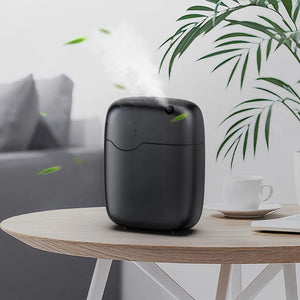


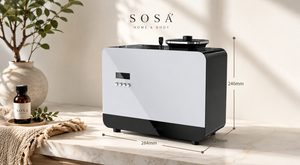
What’s the payback? A Vaayu at ₹11,999 runs for a few hundred rupees a week; holding one or two premium bookings covers it fast.
Strong or subtle? Subtle. Over-scenting reads cheap; keep a light trace in treatment rooms with a Boond at ₹799.
2. It reduces the price flinch. When the room already feels considered, the price feels expected rather than surprising, and fewer guests drift to a cheaper option.
3. The maths is small. A Vaayu runs for a few hundred rupees a week; holding a couple of premium bookings pays it back many times over.
4. Restraint does the work. Premium reads as a trace, not a fog — a Boond at ₹799 in treatment rooms, therapist-adjustable.
5. It corroborates, it doesn’t invent. Scent supports a price your treatments earn; it justifies nothing on its own. And a portion of every order supports girl-child education through Nanhi Kali.
Why a price needs a witness
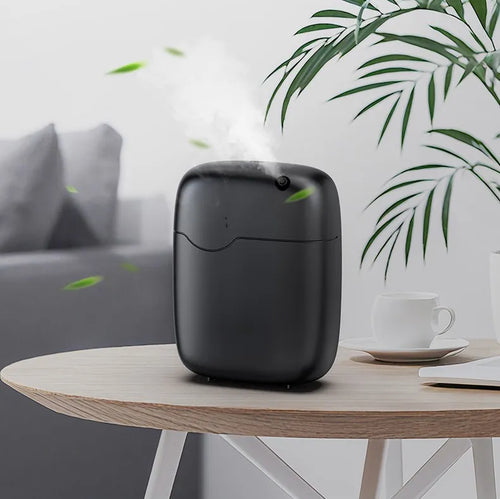
A spa sells something a guest cannot inspect in advance. They cannot test the skill of the hands before the massage, audit the laundry temperature, or measure how recently the room was aired. So when they see the price, they do the only thing available to them: they gather evidence from the things they can perceive, and let that evidence vote on whether the number feels justified. Economists call these credence goods — goods whose quality you trust rather than verify — and a spa is one of the purest examples on any high street.
Every sensory cue in your space is therefore a witness, testifying for or against your price. The hush testifies. The weight of the door testifies. The folded towel testifies. And the air testifies, more powerfully than most, because scent is wired directly to the parts of the brain that handle feeling and memory. A room that smells considered and clean is a witness that agrees with a premium number; a room that smells of nothing, or worse of the corridor, leaves the price to stand alone and unsupported. Pricing power, at bottom, is simply the strength of your witnesses.
How scent corroborates a price
The payback maths
I am wary of promising returns, so let me show the arithmetic and let you judge it. The cost of scenting your front-of-house is genuinely small. A Vaayu is a one-time ₹11,999, and refills from ₹999 keep it running for a modest monthly sum. Set against the price of even a single premium treatment, the running cost per day is a rounding error. The question is not whether it is expensive — it plainly is not — but whether the perceived-value lift it provides is worth that trivial sum. Here is the shape of it.
| Line | Figure | What it means |
|---|---|---|
| Hardware | Vaayu ₹11,999 once | One-time cost for the front-of-house signature |
| Running cost | Refills from ₹999 | A few hundred rupees a week to keep it running |
| What it protects | Your premium rate | Fewer guests drifting to a cheaper option on price alone |
| Break-even | ~1–2 bookings | Holding a couple of premium bookings clears the whole cost |
| The honest bit | Moderate lift | A real but modest effect — it supports, it doesn’t multiply |
SOSA Vaayu — front-of-house₹11,999Shop → 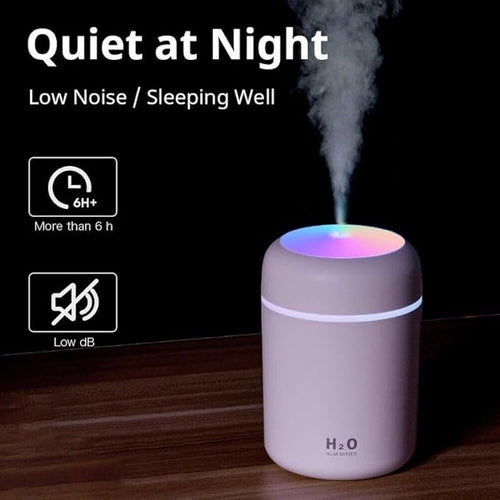 Boond — treatment-room trace₹799Shop →
  Hotel Collection scentsfrom ₹299Shop →
Why restraint reads as expensive
Here is the counter-intuitive part that trips up so many owners: strength does not support a premium price — it undermines it. A heavy, inescapable scent is the signature of a budget venue trying too hard, and guests read it instantly as such. The premium tell is restraint: a signature you notice as you arrive and stop noticing during the treatment, present enough to belong to the brand and quiet enough never to announce itself. In the treatment room this means a Boond at ₹799 on a low, therapist-adjustable setting, so the treatment’s own oils lead and a guest breathing face-down through a cradle is never troubled.
Restraint also means consistency, which is why the machine matters as much as the scent. A signature that is strong on Monday and faint on Thursday reads as an operation that is not quite in control — and an operation not in control cannot credibly charge a premium. Waterless nebulising with app and timer holds the same note at the same strength every day, which is exactly the steadiness a high price wants standing behind it, especially in humid coastal cities where the air itself works against you.
What scent can’t price
Let me be plain, because it protects you from disappointment: fragrance corroborates a premium price, it does not manufacture one. Its effect on perceived value is real but moderate, and it works only when the price is already broadly deserved. Lay a beautiful signature over rushed treatments, grubby rooms or brusque service and the witness turns hostile — the guest simply remembers, more vividly, that they overpaid. Raise your standards first: skilled therapists, spotless and ventilated rooms, unhurried service. Then let the air corroborate the premium you genuinely deliver.
And take the first “too strong” comment seriously. In a premium context, a guest noticing the mechanics of your scenting is a small failure of the very control you are selling. Post honestly that front-of-house is lightly scented and treatment areas kept low, air the premises daily, and keep wet and heat zones clean rather than perfumed. Honesty and restraint are themselves premium signals; scent is simply where they become something a guest can breathe.
The SOSA commercial edit
Choose the system that lets you run one considered signature, consistently, at the right level for each zone. Front-of-house — where the price impression forms — wants the Vaayu; treatment rooms want the quiet Boond; a whole centre wants the Aangan carrying one note through the ducts.
| System | Best for | Why it works | Price |
|---|---|---|---|
| Boond | A controlled trace in treatment rooms | Low, therapist-adjustable output; premium restraint | ₹799 |
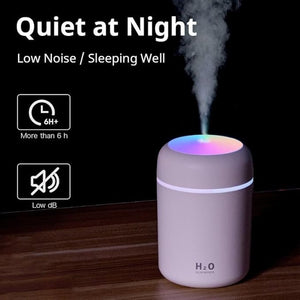
| Sukoon + Hotel Collection | A single premium lounge or small reception | Compact front-of-house signature; ultrasonic, water-based | ₹1,799 |
| SOSA Vaayu ★ | The front-of-house signature that supports the price | Waterless, app + timer, under 38dB — steadiness by design | ₹11,999 |
| SOSA Aangan | One signature across a whole premium centre | HVAC nebulising, 8,000–10,000 sq ft, intensity-zoned | ₹25,999 |
| Refills | Running cost | 100ml / 300ml Hotel Collection refills | from ₹999 |
Versailles
A spa owner once told me she was about to cut her prices because a cheaper place had opened nearby. Before she did, I asked her to change one thing: a considered signature in reception, held steady. She kept her prices. Guests stopped comparing her to the cheaper place because, she said, it simply felt like a different kind of room — and rooms that feel different are not priced by comparison.
That is the whole idea. A price cannot defend itself; the room defends it. Scent is the least expensive witness you can put on the stand, and one of the most persuasive.
We make and support these signatures from Pune. Your spa earns a price it can hold; a girl earns a classroom through Nanhi Kali.
Frequently asked questions
Facts verified August 2026: ambient scent has a real but moderate effect on perceived value, cleanliness perception and recall; congruence beats intensity; and no scent supports a price on an unclean or poorly run premises. SOSA system specs and prices — Boond ₹799, Sukoon ₹1,799, Vaayu ₹11,999, Aangan ₹25,999, Meenar ₹38,500, Hotel Collection from ₹299, refills from ₹999. The Hotel Collection scents are SOSA’s own interpretations inspired by the world’s finest hotels; SOSA is an independent Indian fragrance house, not affiliated with or endorsed by any hotel brand. Prices subject to change.