

- The direct answer
- Why open-door air exchange beats any diffuser
- The three costs of scenting a propped-open entrance
- How different door habits affect the outcome
- What to do instead of fighting the door
- Where the budget belongs when the door stays open
- A note from Sonal
- Questions about open doors and entrance fragrance
2. Most Indian café doors are propped open for large parts of the trading day, and that's usually deliberate, not an oversight. Warmer climates, a wish to look welcoming to walk-in customers, and simple ventilation all make a propped-open door a reasonable operating choice — reasonable for the business, and simultaneously fatal for any fragrance plan built around that doorway.
3. Turning the machine up doesn't fix this — it just wastes fragrance into the street. Increasing intensity to compensate for an open door doesn't rebuild the scent level indoors; it sends more fragrance out through the same gap the air is already exchanging through, which is a running cost with nothing to show for it.
4. An entrance that's sometimes closed and sometimes open doesn't get a partial result — it gets an inconsistent one. A customer who notices the fragrance on a quiet Tuesday morning and not at all during a Saturday queue isn't experiencing a slightly weaker version of the same plan; they're experiencing two entirely different entrances, on the same equipment.
5. The honest fix, in most cafés, is to stop trying to scent the doorway and redirect the same budget to zones that don't depend on a door. Washrooms and retail areas hold a fragrance regardless of how the front door is used that day, which makes them a more reliable place to direct the same budget this page's reader was about to put toward an entrance that can't hold it.
Where the door genuinely stays shut for most of service, entrance scenting still works exactly as described elsewhere in this cluster — the point of this page is that most doors, in most Indian cafés, don't.
Why open-door air exchange beats any diffuser
A diffuser works by releasing fragrance into a defined, largely enclosed volume of air, at a rate designed to build a perceptible level over minutes and hold it there. That mechanism assumes the volume of air stays roughly where it is — moved around gently by a room's own air conditioning, perhaps, but not being continuously replaced by an entirely different body of air from outside. An open doorway breaks that assumption completely. Every time it's open, the air just inside it is in direct, ongoing contact with the street, the car park or the pavement, and that outdoor air is under no obligation to carry any fragrance at all — it dilutes whatever's near the door in seconds, continuously, for as long as the door stays open.
This is a rate problem, not an intensity problem, and that distinction matters because it's the one most owners get wrong first. A stronger diffuser, a higher setting, more reed sticks in the same bottle — none of these change the rate at which outdoor air is replacing indoor air through an open doorway; they only increase how much fragrance is available to be diluted by it. In practice this means a propped-open entrance with a diffuser running at maximum intensity often performs no better, and sometimes worse for cost, than the same entrance with the diffuser switched off.
The Indian context makes this more common, not less. A glass-fronted premium café in a cooler climate might reasonably keep its door shut most of the day with the air conditioning doing the work; a café in Chennai, Mumbai or Bengaluru with a queue at the counter and customers stepping in and out every few seconds, in weather where a closed glass door can feel unwelcoming, very often keeps that door open, wedged or entirely removed from the frame during peak hours. None of that is a mistake on the café's part — it's a sound response to climate and customer flow. It just happens to be incompatible with holding a fragrance at the threshold.
The three costs of scenting a propped-open entrance
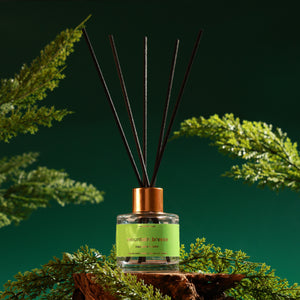
 Mountain Breeze₹849A customer walking through gets a fraction of a second of fragrance-laden air mixed with a much larger volume of street air, which most people register as nothing at all rather than as a subtle version of the intended note.
How different door habits affect the outcome
The equipment and the register can stay identical across all five rows below — the only variable that changes the outcome is how the door is actually used during service, not at close of business.
| Door habit | Typical reason | Effect on fragrance | Verdict |
| Propped fully open for most of service | Walk-in ease, ventilation, warm climate | Continuous dilution — no level ever builds | Don't scent this entrance; redirect the budget |
| Closes on its own but is wedged during peak hours | Queue management, customer flow at the busiest times | Fails exactly when the entrance is busiest — and exposure is therefore highest | Don't scent; the hours that matter most are the hours it fails |
| A swing or spring door that closes after each customer | Standard door hardware, no deliberate propping | Brief exchange per opening, largely recovers between customers | Workable — verify with the air-boundary checks used elsewhere in this cluster |
| A genuinely separate, always-shut vestibule or lift lobby | Purpose-built arrival sequence | No meaningful exchange with the street | Passes cleanly — an entrance scent can hold here |
| No door at all — an open shopfront or café frontage | Deliberate design choice for an airy, casual feel | Total, constant exchange with outside air | Never scent this — there is no boundary to test in the first place |
| The product and the register are identical in every row above — only the door's real behaviour during trading hours changes the verdict, which is why this page recommends watching the door for a working shift before buying anything for it. | |||
Mountain Breeze · washroom, unaffected by the door₹849Shop →  Sukoon · retail shelf near the counter₹1,899Shop →
  Vaayu · only where the door truly closes₹11,999Shop →
What to do instead of fighting the door
Never install or continue running entrance fragrance equipment against a door that's propped open for most of trading hours — the honest response to that finding is to switch the equipment off during those hours, or move it, rather than raising the intensity and hoping it eventually wins.
Sometimes the fix is architectural rather than a fragrance decision at all — a door closer that actually closes the door instead of merely allowing it to, or a vestibule added during a renovation, changes the underlying problem in a way no diffuser setting can. That's worth raising with whoever designs or fits out the space, not solved from the fragrance side.
Usually, the more productive move is simply redirecting the same fragrance budget to a zone the door has no influence over — the washroom, a retail shelf, or a genuinely separated corridor covered elsewhere in this cluster. Those zones deliver a reliable result on the first attempt, which an open-fronted entrance, however much is spent on it, will not.
Where the budget belongs when the door stays open
Every route below performs the same regardless of how the café's own front door is used that day, which is the specific property an open-fronted entrance can't offer.
| Route | Premises | Why | What it costs |
| Watch the door for one full working shift, before buying anything | Any café unsure how its entrance actually behaves during service | Confirms whether the door is a candidate at all, before equipment is bought for it | No purchase — half an hour of observation |
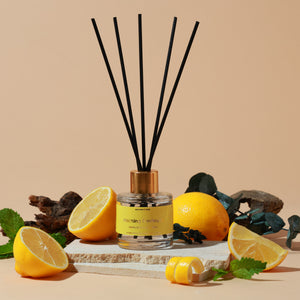
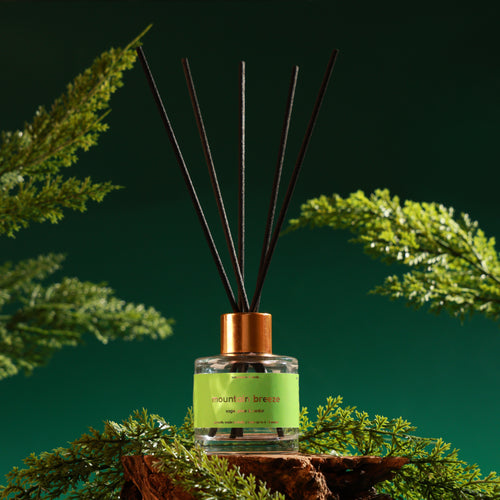
| Reed diffuser, Mountain Breeze or Morning Freshness, washroom | A washroom under roughly 150 sq ft, unaffected by the front door | A clean, dry register that holds regardless of how the entrance is used that day | ₹749–₹849 |
| Sukoon ultrasonic, retail shelf near the counter | A retail or merchandise area selling packaged goods, up to roughly 300 sq ft | Self-contained air, no dependency on the entrance door's behaviour | ₹1,899 |
| Fix the door itself, if that's within the café's control | A door that could close reliably but currently doesn't — a closer, a different hinge, a vestibule | Solves the underlying problem rather than working around it | Assessed by an interior or fit-out professional, not a fragrance purchase |
| Vaayu, opening-hours run window, key-locked | An entrance verified — by watching it, not assuming it — to close reliably through service | Scheduling confines the register to the hours the door is actually shut | ₹11,999 |
I get some version of this question every few weeks: 'we installed a diffuser at the entrance and we can barely smell it — is the machine faulty?' The machine is almost never faulty. Nine times out of ten, the door has been open, wedged or missing from its frame for most of the day the customer is describing, and no amount of troubleshooting the equipment changes that.
I understand why the door stays open — it's warm, customers are coming and going constantly, and a shut glass door can genuinely feel less welcoming in a country where hospitality often means keeping the threshold open. I'm not going to tell a café owner to close a door that's working for their business in every other respect, just to make a fragrance plan possible.
What I will say plainly is that the money is usually better spent elsewhere. A washroom or a retail shelf gives an owner a fragrance decision that actually holds, on the first day, without asking them to change how their front door works. That's not a smaller ambition than scenting the entrance — it's simply the one that's actually available to most cafés as they're run.
Questions about open doors and entrance fragrance
- Should the Entrance of a Premium Café Have a Signature Scent? — the broader question this page's hardest case sits inside.
- Can I Scent My Café Entrance Without Fragrancing the Dining Area? — the fuller air-boundary test this page's door check is part of.
- Can an Entrance Corridor Have a Signature Scent While the Café Interior Remains Unscented? — the case where a real boundary lets the strategy succeed.
- When Does Professional Scenting Make Sense for a Café's Non-Dining Areas? — the wider verdict this page's redirection leads into.
- Brand: the SOSA founder story.
SOSA products & prices (verified September 2026): Reed diffusers 50ml ₹749–₹849 (to 150 sq ft, 6–8 weeks at six reeds) · 130ml ₹1,249–₹1,349 (above 150 sq ft, 14–18 weeks) · reed refill 300ml ₹2,399. Ultrasonic: Boond ₹899 (~150 sq ft) · Sukoon ₹1,899 (270–320 sq ft, ships with three 15ml Hotel Collection fragrances) · Megh ₹3,499 (6L tank, ~100 hrs runtime, ~215 sq ft — a runtime machine, not a coverage upgrade). Waterless cold-air: Safar ₹3,999 (no published coverage figure) · Vaayu ₹11,999 (up to 1000 m³, roughly 2,000–3,000 sq ft; 400ml tank lasting about 90+ days; app and onboard control, 1h/4h/8h/24h run windows, adjustable intensity, key-lock, under 38 dB, freestanding or wall/HVAC mount, 5W, CE/RoHS/SGS) · Aangan ₹25,999 (8,000–10,000 sq ft). Hotel Collection water-based fragrance 15ml ₹299 · 100ml ₹999 · 300ml ₹1,799 is for ultrasonic machines; reed oil and Hotel Collection are not interchangeable. Reed diffusers are alcohol-free, phthalate-free, paraben-free, IFRA-compliant and low VOC, handmade in small batches in Pune. Every purchase funds a girl's education through Nanhi Kali. Prices and availability subject to change — see the live product pages.