

What honestly works besides fragrance: at the table, one large serving piece they would never buy themselves, a proper finishing salt or heavy linen napkins, or a bottle of wine well above the usual. At the door, a genuinely heavy doormat, a warm-toned bulb for the hall, a tray for keys, or good wooden hangers instead of the wire ones everybody has.
Why fragrance belongs to the arrival: smell reaches a guest before the room resolves — before shoes are off, before hello. It is the one sense with no lid, and in most homes the hallway is the least authored space in the house.
What luxury means here: perceived value is made of material, not price. Glass, six fibre reeds and a composed fragrance noticed at the door read well above ₹799–₹1,598, and I would rather say that plainly than pretend the range is expensive.
2. If you do buy for the table, buy the thing they would never buy. One large hand-thrown platter rather than a set. A proper flaky finishing salt, which a cook will taste immediately and never purchases for themselves. Heavy linen napkins. A bottle several levels above the usual, good enough that opening it is a decision.
3. Then look at the doorway, which no one has furnished. A heavy doormat that actually stops the street. A warm-toned bulb replacing the cold one in the hall — an absurdly small intervention that changes every arrival. A tray for keys. Good wooden hangers instead of the wire ones. None of these are exciting to wrap and all of them are noticed weekly.
4. And the part of the arrival that reaches a guest first is the air. Smell arrives before the room resolves. It has no lid — you can look away from a wall colour but you cannot decline to breathe. A host has thought about this and almost never acted on it, because it is the one element of their home they physically cannot assess from the inside.
5. Luxury at a door is made of material, not price. What a visitor registers in ninety seconds is glass rather than plastic, a composed fragrance rather than a synthetic top note, and the fact that somebody clearly decided. At ₹799 to ₹1,598 that reads well above what it costs, and pretending otherwise would be silly in both directions.
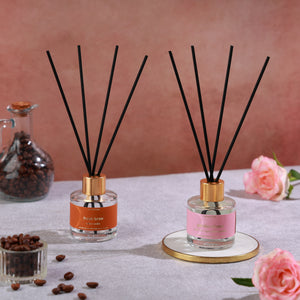
6. If you want it to read as considered, cover two rooms. A single bottle is a token; two scents chosen for the hall and the room beyond it says you thought about the shape of their evening. The Warmth & Bloom duo at ₹1,598 does that, and the two compositions share a warm base so there is no seam at the doorway.
Composed and handmade in small batches in Pune, and a portion of every order supports girl-child education through Nanhi Kali.
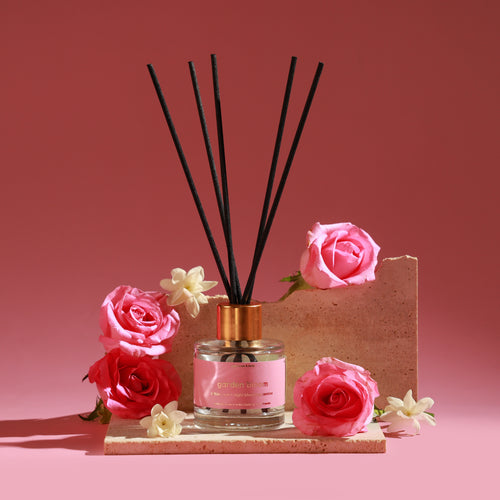
Part one — the ninety seconds nobody buys anything for
Let me deal with the other categories honestly first, because a luxury gift guide that reaches its own product in the second paragraph is an advert with a serif font. For the friend who hosts everyone, the good non-fragrance gifts split into two groups. At the table: one statement serving piece rather than another set, a proper finishing salt, heavy linen napkins, or wine several levels above what usually turns up. At the door: a doormat heavy enough to stay put, a warm-toned bulb to replace whatever cold one the builder installed, a tray for keys, wooden hangers. The second group is smaller, less obvious, and the one almost nobody considers — which is exactly why it is worth considering.
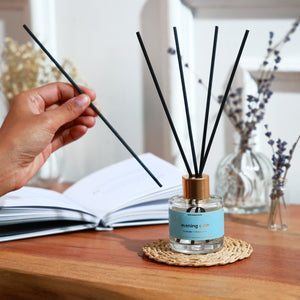
 Evening Calm₹799 · 8.9/10Watch yourself arriving somewhere. The door opens and before you have taken in the room — before the light registers, before you have got your shoes off or said anything — you have already received the air. Smell is the one sense with no lid: you can look away from a wall colour and you cannot decline to breathe. It is also the sense that attaches itself hardest to memory, which is why the flats you remember from childhood are remembered as smells rather than as floor plans. Hotels have known this for thirty years and spend disproportionately on the lobby for exactly this reason. A home hosting a dozen people a month has a lobby too. It is usually a metre and a half of hallway with a shoe rack in it, and nobody has ever spent a rupee on how it feels.
Part two — the arrival, second by second
The ninety seconds broken into its parts, with what a guest registers at each one and what almost every gift does instead. Strength figures are positions on SOSA's own internal scale at six reeds in an ordinary Indian room — our shorthand for presence, not an industry standard and not a quality ranking.
| The moment | What the guest actually receives | What most gifts address instead | What to give | Price |
|---|---|---|---|---|
| The door opens ★ | The air — involuntarily, before the room has resolved | Nothing at all; every present is pointed at dinner | Garden Bloom on the console — rose and night jasmine, 8.9 | ₹799 |
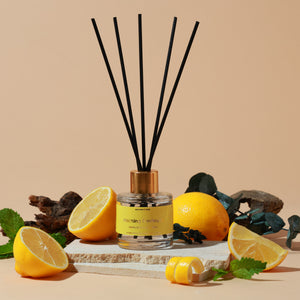
| Shoes off, bag down | Floor level — the shoe pile, wet umbrellas in monsoon, the mat | A doormat, occasionally, and it is a good gift | Morning Freshness — cold and bright, cuts a humid entrance | ₹749 |
| Coats and bags to the bedroom | A room seen alone, unprepared, with the light on | Nothing — nobody has ever thought about this room | Evening Calm — the softest composition we make | ₹799 |
| Walking through to the living room | Whether the hall and the sitting room agree or clash | The living room in isolation, if anything | A duo whose two scents share a base — Warmth & Bloom | ₹1,598 |
| Sitting down, first drink | The room finally, and the host at last | Everything — wine, flowers, dessert, cheese | Bring the wine as well. It was never the problem | — |
| The honest caveat: if their front door opens onto a shared landing, an open corridor or a balcony passage, the entrance is the one place a reed diffuser struggles — a steady draught strips the reeds, empties the bottle weeks early and leaves the room smelling of very little. Put it on a console a few feet inside instead, out of the moving air. And if the person has told you they dislike scented homes, none of this applies; read Part three. | ||||
Garden Bloom · the entrancefrom ₹799Shop → 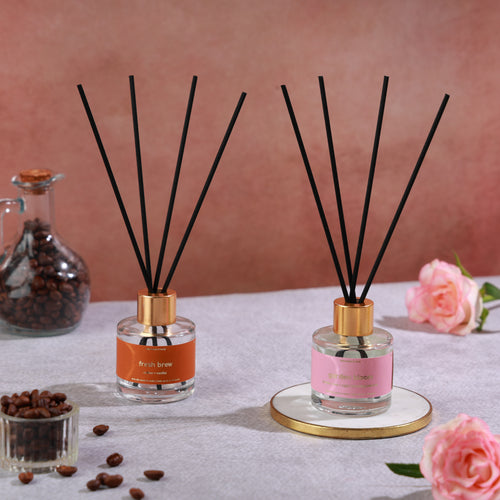 Warmth & Bloom · hall and sofa₹1,598Shop →
 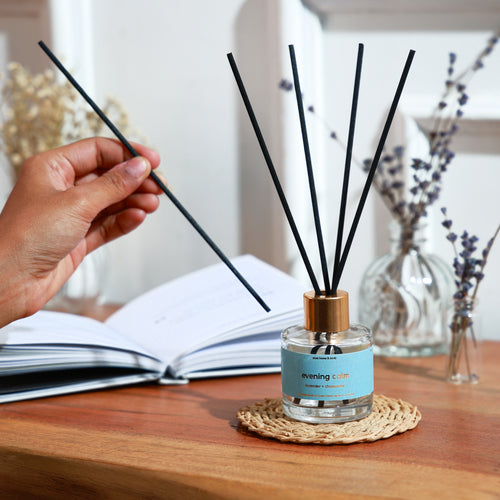 Evening Calm · where the coats gofrom ₹799Shop →
Part three — when this is the wrong gift, said plainly
The refusal specific to this page first, because it is a real one and it is about the entrance itself. A reed diffuser needs gentle incidental air, not moving air. If their front door opens onto a shared landing, an open corridor, a balcony passage or a stairwell that funnels wind — which describes a great many Indian flats — then a bottle placed by that door is sitting in a draught. A draught looks like it should help and does the opposite: it strips the reeds, empties the bottle weeks before it should be empty, and leaves the room smelling of almost nothing because the fragrance is carried away as fast as it is released. Direct sunlight through a landing window does the same by heating the oil. The fix is free and worth saying on the card: put it on a console a few feet inside the door, at roughly waist to chest height, where people passing stir the air a few times an hour.
Then the categorical refusals. Anybody who has told you in words that they dislike scented homes should be given the salt, the napkins or the wine — a constant fragrance is a small argument with them every day for six weeks, and no amount of good composition converts a person who has already declined the category. A household with a newborn, or with anybody scent-sensitive, wants neutral air. A very small, sealed entrance hall with the AC on and no window makes any constant fragrance a fact of life rather than an accent; if that is the flat, Evening Calm at ₹799 with four reeds instead of six is the adjustment, since reed count is the only genuine volume control and fewer reeds makes the bottle last longer as well.
And the mistake that spoils more arrival gifts than any of the above: buying loud. The host has been in that flat all day and their nose has stopped reporting everything in it — adaptation happens within minutes and is strongest at home. The guest crossing the threshold at eight has a fresh nose and receives the full dose. Those two people are having completely different experiences of the same hallway, and the one paying for it is the one who cannot perceive it. So gift a level quieter than the host would choose for themselves. An entrance that announces itself becomes a thing guests remark on, and no host wants their hallway to be a talking point; they want it to feel right and then be forgotten. One last practical note for an entrance specifically: if the flat is open-plan and the kitchen is visible from the door, the cooking rule still applies — extractor on while cooking, window ten minutes afterwards, close up, wait half an hour, and never run fragrance over live cooking.
Part four — the gift edit, by what you want to spend
Arranged by price, and by where in the arrival each one actually sits. Two things worth holding on to: a duo reads as considered where a single bottle reads as a token, and a bigger bottle is a longer gift rather than a stronger one.
| Price | What to give | Where it goes in the arrival | What a guest gets in ninety seconds |
|---|---|---|---|
| ₹799 ★ | Garden Bloom 50ml | Console or shelf a few feet inside the front door | Rose and night jasmine as the door opens — the least divisive thing we make |
| ₹749 | Morning Freshness 50ml | A humid entrance, or the bathroom guests will ask for | Cold, bright and anti-floral — reads as clean air rather than as perfume |
| ₹799 | Evening Calm 50ml | The bedroom where coats and bags are put down | The quietest composition in the range, in the room seen alone |
| ₹1,598 | Warmth & Bloom duo | Hall and living room together | No seam between the two rooms — the compositions share a warm base |
| ₹1,299 | Garden Bloom 130ml | The same console, for a whole season | Identical on arrival — 14–18 weeks instead of 6–8. Weeks, not volume |
| ₹2,498–₹2,598 | Either duo in 2 × 130ml | Two rooms, most of a year of hosting between them | The most generous version of this gift that still asks nothing of them |
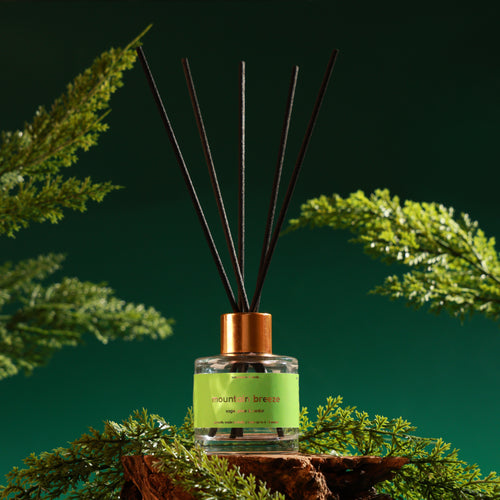
Versailles
The first thing I was taught about scent in a building had nothing to do with perfume. It was that a threshold is a transition, and that people are more receptive in the two or three seconds of crossing one than at any other point in a visit. Everything a good hotel does in a lobby is built on that single observation, and a flat with a dozen visitors a month is running a small version of the same operation without any of the budget or the intention.
What I find genuinely strange is how one-directional hosting generosity is. I have watched a friend receive four bottles of wine, two boxes of sweets and a bunch of lilies in a single evening, all of it kind, all of it aimed at a table she was about to clear. Nobody ever brings anything for the corridor. The corridor is the only part of her home that greets people without her in it.
Two cautions I would attach to any gift for a doorway. Keep it out of a draught — a shared landing or a windy stairwell will strip the reeds and empty the bottle weeks early, and the room will smell of nothing for its trouble. And buy quieter than instinct says, because your host has adapted to their own hallway and cannot judge it, while every guest gets the full dose. Everything is composed and handmade in small batches in Pune, on a heat-stable phthalate-free base tested through 45°C summers and 85% monsoon humidity, and a part of every order funds a girl's classroom through Nanhi Kali.
Frequently asked questions
- What do you gift someone who loves hosting? — hosts give constantly and are given to rarely.
- Gifts for someone who loves entertaining at home — the evening as a sequence of stages.
- The best reed diffuser gift for dinner-party hosts — the two rooms guests quietly judge.
- The complete host and hostess gift guide — this page and the eight around it, in one place.
- Brand: the SOSA founder story.
SOSA reed diffuser range & prices (verified August 2026): alcohol-free, phthalate-free, paraben-free and IFRA-compliant compositions on a heat-stable coconut-derived (CCT) carrier, low-VOC, supplied in a refillable glass bottle with six fibre reeds; 50ml lasts 6–8 weeks and 130ml lasts 14–18 weeks. Morning Freshness (Malabar lemon · peppermint · Nilgiri eucalyptus) 50ml ₹749 · 130ml ₹1,249 · 9.0/10; Garden Bloom (British rose · night-blooming jasmine) 50ml ₹799 · 130ml ₹1,299 · 8.9/10; Evening Calm (Kashmir lavender · chamomile) 50ml ₹799 · 130ml ₹1,299 · 8.9/10; Fresh Brew (Coorg coffee · Kerala vanilla) 50ml ₹849 · 130ml ₹1,349 · 9.5/10; Mountain Breeze (Himalayan pine · sage · Indian cedar) 50ml ₹849 · 130ml ₹1,349 · 9.4/10. Reed diffuser refills are oil only — you reuse your own vessel and reeds: 300ml ₹2,399 (roughly 8–11 months) · 500ml ₹3,499 (roughly 14–18 months), about ₹7–8 per ml against ₹15–17 per ml for a 50ml bottle. Duo sets ₹1,498–₹1,598 for 2 × 50ml and ₹2,498–₹2,598 for 2 × 130ml. Strength figures are positions on SOSA’s own internal strength scale, not an industry standard. Replacement reeds are not sold as a separate SKU; SOSA guidance is to refresh reeds every few months. The reed line is separate from the water-based Hotel Collection for ultrasonic machines (15ml ₹299 · 100ml ₹999 · 300ml ₹1,799) and the two are not interchangeable. Diffusers: Boond 300ml ₹899 · Sukoon 500ml ₹1,899 · Megh 6L ₹3,499 · waterless Vaayu ₹11,999. Composed and handmade in small batches in Pune, India; tested through 45°C summer heat and 85% monsoon humidity. Free shipping above ₹499. A portion of every order supports girl-child education through Nanhi Kali. Prices subject to change — see the live product pages.