



Air change: a closed bedroom sits near 0.2–0.5 air changes an hour. A living room open to a balcony, a kitchen and an entrance is being flushed continuously.
Placement and your nose: a bedside table is nose height in still air. A TV console is knee height in a draught. And you enter a bedroom fresh, while you sit in a living room until you stop noticing anything at all.
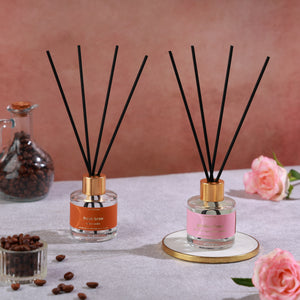
2. Volume: you are dividing by cubic feet. A 10 by 12 ft bedroom at a 9 ft ceiling holds about 1,080 cubic feet. A 15 by 20 ft living room at 10 ft holds 3,000. That is nearly three times the air from the same bottle. Coverage is quoted in square feet, but fragrance fills a volume, and the number that matters is length times width times ceiling height. Six reeds is rated for a room up to roughly 150 sq ft, and most living rooms are well past that.
3. Air change: the bedroom door is shut and the living room is not. A closed bedroom exchanges roughly 0.2 to 0.5 of its air an hour, so fragrance accumulates and stays. A living room is usually open to the kitchen, the entrance and a balcony, has people walking through it, and is often cross-ventilated for part of the day at 3 to 8 air changes an hour. It is not that the living room fails to get the fragrance. It is that it keeps losing it.
4. Placement: the bedside table beats the TV console. In a bedroom the diffuser almost always ends up on a bedside table — an internal wall, still air, and roughly at the height of your head when you are lying down or sitting up. In a living room it ends up on the TV unit or the console by the door: knee height, often behind or below the seating, frequently in the direct line between the entrance and the balcony. Same bottle, completely different delivery.
5. And your own nose is the fourth variable. Olfactory adaptation is essentially complete in about twenty minutes. You walk into the bedroom having been elsewhere, so you get a clean first breath. You sit in the living room for three hours, and after the first twenty minutes you stop registering the scent entirely — while a visitor walking in notices it immediately. A great deal of "my living room diffuser is weak" is actually "I live in my living room".
Made in India, composed by an ISIPCA Versailles-trained perfumer — and a portion of every order supports girl-child education through Nanhi Kali.
Why a fixed output meets two different rooms
The useful mental model is a tap filling a bath with the plug half out. The tap is your diffuser: a fixed, modest flow. The bath is the room's volume. The open plug is the air-change rate. The water level that settles is what you smell. Change the size of the bath or the size of the plughole and the level changes, even though the tap never altered. A bedroom is a small bath with a nearly closed plug. A living room is a large bath with the plug pulled — and people keep walking past and splashing.
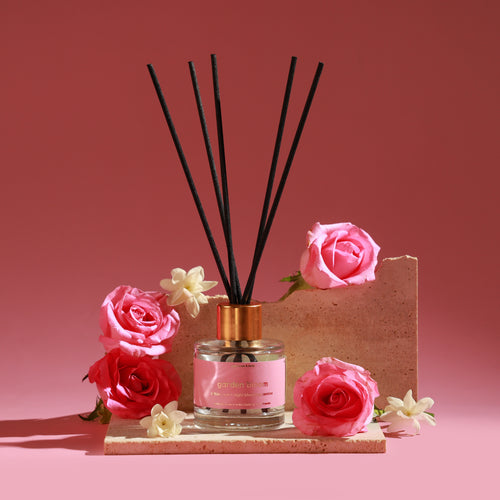
The model also tells you which interventions are worth anything. You cannot turn the tap up much: reed count is the only control, it maxes out at six, and going from four to six is a fifty per cent increase in a flow that was small to begin with. You cannot easily shrink the bath. But you can put a second tap in — a second bottle at the other end of a large room genuinely works, and two 50ml bottles at ₹749 each in the right two positions will outperform one 130ml in the wrong one. You can partially close the plug, by not leaving the diffuser in the direct path between two open sides. And you can stand next to the tap: local concentration near the bottle is always higher than the room average, which is why placing it where people actually sit matters more than placing it in the geometric centre of the room.
The four variables, in the order to check them
 Dose per roomFrom ₹749Measure both rooms properly: length times width times floor-to-ceiling height. Most people are surprised by the ratio — a living room is frequently two to three times the bedroom in cubic feet, and if the ceilings differ as well the gap widens further. Then look at the doors. A bedroom door shut for eight hours a night and much of the day is the reason bedroom fragrance always seems to work: a closed room is a container, and fragrance accumulates in containers. A living room open to the kitchen, the entrance and a balcony is not a container at all; it is a corridor with furniture in it.
Symptom to cause: one bottle, two rooms
Each of these rows has a different fix, and three of the five cost nothing. Confirm before you buy a second bottle.
| What you notice | Most likely cause | How to confirm it | What actually fixes it |
|---|---|---|---|
| Strong in the bedroom, faint in the living room, same bottle ★ | Volume plus air-change rate — a bigger room that keeps losing its air | Measure both in cubic feet, then shut the living room for two hours and re-enter | Six reeds and a second bottle in the living room; four in the bedroom |
| Living room smells of it only within a metre of the bottle | Placement — the bottle is low, obstructed or in the flow path | Hold a strip of tissue at chest height around the room with the flat open | Move to nose height on an internal wall in a still pocket, near the seating |
| Guests comment on the scent but you cannot smell it | Olfactory adaptation — you have been in the room longer than twenty minutes | Leave for thirty minutes, come back and judge the first breath | Nothing. This is your nose working correctly. Do not add reeds to fix it |
| Bedroom feels overpowering at night | A small closed room accumulating scent with almost no air exchange | Count the reeds; compare with the living room bottle | Reduce to three or four reeds and move it away from the bed |
| Both rooms went quiet at the same time, weeks in | Clogged reeds rather than an empty bottle — the fibres load up with heavier materials | Pull one out and look at the exposed length: dull, sticky or darkened is spent | Replace the reeds, not the liquid, and flip them no more than weekly |
| The living room has a smell underneath the fragrance you cannot place | A live source — a wet trap, damp or fabric holding it. This is not a fragrance problem | Smell the sofa back, the curtain and the rug at close range; check drains and the bin | Find and remove it first. Scent over a live source gives you both smells at once, and more reeds makes that worse rather than better. |
| If none of these fit: swap the two bottles between the rooms for one week. If the strong-and-weak pattern stays with the rooms, which it will, then nothing about either bottle is at fault and everything in this article applies. | |||
Reeds · always-on roomsFrom ₹749Shop →  Sukoon · when you want a switch₹1,899Shop →
  Hotel Collection · the scentFrom ₹299Shop →
How to dose each room
Set the bedroom low and the living room high. A bedroom is a small, closed, still container in which fragrance accumulates, and it needs less than people give it: three or four reeds is right for most bedrooms, and six in a small bedroom is genuinely too much — it stops feeling like a background and starts feeling like a scented candle shop. The living room is the opposite case and should have all six reeds in the bottle. That is the free adjustment, and for a lot of homes it closes most of the gap on its own. If you have been running six in the bedroom and four in the living room, which is very common because people put the new bottle where they sleep, you have the dial exactly backwards.
Then fix the living room's placement, which is usually the real problem. Get the bottle up to seated or standing nose height, on an internal wall, in the part of the room people occupy, out of the direct line between the entrance and the balcony, not behind the sofa and not inside a cabinet. Use the tissue test to find a still pocket. Then, if the room is over roughly 1,800 cubic feet — which is most living rooms in a 2BHK — use two points rather than one. Two 50ml bottles at ₹749 in two good positions beat a single 130ml in one mediocre one, because coverage is about where the evaporating surface is, not how much liquid is held in reserve. Buy the 130ml at ₹1,249 for value and fewer reorders, by all means, but buy two sources for coverage.
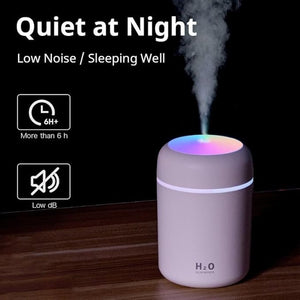
Then be honest about whether a passive source suits the bigger room at all. Reeds are excellent in closed rooms and modest in open ones; that is the shape of the tool, not a defect. If your living room is large, open-plan or ventilated for most of the day, the Sukoon at ₹1,899 is the better instrument for that one space: it actively disperses a cool mist, covers roughly 270 to 320 sq ft, takes 3 to 6 drops of the water-based Hotel Collection from ₹299 per tank, and it switches off, so you spend fragrance while people are in the room. The setup I recommend most often in a 2BHK is reeds holding the bedrooms, bathroom and entrance, and the machine handling the living room when it matters. Keep the liquids apart — reed oil does not go in the machine and the water-based fragrance does not go in the reed bottle.
The order that works
Three of the four variables cost nothing to change. Work through them before deciding the living room needs a bigger purchase — it may only need a different table.
| Step | What to do | When | Cost |
|---|---|---|---|
| 1. Remove the source | Check the living room for a live source first — sofa fabric, curtains, the bin, an unused drain | Before anything else | ₹0 |
| 2. Move the air | Note how each room ventilates; a closed bedroom holds scent, an open living room does not, and that is correct | Daily, five to ten minutes | ₹0 |
| 3. Deal with what holds it | Measure both rooms in cubic feet, then move the living-room bottle to nose height in a still pocket | Weekly to monthly | ₹0 |
| 4. Then the always-on layer ★ | A SOSA reed diffuser — per room: three or four reeds in the bedroom, all six plus a second point in a living room over ~1,800 cu ft | 50ml 6-8 weeks · 130ml 14-18 | from ₹749 |
| 5. Or the on-demand layer | Sukoon with a Hotel Collection scent — a large or open-plan living room, where a passive source cannot keep up; covers roughly 270–320 sq ft | Run it when you want it | ₹1,899 |
Versailles
I get sent photographs of two bottles side by side, one nearly full and one nearly empty, with the question of which one is defective. Neither. What I usually ask for instead is a photograph of where each one is standing, and about eight times out of ten the answer is visible immediately: the bedroom bottle is on a bedside table and the living-room bottle is on a low console beside the balcony door, in the draught, below the seating, doing its best for the street outside. Placement is the most underrated variable in home fragrance.
The second thing I would say is that the bedroom is not the standard against which the living room should be judged. A small closed room is the easiest scenting job in a house, and a large open one is the hardest. If your living room smells subtly of fragrance when you walk in after being out, that is a success, not a shortfall. People chase a living room that smells as strongly as their bedroom, add reeds, add bottles, and end up with a flat that a visitor finds heavy while they themselves — adapted after twenty minutes — still think it is weak.
So: leave the house for half an hour and judge the first breath. Dose the bedroom down rather than the living room up. Move the living-room bottle to nose height out of the draught. And if the living room is genuinely large or open-plan, use the machine there and stop asking a passive wick to do a job it was never shaped for. That is the honest allocation, and it usually costs less than buying a third bottle. A portion of every order funds a girl's classroom through Nanhi Kali.
Frequently asked questions
- High ceilings and hard-to-notice fragrance — why square feet is the wrong unit.
- Does cross-ventilation weaken a reed diffuser? — the honest answer, and the placement fix.
- Half full, wet reeds, but not reaching the bed — the full troubleshooting walkthrough.
- Old large flat vs modern compact high-rise — how the whole approach should differ.
- Brand: the SOSA founder story.
SOSA products & prices (verified August 2026): Hotel Collection water-based ultrasonic diffuser fragrance 15ml ₹299 · 100ml ₹999 · 300ml ₹1,799 · Pack of 7 (15ml, all fragrances) ₹1,799; refills 100ml from ₹999. Seven scents: The Ritz-Carlton-inspired (white tea · bergamot · cedar), Westin-inspired (white tea · aloe · cedar), 1 Hotels-inspired (cedarwood · vetiver · green leaves), The St. Regis-inspired (amber · violet · woods), Shangri-La-inspired (jasmine · green tea · white tea), Four Seasons-inspired (citrus · floral · sandalwood), W Hotels-inspired (citrus · pepper · amber). Diffusers: Boond 300ml ₹899 · Sukoon 500ml ₹1,899 · Megh 6L ₹3,499. Water-based, phthalate-free, composed to IFRA standards for home diffusion; 3–6 drops per tank. Made in India, Pune. The Hotel Collection scents are SOSA's own interpretations inspired by the world's finest hotels; all hotel names are trademarks of their respective owners and are used only to describe the scent style — SOSA is an independent Indian fragrance house, not affiliated with or endorsed by any hotel brand. Prices and availability subject to change — see the live product pages.