Why Does My 1BHK Smell Like Food Even Though I Have a Chimney?

Why Does My 1BHK Smell Like Food Even Though I Have a Chimney?

★ Indian cooking, small flats and the smell that is still there at eleven · the order that actually worksCandle ₹379 · reed ₹749 · Boond ₹899 · Sukoon ₹1,899 · free shipping above ₹499A portion funds girl-child education
★ SOSA · find the cause, then scent the room
Extraction while you cook, ten minutes after, a door shut and the air changed — and only then anything with a scent in it
★ ★ ★ ★ ★
★★★★★
"Chimney on only while cooking was my mistake. Ten minutes afterwards was the whole difference, and it cost nothing."
Meghna K. Free fix · extraction
1BHK, Mumbai
★★★★★
"Fish for two days. Learned it was aerosol landing on fabric rather than air, washed what I could, and it went in an afternoon."
Joseph A. Fabric, not air
Kochi
★★★★★
"Asked straight out whether a diffuser would cover tadka. Was told no, and told why. I bought one anyway, for afterwards, and it is the right way round."
Preeti N. Honest answer
Told the truth
★★★★★
"Open kitchen, so containment was never going to work. Switched to a dry scent that sits somewhere completely different from food. That was the trick."
Rahul V. Forest Suite ₹299
Open kitchen
★★★★★
"Bedroom door shut during cooking. One sentence, free, and my clothes stopped smelling of dinner."
Shalini D. Free fix · shut the door
2BHK, Pune
★★★★★
"Sukoon on the 4H timer from six, not at eight when everyone arrives. The flat has already got there by then."
Imran H. Sukoon · 4H timer
₹1,899
★★★★★
"Chimney on only while cooking was my mistake. Ten minutes afterwards was the whole difference, and it cost nothing."
Meghna K. Free fix · extraction
1BHK, Mumbai
★★★★★
"Fish for two days. Learned it was aerosol landing on fabric rather than air, washed what I could, and it went in an afternoon."
Joseph A. Fabric, not air
Kochi
★★★★★
"Asked straight out whether a diffuser would cover tadka. Was told no, and told why. I bought one anyway, for afterwards, and it is the right way round."
Preeti N. Honest answer
Told the truth
★★★★★
"Open kitchen, so containment was never going to work. Switched to a dry scent that sits somewhere completely different from food. That was the trick."
Rahul V. Forest Suite ₹299
Open kitchen
★★★★★
"Bedroom door shut during cooking. One sentence, free, and my clothes stopped smelling of dinner."
Shalini D. Free fix · shut the door
2BHK, Pune
★★★★★
"Sukoon on the 4H timer from six, not at eight when everyone arrives. The flat has already got there by then."
Imran H. Sukoon · 4H timer
₹1,899
Find the source first · two windows for twenty minutes beats any product for a closed smell Fragrance is the finishing layer. It does not remove damp, a dry drain or a loaded sofa Sukoon ₹1,899 · 270–320 sq ft · 16–18 hours per fill · three 15ml scents included


Founder Diaries · Home Fragrance · Why Your Home Smells of Cooking
By Sonal Sahani · ISIPCA Versailles 11 min read Updated August 2026
The chimney is not broken and you are not doing anything wrong. A kitchen hood is a capture device with a footprint, and it collects the column of hot air rising directly underneath it — that is the entire extent of its job. Indian cooking generates smell in at least three ways that never enter that column, and a 1BHK compounds the problem by being one continuous volume of air with a bed in one corner of it. Everything that actually fixes this is free, and I would rather you did all of it before you spend anything at all.
Quick answers — read this first
Why it happens: a chimney captures the rising plume directly inside its hood footprint. Oil aerosol thrown sideways from a pan wider than the burner, steam from open pots, and tadka — a deliberate high-temperature release — largely miss it.

The free fixes, in order: switch the chimney on before the pan is hot and leave it running ten minutes after you finish; cook on the back burner; keep lids on anything simmering; shut the bedroom door; and open a window on the far side of the flat so the extraction has somewhere to draw replacement air from.

Fragrance comes last. It layers on air that has already been changed. It does not remove a cooking smell, and running a diffuser through dinner gives you two smells rather than one.
The short answer
Short answer: a chimney only removes what rises into its hood. Aerosolised oil leaving the rim of a pan that is wider than the burner, steam from open pots, and the burst of a tadka are all released outside or faster than the capture zone, so they enter the room instead. In a 1BHK there is no second room for them to be diluted into.
The fixes that cost nothing: extraction on before the oil is hot and for ten minutes afterwards; the back burner rather than the front; lids on pots; the bedroom door shut while you cook; and a window opened on the opposite side of the flat, which gives the chimney a make-up air path and is the step almost nobody knows about.
Then, and only then, fragrance: the Sukoon is ₹1,899 for 270–320 sq ft with steady, 2H and 4H timers and three 15ml Hotel Collection scents included, and the Boond is ₹899 for a smaller corner. Hotel Collection scents are ₹299 for 15ml, ₹999 for 100ml and ₹1,799 for 300ml at about ₹6 per millilitre. SOSA does not make a room spray for the home. Free shipping above ₹499.
Straight answer
Why does my 1BHK still smell of food when I have a kitchen chimney?
1. Because a chimney captures a column, not a room. The hood collects the hot plume rising directly beneath it. Anything released outside that footprint, or faster than the fan can take it, goes into the flat instead. This is a geometry problem before it is a product problem.

2. Run the chimney before the pan is hot and for ten minutes after you switch the hob off. Most people start it when the smell starts and stop it when the cooking stops, which are both the wrong moments. The ten minutes afterwards is the single highest-value free change on this page.

3. Cook on the back burner and keep lids on. The back burner sits deeper inside the capture zone and further from the room. A lid on a simmering dal removes an open steam source entirely, and steam is the carrier that takes volatiles everywhere.

4. Shut the bedroom door before you start, not after. In a 1BHK the bedroom is the only separable volume you own and it is full of fabric that will hold whatever reaches it. A closed door for forty minutes costs nothing and is worth more than any product I sell.

5. Open a window on the far side of the flat while the chimney runs. An extractor removing air needs that air replaced from somewhere. Give it a deliberate near path and it stops pulling through every gap in the flat. Almost nobody is told this, and it changes how well the chimney works.

6. Fragrance last, once the air has been changed. A Sukoon at ₹1,899 on the 2H timer after the window is shut again, three drops of a Hotel Collection scent at ₹299. Not during dinner.

A portion of every order supports girl-child education through Nanhi Kali.

TL;DR: a chimney only removes the plume rising inside its hood. Sideways oil aerosol, open-pot steam and tadka mostly miss it, and a 1BHK has no second room to dilute them into. Extraction ten minutes after you finish, the back burner, lids, a shut bedroom door and a window for make-up air — all free — then fragrance.
SOSA Sukoon
For the hour after the extraction has done its work, not the hour during
SOSA Sukoon ₹1,899
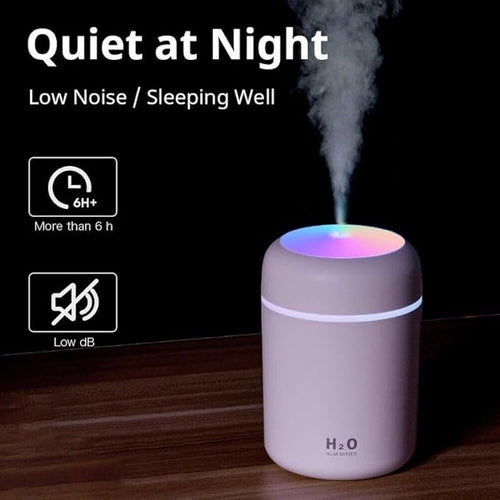
A 500ml BPA-free tank rated for 270–320 sq ft, 16–18 hours per fill on low at 30–50 ml/h against 9–12 on high, a 2.4MHz cool-mist plate, a remote, auto shut-off and steady, 2H and 4H timers, with three 15ml Hotel Collection scents of your choice included. In a 1BHK the timer is the specification that matters, because the single most common mistake in a one-bedroom flat is running a scent through dinner and wondering why the room smells of two things. Set the 2H timer to start once the chimney has been off for ten minutes and the window has been shut again. A steady level arrives in about twenty minutes from cold.

What a hood actually captures, and what it misses

A kitchen chimney is not an air purifier and it is not a room extractor. It is a capture hood: a box with a fan in it, positioned above a heat source, relying on the fact that hot air rises in a reasonably coherent column and can be collected before it spreads. That mechanism is genuinely good, and when the smell is inside the column it works better than anything else in the kitchen. The whole of this page is about the material that is never in the column in the first place. Once you see the problem that way, the list of free corrections writes itself, and the reason your ₹18,000 chimney has not solved a ₹0 problem stops being mysterious.

1
THE GEOMETRY
A pan wider than the burner throws its aerosol sideways
Start with the piece of equipment nobody suspects, which is the kadai. A burner flame is perhaps ten centimetres across. The pan sitting on it is routinely thirty, and a tawa can be more. The rising column of hot air is organised over the flame; the outer two-thirds of the pan surface is not above the flame at all, and what leaves that surface leaves it in whatever direction the surface is facing. Frying throws oil outward as well as upward: droplets are ejected horizontally when water in the food hits hot oil, and the finest of them are small enough to stay suspended and drift with any air movement in the room. The hood is directly above. Nothing about its position helps with a droplet travelling at forty-five degrees from the rim of a pan that overhangs the burner by ten centimetres on each side. The second half of the geometry problem is the hood itself. A great many Indian kitchens have a sixty-centimetre chimney mounted over a four-burner hob that is at least sixty centimetres wide, which means the front burners sit at or beyond the front edge of the capture zone. Stand where you cook and look up. If the front of the pan is not underneath the hood, the front of the pan is venting into your living room. There is no setting on the machine that corrects that, and the free fix is to move the pan to the back burner, which sits deeper under the hood and further from the room. I have watched people spend an afternoon comparing suction ratings when the answer was to use the other ring. If you want the full technical picture of what your chimney can and cannot do, the chimney page in this group goes through it properly.
2
THE CARRIER
Steam from an open pot distributes volatiles everywhere the air goes
Then the second route, which is the one that surprises people, because it does not look like smoke and it does not look like frying. An open pot of dal, rasam, sambar or rice at a simmer is releasing water vapour continuously, and that vapour is not neutral packaging. It carries dissolved and entrained aromatic compounds with it, and it moves as a broad soft plume rather than a tight hot one. A narrow, fast, buoyant column from a frying pan behaves itself and goes upward. A wide, gentle release from a pot at a low simmer drifts, spreads and follows whatever room current is available — a ceiling fan, a doorway, the convection off the fridge motor. Much of it never rises fast enough to be collected. Then it cools, and this is the part that matters for how long the smell lasts. Warm moist air moving into a cooler room deposits its moisture onto cooler surfaces, and what was dissolved in that moisture comes with it — onto walls, onto the outside of cupboards, onto curtains and onto the sofa. The air can be exchanged in twenty minutes. The film left behind on a surface cannot, which is why a flat can smell of lunch at nine at night when the air itself was replaced twice in between. The correction is trivial and free: a lid. A lid on a simmering pot removes the release almost entirely, and where a dish genuinely needs to reduce uncovered, do that last with the extraction on high rather than first while you are busy elsewhere.
3
THE DELIBERATE ONE
A tadka is designed to fill the room, and it succeeds
And then the third, which I will describe accurately rather than politely. A tadka is a controlled flash release of aromatic compounds into air. Oil is taken to a temperature well above anything else in Indian cooking, whole spices are dropped into it, and their volatile fraction is driven off in a matter of seconds — mustard seeds popping and physically ejecting themselves, asafoetida going up almost instantly, curry leaves crackling and releasing everything they have at once. The point of the technique is to put aroma into the room. It is not a side effect of the method; it is the method. No extraction system sized for a domestic kitchen removes that quantity of material in the two or three seconds over which it is released, because the release rate briefly exceeds the capture rate by a wide margin. What escapes in those seconds is what you are still smelling at eleven. So the honest instruction for a tadka is different from the instruction for the rest of the meal: chimney on high for a full minute before the oil goes in, not as the seeds go in, and left on high for a good ten minutes after. A hood that is already moving air has a much better chance of capturing a burst than one that is spinning up into it. Do the tadka on the back burner. Have the bedroom door shut before you begin. And then let the machine run while you eat, which is exactly when everyone switches it off because the noise is annoying and the cooking looks finished. It is not finished. The air in the room is still carrying the release.
The one-line version of this whole page: a chimney removes what goes up into it, and Indian cooking is very good at making smell that goes sideways.

The three escape routes, ranked

Ranked by how much they contribute in a small flat, with the free correction for each and what it costs, which in every case is nothing. The last row is the one that decides how much of any of this reaches your bed, and it is the cheapest line in the table.

Where the smell actually leaves
What the hood catches, what escapes, and the free correction
Route What the chimney gets What escapes into the flat The free correction Cost
Tadka ★ Some of the plume, if the fan is already at speed The burst itself — a release rate that briefly exceeds the capture rate of any domestic hood Chimney on high a full minute before the oil goes in, back burner, ten minutes after ₹0
Aerosolised oil The fraction rising inside the hood footprint Droplets thrown sideways from a pan wider than the burner, which then drift and land on every surface in the flat Move to the back burner; use a lid or a splatter guard; keep the pan closer to the hood's centre ₹0
Open-pot steam Very little — a low simmer does not rise fast enough to be collected A broad soft plume carrying volatiles, which condenses onto cooler walls, cupboards and fabric A lid. Reduce uncovered last rather than first, with extraction on high ₹0
Extraction with no inlet Less than the rating suggests, because the air removed has to be replaced Nothing directly, but the chimney underperforms and pulls replacement air through every gap in the flat Open a window on the far side of the flat while the chimney runs ₹0
The bedroom door Nothing. This is not the chimney's job Everything that got past the hood, into the room with the most fabric in it Shut it before you start cooking, not afterwards. Reopen once the air has been changed ₹0
After all of the above A flat with clean, moving air and no cooking note left in it Now a scent has something to sit on: three drops, on a timer, after the window is shut from ₹299
Shop this guide
Once the air has been changed — the 1BHK setup
The SOSA principle
A chimney is a capture hood, not a room extractor. It removes the column rising into it, and Indian cooking is unusually good at producing smell that never enters that column.
Sideways aerosol from a pan wider than the burner. Steam from an open pot at a simmer. A tadka, which is a deliberate release designed to reach the whole room. None of the three are the chimney's fault, and all three have a free correction.

The free fixes, in the order they matter

Take the timing first, because it is the change that costs nothing, takes no effort and does the most. Switch the chimney on before the pan is hot and leave it running for ten minutes after the hob is off. Almost everyone does the opposite: the fan goes on when the smell arrives and off when the cooking looks finished. Both of those are the wrong moment. A fan that is already moving air has a meaningfully better chance of collecting a sudden release than one accelerating into it, and the air in the kitchen at the instant you switch the hob off is the most heavily loaded air of the entire session — it is carrying everything that escaped, and it has not gone anywhere yet. Ten more minutes of extraction removes that, and it is the difference between a flat that smells of dinner while you eat and a flat that smells of dinner at bedtime. Then the burner. Use the back one. It sits deeper inside the hood's footprint and further from the room, and on a standard sixty-centimetre chimney over a four-burner hob it is often the only ring genuinely covered. Then lids, which remove an open steam source entirely; if a dish has to reduce uncovered, do that at the end with the extraction on high rather than at the start while you are chopping. And shut the bedroom door before you begin. In a 1BHK it is the only volume you can separate, and it contains the mattress, the pillows, the wardrobe and the curtains — the four things in the flat with the longest memory for a smell. Forty minutes of a shut door costs nothing and saves you a week of wondering why your shirts smell faintly of lunch.

Then the one that almost nobody has been told, and the reason it belongs on a page about a chimney rather than a page about windows. An extractor removes air from the flat, and every cubic metre it removes has to be replaced by a cubic metre entering from somewhere. If every window and door is shut, that replacement air still arrives — through the gap under the front door, through window frames, through the bathroom shaft, through the service duct — but it arrives slowly and against resistance, and a fan that cannot get air in cannot get air out. The machine keeps spinning at its rated speed and moves a fraction of its rated volume. Open one window on the far side of the flat while the chimney runs and you have given the extraction a deliberate, near, low-resistance inlet. The chimney immediately does more, and the replacement air stops being dragged in through every gap in the building. That is the whole instruction: one window, on the opposite side from the kitchen, open for as long as the chimney is on and shut when it goes off. The air-path page in this group takes the pressure argument further, including what it means for a bedroom. For here, the practical version is enough. On the monsoon exception, which matters in this country: on a genuinely wet day, indoor humidity is already high and opening up wide imports moisture. One window is still worth it while the extraction runs, because you are exchanging a small amount of air for a specific reason and for a short time, but do not leave the flat open all evening in July expecting it to dry out.

Then the part where I tell you what fragrance does and does not do, because a page like this ends in a shop and you deserve to know the limits before you reach it. Scent does not remove a cooking smell. It adds a second smell to the same air, and if the first one is still there you now own both. There is no product on this site that changes that, and there is no product on anyone else's site that changes it either. What fragrance is genuinely good at is the room afterwards: air that has been changed, surfaces that have been wiped, a flat that currently smells of nothing in particular and would be better for smelling of something you chose. In a 1BHK that means three drops rather than four or six, because you are scenting one continuous volume rather than a room — the Hotel Collection is composed at three to six drops per tank, the dose is per tank rather than per litre since you are scenting the mist and not the water, and a 300ml Boond at ₹899 takes the same three drops as a 500ml Sukoon at ₹1,899. Buy the larger machine for hours and coverage, never for intensity. Run it on the 2H timer starting once the chimney has been off for ten minutes and the window is shut again, which is roughly when you sit down. Placement is waist height or above, at the edge of the room rather than in a doorway, out of the path of a fan, and as far from the hob as the flat allows. And on timings, so you buy the right thing: a candle puts scent into a room in fifteen to twenty minutes and must be attended and put out, a Sukoon reaches a steady level in about twenty minutes from cold, and a reed diffuser needs twenty-four to seventy-two hours before it is doing its job. A reed is the wrong buy for tonight and the right buy for a flat you want to hold one quiet level for months. SOSA does not make a room spray or a linen spray for the home; the sprays in the range are car perfumes.

A chimney removes the column of air rising into it. Indian cooking is unusually good at making smell that goes sideways, and no amount of suction collects what was never underneath the hood.
— Sonal Sahani, SOSA

The SOSA edit

In the order I would actually do it in a one-bedroom flat. The first four rows cost nothing and are the reason the page exists. Only the last two have a price on them, and both belong to the hour after dinner rather than the hour during it.

The SOSA edit
A 1BHK that smells of food, in working order
Do What it is Why it is in this position Cost
1. Extraction on early, off late ★ Chimney on before the pan is hot, and for ten minutes after the hob is off The most heavily loaded air of the session is the air in the room the moment you finish. Remove it ₹0
2. Back burner, lids on The ring that sits deepest under the hood, and a lid on anything at a simmer Corrects the geometry problem rather than fighting it. Reduce uncovered at the end, on high, not at the start ₹0
3. Bedroom door shut before you start The only separable volume in a 1BHK, and the one containing all the fabric Fabric is where a flat keeps its memory. Forty minutes of a shut door beats anything on this site ₹0
4. One window open on the far side A deliberate make-up air path for as long as the chimney runs An extractor with no inlet moves a fraction of its rating. This is the step almost nobody is told ₹0
5. Sukoon or Boond 500ml for 270–320 sq ft with steady/2H/4H timers and three 15ml scents included, or 300ml for a corner Afterwards, on the 2H timer, once the window is shut. Never during cooking — that gives you two smells ₹1,899 / ₹899
6. Hotel Collection 15ml Water-based, ultrasonic only, three to six drops per tank — three in a 1BHK The 1 Hotels-inspired Forest Suite sits nowhere near food. Nothing in the seven is sweet ₹299
Not made by SOSA: a room or linen spray for the home The sprays in the range are car perfumes, sized for about three cubic metres of hot moving air Printed rather than implied. A spray is a thirty-minute product in a room anyway
Honest notes for buyers: fragrance is the last step, never the first. It layers on air that is already clean and moving, and it will not remove a source — not damp, not a dry drain trap, not a loaded sofa, not a filter that needs washing. Deal with the cause, change the air, then scent the room. On timing: a candle puts scent into a room in fifteen to twenty minutes and a Sukoon reaches a steady level in about twenty, while a reed diffuser needs a day to three days before it is doing its job — the wrong buy for a deadline and the right buy for a room you want to hold one level for months. SOSA does not make a room or linen spray for the home; the sprays in the range are car perfumes. A cool-mist ultrasonic adds 30–50 ml of water an hour to the air, so it is the wrong machine for a room you are trying to dry out. The Hotel Collection is water-based and runs in the Sukoon, Boond and Megh only — not in reeds and not in the waterless Vaayu. Reed diffusers are a separate alcohol-free line with their own scents. Candles must be attended and put out. The Hotel Collection scents are SOSA's own interpretations inspired by the world's finest hotels; SOSA is an independent Indian fragrance house, not affiliated with or endorsed by any hotel brand. A portion of every order supports girl-child education through Nanhi Kali.
SOSA Hotel Collection · 15ml
Three drops, and a register that does not sit where food sits
SOSA Hotel Collection · 15ml ₹299 / 15ml
Seven water-based scents for ultrasonic diffusers at three to six drops per tank — three in a 1BHK, because you are scenting one continuous volume rather than a room. Nothing in the seven is sweet and black pepper is the only spice material in any of them: there is no cinnamon, clove, cardamom or saffron in the Hotel Collection or in the alcohol-free reed line, which in a flat where the hob is eight feet from the sofa is a specification rather than a shortfall. The 1 Hotels-inspired Forest Suite is cedarwood, vetiver and green leaves. ₹299 for 15ml, ₹999 for 100ml, ₹1,799 for 300ml at about ₹6 per millilitre.
SS
ISIPCA
Versailles
A note from Sonal

I have stood in a great many one-bedroom flats in Pune and Mumbai at half past seven in the evening, and the conversation is almost always the same. Somebody has bought a good chimney, had it installed properly, and cannot understand why the flat still smells of the meal at bedtime. The answer is never that the chimney is bad. It is that a hood collects a column, and the way we cook produces a great deal of smell that is not in the column. A kadai overhangs its burner by ten centimetres on every side. A tadka is a technique whose entire purpose is to put aroma into the room. Neither of those is a fault in the machine, and neither is a fault in the cooking, which I would not change for anything.

What I would change is the sequence, and it is free. Fan on before the oil is hot. Back burner. Lids on. Bedroom door shut. A window open on the other side of the flat so the extraction has somewhere to draw from. Fan left running for ten minutes after you think you are finished. Six habits, no money, and in a small flat they do more than anything I could sell you. Then — once the air is genuinely changed and the window is shut again — put three drops in a machine on a two-hour timer and let the place smell of something you chose. That order is not modesty. It is the only order in which the second half works at all.

Everything is made and supported from Pune, and a part of every order funds girl-child education through Nanhi Kali. You get a home that smells like somewhere you chose; a girl gets a classroom. That equation has always felt right to me.

Frequently asked questions

Why does my flat smell of food when I have a chimney?
Because a chimney captures the column of hot air rising directly into its hood and nothing else. Oil aerosol thrown sideways from a pan wider than the burner, steam from an open pot, and the burst of a tadka are all released outside that column or faster than the fan can collect them, so they enter the flat instead.
How long should I leave the kitchen chimney running after cooking?
Ten minutes after the hob goes off, and switch it on a minute before the pan gets hot rather than when the smell starts. The air in the kitchen at the moment you finish is the most heavily loaded air of the whole session, and ten more minutes of extraction is the single most valuable free change most people can make.
Does cooking on the back burner really make a difference?
Yes, and more than people expect. A sixty-centimetre hood over a sixty-centimetre four-burner hob leaves the front rings at or beyond the edge of the capture zone. The back burner sits deeper under the hood and further from the room, so a larger share of the plume is actually collected.
Should I open a window while the chimney is running?
One window, on the far side of the flat, for as long as the chimney is on. Extraction removes air that has to be replaced from somewhere, and with everything shut it arrives slowly through gaps. A deliberate inlet lets the chimney move much closer to its rated volume. Shut it again when the fan goes off.
Will a diffuser cover the cooking smell in a 1BHK?
No, and running one during dinner gives you two smells instead of one. Fragrance is a finishing layer on air that has already been changed. Deal with the extraction and the door first, then run a Sukoon at ₹1,899 on the 2H timer at three drops of a Hotel Collection scent at ₹299.
One volume, one bedroom, one hob
Change the air firstthen give the flat a level of its own
The free steps cost nothing and come first. Afterwards, the Sukoon is ₹1,899 for 270–320 sq ft with steady, 2H and 4H timers, 16–18 hours per fill on low and three 15ml Hotel Collection scents of your choice included; the Boond is ₹899 for a smaller corner. Hotel Collection scents are ₹299 for 15ml, ₹999 for 100ml and ₹1,799 for 300ml at about ₹6 per millilitre, at three drops per tank in a 1BHK. Free shipping above ₹499, and a portion of every order supports girl-child education through Nanhi Kali.
See the Sukoon · ₹1,899 Shop the seven scents →
Continue the read
More from SOSA
Editorial standards & sources
About this guide: Written by Sonal Sahani, ISIPCA Versailles-trained founder and perfumer at SOSA Home & Body, on why a kitchen chimney is a capture hood rather than a room extractor, the three ways Indian cooking produces smell that never enters the hood's capture zone, why a one-bedroom flat has no second volume to dilute it into, the five free corrections that matter more than any purchase, and why fragrance belongs to the hour after the extraction rather than the hour during it.

Facts verified August 2026: Diagnostic facts used in this guide: a closed room accumulates what it cannot exchange, so cross-ventilation needs two openings rather than one; a drain's U-bend water seal evaporates in roughly two to four weeks of disuse and then admits sewer gas, which is corrected by pouring water down the drain; microbial growth in fabric and on surfaces accelerates above about 60% relative humidity, and Indian monsoon indoor humidity commonly runs 80–95%, which is the one situation where ventilating on a wet day can import moisture rather than remove it; an air-conditioner's cold, wet evaporator coil and filter grow biofilm that is blown into the room on start-up; textiles adsorb cooking aerosol and body oils and re-release them for weeks; and olfactory adaptation makes a constant household smell undetectable to its residents within about a fortnight while visitors still perceive it. Timings: a scented candle scents a normal room in roughly 15–20 minutes, a Sukoon ultrasonic diffuser reaches a steady level in about 20 minutes from cold, and a reed diffuser needs roughly 24–72 hours. SOSA products and prices: Sukoon 500ml ₹1,899 (270–320 sq ft, 16–18h on low, 9–12h high, 30–50 ml/h, 2.4MHz cool mist, remote, steady/2H/4H timers, BPA-free, auto shut-off, includes three 15ml Hotel Collection scents of your choice); Boond 300ml ₹899; Megh 6-litre ₹3,499; waterless Vaayu ₹11,999 (up to 1000m³); Aangan ₹25,999. Hotel Collection water-based fragrance 15ml ₹299, 100ml ₹999, 300ml ₹1,799, Pack of 7 at 15ml ₹1,799; dose 3–6 drops per tank. Reed diffusers (separate alcohol-free line): Morning Freshness from ₹749, Garden Bloom and Evening Calm from ₹799, Fresh Brew and Mountain Breeze from ₹849; 130ml from ₹1,249; duos from ₹1,498; 300ml refills ₹2,399. Scented candles: Bookshop 80g ₹379, Amber Rose 130g ₹599 and 220g ₹799, Smoked Oudh 130g ₹449, ceramic jar candles ₹949, Pure Calm wax melt set ₹854. Free shipping above ₹499. SOSA does not make a room or linen spray for the home. The Hotel Collection scents are SOSA's own interpretations; SOSA is not affiliated with or endorsed by any hotel brand. Prices subject to change — see the live product pages.
Zurück zum Blog