





Why it reads as old rather than as dinner: the light volatile top of a food smell disperses within hours. The heavier fatty fraction stays on the fibre and oxidises, and oxidised fat is the stale note itself.
The free fixes: covers off and washed weekly if you eat on the sofa; inner pads aired and sunned, since most of them cannot be washed; and the two-minute check that tells you which of the two is the problem.
The rule that saves people a lot of laundry: if the inner pad is the source, washing the cover achieves nothing. Replacement inner pads are cheap, and they are not a SOSA product.
2. Because they take actual food, not just the smell of it. A dropped piece of something, a splash of dal, crumbs pushed into the seam. You pick up what is visible. What went into the weave or past the zip is still there, and it is organic material sitting in a warm dark place.
3. Because of what happens to a food smell over the following days, which is the real answer. A cooking smell is a mixture: light volatile molecules that give it the bright appetising top, and heavier fatty material that carries the body of it. The light half disperses within hours. The heavy half stays on the fibre.
4. And then the heavy half oxidises, which is what stale actually is. Fats exposed to air break down over days and weeks into shorter, sharper compounds — the same process that makes an old packet of nuts taste wrong. So you are not smelling dinner. You are smelling the residue of dinner, some time later, without any of the parts that made it pleasant.
5. So, at ₹0: covers off and through the machine weekly if you eat on the sofa, and the inner pads outdoors in the sun for a day. Stand the pads on edge so both faces get air, and turn them at half-time. Sun is dry heat and ultraviolet at once, and for an object that cannot go in a machine it is the only real treatment available.
6. And check which of the two is the problem before you do any laundry. Unzip one, smell the cover and the bare pad separately. If it is the pad, washing the cover achieves nothing at all — and a replacement inner pad costs very little and is not something SOSA sells.
A portion of every order supports girl-child education through Nanhi Kali.

Why it smells of old food rather than of food
There is a specific reason this smell is so hard to name, and it is worth a paragraph because once you know it you will recognise it everywhere. A food smell is not one thing. It is dozens of compounds of very different weights, arriving together and leaving at completely different rates — and what you meet on a cushion three days later is the slowest quarter of it, on its own, changed. The pleasant part of a cooking smell is largely the light, fast, high-volatility fraction, and that is exactly the fraction that leaves a room first. The part that stays is the heavy oily end, and the heavy oily end does not stay the same while it sits there.
The cover, the pad, and which one you actually have
A short practical table, because this is a small object with a small number of possible states. Find your row, do the thing in it, and skip the rest. Four of the five rows are free, and the one that is not costs a few hundred rupees at a furnishing shop rather than anything from this site.
| What you find | What it means | What to do | How often | Cost |
|---|---|---|---|---|
| Cover smells, pad is clean ★ | Ordinary airborne and contact loading — the common case, and the easy one | Machine wash at the label temperature and dry completely before it goes back on. Weekly if you eat on the sofa, monthly if you do not | Weekly to monthly | ₹0 |
| Pad smells more than the cover | The source is inside, and laundry will not touch it | A full day outdoors, stood on edge, both faces, turned at half-time. Repeat on the next dry day if it is still there | Twice a season | ₹0 |
| A stain you remember, and a smell that comes and goes | A spill went through the cover and into the fill, where it is degrading slowly out of reach | Air the pad hard, and if the smell survives two full days of sun, replace the pad. Cheap, quick, and not a SOSA product | As needed | ₹0 / new pad |
| Crumbs and grit past the zip | Dropped food that got inside, which is organic material in a warm dark place | Unzip, take the pad out, turn the cover inside out and shake it, then vacuum inside the cover with the crevice tool | Monthly | ₹0 |
| Everything smells faintly, nothing stands out | Whole-room loading rather than a cushion event — the sofa and the curtains are carrying it too | Treat the room rather than the cushion: covers and throws washed, upholstery vacuumed, twenty minutes of cross-ventilation with two openings | Quarterly | ₹0 |
| Non-washable covers, no removable pad | A cushion that cannot be taken apart at all, which is common in cheaper sets | Vacuum with the upholstery head, sun both faces, and accept a shorter service life. This is the one case where replacement is the sane answer | Annually | New cushion |
Dry scents · nothing sweet₹299Shop → 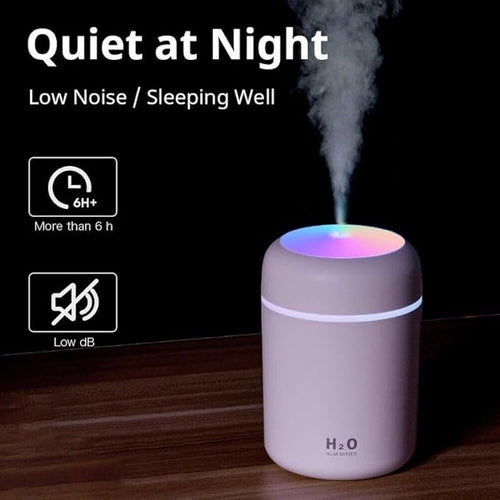 Boond · less per hour₹899Shop →
  Candle · twenty minutes₹379Shop →
The weekly version, and what to run afterwards
Start with the honest routine rather than the ideal one. If your household eats on the sofa — and most households in this country do, whatever anybody says at a dinner party — then cushion covers are a weekly wash, in with the bedlinen, and that single change does more than everything else on this page put together. If nobody eats there, monthly is fine. The way to make a weekly wash survive contact with reality is to reduce what it involves: a second set of covers, so the sofa is never sitting bare while the first set dries, or a washable throw over the two seats people actually use, which takes the load and goes in the machine without anything needing to be unzipped. Then the pads, which are the part that gets forgotten because they cannot be laundered: twice a season, on a dry sunny morning, take them outside and stand them on edge so air reaches both faces, turn them after an hour or two, and bring them in before the evening damp. Two hours of direct sun on a cushion pad does more than any product I sell, and I would rather write that sentence than pretend otherwise. Sunlight is dry heat driving moisture out and ultraviolet dealing with what is growing, and for an object that cannot go in a machine it is the entire available toolkit. While the pads are out, vacuum the inside of the covers with the crevice tool, because that is where the crumbs went.
Then the two habits that stop it coming back, both of which are about the kitchen rather than the sofa. Run the extractor for ten minutes after you finish cooking rather than switching it off with the hob. The aerosol that would otherwise drift out and settle on soft furnishings is still airborne during those ten minutes, and it is the only window in which you can remove it rather than let it land. Shut the kitchen door for the same ten minutes if there is one. And the second: change out of what you cooked in, or at least do not sit down on the sofa in it for half an hour. Clothes and hair after forty minutes over a hob carry a remarkable amount, and they hand it straight to the cushion behind your shoulders. Neither habit costs anything and both are considerably easier than a weekly wash. Beyond that, the ordinary furniture of a well-kept room applies: twenty minutes of cross-ventilation with two openings on opposite or adjacent walls, not one window ajar; the bin emptied and the bin itself wiped, since the bin is usually dirtier than what is in it; and a look at the fridge, because a vegetable drawer with something elderly in it will quietly supply a whole flat with a background note that people then blame on the furniture.
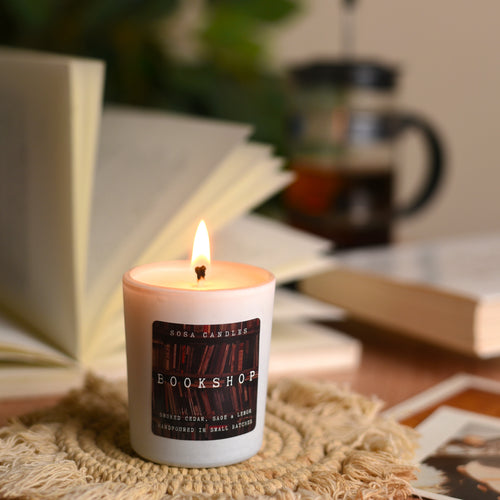
Then fragrance, which belongs here rather than at the top, and one specific piece of advice about which kind. The scent I would not run in a room that has been smelling faintly of old food is a sweet one, and the useful accident is that there is nothing sweet in the Hotel Collection at all — no vanilla, caramel, tonka or praline in any of the seven scents. The reason matters: a sweet, edible note in the air sits close to a food residue in the way a nose files things, and when the two are present together the mind puts them in the same category and the result reads as a cover-up. A dry composition sits somewhere else entirely and does not invite the comparison. The Ritz-Carlton-inspired Quiet Luxury is white tea, bergamot and cedar; the 1 Hotels-inspired Forest Suite is cedarwood, vetiver and green leaves; the W Hotels-inspired Lobby Bar is citrus, pepper and amber. All are ₹299 for 15ml, ₹999 for 100ml and ₹1,799 for 300ml at about ₹6 per millilitre, and the Pack of 7 at 15ml is ₹1,799 against ₹2,093 for seven singles. Dose: three to six drops per tank, four in a living room, and the dose is per tank rather than per litre since you are scenting the mist and not the water — so the Boond at ₹899 takes the same four drops as the Sukoon at ₹1,899. In a room where people eat, I would take the smaller machine and the timer over a larger one left running: two hours from seven scents an evening, and a machine that stops is a scent you keep liking. The Sukoon gives 16–18 hours per fill on low at 30–50 ml/h against 9–12 on high, with a 2.4MHz plate, remote, auto shut-off, steady, 2H and 4H timers and three 15ml scents included. If you would rather have a flame for an evening, a Bookshop candle at ₹379 puts scent in a room in fifteen to twenty minutes and must be attended and put out. And the limits, plainly: the Hotel Collection is water-based and runs in the Sukoon, Boond and Megh only, not in a reed diffuser and not in the waterless Vaayu; SOSA makes no room or linen spray for the home; and nothing above removes a residue from a cushion. It only gives a clean room something to hold.
The SOSA edit
In order, for the smallest and most abused textile in the living room. The diagnosis comes first because it decides whether the rest of the list is laundry or replacement, and the one purchase that actually solves the hard case is not sold here.
| Step | What it is | Why it comes here in the order | Cost |
|---|---|---|---|
| 1. Unzip one and smell them separately ★ | Cover in one hand, bare inner pad in the other. Two minutes, and it decides everything that follows | First. If the pad is the source, a wash cycle is wasted effort and you need to know that before you start one | ₹0 |
| 2. Covers through the machine | Weekly if anybody eats on the sofa, monthly if not, dried completely before they go back on | Second, and it is the whole treatment in the common case. A second set of covers makes the habit survivable | ₹0 |
| 3. Pads outdoors for a day | Stood on edge, both faces, turned at half-time, in direct sun where there is any | Third. Pads cannot be laundered, so sun is the only real treatment they have | ₹0 |
| 4. Ten minutes of extraction after cooking | Extractor left running after the hob is off, kitchen door shut for the same ten minutes | Fourth. It stops the reloading, which is the difference between doing this once and doing it monthly | ₹0 |
| 5. Hotel Collection 15ml in a Boond or Sukoon | Seven water-based scents at ₹299, none of them sweet, at four drops per tank in a 300ml or 500ml machine on a timer | Fifth. A dry scent rather than a sweet one, in a room where the residue has already gone | ₹299 + ₹899 / ₹1,899 |
| Not a SOSA product: replacement inner pads | A new pad from any furnishing shop, for the cushion that has taken a spill or is simply old | Named because it is the right answer for the hard case, and because there is nothing in it for me | — |
Versailles
This is my favourite small problem in the whole cluster, partly because the answer is so cheap and partly because of how people describe it. Nobody ever says their cushions smell of food. They say there is something old about the sofa, or that the room smells like a canteen at the end of the day, and then they look faintly embarrassed. What they are describing is oxidised fat on a fibre, which is one of the most recognisable smells in domestic life and one of the least often correctly named. Once somebody knows that the appealing half of a cooking smell has a few hours in it and the greasy half has weeks, the whole thing stops being mysterious.
The instruction I give is always the same two minutes: unzip one, and smell the cover and the pad separately. Half the people who write to me have been washing covers for months against a problem that was inside the cushion, and no product of mine would have helped them either. Air the pads, buy new ones if they have taken a spill — they cost very little and I do not sell them — and put a dry scent into the room rather than a sweet one, because a sweet note next to a food residue reads as a lid. There is nothing sweet in the collection, which for once means I am recommending something I actually make. Four drops, two hours from seven, and a machine that switches itself off.
Everything is made and supported from Pune, and a part of every order funds girl-child education through Nanhi Kali. You get a home that smells like somewhere you chose; a girl gets a classroom. That equation has always felt right to me.
Frequently asked questions
- Why does my sofa make the whole living room smell closed? — the larger object the cushions are sitting on.
- Can fabric hold a smell for longer than the air does? — why the residue outlasts the room by weeks.
- Why does my carpet smell worse during monsoon? — the same room, when humidity is the variable.
- Why soft furnishings are the real reason your home smells — the pillar guide for the group.
- Brand: the SOSA founder story.
Facts verified August 2026: Diagnostic facts used in this guide: a closed room accumulates what it cannot exchange, so cross-ventilation needs two openings rather than one; a drain's U-bend water seal evaporates in roughly two to four weeks of disuse and then admits sewer gas, which is corrected by pouring water down the drain; microbial growth in fabric and on surfaces accelerates above about 60% relative humidity, and Indian monsoon indoor humidity commonly runs 80–95%, which is the one situation where ventilating on a wet day can import moisture rather than remove it; an air-conditioner's cold, wet evaporator coil and filter grow biofilm that is blown into the room on start-up; textiles adsorb cooking aerosol and body oils and re-release them for weeks; and olfactory adaptation makes a constant household smell undetectable to its residents within about a fortnight while visitors still perceive it. Timings: a scented candle scents a normal room in roughly 15–20 minutes, a Sukoon ultrasonic diffuser reaches a steady level in about 20 minutes from cold, and a reed diffuser needs roughly 24–72 hours. SOSA products and prices: Sukoon 500ml ₹1,899 (270–320 sq ft, 16–18h on low, 9–12h high, 30–50 ml/h, 2.4MHz cool mist, remote, steady/2H/4H timers, BPA-free, auto shut-off, includes three 15ml Hotel Collection scents of your choice); Boond 300ml ₹899; Megh 6-litre ₹3,499; waterless Vaayu ₹11,999 (up to 1000m³); Aangan ₹25,999. Hotel Collection water-based fragrance 15ml ₹299, 100ml ₹999, 300ml ₹1,799, Pack of 7 at 15ml ₹1,799; dose 3–6 drops per tank. Reed diffusers (separate alcohol-free line): Morning Freshness from ₹749, Garden Bloom and Evening Calm from ₹799, Fresh Brew and Mountain Breeze from ₹849; 130ml from ₹1,249; duos from ₹1,498; 300ml refills ₹2,399. Scented candles: Bookshop 80g ₹379, Amber Rose 130g ₹599 and 220g ₹799, Smoked Oudh 130g ₹449, ceramic jar candles ₹949, Pure Calm wax melt set ₹854. Free shipping above ₹499. SOSA does not make a room or linen spray for the home. The Hotel Collection scents are SOSA's own interpretations; SOSA is not affiliated with or endorsed by any hotel brand. Prices subject to change — see the live product pages.