

- The direct answer
- Why this is an unusual list for a brand to publish
- Three questions about the hardware itself
- The full question list, answered
- How to use these answers to shortlist a vendor
- What SOSA's honest answers cost, where they apply
- A note from Sonal
- Questions about vetting a scenting vendor
2. What happens at an open-fronted or semi-open site? Air moves too fast through an open frontage for any machine to hold a level, and the honest answer is a decline or a very narrow recommendation, not a confident sale.
3. What is the running cost per site, per year? A chain needs a real annual figure, not a one-line hardware price — ask for the run-schedule assumptions behind whatever number is quoted, and treat a vague answer as a warning sign.
4. What is the refill supply chain, and how fast can it reach a second or third city? A chain rolling out across several cities needs to know refills won't stall at site three because the supply chain was only ever tested for one location.
5. Who can change the settings once a machine is installed, and how is that controlled? A chain-wide standard only holds if intensity and scheduling can't be altered by whoever's on shift that day — ask specifically how the vendor's hardware locks that down.
A vendor who answers all eight of these questions plainly, including the ones with an unflattering answer, is worth a chain-wide contract far more than one who says yes to everything.

Why this is an unusual list for a brand to publish
Most companies selling hardware into a chain-wide rollout would rather a buyer not ask too many questions before signing. A list like this one — including the question that has an answer some sites won't like — runs against that instinct on purpose. A café chain committing to twenty, fifty or a hundred sites is making a decision that's expensive to reverse once machines are installed and a rollout calendar is underway, and the questions that matter most are rarely the ones a sales conversation volunteers unprompted.
The reason to ask about refusals first is that a vendor's willingness to name them is the single best predictor of how the rest of the relationship goes. A company that will tell a chain, before the order is placed, that certain sites won't get a machine at all is a company that will also tell that chain the truth six months into the rollout when a site isn't working as expected. A company that agrees to scent everything a chain asks for is optimising for the sale, not for twenty sites still smelling right a year later.
It's also worth asking these questions of SOSA directly, not assuming the answers because this cluster argues for restraint elsewhere. A chain should hold any vendor, including this one, to the same standard — refusals in writing, a stated noise figure, named certifications, and a real answer for what happens when a specific site doesn't qualify. Anything less than that from any vendor is a reason to keep shortlisting.
Three questions about the hardware itself
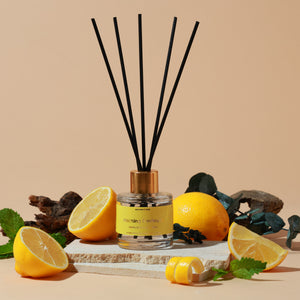
 Morning Freshness₹749Ask for the number in writing, not an adjective, and ask whether it's measured at a specific distance.
The full question list, answered
Put every one of these to any vendor under consideration, including SOSA, before signing anything covering more than a single site.
| Question | Why it matters at chain scale | SOSA's honest answer | Red flag to watch for |
| Which zones will you refuse to scent, and why? | Reveals whether the vendor has actually thought about food-service environments or is simply selling hardware | Dining room, counter, tasting bar, seating, anywhere near food preparation — refused at every site, regardless of budget | A vendor with no named refusals |
| What happens at an open-fronted or semi-open site? | Air exchange defeats any machine before it can build a level, whatever the fragrance or the hardware | Declined outright, or a very narrow recommendation limited to a genuinely enclosed sub-zone if one exists | A confident yes without asking about the frontage first |
| What is the running cost per site, per year? | Chain budgeting needs a real annual figure, not a one-line hardware price | Depends on the site's run schedule; the 400ml tank runs about 90+ days, and refills should be confirmed directly with SOSA for an exact annual figure | A single flat number with no run-schedule assumptions behind it |
| What is the refill supply chain, and how fast can it reach a new city? | A rollout that stalls at site three over a refill delay damages the whole chain's confidence in the programme | Confirm current lead times and stock directly with SOSA before committing a rollout calendar to it | No clear answer beyond "we'll sort it when we get there" |
| Who can change the settings once installed, is the noise level stated, and what certifications does the hardware carry? | A chain-wide standard only holds if settings can't drift site by site, and unrated hardware is a liability across dozens of unattended units | Vaayu ships key-locked, runs under 38 dB, and carries CE, RoHS and SGS marks | No key-lock, no stated decibel figure, or certifications the vendor can't produce on request |
| What do you do when a site fails the qualifying test, and the honest answer isn't the one the chain wanted to hear — a vendor who says "we'd decline that site" without hesitation is the one worth signing with; a vendor who has never said no to a site isn't being cautious, they're not being honest. | |||
Morning Freshness · washroom₹749Shop →  Sukoon · washroom suite₹1,899Shop →
  Vaayu · qualifying zone, key-locked₹11,999Shop →
How to use these answers to shortlist a vendor
Never take a vendor's first answer to the refusal question at face value if it's a general statement rather than a named list of zones — ask them to write the refused zones into the proposal itself, not just say them on a call.
Sometimes a vendor gives a strong answer on hardware certifications but a weak one on refill supply chain, or the reverse — treat the list as a whole rather than stopping at the first good answer, since a chain-wide rollout depends on every item holding, not just one.
Usually the question about what happens when a site fails the qualifying test is the one that separates a vendor worth a multi-site contract from one that isn't — ask it last, after the easier questions, and weigh the answer heavily.
What SOSA's honest answers cost, where they apply
Once a site passes the refusal, frontage and qualifying-test questions above, this is what the hardware actually costs.
| Route | Applies to | Why | What it costs |
| No machine at all | Dining room, counter, tasting bar, any seating, open-fronted sites | These zones and formats are refused regardless of budget — no fragrance solves an air-exchange or food-adjacency problem | ₹0 |
| Reed diffuser | A washroom under 150 sq ft that qualifies | Simple, no power required, sized to the room rather than the chain's ambition | ₹749–₹849 |
| Sukoon ultrasonic | A washroom suite, 270–320 sq ft | Steady coverage for a larger confirmed washroom zone | ₹1,899 |
| Vaayu, key-locked, per site | A genuinely separated entrance or a retail section selling packaged goods | Independent scheduling and a locked settings panel, suited to a chain that can't have every unit adjusted by hand | ₹11,999 per zone |
| Confirmed refill supply chain and lead times | Every site before rollout is finalised | Prevents a later site's refill from becoming the first broken link in the chain's confidence | Confirm directly with SOSA, no cost to ask |
I'd rather a chain ask me every question on this list before they sign anything, including the one about what happens when a site fails. My honest answer is that it happens more often than a sales conversation would ever volunteer — an open frontage, a dining room dressed up as an entrance, a washroom with no real air boundary from the kitchen. In each of those cases the honest answer is that site doesn't get a machine, and I'd rather say that upfront than install one and have it not work.
What I find most chains don't ask, and should, is about the refill supply chain once they're expanding past their first city. It's an unglamorous question next to noise levels and certifications, but it's the one that determines whether a rollout stays on schedule or stalls quietly at site four while everyone waits for a delivery nobody confirmed the timeline for.
If I could get one question onto every chain's vetting checklist, it would be the refusal one, asked first, before anything else. A vendor's list of what they won't scent tells you more about how the relationship will go than their list of what they will — and I'd want a chain to hold SOSA to that exact standard, not just whoever else is on the shortlist.
Questions about vetting a scenting vendor
- When Does SOSA Vaayu Make Sense for a Café — and When Is It the Wrong Product? — the honest sizing conversation behind several of these answers.
- Should Café Chains Standardise Entrance and Washroom Fragrances? — what a chain does once a vendor has passed this list.
- How Do I Create a Scent SOP for a Premium Café Chain? — turning these vendor answers into a written chain policy.
- Is Professional Scenting Worth the Cost for a Premium Café Chain? — the cost side of the same vendor conversation.
- Brand: the SOSA founder story.
SOSA products & prices (verified September 2026): Reed diffusers 50ml ₹749–₹849 (to 150 sq ft, 6–8 weeks at six reeds) · 130ml ₹1,249–₹1,349 (above 150 sq ft, 14–18 weeks) · reed refill 300ml ₹2,399. Ultrasonic: Boond ₹899 (~150 sq ft) · Sukoon ₹1,899 (270–320 sq ft, ships with three 15ml Hotel Collection fragrances) · Megh ₹3,499 (6L tank, ~100 hrs runtime, ~215 sq ft — a runtime machine, not a coverage upgrade). Waterless cold-air: Safar ₹3,999 (no published coverage figure) · Vaayu ₹11,999 (up to 1000 m³, roughly 2,000–3,000 sq ft; 400ml tank lasting about 90+ days; app and onboard control, 1h/4h/8h/24h run windows, adjustable intensity, key-lock, under 38 dB, freestanding or wall/HVAC mount, 5W, CE/RoHS/SGS) · Aangan ₹25,999 (8,000–10,000 sq ft). Hotel Collection water-based fragrance 15ml ₹299 · 100ml ₹999 · 300ml ₹1,799 is for ultrasonic machines; reed oil and Hotel Collection are not interchangeable. Reed diffusers are alcohol-free, phthalate-free, paraben-free, IFRA-compliant and low VOC, handmade in small batches in Pune. Every purchase funds a girl's education through Nanhi Kali. Prices and availability subject to change — see the live product pages.