Ultrasonic vs Waterless Diffusers: What Is the Difference?

Ultrasonic vs Waterless Diffusers: What Is the Difference?

★ Two technologies · what each one actually does to the air in your roomBoond ₹899 · Sukoon ₹1,899 · Megh ₹3,499 · Vaayu ₹11,999 · Aangan ₹25,999A portion funds girl-child education
★ SOSA machines · ultrasonic vs waterless nebulising
One turns water into a scented mist. The other turns neat oil into a dry cloud. Everything else about them follows from that
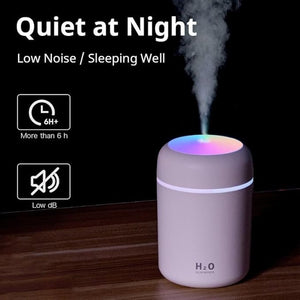
Ultrasonic: a ceramic plate vibrating at 2.4MHz breaks water into a cool mist. Three to six drops of water-based fragrance ride out with it. The output is mostly water.
How an ultrasonic works
Boond · Sukoon · Megh
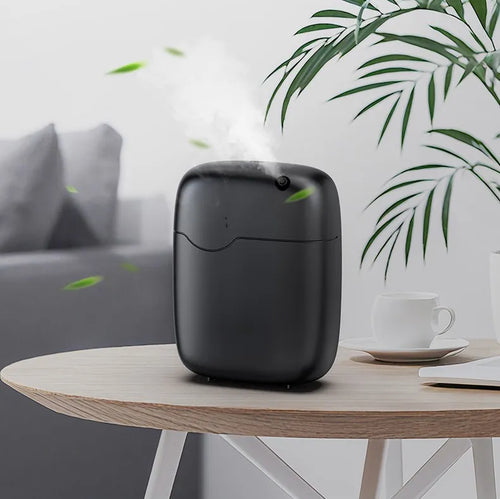
Waterless nebulising: neat oil is forced through a fine nozzle into a dry micro-droplet cloud. No water, no tank, no heat and nothing added to the room but fragrance.
How a nebuliser works
Vaayu · Aangan
The practical consequence is humidity. A Sukoon at 30–50ml an hour lifts room moisture slightly — a comfort in a dry winter or an AC bedroom, a nuisance in a coastal monsoon.
Water in the room
A weather question
Nebulising is more concentrated because the fragrance is undiluted. That is why waterless machines are rated in cubic metres of volume rather than square feet of floor.
Why the ratings differ
sq ft vs m³
The liquids do not cross over. Water-based fragrance in a nebuliser has no throw and the wrong viscosity; neat oil in an ultrasonic will not atomise and films the misting plate.
One rule that matters most
Never swap the bottles
Ultrasonic for rooms: Boond ₹899, Sukoon ₹1,899, Megh ₹3,499, all on the Hotel Collection from ₹299. Waterless for large connected volume: Vaayu ₹11,999, Aangan ₹25,999, on neat oil.
What to buy
Rooms vs volume
Ultrasonic: a ceramic plate vibrating at 2.4MHz breaks water into a cool mist. Three to six drops of water-based fragrance ride out with it. The output is mostly water.
How an ultrasonic works
Boond · Sukoon · Megh
Waterless nebulising: neat oil is forced through a fine nozzle into a dry micro-droplet cloud. No water, no tank, no heat and nothing added to the room but fragrance.
How a nebuliser works
Vaayu · Aangan
The practical consequence is humidity. A Sukoon at 30–50ml an hour lifts room moisture slightly — a comfort in a dry winter or an AC bedroom, a nuisance in a coastal monsoon.
Water in the room
A weather question
Nebulising is more concentrated because the fragrance is undiluted. That is why waterless machines are rated in cubic metres of volume rather than square feet of floor.
Why the ratings differ
sq ft vs m³
The liquids do not cross over. Water-based fragrance in a nebuliser has no throw and the wrong viscosity; neat oil in an ultrasonic will not atomise and films the misting plate.
One rule that matters most
Never swap the bottles
Ultrasonic for rooms: Boond ₹899, Sukoon ₹1,899, Megh ₹3,499, all on the Hotel Collection from ₹299. Waterless for large connected volume: Vaayu ₹11,999, Aangan ₹25,999, on neat oil.
What to buy
Rooms vs volume
Ultrasonic: water-based, 3–6 drops per tank, adds a little humidity Waterless: neat oil, no water, no humidity, rated in cubic metres The two liquids are never interchangeable, in either direction


Founder Diaries · Home Scenting by Home Type
By Sonal Sahani · ISIPCA Versailles 10 min read Updated August 2026
Hold your hand a foot above a running Sukoon for a minute and it comes away faintly damp. Do the same over a waterless machine and nothing happens at all. That single observation is the whole difference between these two technologies, and almost every other distinction — the price, the rating unit, the fragrance you can buy, even where in the room you stand the thing — falls out of whether there is water involved.
Quick answers — read this first
Ultrasonic: a plate vibrating at 2.4MHz turns water into a cool mist; 3–6 drops of water-based Hotel Collection ride out with it. Rated in square feet. Adds humidity. Boond ₹899, Sukoon ₹1,899, Megh ₹3,499.

Waterless nebulising: neat oil forced through a nozzle into a dry micro-droplet cloud. No water, no humidity. Rated in cubic metres. Vaayu ₹11,999, Aangan ₹25,999.

The rule: the liquids never swap. Water-based in a nebuliser has no throw; neat oil in an ultrasonic ruins the plate.
The short answer
Short answer: An ultrasonic diffuser mists water and carries a small amount of water-based fragrance in it, so it scents a room and humidifies it slightly. A waterless nebuliser atomises undiluted oil, so it scents a much larger volume, adds no moisture at all, and costs considerably more.
Which you want: Ultrasonic for rooms — bedrooms, living rooms, anything with a door. A Sukoon at ₹1,899 covers 270–320 sq ft. Waterless only where one connected volume is genuinely large: a Vaayu at ₹11,999 is rated to 1,000 m³ and is right for double-height rooms and villa common areas.
The one thing not to get wrong: The fragrances are not compatible. The water-based Hotel Collection is for ultrasonic machines only; neat nebulising oil is for waterless machines only. Putting either in the wrong machine gives you no scent at best and a damaged machine at worst.
Straight answer
What is the difference between an ultrasonic and a waterless diffuser?
1. The mechanism. An ultrasonic uses a ceramic plate vibrating at about 2.4MHz to shatter water into a cool mist — no heat is involved, which is why the fragrance is not altered. A waterless nebuliser uses air pressure to force neat oil through a fine nozzle, breaking it into a dry cloud of micro-droplets that stay airborne.

2. The liquid. Ultrasonic machines take the water-based Hotel Collection at 3–6 drops in a tank of water. Nebulisers take undiluted oil straight from the bottle. Because the nebuliser is dispersing fragrance at full strength rather than a few drops in half a litre, it is far more concentrated per unit of air moved.

3. What ends up in the room. An ultrasonic puts water into the air along with the scent — a Sukoon at 30–50ml an hour is a small humidifier that happens to smell of something. A nebuliser adds nothing but fragrance. In Delhi in January that is a point for ultrasonic; in Mumbai in August it is a point against.

4. The rating unit, and what it tells you. Ultrasonics are rated in square feet because they are sold for rooms — Boond 150, Sukoon 270–320, Megh 215. Nebulisers are rated in cubic metres because they are sold for open volume: the Vaayu is quoted at 1,000 m³. Neither number crosses a closed door.

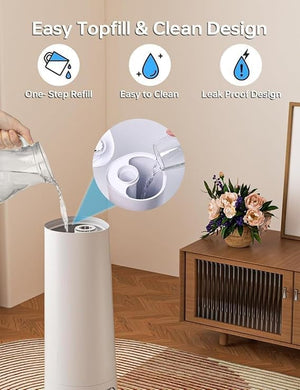
5. The maintenance. An ultrasonic needs a tank filled every 16–18 hours on low, a rinse when you change scent, and filtered water in hard-water cities so the plate does not scale. A nebuliser has none of that and instead has a nozzle that wants clean oil and occasional purging. Different chores, not fewer.

Made in India, composed by an ISIPCA Versailles-trained perfumer — and a portion of every order supports girl-child education through Nanhi Kali.

TL;DR: an ultrasonic mists water and carries a few drops of water-based fragrance in it, so it scents a room and humidifies slightly. A waterless nebuliser atomises neat oil, so it scents a large connected volume and adds no moisture. Rooms take ultrasonics; volume takes waterless; the bottles never swap.
SOSA Sukoon 500ml ultrasonic cool mist diffuser
The ultrasonic, done properly
SOSA Sukoon · 500ml ₹1,899
A 2.4MHz plate, a 500ml tank, 16–18 hours on low and 9–12 on high, a remote and steady / 2H / 4H timers, rated 270–320 sq ft. It runs the water-based Hotel Collection at 3–6 drops and arrives with three 15ml bottles of your choice — the whole ultrasonic case in one machine.

What is actually happening inside each machine

Inside an ultrasonic diffuser there is a small ceramic disc oscillating around 2.4 million times a second. It sits just under the water line, and the vibration is fast enough that the water above it cannot follow — the surface breaks into a fog of droplets a few microns across, which drift up and out as a visible cool mist. Crucially there is no heat anywhere in the process, which is why the fragrance you put in comes out smelling like itself rather than cooked. The fragrance is a passenger: three to six drops dispersed through five hundred millilitres of water is an enormous dilution, and what leaves the machine is mostly water with a little scent riding in it. That is a design choice, not a shortcoming — it is what makes ultrasonic machines gentle enough to run beside a bed and cheap enough to put one in every room.

A cold-air nebuliser does something almost opposite. There is no water and no tank; the bottle of neat oil sits in the machine and a pump drives air across or through a nozzle, shearing the oil into droplets small enough to stay suspended rather than falling. The output is dry, invisible and far more concentrated per unit of air, because nothing has been diluted. That concentration is what lets a Vaayu be quoted at a thousand cubic metres, and it is also why the machine is rated by volume in the first place — you are filling a body of air rather than covering a floor. The cost of that concentration is that the liquid has to be formulated for it. Nebulising oil is composed to atomise cleanly at full strength through a narrow orifice; the water-based Hotel Collection is composed to disperse from a vibrating plate in a tank of water. Neither can do the other job, and that single fact decides more purchases than the price difference does.

Three consequences you will actually notice

1
CONSEQUENCE ONE · HUMIDITY
The output is mostly water, and your city has an opinion
SOSA Sukoon diffuserSOSA Sukoon₹1,899A Sukoon puts out 30–50ml an hour, and nearly all of that is water. Over a four-hour evening that is most of a glass of water released into a bedroom. In a Delhi or Chandigarh winter, or in any room with the air conditioner running all night, this is a genuine comfort — dry air is what makes an air-conditioned room unpleasant at four in the morning, and a little moisture is the fix. On the Konkan coast in August it is exactly what the room does not want, and you will feel it on the bedlinen before you notice the fragrance. A waterless machine sidesteps the question entirely: it adds fragrance and nothing else. Neither is better in the abstract — it depends on the air you already have.
The rule of thumb: dry city or heavy AC, ultrasonic is a bonus. Coastal monsoon, run it in shorter bursts or look at waterless.
2
CONSEQUENCE TWO · CONCENTRATION AND REACH
Diluted fragrance covers rooms; neat oil covers volume
Because an ultrasonic is dispersing a few drops through half a litre of water, the fragrance load per litre of air it moves is low. That suits a room: it fills 270–320 sq ft pleasantly and does not overwhelm anybody sitting three feet away. A nebuliser dispersing undiluted oil has a much higher load, which is why it can hold a volume the size of a hotel lobby and why it is unsuitable at a bedside. The corollary matters for buying: to cover more rooms, you add ultrasonic machines, because each room is a separate problem. To cover more volume, you need concentration, which is where waterless earns its price. The Megh is the useful counter-example here — six litres of water and up to 100 hours of runtime, but still rated to only 215 sq ft, because tank size is a clock and not a map.
The trap: a bigger tank never means more area. Ultrasonic coverage is set by output and room size, not by how much water you can hold.
3
CONSEQUENCE THREE · LIVING WITH IT
Filling, rinsing, scheduling and switching
An ultrasonic is a hands-on object. You fill it, you count drops, you rinse it when you change from Shangri-La-inspired Tea Garden to 1 Hotels-inspired Forest Suite, you use filtered water if you live somewhere hard so the plate does not scale, and you switch it on when you want it. Those are small chores and most people quite enjoy them — the drop-counting is where you actually control the result. A nebuliser is a fixture. You set an intensity and a schedule in an app and then largely forget it, which is right for a large open space that should simply always smell the same and wrong for a bedroom where you want a different answer on different nights. Ask yourself which of those two relationships you want with the machine, because it is as real a difference as any number on the box.

The two technologies, property by property

Set out side by side. The last column is the honest one — for most homes the answer is ultrasonic in almost every row, and the rows where waterless wins are the ones about very large connected spaces and about moisture.

Ultrasonic vs waterless
Where each one wins, and where it loses
Property Ultrasonic Waterless nebulising Which wins
Mechanism 2.4MHz plate mists water Neat oil sheared through a nozzle Neither — different jobs
Rated by Square feet: 150 / 270–320 / 215 Cubic metres: up to 1,000 Waterless, for open volume
Adds humidity Yes, 30–50ml an hour on a Sukoon No — nothing but fragrance Depends on your city
Fragrance Water-based Hotel Collection, 3–6 drops, from ₹299 Neat oil, bought separately Ultrasonic, on choice and price
Entry price ★ Boond ₹899 · Sukoon ₹1,899 Vaayu ₹11,999 Ultrasonic, decisively
Multiple rooms One machine per room, ₹1,899 each One output point only Ultrasonic
Double-height or open-plan over ~2,000 sq ft Struggles — the volume outruns the output Built for it Waterless
The line that matters: a closed door defeats both technologies equally. Nothing on this table changes the fact that a bedroom with the door shut needs its own machine, and the cheapest correct machine for that job is a Sukoon.
Shop this guide
One of each, and the fragrance only one of them takes
The SOSA principle
An ultrasonic sells you mist with fragrance in it. A nebuliser sells you fragrance with nothing in it.
Which is why one is rated in square feet and priced for every room, and the other is rated in cubic metres and priced for one very large space.

Dosing and maintaining each of them

Dosing an ultrasonic is drop-counting, and less is the usual correction. The guidance for the Hotel Collection is three to six drops per tank, and the honest advice is to start at three and add only if a week says you should. The dilution is doing real work: a few drops through 500ml of water is what makes the output gentle enough to sit beside, and pushing to eight or ten does not make the room smell better, it makes the first ten feet smell heavy and the rest of the room unchanged. Fragrance intensity in a room is set far more by how long the machine runs and where it stands than by how much you pour in.

A nebuliser is not dosed at all — it is timed. There are no drops to count, because the oil goes in neat. What you control instead is intensity and duty cycle: how hard the pump runs and how many minutes in every hour it runs at all. Commercial systems are almost never left on continuously; they are programmed to pulse, because a constant output at a constant level is precisely what a human nose stops registering. If you own a Vaayu, the single most useful habit is to set the intensity lower than feels right on day one and let the schedule do the work.

The maintenance is different rather than lighter. An ultrasonic wants filtered water in a hard-water city, a rinse of the tank whenever you change fragrance, and an occasional wipe of the plate with a soft cloth — mineral scale is the commonest reason a Sukoon starts misting weakly. A nebuliser wants clean oil, an occasional purge of the line, and no dust in the nozzle. And the rule that covers both: never cross the liquids. The water-based Hotel Collection is for the Boond, Sukoon and Megh; neat nebulising oil is for the Vaayu and Aangan; reed diffuser oil is a third thing again and belongs in neither.

The question was never which technology is stronger. It is whether you want water in the room afterwards.
— Sonal Sahani, SOSA

What each technology costs to own

Machines and the liquids that go in them. The gap is wider than the price list suggests, because the fragrance economics differ as much as the hardware does.

Ultrasonic and waterless, priced
Every machine, its technology, and what it takes
Machine Technology Rated for Price
Boond
300ml, USB, night light
Ultrasonic · water-based Up to 150 sq ft ₹899
Sukoon ★
500ml, remote, timers
Ultrasonic · water-based 270–320 sq ft ₹1,899
Megh
6 litre, up to 100 hrs
Ultrasonic · water-based Up to 215 sq ft ₹3,499
Vaayu
Bluetooth app, timer
Waterless · neat oil Up to 1,000 m³ ₹11,999
Aangan
Ducted HVAC
Waterless · neat oil 8,000–10,000 sq ft ₹25,999
Hotel Collection · 15ml ₹299 · 100ml ₹999 · 300ml ₹1,799 Water-based, ultrasonic only 3–6 drops per tank from ₹299
Honest notes before you buy: the Hotel Collection is water-based and belongs only in the ultrasonic machines — Boond, Sukoon and Megh — at 3–6 drops per tank; every Sukoon includes three 15ml bottles of your choice. It cannot be used in the waterless Vaayu or Aangan, which run neat nebulising oil bought separately, and it is not for reed diffusers. Neat oil must never go into an ultrasonic: it is too viscous to atomise and it films the misting plate. Ultrasonic machines add a little humidity, which is welcome in a dry or air-conditioned room and less so in a coastal monsoon; waterless machines add none. The machines are imported from China; the fragrances are composed and made in India. Use filtered water in hard-water areas, rinse the tank between scents, and keep fragrance out of reach of children and pets. The Hotel Collection scents are SOSA's own interpretations inspired by the world's finest hotels; SOSA is independent and not affiliated with any hotel brand. A portion of every order supports girl-child education through Nanhi Kali.
SOSA Vaayu waterless cold-air nebulising diffuser
The waterless side of the comparison
SOSA Vaayu · waterless ₹11,999
Cold-air nebulising: neat oil sheared into a dry micro-droplet cloud, no water, no heat and no added humidity, rated to 1,000 m³ with a Bluetooth app and timer. The right technology for a double-height room, a villa great room or open-plan common areas — and the wrong one for a bedroom with the door shut. It cannot run the water-based Hotel Collection.
SS
ISIPCA
Versailles
A note from Sonal

People expect me to have a favourite technology and I genuinely do not. I have a favourite question, which is what the room is like: how big, how tall, how open, how dry, and whether anybody sleeps in it. Answer those and the technology is decided for you without anyone needing to argue about nebulising versus ultrasonic at all.

What I do have strong feelings about is the liquid. More machines are ruined by the wrong bottle than by any other cause. Neat oil poured into an ultrasonic tank does not disperse — it sits on the water, coats the ceramic plate, and within a week the mist thins to nothing and people assume the machine has failed. It has not; it has been asked to atomise something it physically cannot. That is why we say it on every bottle and why I will keep saying it here.

For the overwhelming majority of Indian homes, ultrasonic is the right technology and a Sukoon in each room that is genuinely used is the right shape of setup. Waterless is the answer to a specific architectural problem — a very large connected volume — and outside that problem it is simply an expensive way to scent one room. A portion of every order funds a girl's classroom through Nanhi Kali.

Frequently asked questions

Is a waterless diffuser better than an ultrasonic one?
Not better — different. A waterless nebuliser disperses neat oil, so it is more concentrated and can hold a much larger connected volume, and it adds no humidity. An ultrasonic disperses a few drops of water-based fragrance in a mist of water, which is gentler, far cheaper and correct for an ordinary room. For a home made of rooms with doors, ultrasonic wins on every practical count except moisture.
Does an ultrasonic diffuser make a room damp?
It raises humidity slightly. A Sukoon outputs 30–50ml an hour, so a four-hour evening puts most of a glass of water into the air. In a dry winter or an air-conditioned bedroom that is a comfort; in a coastal monsoon it is unwelcome, and the fix is shorter runs at three drops rather than continuous running. It will not make a room wet.
Can I put essential oil straight into a Sukoon?
No. The Sukoon, Boond and Megh take the water-based Hotel Collection at 3–6 drops in a tank of water. Undiluted oils are too viscous to atomise on a 2.4MHz plate; they float, coat the ceramic and thin the mist until the machine appears to have failed. Neat oil belongs only in a waterless nebuliser.
Why is a waterless diffuser rated in cubic metres instead of square feet?
Because it is designed to fill a body of air rather than cover a floor. Nebulising is used commercially in lobbies, atriums and retail floors where there are no doors and ceiling height varies enormously, so volume is the honest measure. Ultrasonics are rated in square feet because they are sold for rooms of fairly ordinary height. Neither figure survives a closed door.
Which technology is better for a bedroom?
Ultrasonic, almost always. A bedroom is a small closed room, which is exactly what an ultrasonic is rated for, and the gentle output suits sleeping. A Sukoon at ₹1,899 with two or three drops run for an hour before bed is the standard answer; a Boond at ₹899 does a small one. A nebuliser is too concentrated for a bedside and too expensive to put in every bedroom.
Ultrasonic vs waterless · the summary
Mist for rooms. Neat oil for volume. And never the other way round
A Sukoon at ₹1,899 is ultrasonic, covers 270–320 sq ft, runs the water-based Hotel Collection at 3–6 drops and comes with three 15ml bottles. A Vaayu at ₹11,999 is waterless, rated to 1,000 m³, runs neat oil and adds no humidity. Choose by the room, not by the price. A portion of every order supports girl-child education through Nanhi Kali.
Shop the Sukoon ₹1,899 → Hotel Collection from ₹299
Continue the read
More on the machines and the liquids
Editorial standards & sources
About this guide: Written by Sonal Sahani, ISIPCA Versailles-trained founder and perfumer at SOSA Home & Body, on the difference between ultrasonic and waterless cold-air nebulising diffusion. Coverage figures are the manufacturer ratings for each machine; the mechanism described applies to these technologies generally, not only to SOSA machines.

SOSA products & prices (verified August 2026): Hotel Collection water-based ultrasonic diffuser fragrance 15ml ₹299 · 100ml ₹999 · 300ml ₹1,799 · Pack of 7 (15ml, all fragrances) ₹1,799; refills 100ml from ₹999. Seven scents: The Ritz-Carlton-inspired (white tea · bergamot · cedar), Westin-inspired (white tea · aloe · cedar), 1 Hotels-inspired (cedarwood · vetiver · green leaves), The St. Regis-inspired (amber · violet · woods), Shangri-La-inspired (jasmine · green tea · white tea), Four Seasons-inspired (citrus · floral · sandalwood), W Hotels-inspired (citrus · pepper · amber). Diffusers: Boond 300ml ₹899 · Sukoon 500ml ₹1,899 · Megh 6L ₹3,499. Water-based, phthalate-free, composed to IFRA standards for home diffusion; 3–6 drops per tank. Made in India, Pune. The Hotel Collection scents are SOSA's own interpretations inspired by the world's finest hotels; all hotel names are trademarks of their respective owners and are used only to describe the scent style — SOSA is an independent Indian fragrance house, not affiliated with or endorsed by any hotel brand. Prices and availability subject to change — see the live product pages.
Zurück zum Blog