Founder Diaries · Clinics & Medical Centres · Treatment & Procedure Rooms
By Sonal Sahani · ISIPCA Versailles 12 min read Updated November 2026
No. Not on the lowest setting, not with an alcohol-free reed, not with the lightest scent in my own range, and not for the twenty minutes before a list starts. A treatment or procedure room is the one part of a clinic where I will not sell you anything at any intensity or in any formulation, and the reason is not that I believe a fragrance would harm a patient. I have no evidence of that and I am not going to claim it. The reason is that there is an open dressing pack on a trolley, there is a sterile field, there is a patient who is supine and partly undressed and has no socially available way to object, and there is an airborne addition that you could only ever account for to your own quality lead as presentation. Presentation is a perfectly good reason to scent a reception desk. It is not a reason to add anything to the air above an open wound. The useful half of this page is what to do instead, because a treatment suite that smells is almost never short of fragrance: it is short of a bin lid, a collection round, a linen route and a mug of water down a floor gulley, and all four of those are free.
Quick answers — read this first
The answer: no, at any intensity and in any formulation. Treatment rooms, procedure rooms, dressing rooms, minor-OT and day-care recovery stay fragrance-free with their doors shut. That is the default and it is not a concession.
Free, and you can start this morning: move the dressing-waste collection so the bag leaves the suite before the list ends rather than after the last patient · put a lid on the clinical waste bin and make it foot-operated · take the soiled-linen route out of the public corridor and give it a time, not a trolley · pour a mug of water down the floor gulley in the suite and the sluice every single morning, including the gulley nobody uses.
Small purchases: three lidded foot-operated clinical waste bins from about ₹1,200 each · a door closer on the suite door to replace the wedge from ₹500 · a marked jug for the gulley round about ₹250 · a smoke pencil at about ₹400 to settle which way the air actually moves.
Where the machine goes, if you want one: the public bay outside the suite doors. The
Vaayu at ₹11,999, on low, opening hours only, sited at the far end of the bay and not pointed at the doors. Housekeeping and presentation, no clinical effect of any kind, and a diffuser is not an air purifier.
The short answer
Short answer: no. Clinical treatment and procedure areas should never be scented, at any intensity or in any formulation, and that includes dressing rooms, minor-procedure rooms, day-care recovery and the sterile store that serves them. Three reasons, in order: there is an open pack and a sterile field in the room and a fragrance is an airborne addition you cannot account for to a quality lead as anything other than presentation; the patient is supine, partly undressed and has no socially available way to decline it; and the clinician in the room is trained to notice what a wound, a dressing and a room smell of. A treatment suite that smells is almost always short of a bin lid, a waste round, a linen route or a mug of water down a floor gulley, and all four of those cost nothing.
The order, and why: fix the four free sources first, because in a treatment suite they account for nearly every complaint I have been called about. Dressing-waste timing comes first because it is the largest single source and the easiest to reschedule. The lidless bin is second because it is a one-day purchase. The soiled-linen route is third because it is a timing and routing decision rather than a cost. The dry floor gulley is fourth and the cheapest of all, and it is the one that produces the smell everybody assumes is drains in the building rather than drains in the room. Only then does a machine enter the conversation, and it enters it outside the suite doors.
The last line, costed, and it sits outside: the
Vaayu at Rs 11,999 goes in the public bay, waiting area or corridor outside the treatment suite - waterless cold-air nebulisation with no standing water tank, up to 1000 m3, a 400ml fill lasting about seventy-five days, app control with 1h/4h/8h/24h timers, under 38 dB, auto-stop and a key-lock for public areas. The
Aangan at Rs 25,999 for a large integrated centre or an atrium. An alcohol-free
reed diffuser from Rs 749 for a single administrative cabin. Free shipping above Rs 499. Nothing on this page is a treatment, and a diffuser does not clean, purify or disinfect air.
Straight answer
Should clinical treatment areas in a clinic ever be scented, and if not, what do I do about the smell?
1. There is an open pack on the dressing trolley, and you cannot account for what you added to the air above it. Picture the room as it actually is rather than as a floor plan. A dressing pack has been opened and laid out. There is a sterile field on the trolley and a gloved pair of hands working over it. There is saline, there may be an iodine or a chlorhexidine preparation, there is a wound that is open to the room for as long as the procedure takes. Now add a nebulised fragrance to that air, at any concentration you like. I cannot tell you that it will do harm, because I do not know that and no honest supplier does. What I can tell you is the thing that actually matters operationally: if anything about that procedure is ever reviewed, the one variable in the room that nobody specified, nobody documented and nobody can describe in anything other than commercial language is the one I sold you. There is no form of words in which I would want to be the explanation.
2. The patient cannot decline it, and that is not a small thing. A person in a treatment room is supine, often partly undressed, usually under a drape, frequently in some discomfort and always in a position of much less authority than everybody else present. The polite objection that a person makes in a hotel lobby or a reception area is not available to them. They are not going to interrupt a dressing change to say that the smell is making them feel worse, and if they did, the room would have to stop. Consent in that room is for the procedure. It was never for the air, and nobody asked.
3. The clinician's nose is doing work in that room. A nurse changing a dressing is reading the wound partly by smell, and has been trained to. The smell of a wound that has turned, the sweetish note of a particular organism, a soaked dressing that has been on too long, the sharpness of a spirit swab that went on a site that was not dry - these are observations that go in a note, and a nebulised background sits on top of all of them at exactly nose height. You do not have to believe that a fragrance masks a wound odour in any measurable sense to see that it is an unhelpful thing to put between a clinician and an observation they are being paid to make.
4. The only justification left is presentation, and presentation does not reach into that room. This is the test I would apply to any room in your building: write down, in one sentence, what the fragrance in it is for, in language you would use in front of your own quality lead. In a lobby the sentence is easy and I will defend it all day - the building smells of nothing in particular rather than of its own cleaning regime, which is housekeeping and presentation, in the same category as the seating and the signage. In a procedure room that same sentence reads as a reason to decorate the air over a sterile field, and it does not survive being said out loud.
5. Now the useful half: four cheap sources, and they cover almost everything. Treatment suites do smell, and the reason is almost never an absence of fragrance. It is dressing-waste timing, a clinical waste bin with no working lid, a soiled-linen route that goes through the public side of the building, and a dry floor gulley in the suite or its sluice. All four are free to correct and three of them are instructions rather than projects. They are set out at length below.
6. And then the machine, outside the doors. If you want scenting in the part of the building that leads to the suite, it belongs in the public bay, the shared waiting area or the corridor outside, with the suite doors shut. The
Vaayu is ₹11,999 - waterless cold-air nebulisation with no standing water tank in a building that runs twelve hours a day, up to 1000 m³, a 400ml fill lasting about seventy-five days, app control and 1h/4h/8h/24h timers so it runs the opening hours and stops, under 38 dB, auto-stop, and a key-lock without which nothing should stand in a public area at all. Site it at the far end of the bay, pointed away from the suite doors, on one low setting, and read the carryover section below before you decide where the plug goes. A portion of every order supports girl-child education through Nanhi Kali.
TL;DR: no, at any intensity or formulation. Open pack, sterile field, a patient who cannot object, and a clinician reading the room by smell. Four free corrections instead: dressing-waste timing, a lidded bin, the linen route, a mug of water down the floor gulley. The machine goes in the public bay outside, at ₹11,999, on low, doors shut.
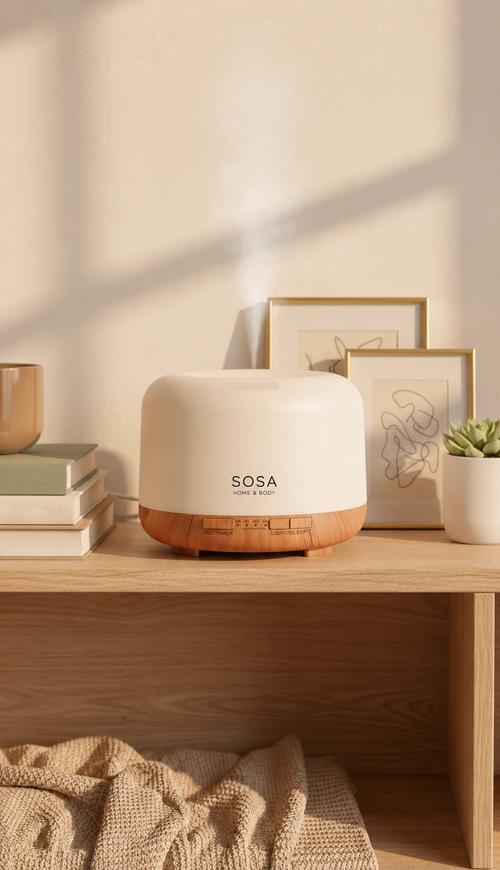
What a treatment suite actually spends on, in order
SOSA commercial scenting from ₹899
Everything that fixes a treatment-suite smell is free, and I would rather you read the list than bought anything.
Dressing waste out before the list ends, a foot-operated lid on the clinical bin, the soiled-linen route taken out of the public corridor, and a mug of water down every floor gulley including the one nobody uses. The only SOSA product on this page sits outside the suite doors: the
Vaayu at ₹11,999 for the public bay or shared waiting area, the
Aangan at ₹25,999 for a large integrated centre or an atrium, and an alcohol-free
reed diffuser from ₹749 for an administrative cabin. Free shipping above ₹499.
The four cheap sources, and all four are free
I have been called to treatment suites that smelled, in six cities, and I have never once found that the answer was fragrance. It has been one of four things every time, and often two of them together: when the dressing waste leaves the room, whether the bin it sits in has a lid that works, where the soiled linen travels and at what hour, and whether anybody has put water down the floor gulley this week. That is a short list and a cheap one, and it is worth saying plainly that none of the four needs a quotation, a contractor or a budget meeting. They need a line at the morning handover and a name against each one. The reason they get missed is not negligence - it is that a treatment suite is run by clinical staff whose attention is correctly on the list, and the four things above are housekeeping decisions that sit in nobody's clinical scope. The full twenty-six-line checklist puts them in a longer sequence; this page takes the four that matter in a procedure area and gives them the space they deserve. The fifth section is not a source at all. It is where a machine goes if you decide you want one, which is outside, and how much air actually crosses a closed door, which is less than most people fear and more than the people selling you a machine will usually tell you.
1
SOURCES ONE AND TWO
When the dressing waste leaves, and the bin that has no working lid
Source one is dressing-waste timing, and it is the biggest of the four by a wide margin. The default arrangement in most clinics is that clinical waste is collected on a round - once a day, usually late, sometimes twice. What that means in practice is that the yellow bag from the nine o'clock dressing sits in the suite until the round comes past, which in a busy clinic is after the last patient of the morning and sometimes after the last patient of the day. Soiled dressings, exudate, gauze and the contents of a suction jar in a warm room for six hours is not a fragrance problem and no amount of anything I sell will touch it. The correction is to decouple the bag from the round: the bag leaves the room when it is three-quarters full or when the list breaks, whichever comes first, and it goes to the holding area or the sluice, behind a door, not to a trolley parked in the corridor. Give it to the person who is already in the room rather than to the person on the round, because the person in the room knows when the bag filled. If your suite runs two lists a day, the bag leaves twice, and if that means two collections instead of one, two collections is what it costs, which is a rota line rather than a rupee.
Source two is the bin itself, and this one you can solve with a purchase order on a Tuesday. An open-topped clinical waste bin, or one with a lid that is propped up by the bag, or a pedal bin whose pedal broke in March and now lives permanently open, is a continuous source for as long as there is anything in it. A foot-operated bin with a lid that closes fully, sized so that the bag does not have to be forced, costs somewhere around ₹1,200 and lasts years, and in a suite with three rooms you want three of them rather than one shared bin in the middle. While you are at it, check the suction jar and the specimen pot discipline, because an uncapped jar on a shelf behind a curtain is the same source wearing a different label.
The day-care surgery and procedure-room page goes into the suite layout in more detail.
2
SOURCES THREE AND FOUR
The soiled-linen route through the public side, and the floor gulley nobody waters
Source three is the soiled-linen route, and it is almost always a routing decision rather than a cleanliness one. In most Indian clinics that I have walked, the soiled linen from the treatment and dressing rooms travels to the laundry hold by the shortest physical path, and the shortest physical path goes through the corridor that patients are sitting in. It is an open bag or a half-covered trolley, it moves at the busiest hour because that is when the rooms turn over fastest, and it leaves a trail that patients attribute to the building rather than to the bag that went past. Three corrections, all free. Give the route a time rather than a trolley - linen moves in the quiet gap between your two peaks, and between peaks it waits in a bag in the sluice with the door shut rather than in a trolley in a corridor. Give it a path - if there is a service corridor, a back stair or a goods lift, it uses them, even if that adds forty metres, and if there genuinely is no alternative route then the bag is closed and the trolley is lidded. And give it a name, because a route with no owner reverts to the shortest path within a fortnight.
Source four is the floor gulley, and it is the cheapest fix in this entire cluster. Treatment suites and their sluices have floor drains and gulleys, and some of them are used constantly while others are used once a quarter. A trap that has not had water through it for three or four weeks dries out, and a dry trap is an open pipe between your treatment room and the building's soil stack. What comes back up is sewer gas, and it is the single commonest cause of a clinical room that smells of something nobody can place. It is also the one that gets blamed on everything else, because the smell is intermittent and strongest when the stack is busy, which is mid-morning. The correction is a mug of water down every gulley in the suite and the sluice, every morning, including the ones that look unused, especially the ones that look unused. A marked jug costs about ₹250 and the round takes a cleaner ninety seconds.
The disinfectant-smell page has the same instruction as the first of its free dials, and for the same reason.
3
OUTSIDE THE DOORS
Where the machine goes, and the carryover routes ranked by how much air each actually moves
If you want scenting near a treatment suite, it goes in the public bay outside it, and then you have to be honest about carryover. A closed door is not a seal, and anybody who tells you a diffuser in the corridor cannot reach the room behind the door is overselling. What is true is that the routes differ enormously in how much air they move, and they are almost never ranked correctly. In my experience, in descending order of how much air actually crosses:
first, a door held open by a wedge. This is not a gap, it is a doorway, and it moves more air than every other route on this list combined. It is also the most common finding in a real suite, because a wedge makes a trolley run easier. Remove the wedge and fit a closer from about ₹500; if staff put the wedge back, the real problem is that the door is too heavy or there is no hold-open device with a release, and that is a hardware conversation rather than a discipline one.
Second, the door swinging. Every opening exchanges a slug of air between the two spaces, and a suite door that opens forty times an hour is a substantial exchange that no amount of door-bottom sealing touches. The correction is distance and direction rather than sealing: put the machine at the far end of the bay, three or four metres away at a minimum, pointed along the bay rather than at the doors, so the air arriving at the door line is already diluted by the whole volume of the bay.
Third, a shared air-conditioning return. If the bay and the suite are served by the same return grille or the same fan coil, you do not have two rooms, you have one room with a wall in it, and the carryover is ducted rather than accidental. This is the route that genuinely needs a drawing. Ask your air-conditioning contractor to confirm which zone the bay sits in; the fix is usually to move the machine to a zone that does not share a return with any clinical space, which is free if you do it before you choose the socket.
Fourth, the ceiling void above a partition that stops at the tile line. A great many clinical partitions in fit-out work stop at the false ceiling, which leaves the void above them as a continuous plenum. It moves real air when there is any pressure difference at all, and it is invisible on a plan. Taking a partition to slab is a contractor's job and usually not worth doing for this reason alone, but it should decide which end of the bay the machine stands at.
Fifth, and last, the undercut at the bottom of the door. This is the one everybody worries about and it is the one that moves least - a ten or twelve millimetre gap with no pressure difference across it is a trickle, not a stream. Do not spend money on brush seals before you have removed the wedge. Settle all of this with a smoke pencil at about ₹400, held at the door line with the suite door shut and the machine running: five seconds of watching smoke tells you more than an hour of argument, and it is the only piece of instrumentation I recommend in this whole cluster.
Keeping fragrance out of clinical zones while scenting the public areas is the longer version of this section.
The one instruction I would put on the suite's handover sheet: the suite doors stay shut, the wedge is gone, and nothing inside those doors is ever scented at any strength - and if somebody asks why the corridor smells pleasant and the rooms do not, that is the correct result rather than an inconsistency to fix.
The source-by-source table
The four sources with what is usually wrong, what to change and what it costs, then the two rows that matter most: where a machine goes, and the row that never changes whatever anybody quotes you. Print it, give every row one name and one date, and notice that the four corrections above the machine are free.
Print this
Four free sources, one siting decision, and one permanent no
| Source |
What is usually wrong |
The correction |
Cost |
| 1. Dressing waste ★ |
The yellow bag waits in the room for a once-a-day collection round, so soiled dressings and exudate sit in a warm suite for six hours |
The bag leaves when it is three-quarters full or when the list breaks, to the sluice or holding area behind a door, taken by the person already in the room |
₹0 |
| 2. The bin lid |
An open-topped clinical bin, a lid propped by the bag, or a pedal that broke months ago, giving a continuous source for as long as anything is in it |
A foot-operated bin with a lid that closes fully, sized so the bag is not forced, one per room rather than one shared. Suction jars and specimen pots capped |
About ₹1,200 each |
| 3. The linen route |
Soiled linen from the dressing rooms carried through the public corridor at the busiest hour, in an open bag or a half-covered trolley |
A time rather than a trolley: linen moves in the quiet gap between peaks, by the service route if one exists, closed bag, and it waits in the sluice with the door shut |
₹0 |
| 4. The floor gulley |
A gulley or floor drain in the suite or sluice that has had no water through it for weeks, so the trap has dried and the soil stack is open to the room |
A mug of water down every gulley every morning, including and especially the ones that look unused. A marked jug and a ninety-second round |
About ₹250 |
| Also free |
The suite door held open with a wedge, which moves more air than every other carryover route on this page put together |
The wedge removed and a door closer fitted. If the wedge keeps coming back, the door is too heavy or needs a hold-open with a release |
From ₹500 |
| Worth ₹400 |
Two people arguing about whether a diffuser in the corridor reaches the room, with nobody able to settle it |
A smoke pencil held at the door line with the door shut and the machine running. Which departments get it and which do not follows the same test |
About ₹400 |
| Outside the doors, optional |
Nothing is wrong at this point. The public bay, shared waiting area or corridor outside the suite is ordinary public space and can be treated as such |
Fragrance. Vaayu at ₹11,999, far end of the bay, pointed away from the doors, one low setting, opening hours only, suite doors shut |
₹11,999 |
| Never, at any intensity |
A diffuser, a reed, a gel block, a plug-in or a spray inside a treatment room, procedure room, dressing room, minor-OT or day-care recovery |
Nobody owns this row and no setting makes it acceptable. The rooms that stay fragrance-free, and SOSA does not make a room spray in any case |
— |
Shop this guide
What goes outside the doors, and nothing at all that goes inside them
The SOSA principle
A treatment suite that smells is short of a bin lid, a waste round, a linen route and a mug of water. It has never once been short of fragrance. And the only question left after those four is where the machine stands, which is outside the doors, pointed the other way.
The wedge under the suite door moves more air than every other carryover route put together. The ten-millimetre gap at the bottom, which is the one everybody worries about, moves the least.
The lids, the closer, and the machine that stays outside
Run the four free sources for a fortnight before you decide anything, and walk the suite yourself at three fixed times rather than relying on a complaint log. Week one: the dressing-waste bag leaves on the list rather than on the round, and the mug of water goes down every gulley in the suite and the sluice every morning. Week two: the soiled-linen route gets a time and a name, and the wedge comes out from under the suite door. Walk it at half past nine, at two and at six, and write one line each time - your own nose at three fixed hours is a better instrument than any form, because you will notice the difference between a smell that is there all day and one that appears an hour after a list starts, and that distinction tells you which of the four sources you are dealing with. What is usually left after a fortnight is one of three much smaller things: a single location that still smells, which is a tracing job and has its own method; a suite that is fine in the morning and tired by the evening, which is an air-change question rather than an odour one; or nothing at all, in which case you are at the siting decision and it is a choice about the public bay rather than a rescue of the suite.
Two things about the small purchases, because in a treatment suite they are the ones that get deferred into next quarter. The first is that the bins are not a cleaning upgrade, they are what makes a free correction survive a busy Thursday. A bag that has to be forced into an undersized bin gets left out; a lid propped open by an overfull bag is the same as no lid; and a single shared bin in the middle of a three-room suite guarantees that two of the three rooms have waste sitting on a surface. Three foot-operated bins at about ₹1,200 each, sized to the bag you actually use, is roughly ₹3,600 and it is the only purchase on this page I would push you on. The second is the door closer, at ₹500 or thereabouts, and the reason it matters is out of all proportion to the price: it is what makes the single largest carryover route disappear, and it is also the row that quietly turns the whole policy real. A suite whose doors are shut is a suite that can sit next to a scented bay without anybody having to be clever about it. A suite whose doors are wedged is one room with the bay, whatever the drawing says, and no amount of careful machine placement will change that. Put a name and a date against both lines and have whoever closes the suite initial them for the first month.
And then the machine, in the detail somebody signing a purchase order will want, and it stands outside the suite doors. The Vaayu is ₹11,999, and in a clinic the argument for it is a housekeeping argument rather than a clinical one: waterless cold-air nebulisation, so there is no standing water tank to be emptied, rinsed and dried every day by a named person in a building that runs twelve hours. If that person does not exist in your facility, do not buy a water tank at all, which is what rules the ultrasonic Sukoon at ₹1,899, Boond at ₹899 and Megh at ₹3,499 out of public clinical property; those three stay honest for a single administrative cabin where one person owns the daily routine, and the Sukoon arrives with three 15ml Hotel Collection scents included. Coverage up to 1000 m³ with the sum done properly - floor area divided by 10.76, multiplied by ceiling height, counting only the volumes a door closes. In a clinic with a treatment suite that arithmetic usually removes forty to sixty per cent of the plan area, because every room in the suite is fragrance-free with its door shut, and a facility that was quoted two machines frequently needs one. A 400ml fill lasts about seventy-five days, so four refills a year, which procurement can model in ten minutes, and a 300ml refill keeps that simple. For a medical facility the bottle should be the lightest thing in the box, and the rule to hold it to is that a patient should not be able to tell you what the fragrance is, only that the place did not smell of anything unpleasant. Public areas only: entrance, reception, shared and departmental waiting, inter-departmental corridors, lift lobbies, administration and the café corner. Treatment and procedure rooms, dressing rooms, day-care surgery and recovery, consultation and examination rooms, sample collection, laboratories, dispensing, sterile stores, imaging, oncology day-care and paediatric clinical areas stay fragrance-free with their doors shut.
I have been asked for the lightest thing I make, for a dressing room, on the lowest setting. There is no setting. The answer in a treatment room is not a smaller amount of fragrance, it is none, and I would rather lose the order than find a form of words for it.
— Sonal Sahani, SOSA
The SOSA edit
The same page compressed into tiers for a budget meeting, with what each one costs and when it earns its place. Four of the five tiers are free or near enough, the fifth is the only SOSA product on the page, and it stands outside the suite doors.
The SOSA edit
Four tiers outside a rupee of fragrance, and then the bay
| Tier |
What is in it |
When it earns its place |
Cost |
| 1. The waste and the gulley ★ |
Dressing waste leaving on the list rather than on the round, and a mug of water down every floor gulley in the suite and sluice each morning |
This morning. No quotation, no purchase order, and between them most of the complaint |
₹0 |
| 2. The lids and the closer |
Three foot-operated clinical bins sized to the bag, suction jars and specimen pots capped, the wedge removed from under the suite door and a closer fitted |
This week. The bins are the only purchase I would push on, and the closer removes the largest carryover route there is |
About ₹4,100 |
| 3. The linen route |
A time instead of a trolley, the service route if one exists, closed bags, and the sluice door shut while linen waits for the quiet gap between peaks |
This week. It is free, and it is the source patients most often attribute to the building rather than to a bag |
₹0 |
| 4. The siting decision |
A smoke pencil at the door line, the air-conditioning zone confirmed so the bay does not share a return with the suite, and the machine placed at the far end pointed away |
Before you buy, not after. Doing it in this order is free; doing it afterwards means moving a socket |
About ₹400 |
| 5. Vaayu — outside the doors |
Waterless, no standing water tank, up to 1000 m³, 400ml lasting about 75 days, app and timers, under 38 dB, key-lock, four scents included. Public bay only |
Only after the four tiers above. One low setting, opening hours, and the suite doors shut. The shared waiting area in full
|
₹11,999 |
| Not on the list at any price |
Any scenting inside a treatment room, procedure room, dressing room, minor-OT or day-care recovery, at any intensity and in any formulation, including a single reed |
Never. Examination rooms are the same answer, and SOSA does not make a room spray |
— |
Honest notes for buyers: this page recommends that you buy nothing at all for the room in its title, and the four corrections it does recommend are free or close to it. It is written as housekeeping guidance and nothing in it is clinical advice: the waste stream, the sharps and specimen discipline, the linen handling and the surface specification in a treatment or procedure area belong to your own infection-control and quality leads, and nothing here should be read as a reason to change a clinical protocol. On fragrance itself, fragrance in a medical facility is housekeeping and presentation, never treatment. Nothing here claims that a fragrance reduces anxiety, aids recovery, improves sleep, cleans or disinfects air, or has any clinical effect whatsoever, because it does not and a diffuser is not an air purifier. Scenting belongs to the entrance, reception, shared waiting areas, inter-departmental corridors and administrative rooms. Consultation and examination rooms, treatment and procedure rooms, day-care surgery, dressing rooms, blood- and sample-collection rooms, laboratories, pharmacy dispensing, sterile stores, imaging rooms, oncology day-care and paediatric clinical areas should be left fragrance-free. A persistent smell is information about a dry drain trap, a bin, a soiled-linen route or an air-conditioning drain pan: find it and fix it rather than covering it. On the machines: the
Vaayu at ₹11,999 is waterless cold-air nebulisation with no standing water tank, covering up to 1000m³ or roughly 2,000–3,000 sq ft, with a 400ml tank lasting about 75 days, app control, 1h/4h/8h/24h timers, under-38dB running, auto-stop and a key-lock for public areas. The
Aangan at ₹25,999 covers up to 3,000m³ and connects to HVAC for a whole floor or an atrium. The ultrasonic
Sukoon,
Boond and
Megh are water-based, hold standing water and add 30–50 ml of water an hour to the air, which suits a single administrative cabin with a named person emptying and drying the tank daily and is unsuitable for public clinical property. An alcohol-free
reed diffuser needs 24–72 hours to establish and suits a small lobby rather than a large waiting hall. Candles are not appropriate in a healthcare facility because an open flame is a fire-safety matter. SOSA does not make a room spray. The Hotel Collection scents are SOSA's own interpretations inspired by the world's finest hotels; SOSA is an independent Indian fragrance house, not affiliated with or endorsed by any hotel brand. A portion of every order supports girl-child education through Nanhi Kali.
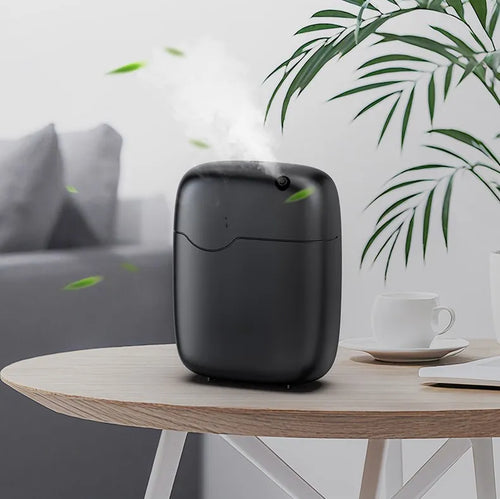
The only line I sell, and it stands outside the suite
SOSA Vaayu ₹11,999
Everything above this is free housekeeping, and the suite itself gets nothing from me at any price. This is the only item on the page SOSA sells, it belongs in the public bay, shared waiting area or corridor outside the treatment doors, and it goes at the far end pointed away from them with the doors shut. Waterless cold-air nebulisation with no standing water tank, up to 1000 cubic metres, a 400ml fill lasting about seventy-five days, app control with 1h/4h/8h/24h timers, under 38 dB, auto-stop, key-lock, four hotel-inspired scents included. Housekeeping and presentation, no clinical effect of any kind.
A note from Sonal
The call that fixed my own thinking on this came from a day-care unit in Pune, and the person on the phone was not a buyer, she was a sister in charge. She wanted the lightest thing I made, for two dressing rooms, on the lowest setting, because a patient had complained about the smell in the suite and she had been told by somebody that a diffuser would deal with it. I asked what time the clinical waste was collected and she said five o'clock. I asked what time the first dressing of the day was and she said nine. We did not discuss fragrance again. The bag started leaving at eleven, the pedal on one of the two bins turned out to have been broken since before she joined, and when I rang back a month later she told me nobody had mentioned the smell since. That is the whole method on this page, and it took eleven minutes.
What I have had to get comfortable with is saying no to the lowest setting, because the lowest setting is where the conversation always goes. Somebody asks whether a very small amount, in a very light formulation, for twenty minutes before a list, would be acceptable, and the honest answer is that there is no quantity at which I can describe what it is for in front of a quality lead without the word presentation doing all the work. A patient on a trolley under a drape did not consent to the air. The nurse changing their dressing is reading the wound partly by nose. There is an open pack on a trolley and a sterile field beside it. None of that becomes acceptable at a lower concentration, it just becomes harder to notice, and a thing you cannot justify is not improved by being made difficult to detect.
I would rather sell one machine into the waiting bay outside a suite that has sorted its waste out than three into a clinic that has not, because the second kind of customer writes to me within the month and they are right to. Everything is made and supported from Pune, and a part of every order funds girl-child education through Nanhi Kali. You get a space that smells like somewhere looked after; a girl gets a classroom. That equation has always felt right to me.
Frequently asked questions
Should clinical treatment areas in a clinic ever be scented?
No, at any intensity and in any formulation. A treatment or procedure room has an open dressing pack and a sterile field in it, a patient who is supine, partly undressed and in no position to object, and a clinician who is trained to read a wound and a dressing partly by smell. A nebulised fragrance in that room is an airborne addition you could only ever account for to your own quality lead as presentation, and presentation does not reach into a room like that. Treatment rooms, procedure rooms, dressing rooms, minor-OT and day-care recovery stay fragrance-free with their doors shut.
What about a single reed diffuser in a dressing room, on the lightest scent?
Still no, and reeds are worse here rather than better. A reed diffuser cannot be turned down, timed or switched off, it takes twenty-four to seventy-two hours to reach its working level and the same again to come back down, and it is a glass bottle of undiluted oil standing at reach height in a room where a patient is undressing and a trolley is being moved. That is a spill and an ingestion consideration on top of everything else. The answer in a treatment room is not a smaller amount of fragrance, it is none.
Our treatment suite smells and we have not changed anything clinically. What is it?
Four things account for nearly all of it. Dressing-waste timing, where the bag waits in the room for a once-a-day collection round instead of leaving when the list breaks. A clinical waste bin with no working lid, or one shared between three rooms. A soiled-linen route that goes through the public corridor at the busiest hour in an open bag. And a floor gulley in the suite or its sluice whose trap has dried out, which leaves the soil stack open to the room. All four cost nothing or close to it, and the gulley is a mug of water every morning.
Can we scent the waiting bay just outside the treatment suite?
Yes. The bay, the shared waiting area and the corridor outside are ordinary public space and can be treated like any other public area. Put the machine at the far end, three or four metres from the suite doors at a minimum, pointed along the bay rather than at them, on one low setting for the opening hours. Confirm the bay does not share an air-conditioning return with the suite before you choose the socket, remove any wedge from under the suite door and fit a closer, and settle the rest with a smoke pencil held at the door line.
A patient told us they would prefer the treatment room to smell nice. What do we say?
Something close to this: we keep the clinical rooms free of any added fragrance on purpose, because the staff need to be able to notice what a room and a dressing smell of, and because not every patient in that chair would want it and nobody in that chair is in a good position to say so. Then fix what they were actually reacting to, which is almost always one of the four sources above. In my experience that answer increases confidence rather than reducing it, which is the whole argument of this cluster.
Four free sources, then the bay outside
Move the waste and water the gulley — and the room in this title still gets nothing from me
The Vaayu is ₹11,999 and it stands outside the suite doors: waterless cold-air nebulisation with no standing water tank, up to 1000 m³ or roughly 2,000–3,000 sq ft, a 400ml tank lasting about seventy-five days for four refills a year, Bluetooth app control with 1h/4h/8h/24h timers, under 38 dB, auto-stop and a key-lock for public areas, supplied with four hotel-inspired fragrances. The Aangan is ₹25,999 for 8,000–10,000 sq ft, and alcohol-free reeds from ₹749 suit an administrative cabin. Free shipping above ₹499, and a portion of every order supports girl-child education through Nanhi Kali.
See the Vaayu · ₹11,999 All commercial scenting
Continue the read
More from SOSA
Editorial standards & sources
Product facts used in this guide. SOSA Vaayu Rs 11,999: waterless cold-air nebulising diffuser, no water reservoir, coverage up to 1000m3 (approximately 2,000-3,000 sq ft), 400ml refillable tank lasting up to about 75 days per fill, Bluetooth app plus onboard control, 1h/4h/8h/24h timer scheduling, adjustable intensity, under 38 dB, DC 12V/1A at 5W, 165 x 80.5 x 215 mm and 0.9 kg, freestanding or wall or HVAC mounted, auto-stop and key-lock, CE, RoHS and SGS certified, supplied with four hotel-inspired fragrances. SOSA Aangan Rs 25,999: HVAC-connected or standalone commercial nebulising diffuser, coverage up to 3,000m3 (roughly 8,000-10,000 sq ft), 800ml reservoir, metal body, programmable schedules, under 42 dB. Ultrasonic machines are water-based, hold standing water and consume 30-50 ml of water an hour: Sukoon Rs 1,899 (500ml, 270-320 sq ft, 16-18 hours on low, three 15ml Hotel Collection scents included), Boond Rs 899 (300ml), Megh Rs 3,499 (6 litres). Hotel Collection water-based fragrance 15ml Rs 299, 100ml Rs 999, 300ml Rs 1,799. Alcohol-free reed diffusers from Rs 749, requiring 24-72 hours to reach their working level. Free shipping above Rs 499. Coverage arithmetic: cubic metres equal floor area in square feet divided by 10.76 and multiplied by ceiling height in metres, counting only the volumes that are actually scented. This guide makes no medical, therapeutic or clinical claim of any kind for fragrance: a diffuser does not purify, disinfect or clean air, and does not treat, calm or affect any patient or condition. Fragrance is housekeeping and presentation. Clinical areas should be left fragrance-free, and a persistent odour should be traced to its source and corrected rather than covered. SOSA is not affiliated with or endorsed by any hotel brand. Prices subject to change - see the live product pages.

 The lightest scentsfrom ₹299Shop →