Founder Diaries · Clinics & Medical Centres · Sprays, Reeds and the Machine
By Sonal Sahani · ISIPCA Versailles 11 min read Updated September 2026
This question is normally asked as though one of the three had to win, and that is the reason it is hard to answer. Decided in general, the comparison is a stalemate. Decided zone by zone, it collapses into six separate answers in about ten minutes, and three of them are 'nothing at all'. I should also clear one thing out of the way immediately: SOSA does not make a room spray, for a clinic or for any other room, and the only sprays in the range are car perfumes. So the honest version of this comparison has two products in it rather than three, plus a column explaining what an aerosol would have done if you bought one elsewhere.
Quick answers — read this first
Decide per zone, not in general: the entrance, reception, shared waiting hall and connecting corridors are usually one connected volume and take one machine — the
Vaayu at ₹11,999, waterless, up to 1000 m³, key-locked, on a timer.
Reeds win two rows: an administrative cabin of about 33 cubic metres behind a shut door, and a small consultation-suite lobby of 60 to 80 cubic metres. Alcohol-free, from ₹749, 24 to 72 hours to settle.
Nothing wins three rows: consultation and examination cabins, procedure and treatment rooms, sample collection, the laboratory, dispensing, sterile stores, imaging, oncology day-care and paediatric clinical areas are fragrance-free with the doors shut.
And SOSA does not make a room spray — an aerosol is a dose of about twenty minutes in a twelve-hour building in any event.
The short answer
Short answer: a scent machine for the public volume, alcohol-free reeds for a small closed room with a named occupant, and nothing at all in clinical areas. There is no general winner because the three formats are not competing for the same room, and SOSA does not make a room spray in any case — the sprays in the range are car perfumes.
The pick: the
Vaayu at ₹11,999 for the entrance, reception, waiting hall and corridors as one volume, up to 1000 m³, with the
Aangan at ₹25,999 reserved for a double-height atrium or a whole-floor HVAC tie-in. An alcohol-free
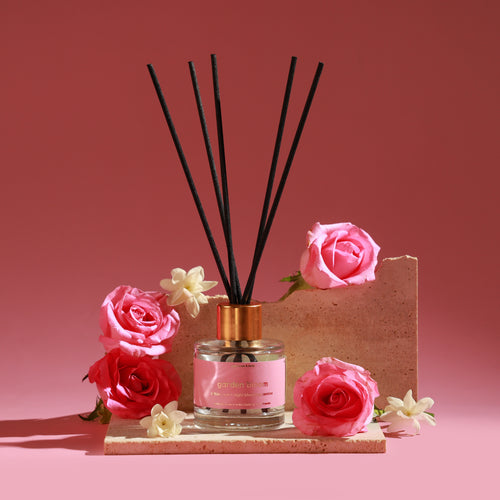
reed diffuser from ₹749 for an administrative cabin. The Westin-inspired
White Tea Serenity is the lightest of the seven scents and the default for a medical facility.
Shop: Vaayu ₹11,999 (up to 1000 m³, 400ml tank ≈75 days, app and 1h/4h/8h/24h timers, under 38 dB, auto-stop, key-lock, four scents included),
Aangan ₹25,999 (up to 3,000 m³, 800ml, HVAC or standalone), alcohol-free reeds from ₹749, ultrasonic
Sukoon ₹1,899 and
Boond ₹899 for a single administrative cabin with a named owner. Free shipping above ₹499.
Straight answer
Should a multi-speciality clinic use room spray, reed diffusers or a scent machine?
1. Stop asking it in general and ask it per zone. A clinic is not a room, it is a building with six or seven different kinds of space in it, and each kind has a different volume, a different door discipline, a different occupancy and a different set of people who did not choose to be there. Those four variables decide the format, and they decide it differently in each zone.
2. Entrance, reception, shared waiting hall and connecting corridors: one machine. In most clinics these are one connected volume because the doors between them are propped, sliding or absent. A 2,500 sq ft public floor at a three-metre ceiling is about 700 cubic metres, which is one
Vaayu at ₹11,999 covering up to 1000 m³, on a timer, key-locked, under 38 dB.
3. Administrative cabin and small suite lobby: reeds. About 33 cubic metres behind a shut door, or a four-chair lobby of 60 to 80. An alcohol-free
reed diffuser from ₹749 is not a compromise in those rooms; it is the better product — silent, unpowered, steady, and chosen by the person who sits there.
4. Clinical rooms: nothing, in any format. Consultation and examination cabins, procedure and treatment rooms, dressing rooms, sample-collection rooms, laboratories, dispensing, sterile stores, imaging, oncology day-care and paediatric clinical areas stay fragrance-free with the doors shut. This row is not a budget decision and it does not move.
5. Room spray: we do not make one, and it would not have held. The sprays in the SOSA range are car perfumes for about three cubic metres of hot moving air. An aerosol in a ventilated hall is a dose of roughly twenty minutes against a twelve-hour day, whoever makes it.
6. And before any of it: check nothing in the building smells of a source. A dry drain trap, a dressing bin past collection, an air-conditioning drain pan, a linen route through a public corridor. Those are information rather than nuisances, and the answer is to find it and fix it rather than to choose a format.
A portion of every order supports girl-child education through Nanhi Kali.
TL;DR: decide per zone rather than in general and the question answers itself: one machine for the entrance, reception, waiting hall and corridors as a single volume — the
Vaayu at ₹11,999 — alcohol-free reeds from ₹749 for an admin cabin or a small suite lobby, and nothing at all in clinical rooms. SOSA does not make a room spray, and an aerosol is a twenty-minute dose in a twelve-hour building regardless.
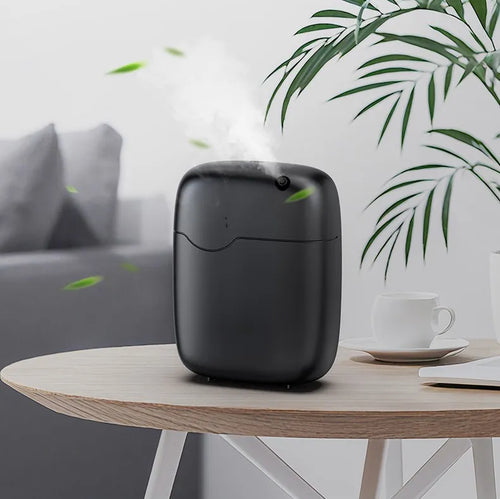
One machine for every volume the doors leave open
SOSA Vaayu · up to 1000 m³ ₹11,999
In most polyclinics the entrance, the reception, the shared waiting hall and the corridors between departments are not four spaces. They are one connected volume with furniture in it, because the doors between them are propped, sliding or absent.
Add those up — 2,500 sq ft of genuinely public floor at a three-metre ceiling is about 700 cubic metres — and the answer is one machine, not four, because the clinical rooms come out of the sum entirely: their doors are shut and they are fragrance-free. Up to 1000 m³ from a 400ml tank lasting about seventy-five days, app and onboard 1h/4h/8h/24h timers, under 38 dB, auto-stop, and a key-lock that is the reason it can stand in a hall full of people you have never met. The
Vaayu wall or HVAC mount puts it out of reach entirely.
Why the question has six answers rather than one
Every procurement conversation I have had about this started with somebody asking which format is best, and every one of them improved the moment we stopped answering that and drew a floor plan instead. The three formats are not competitors. They are three different physical mechanisms with three different operating envelopes, and a clinic happens to contain rooms that fall into all three envelopes plus a set of rooms that fall outside all of them. Asking which is best is a bit like asking whether a building should use lifts or stairs. The answer is both, in specified places, for specified reasons, and the interesting part is the specification rather than the preference.
1
THE FOUR VARIABLES
Volume, door discipline, dwell time and consent
Four things decide the format in any given room of a clinic, and none of them is taste. The first is volume, which is the arithmetic: square feet divided by 10.76, times the ceiling height in metres. A 120 sq ft cabin at three metres is 33 cubic metres; a 900 sq ft waiting hall is 250; a 2,500 sq ft public floor is about 700; a double-height atrium doubles whatever footprint sits under it. The second is door discipline, and it is the variable most people leave out. A room whose door is genuinely shut is a separate volume you can size for; a room whose door is propped all day is not a room at all for this purpose, it is part of the corridor. In most polyclinics the entrance, reception, waiting hall and departmental corridors are one connected volume with furniture in it, which is why they take one machine rather than four. The third is dwell time: somebody standing at a desk for ninety seconds and somebody sitting in a chair for forty minutes have very different relationships with the same air, and the second of those is the one you design for. And the fourth is consent, which is the variable a clinic has and an office does not. A member of your administrative staff can choose what their own cabin smells of. A patient waiting for a blood test chose none of it, may be feeling unwell, and in some departments has a well-documented aversion to smells that any nurse in that department will confirm. That fourth variable is why the fragrance-free list exists and why it is longer than the scented one.
2
THE THREE MECHANISMS
Passive evaporation, aerosol dose and continuous nebulisation
Then the mechanisms, which explain the envelopes.
A reed diffuser is passive: capillary action draws oil up rattan and it evaporates, at roughly a millilitre a day, with no fan and no pressure. Its output is fixed by the reeds and the temperature and does not rise with the size of the room, which is why it is excellent in 33 cubic metres and undetectable in 250. An aerosol is a dose: a fixed quantity released once, immediately subject to dilution by every cubic metre of fresh air arriving, with a substantial fraction of the droplets landing on the floor and the chairs within minutes. In a ventilated hall that gives about twenty minutes of usable presence out of a seven-hundred-and-twenty-minute day, and the only way to extend it is to repeat the dose by hand, roughly thirty-six times.
Cold-air nebulisation is a rate: undiluted oil sheared into particles small enough to stay suspended and travel with the air, released continuously and very slowly, so the concentration climbs for perhaps twenty minutes and then sits flat where release and extraction balance. That last sentence is the whole commercial argument and it is a mechanical one rather than a quality one. A rate can hold a level for twelve hours because it is being replenished at the speed the building removes it. A dose cannot, and a passive source can only do it inside a very small envelope of air. Once the three mechanisms are on the table, the zone map stops being a matter of opinion and
the morning-spray habit explains itself.
3
THE ROWS THAT SAY NOTHING
Three zones where the correct format is no format
And then the rows that make the rest of the table trustworthy.
Consultation and examination cabins get nothing, because a clinician is trained to notice what a room and a patient smell of and a patient may need to describe a symptom that involves smell. Filling that room with anything at all — a machine, a reed, an aerosol residue on the chair — takes information away from the person you are paying to gather it. Sample-collection and blood-collection rooms get nothing, because people faint and feel unwell in them and the correct response is ventilation rather than addition. Laboratories, pharmacy dispensing and sterile stores get nothing, because added airborne anything is a contamination conversation you do not want to have with your own quality lead. Day-care surgery, recovery and dressing rooms get nothing. Oncology and chemotherapy day-care gets nothing, and that row is not negotiable for reasons any oncology nurse will explain in one sentence.
Paediatric clinical areas get nothing, because children cannot consent and their parents did not choose it, and on most honest readings the paediatric waiting area should be left alone as well. That judgement call has its own page. I put these rows in the middle of the table rather than at the bottom on purpose: a clinic that is told plainly where a machine must not go has some reason to believe what it is told about where one should.
The complete fragrance-free list is here.
The sentence I would want a medical director to be able to say about your scenting: it is in the public areas only, it is presentation and housekeeping, it makes no claim of any kind about patients, and the clinical floor is untouched.
The zone table: six rooms, six decisions
Six kinds of space in the same multi-speciality clinic, with the rough volume of each, what each of the three formats would actually do there, and the decision I would sign off. Read it down the last column: it is a different answer six times, which is the point of the page. The room spray column says the same thing in every row, because we do not make one and an aerosol behaves the same way whoever does.
Decided per zone
Room spray, reeds or a machine — six rooms, six different answers
| Zone |
Rough volume |
Room spray |
Alcohol-free reeds |
The decision |
| Entrance, reception, 40-seat hall and corridors ★ |
≈700 m³ as one connected volume |
Not made by SOSA; a 20-minute dose in a 720-minute day regardless |
Below threshold past about a metre |
One Vaayu, low, on a timer, key-locked |
| Double-height atrium reception |
600–1,500 m³, six metres of ceiling |
No |
No |
The Aangan ₹25,999, HVAC-connected or standalone, up to 3,000 m³ |
| Administrative and back-office cabin |
≈33 m³, door shut |
No, and nobody should be spraying in a room they sit in |
Correct. Silent, unpowered, steady, chosen by the occupant |
Morning Freshness from ₹749, six reeds, turned fortnightly |
| Small consultation-suite lobby, four chairs |
≈60–80 m³ |
No |
Right, provided the door is not propped and nothing blows across it |
Reeds from ₹749, or 130ml from ₹1,249 for a longer run |
| Café or refreshment corner reaching the hall |
Part of the public volume |
No |
No |
The same Vaayu on the 1 Hotels-inspired Forest Suite — plus the door closer and extract hood |
| Every clinical room in the building |
Not applicable |
Nothing |
Nothing |
Nothing, with the door shut. Fragrance-free is the default, not a concession |
Shop this guide
One building, three answers
The SOSA principle
Asked in general, the comparison is a stalemate. Asked room by room, it produces six answers in ten minutes — and three of them are that nothing should be installed at all.
Volume, door discipline, dwell time and consent. Those four decide the format in every space in a clinic, and none of them is a matter of taste or budget.
Taking the table into a procurement meeting
Start by doing the arithmetic in public, because a room full of colleagues will accept a number they watched you produce and will argue with one you assert. Cubic metres are square feet divided by 10.76, times the ceiling height in metres, and the only difficult part is deciding which rooms go into the sum. The rule is to count the volumes a door closes, not the square feet on the brochure: the clinical rooms come out entirely because they are fragrance-free and their doors are shut, and in most clinics that removes forty to sixty per cent of the plan area at a stroke. A facility that walked into the meeting expecting to buy three machines very often walks out buying one, which is a better outcome for everybody and the reason I would rather teach the sum than quote a figure. Then check the door discipline honestly rather than architecturally — walk the floor at eleven in the morning and note which doors are actually shut — because a propped door merges two volumes and a shut one separates them, and your drawing will not tell you which is which. The worked example for a 3,000 sq ft clinic is on its own page, and the coverage calculation in full is here.
Then the operating burden, which is the column procurement will actually care about and the one most fragrance suppliers leave blank. Reeds cost nothing to run and need somebody to change a bottle every three months. The Vaayu needs a 400ml refill about every seventy-five days on a clinic's opening hours, which is four visits a year per unit, and nothing else at all. The ultrasonic machines are the interesting row: the Sukoon at ₹1,899, Boond at ₹899 and Megh at ₹3,499 are water-based, hold standing water and put 30–50 ml of water an hour into the air, which means a named person has to empty, rinse and dry the tank at the end of every day in a building that runs twelve hours. If that person does not exist, do not buy a water tank — that is a housekeeping judgement rather than anything more dramatic, and it is why those machines keep a narrow and honest role in one administrative cabin. The standing-water question has its own page and so does the question of who owns the refill. Candles do not appear in the table at all, and that is deliberate: SOSA makes candles from ₹379 and an open flame in a healthcare facility is a fire-safety and insurance matter rather than a fragrance one. There is no softer version of that sentence.
Then the two things that decide whether the table survives contact with the building. The first is that fragrance is the last item on the list and not the first, and a procurement meeting is a good place to say so out loud. Source, then ventilation, then humidity, then fabrics, then cleaning, then airflow, then fragrance. If anything in the public areas smells of anything, that smell has a cause — a dry drain trap, a dressing bin past collection, biofilm in an air-conditioning drain pan, a soiled-linen route through a public corridor — and the correct action is to trace it to its source and correct it rather than to select a format. Buying any of the three products to cover a known smell is the one decision that makes a clinic worse, because it removes the signal that told housekeeping something was wrong. The second is the claim, and in a healthcare setting it has to be written down before anybody signs. Fragrance in a medical facility is housekeeping and presentation. It does not reduce anxiety, aid recovery or have any clinical effect on any patient; a diffuser is not an air purifier and does not clean or disinfect anything, and nothing in this range is sold as though it did. How to describe it internally and to patients is worth reading before the paperwork goes round, because the sentence a medical director will ask for is narrower than the one a supplier usually offers.
Asked which format is best, I have no answer worth having. Asked what should go in the accounts cabin, the atrium and the sample-collection room, I have three, and one of them is nothing.
— Sonal Sahani, SOSA
The SOSA edit
The zone table turned into a purchase order, in the sequence I would sign it. The first row costs nothing, the middle rows are the two products that genuinely belong in a clinic, and the last two rows are the formats that do not — printed rather than left out, so nobody has to discover them by ordering.
The SOSA edit
One clinic, three formats, in purchase order
| Buy |
What it is |
Which zone it is for |
Cost |
| 1. The zone walk and the sum ★ |
Square feet ÷ 10.76 × ceiling height, counting only the volumes a door closes, walked at eleven in the morning |
Every zone. It removes 40–60 per cent of the plan area and often a machine with it |
₹0 |
| 2. Vaayu for the public volume |
Waterless, up to 1000 m³, 400ml ≈75 days, app and 1h/4h/8h/24h timers, under 38 dB, auto-stop, key-lock, four scents included |
Entrance, reception, shared waiting hall and inter-departmental corridors, as one volume |
₹11,999 |
| 3. Morning Freshness for the admin cabin |
Alcohol-free reeds, Malabar lemon, peppermint and eucalyptus, 24–72 hours to settle, six reeds, turned fortnightly |
One closed cabin of about 33 m³ with a named occupant, or a four-chair suite lobby |
from ₹749 |
| 4. Aangan, only where the volume is there |
Up to 3,000 m³, 800ml reservoir, metal body, programmable schedules, HVAC-connected or standalone, under 42 dB |
A double-height atrium or a whole-floor AHU tie-in. Wrong for a 2,500 sq ft polyclinic |
₹25,999 |
| Nothing at all |
No machine, no reed, no aerosol residue, with the door shut |
Consultation, examination, procedure, treatment, dressing, sample collection, laboratory, dispensing, sterile stores, imaging, oncology day-care, paediatric clinical |
— |
| Not in the range: a room spray |
SOSA makes no room spray for the home or for commercial space. The sprays in the range are car perfumes for roughly three cubic metres |
No zone. An aerosol is a dose of about twenty minutes in a twelve-hour building whoever makes it |
— |
Honest notes for buyers: fragrance in a medical facility is housekeeping and presentation, never treatment. Nothing on this page claims that a fragrance reduces anxiety, aids recovery, improves sleep, cleans or disinfects air, or has any clinical effect whatsoever, because it does not and a diffuser is not an air purifier. Scenting belongs to the entrance, reception, shared waiting areas, inter-departmental corridors and administrative rooms. Consultation and examination rooms, treatment and procedure rooms, day-care surgery, dressing rooms, blood- and sample-collection rooms, laboratories, pharmacy dispensing, sterile stores, imaging rooms, oncology day-care and paediatric clinical areas should be left fragrance-free. A persistent smell is information about a dry drain trap, a bin, a soiled-linen route or an air-conditioning drain pan: find it and fix it rather than covering it. On the machines: the
Vaayu at ₹11,999 is waterless cold-air nebulisation with no standing water tank, covering up to 1000m³ or roughly 2,000–3,000 sq ft, with a 400ml tank lasting about 75 days, Bluetooth app control, 1h/4h/8h/24h timers, under-38dB running, auto-stop and a key-lock for public areas. The
Aangan at ₹25,999 covers up to 3,000m³ and connects to HVAC for a whole floor or an atrium. The ultrasonic
Sukoon,
Boond and
Megh are water-based, hold standing water and add 30–50 ml of water an hour to the air, which makes them suitable for a single administrative cabin with a named person emptying and drying the tank daily, and unsuitable for public clinical property. An alcohol-free
reed diffuser needs 24–72 hours to establish and suits a small lobby rather than a large waiting hall. Candles are not appropriate in a healthcare facility because an open flame is a fire-safety matter. SOSA does not make a room spray. The Hotel Collection scents are SOSA's own interpretations inspired by the world's finest hotels; SOSA is an independent Indian fragrance house, not affiliated with or endorsed by any hotel brand. A portion of every order supports girl-child education through Nanhi Kali.
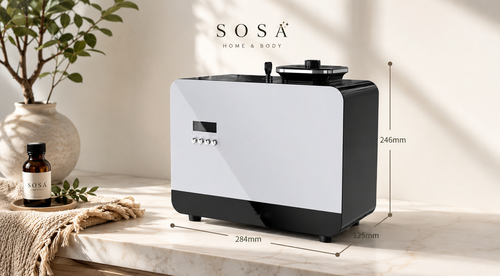
The row where the answer stops being the Vaayu
SOSA Aangan · HVAC or standalone ₹25,999
Up to 3,000 m³, roughly 8,000 to 10,000 sq ft, an 800ml reservoir, a metal body, programmable schedules and under 42 dB.
This belongs in exactly two rows of the zone table: a double-height atrium reception, where six metres of ceiling over the same footprint is twice the volume anybody estimated, and a whole-floor AHU tie-in at a genuinely large integrated centre. It is the wrong machine for a 2,500 sq ft polyclinic and I would rather write that here than agree to it in an email. If your public volume comes out under about a thousand cubic metres, the
Vaayu at ₹11,999 is the honest line item and the difference is ₹14,000 you can spend on seating.
A note from Sonal
I was asked this question across a table in Hyderabad by three people who each had a different answer ready, and the meeting had been going for twenty minutes before anybody mentioned a room. The administrator wanted reeds because they had seen them in a hotel, the facilities lead wanted a machine because it could be scheduled, and the finance lead wanted the aerosol because it was already in the housekeeping budget. All three were right about a different part of the building and none of them knew it. We drew the floor plan on the back of an agenda, wrote a volume beside each space, and the argument ended in under ten minutes.
What surprised them was not which product went where. It was how much of the plan ended up with nothing against it. Once the consultation cabins, the procedure room, the dressing room, the sample collection and the laboratory came out of the sum, the facility that had been sizing for 6,000 square feet was sizing for a little over two thousand, and the machine count went from three to one. The finance lead assumed I had made an error. I had not; I had simply counted the rooms whose doors are shut, which is the only number that matters. Selling one machine where somebody expected to buy three is not a loss. It is the reason the same person rings me about their second branch.
Everything is made and supported from Pune, and a part of every order funds girl-child education through Nanhi Kali. You get a space that smells like somewhere looked after; a girl gets a classroom. That equation has always felt right to me.
Frequently asked questions
Should a multi-speciality clinic use room spray, reed diffusers or a scent machine?
All three questions are really one question asked six times. A scent machine for the entrance, reception, waiting hall and corridors as one connected volume; alcohol-free reeds for an administrative cabin or a small consultation-suite lobby; and nothing at all in clinical rooms. SOSA does not make a room spray, and an aerosol is a twenty-minute dose in a twelve-hour building in any event.
How do I work out which zones go into the calculation?
Cubic metres are square feet divided by 10.76, multiplied by the ceiling height in metres, counting only the volumes a door actually closes. Clinical rooms come out entirely, because they are fragrance-free and their doors are shut, and in most clinics that removes forty to sixty per cent of the plan area. Walk the floor at eleven in the morning to see which doors are genuinely shut.
Is one machine really enough for a whole clinic floor?
Usually, yes. A 2,500 sq ft genuinely public floor at a three-metre ceiling is about 700 cubic metres and the
Vaayu covers up to 1000 m³. The
Aangan at ₹25,999 is for a double-height atrium or a whole-floor HVAC tie-in, and recommending it for a 2,500 sq ft polyclinic would be overselling.
One machine or several is its own question.
Can we use the ultrasonic diffusers instead, since they are much cheaper?
In one room, yes. The
Sukoon at ₹1,899 and
Boond at ₹899 are water-based, hold standing water and put 30–50 ml of water an hour into the air, so they need a named person to empty, rinse and dry the tank every day in a building that runs twelve hours. That is honest for one administrative cabin and wrong for public clinical property.
Where does fragrance sit in the order of work for a clinic?
Last. Source, then ventilation, then humidity, then fabrics, then cleaning, then airflow, then fragrance. A persistent smell is information about a dry drain trap, a bin, a linen route or an air-conditioning drain pan, and the answer is to find it and fix it rather than to choose a format.
The full pre-purchase list is here.
Six rooms, six answers
Not which format — which room
The Vaayu is ₹11,999: waterless cold-air nebulisation with no standing water tank, up to 1000 m³ or roughly 2,000–3,000 sq ft, a 400ml tank lasting about seventy-five days, app control with 1h/4h/8h/24h timers, under 38 dB, auto-stop and a key-lock. The Aangan is ₹25,999 for up to 3,000 m³, HVAC-connected or standalone. Alcohol-free reed diffusers from ₹749 for a closed cabin. SOSA does not make a room spray. Free shipping above ₹499, and a portion of every order supports girl-child education through Nanhi Kali.
See the Vaayu · ₹11,999 The reeds · from ₹749
Continue the read
More from SOSA
Editorial standards & sources
About this guide: Written by Sonal Sahani, ISIPCA Versailles-trained founder and perfumer at SOSA Home & Body, on why the choice between a room spray, reed diffusers and a scent machine has no general answer in a multi-speciality clinic, how volume, door discipline, dwell time and consent decide the format in each zone, and why three of the six rows in the table come out as nothing at all.
Facts verified August 2026: Product facts used in this guide. SOSA Vaayu ₹11,999: waterless cold-air nebulising diffuser, atomises undiluted fragrance oil to a dry residue-free nano-mist with no water reservoir, coverage up to 1000m³ (approximately 2,000–3,000 sq ft), 400ml refillable tank lasting up to about 75 days per fill, Bluetooth app plus onboard control, 1h/4h/8h/24h timer scheduling, adjustable intensity, under 38 dB, DC 12V/1A at 5W, 165 × 80.5 × 215 mm and 0.9 kg, freestanding or wall or HVAC mounted, auto-stop and key-lock, CE, RoHS and SGS certified, supplied with four hotel-inspired fragrances. SOSA Aangan ₹25,999: HVAC-connected or standalone commercial nebulising diffuser, coverage up to 3,000m³ (roughly 8,000–10,000 sq ft), 800ml reservoir, metal body, programmable schedules, under 42 dB. Ultrasonic machines are water-based, hold standing water and consume 30–50 ml of water an hour: Sukoon ₹1,899 (500ml, 270–320 sq ft, 16–18 hours on low, 3–6 drops per tank, steady/2H/4H timers, three 15ml Hotel Collection scents included), Boond ₹899 (300ml), Megh ₹3,499 (6 litres). Hotel Collection water-based fragrance 15ml ₹299, 100ml ₹999, 300ml ₹1,799, Pack of 7 at 15ml ₹1,799 against ₹2,093 bought singly; the Vaayu and Aangan take their own undiluted oil rather than these water-based bottles. Alcohol-free reed diffusers from ₹749, requiring 24–72 hours to reach their working level. Free shipping above ₹499. Coverage arithmetic: cubic metres equal floor area in square feet divided by 10.76 and multiplied by ceiling height in metres, counting only the volumes that are actually scented. This guide makes no medical, therapeutic or clinical claim of any kind for fragrance: a diffuser does not purify, disinfect or clean air, and does not treat, calm or affect any patient or condition. Fragrance is housekeeping and presentation. Clinical areas should be left fragrance-free, and a persistent odour should be traced to its source and corrected rather than covered. SOSA is not affiliated with or endorsed by any hotel brand. Prices subject to change — see the live product pages.