
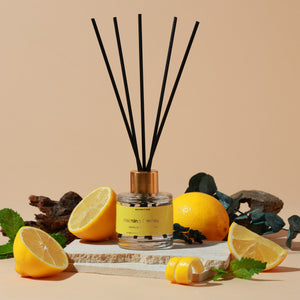
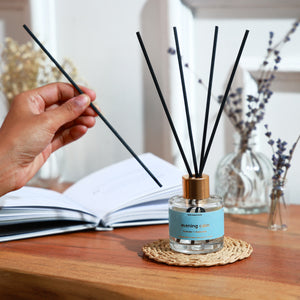
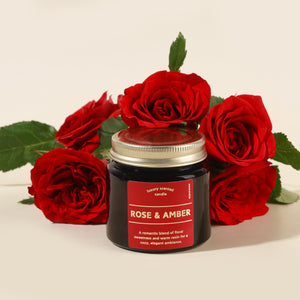
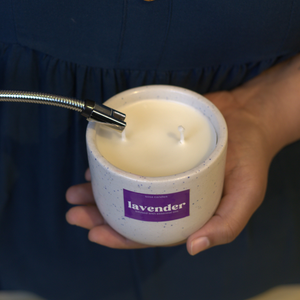
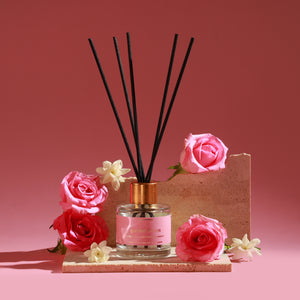
The two defaults to state: non-food, because allergies, diabetes, diets and religious observance are all common and none of them is the giver's business; and for a room rather than for a person, because a candle or a reed diffuser carries no taste guess and nothing anybody has to wear.
The four lines to put around the list: the cap as a ceiling · the order-by date · buy wherever you like · if you know nothing at all, pick the first category and stop worrying.
1. Something for a room they spend time in. This is the one to put first, because it is the answer for a giver who knows nothing. A candle, a reed diffuser, a lamp, a cushion, a mug that is genuinely good. It goes into their home rather than onto their body, so there is no taste guess and no gender guess, and it cannot be wrong on them.
2. Something for their car, if they drive. Worth naming separately because it is specific, obviously useful, and most givers do know whether a colleague drives in. A car perfume, a phone mount, a tyre gauge, a decent cloth. Nobody has ever been embarrassed by one.
3. Something for a desk. A good pen, a stand, a small lamp, a notebook, a plant. The test is whether it survives the first week — a desk toy does not, a lamp does.
4. Something consumable that is not food. Hand cream, soap, a bath thing, coffee if they are a coffee person. Consumable is good because it does not demand shelf space; not-food is good for the reasons below.
5. A good version of a cheap everyday object. An umbrella that works, a water bottle that does not leak, a phone cable that is not fraying. This is the most reliably appreciated category on the list and the least often used.
6. A book or a notebook. A book is a taste guess unless you know them, so steer people towards a notebook, a diary or something general-interest rather than a novel.
7. A plant, or something for one. Low-maintenance only, and worth flagging that it has to travel home.
8. A voucher. Put it on the list and say it is honest rather than lazy. A giver who truly knows nothing and is not comfortable guessing should be allowed a straightforward answer, and a recipient who receives a voucher at least receives something they will use.
Then the two defaults. Non-food, because allergies, diabetes, diets and religious observance are all common and none of them is the giver's business. And for a room rather than for a person, because a near-stranger choosing something that goes on somebody's body is guessing at the thing hardest to guess. And one disclaimer, which is the line I most want you to keep: buy wherever you like, there is no supplier attached to this.
The eight categories, and what each one is actually for
Each of these solves a different version of the same problem, which is that the giver has limited information. Categories one, five and eight work with no information at all. Categories two, three and four work with one observable fact — do they drive, do they have a desk, do they use the office kitchen. Categories six and seven need a little more, and the list should say so, because a giver who picks a novel for somebody they have met twice is making the one guess that cannot be recovered from. The sequence matters: if you lead with the categories that need information, the person who has none reads the first two lines and gives up. If you want a version to forward verbatim, the guide written for the whole team is the same material arranged as a participant page rather than as an HR one.
Their car, if they drive. This is the most under-used category in office gifting and the one most givers have enough information for, because you can usually tell who drives in. A car perfume from ₹449, a phone mount, a tyre gauge, a boot organiser, a microfibre cloth. It is a daily object in a space nobody else decorates for them.
A desk. The test here is the first week. A pen they will keep using, a laptop stand, a small lamp, a mug, a notebook, a cable tidy. Say plainly in the email that desk toys and novelty items fail this test, because that single sentence prevents more bad gifts than any recommendation.
A good version of a cheap everyday object. I would put this second if I thought anybody read past the first line. An umbrella that does not invert, a water bottle that does not leak, a proper phone cable, a decent pair of scissors, a lunchbox that seals. Nobody buys these for themselves at the good price point, everybody uses them daily, and there is no taste component at all. It is the highest hit rate on this list.
A book or a notebook. Include it but caveat it, because a novel is a taste guess of the purest kind and a wrong one is awkward in a way that a wrong candle is not. Steer people to a notebook, a diary, a desk planner or something general-interest. If the giver does know the recipient reads a particular thing, a book is one of the best gifts on the list, and the email should say so in exactly those terms: only if you actually know.
A voucher. Put it on the list openly. An organiser who leaves it off is implicitly telling the person who knows nothing that they have to guess anyway, and the result is a guess rather than a gift. A voucher for a bookshop, a coffee chain or a general retailer is a perfectly good Secret Santa gift and the recipient uses all of it.
Then the defaults, which matter more than the list. Non-food by default: in any office of forty people there are allergies, there is diabetes, there are diets, there is religious observance, and there is at least one person who does not want to explain any of it to a colleague. The non-food default removes the need for anybody to disclose anything. And for a room rather than for a person: personal fragrance, jewellery, clothing and anything sized is the wrong register for somebody you barely know. Some people react badly to fragrance, and an office is exactly where you will not know. That is one more argument for a reed diffuser over a personal perfume: a reed goes home with them and gets placed, or not, in a room of their choosing. Nobody has to wear anything, and nobody has to explain why they are not wearing it. An attar from ₹379 is a genuinely lovely gift for somebody whose fragrance taste the giver knows, and the page on what is appropriate at work sets out that line properly.
The list you can paste into an email
This is the table itself, written to be copied. The second column is what the giver needs to know before choosing, which is the part most gift lists leave out, and the fourth is a rough band rather than a price, because what fits depends on the cap you set.
| Category | What you need to know | Why it works | Rough band |
|---|---|---|---|
| 1. For a room they spend time in ★ | Nothing at all. This is the answer when you know nothing | It goes into their home, not onto their body. No taste guess, no gender guess, nothing anybody has to wear | ₹379 upwards |
| 2. For their car | Whether they drive in. You usually do know this | A daily object in a space nobody else decorates for them, and obviously useful | ₹449 upwards |
| 3. For a desk | That they have one. Avoid anything that will not survive the first week | Used in front of them every day, and a good pen or lamp is never unwelcome | Under most caps |
| 4. Consumable, and not food | Nothing, beyond avoiding strong fragrance on the skin | Does not ask them to find shelf space, and gets finished rather than discarded | Under most caps |
| 5. The good version of a cheap everyday thing | Nothing. An umbrella, a bottle, a cable, scissors that cut | Nobody buys these for themselves at the good price, everybody uses them, and there is no taste component | Under most caps |
| 6. A book or a notebook | A novel needs you to know them. A notebook or diary does not | Excellent if you know what they read, and a notebook is a safe general answer if you do not | Under most caps |
| 7. A plant, or something for one | That they want one, and that it can get home on a bus | Low-maintenance only. A plant needing twice-weekly attention is an obligation | Under most caps |
| 8. A voucher | Nothing, and that is the point | Honest rather than lazy. The recipient uses all of it, and a guess nobody can make is worse | Exactly the cap |


What to write around the list
The list is the easy half. What makes it usable is four lines of framing, and the first is the cap written as a ceiling: up to ₹500, and nobody is expected to spend the full amount. Without that sentence a third of any room reads the number as a target, and the gap between a ₹200 gift and a ₹500 gift becomes something people feel rather than something they choose. The second line is the order-by date, as an actual date and not as a number of days, because nobody does that arithmetic in December. Metro addresses usually see two to four working days, and the rest of India longer. A Secret Santa exchange tomorrow morning is not a delivery problem any online order can solve, and no page here will pretend otherwise: if it is tomorrow, buy locally, or tell the organiser you will hand it over on the Monday. The third line is the one that costs you nothing and protects the list: nobody is obliged to buy from any particular shop. An organiser's suggestions carry institutional weight, and a list that names a supplier is read by somebody as an instruction. The fourth is the escape hatch: if you genuinely know nothing about the person whose name you drew, take the first category and stop worrying about it. The page on a coworker you have met twice is the long version of that line.
Then the two defaults, and I would state them as defaults rather than as rules, because a rule invites exceptions and an exception invites a conversation nobody wants. Non-food, because allergies, diabetes, diets and religious observance are all common in any office of forty people and none of them is a giver's business. Put it as a default and you remove the need for anybody to disclose anything, which is the whole objective; put it as a rule and somebody will ask whether chocolates are allowed, and now you are adjudicating. The same for alcohol. And for a room rather than for a person: anything that goes on somebody's body — fragrance worn on skin, clothing, jewellery, anything sized — is the wrong register for a colleague you barely know, in both directions of seniority. Some people react badly to fragrance, and an office is exactly where you will not know. That is one more argument for a reed diffuser over a personal perfume: a reed goes home with them and gets placed, or not, in a room of their choosing. Nobody has to wear anything, and nobody has to explain why they are not wearing it.
One optional mechanism is worth more than the whole list, and it costs a line in your sign-up form. Ask every participant for one optional sentence: anything you would rather not receive. Not a wishlist, not a profile, one line. It catches food allergies, alcohol, fragrance sensitivity and the person who genuinely does not want another candle, and it does it without anybody having to volunteer a medical fact or a religious observance to a colleague. Pass that line to the giver along with the name. If you want to go one step further, add a second optional line — one thing about me — which is the single mechanism that makes a draw work on a floor where nobody knows anybody, and that page sets out how to collect it without it turning into a form nobody fills in. Everything else on this page is suggestion; those two lines are information, and information is what the giver is short of.
The SOSA edit
The one category on the list I can speak about with authority, broken into the answers I would give at each level of information. This is the table to use if somebody replies to your email asking for something more specific than a category.
| What the giver knows | What I would suggest | Why | Price |
|---|---|---|---|
| Nothing at all ★ | A scented candle, or a reed diffuser if the cap allows it | Goes in a room rather than on a person. No taste guess, no gender guess, and nothing anybody has to wear | ₹379 / ₹749 |
| They drive in every day | A car perfume, spray or hanging | A real daily object in a space nobody else buys for, and nobody has been embarrassed by one | ₹449–₹509 |
| They work from home | Morning Freshness reed diffuser or Evening Calm reed diffuser | It sits in the room they cannot leave. The most genuinely useful thing on this table | ₹749 / ₹799 |
| They have just moved house | A candle, or the ceramic jar candle | A new flat is the one situation where a home object is unambiguously welcome | ₹379–₹949 |
| They collect perfume and have said so | An attar — Adaa attar, Ameeri attar, Mastani attar or Nawaab attar | The only case where personal fragrance is right, because the giver is not guessing. The fragrance gift guide has the detail | ₹379–₹399 |
| Not on the list at any price | A personal perfume for a near-stranger, anything sized, or anything that names their body | Never. They then have to wear it or not wear it, and both are awkward in an office | — |

Versailles
Every December an HR team asks me for a list they can send out, and for two years I sent a list of my own products, which is what you would expect a fragrance company to do. It did not work, and the reason it did not work is instructive: a list of products from one supplier, sent by HR, stops being a suggestion and becomes something closer to a directive, and people resent being directed about a gift. Two organisers told me they had not forwarded it for exactly that reason, and both were right.
So now I send categories, and my own category sits at number one with everything else around it. The change in what came back was immediate — not in orders, which moved very little, but in whether the thing got forwarded at all. What I learned from it is that an organiser's real constraint is not finding gift ideas; it is sending something that does not look like it was written by a vendor. I would rather be one entry on a list that ninety people read than the whole of a list that stays in one inbox.
The two lines I would defend hardest on this page are the non-food default and the sentence saying buy wherever you like. Neither of them does anything for me commercially and both of them are the reason the rest of it is worth sending. Everything is made and supported from Pune, and a part of every order funds girl-child education through Nanhi Kali. Somebody gets a gift that was actually thought about; a girl gets a classroom. That equation has always felt right to me.
Frequently asked questions
- Office Secret Santa gift guide HR can share with the whole team — the same material written as a page for participants.
- How to organise Secret Santa at the office — the six decisions that come before any list.
- How to choose a Secret Santa gift that is appropriate for work — where the line sits, in both directions of seniority.
- Best office Secret Santa gifts in India — the participant-facing version, with specifics.
- Brand: the SOSA founder story.