Founder Diaries · Clinics & Medical Centres · Sensitive Patients & a Public Lobby
By Sonal Sahani · ISIPCA Versailles 13 min read Updated November 2026
You can have both, and the reason you can is that these are not really two competing requirements — they are one zoning decision, one settings decision and two operational promises. Zoning does most of the work: the lobby is scented as its own volume and nothing goes past the door into the department corridor. A low, key-locked setting does the rest, held to the test that no patient should be able to tell you what the fragrance is. Then a named fragrance-free place to wait that somebody from your front office has actually sat in for twenty minutes. And the willingness to switch it off for a named patient, with the app paired to two front-office phones so that the offer is true in ninety seconds rather than true in principle. What I am not going to do on this page is tell you that a fragrance is gentle, hypoallergenic, or suitable for sensitive patients, because those are claims and I do not make them. I am going to tell you how to run a lobby that is pleasant for most people and genuinely switchable for the few who have told you it is not.
Quick answers — read this first
Zoning, which does most of it: the lobby and reception scented as one volume, with the department corridor behind a door and nothing in it · every clinical room fragrance-free with its door shut · the emitter on the far wall at about 2.1 m, never above the registration desk, so the person standing there gets less than the middle of the hall, not more.
The setting: the lowest intensity that registers at all, a timer that runs opening hours and stops, key-locked so nobody turns it up because the hall got busy. The test is that a patient cannot name the fragrance.
The named seat: a specific fragrance-free bay, written on the front-office sheet, behind a door, with daylight and a working extract, within earshot of the desk, and with the same chairs as the lobby. Somebody has to sit in it for twenty minutes before you name it.
The off switch: the
Vaayu app paired to two front-office phones, with the physical key in a named place. Off in ninety seconds, and a ten-minute reminder so it goes back on.
The short answer
Short answer: zone it, run it low and key-locked, name a fragrance-free place to wait, and be able to switch it off in ninety seconds. Zoning does most of the work — the lobby and reception are scented as one volume with the department corridor behind a door and nothing in it, every clinical room is fragrance-free with its door shut, and the emitter sits on the far wall rather than above the registration desk. The setting does the rest: the lowest intensity that registers, on a timer, key-locked so nobody turns it up when the hall is busy. No claim is made that any fragrance is hypoallergenic, gentle or suitable for sensitive patients, because that would be a claim and SOSA does not make it.
The order, and why: zoning first, because a boundary is permanent and a setting is a habit. Then the setting, held to the test that no patient can name the fragrance. Then the named fragrance-free seat, because “we can move you” with nowhere specific behind it is not an offer. Then the off switch, because a promise your front office cannot keep in ninety seconds is worse than no promise. Take a patient at their word, write it on the file, and do not ask them to justify it; whether there is a clinical explanation is between them and their clinician and is not your front office's question.
What it costs: the zoning and the setting are free. The named seat is free unless you buy two matching chairs so it is not visibly worse than the lobby, which is around Rs 6,000. The
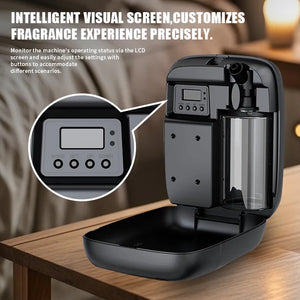
Vaayu at Rs 11,999 is the machine that makes the rest workable — lowest intensity setting, 1h/4h/8h/24h timers, under 38 dB, auto-stop, a key-lock so it cannot be turned up by a passer-by, and Bluetooth app control that can be paired to two front-office phones. Free shipping above Rs 499. No clinical claim of any kind: a diffuser is not an air purifier.
Straight answer
Our clinic has patients who react badly to strong smells and we still want the lobby to feel pleasant — how do we do both?
1. Zoning does about eighty per cent of it, and it is free. Treat the lobby and reception as one scented volume and stop there. Nothing past the door into the inter-departmental corridor, nothing in the departmental waiting bays if they are behind doors, and nothing at all in consultation rooms, examination rooms, the dressing and minor-procedures room, sample collection, the laboratory, dispensing, imaging or paediatric clinical areas. A patient who has told you that strong smells are difficult for them spends perhaps four minutes in your lobby and forty in the parts of the building that have nothing in them.
2. Then placement, which is the part most clinics get backwards. Put the machine on the far wall of the lobby at about 2.1 metres, on the path the air already takes, and not above the registration desk. The person standing at that desk is the closest nose in the building and is often the most anxious person in it, and they should be receiving less than somebody sitting in the middle of the hall rather than more. A patient who checks in and then sits down should experience the level going slightly down, not up.
3. One low setting, key-locked, on a timer, and never adjusted. The lowest intensity that registers at all. A 1h, 4h, 8h or 24h timer that runs your opening hours and stops on its own. The key-lock engaged, because the single commonest way a well-set lobby goes wrong is that somebody turns it up at noon when the hall fills, and a busy hall is a ventilation problem that fragrance makes worse.
The test I would hold you to: a patient should not be able to tell you what the fragrance is, only that the place did not smell of anything unpleasant. If anybody at the desk can name it, it is too strong.
4. A named fragrance-free place to wait, and somebody has to have sat in it. “We can seat you somewhere else” is not an offer if nowhere has been identified. Pick a specific bay, write its location on the front-office sheet by name, and apply five tests by sitting in it yourself for twenty minutes: there is a door between it and the lobby; it is not next to the sluice, the dressing room or the cleaning store; it has daylight and a working extract and is not a dead corridor end; it is within earshot of the desk or has a bell that is actually answered; and it has the same chairs as the lobby, because a fragrance-free option that is visibly worse than the main seating is a penalty rather than a courtesy.
5. The willingness to switch it off for a named patient, and the ninety seconds that make it true. Pair the Bluetooth app to two front-office phones rather than one, because the person with the only phone takes leave, and keep the physical key in a named place as the fallback. Then the offer is real: a patient says something at the desk, the receptionist says that it is off, and it is off before they have sat down. Set a ten-minute reminder so it goes back on, and log it, because three such entries in a month is information about your setting.
6. And what none of this is. It is not a clinical assessment and it is not an allergy service. Take the patient at their word, note it on the file, and never ask them to justify it; whether there is a medical explanation is between them and their clinician. SOSA makes no claim that any fragrance is hypoallergenic, low-allergen, gentle or suitable for sensitive patients, and no claim that fragrance treats, calms or affects anybody. Ask any supplier for the product's safety data sheet and give it to your own clinical lead to read.
The asthma and allergy page goes further into how that decision gets documented.
A portion of every order supports girl-child education through Nanhi Kali.
TL;DR: scent the lobby only, with the emitter on the far wall rather than above the desk. Lowest setting, timer, key-lock, and the test that nobody can name the fragrance. Name one fragrance-free bay on the front-office sheet and sit in it for twenty minutes first. Pair the app to two front-office phones so “we will switch it off” is true in ninety seconds. No hypoallergenic claim, no clinical claim.
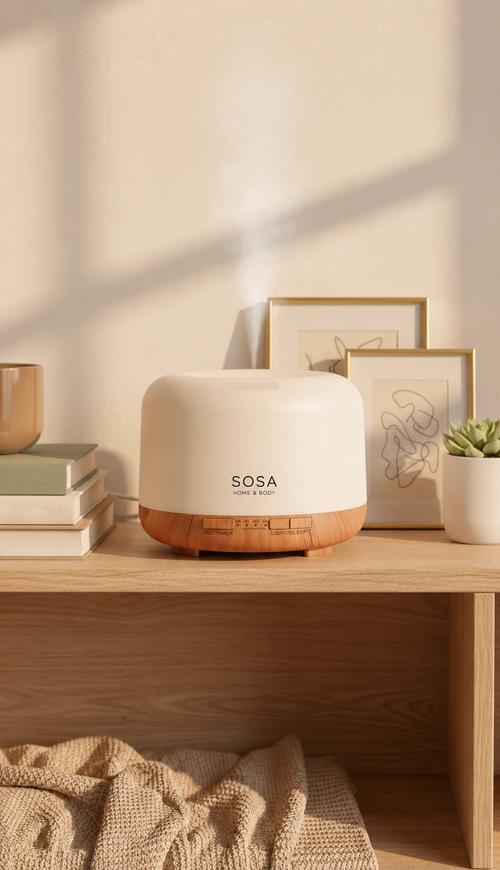
Both constraints, and which part of the machine each one uses
SOSA commercial scenting from ₹899
Two requirements, four answers.
Zoning does most of it and costs nothing. One low key-locked setting does the rest. A named fragrance-free bay that somebody has actually sat in makes the offer real. And the app on two front-office phones makes “we will switch it off” true in ninety seconds. The
Vaayu at ₹11,999 is the machine that supports all four: intensity control, 1h/4h/8h/24h timers, key-lock, Bluetooth app, under 38 dB. Four hotel-inspired scents included, so run the lightest. No hypoallergenic and no clinical claim is made. Free shipping above ₹499.
Zoning, the setting, the named seat, the off switch
The reason these two requirements sit together more comfortably than they look is that the people who have told you strong smells are difficult for them have told you something quite specific, and it is almost always about strength and about choice rather than about the existence of a smell. A lobby held at a level nobody can name is not a strong smell. A lobby somebody can leave for a named seat with a door between them and it is a choice. And a lobby that can be switched off inside ninety seconds by whoever is at the desk is both. What makes clinics fail at this is not the fragrance; it is that the three operational pieces are usually missing. The setting drifts upward because somebody turns it up when the hall is busy. The alternative seating is a sentence rather than a place. And the promise to switch it off depends on a key in a drawer and a person who is at lunch. Fix those three and you are running a lobby that works for the great majority and is genuinely optional for everybody else, which is the honest version of having both. The wider page on handling fragrance-sensitive patients covers the conversation itself; this one is about the building and the machine.
1
ZONING, AND THE PLACEMENT NOBODY EXPECTS
The lobby as one volume, and the desk getting less rather than more
Zoning is eighty per cent of this answer and all of it is free, so it goes first. Draw a boundary around the lobby and reception and treat that as the whole of the scented building. Nothing past the door into the inter-departmental corridor, because the corridor feeds rooms that will be fragrance-free and because a corridor is where a patient walks slowly while reading a sign. Nothing in a departmental waiting bay that sits behind its own door, because that is a separate volume and a separate decision. And nothing at all in consultation and examination rooms, the dressing and minor-procedures room, blood and sample collection, the laboratory, dispensing, sterile stores, imaging, oncology day-care or paediatric clinical areas —
the full fragrance-free list is worth printing and signing. The practical effect for a patient who has told you strong smells are difficult is that the exposure is four minutes at check-in rather than forty minutes across a visit, and four minutes at a level nobody can name is a different proposition entirely.
Then placement, which most clinics get exactly backwards. The instinct is to put the machine behind or above the registration desk, where the cabling is easy and where it looks deliberate. That is the worst position in the room. The person standing at that desk is the closest nose in the building, they are often the most apprehensive person in it, and they have no ability to move away while they are giving their details. Put the unit on the far wall at about 2.1 metres, on the path the air already takes, pointed along the hall rather than across the desk, so that the level somebody meets while checking in is lower than the level in the middle of the seating. And keep the receptionist out of it too: they are in that air for eleven hours a day, which is a far longer exposure than any patient's, and in my experience they are the first people to tell you the setting is wrong if you ask them. Ask them.
2
THE SETTING, AND THE SEAT WITH A NAME ON IT
One low key-locked level, and a bay somebody has actually sat in
The setting is the second eighty per cent of the twenty per cent that zoning leaves, and it is also free. The lowest intensity the machine has, a timer that runs your opening hours and stops without anybody remembering, and the key-lock engaged. The key-lock is not a small feature in this situation; it is the whole reason a machine can stand in a public hall in a clinic with sensitive patients at all. The commonest failure mode in a well-set lobby is not the original setting, it is drift: the hall fills at eleven, somebody decides the fragrance has gone, and turns it up. A busy hall has an air-change problem rather than a fragrance problem, and turning fragrance up in it makes the room worse for everybody and much worse for the one person it was already difficult for. Lock it, and hold the whole thing to one test:
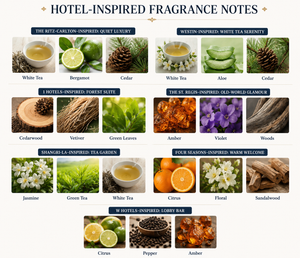
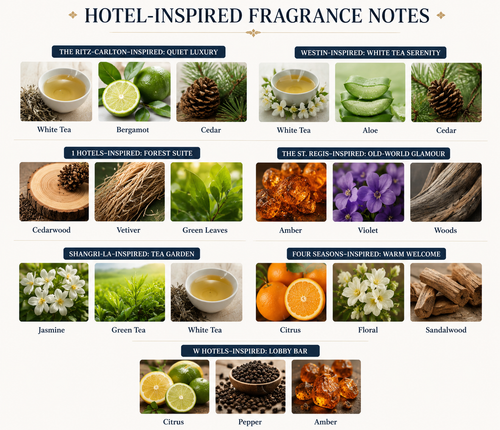
a patient should not be able to tell you what the fragrance is, only that the place did not smell of anything unpleasant. If somebody at the desk can name it, turn it down. Choose from the lightest end of whatever you have — the four included scents give you a month of trying one a week, and I would go in the direction of
Morning Freshness or
Mountain Breeze rather than anything sweet.
And then the named seat, which is where clinics most often have good intentions and no plan. “We can seat you somewhere else” is not an offer unless somewhere has been chosen and written down. Pick one bay, put its actual location on the front-office sheet in words a new receptionist can follow, and apply five tests by going and sitting in it for twenty minutes yourself. One: there is a door between it and the lobby, not an opening. Two: it is not beside the sluice, the dressing room, the cleaning store or the bin hold, which is how a fragrance-free seat becomes the worst seat in the building. Three: it has daylight and a working extract and is not a dead end of corridor. Four: it is within earshot or sight of the registration desk, or has a call bell that somebody actually answers, because a patient who has asked for an accommodation should not then have to worry about being forgotten. Five: it has the same chairs as the lobby. Two matching chairs cost about ₹6,000 and they are the difference between a courtesy and a penalty.
3
THE OFF SWITCH
Two front-office phones, ninety seconds, and a note so it goes back on
The last piece is the one that turns a policy into something a patient can feel, and it is the reason I would specify app control in this particular situation rather than treating it as a convenience. The offer you want your front office to be able to make is not “we will look into it” and not “I will ask the facilities team”. It is: that is switched off now. For that sentence to be true, three things have to be arranged in advance.
One: pair the Bluetooth app to two front-office phones, not one. A single paired phone is a promise that fails on the day that person is on leave, at lunch, or has left the company, and it fails in front of the patient it was made to. Two phones at the desk, both paired, both with the app open on the home screen. Keep the physical key in a named place as the fallback, and write down where, because a key-locked machine with a lost key is an argument waiting to happen.
Two: write the sentence. Something short that everybody at the desk says the same way, acknowledging it, acting on it, and not asking the patient to explain themselves. Having it written down matters more than its wording, and
the front-desk script page has a version you can take. Do not ask for a diagnosis and do not ask them to be sure. Take the statement at face value, note it on the file so the next visit does not start the conversation again, and move on.
Three: set a reminder so it goes back on, and log it. Ten minutes after the patient leaves, or at the end of the clinic session, by whoever switched it off. And keep a one-line log, because the log is information: once or twice a month is an accommodation working as intended, and five times a month means your setting is too high and the answer is to turn it down rather than to keep switching it off.
None of this is a clinical process and it must not be described as one. SOSA makes no claim that any fragrance is hypoallergenic, low-allergen, gentle or safe for sensitive patients, and no claim that fragrance treats, calms or affects any person or condition. If your clinical lead wants to read what is in the bottle, ask the supplier for the safety data sheet and give it to them — that is their decision to make and
it belongs in writing.
The one instruction I would put on the front-office sheet: the named bay, in words a new receptionist can follow, and the two paired phones. Those two lines are what make “we can switch it off” true in ninety seconds instead of true in principle.
The two constraints, side by side
The same question as a table: what clinics usually do when they have both requirements, and what actually holds up. Print it for the front-office folder. Everything above the last row is free or close to it, and the single purchase on the page is the machine that makes the lock, the timer and the app possible.
Print this
A decent lobby and a genuine opt-out, at the same time
| The piece |
What clinics usually do |
What actually holds up |
Cost |
| The boundary ★ |
One machine for the whole building, turned down a little, with the corridor and departmental bays included because they are public |
The lobby and reception scented as one volume and nothing past the department door. Four minutes of exposure instead of forty |
₹0 |
| The placement |
Above or behind the registration desk, where the cabling is easy and it looks deliberate |
Far wall at about 2.1 m, on the path the air already takes, so the desk gets less than the middle of the hall rather than more |
₹0 |
| The setting |
Set low at commissioning, then turned up at eleven when the hall fills and nobody can smell it any more |
Lowest intensity, a timer that runs opening hours, and the key-lock engaged so it cannot drift. A busy hall is an air-change problem
|
₹0 |
| The test |
Asking whether patients like the fragrance, which selects for the people who noticed it |
Asking whether anybody can name it. If the receptionist can, turn it down — they are in that air eleven hours a day |
₹0 |
| The clinical rooms |
A consultation door propped open for airflow on a warm afternoon |
Doors shut, every clinical room out of the sum entirely. That is the control that works, not the machine's setting |
₹0 |
| The alternative seat |
“We can seat you somewhere else”, with nowhere actually identified and no door between it and the lobby |
One named bay on the front-office sheet, behind a door, with daylight, a working extract, earshot of the desk — and the same chairs as the lobby |
₹0, or about ₹6,000 for two matching chairs |
| The off switch |
A promise to switch it off, with a key-locked machine and the key in somebody's drawer |
The app paired to two front-office phones, the key in a named place, off in ninety seconds, a ten-minute reminder so it goes back on |
₹0 |
| Never |
A stronger or “cleaner” fragrance offered as the fix, or a supplier claim that a scent is hypoallergenic, gentle or calming |
No such claim exists here. SOSA makes none, and the honest answers are a lower setting, a door, and an off switch |
— |
Shop this guide
The lock, the timer, the app — and the lightest scents in the box
The SOSA principle
A level nobody can name is not a strong smell, and a seat with a door on it is a choice. Zoning, a locked setting, a named bay and two paired phones. Three of the four are free, and the fourth is the reason the machine has a key-lock at all.
No hypoallergenic claim. No clinical claim. Take the patient at their word, write it on the file, and never ask them to justify it.
The sheet, the two phones, and the machine
Do the three free pieces first and give yourself a fortnight, because two of them need somebody to walk the building and one needs somebody to sit still in it. Week one: draw the boundary and move the machine if it is above the desk, set it to its lowest intensity, put it on a timer that matches your opening hours, and engage the key-lock. Then ask your receptionists — not your patients — whether they can name the fragrance, because they are in that air for eleven hours a day and they are the most sensitive instrument you own. Week two: find the fragrance-free bay and sit in it yourself for twenty minutes with a phone and a notebook. Check the five things: a door, not an opening; nothing beside it that smells of its own accord; daylight and a working extract; earshot of the desk or a bell that is answered; and the same chairs as the lobby. If the only candidate fails on the chairs, buy two matching ones for about ₹6,000 and stop thinking of it as a concession — a fragrance-free seat that is visibly worse than the main seating is a message, and not the one you intend.
Then write the two lines that make the promise real, because this is where almost every clinic with good intentions falls down. Line one is the named bay, written in words a receptionist on her second day can follow: not “the quiet area” but the actual location, by room name and window, in the front-office folder beside the appointment process. Line two is the two paired phones. Pair the Vaayu app to both front-office handsets rather than one, because a single paired phone is a promise that fails on the day that person is on leave, and it fails in front of the patient it was made to; then write down where the physical key lives, in a named place, as the fallback. Add the sentence your staff will use, agreed and written rather than improvised three different ways, and a one-line log. The log is the part people skip and it is the part that teaches you something: once or twice a month means the accommodation is working as designed, and five times a month means your setting is too high and the correct response is to turn it down permanently rather than to keep switching it off. If anybody asks for the ingredient list, ask the supplier for the safety data sheet and hand it to your own clinical lead; that is their call to make and not the front office's, and the fuller version of that conversation is worth reading before you write your own policy.
And then the machine, described accurately, because in this particular situation you are buying it for its controls more than for its coverage. The Vaayu is ₹11,999 and the three features that matter here are the intensity control, the key-lock and the Bluetooth app — the first so the level can be genuinely low, the second so it cannot drift upward on a busy morning, and the third so the off switch lives at the desk rather than in a facilities office. It is waterless cold-air nebulisation with no standing water tank, which is a housekeeping argument in a building that runs twelve hours and also the reason the ultrasonic Sukoon at ₹1,899, Boond at ₹899 and Megh at ₹3,499 are wrong for public clinical property: they are water-based, add thirty to fifty millilitres of water an hour to the air, and need a named person emptying and drying a tank every day. Those three stay honest in a single administrative cabin, as does an alcohol-free reed diffuser from ₹749 — and note that reeds are the wrong instrument here for a different reason, because a reed diffuser cannot be switched off in ninety seconds and a glass bottle of oil at reach height in a public waiting area is a spill risk in any case. Coverage up to 1000 m³, sized on public volumes only, which with a lobby-only boundary is a small number and means the machine runs far inside its capacity. A 400ml fill lasts about seventy-five days, four refills a year from a 300ml refill; 1h/4h/8h/24h timers; under 38 dB; auto-stop; four hotel-inspired scents included so you can run the lightest for a week each. What it is not: it is not a treatment, it does not calm anybody, it does not purify or disinfect air, it is not aromatherapy, and SOSA makes no hypoallergenic or low-allergen claim for any product in the range. Clinical rooms stay fragrance-free with their doors shut.
The two requirements are not in conflict. A level nobody can name, a door, a named seat somebody has sat in, and an off switch that works in ninety seconds — and three of those four cost nothing.
— Sonal Sahani, SOSA
The SOSA edit
The four pieces compressed into tiers, with what each costs and when it earns its place. Three tiers are free, one is two chairs, and the only product on the table is there for its lock, its timer and its app rather than for its coverage.
The SOSA edit
Three free tiers, two chairs, and one machine bought for its controls
| Tier |
What is in it |
When it earns its place |
Cost |
| 1. Zoning and placement ★ |
The lobby and reception as one scented volume, nothing past the department door, every clinical room out with its door shut, and the emitter on the far wall at 2.1 m rather than above the desk |
This week, and free. It is about eighty per cent of the whole answer |
₹0 |
| 2. The setting, locked |
Lowest intensity, a timer that runs opening hours and stops, the key-lock engaged, and the test that nobody at the desk can name the fragrance |
This week. The commonest failure is drift upward on a busy morning, and the lock is what prevents it |
₹0 |
| 3. The named bay |
One specific fragrance-free place to wait, written on the front-office sheet in words a new receptionist can follow, after somebody has sat in it for twenty minutes |
This fortnight. “Somewhere else” with nowhere named is not an offer |
₹0, or about ₹6,000 for two matching chairs |
| 4. The off switch and the sheet |
The app paired to two front-office phones, the physical key in a named place, one agreed sentence for the desk, a ten-minute reminder, and a one-line log |
This fortnight. Two phones rather than one, because one fails on the day somebody is on leave |
₹0 |
| 5. Vaayu — bought for its controls |
Intensity control so the level can be genuinely low, key-lock so it cannot drift, Bluetooth app so the off switch lives at the desk, 1h/4h/8h/24h timers, under 38 dB, no standing water tank |
Once the zoning, the setting, the bay and the sheet exist. It is the hardware the other four tiers depend on |
₹11,999 |
| Not on the list at any price |
A stronger or “cleaner” fragrance offered as the fix, a supplier claim that a scent is hypoallergenic or calming, reeds in a public waiting area, or asking a patient to justify what they have told you |
Never. SOSA makes no such claim, and no clinical claim of any kind, and SOSA does not make a room spray |
— |
Honest notes for buyers: this page is about zoning, settings and front-office process, not about anybody's health. SOSA makes no hypoallergenic, low-allergen or sensitivity claim for any product, and nothing here is clinical advice: a patient's own account should be taken at face value and recorded, and any medical question belongs with their clinician and your clinical lead, who can be given the product's safety data sheet to read. On fragrance itself, fragrance in a medical facility is housekeeping and presentation, never treatment. Nothing here claims that a fragrance reduces anxiety, aids recovery, improves sleep, cleans or disinfects air, or has any clinical effect whatsoever, because it does not and a diffuser is not an air purifier. Scenting belongs to the entrance, reception, shared waiting areas, inter-departmental corridors and administrative rooms. Consultation and examination rooms, treatment and procedure rooms, day-care surgery, dressing rooms, blood- and sample-collection rooms, laboratories, pharmacy dispensing, sterile stores, imaging rooms, oncology day-care and paediatric clinical areas should be left fragrance-free. A persistent smell is information about a dry drain trap, a bin, a soiled-linen route or an air-conditioning drain pan: find it and fix it rather than covering it. On the machines: the
Vaayu at ₹11,999 is waterless cold-air nebulisation with no standing water tank, covering up to 1000m³ or roughly 2,000–3,000 sq ft, with a 400ml tank lasting about 75 days, app control, 1h/4h/8h/24h timers, under-38dB running, auto-stop and a key-lock for public areas. The
Aangan at ₹25,999 covers up to 3,000m³ and connects to HVAC for a whole floor or an atrium. The ultrasonic
Sukoon,
Boond and
Megh are water-based, hold standing water and add 30–50 ml of water an hour to the air, which suits a single administrative cabin with a named person emptying and drying the tank daily and is unsuitable for public clinical property. An alcohol-free
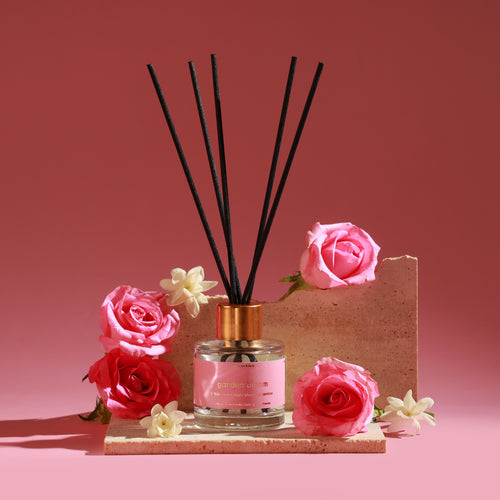
reed diffuser needs 24–72 hours to establish and suits a small lobby rather than a large waiting hall. Candles are not appropriate in a healthcare facility because an open flame is a fire-safety matter. SOSA does not make a room spray. The Hotel Collection scents are SOSA's own interpretations inspired by the world's finest hotels; SOSA is an independent Indian fragrance house, not affiliated with or endorsed by any hotel brand. A portion of every order supports girl-child education through Nanhi Kali.
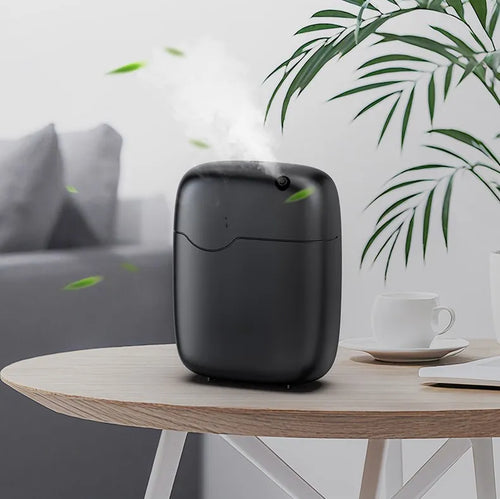
Bought for the lock, the timer and the app
SOSA Vaayu ₹11,999
Three of the four pieces on this page cost nothing, and this is the hardware the other three depend on. The intensity control is what lets the level be genuinely low. The key-lock is what stops it drifting upward on a busy morning. The Bluetooth app is what puts the off switch at the front desk, on two phones, so that “we can switch it off” is true in ninety seconds. Waterless cold-air nebulisation with no standing water tank, up to 1000 cubic metres, a 400ml fill lasting about seventy-five days, 1h/4h/8h/24h timers, under 38 dB, auto-stop, four hotel-inspired scents included. No hypoallergenic claim and no clinical claim is made. Lobby only, on low, for the opening hours.
A note from Sonal
A clinic owner in Mumbai put this to me as a dilemma and I did not think it was one, which I said perhaps too quickly. She had two regular patients who had told her front office that strong smells were difficult for them, and a lobby she was not happy with, and she had been offered a “hypoallergenic” fragrance by another supplier, which is a phrase I would not use about anything I make. What we did instead took an afternoon and cost nothing: we moved her machine off the wall behind the registration desk, where it had been pointing straight at everybody checking in, onto the far wall of the lobby; we dropped it to its lowest setting and engaged the key-lock; and we stopped it at the door into her department corridor. Then she found a bay by the records room, sat in it for twenty minutes, and discovered it was next to her cleaning store, so she used a different one.
The piece she added that I now recommend to everybody was the two phones. She had the app on her own handset, which meant the promise to switch it off depended on her being in the building, and she replaced that with both front-desk phones paired and the app on the home screen of each. The first time it was used, the patient was still standing at the desk when the receptionist told her it was already off, and she wrote to tell me about it because of how small the moment was. That is the whole of what I think is achievable here, and I would rather describe it in those terms than in any larger ones. Nobody was calmed by anything. A person said something was difficult, somebody believed them without asking why, and a machine stopped running inside a minute and a half.
I would rather sell a machine for its key-lock and its app than for its fragrance, in a clinic like this one. Everything is made and supported from Pune, and a part of every order funds girl-child education through Nanhi Kali. You get a space that smells like somewhere looked after; a girl gets a classroom. That equation has always felt right to me.
Frequently asked questions
How should a clinic scent a lobby when some patients are sensitive to strong smells?
Zone it, run it low and locked, name an alternative seat, and be able to switch it off quickly. Scent the lobby and reception as one volume with nothing past the department door and every clinical room fragrance-free with its door shut. Put the emitter on the far wall at about 2.1 metres rather than above the registration desk. Use the lowest intensity on a timer with the key-lock engaged, and hold it to the test that nobody at the desk can name the fragrance.
Is any fragrance suitable for sensitive patients?
SOSA makes no hypoallergenic, low-allergen or sensitivity claim for any product, and I would be cautious about any supplier who does. The honest tools are a lower setting, a boundary, a named alternative seat and an off switch, not a different bottle. If your clinical lead wants to see what is in a product, ask the supplier for the safety data sheet and give it to them, because that assessment is theirs rather than the front office's.
Where should the diffuser go if people stand at the registration desk?
Not above or behind the desk, which is the commonest placement and the worst one. Whoever is standing there is the closest nose in the building, often the most apprehensive person in it, and unable to move away while giving their details. Put the unit on the far wall of the lobby at about 2.1 metres, pointed along the hall rather than across the desk, so that checking in is a lower level than sitting down. Ask your receptionists about it too, because they are in that air for eleven hours a day.
What makes a fragrance-free waiting area a real option rather than a gesture?
Being named, and having been sat in. Pick one bay, write its actual location on the front-office sheet in words a new receptionist can follow, and test it by sitting there for twenty minutes: a door rather than an opening between it and the lobby, nothing beside it that smells of its own accord, daylight and a working extract, earshot of the desk or a bell that is answered, and the same chairs as the lobby. A fragrance-free seat that is visibly worse than the main seating is a penalty.
How quickly should a clinic be able to switch its diffuser off?
Inside about ninety seconds, from the front desk, by whoever is standing there. That means pairing the Bluetooth app to two front-office phones rather than one, because a single paired handset fails on the day that person is on leave and it fails in front of the patient. Keep the physical key in a named place as a fallback, set a ten-minute reminder so it goes back on, and keep a one-line log: five switch-offs in a month means the setting is too high and should be lowered permanently.
Zoning, a lock, a named seat, two phones
A level nobody can name, and an off switch that works — three of the four pieces cost nothing
The Vaayu is ₹11,999: waterless cold-air nebulisation with no standing water tank, up to 1000 m³ or roughly 2,000–3,000 sq ft, adjustable intensity, a 400ml tank lasting about seventy-five days for four refills a year, Bluetooth app control with 1h/4h/8h/24h timers, under 38 dB, auto-stop and a key-lock for public areas, supplied with four hotel-inspired fragrances. The Aangan is ₹25,999 for 8,000–10,000 sq ft, and alcohol-free reeds from ₹749 suit an administrative cabin rather than a public lobby. Free shipping above ₹499, and a portion of every order supports girl-child education through Nanhi Kali.
See the Vaayu · ₹11,999 The hotel-inspired scents
Continue the read
More from SOSA
Editorial standards & sources
Product facts used in this guide. SOSA Vaayu Rs 11,999: waterless cold-air nebulising diffuser, no water reservoir, coverage up to 1000m3 (approximately 2,000-3,000 sq ft), 400ml refillable tank lasting up to about 75 days per fill, Bluetooth app plus onboard control, 1h/4h/8h/24h timer scheduling, adjustable intensity, under 38 dB, DC 12V/1A at 5W, 165 x 80.5 x 215 mm and 0.9 kg, freestanding or wall or HVAC mounted, auto-stop and key-lock, CE, RoHS and SGS certified, supplied with four hotel-inspired fragrances. SOSA Aangan Rs 25,999: HVAC-connected or standalone commercial nebulising diffuser, coverage up to 3,000m3 (roughly 8,000-10,000 sq ft), 800ml reservoir, metal body, programmable schedules, under 42 dB. Ultrasonic machines are water-based, hold standing water and consume 30-50 ml of water an hour: Sukoon Rs 1,899 (500ml, 270-320 sq ft, 16-18 hours on low, three 15ml Hotel Collection scents included), Boond Rs 899 (300ml), Megh Rs 3,499 (6 litres). Hotel Collection water-based fragrance 15ml Rs 299, 100ml Rs 999, 300ml Rs 1,799. Alcohol-free reed diffusers from Rs 749, requiring 24-72 hours to reach their working level. Free shipping above Rs 499. Coverage arithmetic: cubic metres equal floor area in square feet divided by 10.76 and multiplied by ceiling height in metres, counting only the volumes that are actually scented. This guide makes no medical, therapeutic or clinical claim of any kind for fragrance: a diffuser does not purify, disinfect or clean air, and does not treat, calm or affect any patient or condition. Fragrance is housekeeping and presentation. Clinical areas should be left fragrance-free, and a persistent odour should be traced to its source and corrected rather than covered. SOSA is not affiliated with or endorsed by any hotel brand. Prices subject to change - see the live product pages.

 Four included, start lightfrom ₹299Shop →
 Reeds · admin, not the lobbyfrom ₹749Shop →