

Half two — no: there is no defensible figure for what that does to a price, an offer or a time on market. Any brand quoting you a percentage is guessing, and you should discount everything else they say.
The framing that works: this is a fixed decision about the standard you hold, not an expected-value calculation against a deal you have not closed. The arithmetic that is real: ₹11,999 across a year of viewings, and the machine is the one preparation cost the listing does not consume.
2. There is no honest figure for what scent does to a property outcome, and I will not give you one. Not a percentage on offers, not days off a marketing period, not a conversion rate. If a supplier quotes you one, ask for the study, the sample and the market — and then discount everything else they have told you.
3. So do not frame this as an expected-value calculation against a deal you have not closed. That framing needs a probability nobody has, and it also has an uncomfortable implication: that you would stop preparing properly if the number came back small.
4. Frame it instead as a fixed decision about the standard you hold. You already do this with photography. You do not compute the marginal return of a wide-angle lens per listing; you decided once what your listings look like, and you hold it. Presentation standards are set, not calculated.
5. Then do the one piece of arithmetic that is genuinely available. ₹11,999 across a year in which you open a door for a buyer ninety-six times is about ₹125 a viewing, and from the second year it is the cost of oil. Against a preparation budget on a single premium listing, that is the smallest line on the page.
6. And it is the only line the listing does not consume. The photographs are spent on that property. The styling hire, the deep clean and the flowers are spent on it. The machine comes out of the flat on the last viewing and goes into the boot.
A portion of every order supports girl-child education through Nanhi Kali.
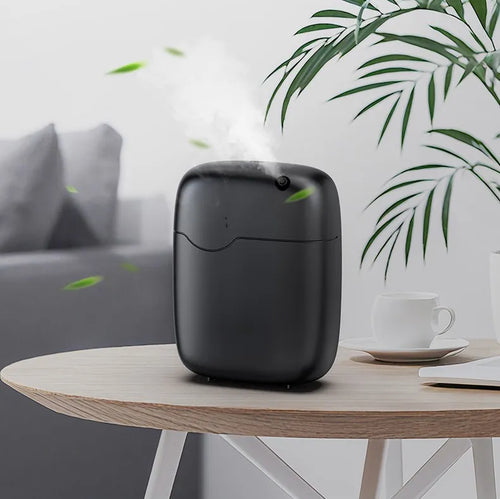
The claim I am not going to make, and why
This is the most direct invitation to a return-on-investment claim that anybody in this cluster has sent me, and it deserves a direct refusal rather than a soft one. I am not going to tell you that scenting a property raises offers, shortens a marketing period, improves a price or increases perceived value by a percentage, because none of those things has a defensible figure attached to it and the ones circulating in this industry are guesses wearing a decimal point. What follows is what is left when you take those out, and there is more of it than you might expect.
Your preparation budget on one listing, line by line
Every line you would ordinarily spend on preparing one premium property for market, with the two things worth comparing across them: whether the spend is consumed by that listing, and what is honestly claimable for it. No column in this table contains a return figure, because there is no honest one to print — including for the row this page is about.
| Line | Typical treatment | Consumed by the listing? | What is honestly claimable |
|---|---|---|---|
| Professional scenting ★ | ₹11,999 once, about ₹125 a viewing across a year of ninety-six, then oil | No. It leaves in the boot after the last viewing and is in the next listing on Tuesday | Changes how the property feels on arrival and how the visit is recalled. Presentation, and nothing beyond it |
| Photography | Per listing, and the largest single presentation cost at most price points | Yes, entirely. The images belong to that property | Decides whether a viewing happens at all, which outranks everything below it |
| Styling or staging | Per listing, hired by the week or the month | Yes. The furniture goes back | Gives scale and function to rooms a buyer would otherwise have to imagine |
| Deep clean | Per listing, repeated before serious viewings | Yes, and it is undone within a month | Removes the commonest reasons a premium property reads as neglected |
| Airing, drain traps, AC filter | Free, and skipped more often than any paid line here | Not applicable — it costs nothing | Fixes most viewing smells at source. This outranks the scenting row and is on the same page for that reason |
| Flowers on the day | A few thousand rupees, per open house | Yes, within four days | A visible, discountable staging gesture that a buyer reads as exactly what it is |
| A defect survey | The cost of an honest hour, or of a professional if the hour finds something | No — it protects you permanently | The only line here that changes whether you should be scenting the property at all |
Not consumed by the listing₹11,999Shop →  If the volume is not there₹1,899Shop →
  The scent · from ₹299₹299Shop →
The arithmetic that works, and the reader who should spend ₹1,899
Start with the division, and be honest about the number you put into it. The variable that decides this is not the value of the properties you sell. It is how many times a year you actually unlock a door and stand in a flat with a buyer. Eight a month is ninety-six a year and about ₹125 a viewing in year one; four a month is forty-eight and about ₹250; two a month is twenty-four and ₹500, at which point the number has stopped being small and has started being a signal. Notice that a realtor selling ₹20 crore properties twice a year is in a worse position on this arithmetic than one selling ₹3 crore flats every week, which is counterintuitive and correct: the machine is amortised by frequency, not by price. From the second year onwards every one of those figures collapses to the cost of the oil, because nothing about the hardware is consumed. A 400ml tank running about 75 days at typical use, on a machine drawing 5W for two hours per appointment, is a supply cost you will forget you have. What that leaves is a first-year decision and a long tail of near-zero, which is the profile of equipment rather than of a consumable — and equipment is bought on a view about how you want to work, not on a per-use return. One more thing the arithmetic quietly settles: if two of your viewings routinely fall at the same hour in different buildings, you will eventually own two machines, and it is better to know that before you build the number than afterwards.
Then the reader I owe a different answer to, and there is a good chance it is you. An agent who needs a return calculation to justify ₹11,999 is usually telling me something true about their diary rather than about their finances: the viewing volume is not there yet. That is not a failing and it is not permanent, but it does change the recommendation. If you are showing two or three properties a month, the honest advice is to spend ₹1,899 on the Sukoon instead — 500ml, rated for 270 to 320 sq ft, 16 to 18 hours per fill on low, steady, 2H and 4H timers, auto shut-off, and three 15ml Hotel Collection scents of your choice included, which covers the fragrance decision at no extra cost. Use it in the entrance zone of a furnished, occupied, air-conditioned property, and know its one real limit: it is water-based and puts 30 to 50 millilitres of water an hour into the air, so it is the wrong machine for a closed vacant flat with stone floors, and completely wrong for one in a humid month. If your listings are mostly vacant, the smaller machine is not a cheaper version of the right answer; it is a different answer, and the correct move is to do the free work properly and buy nothing this year. A reed diffuser from ₹749 covers the one unit you show constantly, since 24 to 72 hours to establish is fine for a property shown for months. And candles, from ₹379, belong only in an occupied property with somebody in it — an unattended flame in a flat you do not live in is an insurance question rather than a presentation one.
Then the two things that no amount of arithmetic touches, and they are the reason this cluster exists. The first is that none of this applies to a property with a defect. If a listing smells of damp, of drains, of a leak or of smoke, that is a material fact about the asset and it belongs in a disclosure rather than under a machine. The economic case for scenting a sound property is modest and honest; the economic case for scenting an unsound one is a liability with a rupee sign in front of it, and it is the one thing this brand will not help with at any price. Find it, fix it or disclose it. The second is that the free work outperforms the paid work and costs nothing at all. A day of cross-ventilation with windows on opposite walls, a mug of water down every drain trap including the ones you never think about, the air-conditioning filter washed and dried, the flat brought to temperature three hours before, and one cold walk in from the lift lobby paying attention to the first four seconds. That list resolves the large majority of the smells that make a premium property read as neglected, and no machine substitutes for any of it. Two practical constraints to finish: the Vaayu takes its own undiluted oil rather than the water-based Hotel Collection bottles at ₹299, which belong in the ultrasonics; and expect to stop smelling your own listing within a fortnight, because a nose reports change and discards constants. The remedy is a colleague walking in cold and telling you the truth, not another step on the intensity dial.
The SOSA edit
In order for a realtor deciding whether this spend is justified, which means the first row costs nothing and the last row is the case for buying nothing at all this year. A buying table that cannot produce that row is not advice.
| Do | What it is | When it is the right call | Cost |
|---|---|---|---|
| 1. The free preparation | A day of cross-ventilation, water down every drain trap, the AC filter washed, the flat at temperature, one cold walk in from the lift | Always, and before any purchase. It fixes most viewing smells at source, which no machine can do afterwards | ₹0 |
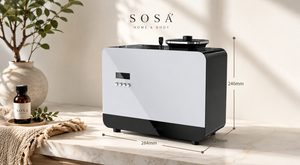
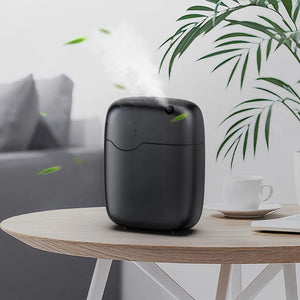
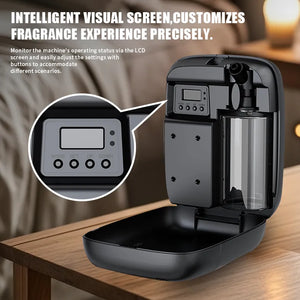
| 2. SOSA Vaayu ★ | Waterless nebulising diffuser, up to 1000 m³, 400ml tank, Bluetooth, 1h/4h/8h/24h timers, key-lock, 0.9 kg, four scents | Six or more viewings a month. About ₹125 each across a year of ninety-six, and oil thereafter | ₹11,999 |
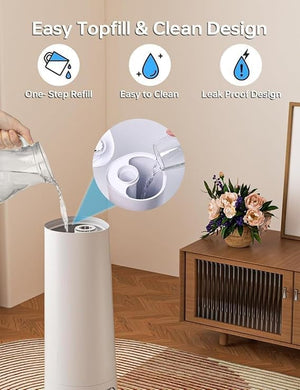
| 3. SOSA Sukoon | 500ml ultrasonic, 270–320 sq ft, 16–18h on low, steady/2H/4H timers, three 15ml scents included | Two or three viewings a month, in furnished occupied properties. Water-based, so not a closed vacant flat | ₹1,899 |
| 4. Reed diffusers | Alcohol-free passive diffusers, 24–72 hours to establish, their own scents | The single unit you show constantly, where the establishment time stops being a problem | from ₹749 |
| SOSA Aangan | Up to 3,000 m³, 800ml, HVAC or standalone, under 42 dB | A sales gallery or a clubhouse only. In an apartment this is more machine than the volume can use | ₹25,999 |
| Buy nothing this year | The correct answer for a low-volume diary, or for a portfolio where the free work has never been done properly | If you need a return calculation to justify ₹11,999, the volume is not there yet and the calculation will not create it | ₹0 |
Versailles
I have been asked some version of this question by nearly every professional buyer we have, and I have given the same answer every time, which is that I do not have the number they want. There is real research on ambient scent in shops and hotels. There is no research on what it does to a residential transaction, and a residential transaction is not a shop. One buyer, one asset, weeks of deliberation, a bank in the middle and a spouse with opinions. Anybody who hands you a percentage for that has taken a finding from a supermarket aisle and dressed it for a different occasion. I would rather lose the sale than be that supplier, partly on principle and partly because a realtor is precisely the reader who will remember which of us made a number up.
What I will say is what I would say about a good camera. It is a fixed cost of working to a standard, it is small when divided by the number of times you use it, and it is the only thing on your preparation invoice that is still yours after the property sells. Buy it on that basis, or do not buy it and do the free work instead, which is genuinely most of the benefit and costs an afternoon. And if you are building a spreadsheet to talk yourself into ₹11,999, the spreadsheet is telling you the honest thing: spend ₹1,899, use it well for a year, and buy the larger machine when your diary makes the case without any arithmetic at all.
Everything is made and supported from Pune, and a part of every order funds girl-child education through Nanhi Kali. You get a space that smells like somewhere considered; a girl gets a classroom. That equation has always felt right to me.
Frequently asked questions
- Whether a brokerage worth lakhs justifies investing in the viewing environment — the same question, asked earlier in the cluster.
- How much a realtor should spend preparing a property before a serious buyer visits — the whole budget, in order.
- Whether professional fragrance should be treated as a staging expense — where this belongs on the books.
- How to choose fragrance, intensity and diffusion method — the complete guide, and the pillar for this cluster.
- Brand: the SOSA founder story.
Facts verified August 2026: Product facts used in this guide. SOSA Vaayu ₹11,999: waterless cold-air nebulising diffuser, atomises undiluted fragrance oil to a dry residue-free nano-mist, coverage up to 1000m³ (approximately 2,000–3,000 sq ft), 400ml refillable tank lasting up to about 75 days per fill, Bluetooth app plus onboard control, 1h/4h/8h/24h timer scheduling, adjustable intensity, under 38 dB, DC 12V/1A at 5W, 165 × 80.5 × 215 mm and 0.9 kg, freestanding or wall/HVAC mounted, auto-stop and key-lock, CE, RoHS and SGS certified, supplied with four hotel-inspired fragrances. SOSA Aangan ₹25,999: HVAC-connected or standalone commercial nebulising diffuser, coverage up to 3,000m³ (roughly 8,000–10,000 sq ft), 800ml reservoir, metal body, programmable schedules, under 42 dB. Ultrasonic machines are water-based and consume 30–50 ml of water an hour: Sukoon ₹1,899 (500ml, 270–320 sq ft, 16–18 hours on low, 3–6 drops per tank, steady/2H/4H timers, three 15ml Hotel Collection scents included), Boond ₹899 (300ml), Megh ₹3,499 (6 litres). Hotel Collection water-based fragrance 15ml ₹299, 100ml ₹999, 300ml ₹1,799, Pack of 7 at 15ml ₹1,799 against ₹2,093 bought singly; the Vaayu and Aangan take their own undiluted oil rather than these water-based bottles. Reed diffusers (separate alcohol-free line) from ₹749, requiring 24–72 hours to reach their working level. Scented candles from ₹379, scenting a room in roughly 15–20 minutes but requiring attendance. Free shipping above ₹499. Timings: a nebulising diffuser reaches a working level within minutes and a stated viewing level well inside two hours. This guide makes no claim that fragrance affects a property's price, offer level or time on market; it is presentation, in the same category as photography, styling and lighting. Fragrance must never be used to conceal a material defect. SOSA is not affiliated with or endorsed by any hotel brand. Prices subject to change — see the live product pages.