
How Do I Stop a Clinic Waiting Area Smelling of Food, People and Disinfectant at Once?

How Do I Stop a Clinic Waiting Area Smelling of Food, People and Disinfectant at Once?

★ ★ One waiting hall, six departments, forty seats and a queue that peaks twice a dayVaayu ₹11,999 · Aangan ₹25,999 · free shipping above ₹499A portion funds girl-child education
★ SOSA · clinics, polyclinics & medical centres
A waiting area that is fine at nine and unpleasant at six has an air-change problem wearing a fragrance problem's clothes
★ ★ ★ ★ ★
★★★★★
"Fine in the morning, stale by evening. We were told to count the occupancy before buying anything, and the honest answer was that we needed the extract fan fixed."
Dr Sameer Ghatge Polyclinic, Thane
Fan first, machine after
★★★★★
"Forty seats, one machine, one setting, twelve hours. Simple to run is what we actually needed."
Anita Fernandes Waiting hall, Vasai
One machine, one setting
★★★★★
"Six specialities share our waiting area. Asking whether each should smell different got a firm no and a good reason for it."
Karthik Iyengar Multi-speciality, Mysuru
One scent, not six
★★★★★
"The cafeteria smell reaching the waiting area was a door closer that had been broken for a year. It cost nothing to fix."
Neelam Joshi Centre manager, Jaipur
A broken door closer
★★★★★
"Our paediatric side was left alone deliberately, on advice. I would not have thought to ask, and I am glad we did."
Dr Anjana Nair Paediatrics wing, Thrissur
Left fragrance-free
★★★★★
"The key-lock is the reason it can sit in a public hall at all. Nothing gets adjusted by anyone passing."
Mohan Barve Facilities, Aurangabad
Key-lock in public
★★★★★
"Fine in the morning, stale by evening. We were told to count the occupancy before buying anything, and the honest answer was that we needed the extract fan fixed."
Dr Sameer Ghatge Polyclinic, Thane
Fan first, machine after
★★★★★
"Forty seats, one machine, one setting, twelve hours. Simple to run is what we actually needed."
Anita Fernandes Waiting hall, Vasai
One machine, one setting
★★★★★
"Six specialities share our waiting area. Asking whether each should smell different got a firm no and a good reason for it."
Karthik Iyengar Multi-speciality, Mysuru
One scent, not six
★★★★★
"The cafeteria smell reaching the waiting area was a door closer that had been broken for a year. It cost nothing to fix."
Neelam Joshi Centre manager, Jaipur
A broken door closer
★★★★★
"Our paediatric side was left alone deliberately, on advice. I would not have thought to ask, and I am glad we did."
Dr Anjana Nair Paediatrics wing, Thrissur
Left fragrance-free
★★★★★
"The key-lock is the reason it can sit in a public hall at all. Nothing gets adjusted by anyone passing."
Mohan Barve Facilities, Aurangabad
Key-lock in public
✓ Aangan ₹25,999 · up to 3,000 m³ (≈8,000–10,000 sq ft) · HVAC or standalone · under 42 dB ✓ Vaayu ₹11,999 · up to 1000 m³ · one machine per public volume, not per floor plan ✓ Count the volumes a door closes. Clinical rooms come out of the sum entirely


Founder Diaries · Clinics & Medical Centres · Shared Waiting Areas
By Sonal Sahani · ISIPCA Versailles 12 min read Updated September 2026
The answer starts by pulling the question apart rather than answering it whole. You do not have a waiting-area smell. You have three of them, with three unrelated sources, arriving at three different times of day, and each one has its own fix that has nothing to do with the other two. Food is a door and a route. People are air change and textiles. Cleaning chemistry is an hour and a dilution. Until all three are dealt with, a diffuser is not a solution to any of them — it is a fourth smell in a room that already has three, and four is a worse room than three. Separate them first. It takes a week and it costs nothing.
Quick answers — read this first
Separate them before you fix anything: food arrives in bursts and is warm and savoury · people is flat, constant and worst at the end of a session · cleaning chemistry is sharp, peaks on the half hour after the mop and fades.

Three fixes: food is a door closer, a trolley route and somewhere to eat that is not the seating · people is air change, occupancy and wipeable seating · cleaning chemistry is the mopping hour, the measured dilution and using a neutral cleaner in the public areas where the phenolic one is not doing a job.

Then, and only then, fragrance: the Vaayu at ₹11,999 holds a steady background in a room that has nothing of its own to smell of. A persistent smell is information about a source, so find it and fix it rather than covering it. Clinical rooms stay fragrance-free.
The short answer
Short answer: stop treating it as one problem. Food is fixed by a door closer, a trolley route and an eating policy. People are fixed by air change and by getting the fabric out of the room. Cleaning chemistry is fixed by moving the mopping hour and measuring the dilution. Fragrance comes after all three, because in a room that still smells of the other three it is simply a fourth.
The week's work: stand in the hall at 09:30, 12:45 and 17:45 for five days and write down which of the three you can smell and how strongly. That log tells you which fix to do first, and in most clinics it is the cleaning one, because it is the only one of the three that the building itself manufactures on a schedule you already control.
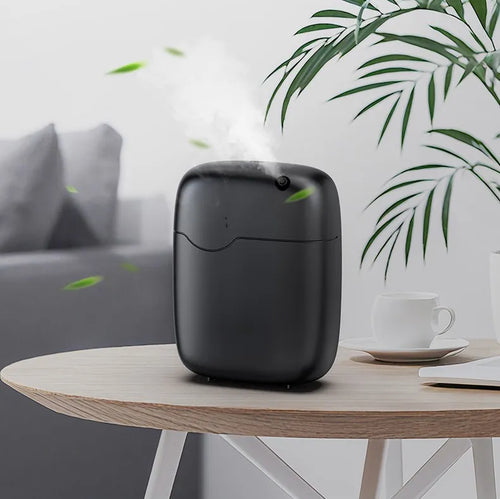
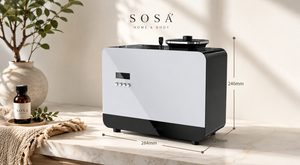
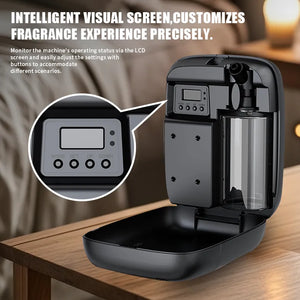
Shop, once the hall has nothing of its own: the Vaayu ₹11,999 (waterless, up to 1000 m³, 400ml lasting about seventy-five days, app plus 1h/4h/8h/24h timers, under 38 dB, key-lock, four hotel-inspired scents included) and the Aangan ₹25,999 for a large centre or an atrium. The 1 Hotels-inspired Forest Suite at ₹299 is the bottle where a café corner sits near the seating. Free shipping above ₹499.
Straight answer
How do I stop a clinic waiting area smelling of food, people and cleaning chemicals all at the same time?
1. Separate the three before you fix anything, because they do not share a cause. Stand in the hall at half past nine, a quarter to one and a quarter to six, for five working days, and write down which of the three you can smell.

2. Food is a door, a route and a policy. The café or pantry door with a closer that has been broken for months is the most common single cause I find. Then the route the tiffin trolley takes at half past twelve, and then the fact that there is nowhere to eat except the waiting chairs.

3. People is air change and fabric, and nothing else. A fixed volume with a fixed air-change rate and twelve hours of occupancy, plus forty upholstered chairs working as a reservoir. That is the damper, the extract fan, the propped door, the purge at the trough and wipeable seating at the next refit.

4. Cleaning chemistry is an hour and a dilution, and it is the easiest of the three. Move the public-area mop out of both peaks to the quiet half-hour. Measure the dilution with a cup instead of pouring a capful for luck. And use a neutral floor cleaner in the lobby and the waiting hall, keeping the phenolic product for the clinical floor where it is actually doing a job.

5. Never put fragrance over any of the three. A persistent smell in a medical facility is information — a bin past its collection time, a dry drain trap, a soiled-linen route, an air-conditioning drain pan — and covering it removes the signal that told housekeeping something was wrong. Find it and fix it, every time.

6. Then, in a hall that has nothing of its own to smell of, a steady background is worth buying. The Vaayu at ₹11,999 on low through the opening hours, in the public areas only. Where a café corner genuinely sits near the seating, the 1 Hotels-inspired Forest Suite at ₹299 is the bottle, because dry woods sit at a different address in the nose from food.

A portion of every order supports girl-child education through Nanhi Kali.

TL;DR: you do not have one smell, you have three with three unrelated sources. Food is a door closer, a trolley route and somewhere to eat that is not the seating. People is air change and fabric. Cleaning chemistry is the mopping hour and the dilution. Fragrance is a fourth smell until all three are handled, and four is a worse room than three.
1 Hotels-inspired · Forest Suite
The bottle for a hall that a café breathes into
1 Hotels-inspired · Forest Suite ₹299 / 15ml
Cedarwood, vetiver and green leaves — bone dry, low in the nose, and the one I reach for where a refreshment counter sits thirty feet from the seating and the door between them is doing its job. Dry woods occupy a different address in the nose from food, so instead of arguing with a samosa they stand beside it; a light white tea in the same hall simply loses. This is the bottle for a café you have already dealt with, not a substitute for dealing with it. If the food smell is still arriving in the seating, the door closer and the extract hood fix more of it than any bottle will. The 15ml at ₹299 is water-based for the ultrasonic machines; the Vaayu runs its own undiluted oil.

Three smells, three sources, three fixes

The reason this problem persists in so many clinics is that it gets discussed as one complaint and therefore gets one response, which is usually a spray at the counter. It is three problems. They have different sources, different peak times, different owners inside your organisation and different fixes, and the only thing they have in common is the room they arrive in. Once you separate them you will usually find that two of the three are somebody's forgotten maintenance job and the third is a rota, and that between them they cost less to correct than a week of the fragrance somebody has already quoted you for.

1
FOOD
A door closer, a trolley route, and somewhere to eat that is not the seating
Food is the easiest of the three to trace because it arrives in bursts and you can time it. It peaks between half past twelve and half past one, it is warm and savoury rather than flat, and it almost always has a single mechanical cause: a door between a café, a pantry or a staff room and the public area, with a closer that stopped working some months ago and that nobody has logged because the door still shuts if you push it. I have found that door in more clinics than I can count, and the repair is a few hundred rupees. Check it today: let the door go from halfway and watch whether it latches. Then the route. A tiffin trolley or a tea trolley taking the public corridor at half past twelve deposits its entire load into the hall on the way through, and most buildings have a service route that nobody uses because the public one is shorter. Change the route, or change the hour, and check where the staff lunch actually happens rather than where the policy says it happens. Then the third part, which people resist because it sounds unkind: if there is nowhere to eat except the waiting chairs, people will eat in the waiting chairs, and patients waiting two hours for a report are entitled to. Two tables in a corner near the café, with its own extract hood running and a lidded bin beside it, moves the smell to a place where it belongs. The cafeteria reaching the waiting area goes through the same problem at greater length.
2
PEOPLE
A fixed volume, a fixed air-change rate, and forty chairs full of textile
People is the flat one, and the hardest to notice because it arrives so slowly. It has no burst. It builds from about eleven, is at its worst in the last hour of the session, and is still faintly there forty minutes after the hall empties, which is the signature that tells you it is partly in the furniture rather than only in the air. The arithmetic fits on the back of an appointment card: floor area divided by 10.76, multiplied by ceiling height, gives the cubic metres; a peak head-count with a clicker gives the load; and if the hall is cooled by wall-mounted split units the outdoor air entering it is zero, because a split unit returns the air it cools to the room. The fixes are the free ones: reopen the fresh-air damper, put the toilet extract on the main supply, prop one internal or rear door so air has a path across the hall, and purge in the quiet half-hour between the peaks. Then the textiles, which is the half of this that a ventilation engineer will not mention: after the floor, upholstered seating is the largest surface in the room and the only large one nobody cleans daily, and forty fabric chairs that have each held ten people take the room's air in all day and give it back all evening. Perforated vinyl or polyurethane seating wiped down at close is roughly the same money as fabric at the next refit and turns the biggest soft surface in the building into a hard one. The full arithmetic of the evening is the page for this one.
3
CLEANING CHEMISTRY
The mopping hour, the measured dilution, and the floor that does not need it
And the third, which is the one your own building manufactures on a schedule you already control. The sharp smell of a clinic at ten past nine and again at ten past two is the floor being cleaned, and it is not a housekeeping failure. It is housekeeping working correctly, in the wrong place at the wrong dilution at the wrong hour. Three separate corrections, all free. First, the hour: move the public-area mop out of both peaks and into the quiet half-hour between them, so that the sharpest fifteen minutes of the cycle happens in a hall with six people in it rather than fifty. Clinical areas keep their own schedule, which is a clinical decision rather than a fragrance one. Second, the dilution, which in my experience is wrong in about half the clinics I walk into: a concentrate meant to be used at one part in twenty gets a generous capful poured straight into the bucket, because the housekeeping team has correctly worked out that nobody ever complains about too much. That gives you three times the smell and no extra cleaning at all. A measuring cup on a string beside the bucket, and a laminated dilution chart above it, fixes it permanently. Third, and the one that surprises people: the lobby and waiting-hall floors do not need the product the clinical floor does. A neutral floor cleaner in the public areas, with the phenolic concentrate kept for the rooms where it is genuinely doing a job, removes most of the smell without removing anything else. That is a conversation to have with your infection-control lead rather than with me. A clinic that smells of the cleaning regime all day is the longer version.
The three questions I would ask your housekeeping supervisor this afternoon: what hour does the public floor get mopped, what does the bottle say the dilution should be, and is there a measuring cup by the bucket. Two of those three are usually wrong and both are free to correct.

The separation table

The three smells side by side: what each is like, when it peaks, what causes it, what fixes it and what that costs. Walk the hall at three fixed times for a week and tick the column that matches. The last row is the fourth smell, which is the one this company sells and goes last.

Three smells, separated
Which of the three you actually have
What you smell When it peaks The actual source The fix Cost
1. Food ★ 12:30 to 13:30, in bursts rather than steadily A café, pantry or staff-room door with a failed closer; a trolley taking the public corridor; nowhere to eat but the chairs Repair the closer, change the route or the hour, and put two tables and a lidded bin near the café with its own extract A few hundred rupees
2. People Builds from 11:00, worst in the last hour, lingers 40 minutes after the hall empties Occupancy in a fixed volume with no outdoor air, plus forty fabric chairs working as a reservoir Fresh-air damper, toilet extract on the supply, one propped internal door, purge at the trough, wipeable seating at the refit ₹0 upwards
3. Cleaning chemistry 09:10 and 14:10, sharp, then fading over about an hour The public floor mopped at the busiest hour, usually at three times the intended dilution Move the mop to the quiet half-hour, put a measuring cup by the bucket, and use a neutral cleaner in the public areas ₹0
4. Something you can name On a schedule, in one corner, unrelated to occupancy A dressing bin past collection, a dry drain trap, a soiled-linen route, an air-conditioning drain pan. Toilets after cleaning Trace it. A persistent smell is information, and covering it removes the signal that told housekeeping something was wrong Usually ₹0
5. Nothing in particular All day, unchanging A hall with the first four dealt with, which is the target state and the hardest of the five to reach Nothing. This is the result. What to fix before spending anything —
6. A fourth smell Whenever the machine is running A diffuser switched on in a room that still has the first three in it Do not. Four smells is a worse room than three. The machine goes after the fixes rather than instead of them ₹11,999
Shop this guide
Once the hall has nothing of its own
The SOSA principle
You do not have a waiting-area smell. You have three, with three unrelated sources and three different peak times. A single answer to three questions is how a hall ends up with four smells in it.
A door closer for the food, air change and textiles for the people, an hour and a dilution for the cleaning chemistry. Two of the three are free and one costs a few hundred rupees.

The order to do it in, and the fourth smell

Do the log first, because it takes five minutes a day and it stops the argument. Three fixed times — half past nine, a quarter to one, a quarter to six — for five working days, one line each, written by the same person so that the nose is consistent. Note which of the three you can smell and how strongly on a scale of nothing, faint, obvious. Two things fall out of that log immediately. The first is which of the three is actually your problem, which is very often not the one the complaints mention, because patients name the cleaning smell and describe the occupancy one as stuffy without connecting the two. The second is whether there is a fourth thing you can actually name — a bin, a toilet, a drain, a drain pan — and if there is, that goes to the top of the list, because a smell you can name has a source and a source gets fixed rather than covered. Put one person on it and read the sheet on Friday. In most clinics the answer is on it by Wednesday.

Then fix them in this order, which is by cost rather than by severity, because two of the three are free and there is no reason to wait. The mopping hour and the dilution go first: a rota change and a measuring cup, both of which can be done this afternoon, and between them they usually remove the sharpest of the three smells entirely. The door closer goes second, at a few hundred rupees, because the food smell is the one patients comment on most. The trolley route and the eating corner go with it. The air work goes third because some of it is free — the damper, the propped door, the purge, the extract on the main supply — and some of it waits for the next refit. The peak-hour operating card sets out the daily version of that, and where a clinic should spend first sets out the annual one. Then walk the hall again at the same three times for a second week, with the same person and the same sheet, and see what is left. What is left is what a fragrance is for.

And then the fourth smell, which is the only honest way to describe what I sell. A diffuser running in a hall that still smells of food, occupancy and floor cleaner does not replace any of those three. It adds to them, and a room with four smells in it reads worse to a patient than the same room with three, because the fourth one is the only one that looks deliberate. In a hall that has nothing of its own left, the same machine does something genuinely worth ₹11,999: it holds one steady background level through the opening hours, so that the building smells of nothing in particular rather than of the cleaning regime, which is presentation and housekeeping and is not a clinical claim of any kind. A diffuser is not an air purifier, it removes nothing from the air and it has no effect on any patient. On the specifics: the Vaayu at ₹11,999 is waterless, covers up to 1000 cubic metres, holds 400ml lasting about seventy-five days, and key-locks so the setting survives a busy afternoon. Where a café corner genuinely sits near the seating, the 1 Hotels-inspired Forest Suite at ₹299 is the bottle rather than the lightest one, because dry woods occupy a different address in the nose from food; everywhere else the Westin-inspired White Tea Serenity is the default. And the half of the plan this never enters: consultation and examination rooms, treatment and procedure rooms, day-care surgery, dressing rooms, sample collection, laboratories, dispensing, sterile stores, imaging, oncology day-care and paediatric clinical areas are fragrance-free, with the doors shut. The ultrasonic Sukoon at ₹1,899 and Boond at ₹899 hold standing water and suit one administrative cabin with a named owner; an alcohol-free reed diffuser from ₹749 takes 24 to 72 hours and is barely noticed past a metre; candles are a fire-safety matter in a healthcare building; and SOSA does not make a room spray.

A hall with three smells in it does not need a fourth. It needs a door closer, an open damper and a measuring cup beside the mop bucket.
— Sonal Sahani, SOSA

The SOSA edit

For a clinic manager looking at a waiting hall that smells of several things at once. The first three rows are the three fixes, in cost order, and none is a fragrance product. The machine is fourth and conditional on the first three being done.

The SOSA edit
Three smells, in the order to fix them
Do this What it is When it earns its place Cost
1. The mopping hour and the dilution ★ Public floor mopped in the quiet half-hour, a measuring cup on a string by the bucket, a dilution chart above it This afternoon. It is a rota change and a plastic cup, and it usually removes the sharpest of the three ₹0
2. The door closer, the route and the eating corner A working closer on the café or pantry door, the trolley off the public corridor, two tables with an extract and a lidded bin Second. A failed door closer is the most common single cause of food reaching a waiting hall A few hundred rupees
3. Air change and the fabric Fresh-air damper reopened, toilet extract on the main supply, one internal door propped, purge at the trough, wipeable seating at the refit Third. Partly free today, partly a refit decision. Forty fabric chairs are the second largest surface in the room ₹0 to a refit
4. A neutral cleaner for the public floor Keeping the phenolic concentrate for the clinical floor where it is doing a job, with the infection-control lead's agreement With the first row, if your infection-control lead agrees — and in my experience they agree faster than facilities does ₹0
5. Vaayu for the public areas Waterless, up to 1000 m³, 400ml lasting about 75 days, app and 1h/4h/8h/24h timers, under 38 dB, key-lock, auto-stop Fourth and conditional. In a hall with nothing of its own left, one steady level for the opening hours is worth having ₹11,999
The scent, where a café is near the seating 1 Hotels-inspired Forest Suite — cedarwood, vetiver and green leaves. Elsewhere the Westin-inspired White Tea Serenity With the machine. Dry woods sit at a different address in the nose from food, so they stand beside it rather than arguing with it from ₹299
Honest notes for buyers: fragrance in a medical facility is housekeeping and presentation, never treatment. Nothing on this page claims that a fragrance reduces anxiety, aids recovery, improves sleep, cleans or disinfects air, or has any clinical effect whatsoever, because it does not and a diffuser is not an air purifier. Scenting belongs to the entrance, reception, shared waiting areas, inter-departmental corridors and administrative rooms. Consultation and examination rooms, treatment and procedure rooms, day-care surgery, dressing rooms, blood- and sample-collection rooms, laboratories, pharmacy dispensing, sterile stores, imaging rooms, oncology day-care and paediatric clinical areas should be left fragrance-free. A persistent smell is information about a dry drain trap, a bin, a soiled-linen route or an air-conditioning drain pan: find it and fix it rather than covering it. On the machines: the Vaayu at ₹11,999 is waterless cold-air nebulisation with no standing water tank, covering up to 1000m³ or roughly 2,000–3,000 sq ft, with a 400ml tank lasting about 75 days, Bluetooth app control, 1h/4h/8h/24h timers, under-38dB running, auto-stop and a key-lock for public areas. The Aangan at ₹25,999 covers up to 3,000m³ and connects to HVAC for a whole floor or an atrium. The ultrasonic Sukoon, Boond and Megh are water-based, hold standing water and add 30–50 ml of water an hour to the air, which makes them suitable for a single administrative cabin with a named person emptying and drying the tank daily, and unsuitable for public clinical property. An alcohol-free reed diffuser needs 24–72 hours to establish and suits a small lobby rather than a large waiting hall. Candles are not appropriate in a healthcare facility because an open flame is a fire-safety matter. SOSA does not make a room spray. The Hotel Collection scents are SOSA's own interpretations inspired by the world's finest hotels; SOSA is an independent Indian fragrance house, not affiliated with or endorsed by any hotel brand. A portion of every order supports girl-child education through Nanhi Kali.
SOSA Vaayu · waterless
The fourth smell, and the only condition under which it helps
SOSA Vaayu · waterless ₹11,999
Up to 1000 m³ from a 400ml tank lasting about seventy-five days, app and onboard timers, under 38 dB, key-lock, auto-stop, no water reservoir standing anywhere in a building that runs twelve hours a day. A diffuser in a hall that still smells of food, people and cleaning chemistry is not a solution to any of the three. It is a fourth smell, and four smells is a worse room than three. The condition is simple and I would rather state it than have you discover it: buy the machine after the door closer, the air change and the mopping schedule, not instead of them. A room with nothing of its own to smell of is the only room a background fragrance improves.
SS
ISIPCA
Versailles
A note from Sonal

A centre manager in Jaipur sent me a message that said, more or less, our waiting area smells of samosas, people and phenyl and we would like it to smell of something else. I asked her to do the log — three times a day, five days, one sheet — and what came back was that the food was obvious only on Tuesdays and Fridays, which turned out to be the days the tea trolley took the front corridor because the service lift was being serviced. The cleaning smell was obvious every day at ten past two, when the public floor was mopped in the middle of the afternoon session. Neither of those is a fragrance problem and neither of them cost anything to correct.

She moved the mop to a quarter past three, put a measuring cup beside the bucket, had the café door closer replaced for something under six hundred rupees, and sent the trolley round the back. The second week of the log came back with two of the three columns empty, and what was left was the flat occupancy one, which we dealt with by reopening a damper and taking the double row of chairs off the openable window. She bought a machine the following month and it has run at one setting since, because by then it was doing the only job a diffuser can honestly do in a clinic: holding a room that has nothing of its own to smell of at exactly that, all day, without anybody thinking about it.

Everything is made and supported from Pune, and a part of every order funds girl-child education through Nanhi Kali. You get a space that smells like somewhere looked after; a girl gets a classroom. That equation has always felt right to me.

Frequently asked questions

How do I stop a clinic waiting area smelling of food, people and cleaning chemicals at once?
By separating them, because they have three unrelated sources. Food is a failed door closer, a trolley route and nowhere to eat but the chairs. People is occupancy in a fixed volume with no outdoor air, plus fabric seating. Cleaning chemistry is the hour the public floor is mopped and the dilution in the bucket.
Should I use a stronger fragrance to deal with several smells at once?
No. In a hall that still smells of three things, a diffuser is a fourth smell rather than a solution to any of them, and four is a worse room than three. A persistent smell is information about a source, and covering it removes the signal that told housekeeping something was wrong. The machine earns its place in a hall that has nothing of its own left.
Why does our clinic smell so strongly of floor cleaner?
Usually two reasons at once: the public area is mopped at the busiest hour, and the concentrate is being used at about three times the dilution on the label because nobody has ever complained about too much. Move the public mop to the quiet half-hour between the peaks and put a measuring cup by the bucket. Both are free. The all-day cleaning smell has its own page.
How do I keep the cafeteria smell out of the waiting hall?
Check the door closer between them first. A closer that has quietly failed is the most common cause I find, and it costs a few hundred rupees. Then move the trolley off the public corridor at lunchtime, and give people two tables with an extract hood and a lidded bin so they are not eating in the seating.
Which scent works best in a waiting area near a café corner?
The 1 Hotels-inspired Forest Suite at ₹299 — cedarwood, vetiver and green leaves. Dry woods occupy a different address in the nose from food, so they stand beside it rather than arguing with it, while a light white tea in the same hall is simply lost. That said, the door closer and the extract hood fix more of the problem than any bottle will.
Three problems, not one
A door closer, an open damper and a measuring cup — then the machine
The Vaayu is ₹11,999: waterless cold-air nebulisation with no standing water tank, up to 1000 m³ or roughly 2,000–3,000 sq ft, a 400ml tank lasting about seventy-five days, Bluetooth app control with 1h/4h/8h/24h timers, under 38 dB, auto-stop and a key-lock for public areas, supplied with four hotel-inspired fragrances. The Aangan is ₹25,999 for a large centre or an atrium. Free shipping above ₹499, and a portion of every order supports girl-child education through Nanhi Kali.
See the Vaayu · ₹11,999 Forest Suite · from ₹299
Continue the read
More from SOSA
Editorial standards & sources
About this guide: Written by Sonal Sahani, ISIPCA Versailles-trained founder and perfumer at SOSA Home & Body, on how to separate the three smells that arrive in a clinic waiting hall — food, occupancy and cleaning chemistry — into three unrelated sources with three separate fixes, covering the failed door closer, the trolley route, air change and fabric seating, the mopping hour and the measured dilution, with fragrance placed last and conditionally.

Facts verified August 2026: Product facts used in this guide. SOSA Vaayu ₹11,999: waterless cold-air nebulising diffuser, atomises undiluted fragrance oil to a dry residue-free nano-mist with no water reservoir, coverage up to 1000m³ (approximately 2,000–3,000 sq ft), 400ml refillable tank lasting up to about 75 days per fill, Bluetooth app plus onboard control, 1h/4h/8h/24h timer scheduling, adjustable intensity, under 38 dB, DC 12V/1A at 5W, 165 × 80.5 × 215 mm and 0.9 kg, freestanding or wall or HVAC mounted, auto-stop and key-lock, CE, RoHS and SGS certified, supplied with four hotel-inspired fragrances. SOSA Aangan ₹25,999: HVAC-connected or standalone commercial nebulising diffuser, coverage up to 3,000m³ (roughly 8,000–10,000 sq ft), 800ml reservoir, metal body, programmable schedules, under 42 dB. Ultrasonic machines are water-based, hold standing water and consume 30–50 ml of water an hour: Sukoon ₹1,899 (500ml, 270–320 sq ft, 16–18 hours on low, 3–6 drops per tank, steady/2H/4H timers, three 15ml Hotel Collection scents included), Boond ₹899 (300ml), Megh ₹3,499 (6 litres). Hotel Collection water-based fragrance 15ml ₹299, 100ml ₹999, 300ml ₹1,799, Pack of 7 at 15ml ₹1,799 against ₹2,093 bought singly; the Vaayu and Aangan take their own undiluted oil rather than these water-based bottles. Alcohol-free reed diffusers from ₹749, requiring 24–72 hours to reach their working level. Free shipping above ₹499. Coverage arithmetic: cubic metres equal floor area in square feet divided by 10.76 and multiplied by ceiling height in metres, counting only the volumes that are actually scented. This guide makes no medical, therapeutic or clinical claim of any kind for fragrance: a diffuser does not purify, disinfect or clean air, and does not treat, calm or affect any patient or condition. Fragrance is housekeeping and presentation. Clinical areas should be left fragrance-free, and a persistent odour should be traced to its source and corrected rather than covered. SOSA is not affiliated with or endorsed by any hotel brand. Prices subject to change — see the live product pages.
Zurück zum Blog