



Contact sniff, in a fixed order: sofa back, deck under the cushions, one seat cushion, curtain hem, curtain middle, rug pile, rug underside. Ten seconds each, face pressed in, breathing through the fabric.
Confirm: seal the suspect in a bag for two hours and smell the trapped air. Prove: remove that one item from the room for three days and judge the room without it.
2. Contact sniff, do not room sniff. Press your face into the fabric and breathe in through it for a slow count of ten. Do this in a fixed order so you are comparing like with like: sofa back, the deck under the seat cushions, one seat cushion, the curtain hem, the middle of the same curtain, the rug pile, the rug underside. You are looking for the one that reads clearly stronger than the room, not for something that smells bad in isolation.
3. Use the sealed-bag test to confirm. Put the suspect — a cushion cover, a throw, a small rug, the loose end of a curtain — into a clean bin bag or a large zip bag, seal it, and leave it two hours at room temperature. Open it and put your nose into the opening. Two hours of release into a small trapped volume concentrates the smell enormously, and a fabric that seemed borderline in the room becomes unmistakable in the bag.
4. Prove it by removal, one variable at a time. Take the identified item out of the room entirely for three days — onto the balcony, into another room, out to a car. Change nothing else. Then reset your nose and judge the room. If it has clearly improved, you are done. If it has not, put it back and remove the next suspect. This is slow, but it is the only test that produces certainty, and it is free.
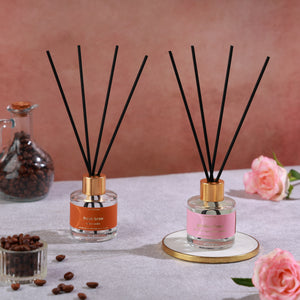
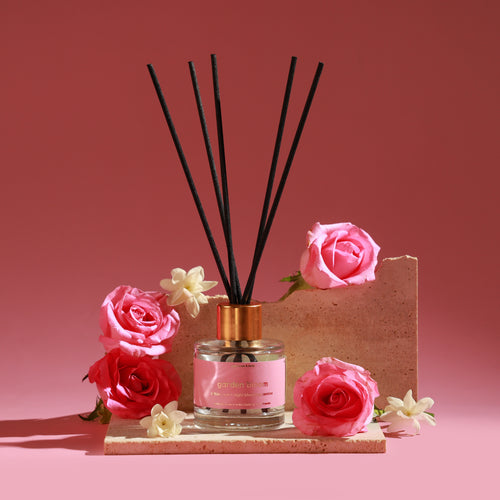
5. Clean the winner, then add fragrance. Deal with the identified reservoir properly and re-run the same test a week later to check. Only when the room passes does an ambient layer make sense — a reed diffuser or a Sukoon gives a clean room a consistent character, which is a real job, but it is not a diagnostic tool and it removes nothing.
Made in India, composed by an ISIPCA Versailles-trained perfumer — and a portion of every order supports girl-child education through Nanhi Kali.
Why standing in the room and sniffing never works
Two things defeat the obvious approach. The first is that room air is a mixture. Every porous object in the space is releasing at once, and what reaches your nose is the sum, weighted by how close you are standing to each of them and by which way the air is moving. A blend of six mild sources smells like a vague, unattributable staleness, which is precisely the complaint people arrive with. The information you need is not in the room air; it is in the individual objects. This is also why people conclude there is no source at all — they smell the average, find nothing dramatic, and decide the flat is simply like this.
The second is olfactory adaptation, and it is more aggressive than people expect. Within roughly twenty minutes of continuous exposure your nose stops reporting a steady smell almost entirely. You are the least reliable possible judge of your own home, and the more time you spend investigating, the less you can detect. This has a practical consequence for the method: you get one honest window per reset, it lasts a few minutes, and you should know exactly what you are going to test before you walk back through the door. Write the order down. Do not wander, do not tidy on the way, do not stop to make tea. Walk in and start sniffing fabric.
The three tests, in order of certainty
 Step fourFrom ₹749Reset for thirty minutes, then walk in and work the list without pausing: sofa back, deck under the cushions, one seat cushion, curtain hem, curtain middle, rug pile, rug underside. Press your face into each and breathe in through the fabric for a slow ten count. Rate each one against the room air you walked into, not against each other. Two useful patterns: the deck under the cushions is the least ventilated part of a sofa and usually reads strongest if the sofa is the problem; the curtain hem reads strongest if the curtains are, because it sits in the floor-level dust layer and never moves.
Reading the result: what each pattern means
Once you have your seven scores and, if needed, your bag test, this table turns the pattern into a decision. Note the rows that are not fabric problems at all — they show up in exactly this investigation and need a different response entirely.
| What you notice | Most likely cause | How to confirm it | What actually fixes it |
|---|---|---|---|
| Deck under the cushions clearly the strongest ★ | The sofa — and specifically the least ventilated part of it | Repeat the check with the cushions out and the deck exposed for an hour | Vacuum the deck and crevices, wash covers, sun the cushion cores |
| Curtain hem far stronger than the curtain middle | The curtains, loaded from the floor-level dust layer and still air | Bag a section of hem for two hours and smell the trapped air | Wash or dry-clean the panels; dry them fully before rehanging |
| Rug underside stronger than the pile | Trapped dust and moisture between the rug backing and the floor | Lift the rug for an evening and smell the floor beneath it | Vacuum both faces, air the rug outdoors, do not put it back damp |
| Everything scores about the same, nothing stands out | A general fabric load plus a low air-change rate, not one culprit | Cross-ventilate ten minutes, leave for thirty, judge the room again | Twice-daily cross-ventilation plus a full soft-furnishings reset |
| Nothing fabric scores, but the room still reads sour | A wet trap, not a textile — dry P-trap, bin, gasket, damp mop | Test at drain and floor level; run water down every unused drain | Water down unused drains weekly; wipe the gasket; dry cloths flat |
| Strongest reading is the wall or floor behind the furniture | Damp or mould in the structure — a health issue | Move the furniture out and inspect plaster, skirting and ceiling corners | Find the moisture source and remove the growth. Do not fragrance this. |
| If none of these fit: run the whole sequence again at a different time of day. Fabric release rises with temperature and humidity, so a 4 pm test in a warm closed room will show you things a 9 am test hides. | |||
Reeds · always-on roomsFrom ₹749Shop →  Sukoon · when you want a switch₹1,899Shop →
 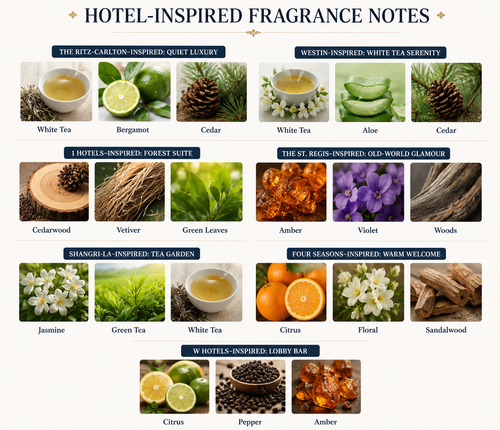 Hotel Collection · the scentFrom ₹299Shop →
Running the method properly
Plan the run before you leave the house. Write the seven checks in order on your phone with a space beside each for a score of 0, 1 or 2. Open no windows and light nothing before you go — you want the room in its normal loaded state, not a ventilated one. Then leave for a full thirty minutes and go outside into different air; standing on the landing beside your own front door does not reset anything. When you come back, do not put the shopping down, do not open a window, do not greet anyone. Walk to the sofa and start.
Sniff correctly, which is closer than feels natural. Contact sniffing means your face in the fabric and a slow inhale through it, not a wave of the hand towards it. Ten seconds per item, then move. Score immediately, before the next one — your memory for smell intensity across a gap of thirty seconds is poor, and your sensitivity is falling the whole time. Expect the honest window to last four or five minutes total. If you run out of nose before you run out of list, stop, note where you got to, and finish the remaining checks on a second reset the next day.
Then act on one thing, and only one thing. The temptation after a positive result is to clean everything at once, which destroys your ability to know what worked. Deal with the identified reservoir properly — vacuum the sofa including sides and deck, wash and fully dry the covers, sun the cushions, wash the curtains — wait a week, and run the same seven checks again. If the room now passes, you have both fixed it and learned which item needs the shortest cleaning cycle in future. Once it passes, add the ambient layer: a reed diffuser from ₹749 for a living room that should simply always smell settled, or the Sukoon at ₹1,899 with 3–6 drops of a Hotel Collection scent from ₹299 if you want scent you can switch on before guests and off at night.
The order that works
This whole method costs nothing but two half-hour walks and some bin bags. The purchase at the end is for the room you have once the answer is found — not for finding it.
| Step | What to do | When | Cost |
|---|---|---|---|
| 1. Remove the source | Reset thirty minutes, contact sniff seven fabrics in a fixed order, bag the suspect, remove it for three days | Before anything else | ₹0 |
| 2. Move the air | Cross-ventilate ten minutes twice daily — and never test immediately after ventilating | Daily, five to ten minutes | ₹0 |
| 3. Deal with what holds it | Clean only the identified item first, wait a week, then re-run the same seven checks | Weekly to monthly | ₹0 |
| 4. Then the always-on layer ★ | A SOSA reed diffuser — a living room that keeps a consistent background once the reservoir is genuinely clean | 50ml 6-8 weeks · 130ml 14-18 | from ₹749 |
| 5. Or the on-demand layer | Sukoon with a Hotel Collection scent — scent before guests and none at midnight; covers roughly 270–320 sq ft | Run it when you want it | ₹1,899 |
Versailles
Most people investigating a smell do it in exactly the way guaranteed to fail: they stand in the room, breathe in, look puzzled, and after ten minutes cannot smell anything at all. That is not a failure of their nose, it is the nose working correctly. Adaptation is a feature. The trick is to spend your few honest minutes on objects rather than on air.
The bag test is the one I recommend most and the one nobody has tried. Two hours of release into two litres of trapped air is a genuinely different signal from the same fabric in a 1,500 cubic foot room. I have watched a household argument about sofa-versus-curtains end in about four seconds once both bags were open on the table.
When you have found it and cleaned it, then a fragrance is worth buying, and not before. I have no interest in selling a diffuser to someone who has a saturated curtain, because in three weeks they will have a saturated curtain that also smells of jasmine and they will conclude the product was weak. Order first, product second. A portion of every order funds a girl's classroom through Nanhi Kali.
Frequently asked questions
- Mopped, and it still smells closed — why the floor is the wrong target.
- Can curtains make a room smell stale? — the fabric standing in the airflow.
- Cushions and rugs in a small flat — the secondary reservoirs.
- Finding the source anywhere in the flat — the room-by-room method.
- Brand: the SOSA founder story.
SOSA products & prices (verified August 2026): Hotel Collection water-based ultrasonic diffuser fragrance 15ml ₹299 · 100ml ₹999 · 300ml ₹1,799 · Pack of 7 (15ml, all fragrances) ₹1,799; refills 100ml from ₹999. Seven scents: The Ritz-Carlton-inspired (white tea · bergamot · cedar), Westin-inspired (white tea · aloe · cedar), 1 Hotels-inspired (cedarwood · vetiver · green leaves), The St. Regis-inspired (amber · violet · woods), Shangri-La-inspired (jasmine · green tea · white tea), Four Seasons-inspired (citrus · floral · sandalwood), W Hotels-inspired (citrus · pepper · amber). Diffusers: Boond 300ml ₹899 · Sukoon 500ml ₹1,899 · Megh 6L ₹3,499. Water-based, phthalate-free, composed to IFRA standards for home diffusion; 3–6 drops per tank. Made in India, Pune. The Hotel Collection scents are SOSA's own interpretations inspired by the world's finest hotels; all hotel names are trademarks of their respective owners and are used only to describe the scent style — SOSA is an independent Indian fragrance house, not affiliated with or endorsed by any hotel brand. Prices and availability subject to change — see the live product pages.