


Exit two: the floor. Ultrasonic mist is heavier than air and settles into the lowest foot of the room.
Exit three: a draught. An open balcony door, a fan on medium or an AC blowing across the machine.
Exit four: a doorway or corridor, where the output goes to whichever room is open.
2. Standing it on the floor. The droplets leaving an ultrasonic plate are denser than the air around them and settle. From ground level, most of the output ends up in the lowest foot of the room — below every nose in the house. A metre up gives the same output a whole room to fall through.
3. Standing it in moving air. A ceiling fan on medium, a pedestal fan or a split AC blowing across the machine does not distribute fragrance, it relocates the entire plume to one wall. An open balcony door does something worse: it takes the fragrance outside.
4. Standing it in a corridor or right by a door. Transit spaces have openings at both ends and nobody stays in them. A machine there gives its output to whichever adjoining room is open at the time.
5. And then adding drops to compensate. This is the one that costs actual money. More fragrance in the tank raises the concentration near the machine and leaves the far end of the room exactly as it was. It also puts you through bottles two or three times faster than necessary.
Made in India, composed by an ISIPCA Versailles-trained perfumer — and a portion of every order supports girl-child education through Nanhi Kali.

Where the fragrance actually goes
It helps to follow a single tank through its life. A Sukoon holds 500ml and puts out somewhere around 30 to 50 millilitres an hour as fine mist. Into that tank you have put three to six drops of fragrance — roughly a fifth to a third of a millilitre, which at 300ml pricing of about ₹6 per millilitre is a little over a rupee. So the fragrance itself is not what a bad position wastes; the money is trivial. What a bad position wastes is the room. You bought a machine and a bottle in order to make a space feel a particular way, and if two-thirds of the output condenses on a wall or leaves through a balcony door, you have paid full price for a third of the effect.
The mechanism is the same in every case: fragrance has to make it from the plate into the air people are breathing, and it can be intercepted at any point on that journey. It can be intercepted physically, by a surface close enough to catch the droplets before they evaporate. It can be intercepted by gravity, if it is released so low that the lowest foot of the room absorbs it. It can be intercepted by ventilation, easily the largest of the four — a closed flat exchanges roughly a fifth to a half of its air per hour, and one open balcony door takes that to something like three to eight. And it can be intercepted geometrically, by being released into a corridor where there is no settled volume of air to accumulate in at all. Four exits, and a diffuser on the floor beside an open balcony door is using three of them at once.
The four exits, in order of cost
 SOSA Sukoon₹1,899Ultrasonic mist is water with fragrance suspended in it. If it strikes something before that water has evaporated, the fragrance goes onto the surface rather than into the room. Walls are the obvious case and they announce themselves — a faint damp halo, and over months a mark. Curtains are worse and quieter, because fabric absorbs and then slowly re-releases, which is how a room ends up with a permanent low background of last month's scent. A shelf directly above the machine is the one nobody thinks of: the plume goes straight up and lands on the underside. A foot of clear space on every side and above costs nothing and closes this exit entirely.
Every mistake, what it costs, and the fix
The fourth column is the point of the table. There is one purchase on this page and it is not a fix for anything here — every genuine remedy for wasted fragrance is a change of position, a change of sequence, or fewer drops.
| The mistake | What it costs you | The fix | Cost |
|---|---|---|---|
| On the floor by the socket ★ | Most of the output settles below knee height | Move it to a console or shelf, about a metre up | Free |
| Pushed back against a wall | Condensation on the wall, a damp mark over time | Pull it forward — a foot of clear space all round | Free |
| Beside or under a curtain | Fragrance absorbed into fabric, re-released for weeks | Move it clear of any textile | Free |
| Directly under a shelf or cabinet | The plume lands on the underside within a foot | Clear space above as well as around | Free |
| In the AC or fan airflow | The whole plume relocated to one wall | Same wall as the AC, below and to one side; fan on low | Free |
| Running with the balcony door open | Air exchange rises from about 0.2–0.5 to 3–8 per hour | Ventilate first, then close, then run for 30–40 min | Free |
| In a corridor "to do the whole flat" | Output given to whichever room is open; nothing held | Move it into a room people sit in | Free |
| On the bedside table | Far too close to your nose, then under-dosed by day | Across the room, on a dresser or chest of drawers | Free |
| Six drops because it "seems weak" | Two to three times the fragrance for no extra reach | Back to three or four, and fix the position instead | Saves money |
| The one thing worth buying: if the machine keeps ending up on the floor because that is where the socket is, a USB-powered Boond at ₹899 removes the constraint. Everything else on this table is corrected by moving what you already own. | |||
Sukoon · remote and timers₹1,899Shop → 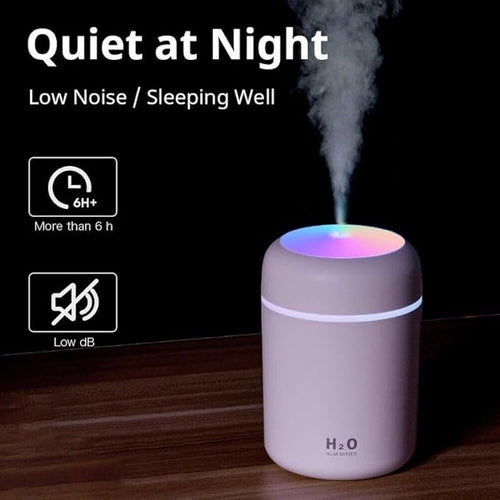 Boond · USB, goes anywhere₹899Shop →
  Hotel Collection · 3–6 dropsFrom ₹299Shop →
Running it so that none of it is wasted
Start with sequence, because it is the biggest single saving. Ventilate the room properly — two openings on opposite sides for five to ten minutes — then close it, then run the diffuser. A room takes about thirty to forty minutes to reach a steady level, so give it that with the door shut before you open anything. What you are avoiding is the very common pattern of running a machine continuously in a room that is also continuously ventilated, which is the scenting equivalent of filling a bath with the plug out.
Then set the dose down rather than up. The Hotel Collection guidance is three to six drops per tank and most rooms want the lower half of that. If a room feels weak, the reflex is to add drops, and it is almost always the wrong reflex — extra fragrance concentrates near the machine and does nothing at the far end, because reach is set by air movement rather than by quantity. Move the machine two or three feet, wait thirty minutes, and reassess before you touch the bottle.
Finally, take your readings honestly, because you are the least reliable instrument in the house. Olfactory adaptation is essentially complete within about twenty minutes — your nose is built to register change, not steady state, so you stop perceiving your own fragrance long before anybody arriving does. Judging a room from inside it leads directly to over-dosing, which is the one mistake here that has a running cost attached. Walk out for twenty minutes, walk back in, and use that first breath. It is the same breath every guest gets. Use filtered water in hard-water cities and never put raw essential or carrier oils into an ultrasonic machine.
What a well-placed setup costs
Since none of the fixes cost anything, this table is about the hardware they apply to — and about the running cost, which is far lower than most people expect once the drops are under control.
| Setup | What you get | Covers | Total |
|---|---|---|---|
| Small room | Boond ₹899 + one 15ml scent ₹299 — USB, no floor cable | Up to 150 sq ft | ₹1,198 |
| Normal room ★ | Sukoon ₹1,899 — remote, timers, 3 × 15ml scents included | 270–320 sq ft | ₹1,899 |
| A year of fragrance | A 300ml bottle ₹1,799 at roughly ₹6 per ml | Hundreds of tanks at 3–4 drops | ₹1,799 |
| Try all seven | Pack of 7 — seven 15ml bottles | One machine, seven options | ₹1,799 |
| Every fix on this page | Move it up, pull it forward, shut the door, use fewer drops | The whole room | ₹0 |
Versailles
People write to me convinced their diffuser is faulty, and it very rarely is. What has usually happened is that the machine is on the floor, pushed back against the wall, next to a balcony door that stays open because of the heat. Three exits, all open at once, and a machine doing exactly what it was built to do. The complaint is real; the diagnosis is wrong.
I find this genuinely interesting rather than annoying, because the economics are so lopsided. The fragrance in a tank costs about a rupee. The machine cost ₹1,899 once. Everything expensive about home scenting has already been paid for by the time you fill the tank, which means the whole return on that spending comes down to a positioning decision most people make by accident, once, on the day the box arrived.
So before you buy a second machine, or a stronger fragrance, or more drops: pick it up, put it a metre higher, pull it a foot forward, shut the door for half an hour and go and stand outside. If that does not fix it, write to me and I will tell you honestly what will. A portion of every order funds a girl's classroom through Nanhi Kali.
Frequently asked questions
- Where should you place a diffuser in any room? — the three rules in full.
- How many square feet does one Sukoon actually cover? — and what shrinks the number.
- How to scent a long corridor or passage — why a passage holds nothing.
- Complete guide to diffuser placement and coverage — the whole physics in one place.
- Brand: the SOSA founder story.
SOSA products & prices (verified August 2026): Hotel Collection water-based ultrasonic diffuser fragrance 15ml ₹299 · 100ml ₹999 · 300ml ₹1,799 · Pack of 7 (15ml, all fragrances) ₹1,799; refills 100ml from ₹999. Seven scents: The Ritz-Carlton-inspired (white tea · bergamot · cedar), Westin-inspired (white tea · aloe · cedar), 1 Hotels-inspired (cedarwood · vetiver · green leaves), The St. Regis-inspired (amber · violet · woods), Shangri-La-inspired (jasmine · green tea · white tea), Four Seasons-inspired (citrus · floral · sandalwood), W Hotels-inspired (citrus · pepper · amber). Diffusers: Boond 300ml ₹899 · Sukoon 500ml ₹1,899 · Megh 6L ₹3,499. Water-based, phthalate-free, composed to IFRA standards for home diffusion; 3–6 drops per tank. Made in India, Pune. The Hotel Collection scents are SOSA's own interpretations inspired by the world's finest hotels; all hotel names are trademarks of their respective owners and are used only to describe the scent style — SOSA is an independent Indian fragrance house, not affiliated with or endorsed by any hotel brand. Prices and availability subject to change — see the live product pages.