



Why guests still smell it: they arrive un-adapted, so they receive the full level in about four seconds. Then they adapt too, within a few minutes, which is why the comment always comes at the door and never again.
What to do: take a reading rather than a guess — leave for twenty minutes and come back in from outside, and ask one guest a question they cannot answer politely. Do not add drops. Nobody in the building is experiencing the shortfall you think you are correcting.
2. The fragrance has not weakened. Nothing about the composition, the machine or the dose has changed. The instrument reading it has changed, and the instrument is you. This is worth being clear about before you touch anything, because every wrong move from here begins with assuming the opposite.
3. Your visitor gets the whole level in about four seconds. That is roughly the length of the doorway verdict — long enough for two or three breaths, which is all a nose needs to decide whether a home smells looked after or smells of something.
4. Then they adapt as well, within a few minutes. Which is exactly why the compliment arrives while their coat is still on and never comes up again over dinner. It is not politeness wearing off. It is their receptors doing to your house what yours did a fortnight ago.
5. Take a reading rather than adding drops. Leave for twenty minutes and come back in through the front door; ask one person to describe what they smell rather than whether they like it. Both are free, and both are more accurate than any adjustment made by feel.
6. Then set the thing to stop. A finite timer and two scents alternating are the two purchases that address this honestly. A larger dose is not.
A portion of every order supports girl-child education through Nanhi Kali.

Four seconds for them, a fortnight for you
The thing to hold on to is that two people standing in the same hall are receiving two different rooms, and neither of them is wrong. Smell is a change-detection sense before it is anything else, so what reaches your attention is not the concentration of a molecule in the air but the difference between that concentration and what your nose was expecting. A visitor's expectation was formed on a staircase or in a car. Yours was formed by this room, over the last several hundred hours, and it now matches the room almost exactly. Same air, same molecules, same dose. One nose has something to report and the other has nothing, and the gap between them opens over a fortnight without you noticing a single day of it.
How to take a reading, in order of accuracy
Five ways to find out what your home actually smells like, ranked by how much you can trust the answer and costed honestly. Four of the five are free and the fifth is a favour. The last column is what each method is genuinely good for, because they are not interchangeable — one of them tells you the level, one tells you the character, and one only tells you whether anything has changed since yesterday.
| Method | What you do | How accurate it is | What it is actually good for | Cost |
|---|---|---|---|---|
| Ask one honest guest ★ | Ask them to describe the smell rather than to say whether it is nice, and ask on the doorstep rather than after dinner | The most accurate reading available to you, and the only one that reports both level and character | Everything. Whether the dose is right, whether the scent suits the flat, and whether anything underneath it needs dealing with | ₹0 |
| Leave for twenty minutes and return | Out of the building entirely, not into another room, then back in through the front door | Partial. Twenty minutes gives real recovery but not full recovery, so expect a muted version of the truth | A quick weekly check on the level. Enough to catch a dose that has crept, not enough to judge a subtle scent | ₹0 |
| Come home from a night away | One night elsewhere, then the doorstep on your return, before you unpack anything | Good. A night's sleep away from a smell restores a great deal more than twenty minutes does | The monthly audit, and much the better version of the method above | ₹0 |
| Come home from a few days away | Three days or more, and the first thirty seconds inside the door treated as data | The best reading you will ever take yourself. Your nose is genuinely reset by then | The annual audit. Also the one that finds a source rather than a scent, since a closed flat accumulates while you are gone | ₹0 |
| Smell your own coat or a scarf | Something worn indoors and then left in a bag outside the house overnight | Indicative rather than reliable. Fabric holds a partial, distorted record of a room | Detecting that a scent is transferring to what you wear, which is a level problem rather than a scent problem | ₹0 |
| Standing in the room and deciding | What almost everybody does, and the origin of nearly every over-dosed flat in the country | Worthless, and worse than worthless, because it reads low with total confidence | Nothing. This is the method that produces the extra drop | ₹0 |
Twenty minutes out, one honest guest, and a timer
Start with the two free methods, because between them they answer the question this page opened with and neither of them requires you to buy anything. The first is the twenty-minute walk. Leave the building entirely — not into the kitchen, not onto a balcony that shares air with the room, but out — and come back in through the front door as a visitor would. The direction matters more than people expect: walking in from a bedroom means you have been breathing the same household air the whole time and have adapted to the flat as one continuous space, while walking in from a street means your last twenty minutes of reference air belonged to somewhere else. Twenty minutes is partial recovery rather than full recovery, so what you get is a muted, indicative version of the truth, and it is still enormously better than standing in your living room trying to decide. Do it before you touch the machine, not after. The second is one honest guest, and the whole art of it is in the phrasing. Asking whether the flat smells nice invites a yes from anybody with manners, which is everybody who visits you. Ask instead for a description: what does it smell of, is it strong or faint, and is there anything under it. A question that cannot be answered with a courtesy gets you an answer. Ask it at the door within the first minute, because after ten they will have adapted and will genuinely no longer know. And ask somebody who visits rarely rather than the friend who is round twice a week, since a frequent visitor has begun to adapt across visits in the same way a household does.
Then the air itself, which has to be dealt with before any reading is worth taking. A closed room does not stop producing smell, it stops removing it, so what a visitor receives at your door is your fragrance sitting on top of whatever the flat has accumulated since it was last aired. If you are auditing a scent, audit it over clean air or you will end up adjusting the fragrance to fix a ventilation problem. Cross-ventilation needs two openings on opposite or adjacent walls for twenty minutes; one window ajar is ventilation and two is exchange, and the difference between them is far larger than the difference between three drops and four. While you are at it, deal with the two silent sources that most often sit under a domestic background and get mistaken for a fragrance problem: pour a mug of water down every floor drain, basin and unused shower, because a U-bend's water seal evaporates in two to four weeks of disuse and then the drain vents into the room, and leave the washing machine door and detergent drawer open between washes with the rubber gasket wiped dry. None of that is fragrance advice and all of it changes what your guest smells at the door. This is the order that matters and it is worth stating plainly: find the source, change the air, then scent the room. A fragrance run over a dry trap or a shut machine does not improve the situation. It gives the room two smells instead of one, and the visitor gets both.
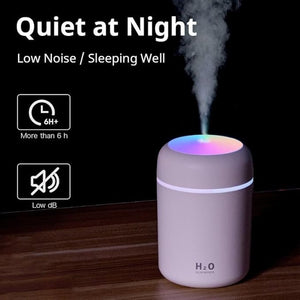
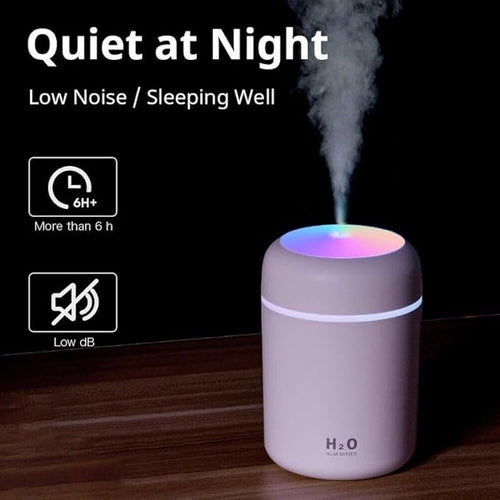
Then the part where something is worth buying, which is smaller and cheaper than most people expect. Given that you cannot audit your own room, the two purchases that genuinely help are a machine that stops on its own and a second scent to alternate with the first. The Sukoon at ₹1,899 has steady, 2H and 4H timers on a 500ml BPA-free tank rated for 270–320 sq ft, 16–18 hours per fill on low at 30–50 ml/h against 9–12 on high, a 2.4MHz cool-mist plate, a remote, auto shut-off and three 15ml Hotel Collection scents of your choice included — and of that list the timers are the specification that matters here, because a finite run produces a level you can repeat while an open-ended one produces a level that keeps climbing past a household nobody can measure. Two hours from seven in the evening is a rise and a fall. Fourteen hours is a plateau you will never perceive the top of. A Boond at ₹899 does the same job in a 300ml tank for a bedroom or a study, and takes the same three to six drops per tank — the dose is per tank rather than per litre, since you are scenting the mist and not the water, so the larger machine buys hours and coverage rather than intensity. The second scent is the cheaper and more interesting purchase. Adaptation is specific to what you are adapted to, so a nose that has gone quiet on amber has not gone quiet on white tea, and two 15ml bottles at ₹598 alternated by the fortnight give you back the ability to smell your own home on the day you switch. On the constraints: the Hotel Collection is water-based and runs in the Sukoon, the Boond and the Megh at ₹3,499 only. It does not go into a reed diffuser, which is a separate alcohol-free line with its own scents, and it does not go into the waterless Vaayu at ₹11,999, which takes its own undiluted oil. Rinse the tank when you change scent, never substitute raw essential or carrier oils, which clog the 2.4MHz plate, and buy the 15ml at ₹299 before the 300ml 300ml refill at ₹1,799.
The SOSA edit
In the order I would actually do things, which begins with four steps that cost nothing and reaches a product on the fifth. The last row is here because it is the single most common purchase made in response to this problem and it is the wrong one.
| Step | What it is | Why it comes here | Cost |
|---|---|---|---|
| 1. Twenty minutes out, then in through the front door ★ | Out of the building entirely, back in as a visitor arrives rather than in from another room | First, because it is free, takes half an hour and stops you adjusting a dose you cannot currently measure | ₹0 |
| 2. Two openings for twenty minutes | Cross-ventilation on opposite or adjacent walls, so the air actually exchanges rather than merely moves | Second, because a fragrance judged over stale air is a fragrance judged wrongly, and this is a larger effect than any dose change | ₹0 |
| 3. A mug of water down every drain | Every floor gully, basin and unused shower. The U-bend seal evaporates in two to four weeks and then the drain vents indoors | Third, because this is the commonest thing sitting under a household smell, and no fragrance will cover it | ₹0 |
| 4. Ask one honest guest, at the door | A description rather than a verdict, asked in the first minute, of somebody who visits rarely | Fourth, and it is the most accurate instrument in this table. Nothing you buy replaces it | ₹0 |
| 5. Sukoon or Boond | 500ml with steady/2H/4H timers and three 15ml scents included, or 300ml for a single room | Once the reading says the level is right. A machine that stops is how you hold a level you can no longer perceive | ₹1,899 / ₹899 |
| Not the answer: more drops | The Hotel Collection is composed at three to six drops per tank, and the fault here is never that the number is too low | Printed rather than implied. Every drop added to correct nose-blindness raises the level for everybody except you | — |

Versailles
I have had this conversation more often than any other, and it usually opens with an apology. Somebody writes to say they think their diffuser has stopped working, and then adds, slightly embarrassed, that their friends keep telling them the house smells lovely. Both halves of that sentence are true at the same time and there is nothing wrong with either the machine or the person. I trained at Versailles with people whose noses were their entire profession, and every one of us walked into our own flats and smelled precisely nothing. It is not a failure of attention or of quality. It is what receptors do.
What I would like to change is the response rather than the phenomenon, because the phenomenon is not going anywhere. The correct instrument in this situation is not a better nose and not a stronger product. It is one honest guest and a habit of stopping. Somebody who will tell you the truth at your own front door, and a machine that runs for two hours and then leaves the room alone. Between them they cost nothing and ₹1,899, and they will keep a home at the level you originally chose for years. Adding a drop because you cannot smell anything is the most understandable mistake in home fragrance and it is still a mistake. Nobody in your building is experiencing the shortfall you are trying to correct.
Everything is made and supported from Pune, and a part of every order funds girl-child education through Nanhi Kali. You get a home that smells like somewhere you chose; a girl gets a classroom. That equation has always felt right to me.
Frequently asked questions
- Why can I not smell my own home? — the mechanism, at the receptor and in the brain.
- How long does it take to go nose-blind to your own house? — the intervals, with nothing sold on the page.
- How do I find out what my house actually smells like to other people? — the audit, in more detail.
- Nose-blindness at home: why you cannot smell your own house, and what to do — the pillar guide.
- Brand: the SOSA founder story.
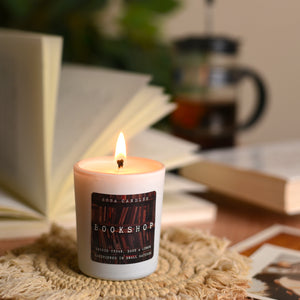
Facts verified August 2026: Diagnostic facts used in this guide: a closed room accumulates what it cannot exchange, so cross-ventilation needs two openings rather than one; a drain's U-bend water seal evaporates in roughly two to four weeks of disuse and then admits sewer gas, which is corrected by pouring water down the drain; microbial growth in fabric and on surfaces accelerates above about 60% relative humidity, and Indian monsoon indoor humidity commonly runs 80–95%, which is the one situation where ventilating on a wet day can import moisture rather than remove it; an air-conditioner's cold, wet evaporator coil and filter grow biofilm that is blown into the room on start-up; textiles adsorb cooking aerosol and body oils and re-release them for weeks; and olfactory adaptation makes a constant household smell undetectable to its residents within about a fortnight while visitors still perceive it. Timings: a scented candle scents a normal room in roughly 15–20 minutes, a Sukoon ultrasonic diffuser reaches a steady level in about 20 minutes from cold, and a reed diffuser needs roughly 24–72 hours. SOSA products and prices: Sukoon 500ml ₹1,899 (270–320 sq ft, 16–18h on low, 9–12h high, 30–50 ml/h, 2.4MHz cool mist, remote, steady/2H/4H timers, BPA-free, auto shut-off, includes three 15ml Hotel Collection scents of your choice); Boond 300ml ₹899; Megh 6-litre ₹3,499; waterless Vaayu ₹11,999 (up to 1000m³); Aangan ₹25,999. Hotel Collection water-based fragrance 15ml ₹299, 100ml ₹999, 300ml ₹1,799, Pack of 7 at 15ml ₹1,799; dose 3–6 drops per tank. Reed diffusers (separate alcohol-free line): Morning Freshness from ₹749, Garden Bloom and Evening Calm from ₹799, Fresh Brew and Mountain Breeze from ₹849; 130ml from ₹1,249; duos from ₹1,498; 300ml refills ₹2,399. Scented candles: Bookshop 80g ₹379, Amber Rose 130g ₹599 and 220g ₹799, Smoked Oudh 130g ₹449, ceramic jar candles ₹949, Pure Calm wax melt set ₹854. Free shipping above ₹499. SOSA does not make a room or linen spray for the home. The Hotel Collection scents are SOSA's own interpretations; SOSA is not affiliated with or endorsed by any hotel brand. Prices subject to change — see the live product pages.