

The schedule, written as times: night before, bins and dressing waste out and mops dried flat · T-60m housekeeping opens up and waters every drain trap and unused gulley · T-45m air conditioning on · T-30m diffuser on, lowest working setting, entrance and reception zone only · T-0 first appointment, and the level has already arrived · close, the timer stops it, and nobody switches it off by hand.
The four registers: the daily check sheet, the refill log with four dates a year, the objection log, and the veto register. The one sentence for the desk: it is a light fragrance we run in the entrance and waiting area as part of housekeeping, it is not in the consultation rooms, and we can switch it off now if you would prefer.
2. Zones in, by name, because a category is not a zone. Scenting is permitted in: the main entrance and lobby; reception and registration; shared and departmental waiting areas; inter-departmental corridors; lift and stair lobbies; administrative and back-office rooms; the cafe or refreshment corner; staff rooms, where the staff of that room have asked for it. Write your own room numbers against each line, because “waiting areas” means something different to the person who installs the machine and the person who audits the document.
3. Zones out, by name, and this list is longer. The following areas are fragrance-free, with doors kept closed: consultation and examination rooms; treatment and procedure rooms; day-care surgery and recovery; dressing rooms; blood- and sample-collection rooms; diagnostic laboratories; pharmacy dispensing; sterile stores and CSSD; imaging and radiology rooms; oncology and chemotherapy day-care; paediatric clinical areas; any room in which a patient undresses. The reason for each entry is worth attaching as an appendix the first time this goes to a quality committee, because somebody will ask why the pharmacy is on the list.
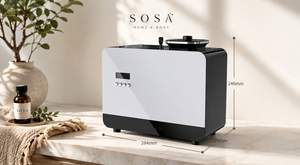
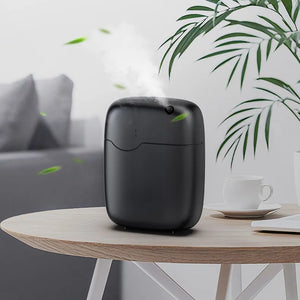
4. Product, oil and setting, written as a specification rather than as a preference. Equipment: one Vaayu waterless cold-air diffuser per public volume, freestanding or wall-mounted at 1.8 to 2.2 metres, discharging horizontally into the occupied band, not less than four metres from any clinical-room door, with the key-lock engaged at all times. Oil: one fragrance across the entire facility, the lightest in the range, undiluted, 400ml. Setting: the lowest setting at which the fragrance is perceptible within two metres of the entrance and not perceptible at the nearest clinical-room door. The setting is recorded in this procedure and changed only by the named owner. One scent, one setting, written down, and the single-fragrance argument across branches if you run more than one site.
5. The schedule, as clock times rather than as intentions. Night before: dressing waste and bins out, mops laundered and dried flat. T-60 minutes: housekeeping opens up; water down every drain trap and unused gulley in every department. T-45 minutes: air conditioning on. T-30 minutes: diffuser on, lowest working setting, public zones only, by timer. T-0: first appointment; the level has already arrived. Close of business: the timer stops the machine. The machine is not switched on or off by hand. The thirty-minute lead is the clause that makes the difference between a level that has arrived and a room still climbing while patients sit in it.
6. The midday prohibition, in its own clause with its own number. The intensity setting shall not be increased because the waiting area is busy, because a patient has commented, or because a member of staff can no longer perceive the fragrance. A busy hall is an air-change condition and increasing fragrance output makes it worse. Any request to increase the setting is logged and referred to the named owner. This clause exists because every unmanaged scenting installation I have seen drifts upward over months, one small adjustment at a time, until a patient tells your receptionist the fragrance is too strong. The nine-in-the-morning and six-in-the-evening question is the page to read before anybody touches the dial.
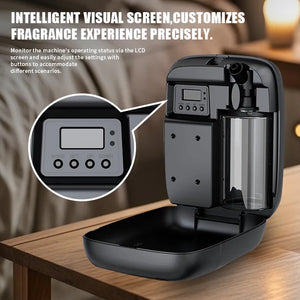
7. Refills, checks, objections, the veto register and the review date. Refill: 400ml lasts approximately seventy-five days; four refill dates are entered in the refill log at commissioning and performed by the named owner or deputy. Daily check: at opening, housekeeping confirms the machine is running, the key-lock is engaged, the outlet is unobstructed, the fill level is above a quarter and there is no leak, and signs the check sheet. Patient objection: any patient or attendant who objects is answered with - it is a light fragrance we run in the entrance and waiting area as part of housekeeping, it is not in the consultation rooms, and we can switch it off now if you would prefer - the machine is switched off within the hour if asked, no clinical benefit is offered in explanation, and the objection is logged. Veto: any clinician, nurse, pharmacist, laboratory lead, infection-control lead or housekeeping lead may remove any zone from scope by entering it in the veto register; a veto takes effect the same day and requires no agreement. Review: this procedure is reviewed annually by the named owner with the quality lead.
A portion of every order supports girl-child education through Nanhi Kali.
The one-page SOP, written out to be lifted
What follows is the document, in three sections, and it is meant to be copied rather than admired. Change the zone names to your own room numbers, change the times to your own opening hours, put your own names in the owner and deputy lines, and put it through whatever approval route your quality manual specifies. Everything in italics is text to lift. Two notes before you do. The first is that the two zone lists are the heart of the document and they have to be written as names, not as categories: the word “waiting” covers a shared hall, a departmental bay, a radiology waiting area and a day-care recovery bay, and three of those four are in scope while the fourth is not. The second is that the prohibitions carry more weight than the permissions. An SOP that says where fragrance may go is a siting document. An SOP that says it will not be increased at midday, will not be used to cover an odour with a source, will be switched off on request within the hour, and can be removed from any zone by any clinician without an argument is a governance document, and that is the one a quality committee will approve without amendment.
2. Zones in scope. Scenting is permitted only in the following areas, which shall be listed by room number in Appendix A: main entrance and lobby; reception and registration; shared and departmental waiting areas; inter-departmental corridors; lift and stair lobbies; administrative and back-office rooms; the cafe or refreshment corner; staff rooms, where the staff of that room have requested it.
3. Zones excluded. The following areas are fragrance-free at all times, with doors kept closed: consultation and examination rooms; treatment and procedure rooms; day-care surgery and recovery; dressing rooms; blood- and sample-collection rooms; diagnostic laboratories; pharmacy dispensing; sterile stores and CSSD; imaging and radiology rooms; oncology and chemotherapy day-care; paediatric clinical areas; any room in which a patient undresses. No equipment shall be sited within four metres of a door to any excluded area, and no supply duct serving any excluded area shall be dosed.
That last sentence matters more than it looks, because a door can be closed and a supply grille cannot. If your public zones and your consulting rooms share an air-handling unit, clause three is not enforceable and the scheme has to be standalone instead. Which departments are scented and which are not is the page to attach when somebody asks why the list is the length it is.
5. Setting. The intensity shall be the lowest setting at which the fragrance is perceptible within two metres of the main entrance and is not perceptible at the nearest excluded-area door. This is verified at commissioning by the named owner walking the boundary, and re-verified at each annual review.
6. Schedule. Night before: dressing waste and general bins removed; mops laundered and dried flat. T-60 minutes: housekeeping opens up and waters every drain trap and unused gulley in every department. T-45 minutes: air conditioning on. T-30 minutes: diffuser starts, by timer, at the recorded setting. T-0: first appointment. Close of business: the timer stops the machine. The machine shall not be switched on or off by hand.
7. Prohibition on increase. The intensity setting shall not be increased because the waiting area is busy, because a member of staff can no longer perceive the fragrance, or because a complaint has been received about any other odour. A busy area is an air-change condition; increasing fragrance output worsens it. Any request to increase the setting shall be logged and referred to the named owner, who may only act on it after the source of the complaint has been investigated.
8. Refill. A 400ml fill lasts approximately seventy-five days at the facility's opening hours. Four refill dates per machine per year shall be entered in the refill log at commissioning. Refills are performed by the named owner or the named deputy and signed for. 9. Daily check. At opening, housekeeping shall confirm that the machine is running, the key-lock is engaged, the outlet is unobstructed, the fill level is above one quarter and there is no leak or residue, and shall sign the daily check sheet.
11. Veto register. Any clinician, nursing in-charge, pharmacist, laboratory lead, infection-control lead or housekeeping lead may remove any zone from the scope of this procedure by entering the zone, the date and their name in the veto register. A veto takes effect on the day it is entered, requires no agreement from the named owner and no justification, and may be reversed only by the person who entered it or by the quality lead. The named owner shall confirm within one working day that the zone has been removed.
The veto register is the clause that makes the rest of the document credible inside a clinical building, and it is the clause most often missing. It costs nothing, it takes a page in a file, and it converts the fragrance-free rule from a promise made by facilities into a control held by the people who work in the rooms. 12. Records. Four registers are maintained: the daily check sheet, the refill log, the objection log and the veto register. Retention is as specified in the quality manual. 13. Ownership and review. The named owner of this procedure is ______ (Facilities). The named deputy is ______. This procedure is reviewed annually, on ______, by the named owner together with the quality lead, and at any time following a veto, a zone change, a change of equipment or three objections in one quarter. What to say to a patient who asks about the fragrance goes into clause ten at greater length.
The SOP as a table, clause by clause
The same document in the form a facilities file wants it: one row per clause, with the owner and the record named. Print it, fill in the blanks, and keep the long version as the approved text.
| Clause | What it says | Who owns it | The record |
|---|---|---|---|
| 1–3. Purpose and the two zone lists ★ | Housekeeping and presentation, no clinical claim, never used to cover a source. Zones in by room number; zones out fragrance-free with doors closed | Facilities drafts; the quality lead and medical director approve the excluded list | The approved SOP, plus Appendix A of room numbers |
| 4–5. Equipment, oil and setting | One waterless machine per public volume at 1.8–2.2 m, key-lock engaged, four metres clear of any excluded-area door. One fragrance, undiluted. Lowest working setting | The named owner, and nobody else changes the setting | Appendix B: model, fragrance, setting, siting |
| 6. The schedule | Traps at T-60m, air conditioning at T-45m, diffuser on by timer at T-30m, timer stops it at close. Never switched by hand | Housekeeping opens up; facilities holds the timer | The daily check sheet |
| 7. The midday prohibition | The setting is not increased because the hall is busy, because staff stopped noticing it, or because of a complaint about another odour | The named owner is the only person who may act on a request to increase | A logged request, and an investigation before any change |
| 8–9. Refills and the daily check | 400ml ≈ 75 days, so four dated refills a year, signed. At opening: running, key-locked, outlet clear, level above a quarter, no leak | Named owner refills; named deputy covers leave. Both names, in the document | The refill log, and the signed daily check sheet |
| 10. Patient objection | The sentence to say, no benefit offered in explanation, off within the hour on request, logged. Three in a quarter in one zone forces a reduction or removal | Front office says it; facilities acts on it; the owner reviews the log | The objection log. The wording, at length |
| 11–13. Veto register, records, review | Any clinician, pharmacist, lab or infection-control lead removes a zone in writing, same day, no agreement needed. Four registers. Annual review with a date | The veto belongs to whoever entered it; the review belongs to the owner and the quality lead | The veto register, and a dated review signature |
| Never in the SOP | Any clinical or therapeutic benefit, any air-purification wording, any satisfaction target, a spray at the counter, a candle, or scenting of an excluded area | Nobody. A document that implies an effect fragrance does not have is a liability in your own file | — |
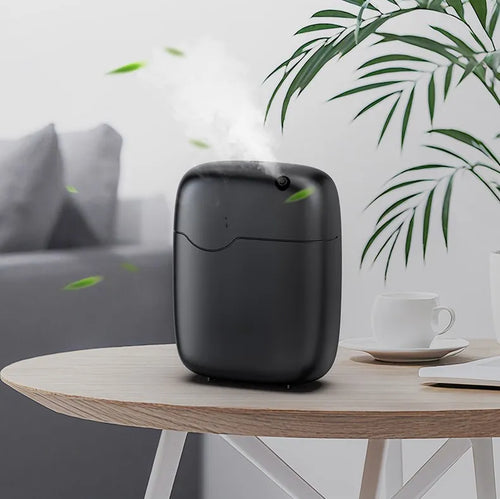 Vaayu · clause four₹11,999Shop →
 Refills · clause eight₹1,799Shop →
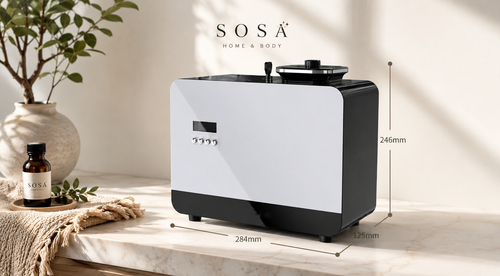 Aangan · large centres₹25,999Shop →
The three clauses that get left out, and what happens then
The first omission is the midday prohibition, and it is the commonest. An SOP that specifies a setting but does not forbid raising it will drift upward, because the people in the building stop perceiving a constant fragrance within a few days while visitors arriving from outside perceive it fully. That asymmetry is the whole mechanism: the staff member who adjusts the dial at two in the afternoon is responding honestly to a sensation that patients walking in from the street are not having. Six months of small honest adjustments later, your receptionist is being told the fragrance is too strong, somebody turns it down by half, and the installation has lost the one property that made it worth having, which is that the level is the same every day. Write the prohibition as its own numbered clause so it can be cited. Put the key-lock requirement in the same clause, because a lock is the mechanism and the clause is the rule, and neither works without the other. And add the sentence about complaints relating to other odours, because the single worst use of a scenting machine is as a response to a smell with a source - a polyclinic that smells of disinfectant every morning needs its mopping schedule changed, not its diffuser turned up.
The second omission is the veto register, and it is the one that decides whether clinical staff trust the document at all. A facilities SOP that says clinical areas are fragrance-free is a promise made by the department that owns the machine. A veto register is a control held by the people who work in the rooms, and the difference is not cosmetic: it means a laboratory lead who is uneasy about a corridor adjacent to her bench does not have to win an argument with facilities, she has to write one line in a register. I have had exactly one objection to this clause from a facilities manager, which was that it allows a single person to shrink the scheme. That is correct and it is the point. A zone that one clinician is unhappy about is not a zone worth defending for the sake of a fragrance, and in practice the register stays almost empty - what it changes is the conversation at the approval meeting, where a medical director who can see the register is being asked to approve something reversible rather than something permanent. How a centre decides where to scent when staff or patients are sensitive to fragrance is the page that sits behind this clause.
The third omission is the review date and the two names, and this one is purely administrative until the day it is not. Write a named owner and a named deputy into clause thirteen, not a department. A task owned by Facilities is owned by nobody, and the specific failure is not that the refill is missed - the machine simply stops and somebody notices - but that the daily check lapses, which is how a slow leak, a blocked outlet or a key-lock left open goes unseen for a month. The deputy exists for the week the owner is on leave, and the honest reason to specify a waterless machine in the equipment clause is that its handling burden survives that week: four dated refill events a year, each of which can be moved by a few days without consequence. A water tank cannot be moved by a few days. It is a daily empty, rinse and dry, which in a building open twelve hours a day across roughly three hundred and ten opening days is something in the region of six hundred operations a year, and a tank in a clinic is a clause that gets quietly abandoned the first time its owner takes a fortnight off. On cost, so the document can carry it: the Vaayu at ₹11,999, four 300ml refills a year at ₹1,799 which is about ₹7,200, and roughly ₹150 of electricity at 5 W over a twelve-hour day, so about ₹19,000 in year one and ₹7,350 thereafter. That figure belongs in the facilities budget, and the SOP is the document that keeps it there.
The SOSA edit
The four registers the SOP creates, what goes in each, who signs it and how often — because a procedure with no records is a wall poster.
| The register | What goes in it | Who signs it | How often |
|---|---|---|---|
| 1. The daily check sheet ★ | Running · key-lock engaged · outlet unobstructed · fill level above one quarter · no leak or residue. One tick per line, one signature | Housekeeping, at opening, as part of the T-60m round | Daily |
| 2. The refill log | Four dates per machine per year entered at commissioning; the actual date performed; the fragrance; the quantity; the signature of the owner or deputy | The named owner, or the named deputy during leave | Four times a year per machine |
| 3. The objection log | Date, zone, what was said, whether the machine was switched off, and the action taken. Three in one quarter in one zone forces a reduction or removal | Front office enters it; the named owner reviews and signs the quarter | As they occur, reviewed quarterly |
| 4. The veto register | Zone, date, name and role of the person vetoing. Effective the same day, no justification required, reversible only by them or the quality lead | Whoever entered it. The owner countersigns that the zone has been removed | As they occur, confirmed within one working day |
| The two names and the review | Named owner (Facilities) and named deputy in clause thirteen, plus a dated annual review with the quality lead and a re-verification of the setting | The named owner and the quality lead jointly | Annually, and after any veto or equipment change |
| Not in the procedure at any price | A clinical or therapeutic benefit, air-purification wording, a satisfaction target, a spray at the counter, a candle, a water tank in a public area, or scenting of an excluded room | Nobody. The same six answers that disqualify a vendor disqualify a clause | — |
Versailles
The first version of this document was two pages and had no prohibitions in it at all. A quality lead at a polyclinic in Pune sent it back to me with three comments in the margin, and all three were the same comment in different words: this tells me what you want to do, it does not tell me what you will not do. She wanted the midday clause, she wanted a line that said the machine goes off within the hour if a patient asks, and she wanted to know who in her building could stop it without having to argue with the facilities manager. I rewrote it around those three things, and the document got shorter rather than longer. It now fits on one page and it gets approved, which the two-page version did not.
What I took from that is that a scenting procedure is read by people looking for the hazard, not by people looking for the benefit. A medical director reading clause one is checking whether the sentence “makes no clinical claim” is in it, because without that sentence the document itself becomes the claim, sitting in the facility's own approved document set with a signature on it. A nursing in-charge is reading clause eleven to find out whether she can remove a corridor. A housekeeping supervisor is reading clause eight to work out how many times a year this will land on her. None of them is reading it to find out what the fragrance smells like. I have sent some version of this page to every clinic that has asked me for one, including the ones who then decided to put the machine off for a year, and the page that puts fragrance fourth behind housekeeping, ventilation and seating is the one I send alongside it.
Everything is made and supported from Pune, and a part of every order funds girl-child education through Nanhi Kali. You get a space that smells like somewhere looked after; a girl gets a classroom. That equation has always felt right to me.
Frequently asked questions
- Who Should Be Responsible for Refilling and Maintaining a Clinic's Scent Diffuser? — clause thirteen, and the week the named owner is on leave.
- Which Areas of a Medical Centre Should Always Be Left Fragrance-Free? — the appendix to attach when somebody asks why the excluded list is so long.
- What Should a Clinic Say to a Patient Who Asks About the Fragrance in Reception? — clause ten, in the words a receptionist can use.
- How Should a Medical Centre's Procurement Team Evaluate a Scenting System? — the twelve questions a vendor's reply has to fit inside this document.
- Brand: the SOSA founder story.