Founder Diaries · Clinics & Medical Centres · Diagnosing a Persistent Smell
By Sonal Sahani · ISIPCA Versailles 12 min read Updated September 2026
This is a list rather than an argument, and it is meant to be printed and put on a wall. There are twenty-six lines on it. Thirteen cost nothing at all and can be started this morning. Seven cost under ₹2,000 each and about ₹6,000 between them. Five are a genuine but modest budget line for the quarter. The twenty-sixth is fragrance, it costs ₹11,999, and it is deliberately last. I sell the twenty-sixth line, which is presumably why you are reading this on my website, and I would still rather you worked down from the top — because a facility that buys a background for a building that still has something of its own to say has bought two smells, and because a good number of clinics that do the first twenty-five lines properly find that they no longer want the twenty-sixth.
Quick answers — read this first
Free and today, the thirteen: water down every drain trap each morning · bin collection times with lids · a soiled-linen route off the public corridor · mop heads laundered and dried flat · a vented cleaning store · the public floor washed in the quiet half-hour · a neutral cleaner specified for public floors · air-conditioning filters every two to four weeks · fan-only for the last ten minutes of the day · fresh-air damper open and toilet extract confirmed running · fridges and drip trays on a named day · every self-closing door released from halfway · nothing stored in the fire stair.
Under ₹2,000 each: a measuring jug and dilution chart ₹250 · lidded bins from ₹300 · twenty-four flat mop heads ₹1,800 a year · a smoke pencil ₹400 · a hygrometer from ₹500 · a door closer from ₹500 · a labelled jug for the trap round.
The last line: the
Vaayu at ₹11,999, public areas only, opening hours only, clinical rooms fragrance-free. Housekeeping and presentation, not a clinical effect of any kind.
The short answer
Short answer: drains, bins, linen, mops, the cleaning store, the wash hour, the air-conditioning filters and drain pan, the fresh-air damper, the toilet extract, the fridges and the door closers — and thirteen of those cost nothing at all. Fragrance is the last line of a twenty-six-line list and it is optional. A persistent smell is information about a source; find it and fix it rather than covering it, and scent only a facility that is already clean.
The order, and why: by cost first, because there is no reason to wait for a quotation before doing something free, and by consequence second. Give every line one named owner and a date. The morning drain-trap round is the single highest-value free line in Indian clinics, because a U-bend seal evaporates in two to four weeks of disuse and every clinic has basins and floor gullies nobody uses.
The last line, costed: the
Vaayu ₹11,999 — waterless, no standing water tank, up to 1000 m³, 400ml lasting about seventy-five days so four refills a year, app plus 1h/4h/8h/24h timers, under 38 dB, key-lock, four hotel-inspired scents included. The
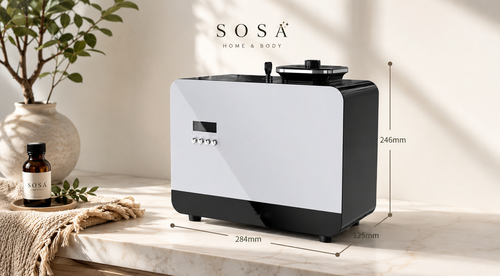
Aangan ₹25,999 for 8,000–10,000 sq ft. An alcohol-free
reed diffuser from ₹749 for an admin cabin. Free shipping above ₹499.
Straight answer
What should a multi-speciality clinic fix before it spends any money on fragrance?
1. The drain traps, every morning, at the top of the list and free. A mug of water down every floor gully, every basin that is not in daily use, every sluice, every unused shower and every toilet in every department. A U-bend seal evaporates in two to four weeks of disuse and then the drain vents into the room. This is the commonest cause of a clinic that smells and the cheapest thing on this page.
2. Then the things with a schedule: bins, linen and the cleaning store. Dressing waste and sharps on a named collection time with lids that actually close; soiled linen in closed bags on a route that does not cross a public corridor and never parked in a service lobby over a weekend; mop heads laundered nightly and dried flat and open rather than left standing in a bucket behind a closed door, which is how a cleaning store becomes the source rather than the solution.
3. Then the air, which is mostly settings rather than spending. Confirm the fresh-air damper is open and has not been shut by somebody chasing a cooling bill. Hold a tissue to every toilet extract grille and confirm the fan is running. Move the air-conditioning filters from quarterly to every two to four weeks in season. Set every indoor unit to run fan-only for the last ten minutes of the day so the coil dries before the building is locked.
4. Then the small purchases, all under ₹2,000 each. A marked measuring jug and a laminated dilution chart at about ₹250; lidded bins where there are open ones; twenty-four flat microfibre mop heads at about ₹1,800 for the year; a smoke pencil at ₹400 for airflow questions; a hygrometer from ₹500 for the room that is worst in monsoon; a replacement door closer from about ₹500.
5. Then five genuine budget lines for the quarter. The air-conditioning maintenance scope widened to include the drain pan, condensate trap, blower wheel and two coil cleans a year. A toilet extract fan repaired and interlocked to the light. A café hood ducted to outside instead of recirculating. A partition taken up to the slab where a ceiling void is shared. Wipeable seating at the next refit.
6. And line twenty-six is fragrance, at ₹11,999, and it is optional. In a facility that has done the twenty-five above it, the
Vaayu holds one low background through the opening hours in public areas only. That is presentation and housekeeping. It makes no clinical claim, a diffuser is not an air purifier, and consultation rooms, procedure rooms, sample collection, laboratories, dispensing, imaging, oncology day-care and paediatric clinical areas stay fragrance-free.
A portion of every order supports girl-child education through Nanhi Kali.
TL;DR: twenty-six lines. Thirteen are free and start this morning — drain traps, bins, linen, mop drying, the wash hour, a neutral public-floor cleaner, filters, the fan-off delay, the damper, the toilet extract, fridges, door closers, the fire stair. Seven cost under ₹2,000 each. Five are a quarter's budget. Fragrance is line twenty-six at ₹11,999 and plenty of clinics never need it.

What a clinic actually spends money on, in order
SOSA commercial scenting from ₹899
The order on this page is by cost and by consequence rather than by how interesting each line is.
Drain traps, bin schedules, mop drying and an air-conditioning filter are free. A door closer, a measuring jug and a set of flat mop heads are under ₹2,000 between them. An extract fan, a damper and a coil clean are a real but modest budget line. Fragrance is the last item and it is optional. The
Vaayu is ₹11,999, the
Aangan is ₹25,999 for a large integrated centre or an atrium, and an alcohol-free
reed diffuser from ₹749 covers an admin cabin. Free shipping above ₹499.
The thirteen that cost nothing, in the order to do them
I have written this list in cost order rather than in order of how serious each item is, and the reason is practical rather than philosophical. Thirteen of the twenty-six lines are free, which means thirteen of them do not need a quotation, a comparison, a purchase order or a conversation with finance, and can therefore be started before lunch by somebody who has read this page. In my experience of walking through medical centres, those thirteen between them account for the large majority of what patients are actually noticing, and a clinic that does all thirteen properly for a month usually arrives at a building with very little left to say. The seven small purchases are mostly tools that make the free lines stick — a jug so a dilution is measured, a hygrometer so damp is a number rather than an opinion, a smoke pencil so an airflow argument ends. The five budget lines are the ones that need a contractor and a date. And the last line is mine, it is the most expensive single item on the page, and it is last because that is where it belongs.
1
LINES 1 TO 13
Free, today, and between them most of what patients are noticing
In the order I would hand them to a facility manager on a Monday. One: the morning trap round. A mug of water down every floor gully, every basin not in daily use, every sluice, every unused shower and every toilet in every department, at sixty minutes before opening, every day, by a named person with a sheet to sign. A U-bend water seal evaporates in two to four weeks of disuse and the drain then vents into the room, which is the commonest single cause of a clinic that smells and costs nothing to prevent. Two: dressing-waste and sharps bins on a named collection time with lids that close, never stored in a public corridor. Three: soiled linen in closed bags on a route that does not cross a public area, and never left in a service lobby on a Friday evening. Four: mop heads laundered every night and dried flat and open. Five: the cleaning store itself vented or its door left ajar, because a closed damp cupboard full of wet textile is a source in its own right and almost nobody thinks of it. Six: the public-area floor washed in the quiet half-hour between your two peaks rather than in either of them. Seven: a neutral floor cleaner specified for the lobby, waiting hall and inter-departmental corridors, with the strong concentrate kept for clinical floors — a specification change with your infection-control lead rather than a purchase. Eight: air-conditioning filters washed every two to four weeks in season instead of quarterly, on the housekeeping sheet rather than on a contractor's visit. Nine: every indoor unit set to run fan-only for the last ten minutes of the day so the coil dries before the building is locked. Ten: the fresh-air damper confirmed open, because in a surprising number of buildings somebody closed it to save on cooling. Eleven: a tissue held to every toilet extract grille to confirm the fan is actually running, which takes four minutes for a whole floor. Twelve: every fridge in the building — staff, specimen, vaccine — cleared on a named day each week and its drip tray pulled out and wiped. Thirteen: every self-closing door in the building released from halfway to see whether it latches, and nothing stored in the fire stair, which is a fire-safety point before it is a smell one.
2
LINES 14 TO 25
Seven tools under ₹2,000, and five contractor jobs worth a quarter's budget
Then the small purchases, which exist mainly to make the free lines survive a change of staff.
A marked measuring jug tied to the cleaning trolley with a laminated chart in millilitres above the sink, about ₹250, which is the difference between a dilution and a guess. Lidded bins from about ₹300 each wherever there is an open one in a public area. Twenty-four flat microfibre mop heads at around ₹1,800 for a year, so a head can be changed per zone rather than run for twelve hours. A smoke pencil at about ₹400, which settles every argument about which way air is moving through a doorway in five seconds. A hygrometer from about ₹500 in whichever room is worst in monsoon, because microbial growth accelerates above roughly sixty per cent relative humidity and Indian monsoon indoor readings run far higher than that, and a number is easier to act on than a feeling. A door closer from about ₹500 wherever one has lost its tension. And a labelled jug kept by the sluice for the trap round, so it is a task rather than an intention. Then the five that need a contractor and a date. The air-conditioning maintenance scope widened to name the drain pan, the condensate line and trap, the blower wheel and two chemical coil cleans a year, which for a ten-unit clinic is roughly ₹25,000 to ₹45,000 a year and is mostly a renegotiation rather than a new cost. A toilet extract fan repaired or replaced and interlocked to the light switch, ₹3,500 to ₹8,000 each. A café or pantry hood ducted to an external wall rather than recirculating through a charcoal cartridge, ₹12,000 to ₹18,000. A partition taken up to the structural slab where a false-ceiling void is shared between a kitchen and a public area, ₹8,000 to ₹15,000. And wipeable perforated seating instead of fabric at the next refit, which is roughly the same money at the time of buying and turns the second largest surface in your waiting hall into one that gets cleaned daily.
Where a clinic should spend first sets the same question as a budget rather than as a checklist.
3
LINE 26
The only thing on this page I sell, and the reason it is at the bottom
And then the last line, which I want to describe accurately rather than generously.
A scent machine in a medical facility does one thing: it holds the public areas at a single low, steady, unremarkable background level from opening to closing, so that the building smells of nothing in particular rather than of its own regime. That is presentation and housekeeping, in the same category as the seating, the signage and whether the lift lobby light works. It is not a clinical effect of any kind: it does not reduce anything, aid anything or improve anything about a patient, it does not clean or purify air, a diffuser is not an air purifier, and if a supplier offers your medical director a wellbeing story, they are handing you a problem to defend rather than a product to use.
The machine is the Vaayu at ₹11,999 — waterless cold-air nebulisation with no standing water tank, which matters in a building that runs twelve hours a day and would otherwise need somebody named to empty, rinse and dry a reservoir daily; up to 1000 m³; a 400ml fill lasting about seventy-five days, so four refill visits a year; Bluetooth app and 1h/4h/8h/24h timers so it runs the opening hours and stops; under 38 dB; auto-stop; and a key-lock, which is the only reason a machine can stand in a public waiting hall at all. Size it honestly: floor area divided by 10.76, multiplied by ceiling height, counting only the volumes a door closes — which removes forty to sixty per cent of most clinic plans, because every clinical room is fragrance-free with its door shut, and turns a two-machine quotation into one machine. The
Aangan at ₹25,999 covers up to 3,000 m³ for a large integrated centre or an atrium and is genuine overselling in a 2,500 sq ft polyclinic. An alcohol-free
reed diffuser from ₹749 suits an administrative cabin. Candles are a fire-safety and insurance matter in a healthcare building. And SOSA does not make a room spray.
The instruction I would give whoever prints this list: put one name and one date against every line, and do not let anybody move line twenty-six up the page. It is not a reward for finishing; it is simply the last thing, and a good number of clinics get to the bottom and decide they are done.
The printable list, line by line
The whole list in one table, grouped by what it costs and ordered inside each group by how much it usually matters in an Indian medical centre. Print it, put a name and a date against every row, and work downwards. The bottom row is the only thing on this page SOSA sells and it is worth noticing how much of the table sits above it.
Print this
Twenty-six lines before a rupee goes on fragrance
| # |
The line |
Who owns it |
Cost |
| 1–3 ★ |
A mug of water down every trap, gully, sluice and unused basin at T-60m daily · dressing and sharps bins on a named collection time with lids · soiled linen closed and off the public route |
Housekeeping supervisor, on a signed daily sheet |
₹0 |
| 4–7 |
Mop heads laundered nightly and dried flat · the cleaning store vented or its door ajar · the public floor washed in the quiet half-hour · a neutral cleaner specified for public floors |
Housekeeping, with infection control on line 7 |
₹0 |
| 8–11 |
Air-conditioning filters every two to four weeks in season · fan-only for the last ten minutes of the day · fresh-air damper confirmed open · a tissue at every toilet extract grille |
Facilities, and the filter line moves to housekeeping |
₹0 |
| 12–13 |
Every fridge and drip tray cleared on a named day · every self-closing door released from halfway, and nothing stored in the fire stair |
Facilities, once a week and once a quarter |
₹0 |
| 14–20 |
Measuring jug and dilution chart ₹250 · lidded bins from ₹300 · 24 flat mop heads ₹1,800 a year · smoke pencil ₹400 · hygrometer from ₹500 · door closer from ₹500 · a labelled jug for the trap round |
Facilities. Seven small purchases, about ₹6,000 together |
Under ₹2,000 each |
| 21–25 |
Maintenance scope widened to drain pan, condensate trap, blower wheel and two coil cleans · toilet extract repaired and interlocked · café hood ducted to outside · partition up to the slab · wipeable seating at the refit |
Contractors, with dates. The AC scope and the café path
|
₹3,500–₹45,000 each |
| 26 |
Fragrance. Vaayu at ₹11,999 on low, public areas only, opening hours only, clinical rooms fragrance-free with their doors shut |
Facilities, four refills a year, one named person |
₹11,999 |
| Never |
A stronger bottle, a spray at the counter, or a machine turned up at midday because the hall got busy. And never a machine for a smell nobody has identified
|
Nobody. A persistent smell is information, so find it and fix it rather than covering it |
— |
Shop this guide
The last line, and what sits beside it
The SOSA principle
Thirteen of the twenty-six lines cost nothing and can be started before lunch. Between them they account for most of what your patients are actually noticing. The line I sell is the twenty-sixth, and a good number of clinics never reach it.
A mug of water in a dry trap. A lid on a bin. A mop head dried flat. A damper somebody closed to save on cooling. None of it is interesting and all of it works.
The seven small ones, the five budget lines, and the last line
Run the free thirteen for a full month before you decide anything else, and give the month a shape rather than letting it drift. Week one: the trap round, the bin times, the linen route and the mop drying, each with one named owner and a signed sheet, because a task with two owners has none. Week two: the wash hour, the neutral-cleaner conversation with your infection-control lead, and the filters moved to a fortnightly cycle on the housekeeping sheet. Week three: the fan-off delay set on every indoor unit, the damper checked, the tissue test at every toilet grille, the fridges and drip trays. Week four: walk the whole building yourself at three fixed hours and write one line each time. What is left at the end of that month is a much smaller and much better-defined problem than what you started with, and it is usually one of three things: a specific location that still smells, in which case the tracing method is the next page; an air-change problem that shows up as a building that is fine at nine and tired by six, in which case the nine-to-six question is; or nothing at all, in which case you are at line twenty-six and it is a genuine choice rather than a rescue.
Two things worth saying about the small purchases, because they are the ones facility managers skip. The first is that every one of the seven exists to make a free line survive a staff change. A measuring jug is not a cleaning product; it is the thing that keeps a correct dilution correct after the supervisor who understood it moves on. A hygrometer is not a dehumidifier; it turns an argument about whether a room is damp into a reading you can put in a log. A smoke pencil at ₹400 ends the single most unproductive disagreement in facilities management, which is two people standing in a doorway disagreeing about which way the air is going. The second is that the five budget lines are almost all renegotiations rather than new costs: the air-conditioning scope is money you are already spending, differently specified; the toilet extract is a repair that has been deferred; the seating is the same money at the next refit, spent on a different material. Only two items on the whole page — the café duct and the partition to the slab — are genuinely new spending, and both are one-off and permanent. Put dates against them, tell your medical director the list exists, and you will have done more for how your facility reads to a patient than any fragrance decision could.
And then the last line, in the detail somebody signing a purchase order will want. The Vaayu is ₹11,999 and the argument for it in a clinic is a housekeeping argument rather than a clinical one: waterless cold-air nebulisation, so there is no standing water tank to be emptied, rinsed and dried every single day by a named person in a building that runs twelve hours a day. If that person does not exist in your facility, do not buy a water tank at all, which rules out the ultrasonic Sukoon at ₹1,899, Boond at ₹899 and Megh at ₹3,499 for public clinical property — those three stay honest for a single administrative cabin where one person owns the daily routine, and the Sukoon arrives with three 15ml Hotel Collection scents included. Coverage up to 1000 m³ with the sum done properly; a 400ml fill lasting about seventy-five days, so four refills a year, which procurement can model in ten minutes; 1h/4h/8h/24h timers and an app so the facility team sets the schedule and the centre head never touches it; under 38 dB, quieter than the reception's own air conditioning; auto-stop; a key-lock; and four hotel-inspired scents in the box, so the first month's trial costs nothing. The bottle for a medical facility is the lightest thing available — the Westin-inspired White Tea Serenity at ₹299, or the 1 Hotels-inspired Forest Suite at ₹299 where a café reaches the seating — and the rule to hold it to is that a patient should not be able to tell you what the fragrance is, only that the place did not smell of anything unpleasant. Public areas only: entrance, reception, shared waiting, inter-departmental corridors, lift lobbies, administration and the café corner. Consultation and examination rooms, treatment and procedure rooms, day-care surgery, dressing rooms, sample collection, laboratories, dispensing, sterile stores, imaging, oncology day-care and paediatric clinical areas stay fragrance-free with their doors shut, and the full list and the reason for each entry is worth reading before you site anything.
Thirteen free lines, seven cheap ones, five with a contractor attached, and then mine. If you only ever do the first thirteen, your facility will read better to a patient than it does today — and I will still think the page did its job.
— Sonal Sahani, SOSA
The SOSA edit
The same twenty-six lines compressed into five tiers plus the one thing nobody should do. This is the version for a budget meeting rather than for a wall, with what each tier costs and what it is worth. Note where the only SOSA product on the page sits.
The SOSA edit
Five tiers, and the last line
| Tier |
What is in it |
When it earns its place |
Cost |
| 1. The free thirteen ★ |
Traps, bins, linen, mop drying, the cleaning store, the wash hour, the neutral cleaner, filters, the fan-off delay, the damper, the toilet extracts, the fridges, the doors |
This morning. No quotation, no purchase order, and between them most of what patients notice |
₹0 |
| 2. The seven tools |
Measuring jug and chart, lidded bins, flat mop heads, a smoke pencil, a hygrometer, a door closer, a labelled trap jug |
This week. Each one exists to make a free line survive a change of staff |
About ₹6,000 together |
| 3. The deferred repairs |
Toilet extract fan repaired and interlocked; air-conditioning scope widened to pan, trap, blower wheel and two coil cleans a year |
This quarter. Mostly money you already spend, specified differently. The AC brief
|
₹3,500–₹45,000 a year |
| 4. The two permanent jobs |
The café hood ducted to an external wall, and a partition taken up to the structural slab where a ceiling void is shared |
When the walk says the path is above the ceiling. The café page has the tests |
₹8,000–₹18,000 each |
| 5. Vaayu — the last line |
Waterless, no standing water tank, up to 1000 m³, 400ml lasting about 75 days, app and timers, under 38 dB, key-lock, four scents |
Only after the four tiers above. Public areas, opening hours, one low setting. The Aangan at ₹25,999 for a large centre |
₹11,999 |
| Not on the list at any price |
A machine bought to cover something nobody has identified, a stronger bottle because patients complained, or scenting in a clinical room |
Never. An unexplained smell is information, and SOSA does not make a room spray in any case |
— |
Honest notes for buyers: fragrance in a medical facility is housekeeping and presentation, never treatment. Nothing on this page claims that a fragrance reduces anxiety, aids recovery, improves sleep, cleans or disinfects air, or has any clinical effect whatsoever, because it does not and a diffuser is not an air purifier. Scenting belongs to the entrance, reception, shared waiting areas, inter-departmental corridors and administrative rooms. Consultation and examination rooms, treatment and procedure rooms, day-care surgery, dressing rooms, blood- and sample-collection rooms, laboratories, pharmacy dispensing, sterile stores, imaging rooms, oncology day-care and paediatric clinical areas should be left fragrance-free. A persistent smell is information about a dry drain trap, a bin, a soiled-linen route or an air-conditioning drain pan: find it and fix it rather than covering it. On the machines: the
Vaayu at ₹11,999 is waterless cold-air nebulisation with no standing water tank, covering up to 1000m³ or roughly 2,000–3,000 sq ft, with a 400ml tank lasting about 75 days, Bluetooth app control, 1h/4h/8h/24h timers, under-38dB running, auto-stop and a key-lock for public areas. The
Aangan at ₹25,999 covers up to 3,000m³ and connects to HVAC for a whole floor or an atrium. The ultrasonic
Sukoon,
Boond and
Megh are water-based, hold standing water and add 30–50 ml of water an hour to the air, which makes them suitable for a single administrative cabin with a named person emptying and drying the tank daily, and unsuitable for public clinical property. An alcohol-free
reed diffuser needs 24–72 hours to establish and suits a small lobby rather than a large waiting hall. Candles are not appropriate in a healthcare facility because an open flame is a fire-safety matter. SOSA does not make a room spray. The Hotel Collection scents are SOSA's own interpretations inspired by the world's finest hotels; SOSA is an independent Indian fragrance house, not affiliated with or endorsed by any hotel brand. A portion of every order supports girl-child education through Nanhi Kali.
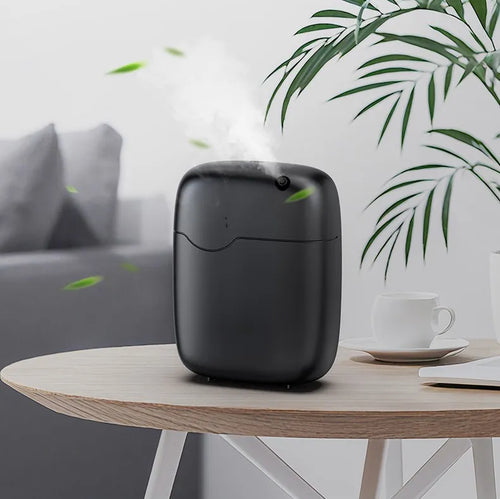
The last line of the list, and it stays the last line
SOSA Vaayu ₹11,999
Everything above this on the checklist is housekeeping, maintenance or building fabric, and most of it is free. This is the only item on the page that SOSA sells, it is the most expensive single line, and it is deliberately at the bottom — because a facility that buys it before the twenty-two lines above it has bought a background for a building that still has something to say. Up to 1000 m³, 400ml lasting about seventy-five days, app and 1h/4h/8h/24h timers, under 38 dB, auto-stop, key-lock, four hotel-inspired scents included. Public areas only, on low, for the opening hours.
A note from Sonal
I started keeping this list because of a phone call from a procurement lead in Pune who wanted a quotation for four machines for a new centre and asked, almost as an afterthought, whether there was anything else he should be doing. I said there were about twenty things he should be doing first and most of them were free, and he asked me to send them. It took me two evenings to write down properly, and I have been sending some version of it ever since, which has cost this company a number of sales I can name. It has also produced the customers I like most, because a facility that has worked down twenty-five lines before reaching mine knows exactly what it is buying and exactly what it is not.
What surprised me is how often the list ends the conversation. Perhaps a third of the clinics I send it to come back some weeks later to say the problem has gone and they would like to think about scenting next year, which is the correct answer and I am glad to hear it. Another third buy one machine instead of the two or three they had planned, because once the clinical rooms come out of the coverage sum, the building is smaller than the brochure says. The remainder buy what they were going to buy anyway, and run it on a lower setting than they expected to, which is also better. I would rather sell one machine into a building that is right than four into a building that is not, and I would rather write that on the page than discover I had to explain it later.
Everything is made and supported from Pune, and a part of every order funds girl-child education through Nanhi Kali. You get a space that smells like somewhere looked after; a girl gets a classroom. That equation has always felt right to me.
Frequently asked questions
What should a clinic fix before spending anything on fragrance?
In order: the daily drain-trap round, bin collection times with lids, the soiled-linen route, mop-head laundering and drying, the cleaning store, the wash hour, a neutral cleaner for public floors, air-conditioning filters every two to four weeks, a fan-off delay at closing, the fresh-air damper, the toilet extracts, the fridges and drip trays, and the door closers. All thirteen are free.
Which single free fix makes the biggest difference in an Indian clinic?
The morning drain-trap round. A U-bend water seal evaporates in two to four weeks of disuse and the drain then vents into the room, and every clinic has floor gullies, sluices and basins that are barely used. A mug of water down each of them sixty minutes before opening, by a named person with a sheet to sign, costs nothing and resolves more complaints than anything else on the list.
How much should a clinic expect to spend before it gets to fragrance?
About ₹6,000 on seven small tools, and then a quarter's budget on repairs that are mostly renegotiations of money you already spend — the air-conditioning maintenance scope, a toilet extract fan, and in some buildings a café duct at ₹12,000 to ₹18,000 or a partition taken up to the slab at ₹8,000 to ₹15,000. Only two of the twenty-six lines are genuinely new spending.
Do we still need a scent machine after doing all of this?
Often not, and that is a legitimate outcome. Roughly a third of the clinics I send this list to come back to say the problem has gone. For the ones that still want a steady background, the
Vaayu at ₹11,999 holds one low level in the public areas through the opening hours, which is presentation and housekeeping rather than any clinical effect.
How many machines does a multi-speciality clinic actually need?
Usually fewer than the brochure suggests, because the sum should count only the volumes a door closes. Floor area divided by 10.76, multiplied by ceiling height, with every clinical room excluded since it is fragrance-free with its door shut. In most clinics that removes forty to sixty per cent of the plan area, and a facility that expected two machines needs one.
Twenty-five lines, then this one
Work down from the top — and a good number of clinics never reach the bottom
The Vaayu is ₹11,999: waterless cold-air nebulisation with no standing water tank, up to 1000 m³ or roughly 2,000–3,000 sq ft, a 400ml tank lasting about seventy-five days for four refills a year, Bluetooth app control with 1h/4h/8h/24h timers, under 38 dB, auto-stop and a key-lock for public areas, supplied with four hotel-inspired fragrances. The Aangan is ₹25,999 for 8,000–10,000 sq ft, and alcohol-free reeds from ₹749 suit an administrative cabin. Free shipping above ₹499, and a portion of every order supports girl-child education through Nanhi Kali.
See the Vaayu · ₹11,999 All commercial scenting
Continue the read
More from SOSA
Editorial standards & sources
About this guide: Written by Sonal Sahani, ISIPCA Versailles-trained founder and perfumer at SOSA Home & Body, as a printable twenty-six-line checklist of everything a multi-speciality clinic should correct before spending anything on fragrance — thirteen free lines covering drain traps, bins, linen, mop drying, the wash hour, filters, dampers and extracts; seven tools under ₹2,000; five contractor jobs with costs; and fragrance placed last, optional, and limited to public areas.
Facts verified August 2026: Product facts used in this guide. SOSA Vaayu ₹11,999: waterless cold-air nebulising diffuser, atomises undiluted fragrance oil to a dry residue-free nano-mist with no water reservoir, coverage up to 1000m³ (approximately 2,000–3,000 sq ft), 400ml refillable tank lasting up to about 75 days per fill, Bluetooth app plus onboard control, 1h/4h/8h/24h timer scheduling, adjustable intensity, under 38 dB, DC 12V/1A at 5W, 165 × 80.5 × 215 mm and 0.9 kg, freestanding or wall or HVAC mounted, auto-stop and key-lock, CE, RoHS and SGS certified, supplied with four hotel-inspired fragrances. SOSA Aangan ₹25,999: HVAC-connected or standalone commercial nebulising diffuser, coverage up to 3,000m³ (roughly 8,000–10,000 sq ft), 800ml reservoir, metal body, programmable schedules, under 42 dB. Ultrasonic machines are water-based, hold standing water and consume 30–50 ml of water an hour: Sukoon ₹1,899 (500ml, 270–320 sq ft, 16–18 hours on low, 3–6 drops per tank, steady/2H/4H timers, three 15ml Hotel Collection scents included), Boond ₹899 (300ml), Megh ₹3,499 (6 litres). Hotel Collection water-based fragrance 15ml ₹299, 100ml ₹999, 300ml ₹1,799, Pack of 7 at 15ml ₹1,799 against ₹2,093 bought singly; the Vaayu and Aangan take their own undiluted oil rather than these water-based bottles. Alcohol-free reed diffusers from ₹749, requiring 24–72 hours to reach their working level. Free shipping above ₹499. Coverage arithmetic: cubic metres equal floor area in square feet divided by 10.76 and multiplied by ceiling height in metres, counting only the volumes that are actually scented. This guide makes no medical, therapeutic or clinical claim of any kind for fragrance: a diffuser does not purify, disinfect or clean air, and does not treat, calm or affect any patient or condition. Fragrance is housekeeping and presentation. Clinical areas should be left fragrance-free, and a persistent odour should be traced to its source and corrected rather than covered. SOSA is not affiliated with or endorsed by any hotel brand. Prices subject to change — see the live product pages.




 Aangan · large centres₹25,999Shop →