

How to tell: ask. One sentence, in advance. "Is it the spending, or the stuff, or would you rather I didn't at all?" People answer that question honestly, and being asked is itself the considerate act.
If they meant it literally: give nothing, and write something true. A letter, a phone call, a meal you cooked, a day of your labour. This is a real answer, not a consolation prize.
If it was the spending or the stuff: something small that finishes. A 50ml reed diffuser from ₹749 runs 6–8 weeks and then it is gone — no shelf, no display, no obligation to keep it.
2. Ask one question, before the occasion. "Is it the money, or the stuff, or would you honestly rather I didn't?" It takes ten seconds and it converts a guess into an instruction. The surprise is a convention; the consideration is the point of the exercise.
3. If the objection is money, make the smallness visible. Something obviously modest removes the debt. A ₹749 bottle that finishes in six to eight weeks reads as a gesture, not a transaction, and nobody has to work out what they now owe you.
4. If the objection is possessions, buy something with a stated end. This is the loophole that is not really a loophole, because it does not violate the request — a consumable does not become part of what they own. It arrives, it works, it goes. Say the run time out loud when you hand it over: six to eight weeks on a 50ml, fourteen to eighteen on a 130ml.
5. If the objection is reciprocity, give in a way that cannot be repaid. Time, labour, food you cooked, a repair, a lift to the airport at five in the morning. These are difficult to give back and therefore create no ledger.
6. If they meant it literally, give nothing, and say something true. A letter that names a specific thing you are grateful for will outlast every object in this article. If that feels insufficient, it is worth asking whether the gift was for them or for your own discomfort.
7. Never escalate to prove sincerity. Buying bigger after being asked not to buy at all is the single most common failure here, and it makes the recipient responsible for managing your feelings about their preference.
Everything we make is composed and handmade in small batches in Pune, and a portion of every order supports girl-child education through Nanhi Kali.
Part one — the four things people mean by it
The sentence is short and the intentions behind it are not interchangeable. Getting this wrong is how somebody who said "please, nothing" ends up with a large boxed object they must now thank you for. Below are the three meanings that leave room for a gift and, in the middle of the article rather than buried at the end, the fourth one that does not. The tell is usually in what they say next — money, space, or a general weariness with the whole ritual — and if there is no tell, you are allowed to ask.
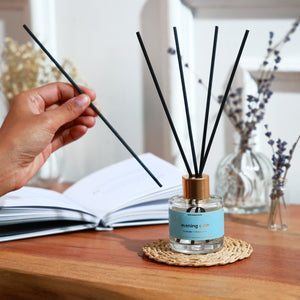
 Evening Calm₹799 · the softestThe second version is about accumulation, and it is usually said by somebody who has recently cleared a cupboard, moved house, or dealt with a parent's belongings. They are not against generosity; they are against permanence. This is the one meaning where a consumable genuinely satisfies the request rather than sidestepping it, because a thing that ends does not join what they own. Good coffee, good soap, something from a bakery, home fragrance. A 50ml at ₹799 occupies a coaster's worth of surface for six to eight weeks and then leaves a glass bottle they may refill or recycle as they please. Say the number when you give it. "It runs out in about two months" is the sentence that makes the gift acceptable, and hiding it would be the dishonest version of this argument.
Part two — what honours the request and what quietly breaks it
Same sentence, four intentions, and a response that works for one can be actively rude for another. The table maps each meaning to what lands and what fails. Note that only one row leads to a product recommendation, and one row leads to no purchase at all.
| What they said next | What it means | What honours it | What breaks it |
|---|---|---|---|
| "Save your money" · "you've spent enough" ★ | The ledger — don't create a debt | Something visibly modest: a 50ml at ₹749, food you made, a plant cutting | An expensive gift with the price concealed |
| "I'm trying to get rid of things" | Accumulation — don't add to the house | A consumable with a stated life; say the run time aloud | Anything permanent, however small or beautiful |
| "Let's not do gifts this year" | Reciprocity — don't start an exchange | Something unrepayable: time, labour, a meal you cooked | Going ahead anyway, so they arrive empty-handed |
| Said repeatedly, calmly, unprompted | Exactly what it says | Nothing. A letter, a call, a day of your time, a donation | A small clever purchase that proves you did not listen |
| "Only if you're passing" · a laugh | Softened politeness — they would not mind | A small consumable, given lightly and without ceremony | Treating it as a full veto and giving nothing at all |
| "Nothing for the house, please" | A specific exclusion, stated | Something that is not for the house — food, a booking, a service | Home fragrance, candles, decor. They named the category |
| You genuinely cannot tell | Unknown | Ask them. One sentence, in advance | Guessing, then buying upward to be safe |
| The honest caveat: I sell home fragrance and two rows of this table tell you not to buy it. That is the correct proportion. A small consumable is an excellent answer to the money objection and to the accumulation objection, and it is the wrong answer to a straightforward no — dressing a purchase in the language of "but it finishes" does not make it a non-purchase. If you find yourself building an elaborate justification for why your gift does not really count as a gift, you have your answer already. | |||
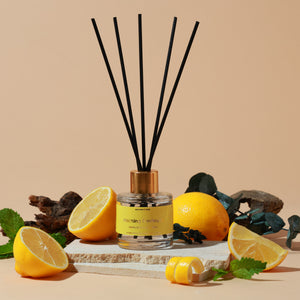
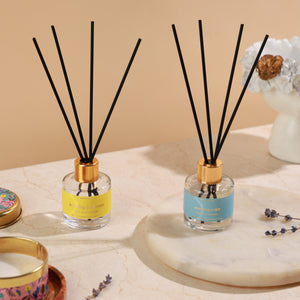
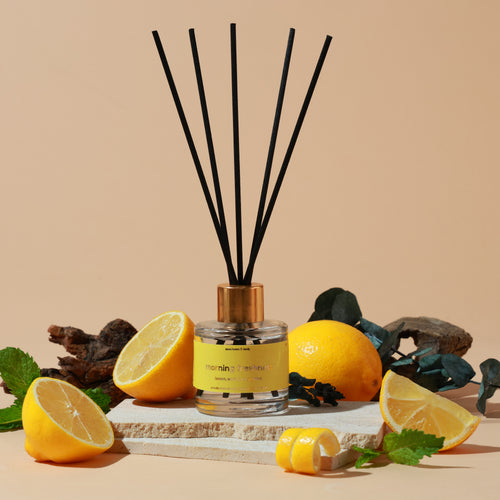
Morning Freshness 50ml · the smallest spend₹749Shop → 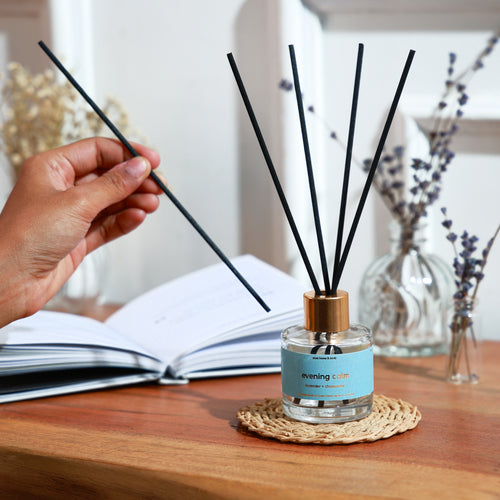 Evening Calm 50ml · the quietest₹799Shop →
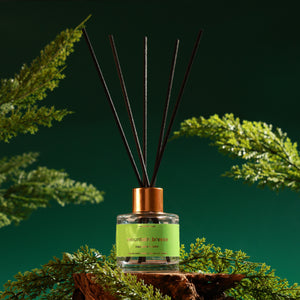
 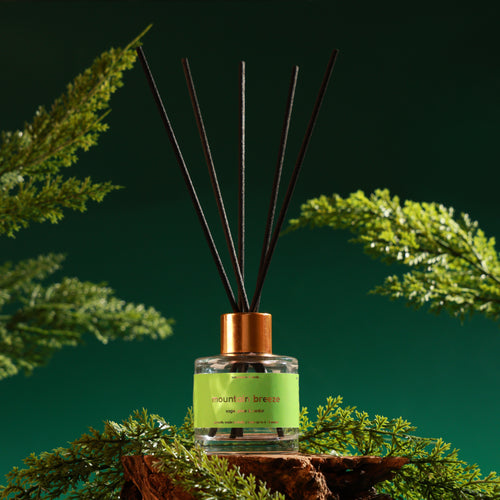 Mountain Breeze 50ml · no sweetness₹849Shop →
Part three — the case for buying nothing, made properly
Here is the part of this article that costs me money, and it is the part I believe most. For a substantial share of the people who say "don't buy me anything", the correct purchase is none. Not a smaller purchase, not a cleverer one, not a consumable chosen because it technically evaporates. None. What they are objecting to is the transaction itself — the obligation, the theatre, the assumption that affection has to be converted into an object before it counts. Giving them a bottle because it finishes is still handing them a parcel and a moment in which they must perform pleasure, and if that moment is the thing they were declining, the smallness of the gift does not help.
What works instead is not a downgrade. Cook the meal and do the washing up. Book a table on a specific date and put it in both diaries — a booking is a gift, a voucher is homework. Take a day off and drive them to the thing they have been putting off. Fix the tap, sort the photographs, sit with the person they care for so they can leave the house for four hours. Write the letter: not a card with a printed sentiment, but a page that names one specific thing you are grateful for and one memory only you have. Every one of those is harder to give than a purchase, which is exactly why they read as sincere. And if what you want is to mark the occasion without any object changing hands, a donation to something they care about, made quietly and mentioned once, does that cleanly.
The exclusions for home fragrance specifically, since this is the point where a reader might reasonably be reaching for a bottle. Do not give it to somebody who has told you they dislike scented things — that is a second stated preference, and overriding two is worse than overriding one. Do not give it into a household where anyone has a fragrance sensitivity, gets headaches, or is managing asthma. Skip it in a home with a newborn. Skip it for a very small sealed room, because a composition dosed for an ordinary living room becomes insistent at that volume. Skip it if they said "nothing for the house" — they named the category and you should take the name seriously. And on presentation: there is no SOSA gift card, and I cannot confirm what wrapping or gift-note options exist at checkout, so if the giving is meant to be light and unceremonious, plan around what you can actually verify rather than what you hope is available.
Part four — the edit, starting from nothing
Ordered from no purchase upwards, which is the order I would work through it. The first two rows are free and are the right answer more often than the rest of this table combined.
| Response | What it is | Price | Right when |
|---|---|---|---|
| Nothing, plus a letter ★ | A page naming one specific thing you are grateful for | Free | They have said it repeatedly and calmly. Believe them |
| Your time, specifically | A day of driving, packing, childminding, or a repair done | Free | The objection is reciprocity, or money, or both |
| A booked meal | A table reserved on a named date, not a voucher | Not ours to price | You want to mark the occasion with no object involved |
| A donation in their name | Given quietly to something they already care about | Your choice | They dislike the ritual but not the sentiment |
| One 50ml that finishes | Morning Freshness ₹749, Evening Calm or Garden Bloom ₹799 | ₹749–₹799 | The objection was money or accumulation. Six to eight weeks, then gone |
| One 50ml, anti-floral | Mountain Breeze — pine, sage, cedar, no sweetness | ₹849 | They are sceptical of "scented" things but not against them |
| Two bottles, both finishing | A 2 × 50ml duo — Day & Night or Fresh & Grounded | ₹1,498–₹1,548 | Only where the objection was stuff rather than spending |
| Do not do this | Buying larger than usual to prove the sentiment | — | Never. It makes them manage your feelings about their preference |
Versailles
My mother has said "don't buy me anything" every year of my adult life, and for about ten of those years I ignored it and bought something anyway. She always thanked me properly, and the objects always ended up in a particular cupboard, and eventually I understood that I had been giving myself the satisfaction of giving and handing her the administration of receiving.
What she wanted, it turned out, was for someone to come and sit in her kitchen for an afternoon without an agenda. That costs more than a bottle of anything, in the only currency that is actually scarce. I now do that, and some years I bring something small that runs out, and some years I bring nothing, and she can tell the difference between the two kinds of nothing — the one that listened and the one that forgot.
I am aware this is an odd argument to make on a shop's blog. But a range built on telling people not to buy the bigger bottle would be dishonest if it could not also say: sometimes do not buy the smaller one either. Everything we make is composed and handmade in small batches in Pune, and part of every order funds a girl's classroom through Nanhi Kali — which is a fine reason to buy something, and not a reason to override somebody who asked you not to.
Frequently asked questions
- What do you gift a minimalist? — the three shapes a gift is allowed to take.
- Gifts for someone who doesn't want more stuff — why a consumable is not stuff.
- When they prefer experiences to things — the honest case for booking rather than buying.
- The complete SOSA gift finder — by recipient, relationship, budget and room.
- Brand: the SOSA founder story.
SOSA reed diffuser range & prices (verified August 2026): alcohol-free, phthalate-free, paraben-free and IFRA-compliant compositions on a heat-stable coconut-derived (CCT) carrier, low-VOC, supplied in a refillable glass bottle with six fibre reeds; 50ml lasts 6–8 weeks and 130ml lasts 14–18 weeks. Morning Freshness (Malabar lemon · peppermint · Nilgiri eucalyptus) 50ml ₹749 · 130ml ₹1,249 · 9.0/10; Garden Bloom (British rose · night-blooming jasmine) 50ml ₹799 · 130ml ₹1,299 · 8.9/10; Evening Calm (Kashmir lavender · chamomile) 50ml ₹799 · 130ml ₹1,299 · 8.9/10; Fresh Brew (Coorg coffee · Kerala vanilla) 50ml ₹849 · 130ml ₹1,349 · 9.5/10; Mountain Breeze (Himalayan pine · sage · Indian cedar) 50ml ₹849 · 130ml ₹1,349 · 9.4/10. Reed diffuser refills are oil only — you reuse your own vessel and reeds: 300ml ₹2,399 (roughly 8–11 months) · 500ml ₹3,499 (roughly 14–18 months), about ₹7–8 per ml against ₹15–17 per ml for a 50ml bottle. Duo sets ₹1,498–₹1,598 for 2 × 50ml and ₹2,498–₹2,598 for 2 × 130ml. Strength figures are positions on SOSA’s own internal strength scale, not an industry standard. Replacement reeds are not sold as a separate SKU; SOSA guidance is to refresh reeds every few months. The reed line is separate from the water-based Hotel Collection for ultrasonic machines (15ml ₹299 · 100ml ₹999 · 300ml ₹1,799) and the two are not interchangeable. Diffusers: Boond 300ml ₹899 · Sukoon 500ml ₹1,899 · Megh 6L ₹3,499 · waterless Vaayu ₹11,999. Composed and handmade in small batches in Pune, India; tested through 45°C summer heat and 85% monsoon humidity. Free shipping above ₹499. A portion of every order supports girl-child education through Nanhi Kali. Prices subject to change — see the live product pages.