



Should My Dining Room Smell Fragranced While Guests Are Eating?

Should My Dining Room Smell Fragranced While Guests Are Eating?

★ Hosting dinner · cooking smells, open kitchens and the hour before people arriveCandle ₹379 · reed ₹749 · Boond ₹899 · Sukoon ₹1,899 · free shipping above ₹499A portion funds girl-child education
★ SOSA · when people are coming over
You cannot fragrance your way out of a fried-onion kitchen. You can, however, clear it and then put something clean on top — and the timing is the recipe
★ ★ ★ ★ ★
★★★★★
"Biryani for eight and I was panicking about the smell. Extractor through cooking, windows wide for twenty minutes, then the diffuser. The living room was completely clear by the time they sat down."
Nandini R. Dinner party, Hyderabad
Air, then scent
★★★★★
"My kitchen opens into the living room. Told me to keep fragrance out of the dining area entirely while people eat, which I had never considered. It was right."
Imran Q. Open kitchen, Mumbai
Nothing at the table
★★★★★
"The bit that helped: turn it on an hour before, off when guests arrive. The room holds it and nothing competes with the food."
Shalini D. Hosts often, Pune
On early, off at 8
★★★★★
"Twelve people in a small 2BHK. The advice was less fragrance, more airflow — the room was going to get warm regardless. Completely correct."
Gaurav L. 12 guests, Delhi
Less, not more
★★★★★
"Same scent at the entrance and the living room so the flat reads as one place. Small thing, made it feel considered."
Ritika S. Entrance + living, Bengaluru
One signature
★★★★★
"Frying happens. Twenty minutes of proper cross-ventilation afterwards does more than any product, and then the product actually works."
Harish M. Fried food, Chennai
Cross-ventilate
★★★★★
"Biryani for eight and I was panicking about the smell. Extractor through cooking, windows wide for twenty minutes, then the diffuser. The living room was completely clear by the time they sat down."
Nandini R. Dinner party, Hyderabad
Air, then scent
★★★★★
"My kitchen opens into the living room. Told me to keep fragrance out of the dining area entirely while people eat, which I had never considered. It was right."
Imran Q. Open kitchen, Mumbai
Nothing at the table
★★★★★
"The bit that helped: turn it on an hour before, off when guests arrive. The room holds it and nothing competes with the food."
Shalini D. Hosts often, Pune
On early, off at 8
★★★★★
"Twelve people in a small 2BHK. The advice was less fragrance, more airflow — the room was going to get warm regardless. Completely correct."
Gaurav L. 12 guests, Delhi
Less, not more
★★★★★
"Same scent at the entrance and the living room so the flat reads as one place. Small thing, made it feel considered."
Ritika S. Entrance + living, Bengaluru
One signature
★★★★★
"Frying happens. Twenty minutes of proper cross-ventilation afterwards does more than any product, and then the product actually works."
Harish M. Fried food, Chennai
Cross-ventilate
Candle: scent in the room in 15–20 minutes · Sukoon: about 20 minutes from cold A reed diffuser needs 24–72 hours — the wrong buy when guests arrive tonight Ventilate first · fragrance is the finishing layer, never the cover-up


Founder Diaries · Home Fragrance · Hosting Dinner
By Sonal Sahani · ISIPCA Versailles 11 min read Updated August 2026
No. The dining room should not smell of fragrance while people are eating in it, and the reason is physiological rather than a matter of taste. Somewhere between three-quarters and nine-tenths of what you experience as the flavour of a meal is not taste at all — it is smell, arriving at your olfactory receptors from the back of your mouth as you chew and swallow. A room carrying its own fragrance is therefore not a background to dinner. It is a competitor for the same equipment. The good news is that this makes the practical answer simple and cheap: scent the room before, and stop before the food arrives. The 2H timer on the Sukoon does the stopping for you.
Quick answers — read this first
The answer: no. Nothing fragranced in the room where people are eating, for the whole time they are eating.

Why: flavour is mostly retronasal smell — odour molecules reaching your nose from the back of the mouth. Ambient fragrance and food arrive at the same receptors, and the food comes off worse.

What to do instead: run the diffuser from about half past six for an eight o'clock dinner, on low, on the 2H timer, so it shuts itself off at half past eight as the plates land. Scent the entrance, not the table.

After dinner: once the plates have gone, a heavier bottle is welcome — the St. Regis-inspired Old-World Glamour, ₹299 for 15ml, three drops on the 2H timer.
The short answer
Short answer: no. A dining room should not carry fragrance while food is being eaten in it. Most of what you register as flavour is smell arriving retronasally, from the back of the mouth, so a scented room measurably changes how the food reads — and not in the food's favour. Scent the room before people sit down, then stop.
The pick: the Sukoon at ₹1,899 specifically for its 2H timer — start it at six for an eight o'clock dinner and it switches itself off at eight, unattended, at exactly the right moment. Three or four drops of any of the seven Hotel Collection scents at ₹299 for 15ml. A candle at the table is the same mistake with a flame in it.
Shop: Hotel Collection 15ml ₹299, 100ml ₹999, 300ml ₹1,799 at about ₹6 per millilitre; Pack of 7 at 15ml ₹1,799 against ₹2,093 singly, saving ₹294. The Sukoon is ₹1,899 for 270–320 sq ft with steady, 2H and 4H timers, auto shut-off and three 15ml scents of your choice included; the Boond is ₹899 for a hall or entrance. Free shipping above ₹499.
Straight answer
Should my dining room smell of fragrance while my guests are eating?
1. No. Have the fragrance stop before the food starts. Not lowered, not moved further away — stopped. The room will hold what it has already absorbed for a long while afterwards, which is all you need, and the air immediately around the table will be doing nothing but carrying the food.

2. The mechanism, so you can trust the instruction rather than take it on faith. When you chew, volatile compounds from the food travel up the back of your throat to the olfactory receptors in your nasal cavity. That route is called retronasal olfaction, and it supplies the overwhelming majority of what you call flavour. Your tongue only reports sweet, salt, sour, bitter and savoury. Everything else — the cardamom in the pulao, the char on the paneer, the coriander — is smell.

3. So a fragranced room is not a backdrop to a meal. It is competition. The same receptors are being asked to process white tea and bergamot at the same instant they are being asked to process your cooking, and the cooking is the thing you spent four hours on.

4. Set the Sukoon going at six for an eight o'clock dinner, on low, on the 2H timer. Three or four drops. It reaches a steady level in about twenty minutes, holds it for the rest of the two hours, and shuts itself off at eight while you are carrying dishes and thinking about nothing else. That is the entire answer, and the timer is why the machine is worth ₹1,899 rather than the coverage figure.

5. Scent the entrance instead, and bring the fragrance back afterwards. The hall or the landing outside your door is where a first impression is formed and where nobody is eating. And once the plates have gone, a heavier bottle in the sitting room is genuinely welcome — that is the third act, and it is the part most people skip.

A portion of every order supports girl-child education through Nanhi Kali.

TL;DR: no. Flavour is mostly smell arriving from the back of the mouth, so a fragranced dining room competes with the food for the same receptors. Run the Sukoon from six on the 2H timer for an eight o'clock dinner and let it stop itself as the plates land. Scent the entrance, never the table, and bring a heavier bottle back after dinner.
SOSA Sukoon
Bought for the one setting this page is about
SOSA Sukoon ₹1,899
A 500ml BPA-free tank rated for 270–320 sq ft, a 2.4MHz cool-mist plate, a remote, auto shut-off, 16–18 hours per fill on low against 9–12 on high, and three 15ml Hotel Collection scents of your choice included. None of that is why I would buy it for a dinner. The 2H timer is why. Set it going at six and it stops at eight without you thinking about it again, which is the difference between a plan and an intention. A machine you have to remember to switch off is a machine that will still be running at nine o'clock while somebody is trying to taste your dal, because at nine o'clock you are pouring wine and finding a serving spoon.

Why a scented dining room changes the food

I want to make the case properly rather than assert it, because this is the one piece of advice in the whole hosting group that people resist. It sounds like an aesthetic preference dressed up as a rule, and it is not. Your tongue is a fairly crude instrument. It reports five things: sweet, salt, sour, bitter and savoury. That is the entire vocabulary of taste. Everything else you believe you are tasting — the smoke in a tandoori marinade, the citrus in a chutney, the difference between ghee and oil, the specific green of fresh coriander against the specific green of curry leaf — is smell. It reaches you through the nasopharynx, the passage that connects the back of your mouth to your nasal cavity, every time you chew and every time you swallow. Pinch your nose shut and eat a spoonful of biryani and you will get salt, warmth and texture and almost nothing else. That is the experiment, and it takes four seconds.

1
THE MECHANISM
Flavour is smell taking the back route
Perfumers are taught this early because it explains a great deal about why people describe scent in food words. There are two ways an odour molecule reaches your olfactory epithelium: orthonasally, in through your nostrils, which is what you do when you sniff a bottle; and retronasally, up from the back of your mouth, which is what happens involuntarily while you eat. They arrive at the same patch of tissue and are processed by the same system, and the brain is generally poor at telling you which route something came in by. It hands you a single unified impression and calls it flavour. This is why a cold makes food taste of nothing, why wine people swirl and sniff and then chew, and why a room full of jasmine changes the character of a green tea. Now apply it to your dining table. If the air in the room carries bergamot at a level you can consciously detect, then every mouthful your guest takes is being delivered to receptors that are already partly occupied. The result is not that the food tastes bad. It is subtler and worse than that: the food tastes less like itself. Its edges soften, its top notes get muddled, and the thing you cooked reads as a slightly generic version of what it is. Nobody at the table will diagnose this. They will simply find the meal a little less memorable than it deserved to be, and they will have no idea why, and neither will you.
2
THE SOCIAL HALF
A perfumed room while people eat reads as inattention to the food
The second argument is not about receptors at all and I find it lands harder with most people. Think about what a strongly fragranced dining room says. It says that the host considered the atmosphere of the room to be a thing requiring management at the exact moment the food was the thing on offer. At best that reads as slightly anxious. At worst — and this is the version that actually happens — it reads as covering something, because that is what fragrance in a room where food is present has historically meant. A guest's nose does not analyse; it categorises fast, and the category available for 'perfume plus dinner' is not a flattering one. Consider the inverse, which is what good restaurants do without ever announcing it. Walk into a serious restaurant and the dining room smells of almost nothing except, faintly, the kitchen and other people's food. They are not being negligent. They have decided, correctly, that the room's job is to be a clean neutral vessel for what comes out of the pass. A hotel lobby is scented; the restaurant twenty feet away is not. That distinction is deliberate and it is worth copying exactly. The most confident thing a host can do is let the food be the only thing in the air, because it says the food is worth being the only thing in the air. Anything else is hedging, and guests can feel a hedge even when they cannot name it.
3
THE STRUCTURE
Three acts: scent the arrival, clear the meal, warm the end
So here is the shape I would give an evening, and it is genuinely three separate acts rather than one long decision. Act one is arrival, and it should be scented. The entrance, the hall, the first eight feet inside your door — this is where the impression of a home gets made, in about four seconds, before anybody has taken their shoes off. There is no food here and nothing to compete with, so put your scent exactly here and let people walk through it. A Boond at ₹899 in a hall does this on its own, or a reed diffuser from ₹749 if there is no socket and you are willing to set it up two or three days early, since reeds need 24 to 72 hours before they are doing their job properly. Act two is dinner, and it is unscented. Machine off, candles unlit or well away from the table, nothing on the table but flowers with no smell, or none. The room will still carry a trace of what was running earlier and that trace is exactly the right amount — present enough that the space feels looked after, far too low to interfere with a mouthful. Act three is after, and it is the one nobody plans. Once the plates have gone, bring the fragrance back and bring it back heavier. A sitting room at half past nine with the lamps low and coffee going is the single best moment for the plushest bottle you own — the St. Regis-inspired Old-World Glamour at ₹299, three drops on the 2H timer. It signals, without anybody consciously registering it, that the evening has moved into its slow half.
The test, if you want to check any of this for yourself: cook something aromatic, run a diffuser in the same room at four drops, and eat a plate of it. Then air the room properly, cook the same thing again the following week with nothing running, and eat it again. The second plate will taste more like the dish. I have done this with people who did not believe me and I have not yet lost the argument.

Where the fragrance goes, room by room

The same house, the same evening, five different spaces, and only two of them should carry any scent while people are eating. The third column is the reason rather than the rule, because the reasons are what let you adapt this to a flat I have not seen. Note that the dining area and the table itself are the only two rows where my answer is a flat no.

Room by room
Which parts of the house get scent on a dinner night, and which do not
Space Scented? Why What to use
The dining area ★ No — nothing, from the moment food lands Retronasal olfaction: flavour is mostly smell, and ambient fragrance competes for the same receptors. It also reads socially as inattention to the food Nothing. The Sukoon on the 2H timer stops itself before this point
The entrance or hall Yes, and this is the priority No food here, and it is where the impression of the whole house is formed in about four seconds Boond ₹899, or a reed diffuser from ₹749 set up two to three days early
The living room, before dinner Yes, until about eight It has time to reach a level and settle, and a settled room reads as a property of the building rather than an event Sukoon ₹1,899, three or four drops on low, 2H timer
The living room, after dinner Yes, and heavier than before Eating has finished, so the objection expires. A warm room is what makes people stay sitting St. Regis-inspired ₹299, three drops on the 2H timer
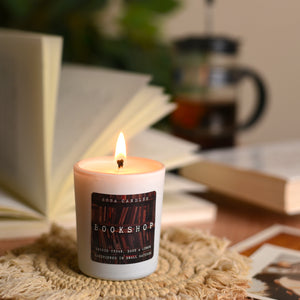
The table itself No — including scented candles A candle six inches from a plate is the same interference as a diffuser, with a flame and a reaching arm added to it Unscented tealights if you want light. Bookshop candle ₹379 belongs in the next room
The guest bathroom Yes, quietly The one small room where a light constant scent is genuinely useful and nobody is eating A 50ml reed diffuser from ₹749. Set it up days ahead, not on the night
Shop this guide
What a properly-timed dinner actually needs
The SOSA principle
A serious restaurant scents its lobby and leaves its dining room alone. That is not negligence. It is the most confident thing a room can say about the food coming out of it.
Scent the arrival, clear the meal, warm the end. Three acts, one machine, and a timer doing the only part you would otherwise forget.

The six o'clock start, the 2H timer, and the table itself

Start with the numbers, because the whole of this page collapses into a setting on a machine. For an eight o'clock dinner: Sukoon on at six, low setting, three or four drops of Hotel Collection in the tank, 2H timer. It reaches a steady level in about twenty minutes and shuts itself off at eight. Three drops in a small flat, four in a normal sitting room, and I would not go to five on an evening when food is involved even in a large hall. The dose is per tank rather than per litre — you are scenting the mist and not the water — so a 300ml Boond at ₹899 takes exactly the same three drops as a 500ml Sukoon at ₹1,899, and the bigger machine buys you hours and coverage rather than intensity. That is the single most common misunderstanding I correct by email, and it costs people money in fragrance they did not need to use. The timer is the specification that matters here and it is worth being explicit about why. Auto shut-off protects the machine when the tank runs dry; the 2H timer protects your dinner. They are different features and only the second one is the reason this page exists. If you already own an ultrasonic diffuser with no timer, the workaround is a phone alarm at ten to eight labelled with something you cannot ignore, and I say that without any embarrassment, because a plan that depends on you remembering something while carrying a hot dish is not a plan.

Then placement, which changes when you know the machine will be stopping. Put it as far from the table as the room allows and as close to the route people will walk in by as you can manage. Waist height or above, on a shelf or a console rather than the floor, because cool mist falls rather than rises and a machine on the ground is scenting a rug. Out of the path of a fan or an air-conditioning vent, since a draught strips the light top off a composition and leaves the heavy end standing on its own, which is how a perfectly good bottle starts reading as thick without the dose having changed. Away from soft furnishings you cannot wash. And keep the kitchen door shut during those two hours if you have a door, because the one thing that will ruin this arrangement is not the diffuser at all — it is frying oil moving through the flat while the scent is establishing itself. Extraction on the whole time you cook and for ten minutes after, windows open on two opposite walls for twenty minutes before you close up and switch anything on. Fragrance goes onto air that is already clean; it does nothing whatever for air that is not, and it makes a genuinely unpleasant compound smell if you try. If your kitchen has no door and opens straight onto the dining area, run the driest bottle you own — the 1 Hotels-inspired Forest Suite at ₹299, cedarwood, vetiver and green leaves — because dryness sits at a different address in the nose from food and coexists with it rather than arguing.

Then the table itself, the constraints, and the principle. A scented candle on the dining table is the same mistake this whole page is about, with an open flame and a reaching arm added. If you want candlelight, and you should, use unscented tealights or dinner candles and put the Bookshop candle at ₹379 or the Amber Rose candle at ₹599 in the next room where it is doing the pre-dinner work instead. Cut flowers on a dinner table should be scentless for the same reason — lilies and tuberose in particular are strong enough to reach the plate. On the constraints: the Hotel Collection is water-based and runs in the Sukoon, the Boond and the Megh only. It does not go into a reed diffuser, which is a separate alcohol-free line with its own scents, and it does not go into the waterless Vaayu at ₹11,999, which takes its own undiluted oil. Never put raw essential or carrier oils into an ultrasonic — they clog the 2.4MHz plate — and rinse the tank when you change scent, which matters more than usual here because you are deliberately running two different bottles in one evening. And the principle: fragrance is hospitality before the meal and after it, and interference during it. A host who understands that difference is telling their guests, without a word, that the food is the point.

Fragrance is hospitality before the meal and after it. During the meal it is interference, however good the bottle.
— Sonal Sahani, SOSA

The SOSA edit

In buying order for somebody who hosts dinner at home and wants the room to be right without the food paying for it. The first row is the purchase that makes the timing discipline possible at all, which is why it comes before any fragrance. The last row states what should be on the table, which is nothing.

The SOSA edit
A dinner that smells right, in buying order
Buy What it is When it earns its place Price
1. Sukoon 500ml ultrasonic for 270–320 sq ft with steady, 2H and 4H timers, auto shut-off and three 15ml scents included First, and for the 2H timer rather than the coverage. On at six, off at eight, no memory required ₹1,899
2. Hotel Collection 15ml Water-based fragrance for ultrasonic diffusers, three to six drops per tank, seven hotel-inspired scents Three or four drops for the pre-dinner hours. Nothing in the seven is sweet, which is why none of them argue with food ₹299
3. St. Regis-inspired 15ml Powdery violet, warm amber and polished woods — the plushest and slowest of the seven After the plates have gone, in the room people move to. Three drops on the 2H timer at about half past nine ₹299
4. Boond or a reed diffuser A 300ml ultrasonic for a hall, or a 50ml alcohol-free reed that needs no socket For the entrance, which is the space that most deserves scent and most often gets none. Set a reed up days early ₹899 / from ₹749
5. Pack of 7 or 300ml refill All seven at 15ml for ₹1,799 against ₹2,093 singly, or about ₹6 per ml against roughly ₹20 Once you host often enough that you want a before-bottle and an after-bottle rather than one compromise ₹1,799 each
On the dining table: nothing No diffuser, no scented candle, no strongly perfumed flowers, for the whole time food is present This is the row the page exists for. Unscented tealights if you want the light, and put the scented candle next door
Honest notes for buyers: fragrance is the last step, not the first — it layers on air that is already clean and moving, and it will not cover cooking, damp or a room that has been shut for weeks. Timing matters as much as product: a candle scents a room in fifteen to twenty minutes and a Sukoon in about twenty, which is why both work when people are arriving tonight, while a reed diffuser needs a day to three days before it is doing its job properly — it is the wrong buy for a deadline and the right buy for a room you want to hold a steady scent for months. SOSA does not make a room spray for the home; the sprays in the range are formulated and sized for a car. The Hotel Collection is water-based and runs in the Sukoon, Boond and Megh only — not in reeds, and not in the waterless Vaayu. Reed diffusers are a separate alcohol-free line with their own scents. Candles must be attended and put out before guests leave a room unattended. The Hotel Collection scents are SOSA's own interpretations inspired by the world's finest hotels; SOSA is an independent Indian fragrance house, not affiliated with or endorsed by any hotel brand. A portion of every order supports girl-child education through Nanhi Kali.
The St. Regis-inspired · Old-World Glamour
The bottle for after the plates have gone
The St. Regis-inspired · Old-World Glamour ₹299 / 15ml
Powdery violet, warm amber and polished woods — the slowest and plushest of the seven, and completely wrong during dinner and completely right after it. Once eating has finished, the objection this page is built on simply expires: nobody's retronasal receptors are busy any more, and a warm room reads as somewhere you want to stay sitting. Three drops on the 2H timer at about half past nine, in the room people have moved to rather than the one they ate in. ₹299 for 15ml, ₹999 for 100ml, ₹1,799 for 300ml at about ₹6 per millilitre.
SS
ISIPCA
Versailles
A note from Sonal

I have been served some very good food in rooms that were working against it, and the hosts never knew. A dining table with a lit vanilla candle in the middle of it is a common sight in Indian homes and it is doing real damage to the meal on the table. Not dramatic damage. The food does not taste wrong. It tastes fractionally less like itself, its top notes blur, and the impression the evening leaves is a little flatter than the cooking earned. It took me years of training to be able to name what was happening, and I still think most people feel it perfectly well without being able to name it.

So my instruction is short and I do not soften it. Scent your entrance, scent your sitting room until eight, then stop and let people eat. The room keeps a trace and the trace is plenty. Afterwards, when the plates have gone and somebody has asked for coffee, put the heaviest bottle you own on for a couple of hours and let the evening get warmer. It is the cheapest piece of hosting technique I know, it costs nothing beyond a timer setting, and it takes a dinner from good to considered without any guest being able to say what changed.

Everything is made and supported from Pune, and a part of every order funds girl-child education through Nanhi Kali. You get a home that smells like somewhere you chose; a girl gets a classroom. That equation has always felt right to me.

Frequently asked questions

Should I use a diffuser in the dining room while guests are eating?
No. Most of what you experience as flavour is smell arriving retronasally, from the back of the mouth, so ambient fragrance and food compete for the same receptors. Run the Sukoon from about six for an eight o'clock dinner on the 2H timer so it stops itself as the food arrives.
Is a scented candle on the dining table a bad idea?
Yes, for the same reason as a diffuser, with an open flame and a reaching arm added. Use unscented tealights or dinner candles on the table and put the Bookshop candle at ₹379 in the next room, where it does its work before people sit down.
Will the room still smell of anything if I switch the diffuser off at eight?
Yes, and that residual trace is exactly the right level. A room that has run at three or four drops for two hours holds a low background for a good while after the mist stops. Present enough that the space feels looked after, far too low to interfere with a mouthful.
Where should the fragrance go on a dinner night if not the dining room?
The entrance first, since that is where the impression of a house is formed and nobody is eating there, then the living room until about eight. A Boond at ₹899 handles a hall, or a reed diffuser from ₹749 if there is no socket — set a reed up two to three days ahead, since it needs 24 to 72 hours to work.
What should I put on after dinner?
The St. Regis-inspired Old-World Glamour at ₹299 for 15ml — amber, violet and woods, the plushest of the seven — at three drops on the 2H timer, in whichever room people have moved to. Once eating has finished the objection expires and a warmer room is genuinely welcome.
Before dinner and after it, never during
On at six, off at eightand the timer does the remembering
The Sukoon is ₹1,899 for 270–320 sq ft with steady, 2H and 4H timers, auto shut-off, 16–18 hours per fill on low and three 15ml Hotel Collection scents of your choice included. The Hotel Collection is ₹299 for 15ml, ₹999 for 100ml and ₹1,799 for 300ml at about ₹6 per millilitre, with the Pack of 7 at 15ml at ₹1,799 against ₹2,093 singly. Free shipping above ₹499, and a portion of every order supports girl-child education through Nanhi Kali.
See the Sukoon · ₹1,899 Shop the Hotel Collection →
Continue the read
More from SOSA
Editorial standards & sources
About this guide: Written by Sonal Sahani, ISIPCA Versailles-trained founder and perfumer at SOSA Home & Body, on why a dining room should carry no fragrance while food is being eaten in it, how retronasal olfaction makes flavour largely a matter of smell, why a perfumed room reads socially as inattention to the food, and how a 2H timer turns that principle into a setting you only have to make once.

Facts verified August 2026: Timings in this guide: a scented candle puts noticeable fragrance into a normal room in roughly 15–20 minutes; a Sukoon ultrasonic diffuser reaches a steady level in about 20 minutes from cold; a reed diffuser needs roughly 24–72 hours for the oil to travel the reeds and the room to settle, so it is not a same-day solution. SOSA products and prices: Sukoon 500ml ultrasonic diffuser ₹1,899 (270–320 sq ft, 16–18h on low, 9–12h high, 30–50 ml/h, 2.4MHz cool mist, 7-colour LED, remote, steady/2H/4H timers, BPA-free, auto shut-off, includes three 15ml Hotel Collection scents of your choice); Boond 300ml ₹899; Megh 6-litre ₹3,499; waterless Vaayu ₹11,999 (up to 1000m³); Aangan ₹25,999; Meenar ₹38,500. Hotel Collection water-based fragrance 15ml ₹299, 100ml ₹999, 300ml ₹1,799, Pack of 7 at 15ml ₹1,799 / 100ml ₹5,999 / 300ml ₹10,799; dose 3–6 drops per tank. Reed diffusers (separate alcohol-free line): Morning Freshness from ₹749, Garden Bloom and Evening Calm from ₹799, Fresh Brew and Mountain Breeze from ₹849; 130ml from ₹1,249; duos from ₹1,498; 300ml refills ₹2,399. Scented candles: Bookshop 80g ₹379 (~15–18 hours), Bookshop + Cozy Corner ₹664 (~30–36 hours), Amber Rose 130g ₹599 (~25–30 hours) and 220g ₹799 (~40–50 hours), ceramic jar candles ₹949, Pure Calm wax melt set ₹854. Free shipping above ₹499. SOSA does not make a room or linen spray for the home — the sprays in the range are car perfumes. The Hotel Collection scents are SOSA's own interpretations; SOSA is not affiliated with or endorsed by any hotel brand. Prices subject to change — see the live product pages.
Back to blog
