



The three timescales: seconds to minutes at the receptor; twenty to thirty minutes for a strong smell to disappear entirely; about a fortnight for your own home to become invisible to you.
The audit, all at ₹0: ask one honest guest; come home from a trip; twenty minutes out and back through the front door; a week-old garment smelled outdoors; room by room from the corridor; and a written dose checked against how fast the bottle empties.
The rule: the correct response to not being able to smell your own home is never to add more.
2. It takes about a fortnight, and there is nothing to notice while it happens. There is no day on which the scent goes. It thins across two weeks, at a rate slow enough that each day seems the same as the last, and the concentration in the air is unchanged throughout.
3. Your visitors are unaffected, which is the whole shape of the problem. They arrive with a reference point formed elsewhere and receive your home in full. Then they adapt too, within minutes, which is why the comment comes once at the door and never again.
4. So audit your home rather than sniffing it, and every method is free. Ask one honest person to describe rather than judge, in the first minute. Come home from a trip and read the first thirty seconds. Leave the building for twenty minutes. Smell a week-old shirt outdoors. Enter each room from the corridor. Check how fast the bottle empties.
5. And never respond to not smelling your home by adding more. That instinct is the adaptation talking, it is the origin of nearly every over-scented flat, and the free alternatives — a second scent alternated, a timer, a written dose — restore your perception without touching the level.
A portion of every order supports girl-child education through Nanhi Kali.

Part one — the mechanism, at two levels
Two separate systems produce what people call nose-blindness, they run on different clocks, and knowing which is which explains almost every practical question in this group. The first is peripheral and chemical: receptor cells in the roof of the nose stop responding to a molecule that is continuously present. The second is central and cognitive: the brain learns what your home smells like and stops passing it up to attention. The first is fast and reverses fast. The second is slow, deep, and the reason a fortnight rather than an hour is the number that matters at home.
Part two — the audit table, and every method at ₹0
Six ways to find out what your home actually smells like, what each one measures, how far you can trust it, how long it takes and what it costs. Every row costs ₹0, and that is not a coincidence: this is a problem of information rather than of product, and information is free. The methods are not interchangeable — one reports the level, one reports the character, one reports where the smell lives, and one is the only objective instrument in the house.
| Method | What it measures | How reliable | How long it takes | Cost |
|---|---|---|---|---|
| Ask one honest guest ★ | Level and character together, plus anything sitting underneath the fragrance | The most reliable reading available to anybody. It is the only method using a nose that has not adapted to your home | One minute, at the door, with permission asked the day before | ₹0 |
| Come home from three days away | The level, honestly, plus whatever the closed flat has accumulated while you were gone | Very high, and the best self-administered test there is. Three days is genuine recovery rather than partial | Thirty seconds, and it exists only in those thirty seconds | ₹0 |
| Twenty minutes out and back | The level, muted. Partial receptor recovery gives a real but understated reading | Moderate. Enough to catch a dose that has crept; not enough to judge a subtle scent | Twenty minutes, and it must be out of the building | ₹0 |
| A garment or towel hung for a week | Whether the level has climbed far enough to transfer onto what you wear and carry out of the house | Good for that one question. Fabric records everything, including damp and dinners, so read it narrowly | Ten minutes outdoors with the item in a bag | ₹0 |
| Room by room from the corridor | Where the smell lives — which room is contributing what, rather than how strong the whole flat is | Good, and the only method that localises. Entering from the next room measures nothing | Five minutes, one minute on the landing between rooms | ₹0 |
| The written-dose check | Whether your dose has drifted. A 15ml is about 300 drops — roughly 100 tank fills at three, about 50 at six | The only objective instrument in the house. A bottle does not adapt to anything | Two dates written on a bottle, months apart | ₹0 |
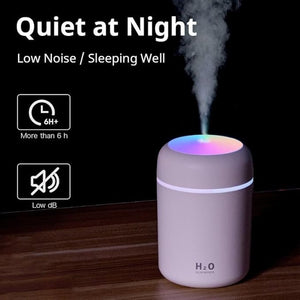
The machine that stops₹1,899Shop →  Two scents · ₹598₹299 eachShop →
 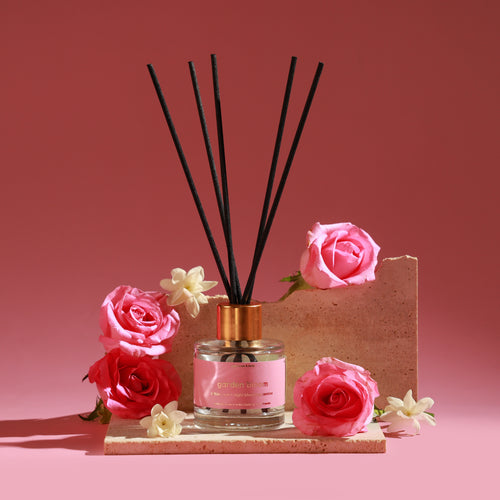 Reeds · from ₹749from ₹749Shop →
Part three — the ratchet, and the rule that follows from it
The single most expensive consequence of nose-blindness is not that you cannot enjoy your own home. It is what you do about it. Adaptation produces exactly one sensation, the sensation of not enough, and it produces it on a fortnightly cycle for as long as a scent is running. So a dose managed by how the room feels can rise and has no mechanism for falling: three drops becomes four because three has stopped registering, four works for a fortnight and then becomes five, and nowhere in that sequence is there an evening when a scent feels excessive and somebody decides to use less. That sensation requires an unadapted nose and belongs entirely to your visitors, who will not report it, because there is no polite way to tell a host their home is too strong. What they do instead is open a window. The result is a slow, invisible climb in exactly the households that care most — the person who chose the scent carefully and tops it up before guests arrive is the one who ends up furthest from where they started, which is why none of this is worth being embarrassed about. The loop is set out fortnight by fortnight on its own page, and the signs that it has already happened on another. The rule that follows is the most important sentence in this guide, and it is short. The correct response to not being able to smell your own home is never to add more. Not one drop, not a stronger scent, not a bigger machine. Every one of those addresses a perception problem with a concentration change, and the perception problem is in you.
What to do instead divides into things that cost nothing and things that cost very little, and the free half comes first because on this subject it usually settles the matter. Write the dose down. The Hotel Collection is composed at three to six drops per tank — three in a bedroom, study or small hall, four in a sitting room, five in a genuinely large space — and the dose is per tank rather than per litre, since you are scenting the mist and not the water, so a 300ml Boond takes the same drops as a 500ml Sukoon and a six-litre Megh takes the same again. Set that number in the first week, while your judgement of your own home is still worth something, and write it on the bottle in pen with the date and the timer setting. From then on pouring is compliance rather than assessment. Then deal with the room, because a fragrance is frequently being asked to shout over something that should simply be removed. Two openings on opposite or adjacent walls for twenty minutes: one window is ventilation and two is exchange, and a closed room does not stop producing smell, it stops removing it. A mug of water down every floor drain, basin and unused shower, since a U-bend water seal evaporates in two to four weeks of disuse and the drain then vents into the room. Washable fabric — cushion covers, throws, curtains, bedlinen — through a cycle, because textiles adsorb cooking aerosol and body oils and re-release them for weeks. The AC filter washed every two to four weeks in season, since a cold wet evaporator coil grows biofilm that is blown into the room on start-up. The washing machine door and drawer left open, the gasket wiped. Fragrance removes none of those, and layered on top of any of them it gives the room two smells instead of one. Find the source, change the air, then scent the room, in that order.
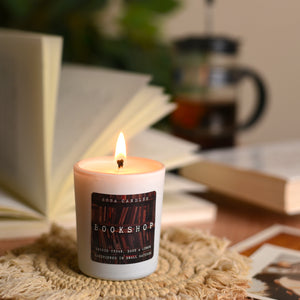
Then the small commercial section, which is short because the honest list is short. Three things help, and only three. The first is a machine that stops on its own. The Sukoon at ₹1,899 has steady, 2H and 4H timers on a 500ml BPA-free tank rated for 270–320 sq ft, 16–18 hours per fill on low at 30–50 ml/h against 9–12 on high, a 2.4MHz cool-mist plate, a remote, auto shut-off and three 15ml Hotel Collection scents of your choice included — and for this problem the timers are the specification that matters rather than the coverage figure, because an intermittent exposure lets receptors recover in the gaps while a continuous one guarantees you never perceive the room again. Two hours from seven gives an evening a rise and a fall. The second is two scents rather than one, at ₹598 for two 15ml. Adaptation is specific, so alternating a cool composition with a warm one restores your perception on the day you switch with no increase in dose — provided the two are genuinely distant, since two white teas will not reset each other. The Pack of 7 at 15ml is ₹1,799 against ₹2,093 for seven singles, a saving of ₹294, if you want the rotation stocked properly. The third is free and it is the written dose above. A Boond at ₹899 is the same idea in a smaller room, and the Megh at ₹3,499 the same idea in an open-plan flat. On the constraints: the water-based Hotel Collection runs in those three machines only. It does not go into a reed diffuser, which is a separate alcohol-free line with its own scents from ₹749 and needs 24 to 72 hours to establish — the wrong buy for a deadline and a very good unchanging baseline underneath a rotation — and it does not go into the waterless Vaayu at ₹11,999, which takes its own undiluted oil. A candle scents a room in fifteen to twenty minutes and must be attended and put out; Bookshop candle is ₹379. SOSA does not make a room or linen spray for the home. Rinse the tank between scents, never substitute raw essential or carrier oils, and buy 15ml at ₹299 before the 300ml 300ml refill at ₹1,799.
Part four — the three things worth buying, and the order of everything else
The whole of this group in the order I would actually work through it. Six of the eight rows cost nothing, which is the correct proportion for a problem that is about information rather than about product, and the last row names the purchase this condition most often produces.
| Step | What it is | Why it comes here | Cost |
|---|---|---|---|
| 1. Stop adding drops ★ | Hold the current dose, whatever the room feels like, and write it on the bottle with the date | First, and free. Everything else is undone by a level that is still climbing | ₹0 |
| 2. Change the air and check the sources | Two openings for twenty minutes; a mug of water down every unused drain; washable fabric through a cycle; the AC filter washed | Second. A visitor smells your fragrance and your flat's backlog in one breath, and fragrance removes neither | ₹0 |
| 3. Take a reading you can trust | One honest guest asked to describe rather than judge, in the first minute — or the first thirty seconds home from a trip | Third. Until you have an external reading, every decision about the level is made with a broken gauge | ₹0 |
| 4. Check the bottle rather than the room | A 15ml is about three hundred drops: roughly a hundred tank fills at three, about fifty at six | Fourth. The only instrument in your house that has not adapted to anything is the one you pour from | ₹0 |
| 5. A machine that stops | Steady, 2H and 4H timers, 500ml, 270–320 sq ft, 16–18 hours on low, three 15ml scents included | Fifth, and the first thing on this list to cost money. Intermittent exposure lets your receptors recover; continuous does not | ₹1,899 |
| 6. Two scents rather than one | Two 15ml bottles alternated on a rhythm — a cool one against a warm one, not two of the same family | Sixth. Adaptation is specific, so a switch restores your perception without touching the level | ₹598 |
| 7. One unchanging thing, if you want a signature | A reed diffuser from ₹749, one level for months, 24–72 hours to establish, nothing to switch on | Seventh and optional. Rotate the machine and keep the reed, so the house still has a smell of its own | from ₹749 |
| Not the answer: a bigger bottle of the same scent | ₹1,799 for 300ml at about ₹6 per millilitre, bought while the dose is still moving | Genuine value once a dose has settled, and a way of removing your last signal while it has not | — |
Versailles
Of everything in this cluster, this is the group I most wanted written properly, because it is the one where a fragrance company has an obvious incentive to say nothing. A customer who cannot smell their own home buys more fragrance. That is simply true, and it is the reason the instinct to add a drop is so rarely corrected by anybody selling the drops. I would rather correct it. A household running at eight drops in a small flat is not a good customer; it is a customer whose home announces itself, who will eventually be told so by somebody blunt, and who will blame the fragrance rather than the fortnight.
So the honest summary of ten articles is that this is a problem of information and not of product. One person you trust, asked at the door to describe rather than to praise, will tell you more in thirty seconds than a year of standing in your own hall wondering. A trip will tell you nearly as much for nothing. A number written on a bottle will keep you where you decided to be, long after you have lost the ability to judge it. Beyond that there are three things worth buying and I have listed them plainly: a machine that stops, a second scent to alternate with the first, and, if you want the place to have a signature, something unchanging in a corner holding one level for months. And the last thought, which I would like to be the one that stays: you are not the audience for your own home. The audience comes through the door, gets the whole thing in about four seconds, and then loses it exactly as you did. Build the room for them, set the level once, and let your own nose get on with the job it is actually for, which is noticing what has changed.
Everything is made and supported from Pune, and a part of every order funds girl-child education through Nanhi Kali. You get a home that smells like somewhere you chose; a girl gets a classroom. That equation has always felt right to me.
Frequently asked questions
- Why your house smells nice to guests when you cannot smell anything, why you cannot smell your own home and how long it takes to go nose-blind — the opener, the mechanism and the timings.
- Why you only notice your home when you come back from a trip and how to find out what your house actually smells like to other people — the best solo reading, and the five free tests around it.
- Am I using too much home fragrance without realising it? and why you keep adding more drops — the signs of a dose that has crept, and the loop that produced it.
- Why visitors comment when you never notice and should you change your fragrance regularly — how to read a guest's remark, and the rotation that resets your nose without raising the level.
- Brand: the SOSA founder story.
Facts verified August 2026: Diagnostic facts used in this guide: a closed room accumulates what it cannot exchange, so cross-ventilation needs two openings rather than one; a drain's U-bend water seal evaporates in roughly two to four weeks of disuse and then admits sewer gas, which is corrected by pouring water down the drain; microbial growth in fabric and on surfaces accelerates above about 60% relative humidity, and Indian monsoon indoor humidity commonly runs 80–95%, which is the one situation where ventilating on a wet day can import moisture rather than remove it; an air-conditioner's cold, wet evaporator coil and filter grow biofilm that is blown into the room on start-up; textiles adsorb cooking aerosol and body oils and re-release them for weeks; and olfactory adaptation makes a constant household smell undetectable to its residents within about a fortnight while visitors still perceive it. Timings: a scented candle scents a normal room in roughly 15–20 minutes, a Sukoon ultrasonic diffuser reaches a steady level in about 20 minutes from cold, and a reed diffuser needs roughly 24–72 hours. SOSA products and prices: Sukoon 500ml ₹1,899 (270–320 sq ft, 16–18h on low, 9–12h high, 30–50 ml/h, 2.4MHz cool mist, remote, steady/2H/4H timers, BPA-free, auto shut-off, includes three 15ml Hotel Collection scents of your choice); Boond 300ml ₹899; Megh 6-litre ₹3,499; waterless Vaayu ₹11,999 (up to 1000m³); Aangan ₹25,999. Hotel Collection water-based fragrance 15ml ₹299, 100ml ₹999, 300ml ₹1,799, Pack of 7 at 15ml ₹1,799; dose 3–6 drops per tank. Reed diffusers (separate alcohol-free line): Morning Freshness from ₹749, Garden Bloom and Evening Calm from ₹799, Fresh Brew and Mountain Breeze from ₹849; 130ml from ₹1,249; duos from ₹1,498; 300ml refills ₹2,399. Scented candles: Bookshop 80g ₹379, Amber Rose 130g ₹599 and 220g ₹799, Smoked Oudh 130g ₹449, ceramic jar candles ₹949, Pure Calm wax melt set ₹854. Free shipping above ₹499. SOSA does not make a room or linen spray for the home. The Hotel Collection scents are SOSA's own interpretations; SOSA is not affiliated with or endorsed by any hotel brand. Prices subject to change — see the live product pages.