I Deep-Cleaned My Entire House but It Still Doesn't Smell Luxurious — What's Missing?

I Deep-Cleaned My Entire House but It Still Doesn't Smell Luxurious — What's Missing?

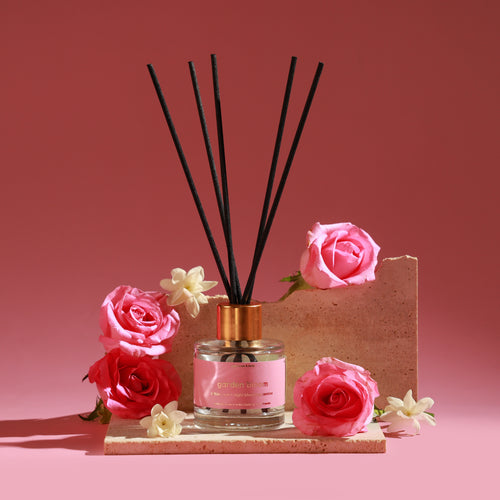
★ ★ After a deep clean · the room is spotless and still does not smell like anythingCandle ₹379 · reed ₹749 · Boond ₹899 · Sukoon ₹1,899 · free shipping above ₹499A portion funds girl-child education
★ SOSA · when people are coming over
Clean smells of nothing, which is exactly the point — and also why a freshly cleaned house can feel oddly unfinished until something warm sits on top of it
★ ★ ★ ★ ★
★★★★★
"Deep-cleaned everything and the house still felt flat. It was not dirty, it was just blank. One scent gave it the finished feeling I was chasing."
Anjali D. Post-deep-clean
The finishing layer
★★★★★
"The house reeked of cleaning product. Waited a few hours with windows open before adding anything, as advised — the two would have fought otherwise."
Prashant G. After cleaning, Mumbai
Waited, then scented
★★★★★
"Curtains, sofa and carpets all cleaned. Fabric holds scent, so the room took it beautifully and has held it for weeks."
Reshma B. Upholstery cleaned
Fabric holds it
★★★★★
"Wanted the hotel-housekeeping smell. Turns out that is clean linen and restraint, not a strong fragrance. Adjusted my whole approach."
Vivek M. Hotel housekeeping feel
Restraint
★★★★★
"Replaced the reeds during the big clean, which I did not know you should do. Instant difference — the old ones had stopped drawing."
Tara N. Reeds replaced
Flip the reeds
★★★★★
"After Diwali cleaning I wanted it to hold for weeks, not days. A reed was the right format for that; a candle would have been a Sunday-only thing."
Mohit S. Post-Diwali clean
Reed for weeks
★★★★★
"Deep-cleaned everything and the house still felt flat. It was not dirty, it was just blank. One scent gave it the finished feeling I was chasing."
Anjali D. Post-deep-clean
The finishing layer
★★★★★
"The house reeked of cleaning product. Waited a few hours with windows open before adding anything, as advised — the two would have fought otherwise."
Prashant G. After cleaning, Mumbai
Waited, then scented
★★★★★
"Curtains, sofa and carpets all cleaned. Fabric holds scent, so the room took it beautifully and has held it for weeks."
Reshma B. Upholstery cleaned
Fabric holds it
★★★★★
"Wanted the hotel-housekeeping smell. Turns out that is clean linen and restraint, not a strong fragrance. Adjusted my whole approach."
Vivek M. Hotel housekeeping feel
Restraint
★★★★★
"Replaced the reeds during the big clean, which I did not know you should do. Instant difference — the old ones had stopped drawing."
Tara N. Reeds replaced
Flip the reeds
★★★★★
"After Diwali cleaning I wanted it to hold for weeks, not days. A reed was the right format for that; a candle would have been a Sunday-only thing."
Mohit S. Post-Diwali clean
Reed for weeks
✓ Reed diffusers: no electricity, no routine, steady for months · from ₹749 ✓ Sukoon ₹1,899 · 270–320 sq ft · 16–18 hours per fill · three 15ml scents included ✓ Air the room first · fragrance layers on clean air, it does not replace it


Founder Diaries · Home Fragrance · After a Deep Clean
By Sonal Sahani · ISIPCA Versailles 11 min read Updated August 2026
Nothing is wrong with your cleaning. The problem is that a freshly deep-cleaned house smells of cleaning, and smelling of cleaning is a completely different thing from smelling looked after. Pine, lemon and bleach are functional smells — they exist to prove that a job was done, and a nose that meets them reads exactly that and nothing more. What you are picturing when you say luxurious is a house with almost no detectable smell at its base and one quiet, consistent, entirely non-functional note sitting on top of it. Getting there takes a day of waiting and about ₹299 worth of the right thing, in that order.
Quick answers — read this first
What is missing, in one line: time and a constant. The cleaning products have not finished clearing, and there is nothing in the house that smells the same way every day.

Why it does not read as luxurious: pine, lemon and bleach are functional signals. The nose files them under work completed, not under pleasant place. A house that reads as expensive has a base of almost nothing plus one note that is doing no job at all.

What to do: leave the house alone overnight with the windows open, then from the following day run one dry, unsweet scent low and at the same hour daily — the Hotel Collection at ₹299 for 15ml, three drops, or a reed diffuser from ₹749 if you would rather not switch anything on.
The short answer
Short answer: your house smells of cleaning rather than of nothing, and the two are not the same. Cleaning products are composed to be noticed — that is how you know they worked — so pine, lemon and chlorine read to the nose as labour rather than as luxury. They also take hours to fade rather than vanishing when you put the bottle away. Wait a day, then add one quiet note.
The pick: one dry, unsweetened scent run at a low dose and at a consistent hour. The Hotel Collection at ₹299 for 15ml in a Sukoon at ₹1,899, three drops on low, or a reed diffuser from ₹749 if you want something with no routine attached. Start it the day after the clean, not the same evening.
Shop: Hotel Collection 15ml ₹299, 100ml ₹999, 300ml ₹1,799 at about ₹6 per millilitre; Pack of 7 at 15ml ₹1,799 against ₹2,093 singly. Sukoon ₹1,899 with three 15ml scents included, Boond ₹899. Reed diffusers from ₹749 for 50ml and ₹1,249 for 130ml, 300ml refills ₹2,399. Bookshop candle ₹379. Free shipping above ₹499.
Straight answer
I deep-cleaned the whole house and it still does not smell luxurious. What is missing?
1. Understand what you are actually smelling, because it changes everything that follows. You are smelling cleaning products, not cleanliness. Those are engineered to be conspicuous — a floor cleaner that left no trace would feel to the buyer as though it had not worked — so they are built on loud, cheap, high-impact materials. The nose reads them as evidence of effort, and evidence of effort is the opposite of the impression you are chasing.

2. Give them time to leave. They fade over hours; they do not switch off. Phenyl, pine oil, chlorine and the fragrance loaded into a surface spray keep releasing from the surfaces you wiped for a good part of the day. Open two windows on opposite sides of the house for twenty minutes, then leave a gap somewhere overnight if the weather and the street allow it.

3. Then add one thing, and make it something that is doing no job. The distinguishing feature of an expensive-smelling house is that its scent has no function — it is not deodorising anything, not proving anything, not covering anything. Dry, cool, unsweetened, and quiet enough that a guest notices the room before they notice the smell.

4. Run it low and run it always. This is the piece almost everybody gets wrong. A house that smells of one thing faintly and constantly reads as a place with a character. A house that smells of one thing strongly on Sundays reads as a house where something was sprayed on Sunday. Three drops in a Sukoon at ₹1,899 on the 4H timer, or a reed diffuser from ₹749 that never stops.

5. Start the day after the clean, not the same evening. Fragrance laid on top of a floor cleaner produces a combined smell that is worse than either of its parts, and it is that combination people are describing when they call a room chemical. The timing has its own page.

6. Buy last, and buy small. A 15ml bottle at ₹299 is enough to find out whether you were right before you commit ₹1,799 to 300ml of it. A portion of every order supports girl-child education through Nanhi Kali.

TL;DR: a deep-cleaned house smells of cleaning, which the nose files under work done rather than under nice place. Two things are missing: time for the cleaning products to clear, and one quiet non-functional note running constantly at a low level. Wait a day, then start a dry unsweet scent from ₹299 and never turn it up.
SOSA Hotel Collection · seven scents
One note that is not doing a job
SOSA Hotel Collection · seven scents from ₹299
White tea, bergamot and cedar; white tea, aloe and cedar; cedarwood, vetiver and green leaves; amber, violet and woods; jasmine, green tea and white tea; citrus, soft florals and sandalwood; citrus, pepper and amber. Not one of those seven smells like a task. That is the specification that matters on the day after a deep clean, and it is the one nobody shops for. A cleaning product has to announce itself or you cannot tell whether it worked, so it is composed loud, bright and unmistakable. A house fragrance has the opposite brief: it should be impossible to point at and impossible to miss. Water-based, ultrasonic only, three to six drops per tank, IFRA-standard, phthalate-free and composed in Pune. ₹299 for 15ml, ₹999 for 100ml, ₹1,799 for 300ml at about ₹6 per millilitre.

Why clean and looked-after are two different smells

There is a category error buried in the question, and once you see it the whole thing becomes solvable. Cleanliness has no smell. What we call the smell of clean is the smell of the chemicals used to achieve it, and those chemicals are designed by people whose commercial problem is that their product does invisible work. A floor cleaner has to convince you it did something. The only channel it has for that is your nose, so it arrives at a very high fragrance load built from the loudest and cheapest materials available — pine, lemon, lavender of the synthetic kind, and in a lot of Indian households the flat sweetness of phenyl underneath all of it. It works. You can smell that the floor was mopped from the next room. That is precisely the problem, because a person walking in cannot distinguish between a house that is clean and a house that has just been cleaned, and only the second of those is being announced to them.

1
THE SIGNAL
Pine, lemon and chlorine are proof-of-work, not pleasure
Think about where else in life you meet these smells. Pine and lemon in that particular register turn up in hospital corridors, in stairwells, in office toilets, on train platforms and in the lift of every building you have ever been in on a Monday morning. They are the international vocabulary of institutional maintenance, and your nose has been trained on them since childhood without your ever agreeing to it. When they appear in your own drawing room, they carry that entire context with them. The room does not read as cared for. It reads as serviced. The second half of the signal problem is intensity. Functional fragrance is dosed high because it has to survive dilution in a bucket of water and then compete with whatever it is meant to be removing. Nothing in a well-composed home fragrance is dosed anywhere near that, which is why people who are used to the smell of cleaning often find their first proper home fragrance underwhelming for about a week. It is not weak. It is at the level that a smell has to be at if it is going to be lived with rather than noticed, and the gap between those two levels is enormous. I would rather a reader spend ₹299 and find it too quiet for a fortnight than spend ₹1,799 on something loud enough to satisfy them on day one, which they will be unable to stay in the room with by March.
2
THE STRUCTURE
Almost nothing, plus one thing
Now the positive half, because diagnosing is not the same as answering. Every house I have been in that smelled genuinely expensive had the same two-part structure: a base of almost no detectable smell at all, and exactly one quiet note sitting on top of it. Not three notes. Not a different scent per room. One. The base is not the absence of effort — it is the product of a great deal of effort, because it means no bin that has been standing since yesterday, no damp towel on a bathroom hook, no soft furnishing that has quietly absorbed six months of cooking, no shoes in an unventilated cupboard by the door, and no kitchen sink trap that has not been flushed since somebody moved in. A deep clean gets you most of the way there, which is why you are so close and so frustrated. The note on top has to be non-functional, and that word is doing all the work. It must not smell as though it is deodorising, sanitising, masking or freshening anything, because the moment the nose detects a purpose it re-files the whole room under maintenance. Dry, cool, low in sweetness, mid-strength at most. White tea. Cedar. Vetiver. Green leaf. A little bergamot. Materials that would not be out of place in a perfume you would actually wear, used at a level far below where you would wear them.
3
THE CONSTANT
A smell only becomes an identity by repeating
And here is the piece that almost nobody tells you, which is why so many people buy well and are still not satisfied. The reason a good hotel, a good shop or somebody else's well-run house smells the way it does is not that the fragrance is remarkable. It is that it is the same fragrance every single time you go there. Consistency is the entire mechanism. A scent encountered once is an event. The same scent encountered on forty consecutive days stops being a scent at all and becomes a property of the building, in the same way that a person's house has a look rather than a decoration. Your house currently has no constant. It has an occasional strong smell of cleaning, followed by several days of very little, followed by cooking, followed by cleaning again. There is nothing for a visitor to recognise and nothing for you to be proud of. Which is why the recommendation at the bottom of this page is not for a stronger product but for a duller routine: one scent, one low dose, one hour of the day, indefinitely. A reed diffuser from ₹749 does this without any input from you, at the cost of taking a day or three to reach its level. A Sukoon at ₹1,899 does it in about twenty minutes with a timer to make it automatic. Both are correct. Two different scents in two rooms is the single most common way people spend more money and end up with a house that reads as less coherent than it did before.
The test that settles it faster than any amount of reading: walk out of your own front door, stand on the landing for five full minutes, and walk back in. If what you meet is a smell you could name, it is too strong or it is the wrong kind. If what you meet is a room that feels finished and you cannot say why, you have arrived.

What a house actually needs to smell looked after, in order

Five elements, arranged by how much difference they make rather than by how much they cost, which for once puts the cheapest item first. Most readers arriving at this page have already done the expensive part and are missing two free ones. The last row is the thing people reach for instead, and it is the only one on the list that actively makes the situation worse.

After a deep clean
The elements of a house that smells looked after
The element What it actually means What it costs How long it takes
1. A base of almost nothing ★ No bin, no damp towel, no unwashed fabric, no shoe cupboard, no unflushed sink trap. The deep clean has done most of this already Free You have done it
2. Time for the cleaning to clear Pine, phenyl, chlorine and cleaner fragrance keep releasing from wiped surfaces for hours. Cross-ventilate twenty minutes, then leave the house overnight Free Six to twelve hours
3. One non-functional note Dry, cool, unsweetened, and audibly not doing a job. Hotel Collection 15ml, three drops, or an alcohol-free reed ₹299 / from ₹749 20 minutes / 24–72 hours
4. A constant The same scent, the same low dose, the same hour, every day. This is what makes a smell become an identity rather than an event Free once bought Two to three weeks
5. Fabric that has been washed Curtains, cushion covers and throws hold scent far better than air does, and a clean textile is what makes a room's fragrance survive a door opening A wash cycle One afternoon
Not this: a second and third scent Different fragrance in every room is the most common upgrade and it reliably makes a house read as less coherent, not more ₹299 each, wasted —
Shop this guide
The three ways to supply the missing constant
The SOSA principle
A cleaning product has to be noticed or you cannot tell it worked. A house fragrance has the opposite job. Which is why the two can never be the same material, and why more of the first will never turn into the second.
Functional smells read as labour. Non-functional smells read as character. The difference is not quality or price — it is whether the nose can detect a purpose behind the scent.

Low, consistent, and starting tomorrow rather than tonight

Start with the dose, because on this particular page the number is lower than anywhere else in the range. The Hotel Collection is composed at three to six drops per tank, and a house that has just been deep-cleaned should be run at three. The reasoning is specific to the situation rather than general caution: the surfaces in your house are, at this moment, unusually free of the organic material that normally absorbs and damps down fragrance. Clean hard floors, clean glass, clean tile and freshly laundered fabric reflect scent back into a room instead of soaking it up, so the identical dose that read as pleasant a fortnight ago will read as noticeably stronger the day after a clean. Three drops now, and you can move to four in a couple of weeks when the house has gone back to normal. The dose is per tank rather than per litre, since you are scenting the mist and not the water, so a 300ml Boond at ₹899 takes exactly the same three drops as a 500ml Sukoon at ₹1,899 — the larger machine buys you hours and coverage, never intensity. On the Sukoon specifically: 16–18 hours per fill on low at 30–50 ml/h against 9–12 on high, a 2.4MHz cool-mist plate, auto shut-off, a remote, a BPA-free tank and steady, 2H and 4H timers, with three 15ml scents of your choice included. Use the 4H timer and low output. High output is for a room you have neglected, and you have conspicuously not neglected this one.

Then the hour, which matters more here than the dose does. Pick a time and never move it — I would choose late afternoon, around five, for a house where people come home in the evening, and about an hour before you normally have the first cup of tea for a house that is busiest in the morning. The point of fixing the hour is that a constant is built out of repetition rather than out of duration, and a machine running four hours at the same time daily produces a much stronger sense of identity than the same machine running twelve hours at random. Placement then follows: waist height or above, because cool mist falls rather than rises and a diffuser on the floor is scenting a rug; at the edge of a room rather than in a doorway, since a draught strips the light top off a composition and leaves the heavy end standing on its own; away from an air-conditioning vent or a fan for the same reason; and never on unsealed wood or an unprotected polished surface. If you would rather have no routine at all, a reed diffuser from ₹749 gives you the constant with nothing to switch on, at the cost of 24 to 72 hours before it reaches its proper level and a fixed output you adjust only by adding or removing reeds. For a house you want to hold for weeks after a big clean, that is the better instrument.

Then the two constraints and the principle. The first constraint is habituation: within about a fortnight you will stop being able to smell your own house, because a nose reports change and discards constants. This is not a fault and it is not fixed by adding drops. It is, in fact, evidence that the thing you set out to build has been built — the scent has become part of the background, which is exactly what an identity is. Ask one honest guest rather than trusting your own nose, and resist the instinct to turn anything up. The second constraint is compatibility, and it is worth stating plainly because it costs people money. The Hotel Collection is water-based and runs in an ultrasonic machine only: the Sukoon, the Boond and the Megh at ₹3,499. It does not go into a reed diffuser, which is a separate alcohol-free line with its own scents, and it does not go into the waterless Vaayu at ₹11,999, which takes its own undiluted oil. Never put raw essential or carrier oils into an ultrasonic, which clogs the 2.4MHz plate, and rinse the tank when you change scent. SOSA does not make a room spray for the home; the sprays in the range are car perfumes, and a spray would be the wrong instrument here in any case because it is a thirty-minute product and what this page is arguing for is a permanent one. And the principle: you are not trying to make your house smell of something. You are trying to make it smell of itself, on purpose, every day.

A cleaning product is composed to be noticed, because that is how you know it worked. A house fragrance is composed to be missed only when it is gone.
— Sonal Sahani, SOSA

The SOSA edit

In buying order for somebody standing in a spotless house that still does not feel finished. The first row is free and the second costs ₹299, which is the correct proportion for this particular problem. The last row is the product people go looking for at this exact moment and it does not exist here, so it is printed rather than left to be discovered.

The SOSA edit
After a deep clean, in buying order
Buy or do What it is When it earns its place Price
1. Wait a day ★ Cross-ventilation for twenty minutes, two openings on opposite walls, then leave the house overnight before adding anything First, and it is the step that makes every purchase below it work properly Free
2. Hotel Collection 15ml One dry, unsweetened scent. White tea and bergamot, or cedarwood and vetiver if the house has a lot of wood in it Three drops on low, at the same hour daily, from the day after the clean ₹299
3. Sukoon or Boond 500ml for 270–320 sq ft with steady/2H/4H timers and three scents included, or 300ml for one room The Sukoon if you want the timer to build the habit for you. About twenty minutes from cold ₹1,899 / ₹899
4. A reed diffuser Alcohol-free, its own scent line, nothing to switch on and nothing to remember If you would rather have no routine at all. Allow 24 to 72 hours before it is at its proper level from ₹749
5. 300ml refill About ₹6 per millilitre against roughly ₹20 at 15ml Only once one bottle has clearly become the smell of the house. Never as a first purchase ₹1,799
Not in the range: a room spray for the home SOSA does not make one. The sprays in the range are formulated and sized for a car A spray is a thirty-minute product in any case, and this page is arguing for a permanent one —
Honest notes for buyers: fragrance is the last step, not the first — it layers on air that is already clean and moving, and it will not cover cooking, damp or a room that has been shut for weeks. Timing matters as much as product: a candle scents a room in fifteen to twenty minutes and a Sukoon in about twenty, which is why both work when people are arriving tonight, while a reed diffuser needs a day to three days before it is doing its job properly — it is the wrong buy for a deadline and the right buy for a room you want to hold a steady scent for months. SOSA does not make a room spray for the home; the sprays in the range are formulated and sized for a car. The Hotel Collection is water-based and runs in the Sukoon, Boond and Megh only — not in reeds, and not in the waterless Vaayu. Reed diffusers are a separate alcohol-free line with their own scents. Candles must be attended and put out before guests leave a room unattended. The Hotel Collection scents are SOSA's own interpretations inspired by the world's finest hotels; SOSA is an independent Indian fragrance house, not affiliated with or endorsed by any hotel brand. A portion of every order supports girl-child education through Nanhi Kali.
SOSA Sukoon
The machine that supplies the missing constant
SOSA Sukoon ₹1,899
A 500ml BPA-free tank rated for 270–320 sq ft, 16–18 hours per fill on low at 30–50 ml/h against 9–12 on high, a 2.4MHz cool-mist plate, a remote, auto shut-off and steady, 2H and 4H timers — with three 15ml Hotel Collection scents of your choice included. The reason this and not a bigger bottle of something: the thing a spotless house is missing is not intensity, it is repetition. A room that receives the same modest scent at the same hour every day acquires an identity. A room that receives a large amount of scent once a fortnight acquires a memory of an occasion. The timers are what make the first of those happen without you having to remember anything, and about twenty minutes from cold is all it needs to reach a steady level.
SS
ISIPCA
Versailles
A note from Sonal

This is the email I get more often than any other, and it always arrives with a note of genuine bafflement in it: I have done everything, the house is spotless, why does it not feel the way I wanted it to feel. The answer I have to give is slightly deflating, which is that the smell of cleaning is not a weaker version of the smell of luxury. It is a different smell entirely, pointing in the opposite direction. You have not underdone it. You have done a great deal of one thing and none of another.

The other thing is unglamorous and mostly free. Let the house breathe for a day so that the phenyl and the pine can finish leaving, because they leave slowly and from every surface you touched. Then choose one quiet scent, run it low, run it at the same time every day, and do not change it for a year. That last sentence is the one people resist, because a year of the same scent sounds like a lack of imagination — and it is the entire mechanism by which a house acquires a smell that people remember. Every hotel you have ever admired is doing exactly this, at a dose lower than you would guess, with no variety whatsoever.

Everything is made and supported from Pune, and a part of every order funds girl-child education through Nanhi Kali. You get a home that smells like somewhere you chose; a girl gets a classroom. That equation has always felt right to me.

Frequently asked questions

Why does my house smell of cleaning products instead of smelling clean?
Because cleanliness has no smell of its own, and what you are actually smelling is the fragrance in the cleaner. Those are dosed high and built on loud materials — pine, lemon, synthetic lavender, phenyl — because the product has to prove it worked. The nose reads that as maintenance rather than as care.
How long after deep cleaning should I wait before using home fragrance?
Overnight at minimum, and the following evening is better. Cleaning products keep releasing from the surfaces you wiped for several hours, so fragrance added the same day sits on top of them and produces a combined smell that most people describe as chemical. The full timing answer is here.
What makes a house smell expensive rather than just clean?
A base of almost no detectable smell, plus exactly one quiet note that is doing no job — not deodorising, not masking, not freshening. Dry, cool and unsweetened, run at a low dose. The Hotel Collection at ₹299 for 15ml at three drops is the whole of it.
Should I use a different fragrance in each room?
No, and it is the most common way people spend more and end up with less. One scent repeated everywhere reads as a house with a character; three scents read as three separate decisions. If you want a second product it should be a second machine running the same bottle, not a different bottle.
Is a reed diffuser or a diffuser machine better for this?
Both work and they solve it differently. A reed diffuser from ₹749 needs no routine and no electricity but takes 24 to 72 hours to reach its level and cannot be turned down. A Sukoon at ₹1,899 is at a steady level in about twenty minutes and has timers, which is how the daily consistency gets built without you having to remember it.
The house is clean. Now give it a constant.
One quiet note — run low, run daily, changed never
The Hotel Collection is ₹299 for 15ml, ₹999 for 100ml and ₹1,799 for 300ml at about ₹6 per millilitre; the Pack of 7 at 15ml is ₹1,799 against ₹2,093 for seven singles. The Sukoon is ₹1,899 for 270–320 sq ft with steady, 2H and 4H timers and three 15ml scents of your choice included, and reed diffusers start at ₹749 for 50ml if you would rather have nothing to switch on. Free shipping above ₹499, and a portion of every order supports girl-child education through Nanhi Kali.
Shop the Hotel Collection → See the Sukoon · ₹1,899
Continue the read
More from SOSA
Editorial standards & sources
About this guide: Written by Sonal Sahani, ISIPCA Versailles-trained founder and perfumer at SOSA Home & Body, on why a deep-cleaned house smells of cleaning rather than of being looked after, why functional fragrance materials read to the nose as labour rather than as care, what the two-part structure of an expensive-smelling house actually is, and why consistency at a low dose matters far more than the scent you choose.

Facts verified August 2026: Timings in this guide: a scented candle puts noticeable fragrance into a normal room in roughly 15–20 minutes; a Sukoon ultrasonic diffuser reaches a steady level in about 20 minutes from cold; a reed diffuser needs roughly 24–72 hours for the oil to travel the reeds and the room to settle, so it is not a same-day solution. SOSA products and prices: Sukoon 500ml ultrasonic diffuser ₹1,899 (270–320 sq ft, 16–18h on low, 9–12h high, 30–50 ml/h, 2.4MHz cool mist, 7-colour LED, remote, steady/2H/4H timers, BPA-free, auto shut-off, includes three 15ml Hotel Collection scents of your choice); Boond 300ml ₹899; Megh 6-litre ₹3,499; waterless Vaayu ₹11,999 (up to 1000m³); Aangan ₹25,999; Meenar ₹38,500. Hotel Collection water-based fragrance 15ml ₹299, 100ml ₹999, 300ml ₹1,799, Pack of 7 at 15ml ₹1,799 / 100ml ₹5,999 / 300ml ₹10,799; dose 3–6 drops per tank. Reed diffusers (separate alcohol-free line): Morning Freshness from ₹749, Garden Bloom and Evening Calm from ₹799, Fresh Brew and Mountain Breeze from ₹849; 130ml from ₹1,249; duos from ₹1,498; 300ml refills ₹2,399. Scented candles: Bookshop 80g ₹379 (~15–18 hours), Bookshop + Cozy Corner ₹664 (~30–36 hours), Amber Rose 130g ₹599 (~25–30 hours) and 220g ₹799 (~40–50 hours), ceramic jar candles ₹949, Pure Calm wax melt set ₹854. Free shipping above ₹499. SOSA does not make a room or linen spray for the home — the sprays in the range are car perfumes. The Hotel Collection scents are SOSA's own interpretations; SOSA is not affiliated with or endorsed by any hotel brand. Prices subject to change — see the live product pages.
Back to blog