




Cadence: daily servicing to a checklist, including the rim channel and the drain grating, and every surface dried by hand afterwards.
Scent: low, continuous and usually placed in the bedroom rather than the bathroom, so the bathroom inherits it at an even lower level.
And when something smells wrong, they call engineering. Nobody sprays over a drain.
2. The cleaning is a cadence, not an event. Housekeeping services the room daily to a checklist. That checklist includes the parts a domestic clean skips: under the rim, the drain grating, the shower head, the seat hinges, the silicone lines. Because it happens every day it never has to be heroic, which is the whole point — a bathroom's odour is a regrowth rate, and a daily light touch beats a fortnightly deep clean comfortably.
3. Every surface is dried by hand at the end. Watch a housekeeper finish a bathroom and the last thing they do is buff it dry — glass, taps, ledges, the shower tray, the floor. That is not only for appearance. A bathroom left wet after cleaning is a bathroom growing for the next four hours, and a bathroom left dry is not. It is a genuinely free technique and it is the one most worth stealing.
4. The scent is a level, and usually not in the bathroom. In most hotels the fragrance is diffused into the room, the corridor or the lobby at a low continuous rate, and the bathroom simply inherits a fraction of it through the open door. Nothing is sprayed at the WC. The character you remember is quiet, constant and identical on every visit, which is what makes it read as a signature rather than as a product.
5. And when a bathroom does smell, they call engineering. This is the part I most want people to copy. A reported drain smell in a hotel is a maintenance ticket, not a housekeeping one, because everyone in the building understands that a sewer smell means a failed water seal. Nobody sprays over it. The smell is the report, and covering it would only delay the repair.
Made in India, composed by an ISIPCA Versailles-trained perfumer — and a portion of every order supports girl-child education through Nanhi Kali.

Why a hotel bathroom smells of almost nothing
The instinct is to assume hotels use a stronger or better product, and it is the wrong instinct. What they have is a bathroom that is genuinely dry most of the time, which removes the source rather than covering it. Domestic bathrooms smell because their wet surfaces stay wet — grout, silicone, the inside of the waste pipe, the rim channel, the mat — and any surface that does not dry grows a bacterial film within days. A hotel bathroom is ventilated continuously by a central system, has no fabric mat left on a wet floor, is serviced daily, and is buffed dry at the end of every clean. The room is not being deodorised; it is being kept out of the condition that produces odour in the first place. That is why the smell you remember is absence rather than presence.
The second half is a choice about shape. Home fragrance can be delivered as a burst or as a level, and the two behave completely differently in a small room. A block, a gel or an aerosol produces a strong peak that then decays; while it decays, its ratio against whatever is underneath moves steadily the wrong way, and the tail end of that curve — sweet residue over a sour or sulphurous base — is precisely the smell everybody files under "public toilet". A continuous low-level diffusion never visits that ratio at all. It holds one quiet level, all day, at a strength most guests never consciously register. That combination of constant and faint is what makes a hotel scent read as expensive, and it is entirely reproducible at home — it is a question of delivery shape and dose rather than of budget. Rooms that smell expensive smell the same at nine in the morning and nine at night.
The three systems, and the domestic version of each
 The hotel-inspired layer₹1,899A hotel bathroom is ducted into a central extract riser that runs around the clock. Nothing is wired to a light switch, so the room is never abandoned at peak moisture. At home you cannot install a riser, but you can reproduce most of the effect for very little: ask an electrician to fit a run-on timer module to your existing fan so it continues for fifteen to twenty minutes after every shower, and give the fan an inlet with a 10–15mm gap under the door. Then check the fan is actually extracting — hold a sheet of tissue against the grille; it should stick unaided. Most domestic bathrooms fail on either the timing or the make-up air, and both are cheap to fix.
Symptom to cause: what your bathroom is missing
Work down until a row matches. Most home bathrooms are missing one of the three hotel systems rather than all of them, and the fix is usually mechanical rather than a purchase — including the two rows that are not fragrance problems at all.
| What you notice | Most likely cause | How to confirm it | What actually fixes it |
|---|---|---|---|
| Room stays steamy long after a shower ★ | The fan stops with the light; a hotel extracts continuously | Note whether the mirror has cleared twenty minutes after you leave | A run-on timer module for fifteen to twenty minutes, plus a gap under the door |
| Clean but never quite fresh | The room is left wet after cleaning; housekeeping buffs everything dry | Touch the shower tray and glass an hour after your next clean | Dry every surface by hand as the last step of every clean |
| Fine on Sunday, tired by Thursday | A monthly deep clean against a daily regrowth rate | Do one fixed weekly ten minutes and compare the following Thursday | Weekly cadence: drain water, rim brush, hair catcher, mat washed |
| Smells of freshener rather than of nothing | A burst product decaying, or a living-room dose in a small wet room | Remove everything scented for two days and judge the room bare | A low continuous level instead; two or three reeds, not six, and not a spray |
| Sulphurous smell that keeps returning | A failed water seal — a hotel would raise this with engineering | Pour a mug of water into every drain and reassess after an hour | Refill; if it recurs, a plumber and a vent check. Never scent it. |
| Dark growth in grout or on the ceiling | Sustained dampness and mould — a health and building issue | Check above the shower and the corner furthest from the extract grille | Fix the extraction, remove the growth. Not a fragrance decision. |
| If none of these fit: stay in a hotel you like and pay attention on the way in: the bathroom smells of nothing, and the faint character you can detect is coming from the bedroom. Copy that arrangement — scent the larger room at a low level, and let the bathroom simply be clean and dry. | |||
 Reeds · always-on roomsFrom ₹749Shop → Sukoon · when you want a switch₹1,899Shop →
  Hotel Collection · the scentFrom ₹299Shop →
Building the hotel effect at home
Start with the extraction, because it is the system that does the most and the one most homes fail on. Check the fan is actually moving air with a sheet of tissue at the grille, clean the impeller and housing, and confirm the duct reaches an external terminal rather than stopping in a false ceiling. Then change the timing: a run-on timer module fitted to the existing fan gives you fifteen to twenty minutes after every shower without anyone remembering, and a 10–15mm gap under the door gives the fan the make-up air it needs to actually move that volume. This is the domestic version of a central riser and it costs very little.
Then adopt the cadence and the drying, which are free. Ten minutes on a fixed day each week: a mug of water into every drain including the guest bathroom and utility outlet, an angled-neck brush into the WC rim channel, the hair catcher cleared, the mat washed and fully dried. Four times a year: grout brushed, blackened silicone cut out and replaced, the shower head descaled, the extract fan cover off and vacuumed. And every single time you clean, finish by drying the room by hand — glass, taps, ledges, tray, floor. That last habit is the closest thing to a free hotel upgrade that exists.
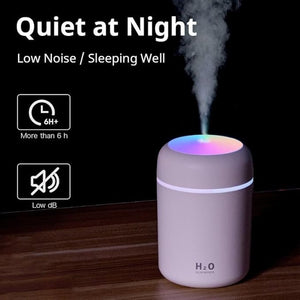
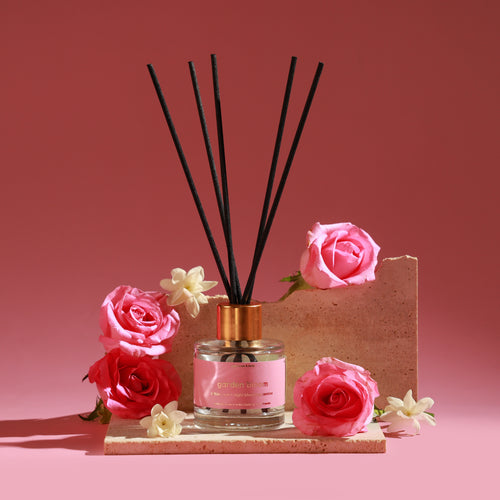
Then place the scent as a hotel would: low, continuous, and mostly in the larger room. For the bathroom itself, a reed diffuser at 50ml from ₹749 for 6–8 weeks or 130ml from ₹1,249 for 14–18, run at two or three of its six reeds, placed at the far side of the room from the extract grille, above floor level and out of the splash zone. Of the five blends, Morning Freshness reads clean and bright and is the natural bathroom choice, while Mountain Breeze is dry and grounded if you dislike anything sharp. For the hotel-inspired scents themselves — The Ritz-Carlton-inspired Quiet Luxury, Westin-inspired White Tea Serenity and the rest of the seven — those are water-based and run in the Sukoon at ₹1,899, 3–6 drops per tank, covering roughly 270–320 sq ft. Put that in the bedroom or dressing area adjoining the bathroom and run it for an hour rather than all day; the bathroom inherits it exactly as a hotel bathroom does. The two liquids are not interchangeable and there is no hotel-inspired reed diffuser — if you want those scents, the Sukoon is the tool. SOSA is independent and not affiliated with or endorsed by any hotel brand.
What to do, in order
The first three steps are the hotel's actual method and they are mostly free. The fourth is where we come in, and even there the dose is smaller than most people expect.
| Step | What to do | When | Cost |
|---|---|---|---|
| 1. Remove the source | Weekly: a mug of water down every drain, rim channel brushed, hair catcher cleared, mat washed and dried | Before anything else | ₹0 |
| 2. Move the air | A run-on timer for fifteen to twenty minutes after every shower, with a gap under the door for make-up air | Daily, five to ten minutes | ₹0 |
| 3. Deal with what holds it | Dry every surface by hand at the end of each clean; grout, silicone, shower head and fan cover seasonally | Weekly to monthly | ₹0 |
| 4. Then the always-on layer ★ | A SOSA reed diffuser — a quiet constant level in the bathroom itself, no socket needed, at two or three reeds and away from the grille | 50ml 6-8 weeks · 130ml 14-18 | from ₹749 |
| 5. Or the on-demand layer | Sukoon with a Hotel Collection scent — the hotel-inspired water-based scents in the adjoining bedroom or dressing area; covers roughly 270-320 sq ft | Run it when you want it | ₹1,899 |
Versailles
When people ask me how hotels do it, they expect an answer about fragrance and they are usually disappointed. The answer is mostly ventilation and cadence. A hotel bathroom is dry far more of the day than yours is, because the extraction never stops and because housekeeping buffs every surface at the end of the clean. Copy those two things and you will get most of the effect before you have bought anything.
The fragrance part is real, but it is quieter than people imagine and it is usually not in the bathroom at all. It is a low continuous level in the room or the corridor, identical on every visit, at a strength most guests never consciously notice. That is the opposite of a block on the rim. If you take one thing from this page, take the shape: a level, not a burst, and less of it than you think.
One correction I have to make often. Our hotel-inspired scents are water-based and they belong in the Sukoon — there is no hotel-inspired reed diffuser, and putting oil-based reed fragrance into a machine will ruin it. So for the bathroom itself use a reed blend at two or three reeds, and put the Sukoon in the bedroom or dressing area next door, which is precisely the arrangement a hotel uses. We are independent, by the way, and not affiliated with any hotel brand; the scents are inspired, not licensed. A portion of every order funds a girl's classroom through Nanhi Kali.
Frequently asked questions
- Keeping a bathroom good permanently — the routine, and the reed count.
- Why fresheners make it worse — a level beats a burst.
- A bathroom with no window — when the fan is the only ventilation.
- Musty even with an exhaust fan — why extraction usually fails.
- Brand: the SOSA founder story.
SOSA products & prices (verified August 2026): Hotel Collection water-based ultrasonic diffuser fragrance 15ml ₹299 · 100ml ₹999 · 300ml ₹1,799 · Pack of 7 (15ml, all fragrances) ₹1,799; refills 100ml from ₹999. Seven scents: The Ritz-Carlton-inspired (white tea · bergamot · cedar), Westin-inspired (white tea · aloe · cedar), 1 Hotels-inspired (cedarwood · vetiver · green leaves), The St. Regis-inspired (amber · violet · woods), Shangri-La-inspired (jasmine · green tea · white tea), Four Seasons-inspired (citrus · floral · sandalwood), W Hotels-inspired (citrus · pepper · amber). Diffusers: Boond 300ml ₹899 · Sukoon 500ml ₹1,899 · Megh 6L ₹3,499. Water-based, phthalate-free, composed to IFRA standards for home diffusion; 3–6 drops per tank. Made in India, Pune. The Hotel Collection scents are SOSA's own interpretations inspired by the world's finest hotels; all hotel names are trademarks of their respective owners and are used only to describe the scent style — SOSA is an independent Indian fragrance house, not affiliated with or endorsed by any hotel brand. Prices and availability subject to change — see the live product pages.