


Inside the practice hall? No. A room full of people breathing on purpose is the wrong place for ambient scent.
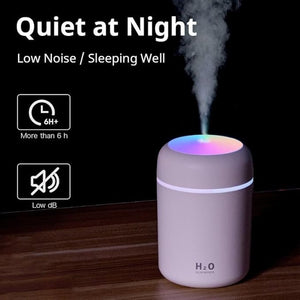
Where, then? The threshold, reception and corridor; a trace in changing rooms via a Boond at ₹799 — off at the first Om.
2. It works on the approach. Relaxation is assembled in the walk from the street to the cushion — the reception, the shoe rack, the corridor — which is exactly where a scent belongs.
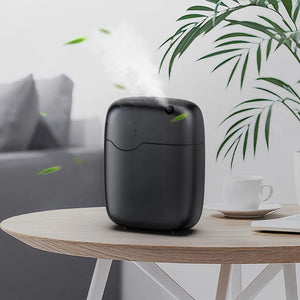
3. It stays out of the hall. A room of people breathing deliberately is the worst audience for fragrance; the Vaayu (₹11,999) runs before class and switches off at the first Om.
4. It is barely there. If a student can smell it from their mat, it is too strong or in the wrong room — a trace, never a cloud.
5. It compounds a calm studio. Clean, aired air does the heavy lifting; the scent only makes the arrival feel tended. A portion of every order supports girl-child education through Nanhi Kali.
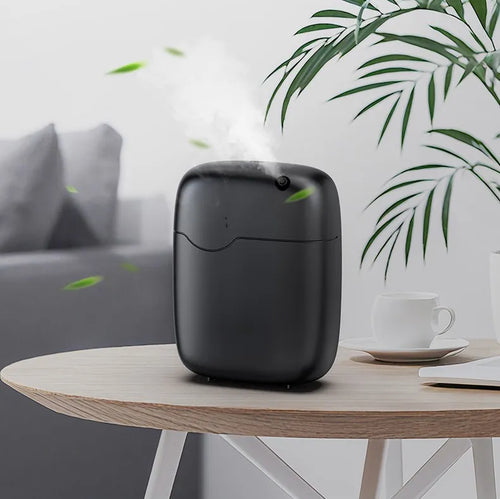
Relaxation is assembled before the mat
There is a comforting fiction that relaxation is a switch — that a student sits, closes their eyes, and a calm state simply turns on. If that were true, it would make sense to fill the practice room with something soothing and let the smell do the work. But a nervous system does not switch; it settles, gradually, and the settling begins long before the mat. It starts when a person steps out of the horns and the heat and the group chat, and crosses into a place that is quieter than the one they left. By the time they sit, the descent should already be underway — the practice deepens it, it does not start it from cold.
This is why the useful question is not “what should the yoga room smell of” but “what does the arrival feel like”. The reception, the shoe rack, the corridor: this is the settling room, the place where a student sets down what they carried in. A calm, clean note met here is read by the body as a signal — you have arrived, you are safe, you can let go — and the body answers it below the level of thought. Scent, placed at the arrival, is one of the gentlest ways to help a person begin softening before they have consciously decided to. It is a courtesy paid at the door, not a treatment applied to the practice.
What the arrival scent actually does
Where it helps, and where it harms
The difference between a studio that uses scent well and one that sabotages its own classes is simply a matter of place. Relaxation is helped in the transitional zones a student passes through on the way in, and harmed the instant scent reaches the room where they are trying to turn attention inward. The table below is the whole doctrine on one page.
| Zone | Scent level | What it does for relaxation |
|---|---|---|
| Entrance & reception | Signature, gentle | Sets the day down; cues the down-shift on arrival |
| Corridor & shoe rack | A soft trace | Carries the calm toward the changing room |
| Changing rooms | A trace (Boond) | Holds the settled feeling as they prepare |
| Practice hall | None | Leaves the breath undisturbed — the practice does the work |
| Hot room | None, ever | Heat amplifies scent; clean air protects the student |
Vaayu · the settling room₹11,999Shop →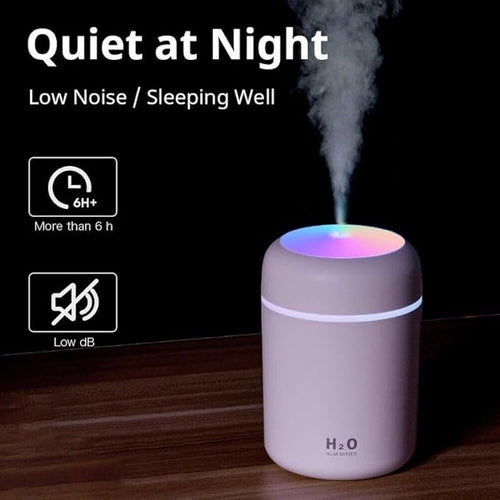 Boond · changing rooms₹799Shop →
 Hotel Collection · the note₹299Shop →
Why the breathing hall stays clean
It is worth saying plainly, because the instinct to add “a relaxing aroma” to the relaxing room is so strong. A yoga hall is a room engineered entirely around breath. Students are asked to breathe slowly, deeply, often through the nose, sometimes with eyes closed and attention held on the airflow itself. An ambient fragrance introduced into that room does not register as soothing; it registers as a foreign presence in the exact channel a student is trying to keep clear. At best it is a distraction. At worst — in a warm room, a full class, or for anyone sensitive — it can tip a person into feeling faintly unwell, which is precisely the opposite of relaxed.
Hot yoga makes the rule non-negotiable. At 35 to 40 degrees, fragrance amplifies and behaves unpredictably, and a scented hot room is a genuine risk to how students feel mid-practice. So the hot room, like every practice hall, stays completely clean; you scent the changing rooms and corridor with a small Boond and put the money into extraction and a proper air-out between classes. Across every style, the logic holds: relaxation inside the hall is protected by clean, moving air, and helped from outside it by a gentle, prepared arrival. The threshold carries the welcome; the hall yields to the breath. If you want to go deeper on the mechanism, my colleague-piece on how fragrance supports mindfulness practices walks through the near-neutral discipline for meditation and breathwork rooms.
The SOSA commercial edit
Put the scent where the character belongs — the threshold and the front-of-house — and none where the breath happens. A Vaayu carries the reception, a Boond keeps the side rooms to a trace, and the practice hall stays clean, with budget spent on ventilation rather than diffusion inside it.
| System | Best for | Why it works | Price |
|---|---|---|---|
| Boond | Changing rooms, washrooms, shoe racks, retail corners | Small, water-based, keeps side rooms to a trace | ₹799 |
| Sukoon + Hotel Collection | A single small studio reception | Gentle ultrasonic diffusion for one enclosed lobby | ₹1,799 + ₹299 |
| Megh | Larger lounges and mid-size venues, long runs | 6L tank for extended daily running | ₹3,499 |
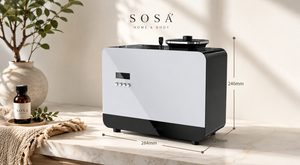
| SOSA Vaayu ★ | Reception, entrance, corridor, shoe rack | Waterless, app + timer, up to ~1000m³, under 38dB | ₹11,999 |
| SOSA Aangan | Whole wellness centre via ducting, 8,000–10,000 sq ft | One signature front-of-house, halls on their own zone | ₹25,999 |
| SOSA Meenar | Flagship properties, 12,000–18,000 sq ft | HVAC nebulising for the largest floor plates | ₹38,500 |
| Hotel Collection refills | Keeping the studio running | The real running cost, low and predictable | from ₹999 |
Versailles
Owners often ask me for “a scent that will help my students relax”, and they are usually picturing the practice room. I understand the wish — it feels generous to fill the room where people come to unwind with something lovely. But I have sat through enough classes with a scented hall to know the truth: a fragranced breathing room is a distracted breathing room.
What actually works is quieter and, honestly, more elegant. Prepare the arrival so gently that a student is already softening as they take off their shoes, then give them a hall that is nothing but clean air and their own breath. The scent did its work at the door and knew when to stop.
That knowing-when-to-stop is the craft. Help the settling begin, then step out of its way. Your students get a practice that stays entirely theirs; a girl gets a classroom through Nanhi Kali.
Frequently asked questions
- How fragrance improves relaxation during yoga — the descent, and the doorway it starts at.
- How fragrance supports mindfulness practices — the near-neutral discipline for the breath room.
- SOSA Vaayu — the waterless threshold standard with a timer.
- Brand: the SOSA founder story.
Facts verified August 2026: the evidence on ambient scent is that effects on mood, dwell and perceived calm are real but moderate, that scent-environment congruence matters more than intensity, and that no fragrance improves an unclean or poorly ventilated space — which is why the practice hall stays clean and the scent lives at the threshold. SOSA systems and prices as stated: Boond ₹799, Sukoon ₹1,799, Megh ₹3,499, Vaayu ₹11,999, Aangan ₹25,999, Meenar ₹38,500, Hotel Collection scents from ₹299, refills from ₹999. The Hotel Collection scents are SOSA’s own interpretations inspired by the world’s finest hotels; SOSA is an independent Indian fragrance house, not affiliated with or endorsed by any hotel brand. Prices subject to change.