Founder Diaries · Clinics & Medical Centres · Cleaning Chemicals & the Wash Hour
By Sonal Sahani · ISIPCA Versailles 12 min read Updated November 2026
A clinic that smells of disinfectant all day is not a clinic that is cleaned too well. It is a clinic running five decisions badly, and I have never once found that fragrance was the missing sixth. The five are the dose, the hour, the mop head, the air moving over a wet floor, and which product is specified for which floor. Four of them cost nothing at all and can be changed tomorrow morning. The fifth is a conversation with your own infection-control lead rather than a purchase. Together they are the whole of this page, and the fragrance I sell appears at the end of it as an optional line at ₹11,999 for a facility that no longer smells of anything. If you put a diffuser into a corridor that has a wet phenolic floor in it, you have not replaced the disinfectant smell. You have added a second smell to it, and patients notice the pair more clearly than they noticed the one.
Quick answers — read this first
Free, and you can start tomorrow: measure the dilution in millilitres against the label instead of pouring capfuls · move the public-area wash out of the half-hour before opening and into the quiet gap between your two peaks · launder every mop head nightly and dry it flat and open rather than standing in a bucket · switch the fan coil off in the zone being mopped and work the mop towards the extract, not away from it · leave the cleaning store vented or its door ajar.
Small purchases: a marked measuring jug and a laminated millilitre chart about ₹250 · twenty-four flat microfibre mop heads about ₹1,800 for the year · a drying rack for the store from about ₹900 · a door wedge removed and a door closer from ₹500.
The specification: a low-odour neutral cleaner for the lobby, waiting areas and inter-departmental corridors, with the strong concentrate reserved for clinical floors, sluices and sanitary areas, decided with your infection-control lead and not by me.
Last and optional: the
Vaayu at ₹11,999, public areas only, on low, opening hours only. Housekeeping and presentation, no clinical effect of any kind.
The short answer
Short answer: a clinic smells of disinfectant all day because the concentrate is being over-dosed against its own label, because the public floor is washed in the half-hour before opening so patients arrive during the drying phase, because the mop head is soured, because an air-conditioning fan is blowing across a wet floor and distributing it, and because the same strong product is used on a waiting-room floor as on a sluice. Four of those five corrections cost nothing. Fragrance corrects none of them, and layering a scent over a wet phenolic floor gives you two smells rather than one.
The order, and why: dose first, because it is the only one that is wrong at every hour of the day rather than at one of them. Then the hour, because it decides which forty patients meet the floor at its strongest. Then the mop head and the airflow, which are what turn a local wash into a building-wide smell. The product specification is last of the five because it needs your infection-control lead to agree it, and it is a specification change rather than a purchase.
The last line, costed: the
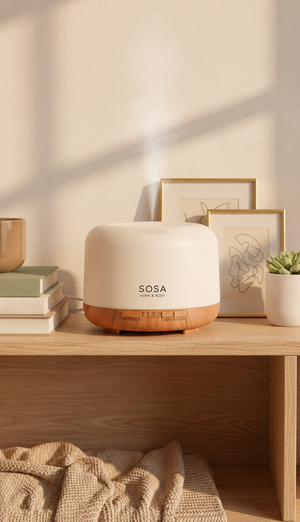
Vaayu at Rs 11,999 — waterless cold-air nebulisation with no standing water tank, up to 1000 m³, a 400ml fill lasting about seventy-five days, app control with 1h/4h/8h/24h timers, under 38 dB, auto-stop and a key-lock for public areas. The
Aangan at Rs 25,999 for a large integrated centre or an atrium. An alcohol-free
reed diffuser from Rs 749 for a single administrative cabin. Free shipping above Rs 499. None of it is a treatment and a diffuser is not an air purifier.
Straight answer
Why does my multi-speciality clinic smell of disinfectant all day, and what do I change first?
1. The dose, and it is almost always the dose. Every floor concentrate has a dilution printed on the drum — one in forty, one in eighty, thirty millilitres in five litres, whatever your product specifies. Housekeeping does not pour millilitres. Housekeeping pours a capful, or a glug, or the amount that the supervisor who left in March used to pour, and in every clinic I have walked through that amount has been two to five times the label. An over-dosed floor does not get cleaner; it gets a residue that goes on releasing for hours after the floor is dry, which is exactly the complaint you are reading this page about. Buy a marked jug for ₹250, laminate the millilitre figure above the sink, and watch the smell halve inside a week.
2. The hour, relative to when your doors open. If the lobby and the waiting hall are washed between 8:30 and 8:55 and the first appointment is at nine, your first forty patients of the day arrive during the drying phase, which is when any wet floor releases most of what is on it. Move the public-area wash to the quiet half-hour between your morning and evening peaks, or do it the night before and give the floor a dry buff at T-45 minutes. Clinical floors keep their own schedule and their own product; nobody is asking you to clean less.
3. The mop head, which is the part nobody looks at. A head left standing in a bucket in a closed cupboard from six in the evening until eight the next morning sours. The following day it is not cleaning two thousand square feet, it is distributing itself over two thousand square feet, and the smell that reaches the waiting hall is a mixture of last night's chemical and whatever grew in the bucket. Laundered every night, dried flat and open, one head per zone so that nothing runs for twelve hours.
4. The air moving over the wet floor. A fan coil blowing down a freshly mopped corridor is a distribution system, and it will put a local wash into every room that corridor feeds within minutes. Switch the indoor unit off in the zone being mopped and leave it off for twenty minutes. Work the mop towards the extract rather than away from it, so the air you are disturbing leaves the building instead of touring it. Both of those are free and both of them are instructions rather than projects.
5. The product specified for a public floor. A waiting-hall floor and a sluice floor are not the same hygiene problem, and in most clinics they are being cleaned with the same drum because one drum is simpler to buy. A low-odour neutral cleaner for the lobby, the waiting areas, the lift lobbies and the inter-departmental corridors, with the strong concentrate kept for clinical floors, sanitary areas and the sluice, is a specification change rather than a purchase. It is also not my call: take it to your infection-control lead, who owns the dilution, the contact time and the surface list, and who will usually say yes faster than you expect.
6. And then, if you still want it, fragrance — last, optional, and at ₹11,999. In a clinic that has done the five above, the
Vaayu holds the public areas at one low, steady, unremarkable level through the opening hours so that the building smells of nothing in particular. That is presentation and housekeeping, in the same category as the seating and the signage. It is not a clinical effect, it does not clean or disinfect air, a diffuser is not an air purifier, and the clinical rooms stay fragrance-free with their doors shut. A portion of every order supports girl-child education through Nanhi Kali.
TL;DR: five dials. Dose measured in millilitres instead of capfuls, the public wash moved out of the hour before opening, the mop head laundered nightly and dried flat, the fan coil switched off over a wet floor, and a neutral cleaner specified for public floors with infection control's agreement. Four cost ₹0 and the fifth costs nothing either. Fragrance is after all five, optional, and ₹11,999.
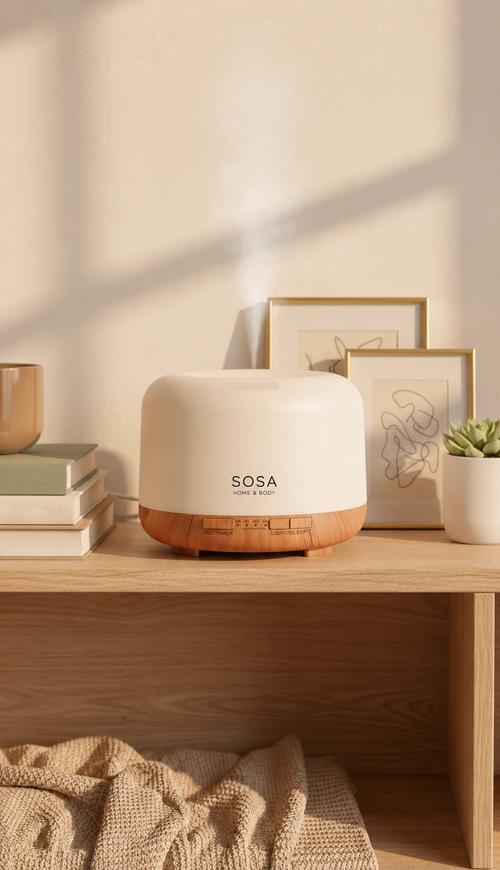
What actually changes a disinfectant smell, in order
SOSA commercial scenting from ₹899
The order on this page is the order in which these things get fixed in a real clinic.
A measuring jug and a laminated dilution chart, the wash hour moved, mop heads laundered and dried flat, the fan coil off over a wet floor and a neutral cleaner specified for public areas. Four of the five are free and the fifth is a conversation, not a cost. Fragrance comes after them and it is a genuine choice rather than a repair: the
Vaayu is ₹11,999, the
Aangan is ₹25,999 for a large integrated centre or an atrium, and an alcohol-free
reed diffuser from ₹749 suits an administrative cabin. Free shipping above ₹499.
The five dials, and four of them cost nothing
I have written this as five dials rather than as a list of causes, because every one of them is something a person in your building already does every day and can do differently tomorrow without a quotation. That matters more than it sounds. A cause you can only fix with a contractor becomes a line in a budget meeting and waits a quarter; a dial you can turn is turned by the housekeeping supervisor at the morning handover, and you can smell the difference by Friday. The dose, the hour, the head and the airflow are all dials of that kind. The fifth, the product specification for public floors, is a short conversation with the person in your clinic who owns infection control, and it is the one I am least qualified to make for you, which is why it is written as a question to put to them rather than as an instruction. What I will say plainly is that none of the five is a fragrance problem, and that covering a cleaning-chemical odour with a scent is the clearest example I know of spending money to remove information you need.
1
DIALS ONE AND TWO
The dose against the label, and the hour against your opening time
Dial one is the dilution, and it is wrong in most clinics I visit. Floor concentrates in India are specified somewhere between one in forty and one in a hundred depending on the chemistry, and the figure is printed on the drum. What happens on the ground is that somebody pours by eye into a bucket whose volume nobody has measured, and the resulting mix is routinely two to five times stronger than the label. The thing worth understanding is that the extra concentrate does not do extra work. The product has a contact time and a surface specification, both of which it meets at its stated dilution; past that, the surplus is residue, and residue on a hard floor goes on releasing for hours after the floor looks dry. That is what an all-day disinfectant smell actually is in most buildings. The correction is a marked measuring jug tied to the trolley and a laminated card above the sink with the millilitre figure on it, about ₹250 for both, and a supervisor who checks it rather than assumes it.
Dial two is the hour, and it decides who meets the floor at its strongest. The default in Indian clinics is to wash the public areas in the half-hour before opening, because it feels like the right thing to present a freshly cleaned lobby. The effect is that your first forty patients walk in during the drying phase. Move the public-area wash to the quiet gap between your two peaks — in most multi-speciality clinics that is somewhere between half past two and half past three — or wash the night before and give the floor nothing but a dry buff at T-45 minutes. Clinical floors, sluices and sanitary areas keep their own frequency and their own product and are not part of this conversation.
The polyclinic that smells of disinfectant every single morning is almost always a wash-hour page rather than a chemistry page.
2
DIALS THREE AND FOUR
The soured mop head, and the fan coil blowing across a wet floor
Dial three is the head on the end of the mop, and it is the single most overlooked object in clinic housekeeping. A microfibre or cotton head that finishes the evening round and is left standing in a bucket of dirty solution inside a closed cleaning cupboard has eleven warm hours to go sour. In the morning it is put back on the handle and walked across your lobby, your waiting hall and two hundred feet of inter-departmental corridor, and what reaches a patient is a mixture of yesterday's chemical and whatever has been growing in the bucket overnight. No dilution change fixes that, because the smell is not coming out of the drum any more. The routine is laundered every night, wrung properly, and dried flat and open on a rack rather than hung in a bucket or shut in a cupboard; twenty-four flat heads at roughly ₹1,800 for the year gives you a head per zone per day, so nothing runs for twelve hours and the clinical zones never share a head with the lobby. The cleaning store itself needs air: a closed damp cupboard full of wet textile is a source in its own right, and an extract grille, a louvred door or simply a door left ajar costs nothing. Dial four is the air moving over the wet floor, and it is what turns a local wash into a building-wide smell. If an indoor unit is blowing down a corridor that is being mopped, that corridor's air is being pushed into every room the corridor feeds. Switch the fan coil off in the zone being worked and leave it off for twenty minutes; mop towards the extract grille rather than away from it, so the air you disturb leaves rather than tours; and do not prop open the door between a wet clinical corridor and a dry public one for the convenience of the trolley. A smoke pencil at about ₹400 settles any argument about which way the air is actually going, in five seconds, which is roughly five minutes faster than two people can argue about it.
3
DIAL FIVE, AND THEN THE LAST LINE
A neutral cleaner for public floors, and the only thing on this page I sell
Dial five is the specification, and it is the one that needs somebody other than me to sign it off. In most clinics a single floor concentrate is bought for the whole building because a single drum is easier to order, so a waiting-hall floor with shoes on it is being cleaned with the product chosen for a sluice. Those are not the same hygiene problem. The question to put to your infection-control lead is whether a low-odour neutral floor cleaner can be specified for the lobby, the shared and departmental waiting areas, the lift lobbies, the inter-departmental corridors and the administrative floor, with the strong concentrate reserved for clinical floors, dressing rooms, sanitary areas and the sluice. In my experience the answer is usually yes, because the public floor was never the reason the strong product was chosen. It is their decision and not mine: dilution, contact time and the surface list belong to the person in your building who owns infection control, and any supplier who tells you otherwise is overstepping. What I can tell you is that it costs nothing, that it is reversible, and that it removes the largest remaining source once the first four dials are turned.
And then the last line, described accurately. A scent machine in a medical facility does one thing: it holds the public areas at a single low, unremarkable background from opening to closing so the building smells of nothing in particular rather than of its own cleaning regime. The machine is the
Vaayu at ₹11,999 — waterless cold-air nebulisation with no standing water tank, which is a housekeeping argument in a building that runs twelve hours a day; up to 1000 m³; a 400ml fill lasting about seventy-five days, so four refills a year; app control and 1h/4h/8h/24h timers so it runs the opening hours and stops; under 38 dB; auto-stop; and a key-lock, without which nothing should stand in a public waiting hall. The
Aangan at ₹25,999 is for a large integrated centre or an atrium and is overselling in a 2,500 sq ft polyclinic. An alcohol-free
reed diffuser from ₹749 suits an administrative cabin. Candles are a fire-safety matter in a healthcare building, and SOSA does not make a room spray.
The one instruction I would put on the handover sheet: the dose in millilitres and the wash hour are the two that pay back fastest, and neither needs permission from anybody above the housekeeping supervisor. Do them this week, before you decide anything about the other three.
The dial-by-dial table
The five dials with what is usually wrong, what to change, and what it costs. Print it and give each row one name and one date. The bottom two rows are the only ones with a SOSA product in them, and it is worth noticing that four of the five corrections above them are free.
Print this
Five dials before a rupee goes on fragrance
| Dial |
What is usually wrong |
The correction |
Cost |
| 1. The dose ★ |
Concentrate poured by capful or by eye into a bucket nobody has measured, routinely two to five times the printed dilution, leaving a residue that releases for hours after the floor is dry |
A marked measuring jug on the trolley and the millilitre figure laminated above the sink, checked at the morning handover |
About ₹250 |
| 2. The hour |
The public floor washed between 8:30 and 8:55, so the first forty patients of the day arrive during the drying phase |
Public areas washed in the quiet gap between your two peaks, or the night before with a dry buff at T-45 minutes. Clinical floors keep their own schedule |
₹0 |
| 3. The head |
One mop head standing in a bucket in a closed cupboard overnight, soured by morning, then walked across the whole public floor |
Laundered nightly, dried flat and open on a rack, one head per zone per day. The store vented or its door left ajar |
₹1,800 a year |
| 4. The air |
A fan coil blowing down the corridor being mopped, distributing a local wash into every room the corridor feeds |
The indoor unit switched off in that zone for twenty minutes, and the mop worked towards the extract rather than away from it |
₹0 |
| 5. The specification |
One strong concentrate bought for the whole building, so a waiting-hall floor is cleaned with the product chosen for a sluice |
A low-odour neutral cleaner specified for public floors, strong concentrate kept for clinical, sanitary and sluice areas — agreed with your infection-control lead, who owns it |
₹0 |
| Also free |
A cleaning trolley with an open bucket parked in a public corridor between rooms, and a cleaning store with no air in it |
The trolley either moving or behind a door, lids on buckets in public areas, and a louvred door or extract grille on the store |
₹0 |
| Optional, after the five |
Nothing is wrong at this point. A clinic that smells of nothing in particular is the target, and some clinics stop here |
Fragrance. Vaayu at ₹11,999 on low, public areas only, opening hours only, clinical rooms fragrance-free with their doors shut |
₹11,999 |
| Never |
A scent machine, a gel block or a stronger bottle run over a wet phenolic floor, which gives patients two smells instead of one |
Nobody owns this row. A persistent smell is information, and SOSA does not make a room spray in any case |
— |
Shop this guide
The optional line, and what sits beside it
The SOSA principle
Four of the five dials cost nothing and the fifth is a conversation. Between them they are almost always the entire disinfectant complaint. Fragrance over a wet phenolic floor is not one smell replacing another. It is two smells.
A measured jug. A wash hour moved by five hours. A mop head dried flat. A fan coil switched off for twenty minutes. None of it photographs well and all of it works.
The jug, the mop heads, and the one thing I sell
Turn the first four dials and give it a fortnight before you decide anything else, because the smell you are trying to describe takes a few days to clear out of a building even after its source stops. Week one: the measuring jug on the trolley, the millilitre card above the sink, and the public-area wash moved out of the half-hour before opening. Week two: the mop heads laundered nightly and dried flat, the store door left ajar or louvred, and the fan coil switched off in whichever zone is being mopped. Walk the lobby yourself at nine, at two and at six, and write one line each time, because your own nose at three fixed hours is a better instrument than any complaint log. What is usually left after a fortnight is one of three much smaller problems: a specific location that still smells, which is a tracing job and has its own method; a building that is fine in the morning and tired by evening, which is an air-change question and belongs on the nine-to-six page; or nothing at all, in which case you are at the optional line and it is a choice rather than a rescue.
Two things about the small purchases, because they are the ones that get skipped. The first is that both of them exist to make a free dial survive a change of staff. A measuring jug is not a cleaning product; it is the thing that keeps a correct dilution correct after the supervisor who understood it moves on, and it is the cheapest insurance in facilities management at about ₹250. Twenty-four flat mop heads at roughly ₹1,800 for a year is not a cleaning upgrade either; it is what makes a head-per-zone rule possible, so that the lobby never shares a head with a dressing room and nothing runs for twelve hours. The second is that neither purchase works without one name against it. A dilution chart on a wall that nobody is accountable for is decoration. Put the housekeeping supervisor's name on the jug line and the dates on a sheet, and have whoever opens the clinic initial it. I have watched the same ₹250 jug fix a complaint in one clinic and change nothing at all in another two kilometres away, and the difference was entirely whether somebody was checking.
And then the last line, in the detail somebody signing a purchase order will want. The Vaayu is ₹11,999 and the argument for it in a clinic is a housekeeping argument rather than a clinical one: waterless cold-air nebulisation, so there is no standing water tank to be emptied, rinsed and dried every day by a named person in a building that runs twelve hours. If that person does not exist in your facility, do not buy a water tank at all, which is what rules the ultrasonic Sukoon at ₹1,899, Boond at ₹899 and Megh at ₹3,499 out of public clinical property. Those three stay honest for a single administrative cabin where one person owns the daily routine, and the Sukoon arrives with three 15ml Hotel Collection scents included. Coverage up to 1000 m³ with the sum done properly — floor area divided by 10.76, multiplied by ceiling height, counting only the volumes a door closes, which removes forty to sixty per cent of most clinic plans because every clinical room is fragrance-free with its door shut. A 400ml fill lasts about seventy-five days, so four refills a year, which procurement can model in ten minutes; a 300ml refill keeps that simple. For a medical facility the bottle should be the lightest thing in the box, and the rule to hold it to is that a patient should not be able to tell you what the fragrance is, only that the place did not smell of anything unpleasant. Public areas only: entrance, reception, shared and departmental waiting, inter-departmental corridors, lift lobbies, administration and the café corner. Consultation and examination rooms, treatment and procedure rooms, day-care surgery, dressing rooms, sample collection, laboratories, dispensing, sterile stores, imaging, oncology day-care and paediatric clinical areas stay fragrance-free with their doors shut.
A disinfectant smell is a dose, an hour, a mop head and a fan. If you turn those four dials and the smell goes, you have saved ₹11,999 and I would still rather you read the page than bought the machine.
— Sonal Sahani, SOSA
The SOSA edit
The same five dials compressed into tiers for a budget meeting, with what each one costs and when it earns its place. Note where the only SOSA product on the page sits, and how little sits beside it.
The SOSA edit
Four free tiers, and then the optional one
| Tier |
What is in it |
When it earns its place |
Cost |
| 1. The dose and the hour ★ |
A marked jug and a laminated millilitre chart; the public-area wash moved out of the half-hour before opening into the quiet gap between peaks |
Tomorrow morning. No quotation, no purchase order, and between them most of the complaint |
About ₹250 |
| 2. The head and the store |
Mop heads laundered nightly and dried flat and open, one head per zone per day, and the cleaning store vented or its door left ajar |
This week. The head is what carries yesterday's chemical across today's lobby |
₹1,800 a year |
| 3. The airflow |
The fan coil switched off in the zone being mopped, the mop worked towards the extract, and a smoke pencil to end the argument about which way air moves |
This week. It is the difference between a local wash and a building-wide smell |
About ₹400 |
| 4. The specification |
A low-odour neutral cleaner for public floors with the strong concentrate kept for clinical, sanitary and sluice areas |
This month, and only with your infection-control lead's agreement. The chemistry question in full
|
₹0 |
| 5. Vaayu — optional, and last |
Waterless, no standing water tank, up to 1000 m³, 400ml lasting about 75 days, app and timers, under 38 dB, key-lock, four scents included |
Only after the four tiers above, and only if you still want it. Public areas, opening hours, one low setting |
₹11,999 |
| Not on the list at any price |
A machine or a gel block run to cover a wet phenolic floor, a stronger bottle because patients complained, or any scenting inside a clinical room |
Never. The free work comes first, and SOSA does not make a room spray |
— |
Honest notes for buyers: this page describes a clinic's own housekeeping chemicals, which is a housekeeping subject. It does not advise on infection control: the choice of product, the dilution, the contact time and the surface list belong to your own infection-control lead, and nothing here should be read as a reason to clean less or to weaken a specification. On fragrance itself, fragrance in a medical facility is housekeeping and presentation, never treatment. Nothing here claims that a fragrance reduces anxiety, aids recovery, improves sleep, cleans or disinfects air, or has any clinical effect whatsoever, because it does not and a diffuser is not an air purifier. Scenting belongs to the entrance, reception, shared waiting areas, inter-departmental corridors and administrative rooms. Consultation and examination rooms, treatment and procedure rooms, day-care surgery, dressing rooms, blood- and sample-collection rooms, laboratories, pharmacy dispensing, sterile stores, imaging rooms, oncology day-care and paediatric clinical areas should be left fragrance-free. A persistent smell is information about a dry drain trap, a bin, a soiled-linen route or an air-conditioning drain pan: find it and fix it rather than covering it. On the machines: the
Vaayu at ₹11,999 is waterless cold-air nebulisation with no standing water tank, covering up to 1000m³ or roughly 2,000–3,000 sq ft, with a 400ml tank lasting about 75 days, app control, 1h/4h/8h/24h timers, under-38dB running, auto-stop and a key-lock for public areas. The
Aangan at ₹25,999 covers up to 3,000m³ and connects to HVAC for a whole floor or an atrium. The ultrasonic
Sukoon,
Boond and
Megh are water-based, hold standing water and add 30–50 ml of water an hour to the air, which suits a single administrative cabin with a named person emptying and drying the tank daily and is unsuitable for public clinical property. An alcohol-free
reed diffuser needs 24–72 hours to establish and suits a small lobby rather than a large waiting hall. Candles are not appropriate in a healthcare facility because an open flame is a fire-safety matter. SOSA does not make a room spray. The Hotel Collection scents are SOSA's own interpretations inspired by the world's finest hotels; SOSA is an independent Indian fragrance house, not affiliated with or endorsed by any hotel brand. A portion of every order supports girl-child education through Nanhi Kali.
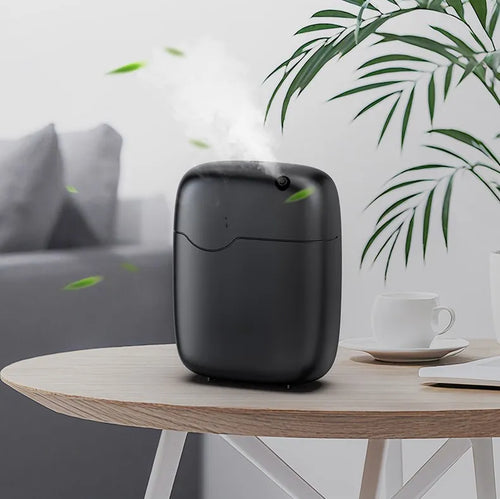
The optional line, and it stays optional
SOSA Vaayu ₹11,999
Every correction above this one is housekeeping, and four of the five are free. This is the only item on the page that SOSA sells, it is the most expensive single line on it, and it belongs after the dose, the hour, the mop head, the airflow and the specification — because a diffuser running over a wet phenolic floor adds a smell rather than replacing one. Waterless cold-air nebulisation with no standing water tank, up to 1000 cubic metres, a 400ml fill lasting about seventy-five days, app control with timers, under 38 dB, auto-stop, key-lock, four hotel-inspired scents included. Public areas only, on low, for the opening hours.
A note from Sonal
The first time I understood that this was a dosing problem rather than a fragrance problem was in a polyclinic in Pune where the owner had already bought two diffusers from somebody else and was about to buy a third. We stood in the waiting hall at half past nine and the floor was still tacky, and when I asked how much concentrate went into the bucket the answer was a cheerful two capfuls, which turned out to be about four times what the drum said. We measured it the next week, moved the wash to three in the afternoon, and the complaint stopped. He kept one of the two machines, moved the other to his administrative floor, and told me afterwards that the honest version of the conversation was worth more to him than the machine was.
I have since stopped leading with chemistry when somebody describes this, and started by asking what time the floor is washed. It is a strange question from a perfumer and it is the one that most often ends the call, because the answer is nearly always a half-hour before opening and the person saying it has never connected those two facts. Nothing about that is anybody's failure. A clean building before the first patient arrives is a good instinct, and whoever had it was doing the job properly; it is just that the drying phase lands on the wrong forty people. Moving it is free, it takes one line at a handover, and it is the most useful thing I know how to say about a disinfectant smell.
I would rather sell one machine into a building where the floor has already been sorted out than three into a building where it has not, and the second kind of customer writes to me within the month. Everything is made and supported from Pune, and a part of every order funds girl-child education through Nanhi Kali. You get a space that smells like somewhere looked after; a girl gets a classroom. That equation has always felt right to me.
Frequently asked questions
Why does my clinic smell of disinfectant all day rather than just after cleaning?
Because the concentrate is almost certainly being over-dosed against its printed dilution, and the surplus leaves a residue on the floor that goes on releasing for hours after the surface looks dry. Pouring by capful into an unmeasured bucket typically lands at two to five times the label. A marked measuring jug and the millilitre figure laminated above the sink is the correction, and in most clinics it halves the complaint inside a week.
What time should a clinic wash its public floors?
Not in the half-hour before opening, which is the default in most Indian clinics and puts your first forty patients into the drying phase. Wash the lobby, waiting areas and inter-departmental corridors in the quiet gap between your two daily peaks, or wash them the night before and give the floor nothing but a dry buff forty-five minutes before you open. Clinical floors, sanitary areas and the sluice keep their own frequency and their own product.
Can a mop head be the cause of a smell in the waiting area?
Yes, and it is the most overlooked object in clinic housekeeping. A head left standing in a bucket in a closed cupboard overnight sours in eleven warm hours, and the next morning it distributes itself across the whole public floor rather than cleaning it. Launder every head nightly, dry it flat and open on a rack, and keep one head per zone per day so nothing runs for twelve hours and the lobby never shares a head with a dressing room.
Should we use a neutral cleaner in the waiting area instead of the strong concentrate?
It is the right question to ask, but it is not mine to answer. A low-odour neutral cleaner for the lobby, waiting areas, lift lobbies and inter-departmental corridors, with the strong concentrate reserved for clinical floors, sanitary areas and the sluice, is a specification change that costs nothing. Put it to the person in your clinic who owns infection control, because dilution, contact time and the surface list are theirs, and in my experience they usually agree.
Will a diffuser cover the cleaning smell in the meantime?
No, and it is worth being blunt about why. A scent running over a wet phenolic floor does not replace that smell, it sits on top of it, and patients notice the pair more clearly than they noticed the single smell. It also removes the signal that told you the dose or the wash hour was wrong. Turn the dials first; if the building then smells of nothing in particular, fragrance becomes a presentation choice rather than a repair, which is the only honest reason to buy it.
Five dials, then this
Measure the dose and move the hour — and a good number of clinics stop there
The Vaayu is ₹11,999: waterless cold-air nebulisation with no standing water tank, up to 1000 m³ or roughly 2,000–3,000 sq ft, a 400ml tank lasting about seventy-five days for four refills a year, Bluetooth app control with 1h/4h/8h/24h timers, under 38 dB, auto-stop and a key-lock for public areas, supplied with four hotel-inspired fragrances. The Aangan is ₹25,999 for 8,000–10,000 sq ft, and alcohol-free reeds from ₹749 suit an administrative cabin. Free shipping above ₹499, and a portion of every order supports girl-child education through Nanhi Kali.
See the Vaayu · ₹11,999 All commercial scenting
Continue the read
More from SOSA
Editorial standards & sources
Product facts used in this guide. SOSA Vaayu Rs 11,999: waterless cold-air nebulising diffuser, no water reservoir, coverage up to 1000m3 (approximately 2,000-3,000 sq ft), 400ml refillable tank lasting up to about 75 days per fill, Bluetooth app plus onboard control, 1h/4h/8h/24h timer scheduling, adjustable intensity, under 38 dB, DC 12V/1A at 5W, 165 x 80.5 x 215 mm and 0.9 kg, freestanding or wall or HVAC mounted, auto-stop and key-lock, CE, RoHS and SGS certified, supplied with four hotel-inspired fragrances. SOSA Aangan Rs 25,999: HVAC-connected or standalone commercial nebulising diffuser, coverage up to 3,000m3 (roughly 8,000-10,000 sq ft), 800ml reservoir, metal body, programmable schedules, under 42 dB. Ultrasonic machines are water-based, hold standing water and consume 30-50 ml of water an hour: Sukoon Rs 1,899 (500ml, 270-320 sq ft, 16-18 hours on low, three 15ml Hotel Collection scents included), Boond Rs 899 (300ml), Megh Rs 3,499 (6 litres). Hotel Collection water-based fragrance 15ml Rs 299, 100ml Rs 999, 300ml Rs 1,799. Alcohol-free reed diffusers from Rs 749, requiring 24-72 hours to reach their working level. Free shipping above Rs 499. Coverage arithmetic: cubic metres equal floor area in square feet divided by 10.76 and multiplied by ceiling height in metres, counting only the volumes that are actually scented. This guide makes no medical, therapeutic or clinical claim of any kind for fragrance: a diffuser does not purify, disinfect or clean air, and does not treat, calm or affect any patient or condition. Fragrance is housekeeping and presentation. Clinical areas should be left fragrance-free, and a persistent odour should be traced to its source and corrected rather than covered. SOSA is not affiliated with or endorsed by any hotel brand. Prices subject to change - see the live product pages.


 The lightest scentsfrom ₹299Shop →