



Why Does My House Smell Earthy After It Rains?

Why Does My House Smell Earthy After It Rains?

★ Monsoon, damp walls and the one situation where opening the window makes it worseCandle ₹379 · reed ₹749 · Boond ₹899 · Sukoon ₹1,899 · free shipping above ₹499A portion funds girl-child education
★ SOSA · find the cause, then scent the room
Above about sixty per cent humidity things start growing. Fragrance over damp is not a fix — it is a second smell on top of the first
★ ★ ★ ★ ★
★★★★★
"Told outright not to run a cool-mist diffuser in a flat I was trying to dry out, because it adds water to the air. That cost them a sale and earned my trust."
Ketan J. Told not to buy
Mumbai monsoon
★★★★★
"Ventilating on a wet day was making it worse. Switching to AC dry mode for two hours instead changed the whole flat."
Sonia R. Dry mode, not windows
The exception
★★★★★
"Wall smelled and there was nothing to see. It was seepage from the neighbouring bathroom. Fragrance would have hidden the one clue I had."
Ganesh P. Found the seepage
Diagnosed properly
★★★★★
"Books. My whole study was the bookshelf, every July. Now they get a fan on them and the room is fine."
Meera S. Books, Kolkata
Free fix · airflow
★★★★★
"Ground floor, and I had assumed my flat was just old. It was the floor I was on. Knowing that changed what I did about it."
Zoya H. Ground floor
Understood the cause
★★★★★
"Once it was genuinely dry, a candle was the right thing — no water in the air, and twenty minutes to work."
Nikhil D. Candle after drying
₹379
★★★★★
"Told outright not to run a cool-mist diffuser in a flat I was trying to dry out, because it adds water to the air. That cost them a sale and earned my trust."
Ketan J. Told not to buy
Mumbai monsoon
★★★★★
"Ventilating on a wet day was making it worse. Switching to AC dry mode for two hours instead changed the whole flat."
Sonia R. Dry mode, not windows
The exception
★★★★★
"Wall smelled and there was nothing to see. It was seepage from the neighbouring bathroom. Fragrance would have hidden the one clue I had."
Ganesh P. Found the seepage
Diagnosed properly
★★★★★
"Books. My whole study was the bookshelf, every July. Now they get a fan on them and the room is fine."
Meera S. Books, Kolkata
Free fix · airflow
★★★★★
"Ground floor, and I had assumed my flat was just old. It was the floor I was on. Knowing that changed what I did about it."
Zoya H. Ground floor
Understood the cause
★★★★★
"Once it was genuinely dry, a candle was the right thing — no water in the air, and twenty minutes to work."
Nikhil D. Candle after drying
₹379
A cool-mist diffuser adds 30–50 ml of water an hour — the wrong machine for a damp room Dry the room, find the water, then scent it. In that order, and not before Candles and reeds add no moisture · candles from ₹379, reeds from ₹749


Founder Diaries · Home Fragrance · Damp, Monsoon & Humidity
By Sonal Sahani · ISIPCA Versailles 10 min read Updated August 2026
This is the one page in the group where the smell might be something you want to keep. The earthy note that arrives with the first rain is largely geosmin, a compound produced by soil bacteria and flung into the air when raindrops strike dry ground, together with petrichor — plant oils that have accumulated on stone and soil through the dry weeks and are released all at once. Human beings detect geosmin at concentrations of a few parts per trillion, which is why a smell present in vanishingly small amounts arrives so vividly. That is worth understanding properly. Then there is the other version of this question, where an earthy smell indoors outlasts the rain by days — and that one is not weather.
Quick answers — read this first
What it is: geosmin, a metabolite made by soil bacteria, plus petrichor — plant oils deposited on rock and soil during dry weather. Raindrops hitting dry ground trap tiny air bubbles that burst and throw both into the air as an aerosol.

Why it is so vivid: the human nose detects geosmin at a few parts per trillion, among the lowest thresholds for any smell we perceive. There is almost none of it in the air and you smell it immediately.

The test that matters: does it fade within an hour or two of the rain stopping, or does it stay for days? Petrichor through a window is temporary and pleasant. A cellar-like earthy smell that persists means water is getting somewhere it should not.
The short answer
Short answer: the earthy smell after rain is largely geosmin, a compound produced by soil-dwelling bacteria and released when raindrops hit dry ground, along with petrichor — plant-derived oils that build up on stone and soil in dry weather. Humans detect geosmin at a few parts per trillion, which is why it registers so strongly.
The distinction that matters: outdoor petrichor arriving through a window is temporary and fades within an hour or two of the rain stopping. A persistent earthy or cellar-like smell indoors, still there days later, is a different thing and usually means water is reaching a wall, a floor, a shaft or a basement.
Shop, for the first case only: Mountain Breeze at ₹849 — Himalayan pine, sage and cedar — is the nearest register in the range to wet forest, and a Amber Rose candle at ₹599 for 130g suits a rain evening at 15–20 minutes from lighting. Neither adds water to the air. For the second case, buy nothing until you have found the water.
Straight answer
What is the earthy smell in my house after it rains, and should I be worried about it?
1. What you are smelling is mostly geosmin, and it comes from the ground rather than from your house. Geosmin is a metabolite produced by soil bacteria, particularly the actinomycetes that thrive in soil during dry spells. It is also what gives beetroot its flavour and what people taste when tap water tastes muddy.

2. Rain is what puts it into the air. A raindrop landing on dry porous ground traps a tiny bubble of air beneath it; the bubble rises through the drop and bursts at the surface, throwing out a fine spray of droplets carrying whatever the soil held. The first rain after a dry spell releases the most, which is why the smell is at its strongest in June.

3. Petrichor is the other half of it. Plant oils accumulate on rock and soil through dry weeks and are released with the same rain, which is why the smell has a resinous, slightly sweet, faintly green edge over the earthiness rather than being simply damp.

4. And you detect it at astonishing dilution. The human threshold for geosmin is in the region of a few parts per trillion — among the lowest for any compound we perceive. There is almost nothing of it in the air, and you get it the moment you open a door.

5. The test that decides whether this page is a pleasure or a warning: how long does it last? Outdoor petrichor through an open window fades within an hour or two of the rain stopping. An earthy, cellar-like smell that is still there two days later is coming from inside the building, and it means water is reaching somewhere it should not — a wall, a floor, a shaft or a basement.

A portion of every order supports girl-child education through Nanhi Kali.

TL;DR: the earthy smell after rain is largely geosmin from soil bacteria, thrown into the air by raindrops hitting dry ground, plus petrichor from plant oils on stone — and we detect geosmin at a few parts per trillion. If it fades an hour after the rain stops it is weather and it is lovely. If it is still there in two days, water is getting in somewhere.
Mountain Breeze reed diffuser
If what you want is to keep the smell rather than to lose it
Mountain Breeze reed diffuser ₹849
Himalayan pine, sage and cedar. Nothing anybody sells is petrichor, and I am not going to tell you otherwise — geosmin is a microbial metabolite produced in soil, and the pleasure of it is inseparable from its being weather rather than a product. What this bottle is instead is the nearest habitable register: cool, resinous, green and damp-adjacent, the smell of wet forest rather than of wet earth, and the only thing in the range a person who loves the smell of rain has ever written to me about twice. It adds no moisture, which on this particular page matters, because half the readers here are describing something lovely and half are describing a problem. From ₹849, 130ml from ₹1,349, 300ml refills ₹2,399.

What you are actually smelling, and why it is so vivid

Most of this cluster is about smells nobody wants. This one is different, and it deserves to be explained properly rather than treated as a fault. The smell of the first rain is one of the few genuinely universal pleasures in human olfaction — it is recognised across cultures, it is disproportionately associated with memory and relief, and there is a real chemistry underneath it that is more interesting than the marketing usually admits. It is worth knowing what it is made of, both because the answer is good and because knowing it is what lets you tell it apart from the version of this smell that is a problem.

1
THE COMPOUND
Geosmin, made by soil bacteria, detected at parts per trillion
The main character is a single molecule. Geosmin — the name means, straightforwardly, earth smell — is a bicyclic alcohol produced by soil-dwelling microorganisms, most famously the actinomycetes, a group of filamentous bacteria that are abundant in soil everywhere and become particularly active as soil dries and they form spores. It is the same compound responsible for the earthy taste of beetroot, for the muddy off-flavour that occasionally appears in freshwater fish and in tap water, and for the smell of a newly turned flowerbed. What makes it remarkable is not that it exists but how little of it we need. The human detection threshold for geosmin sits in the region of a few parts per trillion, which places it among the very lowest thresholds recorded for any odorant our species perceives — we are, on this one compound, more sensitive than most laboratory instruments were until relatively recently. There is a decent evolutionary story about why: a nose tuned to find damp soil and, with it, water and the growth that follows water, is a nose that belongs to an animal that survives dry seasons. Whether or not that is the reason, the consequence is the everyday experience: a quantity of a substance so small that it barely registers as present arrives in your consciousness immediately and completely, before you have consciously noticed the rain. That disproportion — almost nothing in the air, an enormous perceptual event — is the whole reason the smell of rain feels less like a smell than like an announcement.
2
THE MECHANISM
How raindrops throw it into the air, and why the first rain is the strongest
Then the delivery, which is more mechanical and more elegant than most people expect. Geosmin and the plant oils that accompany it accumulate on and in dry ground during a dry spell; rain is what launches them. When a drop lands on a porous dry surface it does not simply splash. It traps a small bubble of air beneath itself, and that bubble rises through the drop and bursts at the top, firing a fine spray of tiny droplets upward — an aerosol, each droplet carrying dissolved and suspended material from the surface it came off. Those droplets are small enough to remain airborne and to travel on the breeze, which is precisely why the smell reaches you before the rain does: you are receiving the aerosol from ground that is already being rained on, half a kilometre upwind. The effect is strongest on light or moderate rain onto dry porous ground, and weaker in a heavy downpour onto ground that is already saturated, which is the everyday observation that the first shower of the season smells extraordinary and the fourth day of continuous rain smells of very little. The other half of the smell has a name of its own: petrichor, coined in 1964 by two Australian researchers, from the Greek for stone and for the fluid in the veins of the gods — a generous piece of naming for a real phenomenon. Plants secrete oils that accumulate on rocks and soil during dry weather, and rain releases them along with the geosmin. Ozone from lightning adds a sharper, cleaner note in a thunderstorm. Together they make the composition people actually mean: earthy underneath, resinous and slightly green above, with something clean across the top.
3
THE DISTINCTION
Weather through a window, or water in the building
Now the useful part, because roughly half the people who search this question are describing something they like and half are describing something that worries them, and the two need opposite advice. Outdoor petrichor arriving through a window is an event with a beginning and an end: it appears with the rain or just before it, it is strongest near the openings, it is at its most vivid on the first rain after dry weather, and it is largely gone within an hour or two of the rain stopping. Nothing needs doing about it except perhaps standing in it. An earthy, cellar-like, mushroomy smell that is still in the flat two days after the rain has stopped is a different phenomenon with a different chemistry — the metabolites of growth happening inside your building rather than aerosol from soil outside it — and it means water is reaching somewhere it should not: a wall taking in driven rain, a floor over a damp slab, a ventilation shaft or lift well that stays wet, a basement or stilt parking below, a leaking terrace above a top-floor flat, or ground that slopes towards the building rather than away from it. The confusion between the two is understandable, since geosmin is also produced by some of the same families of microorganism indoors. The practical difference is duration, and it is the only test this page really needs. An hour is weather. Two days is a building. And the recommendation splits along exactly that line: for the first, enjoy it, and scent the evening afterwards if you like. For the second, buy nothing until you have found the water.
The test, in one line: start the clock when the rain stops. If the smell is gone within a couple of hours it came from outside and it was a gift. If it is still there on the second day it came from inside and it is information.

Telling the lovely one from the other one

Same word, two entirely different smells, and the differences are consistent enough to sort in a couple of days. Duration is the reliable one; the rest of these are supporting evidence. If a row on the left describes you, this is weather and the page ends pleasantly. If more than two rows on the right do, treat it as a moisture problem and work through the diagnostic route rather than the fragrance one.

Two earthy smells
Outdoor petrichor against indoor damp
Test Petrichor — weather, and welcome Indoor damp — water getting in
How long it lasts ★ Fades within an hour or two of the rain stopping. It has a clear end Still there the next day and the day after, whether or not it is raining. No end
Where it is strongest At open windows and doors, on balconies, on the side the wind is coming from In one room, one corner, a cupboard, a bathroom shaft or a stairwell — and away from the windows
The character of it Earthy but bright: resinous, faintly green and sweet, with something clean over the top Earthy and closed: mushroomy, cellar-like, flat, with no lift in it at all
Season and timing Strongest on the first rains after dry weather, weaker as the season goes on and the ground stays wet Builds through the season and is at its worst in August and September, after weeks of accumulated moisture
What a visitor says That it smells wonderful, usually before they say anything else That it smells a bit closed in here, usually while trying to be polite about it
What to do Nothing. Open the window, then shut it and scent the evening if you like Find the water. A wall, a floor, a shaft, a terrace, a basement or ground sloping the wrong way
Shop this guide
For the version you want to keep
The SOSA principle
We detect geosmin at a few parts per trillionalmost nothing in the air, and an enormous event in the nose.
Which is why the first rain does not feel like a smell so much as an announcement, and why nobody has ever needed to be taught to notice it.

Keeping the good version, and dealing with the bad

Take the pleasant case first, since it is the one most readers are actually in. Petrichor cannot be bottled, and I would be suspicious of anybody claiming to have done it. Geosmin is a single microbial metabolite whose entire effect depends on arriving in a burst, from outside, in cool wet air, after weeks of dry weather — and a room fragrance is a steady level held for hours, which is the opposite of every one of those conditions. Held constant at a level you could actually smell, geosmin reads as a cellar rather than as rain, which is exactly the problem the second half of this page is about. So what you can do about the good version is mostly logistical and free: open the window on the upwind side when the rain starts, shut the one the rain is driving into, take the ten minutes rather than the whole afternoon, and then close up before the evening humidity climbs. The one thing worth being careful about is not confusing the pleasure with a reason to leave everything open, because a monsoon window left open for hours is how outdoor moisture becomes an indoor problem — this is the same flat, and the rest of the group applies. Wipe the sill, put the wet umbrella somewhere it can dry rather than in a cupboard, and run the fan for a while afterwards. Enjoy the smell, then take the air back.

Then, if you would like the room to carry something in that direction afterwards, the honest options and their limits. Nothing in the SOSA range is petrichor, and nothing in it is geosmin — the seven water-based Hotel Collection scents are white tea and bergamot with cedar; white tea, aloe and cedar; cedarwood, vetiver and green leaves; amber, violet and woods; jasmine, green tea and white tea; citrus, soft florals and sandalwood; and citrus, pepper and amber, with none in the alcohol-free reed line either. The nearest register the house has is Mountain Breeze at ₹849 — Himalayan pine, sage and cedar — which is wet forest rather than wet earth: cool, resinous, green and dry, and the closest thing to the green-resinous half of petrichor rather than to its earthy half. It is a reed, so it adds no water to the air, needs no socket and holds one level for months, and it wants 24 to 72 hours to establish before you judge it. For a specific rain evening a candle is the better format: the Amber Rose candle at ₹599 for 130g gives 25 to 30 hours and reaches the room in fifteen to twenty minutes, and warmth is the right direction to move a room that has spent the afternoon full of cool wet air. What I would not run on a rainy evening is a cool-mist ultrasonic — the Sukoon at ₹1,899, Boond at ₹899 or Megh at ₹3,499 all put 30 to 50 millilitres of water an hour into the air, which is precisely the wrong addition to a flat during a monsoon week even when nothing is actually wet. They are a fine idea in November.

Then the other case, briefly and firmly, because it needs a different page rather than a different scent. If the earthy smell is still there two days after the rain stopped, treat it as a moisture problem from that moment and stop thinking about fragrance entirely. Work outwards from where it is strongest: a wall that takes driven rain on one particular face; the floor in a ground-floor flat, where a slab over damp ground can push moisture up through tiles and into the room; a bathroom shaft or a lift well that stays wet and vents into the corridor; a terrace above a top-floor flat with ponding on it; a basement or stilt parking under the building; or the simplest and commonest of the lot, ground outside that slopes towards the building so that every downpour delivers water to the base of a wall. Then do the free things that both diagnose and help: pull furniture off the suspect wall, run a fan into the corner, run AC dry mode for an hour or two a day, ventilate in the driest part of the afternoon rather than while it rains, and check the enclosed spaces — cupboards, shoe cabinets, the space under the sink — where this smell always starts first. If it narrows to one wall, the diagnostic tests on the wall page will separate condensation from seepage in a single night. And do not scent it while you are still looking, because a persistent earthy smell is the most useful signal a flat gives you in monsoon, and there is a reason it is the one smell humans detect at parts per trillion.

An hour after the rain, it was weather and it was a gift. Two days after the rain, it is your building telling you something.
— Sonal Sahani, SOSA

The SOSA edit

Split by which of the two smells you actually have, because there is no product answer that serves both. The top rows are for the pleasant case; the bottom rows are the honest limits, including the note nobody in this category makes and the machine to leave off during a wet week.

The SOSA edit
Rain, earth, and what is worth buying
Buy or do What it is When it is the right answer Price
1. The hour test ★ Start the clock when the rain stops and see whether the smell is gone in two hours or still there in two days First, always, because it decides whether this is a page about pleasure or a page about water. Everything below depends on the answer ₹0
2. Mountain Breeze Himalayan pine, sage and cedar in the alcohol-free reed line, 130ml from ₹1,349, refills ₹2,399 If you love the green-resinous half of rain. Wet forest rather than wet earth, no water added, one level for months. Allow 24–72 hours ₹849
3. Amber Rose candle 130g for roughly 25–30 hours, or 220g at ₹799 for 40–50 hours For a specific wet evening. Fifteen to twenty minutes to scent a room, warmth against cool damp air, attended and put out ₹599
4. Fresh Brew or Evening Calm Coorg coffee and Kerala vanilla at ₹849, or Himalayan lavender and chamomile at ₹799 If what you want from a rainy day is comfort rather than the smell of outdoors. Both are reeds and both add no water ₹849 / ₹799
Not made anywhere: a petrichor or geosmin scent There is no earth, soil or petrichor note in the seven Hotel Collection scents or in the alcohol-free reed line Printed rather than implied. Geosmin held at a constant level for hours reads as a cellar, which is the smell this cluster exists to remove
Not during a wet week: the ultrasonic diffusers Cool mist at 30–50 ml/h — Sukoon ₹1,899, Boond ₹899, Megh ₹3,499 Good machines, wrong month. Adding half a litre of water to a monsoon flat undoes the rest of this group's advice
Honest notes for buyers: fragrance is the last step, never the first. It layers on air that is already clean and moving, and it will not remove a source — not damp, not a dry drain trap, not a loaded sofa, not a filter that needs washing. Deal with the cause, change the air, then scent the room. On timing: a candle puts scent into a room in fifteen to twenty minutes and a Sukoon reaches a steady level in about twenty, while a reed diffuser needs a day to three days before it is doing its job — the wrong buy for a deadline and the right buy for a room you want to hold one level for months. SOSA does not make a room or linen spray for the home; the sprays in the range are car perfumes. A cool-mist ultrasonic adds 30–50 ml of water an hour to the air, so it is the wrong machine for a room you are trying to dry out. The Hotel Collection is water-based and runs in the Sukoon, Boond and Megh only — not in reeds and not in the waterless Vaayu. Reed diffusers are a separate alcohol-free line with their own scents. Candles must be attended and put out. The Hotel Collection scents are SOSA's own interpretations inspired by the world's finest hotels; SOSA is an independent Indian fragrance house, not affiliated with or endorsed by any hotel brand. A portion of every order supports girl-child education through Nanhi Kali.
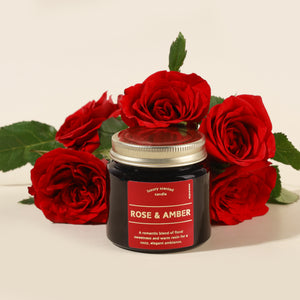
SOSA Amber Rose candle · 130g
For the evening after a wet afternoon, once the windows are shut
SOSA Amber Rose candle · 130g ₹599
Twenty-five to thirty hours of burn from 130g, and forty to fifty from the 220g at ₹799. A candle is the right format for a rain evening for a reason that has nothing to do with mood: it adds no water to a flat that has spent the afternoon taking water in, and it reaches the room in fifteen to twenty minutes rather than tomorrow. It is also finite, which suits an evening that is itself finite. Amber and rose is warm without being sugared, which is the right direction to move a room that has just been full of cool wet air. Light it once the windows have been shut and the fans have run, attend it, and put it out. Never as a substitute for finding out where the earthy smell is coming from, if the earthy smell is still there tomorrow.
SS
ISIPCA
Versailles
A note from Sonal

I have wanted to write this page for a while, because it is the only smell in the whole cluster that people arrive describing with affection. Geosmin is a bacterial metabolite from soil, we detect it at something like a few parts per trillion, and the first rain of a season is a burst of it thrown into the air by drops landing on dry ground. As a perfumer I find the disproportion genuinely moving: there is almost none of it in the air, and it is one of the largest events the human nose has. No composition I could ever write competes with that, and I am not going to pretend otherwise on a product page.

What I will say is where the line falls, because the same words describe two different situations. Rain smell through a window has an end. It fades within an hour or two, and if you want to keep the evening going afterwards, a candle or a pine-and-cedar reed is a fair and pleasant thing to buy. An earthy smell that is still in the flat on Thursday when the rain stopped on Tuesday is not weather. That one is your building, and the correct response is a torch and a slow walk rather than an order from me. I would rather sell to the first reader and be useful to the second than blur the two and take money from both.

Everything is made and supported from Pune, and a part of every order funds girl-child education through Nanhi Kali. You get a home that smells like somewhere you chose; a girl gets a classroom. That equation has always felt right to me.

Frequently asked questions

What causes the earthy smell after rain?
Mainly geosmin, a compound produced by soil bacteria such as actinomycetes, released into the air when raindrops strike dry porous ground and throw up a fine aerosol. Alongside it is petrichor — plant oils that accumulate on stone and soil during dry weather and are released by the same rain.
Why is the smell of rain so strong when there is so little of it in the air?
Because the human threshold for geosmin is extraordinarily low, in the region of a few parts per trillion. It is among the lowest detection thresholds for any compound we perceive, so a quantity that barely exists in the air produces a very large perceptual event.
How do I know whether my earthy smell is petrichor or damp?
Time it. Outdoor petrichor fades within an hour or two of the rain stopping and is strongest near open windows. An earthy, cellar-like smell that is still there a day or two later, strongest in one room or corner rather than at the windows, means water is reaching somewhere it should not.
Is there a petrichor or rain-smell home fragrance in the SOSA range?
No. There is no earth, soil or petrichor note in the seven Hotel Collection ultrasonic scents or in the alcohol-free reed line. The nearest register is Mountain Breeze at ₹849 — Himalayan pine, sage and cedar — which is wet forest rather than wet earth, and it is described that way rather than stretched.
Can I run a diffuser on a rainy evening?
A candle or a reed, yes — neither adds anything to the air but scent. A cool-mist ultrasonic adds 30 to 50 millilitres of water an hour, which is the wrong addition during a monsoon week even when nothing in the flat is actually wet. Those machines are a better idea from November onwards.
Two hours, or two days
Geosmin, at a few parts per trillionand the test that tells you which one you have
If the smell fades within a couple of hours of the rain stopping, it was weather. Mountain Breeze is ₹849 for Himalayan pine, sage and cedar, the nearest register in the range to wet forest, and the Amber Rose candle is ₹599 for 130g at 25–30 hours — neither adds water to the air. If it is still there two days later, find the water before you buy anything. Free shipping above ₹499, and a portion of every order supports girl-child education through Nanhi Kali.
See Mountain Breeze → See the Amber Rose · ₹599
Continue the read
More from SOSA
Editorial standards & sources
About this guide: Written by Sonal Sahani, ISIPCA Versailles-trained founder and perfumer at SOSA Home & Body, on what the earthy smell after rain actually is: geosmin produced by soil bacteria and released as an aerosol when raindrops hit dry ground, petrichor from plant oils accumulated on stone and soil, the extraordinarily low concentration at which humans detect geosmin, and the duration test that distinguishes welcome outdoor petrichor from a persistent indoor earthy smell that means water is getting into the building.

Facts verified August 2026: Diagnostic facts used in this guide: a closed room accumulates what it cannot exchange, so cross-ventilation needs two openings rather than one; a drain's U-bend water seal evaporates in roughly two to four weeks of disuse and then admits sewer gas, which is corrected by pouring water down the drain; microbial growth in fabric and on surfaces accelerates above about 60% relative humidity, and Indian monsoon indoor humidity commonly runs 80–95%, which is the one situation where ventilating on a wet day can import moisture rather than remove it; an air-conditioner's cold, wet evaporator coil and filter grow biofilm that is blown into the room on start-up; textiles adsorb cooking aerosol and body oils and re-release them for weeks; and olfactory adaptation makes a constant household smell undetectable to its residents within about a fortnight while visitors still perceive it. Timings: a scented candle scents a normal room in roughly 15–20 minutes, a Sukoon ultrasonic diffuser reaches a steady level in about 20 minutes from cold, and a reed diffuser needs roughly 24–72 hours. SOSA products and prices: Sukoon 500ml ₹1,899 (270–320 sq ft, 16–18h on low, 9–12h high, 30–50 ml/h, 2.4MHz cool mist, remote, steady/2H/4H timers, BPA-free, auto shut-off, includes three 15ml Hotel Collection scents of your choice); Boond 300ml ₹899; Megh 6-litre ₹3,499; waterless Vaayu ₹11,999 (up to 1000m³); Aangan ₹25,999. Hotel Collection water-based fragrance 15ml ₹299, 100ml ₹999, 300ml ₹1,799, Pack of 7 at 15ml ₹1,799; dose 3–6 drops per tank. Reed diffusers (separate alcohol-free line): Morning Freshness from ₹749, Garden Bloom and Evening Calm from ₹799, Fresh Brew and Mountain Breeze from ₹849; 130ml from ₹1,249; duos from ₹1,498; 300ml refills ₹2,399. Scented candles: Bookshop 80g ₹379, Amber Rose 130g ₹599 and 220g ₹799, Smoked Oudh 130g ₹449, ceramic jar candles ₹949, Pure Calm wax melt set ₹854. Free shipping above ₹499. SOSA does not make a room or linen spray for the home. The Hotel Collection scents are SOSA's own interpretations; SOSA is not affiliated with or endorsed by any hotel brand. Prices subject to change — see the live product pages.
ブログに戻る