



- The direct answer
- Why aroma comes in bursts, not a steady stream
- The three mechanical facts behind the pattern
- What's happening in the air, minute by minute
- Why this isn't a zone-rule question at all
- What to buy — and why almost nothing applies here
- A note from Sonal
- Questions about the brewing-to-quiet smell pattern
2. Extraction is the second burst, driven by heat and steam. Hot water passing through ground coffee carries volatile aroma compounds out with the steam and the crema, producing a second, shorter pulse at the group head and the cup — once the shot or the pour finishes, that pulse ends with it, because the mechanism producing it has stopped.
3. Between rushes, neither mechanical event is occurring. No grinding and no active extraction means no fresh pulse of aroma entering the room; whatever remains in the air from the last burst disperses within minutes in a normally ventilated space, which is exactly what a customer notices as the café going quiet.
4. This pattern is the expected baseline, not a malfunction to correct. A café that smells intensely of coffee only when coffee is actively being made, and modestly the rest of the time, is behaving exactly the way the underlying mechanism predicts — there's nothing here that ventilation, cleaning or equipment maintenance is failing to catch.
5. The instinct to fill that gap with fragrance treats a correct pattern as a problem. A fragrance run continuously to hold a constant coffee-adjacent smell between rushes doesn't restore anything — it replaces a genuine, intermittent signal with a manufactured, constant one, which is a different and worse experience, addressed in full on a later page in this block.
No SOSA product changes this pattern, and none should — Vaayu's place in a café remains the washroom, a separated entrance or retail, never an attempt to smooth over the natural rhythm of grinding and extraction.
Why aroma comes in bursts, not a steady stream
Whole roasted beans release aroma slowly, through the sealed or semi-sealed surface of the bean itself, which is one reason a bag of beans on a shelf is nowhere near as fragrant as a fresh grind. The instant a bean is fractured by a burr grinder, that surface area increases enormously and instantly, and the volatile aroma compounds trapped inside are released in a concentrated pulse. That pulse is front-loaded — strongest in the first seconds after grinding, weakening rapidly after that — which is exactly the burst a customer notices standing near the counter while an order is being ground, and exactly why the same beans, sitting whole in a hopper an hour earlier, produced nowhere near as strong a smell.
Extraction adds a second, separate pulse on top of the first. Hot water forced through ground coffee at pressure or by gravity carries volatile compounds out of the grounds along with the steam and, in espresso, the crema — this is a genuinely different release mechanism from grinding, driven by heat and moisture rather than mechanical fracture, but it behaves the same way in one important respect: it's tied to an event with a start and an end. Once the shot pulls or the pour finishes, the steam stops carrying new aroma into the air, and that second pulse ends along with it, just as reliably as the first one did at the grinder.
Put those two mechanisms together and a rush hour is, mechanically, a rapid sequence of aroma pulses — grind, extract, grind, extract — close enough together that they blend into what feels like one continuous, strong smell. Between rushes, the gaps between pulses widen, and whatever aroma is left in the air from the last one disperses in a normally ventilated room within a few minutes, well before the next drink is ordered. The neutral period a customer notices isn't the smell 'running out' — it's simply the space between pulses becoming long enough to be noticeable again, which is a direct and entirely expected consequence of how the mechanism works.
The three mechanical facts behind the pattern
 Mountain Breeze₹849This is why standing near an idle hopper of whole beans produces almost no smell, while the same beans at the moment of grinding produce a burst strong enough to be noticed across the room.
What's happening in the air, minute by minute
Mapped against the clock, the pattern a customer notices lines up exactly with what the two release mechanisms predict.
| Moment | What's mechanically happening | What a customer notices | What it costs |
| A bean is ground | A front-loaded pulse of aroma compounds is released instantly | A strong, sudden burst of coffee smell near the counter | ₹0 — this is the mechanism working |
| A shot pulls or a pour extracts | Heat and steam carry a second pulse out of the grounds | The strongest, most rounded coffee smell of the whole cycle | ₹0 — nothing to add here |
| Rush hour, back-to-back orders | Grinding and extraction pulses overlap continuously | The café smells consistently strong throughout service | ₹0 — a natural result of order volume |
| Between orders, quiet period | No grinding, no extraction — no active aroma source | The smell fades toward a neutral baseline within minutes | ₹0 — expected, not a fault |
| Fragrance added to fill that gap | A manufactured, constant smell replaces the intermittent genuine one | A café that starts to read as artificial rather than freshly brewed | Not recommended — covered fully in the next page in this block |
| Nothing in this pattern points to a ventilation fault, a cleaning gap or a product to buy — the lull between rushes is the mechanism doing exactly what it does when no bean is being ground and no shot is being pulled. | |||
Mountain Breeze · a washroom, outside the brewing cycle₹849Shop →  Sukoon · a separated entrance, self-contained₹1,899Shop →
  Vaayu · zoned across non-dining areas₹11,999Shop →
Why this isn't a zone-rule question at all
Never treat the neutral lull between rushes as a defect in the dining room or the counter that needs a fragrance to correct — there is no interference here to prevent, because there is no competing product in the air to protect against; the pattern this page describes is simply the coffee's own aroma turning on and off with the equipment that produces it.
Sometimes, in other pages in this block, a separated entrance is treated as a fair zone for its own fragrance. That guidance still applies exactly as written elsewhere — it has nothing to do with this particular pattern, which is purely about the timing of grinding and extraction inside the service area.
Usually the washroom is where this cluster's genuine fragrance opportunity sits, and that remains true here too, entirely independent of whether the dining room happens to be mid-rush or between orders at the moment a customer visits it. The two questions — washroom register and dining-room aroma rhythm — simply don't interact.
What to buy — and why almost nothing applies here
This table is short on purpose — the pattern this page explains isn't solved by equipment, because it isn't a problem.
| Route | Premises | Why | What it costs |
| Do nothing to the dining room or counter | Every café showing this exact pattern | The lull between rushes is the mechanism working correctly, not a fault to fix | ₹0 |
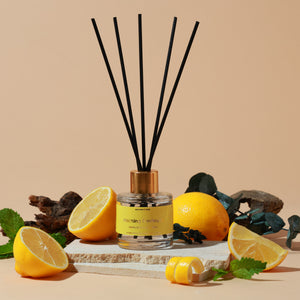
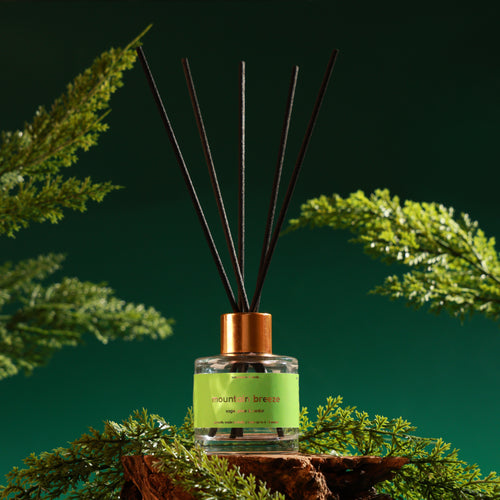
| Reed diffuser, Mountain Breeze, washroom | Under 300 sq ft, one washroom apart from the counter | A separate, unrelated register for a room with no brewing cycle of its own | ₹749–₹849 |
| Sukoon ultrasonic, separated entrance | 300–750 sq ft, a genuinely separated arrival zone | Holds a steady level entirely apart from the grinding-and-extraction rhythm inside | ₹1,899 |
| Vaayu, wall or HVAC-mounted, per zone | 750 sq ft and above, several non-dining zones | Zoned scheduling for washrooms, entrance and retail — none of it touches the brewing cycle | ₹11,999 |
| A ventilation check, if the neutral period feels unusually long | Any café, if dispersion seems slower than a few minutes | Rules out an airflow issue distinct from the aroma-pulse pattern itself | Assessed by a ventilation professional |
This is one of the most common questions I get from owners who are convinced something is wrong with their café, and it's almost always the nicest possible news I can give them: nothing is wrong. The pattern they're describing is coffee aroma behaving exactly the way the chemistry says it should, and the fact that they've noticed it at all usually means they're paying closer attention to their café's smell than most owners ever do.
I ask a version of the same two questions every time: is the strong smell tied to the grinder and the machine actually running, and does it fade once things go quiet. The answer is almost always yes to both, and once an owner hears the mechanism explained, the urge to 'fix' the quiet periods with a fragrance usually goes away on its own.
I'd rather explain the mechanism than sell into the anxiety it creates. A café that understands why its own smell rises and falls with service volume is in a much stronger position than one reaching for a diffuser to paper over a pattern that was never actually broken.
Questions about the brewing-to-quiet smell pattern
- Why Does Freshly Ground Coffee Smell So Powerful Inside a Café? — the deeper mechanics of the grinding pulse this page relies on.
- Is the Smell of Fresh Coffee Enough for a Café? — the broader question this pattern feeds directly into.
- Should I Let Coffee Become the Natural Signature Scent of My Café? — what to do with the rhythm this page explains, rather than fight it.
- Can a Scent Machine Compete With Fresh Coffee Aroma? — why filling the quiet periods mechanically is the wrong instinct.
- Brand: the SOSA founder story.
SOSA products & prices (verified September 2026): Reed diffusers 50ml ₹749–₹849 (to 150 sq ft, 6–8 weeks at six reeds) · 130ml ₹1,249–₹1,349 (above 150 sq ft, 14–18 weeks) · reed refill 300ml ₹2,399. Ultrasonic: Boond ₹899 (~150 sq ft) · Sukoon ₹1,899 (270–320 sq ft, ships with three 15ml Hotel Collection fragrances) · Megh ₹3,499 (6L tank, ~100 hrs runtime, ~215 sq ft — a runtime machine, not a coverage upgrade). Waterless cold-air: Safar ₹3,999 (no published coverage figure) · Vaayu ₹11,999 (up to 1000 m³, roughly 2,000–3,000 sq ft; 400ml tank lasting about 90+ days; app and onboard control, 1h/4h/8h/24h run windows, adjustable intensity, key-lock, under 38 dB, freestanding or wall/HVAC mount, 5W, CE/RoHS/SGS) · Aangan ₹25,999 (8,000–10,000 sq ft). Hotel Collection water-based fragrance 15ml ₹299 · 100ml ₹999 · 300ml ₹1,799 is for ultrasonic machines; reed oil and Hotel Collection are not interchangeable. Reed diffusers are alcohol-free, phthalate-free, paraben-free, IFRA-compliant and low VOC, handmade in small batches in Pune. Every purchase funds a girl's education through Nanhi Kali. Prices and availability subject to change — see the live product pages.