


What "clean" smells like: nothing in particular. Not lemon, not pine, not phenyl. Cleaning products that announce themselves read as concealment to a guest, not as hygiene.
The register that travels best: cool and transparent — white tea, bergamot, cedar, citrus, light green notes. Loud, sweet or heavily floral scents divide a guest population you cannot screen.
The limit: fragrance adds a smell. It does not remove one, purify air or clean anything, and no one can promise it changes a rating, a review or a booking.
2. Then, underneath, one quiet designed scent. Present enough to register in the first breath at the threshold, quiet enough that a guest could not name it from the sofa. If a guest can describe your fragrance in detail after ten minutes, it is louder than it should be for a property housing strangers.
3. Not of cleaning. Phenyl, bleach, strong pine floor washes and citrus surface sprays are the most common arrival smell in Indian listings, and they do not read as clean to a guest. They read as recent — as something done just now, possibly to something.
4. Never of fragrance over a problem. This is the one ranking below doing nothing. Deal with the source: bins, drain traps, the fridge, damp cloths, the washing machine door, shoes, soft furnishings that hold smoke. Fragrance is not a remedy and I will not sell it to you as one.
5. The same in every connected room. A seam — one scent in the hall, a different one in the living room — is noticed in the first thirty seconds of walking through. One source covering the whole connected volume beats four sources covering it in patches.
6. And with the claim kept honest. All of this is about what arriving feels like. No one can promise you that scenting a property moves a rating, a review score, a booking rate or a nightly price, because no such data exists. Nor does fragrance purify air, remove odours or affect anybody's health or mood.
Our fragrances are composed in small batches in Pune, the machines are made in India, and a portion of every order supports girl-child education through Nanhi Kali.
Part one — the three things a guest can actually meet at your door
Every arrival lands in one of three states, and hosts tend to aim at the third when the second is what guests reward and the first is what most properties need first. What follows is not a taste argument. It is about what a stranger's nose does with ambiguous information in a building they do not know — and an unfamiliar building is exactly the situation in which a person is most alert to smells that suggest something is being managed.
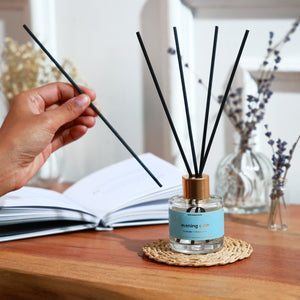
 Evening Calm₹799 · softestOnce the air is clean, a small amount of designed fragrance changes the character of an arrival — the room feels tended rather than merely empty. The mistake is scale. A property housing strangers is not a shop or a lobby you pass through; it is somewhere a person will sleep for four nights, possibly with a child, possibly with a headache, possibly with an opinion about jasmine formed in 1997. The correct intensity is one at which a guest notices the room and not the fragrance. Cool, transparent registers — white tea, bergamot, cedar, citrus, light greens — travel across the widest range of people and interiors. Our softest reed compositions sit at 8.9 on our internal scale at six reeds; in a small entry, four reeds instead of six is a perfectly sensible way to go quieter still.
Part two — the hierarchy, ranked from best arrival to worst
Set out as a ranking, because the ordering is the whole point of this page and it is the part that surprises hosts. Note that positions four and five are the wrong way round from how most people assume they work.
| Rank | What the air is doing | How it reads to a stranger | What produces it | Cost to reach |
|---|---|---|---|---|
| 1 · Neutral, then one quiet scent ★ | Clean air with a designed scent underneath it | Tended. Considered. Nothing to think about | Ventilation plus one restrained source, established early | ₹749 upwards |
| 2 · Neutral alone | Clean air carrying no information at all | Fine. Unremarkable in the best sense | Twenty minutes of windows and source removal | Free |
| 3 · Loud scent over clean air | A strong fragrance in an otherwise clean property | Divisive — lovely to some guests, oppressive to others | Over-dosing, or a machine at high intensity in a small volume | The same money, spent worse |
| 4 · The original smell, untreated | A tired or stale property, honestly presented | Disappointing, but not suspicious | A missed turnover, or a property left closed | Free, and recoverable |
| 5 · Fragrance layered over a problem | Two smells in the same air, separable by anyone | Concealment. The worst message of the five | Scenting instead of ventilating and fixing | Money spent making it worse |
| The honest caveat: this ranking describes how an arrival is likely to be experienced. It is not a performance claim — there is no data connecting any of these states to review scores, ratings, bookings, occupancy or nightly rate, and nobody can promise you one. Nor is any of it a health or air-quality claim: fragrance adds a smell, it does not purify, disinfect or remove anything. Ventilate first. | ||||
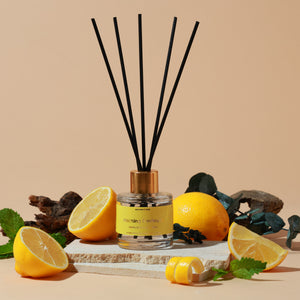
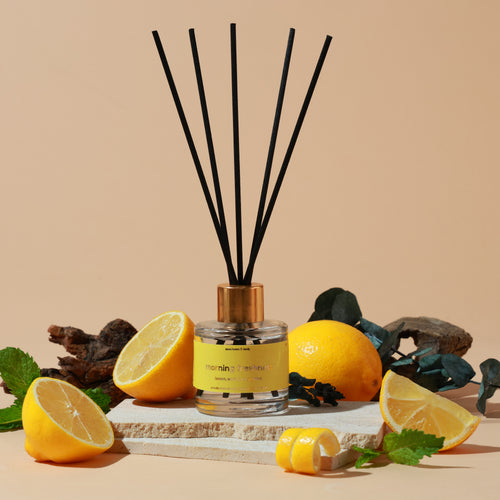
Morning Freshness · clean and coldfrom ₹749Shop → 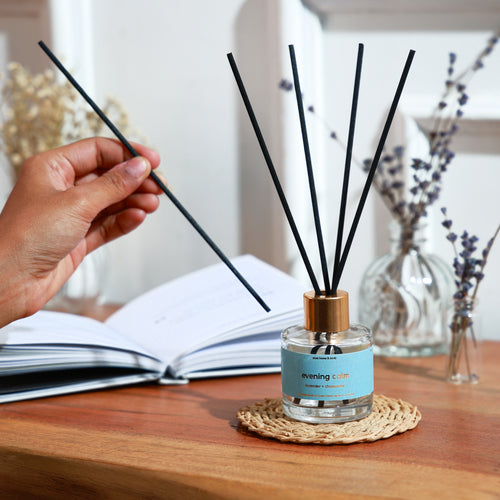 Evening Calm · the softestfrom ₹799Shop →
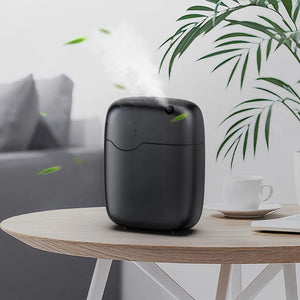
 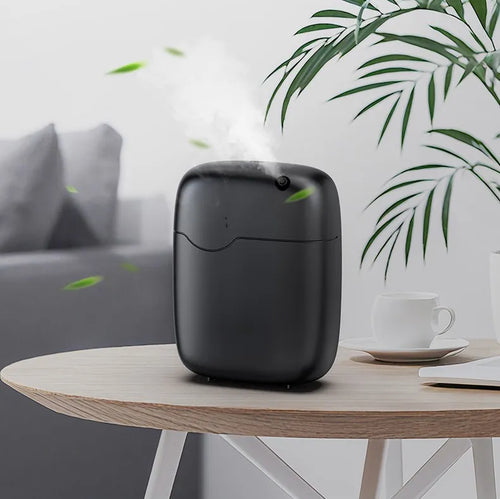 Vaayu · one scent, no seams₹11,999Shop →
Part three — when you should not scent an Airbnb at all
There are four situations in which my advice to a host is to add nothing, and I would rather set them out plainly than let the rest of this page imply that every property benefits. The first is any property with an active source you have not dealt with. Damp, a dry drain trap, a fridge seal, an unused bathroom, a soft furnishing holding cigarette smoke, a chimney or a blocked kitchen extract — all of these keep producing while your fragrance runs, and the result is position five in the table above. The correct sequence is diagnosis, then repair, then ventilation, and scenting only if you still want to. A bucket of water down every trap in an unused bathroom, weekly, solves more Indian arrival complaints than any product on this site.
The second is a guest population you cannot make assumptions about. Pet-friendly listings, properties marketed to families with infants, listings where guests have previously written to you about asthma or migraine, and very small properties where there is no room to escape a fragrance. In a 300 square foot studio there is no far end. In those cases I would run nothing, or at most a single reed bottle at four reeds in the entry — low, passive, removable in three seconds if a guest asks. And whatever you run, write one line in the listing saying the property is lightly scented. A guest who has been told can decide before they book; a guest who discovers it on arrival cannot.
The third is a property where the cleaning has not been solved. Fragrance applied to an under-cleaned flat is not a shortcut to a clean one; it is the most conspicuous possible way of admitting the gap. And the fourth, which is really a scale question: if your connected volume is small, do not buy a machine built for 1000m³. The Vaayu is specified up to about 2,000–3,000 sq ft depending on ceiling height. Run at that capability inside a compact flat, the correct setting would be so low that a ₹749 reed bottle would have done the same work. The honest ladder is reeds for one small room, a Sukoon at ₹1,899 for one normal room on demand, and a Vaayu only when a single open volume genuinely defeats both.
Part four — every arrival smell, and the fix that actually works
The practical half. Hosts arrive at fragrance because something smelled wrong and fragrance seemed like the answer to it. In almost every case the answer is in this table instead, and the fragrance column is deliberately the least interesting one on the page.
| What the guest is smelling | Where it is coming from | The fix that works | What fragrance can do here |
|---|---|---|---|
| Closed, soft, faintly damp ★ | No air exchange since the last checkout, high humidity | Twenty minutes of open windows at the start of the clean | Nothing until the air has been changed — then a great deal |
| Sour, sweetish, near a bathroom | A dry drain trap in a room nobody used | A bucket of water down every trap, weekly | Nothing. This is a plumbing job |
| Sharp, chemical, clinical | Phenyl or bleach floor wash used just before check-in | Change the product, or clean earlier and ventilate after | Nothing — you would be stacking two announcements |
| Old cooking | Oil in the extractor, and soft furnishings near the kitchen | Extractor on, window ten minutes, close up, then wait half an hour | Only after the air is clear. Never over live cooking |
| The last guest | Bedding, curtains, upholstery, the bin, the washing machine door | Launder, empty, leave the machine door open between stays | A light scent once the textiles are dealt with |
| Nothing wrong, but nothing at all | A correctly cleaned, correctly ventilated property | You have already done the hard part | This is where fragrance belongs — reeds from ₹749, Sukoon ₹1,899, Vaayu ₹11,999 |
Versailles
The most useful lesson of my training had nothing to do with composing. It was learning to smell a room in parts — to notice that what I had taken for one impression was three things arriving together, and that the pleasant one was often the smallest of them. Guests do this too, without knowing they are doing it. They cannot name the components, but they can tell that there are components, and a fragrance sitting on top of something is one of the easiest patterns in the world to detect.
Which is why I have never been comfortable with the language this category uses. Nothing I make eliminates an odour. Nothing I make purifies air. A diffuser puts fragrance into the air, and everything else is a job for a window, a cloth and a bucket of water down the drain traps.
If you take one thing from this page, make it the order. Ventilate, fix, close up, then scent — and if the turnover is tight and you can only do one, open the windows. It is free, it is faster than anything you could buy from me, and it does more. Everything we make is composed in Pune, the machines are made in India, and a portion of every order funds a girl's classroom through Nanhi Kali.
Frequently asked questions
- How to make your Airbnb smell amazing when guests walk in — the ninety-second window.
- The best entrance fragrance — why the door wants a different scent from the living room.
- Keeping a property fresh between stays and the luxury first impression.
- The complete arrival scenting guide — the whole cluster in one place.
- Brand: the SOSA founder story.
SOSA Vaayu specifications (verified from the live product page, August 2026): ₹11,999 (the product page displays a rounded ₹12,000). Waterless cold-air nebulisation — pressurised air atomises undiluted fragrance oil into a dry nano-mist; no water, no heat, residue-free. Coverage up to 1000m³, about 2,000–3,000 sq ft. 400ml refillable tank, 90+ days per fill at a mid intensity setting. Bluetooth app plus onboard buttons, 1h / 4h / 8h / 24h timers, adjustable mist intensity, auto-stop and key-lock. Under 38 dB. DC 12V / 1A, 5W. 165 × 80.5 × 215 mm, 0.9 kg, black or white. Freestanding or wall / HVAC mount. CE, RoHS and SGS certified. Ships with four SOSA Hotel Collection fragrances at 100ml each (400ml in total) in one of three combos chosen at checkout. SOSA does not currently sell a separate Vaayu refill oil; the 400ml supplied in the box is the fragrance available at the time of writing, and buyers who need long-term supply should confirm current refill availability with SOSA before purchasing. The cold-air oil supplied with the Vaayu is a different product from the water-based Hotel Collection sold for ultrasonic machines (15ml ₹299 · 100ml ₹999 · 300ml ₹1,799), which must not be used in a Vaayu despite sharing scent names. Other SOSA machines: Boond 300ml ₹899 (~150 sq ft) · Sukoon 500ml ₹1,899 (270–320 sq ft) · Megh 6L ₹3,499 (~215 sq ft — a runtime and humidity machine, not a coverage upgrade) · Aangan ₹25,999 (~8,000–10,000 sq ft) · Meenar ₹38,500 (12,000–18,000 sq ft) · Safar car diffuser ₹3,999. Reed diffusers 50ml ₹749–₹849 (6–8 weeks) · 130ml ₹1,249–₹1,349 (14–18 weeks) · duo sets ₹1,498–₹1,598 · oil-only refills 300ml ₹2,399 / 500ml ₹3,499. Runtime, consumption and coverage figures are manufacturer specifications and vary with intensity setting, run hours, ceiling height, ventilation and season; any per-month or per-day figure in this guide is arithmetic on those specifications, not a measurement. Electricity costs vary by state tariff. No claim is made that scenting affects ratings, reviews, bookings, occupancy, revenue, health, mood or air quality. Free shipping above ₹499. A portion of every order supports girl-child education through Nanhi Kali. Prices subject to change — see the live product pages.