


What Humidity Level Makes a House Start Smelling Musty?

What Humidity Level Makes a House Start Smelling Musty?

★ Monsoon, damp walls and the one situation where opening the window makes it worseCandle ₹379 · reed ₹749 · Boond ₹899 · Sukoon ₹1,899 · free shipping above ₹499A portion funds girl-child education
★ SOSA · find the cause, then scent the room
Above about sixty per cent humidity things start growing. Fragrance over damp is not a fix — it is a second smell on top of the first
★ ★ ★ ★ ★
★★★★★
"Told outright not to run a cool-mist diffuser in a flat I was trying to dry out, because it adds water to the air. That cost them a sale and earned my trust."
Ketan J. Told not to buy
Mumbai monsoon
★★★★★
"Ventilating on a wet day was making it worse. Switching to AC dry mode for two hours instead changed the whole flat."
Sonia R. Dry mode, not windows
The exception
★★★★★
"Wall smelled and there was nothing to see. It was seepage from the neighbouring bathroom. Fragrance would have hidden the one clue I had."
Ganesh P. Found the seepage
Diagnosed properly
★★★★★
"Books. My whole study was the bookshelf, every July. Now they get a fan on them and the room is fine."
Meera S. Books, Kolkata
Free fix · airflow
★★★★★
"Ground floor, and I had assumed my flat was just old. It was the floor I was on. Knowing that changed what I did about it."
Zoya H. Ground floor
Understood the cause
★★★★★
"Once it was genuinely dry, a candle was the right thing — no water in the air, and twenty minutes to work."
Nikhil D. Candle after drying
₹379
★★★★★
"Told outright not to run a cool-mist diffuser in a flat I was trying to dry out, because it adds water to the air. That cost them a sale and earned my trust."
Ketan J. Told not to buy
Mumbai monsoon
★★★★★
"Ventilating on a wet day was making it worse. Switching to AC dry mode for two hours instead changed the whole flat."
Sonia R. Dry mode, not windows
The exception
★★★★★
"Wall smelled and there was nothing to see. It was seepage from the neighbouring bathroom. Fragrance would have hidden the one clue I had."
Ganesh P. Found the seepage
Diagnosed properly
★★★★★
"Books. My whole study was the bookshelf, every July. Now they get a fan on them and the room is fine."
Meera S. Books, Kolkata
Free fix · airflow
★★★★★
"Ground floor, and I had assumed my flat was just old. It was the floor I was on. Knowing that changed what I did about it."
Zoya H. Ground floor
Understood the cause
★★★★★
"Once it was genuinely dry, a candle was the right thing — no water in the air, and twenty minutes to work."
Nikhil D. Candle after drying
₹379
A cool-mist diffuser adds 30–50 ml of water an hour — the wrong machine for a damp room Dry the room, find the water, then scent it. In that order, and not before Candles and reeds add no moisture · candles from ₹379, reeds from ₹749


Founder Diaries · Home Fragrance · Damp, Monsoon & Humidity
By Sonal Sahani · ISIPCA Versailles 10 min read Updated August 2026
This page sells nothing, and it is the most useful one in the group. Below about 50% relative humidity a house is dry and comfortable; 50 to 60% is unremarkable; above roughly 60% microbial growth accelerates; above 70% it is rapid; and 80 to 95% is an ordinary indoor monsoon reading in coastal India. Those five bands explain almost everything people ask me about musty smells, including why the same flat is fine in January and impossible in July. The single most useful thing you can buy is a digital hygrometer at three to five hundred rupees, which tells you which band you are in — and SOSA does not sell one.
Quick answers — read this first
The numbers: under 50% RH is dry and comfortable · 50–60% is fine · above about 60% microbial growth accelerates · above 70% it is rapid · 80–95% is normal indoor monsoon in coastal India. Aim to keep occupied rooms under 60%, and ideally between 45 and 55%.

Why it is relative: warm air holds more water vapour than cool air, so cooling air raises its relative humidity without adding a drop. Which is why the coldest surface in a room — an external wall, a window, the plaster behind a wardrobe — is where condensation and growth begin.

What to buy: a digital hygrometer, ₹300–₹500, and SOSA does not sell one. Nothing in this range measures or removes humidity. Fragrance belongs after the number is under control, not instead of it.
The short answer
Short answer: a house starts smelling musty when relative humidity holds above roughly 60%, because that is where microbial growth on and inside porous materials accelerates. Above 70% it becomes rapid. Below 50% it largely stops. Indian monsoon indoor readings of 80–95% sit far above the threshold, for months at a time.
The target and the levers: aim for 45–55% and treat 60% as the line. The levers that move it are ventilation timed to the drier part of the day, one to two hours of AC dry mode, fans to prevent still saturated pockets, desiccants inside enclosed spaces, and not drying laundry indoors, which can add several litres a day to a flat.
What to buy: a digital hygrometer at ₹300–₹500, which SOSA does not make or sell. Nothing in the SOSA range measures humidity or removes it, and the cool-mist diffusers add 30–50 ml of water an hour. Candles from ₹379 and alcohol-free reed diffusers from ₹749 add nothing to the air, and belong after the reading is under 60%.
Straight answer
At what humidity level does a house start to smell musty, and what should I aim for?
1. The threshold is about 60% relative humidity, and above 70% it stops being gradual. Below 50% microbial growth on and inside porous materials is largely dormant. Between 50 and 60% it is slow enough not to matter. Above 60% it accelerates, and above 70% it is rapid — which is when a flat begins to smell rather than merely to feel humid.

2. Indian monsoon indoor readings sit far above that. Eighty to ninety-five per cent is ordinary in a coastal flat in July, which is not a spike but a season, and it is why the same rooms with the same contents smell entirely different in January.

3. Aim for 45 to 55%, and treat 60% as a line rather than a target. That band is comfortable for people, unhelpful to mould, and gentle on wooden furniture and books, which do not enjoy very dry air either.

4. Buy a hygrometer, and note that we do not sell one. A digital hygrometer costs three to five hundred rupees and settles in ten minutes what a year of guessing will not. Two is better than one: put the second in a room that does not smell, because the difference between the readings is worth more than either number alone.

5. Then move the number, with levers that mostly cost nothing. Ventilate in the drier part of the day rather than during rain; run AC dry mode for one to two hours; keep fans moving so no corner sits still and saturated; put desiccants in wardrobes, shoe cabinets and suitcases; and stop drying laundry indoors, which can add several litres of water a day to a flat.

A portion of every order supports girl-child education through Nanhi Kali.

TL;DR: above roughly 60% relative humidity growth accelerates and above 70% it is rapid, while under 50% is dry and comfortable — aim for 45 to 55%. Indian monsoon indoors runs 80 to 95%. Buy a ₹300 to ₹500 hygrometer, which SOSA does not sell, and move the number with ventilation timing, dry mode, fans, desiccants and no indoor laundry drying.
A digital hygrometer
The most useful purchase on this page is not one of ours
A digital hygrometer ₹300–₹500
SOSA does not sell a hygrometer, a dehumidifier or a moisture meter, and this page is not going to invent a reason for you to buy fragrance instead of one. A ₹300 to ₹500 digital hygrometer tells you the one number that decides whether your flat has a smell problem or a moisture problem, and it settles in ten minutes what a year of guessing will not. Buy two if you can — one for the room that smells and one for a room that does not, because the difference between them is worth more than either reading on its own. Everything SOSA makes is a finishing layer for air that is already dry and moving. None of it changes the number, and any brand telling you otherwise is selling you a second smell on top of the first.

What relative humidity actually means

Before the numbers are any use, the word needs unpacking, because the thing that confuses people is the first half of it. Relative humidity is not a measure of how much water is in the air. It is a measure of how much water is in the air compared with the most that air could hold at its current temperature — and since warm air can hold considerably more water vapour than cool air, the same quantity of water gives you a low reading when it is warm and a high one when it is cold. Almost every counter-intuitive thing about damp in a home follows from that one sentence, including the single most important practical fact on this page: growth does not begin in the middle of a room, it begins on its coldest surface.

1
THE PHYSICS
Cooling air raises humidity without adding a drop of water
Work an example, because it makes the whole thing concrete. Take a room at 30 degrees and 60% relative humidity, which sounds perfectly acceptable. Cool that same air, with the same amount of water in it, to 22 degrees, and the relative humidity is now around 96%. Nothing has been added. The air simply cannot hold as much when it is cooler, so the same water occupies a far larger share of the maximum. Take it down another degree or two and the air can no longer hold it at all, and the surplus comes out as liquid water on whatever surface did the cooling. That temperature is the dew point, and in this example it is about 21 degrees. Which gives the most useful practical rule in this entire cluster: any surface in your home that is below the dew point of the room air will be wet, whether or not anything is leaking. Now look around a monsoon flat and ask which surfaces are coldest. The external wall, especially on the side the rain is driving. The window glass and the metal frame around it. The wall behind a wardrobe that has been pushed flat against it, where no warm air circulates. A concrete column or beam that runs through to the outside. The floor of a ground-floor flat over a damp slab. The wall a bathroom shaft or a lift well sits behind. Every one of those is a place where the local relative humidity, right at the surface, is far higher than the number in the middle of the room — which is exactly why mould appears in corners and behind furniture rather than in the open, and why a flat can read 65% on a meter and still be growing something at 90% behind the cupboard.
2
THE BANDS
Under 50 dry · 50–60 fine · over 60 accelerating · over 70 rapid · 80–95 monsoon
So, the numbers themselves, with what each band actually means for a house. Below about 50% relative humidity, microbial growth is largely dormant. The spores are present — they always are — but there is not enough available water for them to establish, and existing growth goes quiet. This is a typical Delhi winter, a run of dry days almost anywhere inland, or a room with air-conditioning running steadily. It is comfortable, though below about 35 or 40% people start to notice dry eyes and dry skin, and wooden furniture and musical instruments genuinely dislike it. From 50 to 60% is the band most homes should aim to live in. It is comfortable, it is safe for timber and paper, and it is slow enough biologically that nothing establishes. Above roughly 60%, growth accelerates, which is the sentence that matters and the reason 60 is the number quoted everywhere. It does not mean a room at 62% is instantly mouldy; it means the process has started and that time now works against you, which is why a fortnight at 65% produces a smell and an afternoon at 65% does not. Above 70% it is rapid, and porous materials — fabric, paper, leather, plaster, timber — begin to hold enough water for growth inside them rather than merely on them. And 80 to 95% is an ordinary indoor monsoon reading on the Indian coast, sustained for weeks, which is why a Mumbai or Kochi flat in July is not a housekeeping problem but a climate one. Two more numbers worth having: condensation on a surface means that surface is at 100% locally, whatever the room reads, and a flat where the reading never falls below 60% at any hour of any day is a flat with no recovery window at all.
3
THE PURCHASE
A ₹300 hygrometer, which SOSA does not sell
Which brings me to the only shopping advice on this page, and it is for something I do not make. Buy a digital hygrometer. They cost three to five hundred rupees, they are the size of a matchbox, and they replace an entire year of guessing with a number you can act on. SOSA does not sell one, does not sell a dehumidifier and does not sell a moisture meter, and I would rather write that plainly than construct a reason for you to buy fragrance instead. Nothing in this range measures humidity, and nothing in it removes humidity — in fact the cool-mist diffusers add it, at 30 to 50 millilitres an hour, which is the whole reason this group of pages exists. Two hygrometers are better than one, and the second one is where the value is: put it in a room that does not smell. A single reading of 68% tells you something. A pair of readings — 68% in the bedroom that smells, 55% in the living room that does not — tells you where to look, because a fifteen-point gap between two rooms in the same flat is not weather, it is something about that room: a cold external wall, a shared bathroom wall, a shut door, no air movement, a cupboard against the masonry, or water arriving from somewhere. Leave the meter in one place for a few days rather than carrying it around, and read it at the same two hours daily — first thing in the morning, when a closed room is at its worst, and in the late afternoon, which is usually the driest part of a monsoon day. The pattern is worth more than any single number.
What the meter is actually for: not for reassurance, but for a before and after. Take a reading, run dry mode for two hours, and read it again. That is how you find out which of the levers below is doing the work in your particular flat.

The scale, band by band

The whole of this page in one table, with what each band means for the people in the house as well as for the things in it. The band to live in is 45 to 55%, and 60% is the line rather than the target. The bottom two rows are the ones most readers of this cluster are actually in during July, and they are there so the numbers on a new meter do not come as a shock.

The humidity scale
What each band means for a house and the people in it
Relative humidity What is happening biologically How it feels What to do
45–55% ★ Growth dormant. Nothing establishes in fabric, paper, timber or plaster Comfortable, and easy on books, wood and instruments as well as on people The band to aim for. Nothing to do except keep it there
Under 40% Nothing grows at all, and existing growth is fully dormant Dry eyes, dry skin, static, and timber that shrinks and cracks over a season Common in a north Indian winter. This is the one situation where a cool-mist diffuser is actively useful
55–60% Slow. Time is roughly neutral rather than working against you Unremarkable. Most homes most of the year Nothing, beyond keeping air moving in the corners and cupboards
60–70% Accelerating. Growth establishes inside porous materials given a few weeks Slightly close. Fabric feels cool, paper feels soft, cupboards begin to smell first Act: dry mode, fans, open cupboards, desiccants in enclosed spaces, no laundry drying indoors
70–80% Rapid. Visible growth possible within days on cold surfaces and in still corners Clammy. The flat smells musty rather than merely feeling humid All of the above, daily, plus a look at the cold walls and behind furniture for anything visible
80–95% Sustained, in every porous thing in the flat at once An ordinary coastal Indian monsoon indoors, for weeks at a stretch Manage rather than cure. And keep anything that adds water to the air switched off
Shop this guide
What SOSA makes, and where it honestly belongs
The SOSA principle
Relative humidity is relative to temperature. Cool the same air and the number goes up without a drop of water being added.
Which is why growth starts on the coldest surface in the room rather than in the middle of it, and why a flat reading 65% can be running at 90% behind the wardrobe.

Moving the number, and what it costs

Take the levers in order of how much they actually move the reading. The largest one available to most Indian homes is air-conditioning in dry mode, and it is free if you already have the machine. Dry mode runs the compressor with a low fan speed so that a much greater share of the moisture in the room condenses on the cold coil, and that water leaves the building down the drain pipe instead of being blown back in. One to two hours in an occupied room will typically bring a reading down by several points and hold it there for hours, and it is worth doing on a cool day when you do not want the cooling at all — which is precisely when people forget it exists. The second lever is ventilation, and its value depends entirely on timing. Exchange only helps when the air outside is drier than the air inside: twenty minutes with two openings on opposite walls in the driest part of the afternoon will pull a reading down, and the same twenty minutes during rain will push it up. If you own the meter, this is the thing to test first, because it converts an argument into an experiment. The third is the one nobody wants to hear: stop drying laundry indoors. A single machine load carries something in the region of two litres of water, and every drop of it that dries on a rack inside the flat has gone into your air — which in a closed monsoon room can move the reading by ten points or more on its own, and is the reason so many flats smell worst in the room with the drying rack in it. Dry outside where possible, use the machine's dryer if it has one, or shut the rack into one room with the exhaust fan on and the door closed.

Then the levers that do not change the room reading much but change where the trouble starts, which matters more than the average suggests. Fans first: air movement removes no water at all, and it is still one of the most valuable things on this list. The reason is the physics in the section above — the number that matters is not the room's humidity but the humidity right at the coldest surface, and still air against a cold wall cools, climbs towards saturation and stays there. Moving air keeps the surface layer closer to the room's average, which is why a fan pointed into the corner that smells worst is worth more than another hour of dry mode in the middle of the flat. Then desiccants, in the small sealed volumes where nothing else reaches. Silica gel sachets or calcium chloride tubs work by pulling water vapour out of the air around them, and inside a wardrobe, a shoe cabinet, a suitcase, a camera bag or a glazed bookcase — small, closed, unventilated — that is genuinely effective. In an open room they are close to useless, whatever the packaging claims, because the volume of air is far too large and it is being replaced continuously. Replace or regenerate them when they are spent rather than leaving a saturated sachet in the cupboard doing nothing. And keep the enclosed spaces open when the flat is dry: cupboard doors ajar on a dry afternoon, furniture a few inches off external walls, books pulled forward on their shelves. A cupboard is a small room with no ventilation, and every one of these measures is really the same idea — do not let any part of the flat sit still, closed and cold at the same time.

Then the last paragraph, which is the honest one about my own products. Nothing SOSA makes will move the number on your hygrometer, and one category of it moves the number the wrong way. The cool-mist ultrasonics — the Sukoon at ₹1,899, the Boond at ₹899, the Megh at ₹3,499 — work by breaking water into a fine mist with a 2.4MHz plate and putting it into the room at 30 to 50 millilitres an hour, which means a full 500ml tank ends up in your air. In a north Indian winter at 35% relative humidity that is pleasant and often welcome. In a flat reading 78% it is the last machine you want, and I would rather say so than take the order. The formats that add nothing at all to the air are candles, which are a flame, and alcohol-free reed diffusers, which work by capillary action and ambient evaporation. A candle from ₹379 reaches a room in fifteen to twenty minutes and must be attended and put out; a reed diffuser from ₹749 holds one level for months and needs 24 to 72 hours to establish, which makes it the wrong buy for tonight and the right buy for a habit. SOSA also makes no room or linen spray for the home — the sprays in the range are car perfumes. And the only sentence about fragrance this page is willing to offer: it belongs after the number is under control, not instead of it. A scent laid over a flat reading 80% does not replace the musty smell, because the musty smell is still being manufactured; it simply arrives alongside it, and everyone who visits receives both. Get the reading under 60 and then buy something you like. In that order, the fragrance is the finish it was designed to be.

Fragrance belongs after the number is under control. Laid over a flat at eighty per cent, it does not replace the smell — it joins it.
— Sonal Sahani, SOSA

The SOSA edit

The only page in this cluster whose first row is a product SOSA does not sell, and the ranking is honest rather than modest: the meter genuinely is worth more to you than anything below it. The last row is the category of our own that works against everything above.

The SOSA edit
Getting the number down, in order of what actually works
Buy or do What it is What it does to the number Cost
1. A digital hygrometer ★ — not sold by SOSA A ₹300–₹500 meter, ideally two: one in the room that smells and one in a room that does not Nothing, and it is still first. It converts a year of guessing into a number, and the gap between two rooms tells you where to look ₹300–₹500
2. AC dry mode One to two hours daily in the occupied room, hot day or not The largest single lever most homes have. Several points down, held for hours, and the water leaves the building ₹0
3. Ventilation, correctly timed Two openings on opposite walls for twenty minutes, in the driest part of the day Down when the outside air is drier, up when it is not. Own the meter and this becomes an experiment rather than an argument ₹0
4. No laundry dried indoors A machine load carries roughly two litres of water, and indoors all of it goes into your air Ten points or more in a closed room. The most underrated line on this page ₹0
5. Fans and desiccants Air movement into cold corners, plus silica gel or calcium chloride inside wardrobes, shoe cabinets and suitcases Little to the room average, a great deal to the surfaces and small closed volumes where growth actually starts ₹0 / ₹100s
Works against all of it: cool-mist diffusers The Sukoon ₹1,899, Boond ₹899 and Megh ₹3,499 mist water at 30–50 ml/h Up. A 500ml tank ends up in your air. Excellent machines below 45% relative humidity and the wrong ones above 60%
Honest notes for buyers: fragrance is the last step, never the first. It layers on air that is already clean and moving, and it will not remove a source — not damp, not a dry drain trap, not a loaded sofa, not a filter that needs washing. Deal with the cause, change the air, then scent the room. On timing: a candle puts scent into a room in fifteen to twenty minutes and a Sukoon reaches a steady level in about twenty, while a reed diffuser needs a day to three days before it is doing its job — the wrong buy for a deadline and the right buy for a room you want to hold one level for months. SOSA does not make a room or linen spray for the home; the sprays in the range are car perfumes. A cool-mist ultrasonic adds 30–50 ml of water an hour to the air, so it is the wrong machine for a room you are trying to dry out. The Hotel Collection is water-based and runs in the Sukoon, Boond and Megh only — not in reeds and not in the waterless Vaayu. Reed diffusers are a separate alcohol-free line with their own scents. Candles must be attended and put out. The Hotel Collection scents are SOSA's own interpretations inspired by the world's finest hotels; SOSA is an independent Indian fragrance house, not affiliated with or endorsed by any hotel brand. A portion of every order supports girl-child education through Nanhi Kali.
SOSA alcohol-free reed diffusers
The step that belongs after the number is under sixty
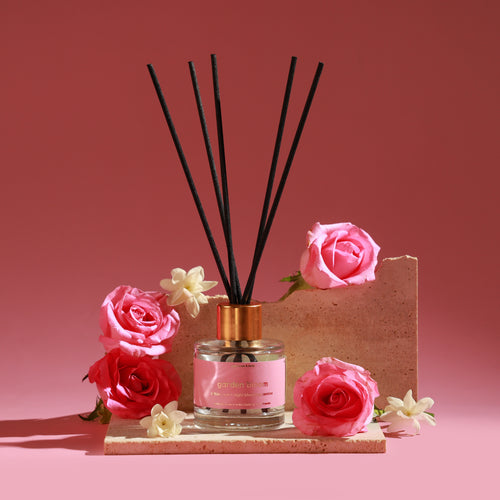
SOSA alcohol-free reed diffusers from ₹749
Morning Freshness at ₹749, Garden Bloom and Evening Calm at ₹799, Fresh Brew and Mountain Breeze at ₹849. Reeds are the format that fits this page's logic, because they add nothing to the air except scent and they hold one level for months rather than producing a peak — no water, no electricity and no daily decision. They need 24 to 72 hours to establish, so they are the wrong buy for tonight and the right buy for a habit. 130ml from ₹1,249, duos from ₹1,498, 300ml refills ₹2,399. Free shipping above ₹499. And the order stands: the hygrometer first, the levers second, and this only once the reading is where you want it.
SS
ISIPCA
Versailles
A note from Sonal

This is a page with no product in it, and I have written it deliberately that way. The most useful thing anybody reading this cluster can buy is a hygrometer for a few hundred rupees, and SOSA does not sell one. I have watched people spend far more than that on scent for a flat whose actual problem was a number they had never measured, and the fragrance was blamed for not fixing something it was never capable of touching. A meter on the shelf for a week tells you whether you have a smell problem or a moisture problem, and those two have almost nothing in common except the room they happen in.

The second thing worth saying is the one about my own machines, because it is the least commercial sentence on this site and it is simply true. An ultrasonic diffuser is a device for adding water to air. Above sixty per cent relative humidity, adding water to air is the wrong thing to be doing. Below forty-five it is often the right thing, and in a Delhi winter I run one myself. So the instruction is not to avoid the machine, it is to know your number and buy accordingly — and if the number is high, the honest formats from this house are a candle, which is a flame, or a reed, which is capillary action. Get the reading under sixty first. After that, buy whatever you like the smell of, and it will finally do what fragrance is actually for.

Everything is made and supported from Pune, and a part of every order funds girl-child education through Nanhi Kali. You get a home that smells like somewhere you chose; a girl gets a classroom. That equation has always felt right to me.

Frequently asked questions

What humidity level makes a house smell musty?
Above roughly 60% relative humidity, because that is where microbial growth on and inside porous materials accelerates. Above 70% it becomes rapid. Below 50% growth is largely dormant and existing growth goes quiet. Indian monsoon indoor readings of 80–95% sit far above the threshold for weeks at a time.
What humidity should I aim for at home?
Between 45 and 55%, and treat 60% as a line rather than a target. That band is comfortable for people, safe for books, timber and instruments, and slow enough biologically that nothing establishes. Below about 40% is not harmful but brings dry skin, static and shrinking wood.
Why does humidity rise when the temperature falls?
Because relative humidity compares the water in the air with the most that air could hold at its current temperature, and cooler air holds less. The same air at 30 degrees and 60% is close to 96% at 22 degrees without a drop being added — which is why the coldest surface in a room is where condensation and growth begin.
Does SOSA sell a hygrometer or a dehumidifier?
No. SOSA makes home fragrance — candles, alcohol-free reed diffusers, water-based Hotel Collection scents and the ultrasonic and waterless machines that run them. Nothing in the range measures humidity or removes it, and a ₹300 to ₹500 digital hygrometer from anywhere is the most useful purchase on this page.
Can I use a diffuser if my humidity reading is high?
Not a cool-mist ultrasonic, which adds 30 to 50 millilitres of water an hour and is working against you above 60%. Below about 45% it is genuinely useful. If the reading is high, candles from ₹379 and alcohol-free reed diffusers from ₹749 add nothing to the air, and both belong after the number is down rather than instead of bringing it down.
The number first · the fragrance after
Sixty per cent is the lineand the meter that finds it is not ours
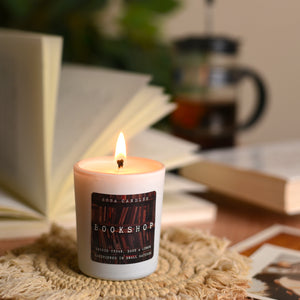
Buy a ₹300 to ₹500 digital hygrometer, aim for 45–55%, and use dry mode, correctly timed ventilation, fans, desiccants and no indoor laundry drying to get there. Once the reading is under 60%, a Bookshop candle is ₹379 for roughly 15–18 hours and alcohol-free reed diffusers are from ₹749, neither of which adds water to the air. The Sukoon at ₹1,899 mists 30–50 ml an hour and belongs below 45%. Free shipping above ₹499, and a portion of every order supports girl-child education through Nanhi Kali.
See the reed diffusers → See the candles · ₹379
Continue the read
More from SOSA
Editorial standards & sources
About this guide: Written by Sonal Sahani, ISIPCA Versailles-trained founder and perfumer at SOSA Home & Body, on the humidity numbers that decide whether a house smells musty: dormancy below 50% relative humidity, acceleration above roughly 60%, rapid growth above 70% and the 80–95% typical of an Indian coastal monsoon indoors, why relative humidity is relative to temperature so that cooling air raises it without adding water, why the coldest surface in a room is where condensation and growth begin, why a ₹300–₹500 hygrometer SOSA does not sell is the most useful purchase on the page, and why fragrance belongs only after the reading is under control.

Facts verified August 2026: Diagnostic facts used in this guide: a closed room accumulates what it cannot exchange, so cross-ventilation needs two openings rather than one; a drain's U-bend water seal evaporates in roughly two to four weeks of disuse and then admits sewer gas, which is corrected by pouring water down the drain; microbial growth in fabric and on surfaces accelerates above about 60% relative humidity, and Indian monsoon indoor humidity commonly runs 80–95%, which is the one situation where ventilating on a wet day can import moisture rather than remove it; an air-conditioner's cold, wet evaporator coil and filter grow biofilm that is blown into the room on start-up; textiles adsorb cooking aerosol and body oils and re-release them for weeks; and olfactory adaptation makes a constant household smell undetectable to its residents within about a fortnight while visitors still perceive it. Timings: a scented candle scents a normal room in roughly 15–20 minutes, a Sukoon ultrasonic diffuser reaches a steady level in about 20 minutes from cold, and a reed diffuser needs roughly 24–72 hours. SOSA products and prices: Sukoon 500ml ₹1,899 (270–320 sq ft, 16–18h on low, 9–12h high, 30–50 ml/h, 2.4MHz cool mist, remote, steady/2H/4H timers, BPA-free, auto shut-off, includes three 15ml Hotel Collection scents of your choice); Boond 300ml ₹899; Megh 6-litre ₹3,499; waterless Vaayu ₹11,999 (up to 1000m³); Aangan ₹25,999. Hotel Collection water-based fragrance 15ml ₹299, 100ml ₹999, 300ml ₹1,799, Pack of 7 at 15ml ₹1,799; dose 3–6 drops per tank. Reed diffusers (separate alcohol-free line): Morning Freshness from ₹749, Garden Bloom and Evening Calm from ₹799, Fresh Brew and Mountain Breeze from ₹849; 130ml from ₹1,249; duos from ₹1,498; 300ml refills ₹2,399. Scented candles: Bookshop 80g ₹379, Amber Rose 130g ₹599 and 220g ₹799, Smoked Oudh 130g ₹449, ceramic jar candles ₹949, Pure Calm wax melt set ₹854. Free shipping above ₹499. SOSA does not make a room or linen spray for the home. The Hotel Collection scents are SOSA's own interpretations; SOSA is not affiliated with or endorsed by any hotel brand. Prices subject to change — see the live product pages.
ブログに戻る