
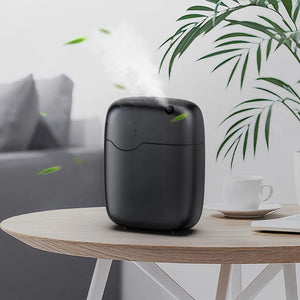



Which diffuser fits the aesthetic? A quiet Sukoon at ₹1,799 for the main living space, or the waterless SOSA Vaayu at ₹11,999 to carry one note through the whole home.
How strong? Faint. Japandi is restraint; the air should read as considered, never as fragranced.
2. Choose warmth, not sweetness. A soft cedarwood echoes the oak and cane; a white tea echoes the calm of the tea table. Pick one at ₹299 and commit.
3. Keep it below the threshold. Run the diffuser low enough that you sense it only when you return from outside. Restraint is the whole point of the style.
4. Match the tool to the room. A Boond (₹799) for a reading nook, a Sukoon (₹1,799) for the living space, the Vaayu (₹11,999) for one note through the whole home.
5. Let it be the same, every day. Consistency is quietly luxurious; novelty is busy. One note, held steady, is Japandi in the air.
And a portion of every order supports girl-child education through Nanhi Kali.

What Japandi asks of a scent
Japandi is the meeting of two restraints. From Japan it takes wabi-sabi — the beauty of the plain, the aged, the imperfect — and from Scandinavia it takes hygge, the warmth that keeps minimalism from turning cold. The rooms are built from natural materials left honest: oak and ash, cane and rattan, paper, stoneware, undyed textiles in oat and clay and charcoal. Nothing shouts. Everything is chosen and then left alone. A fragrance that belongs in that room has to observe the same discipline — it cannot be sweet, cannot be synthetic-bright, cannot announce itself at the door.
That rules out most of what fills a supermarket shelf. The vanilla-and-fruit accords, the "fresh linen" that smells of nothing in nature, the sharp florals — all of them read as decoration laid over the room, and Japandi does not decorate. What it wants instead is a scent that feels like one of the materials: the dry warmth of cedar shavings, the clean green stillness of white tea, a whisper of something woody that could have come from the furniture itself. The honest caveat, as always: this effect is real but moderate. A beautiful scent compounds a home that is already calm, clean and aired; it cannot rescue a stuffy one. Get the air right first, and the fragrance becomes the last true material in the room.
The Japandi scent palette
You do not need a wardrobe of fragrances. Japandi is a discipline of subtraction, so choose one signature and, at most, hold a second in reserve for the season. Here is the short palette I recommend, and where each note sits best.
| Note | Mood it brings | Best room |
|---|---|---|
| Cedarwood | Grounded, warm, material | Living room, study, whole home |
| White tea | Clean, still, unhurried | Bedroom, workspace, mornings |
| Soft sandalwood | Creamy warmth, meditative | Evenings, reading corner |
| Green / hinoki-style | Fresh forest, quiet | Entrance, transitional spaces |
If you are unsure, start with cedar for the whole home and audition white tea for the bedroom on a separate Boond. Live with each for a fortnight before deciding — the nose needs a week simply to stop noticing a new scent, and only after that can you judge whether it truly belongs.


Placing scent in a Japandi home
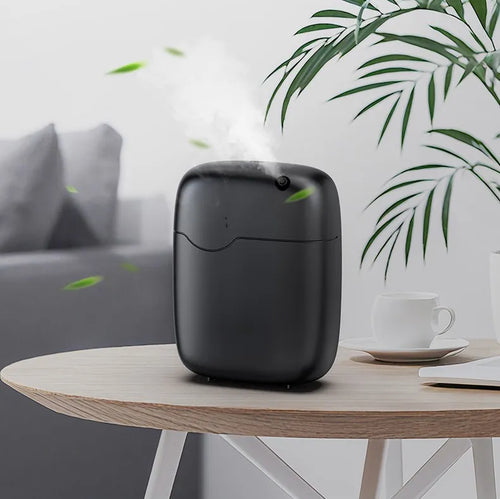
Japandi rooms are spare, which means every object is seen — so the diffuser itself matters as much as the fragrance. Choose a machine you are happy to leave in view: quiet, unfussy, in a natural or muted finish that sits with the ceramics rather than against them. Then place it off the main sightline and away from the walking path, so the scent arrives as atmosphere and the object recedes. A diffuser by the front door hits guests in the face; the same diffuser on a low shelf, a metre back, lets the warmth reach them a beat later, softer, the way it should.
Because the style prizes calm, moving air, keep to the light settings and give the home real ventilation each day. Ultrasonic diffusers such as the Sukoon add a faint humidity along with the scent, which is welcome in a dry room and something to watch in a humid coastal flat. If you want one note carried seamlessly from the entrance through the living room and into the bedrooms — the true Japandi ideal of a single continuous space — the waterless SOSA Vaayu at ₹11,999 runs dry oil on a timer, so there are no seams between rooms and no gaps in the day, and no added moisture at all.
Why one note, held low
The temptation, once you own a diffuser, is to build a collection and rotate it — cedar on Monday, something floral for guests, a spice for the evening. It feels generous. In a Japandi home it is a mistake, and the same mistake as filling a bare shelf because the space makes you uneasy. The empty shelf is the design. So is the single, steady note. A home that smells quietly of one warm thing, day after day, feels held together and intentional; a home that smells of a different idea each visit feels improvised, which is the opposite of what this style is for.
Hold it low, too. The nose tires of anything strong within minutes, and all that remains after that is fatigue — the precise sensation a Japandi room is designed to prevent. Run the diffuser below the level you would consciously notice, and trust the first honest visitor: if they can name the fragrance from across the room, it is too much, and turning it down will make the home feel more considered, not less. A single Hotel Collection scent at ₹299, run softly, will always outclass two run hard.
The SOSA home edit
One quiet ladder of diffusers, from a single nook to a whole home on one note. Choose the rung that matches your space and pair it with a warm-minimal cedar or white tea.
| System | Best for | Why it works | Price |
|---|---|---|---|
| Boond | One room, bedside, gifting | Compact ultrasonic, quiet, sips fragrance | ₹799 |
| Sukoon + Hotel Collection | Living room, open-plan main floor | 500ml ultrasonic; fills a connected space gently | ₹1,799 + ₹299 |
| Megh 6L | Large living area, long unattended runs | 6L tank, water-based, hours between refills | ₹3,499 |
| SOSA Vaayu ★ | Whole home, villa, duplex on one signature | Waterless nebulising, app + timer, no added humidity | ₹11,999 |
| Hotel Collection refills | Keeping it running | The real running cost, low and predictable | from ₹999 |
Versailles
The first Japandi home I scented belonged to a friend who had spent two years getting the emptiness exactly right — the pale floors, the one good bench, the light. She wanted a fragrance and was terrified it would spoil the quiet she had built.
So we chose the least fragrant fragrance I make: a soft cedar, run so low that on the first evening she said she could not smell anything at all. I asked her to go outside and come back. She stopped in the doorway. That is the Japandi effect — a warmth you only meet on the threshold, then forget you are breathing.
Choose one honest note, keep it warm, keep it low, and let it be the last material in the room. Your home gets a quiet signature; a girl gets a classroom through Nanhi Kali.
Frequently asked questions
- The minimalist home fragrance guide — one restrained note, done right.
- The Scandinavian home fragrance guide — clean, airy, light-filled scenting.
- Cedarwood as a signature scent — the warm wood note in depth.
- SOSA Vaayu — one quiet note across the whole home.
- Brand: the SOSA founder story.
Facts verified August 2026: the evidence on ambient scent is that effects on mood and perceived calm are real but moderate, that a consistent, congruent note reads as more considered than a strong one, and that no fragrance improves an unclean or unventilated room. SOSA systems and prices as stated: Boond ₹799, Sukoon ₹1,799, Megh ₹3,499, Vaayu ₹11,999, Hotel Collection scents from ₹299, refills from ₹999. The Hotel Collection scents are SOSA's own interpretations inspired by the world's finest hotels; SOSA is an independent Indian fragrance house, not affiliated with or endorsed by any hotel brand. Made in India, Pune. Prices subject to change.