Founder Diaries · Clinics & Medical Centres · Drain Traps, Extract & Urinals
By Sonal Sahani · ISIPCA Versailles 14 min read Updated November 2026
You are not smelling the toilet. You are smelling the drain, through a gap that evaporated. That one sentence is the whole of this page, and it is why cleaning does not fix it: the source is not on any surface a cleaner can reach, it is air coming up a pipe into the room, and it comes back within an hour of the floor drying. Every fixture in your building has a U-bend holding fifty to seventy-five millimetres of water, that water is the only thing between the room and the sewer, and in a lightly used toilet or an unused floor gulley it evaporates in roughly two to four weeks. After that the pipe is simply open. The correction is a mug of water down every trap and every gulley on a schedule, it costs nothing, and it is the single most useful thing I know about Indian clinic buildings. This page is also the one where I expect most readers to buy nothing from me at all, and I would be pleased rather than disappointed about that.
Quick answers — read this first
Free, and the whole answer in most clinics: walk the building with a pen and number every trap — every floor gulley, every basin, every sluice sink, every shower, every urinal and every WC. Most clinics find twenty to forty and are surprised by six of them. Then a mug or a labelled one-litre jug of water down every one, sixty minutes before opening: daily for anything in use, weekly for the lightly used ones, and every single one after any shutdown longer than four days. One named person, a printed sheet on the back of the door, a tick and initials.
The gulley trick, for a drain nothing ever discharges into: a mug of water followed by a tablespoon of mineral or cooking oil. The oil floats on the seal and slows evaporation for months.
Costed, and worth it: an extract fan interlocked to the light switch with a 10 to 20 minute run-on at ₹3,500–₹8,000 each · an automatic purge valve on a urinal trough at ₹2,500–₹6,000, or a bucket purge twice a day at ₹0 · an air admittance valve where a trap is being siphoned at ₹1,500–₹4,000 · a WC pan connector or seal replaced at ₹500–₹2,500.
And from me: probably nothing. A clinic toilet with daily traps, a working extract and a purged urinal does not need fragrance, and SOSA does not make a room spray.
The short answer
Short answer: a clinic toilet that smells after cleaning almost always has a dry drain-trap water seal. Every fixture has a U-bend holding fifty to seventy-five millimetres of water, that water is the only barrier between the room and the drain, and in a lightly used toilet or an unused floor gulley it evaporates in roughly two to four weeks — faster in dry air-conditioned air and faster in Indian summer. Cleaning cannot fix it because the source is air coming up a pipe rather than anything on a surface. A mug of water down every trap and gulley on a schedule costs nothing and is the commonest single cause in the whole cluster.
The order, and why: count the traps first, because almost every clinic has six it has forgotten and you cannot schedule what you have not listed. Then the daily water round, free, at sixty minutes before opening. Then the failures that water alone does not fix: a trap being siphoned by a discharge elsewhere, which gurgles; a missing or bypassed trap, which is common in retro-fitted clinics; a failed WC pan connector, which smells at floor level in the morning. Then the extract fan interlocked to the light. Then the urinal trough, where scale in the trap holds odour even when the surface is clean. Fragrance is not on this list.
What this page costs, honestly: Rs 0 for the trap round and the count, Rs 3,500 to Rs 8,000 for an extract fan wired to the light switch with a run-on timer, Rs 2,500 to Rs 6,000 for an automatic purge on a urinal trough, and between Rs 500 and Rs 4,000 for the plumbing failures. Nothing from SOSA belongs inside a toilet cubicle. If anything is scented it is the lobby outside, where the
Vaayu at Rs 11,999 holds one low background through the opening hours, and most readers of this page should spend nothing with me.
Straight answer
Our clinic toilets smell even after cleaning. What is actually wrong?
1. A dry drain trap, in nine cases out of ten, and you cannot clean your way out of it. Every fixture in the building sits above a U-bend that holds between fifty and seventy-five millimetres of water. That water is a seal, not a filter: it is the only thing between the room and the drain, and while it is there the pipe is closed. Let it evaporate and the pipe is open, and what comes up is drain air, continuously, from a source no cleaner can reach. This is why the room is spotless, smells of bleach for forty minutes, and is back to how it was by eleven.
2. It dries by evaporation, in roughly two to four weeks of disuse, and the floor gulley is the worst offender. Every Indian clinic toilet and bathroom has a drain in the floor, put there for a washdown that in a modern clinic never happens, and nothing has discharged into it since the fit-out. Nor has anything discharged into the basin in the cabin nobody uses, the sluice sink used once a month, the shower in the day-care recovery room that has not been used since the building opened, the pantry sink on a Monday after a long weekend, or the trap on an air-conditioning condensate line in a room that is shut all summer. Dry air-conditioned air and an Indian summer both make it faster. Two weeks is quite enough.
3. The correction is a mug of water, on a schedule, and it is free. First count them: walk the building with a pen and number every floor gulley, basin, sluice, shower, urinal and WC on a sheet. Most clinics find between twenty and forty and are genuinely surprised by about six of them. Then a mug or a labelled one-litre jug down every one of them at sixty minutes before opening — daily for anything in use, weekly for the lightly used ones, and every single one of them after any shutdown longer than four days, which means every Monday after a long weekend and the first morning after Diwali. One named person, a printed sheet on the back of the door, a tick and initials. For a gulley that genuinely never gets used, follow the water with a tablespoon of mineral or cooking oil: it floats on the seal and slows the evaporation for months, which is a housekeeping trick rather than a product.
4. Then the failures a mug of water does not fix, which are the remaining tenth. A trap can be siphoned out by a discharge elsewhere on an undersized or unvented stack — the tell is a gurgle in one fixture when another is flushed, and the answer is a vent or an air admittance valve at ₹1,500 to ₹4,000. A trap can be missing altogether: a washing-machine or water-purifier drain hose pushed straight into a gulley, or a basin waste shoved down past the water, which is extremely common in retro-fitted clinics and takes two minutes to look at. A WC pan connector or floor seal can have failed, which smells at floor level behind the pan, worst in the morning, and is ₹500 to ₹2,500 to re-make. And a vent pipe can terminate somewhere useless, including inside a ceiling void, which I have seen more than once.
5. Then the extract fan, wired to the light switch, which is the one thing here worth real money. A clinic toilet with no mechanical extract has nowhere to send its air except your corridor. The arrangement that works is an extract fan interlocked with the light switch plus a ten to twenty minute run-on timer, so it runs whenever the room is used and for a while afterwards, at ₹3,500 to ₹8,000 each including the electrician. Tissue-test every grille monthly, because a fan with a failed capacitor hums exactly like a working one, and leave a 10 to 12mm undercut under the door as the replacement-air path rather than sealing it.
6. And the urinals, which hold odour in the pipe rather than on the surface. A trough or a bowl that only gets water when somebody uses it will scale: urine salts and hard water build a deposit in the trap and the pipe which holds odour whatever you do to the ceramic above it. Purge it — an automatic flushing valve or timed solenoid every twenty to thirty minutes in opening hours at ₹2,500 to ₹6,000, or two bucket purges a day at ₹0 — and descale the trap on a monthly rota with a product meant for scale. More bleach is the wrong answer: on urine salts it smells worse and dissolves nothing. Waterless urinals need their cartridge or sealant changed on the maker's interval, and if nobody in your building knows what that interval is, nobody is changing it.
7. And fragrance is not on this list at all. A clinic toilet with a daily trap round, a working extract and a purged urinal does not need fragrance, and a toilet that smells needs the cause found rather than covered. SOSA does not make a room spray, nothing of mine belongs inside a cubicle, and if anything is scented it is the lobby outside. I would far rather you finished this page and bought nothing. A portion of every order supports girl-child education through Nanhi Kali.
TL;DR: it is a dry U-bend water seal. Fifty to seventy-five millimetres of water is the only barrier between the room and the drain, and it evaporates in roughly two to four weeks of disuse. Count every gulley, basin, sluice, shower, urinal and WC in the building, then a mug of water down each one sixty minutes before opening, on a sheet, with a name against it. Free. Then an extract fan on the light switch and a purge on the urinal trough. No fragrance in a toilet.
The page where I expect you to buy nothing
SOSA commercial scenting from ₹899
A toilet that smells after cleaning is a plumbing fact, not a fragrance question, and the honest version of this page ends without a purchase. A U-bend holds fifty to seventy-five millimetres of water, that water is the only barrier between the room and the drain, and it evaporates in roughly two to four weeks of disuse. A mug of water down every trap and gulley on a written round costs nothing and is the commonest single cause in this whole cluster. After that, an extract fan on the light switch at ₹3,500 to ₹8,000 and a purge on the urinal trough. Nothing of mine goes inside a cubicle, SOSA does not make a room spray, and if anything is scented it is the lobby outside.
What a trap is, why it dries, and the round that costs nothing
I want to teach this properly rather than give you an instruction, because a housekeeping team that understands why the mug of water matters keeps doing it and one that has merely been told stops within a month. The mechanism is simple enough to explain at a handover in ninety seconds, and once somebody has understood it they will never again look at an unused floor drain the same way. It is also the reason this subject sits at the top of every list I write for clinics: it is free, it takes one person ten minutes a day, and it accounts for more complaints in Indian medical buildings than anything else I have come across. If the smell you are chasing is in a corridor rather than in the toilet itself, the mechanism is the same and the dressing-room corridor page picks up the rest of it; and if the whole building smells rather than one room, the full checklist is the place to start.
1
THE MECHANISM
Fifty millimetres of water, and the two to four weeks it lasts
Every fixture in your building discharges through a U-bend, and the bend holds water. A basin, a WC, a shower, a sluice sink, a urinal, a floor gulley, even the condensate drain from an air-conditioning unit: each one has a trap, and each trap holds somewhere between fifty and seventy-five millimetres of standing water. That water is the whole of the building's defence against the drain. It is a seal rather than a filter: while it is there, air cannot pass in either direction, and the moment it is gone the pipe is simply open into the room. Nothing about the ceramic, the tiling or the cleaning product has any bearing on it. It goes by evaporation, and the timescale is shorter than people expect. A trap in a fixture that is used several times a day is topped up every time it is used and will never dry. A trap in a fixture that is not used loses its seal in roughly two to four weeks, and both halves of an Indian clinic's environment accelerate that: air-conditioned air is dry, and summer is hot. Which traps are at risk is the part worth walking. First and worst, the floor gulley: every Indian clinic toilet, bathroom and sluice has a drain in the floor, installed for a washdown that in a modern clinic never happens, and in many buildings nothing has discharged into it since the day it was commissioned. Then the basin in the consulting cabin that is used for handwashing twice a week; the sluice sink in a department that does one dressing a month; the shower in a day-care recovery bay that has never been used; the staff pantry sink on a Monday after a long weekend; the toilet in the department that was closed for six weeks for refurbishment; the condensate trap in a room shut all winter. And the tell that confirms it before you spend anything. A dry trap gives you a smell that is present continuously rather than at one hour, that is worse at floor level, that is strongest first thing in the morning after a night with no use, and that returns within about an hour of the room being cleaned. If that describes what you have, you almost certainly do not have a cleaning problem at all.
2
THE ROUND, AND THE FAILURES WATER DOES NOT FIX
A mug, a sheet, a name — and the tenth of cases that need a plumber
Count them before you schedule them, because you cannot run a round against a list that does not exist. Walk the whole building with a pen and a clipboard and number every trap: floor gullies, basins, sluice sinks, showers, urinals, WCs, pantry sinks, condensate drains. Most multi-speciality clinics come out between twenty and forty, and in every single walk I have done there have been about six that nobody had thought of. Write them on one sheet, in room order, and print it. Then the round itself, which is ten minutes of one person's day. A mug, or better a labelled one-litre jug kept at the sluice, down every trap at sixty minutes before opening. Daily for everything in use; weekly for the lightly used ones; and every single trap in the building after any shutdown longer than four days, which in practice means the Monday after a long weekend, the morning after a festival and the first day back after a department has been closed for work. One named person, the sheet on the back of a door, a tick and initials against each line, and the supervisor checking it rather than assuming it. For a gulley that genuinely never receives anything, follow the water with a tablespoon of mineral or cooking oil, which floats on top of the seal and slows evaporation for months — an old building-services trick, costs nothing, and worth doing on the six you found that nobody remembered. And then the tenth of cases where water is not the answer, which you can tell apart by their tells. Siphonage: the trap is pulled out by a discharge elsewhere on an undersized or unvented stack, and the tell is a gurgle from one fixture when another is flushed, or a smell that appears only when the floor above is busy. That needs a vent pipe or an air admittance valve, ₹1,500 to ₹4,000. Back pressure: the smell is worst on the lowest floor, or when a pump runs, which points at the stack rather than the fixture. A missing trap: a water-purifier or washing-machine hose pushed straight into a gulley, or a flexible basin waste shoved down past the water seal, which is very common in retro-fitted clinics and which you find by looking rather than by testing. A failed WC pan connector or floor seal: a smell at floor level behind the pan, worst in the morning, sometimes with the pan rocking slightly, ₹500 to ₹2,500 to re-make. And a vent terminating somewhere useless, including inside a ceiling void, which I have now seen twice.
3
THE EXTRACT AND THE URINAL
A fan on the light switch, a trough that gets purged, and nothing from me
The extract fan is the one line on this page worth real money, and the detail that matters is how it is wired. A toilet with no mechanical extract has nowhere to send its air except the corridor outside, which is how one dry gulley becomes a complaint about a waiting area. The arrangement that works in a clinic is an extract fan interlocked with the light switch, with a ten to twenty minute run-on timer, so that it runs whenever the room is in use and keeps running after the person has left — which is the half of it that most installations miss. Three and a half to eight thousand rupees each including the electrician, and it is the best money on this page. Two things to get right alongside it: tissue-test every grille monthly, because a fan whose capacitor has failed hums exactly like a working one and from below they are indistinguishable, and leave a 10 to 12mm undercut clear under the door rather than sealing it with a draught strip, because the fan can only move the air it is allowed to replace.
The urinals hold their odour in the pipe rather than on the surface, which is why cleaning the ceramic achieves nothing. A trough, or a bowl that only receives water when somebody uses it, will build a scale of urine salts and hard-water deposit in the trap and the first length of pipe, and that deposit holds odour regardless of how clean the surface above it is. Purge it: an automatic flushing valve or timed solenoid that runs the trough every twenty to thirty minutes through opening hours is ₹2,500 to ₹6,000, and two bucket purges a day at a named hour is the ₹0 version. Descale the trap monthly with a product intended for scale. More bleach is the wrong answer and worth saying plainly: on urine salts it produces a sharper smell and dissolves none of the deposit. If you have waterless urinals, they have a cartridge or a sealant liquid with a replacement interval set by the manufacturer, and if nobody in the building can tell you what that interval is then nobody is changing it, which is the commonest reason a waterless urinal smells.
And the fragrance paragraph, which is short. Nothing I make belongs inside a toilet cubicle. SOSA does not make a room spray, a gel block on the wall is covering the exact signal you need, and a toilet that smells needs its cause found. If a clinic wants a background anywhere near here it belongs in the lobby or the corridor outside, on low, where the
Vaayu at ₹11,999 holds one public volume through the opening hours. Most readers of this page should spend nothing with me, and that is the intended outcome rather than a failure of the page.
The instruction I would print and tape inside the housekeeping store: count the traps, then one mug of water down every one of them at T-60 minutes, every day, with a name and a tick. If you do nothing else on this page, do that.
The eight failures, and how to tell them apart
The same eight causes with the tell that identifies each one, so that you can sort them out from inside the room in about ten minutes rather than calling a plumber to guess. Print it, take a torch, and work down. The first row is nine cases out of ten and it costs nothing.
Print this
A toilet that smells after cleaning: eight causes, in order of how common they are
| The cause |
The tell |
The fix |
Cost |
| 1. A dry trap or gulley ★ |
Continuous rather than hourly, worse at floor level, strongest first thing in the morning, and back within an hour of cleaning. A lightly used toilet or a floor drain nothing discharges into |
Count every trap in the building, then a mug of water down each at T-60 minutes daily, on a sheet with a name and a tick |
₹0 |
| 2. A trap nobody knew existed |
The six traps every clinic forgets: an unused shower, a sluice sink used monthly, a cabin basin, a pantry sink after a long weekend, a condensate drain, a toilet in a closed department |
The same round, plus a tablespoon of mineral or cooking oil on the seal of any gulley that genuinely never gets used |
₹0 |
| 3. Siphonage |
A gurgle from one fixture when another is flushed, or a smell that arrives only when the floor above is busy. The seal is being pulled out rather than evaporating |
A vent pipe, or an air admittance valve fitted on the branch. A plumber, with the gurgle demonstrated to him |
₹1,500–₹4,000 |
| 4. A missing or bypassed trap |
A purifier or washing-machine hose pushed straight into a gulley, or a flexible basin waste shoved down past the water. Common in retro-fitted clinics |
Look rather than test. A proper trapped connection, which is a short plumbing job |
₹500–₹2,500 |
| 5. A failed pan connector or seal |
Smell at floor level behind the WC, worst in the morning, sometimes with the pan rocking very slightly on the floor |
The connector and floor seal re-made and the pan re-bedded. Do not silicone over it and hope |
₹500–₹2,500 |
| 6. No extract, or a dead one |
The corridor outside smells as much as the room does, and a tissue held to the grille falls instead of sticking even though the fan is humming |
An extract fan interlocked to the light with a 10 to 20 minute run-on, and the door undercut left clear |
₹3,500–₹8,000 each |
| 7. Urinal scale |
The ceramic is clean and the smell persists, sharpest in the afternoon, and worse after bleach rather than better |
Purge the trough every 20 to 30 minutes automatically, or twice a day with a bucket, and descale the trap monthly. The waiting-area version of this
|
₹0–₹6,000 |
| Never |
A gel block on the wall, a spray at the counter or a diffuser in the cubicle, all of which cover the one signal telling you a seal is dry |
Nobody. A persistent smell is information, and SOSA does not make a room spray |
— |
If anything, the lobby outside
Nothing here goes in a cubicle
The SOSA principle
A U-bend holds fifty to seventy-five millimetres of water and that water is the only thing between your waiting room and the sewer. In a lightly used toilet it evaporates in two to four weeks, and then the pipe is open. A mug of water, every morning, with a name against it. That is the whole answer in nine cases out of ten.
The floor gulley is the worst offender in every Indian clinic, because it was installed for a washdown that never happens and nothing has discharged into it since the building opened.
The extract fan, the urinal trough, and why I am selling you nothing
Run the trap round for three weeks before you spend a rupee, because it is free and because it resolves most of these rooms on its own. Day one: the count. Walk the building with a clipboard and number every floor gulley, basin, sluice sink, shower, urinal, WC, pantry sink and condensate drain, in room order, on one printed sheet. Day two: the round starts at sixty minutes before opening, one named person, a mug or a labelled jug, a tick and initials against every line. Day three: a tablespoon of mineral oil on the six gullies nobody remembered. Week two: the gurgle test — flush each WC in turn and have somebody listen at the neighbouring fixtures, and note anything that gurgles. Week three: a tissue at every extract grille, and a look behind every WC at floor level in the morning. At the end of three weeks you will know which rooms were simply dry and which have an actual plumbing failure, and the second list is usually one or two fixtures rather than a building. That is a very good place to be before anybody quotes you for anything, and the version of this conversation that starts with a morning complaint ends up in the same place.
Then the money, and it is modest. The extract fan is the purchase I would always make: an interlocked fan with a ten to twenty minute run-on timer, three and a half to eight thousand rupees each including the electrician, which is what stops a toilet exporting its air into your corridor. An automatic purge on a urinal trough is two and a half to six thousand and takes the whole problem away permanently; two bucket purges a day at named hours is the free version and works if somebody actually does it. An air admittance valve where a trap is genuinely being siphoned is fifteen hundred to four thousand. A WC pan connector or floor seal re-made is five hundred to two and a half thousand. So the worst case for a four-toilet clinic is somewhere around thirty thousand rupees, and the common case is one extract fan, one purge valve and a free daily round. The only other thing I would buy is a labelled one-litre jug that lives at the sluice and is used for nothing else, because a round done with whatever cup is nearest becomes a round that does not get done. Put the housekeeping supervisor's name on the sheet and have whoever opens the clinic initial it, and ask your facilities lead to tissue-test the grilles monthly, because a dead extract fan is invisible from below and will quietly undo everything else on the page.
And now the part where I tell you not to buy anything from me, which I would rather write plainly than bury. A clinic toilet with a daily trap round, a working interlocked extract fan and a purged urinal trough does not need fragrance, and I am not going to pretend otherwise in order to finish a page with a product in it. SOSA does not make a room spray. A gel block on a cubicle wall is covering the exact signal that would have told you a water seal was dry, which is the thing this entire cluster exists to argue against. If a clinic wants a background anywhere in this part of the building it belongs outside the toilet, in the lobby or the public corridor, at one low level through the opening hours, and the machine for that is the Vaayu at ₹11,999: waterless cold-air nebulisation with no standing water tank, up to 1000 m³ with the sum done as area divided by 10.76 multiplied by ceiling height counting only the volumes a door closes, a 400ml fill lasting about seventy-five days, app and 1h/4h/8h/24h timers, under 38 dB, auto-stop and a key-lock. The Aangan at ₹25,999 is for a floor or an atrium. The water-based Sukoon at ₹1,899, Boond at ₹899 and Megh at ₹3,499 hold standing water and belong in a single administrative cabin with one named person drying the tank daily. An alcohol-free reed diffuser from ₹749 suits that same cabin and not a sanitary area. Consultation and examination rooms, treatment and procedure rooms, day-care surgery, dressing rooms, sample collection, laboratories, dispensing, sterile stores, imaging, oncology day-care and paediatric clinical areas all stay fragrance-free with their doors shut. None of it treats anything, cleans anything or purifies anything, and a diffuser is not an air purifier. If you close this page and all you do is start the trap round, it has done its job and I am content with that.
Fifty millimetres of water is the only thing between your waiting room and the sewer, and in a toilet nobody uses it is gone in a fortnight. A mug of water, every morning, with somebody's name against it. I have nothing to sell you that comes close.
— Sonal Sahani, SOSA
The SOSA edit
The same work in tiers, for a facilities meeting rather than a wall. Four of the five tiers are housekeeping or plumbing and none of them is mine, and the fifth is for the lobby outside rather than for the room this page is about.
The SOSA edit
The round, the fan, the trough, and nothing in the cubicle
| Tier |
What is in it |
When it earns its place |
Cost |
| 1. Count and water them ★ |
Every gulley, basin, sluice, shower, urinal, WC, pantry sink and condensate drain numbered on one sheet, then a mug of water down each at T-60 minutes daily with a name and a tick |
Tomorrow morning. Nine cases out of ten, and it costs nothing at all |
₹0 |
| 2. The forgotten six |
A tablespoon of mineral or cooking oil on the seal of any gulley that genuinely never receives water, plus every trap watered after any shutdown longer than four days |
The same morning, and every Monday after a long weekend |
₹0 |
| 3. The plumbing tenth |
An air admittance valve where a fixture gurgles, a trapped connection where a hose was pushed into a gulley, a WC pan connector and floor seal re-made |
This month, with the gurgle demonstrated to the plumber rather than described |
₹500–₹4,000 each |
| 4. The fan and the trough |
An extract fan interlocked to the light with a 10 to 20 minute run-on and the door undercut left clear; an automatic purge on the urinal trough, or two bucket purges a day |
This quarter. The fan is the single best purchase on the page |
₹3,500–₹8,000 and ₹0–₹6,000 |
| 5. Vaayu — the lobby outside, if at all |
Waterless, no standing water tank, up to 1000 m³, 400ml lasting about 75 days, app and timers, under 38 dB, key-lock. For a public volume, never for a cubicle |
Only if the clinic wants a background in the public area, and only after the four tiers above |
₹11,999 |
| Not on the list at any price |
A gel block on a cubicle wall, a spray at the counter, or a diffuser inside a toilet that smells — all of which cover a dry water seal |
Never. A clinic should smell of nothing in particular, and SOSA does not make a room spray |
— |
Honest notes for buyers: this page is drainage and housekeeping rather than fragrance, and most readers of it should buy nothing from SOSA at all. Trap seals, venting, siphonage, air admittance valves and sanitary pipework are plumbing matters for a licensed plumber who can see the installation, and anything concerning sewer gas, drainage defects or sanitary standards in a healthcare building belongs to that plumber and to your own infection-control and safety leads rather than to a fragrance house. On fragrance itself, fragrance in a medical facility is housekeeping and presentation, never treatment. Nothing here claims that a fragrance reduces anxiety, aids recovery, improves sleep, cleans or disinfects air, or has any clinical effect whatsoever, because it does not and a diffuser is not an air purifier. Scenting belongs to the entrance, reception, shared waiting areas, inter-departmental corridors and administrative rooms. Consultation and examination rooms, treatment and procedure rooms, day-care surgery, dressing rooms, blood- and sample-collection rooms, laboratories, pharmacy dispensing, sterile stores, imaging rooms, oncology day-care and paediatric clinical areas should be left fragrance-free. A persistent smell is information about a dry drain trap, a bin, a soiled-linen route or an air-conditioning drain pan: find it and fix it rather than covering it. On the machines: the
Vaayu at ₹11,999 is waterless cold-air nebulisation with no standing water tank, covering up to 1000m³ or roughly 2,000–3,000 sq ft, with a 400ml tank lasting about 75 days, app control, 1h/4h/8h/24h timers, under-38dB running, auto-stop and a key-lock for public areas. The
Aangan at ₹25,999 covers up to 3,000m³ and connects to HVAC for a whole floor or an atrium. The ultrasonic
Sukoon,
Boond and
Megh are water-based, hold standing water and add 30–50 ml of water an hour to the air, which suits a single administrative cabin with a named person emptying and drying the tank daily and is unsuitable for public clinical property. An alcohol-free
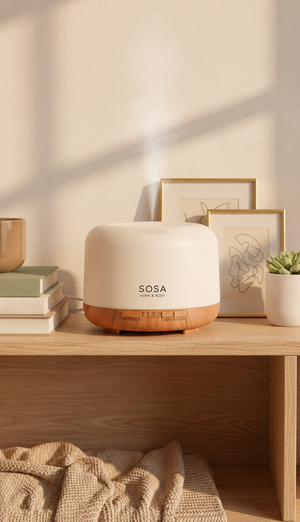
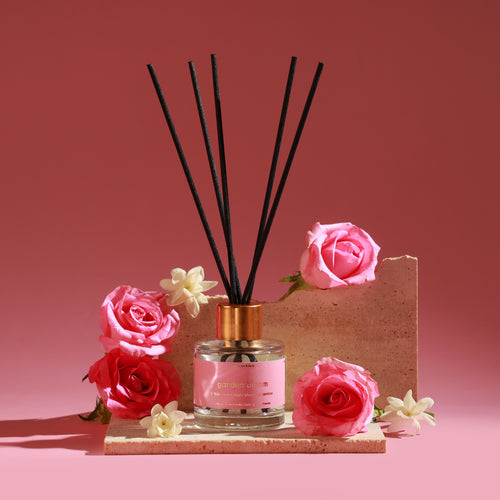
reed diffuser needs 24–72 hours to establish and suits a small lobby rather than a large waiting hall. Candles are not appropriate in a healthcare facility because an open flame is a fire-safety matter. SOSA does not make a room spray. The Hotel Collection scents are SOSA's own interpretations inspired by the world's finest hotels; SOSA is an independent Indian fragrance house, not affiliated with or endorsed by any hotel brand. A portion of every order supports girl-child education through Nanhi Kali.
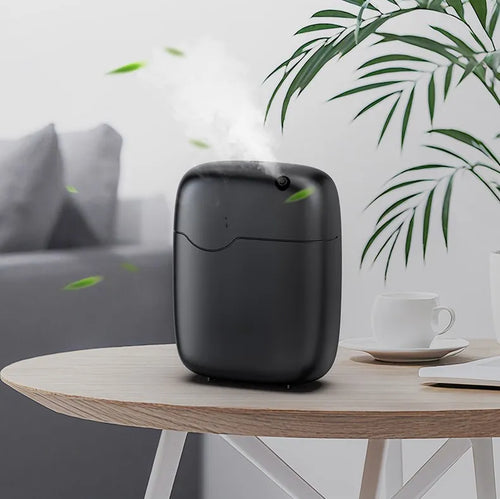
Not for this room, and probably not for you yet
SOSA Vaayu ₹11,999
Nothing SOSA makes belongs inside a toilet cubicle, and this page is the one where I expect most readers to spend nothing. A clinic toilet with a daily trap round, an extract fan interlocked to the light and a purged urinal trough does not need fragrance at all, and a gel block on the wall covers the exact signal that would have told you a water seal had gone dry. If a clinic wants a background in the lobby or the public corridor outside, this is the machine for it: waterless cold-air nebulisation with no standing water tank, up to 1000 cubic metres, a 400ml fill lasting about seventy-five days, app control with timers, under 38 dB, auto-stop and a key-lock. Public volumes only, on low, for the opening hours.
A note from Sonal
A facilities manager in Delhi rang me to ask which of my scents was strongest, which is a question I have learned to treat as a symptom. I asked what he was trying to cover and he described two toilets on a quiet second floor that smelled however often they were cleaned, and I asked when they had last been used properly, and there was a long pause. Both had been barely used for about six weeks while a department was being refurbished upstairs. Four weeks with no water down a U-bend and the seal is gone, and after that the pipe is open into the room. He put a mug of water down every trap and gulley on that floor the next morning and rang me three days later to say it had stopped. He bought nothing, and it is still one of my favourite calls.
I have told this to enough clinics now to be fairly confident it is the commonest single cause of a medical building that smells in India, and also the least known. The part that surprises people most is the floor gulley. Every clinic toilet and bathroom in this country has a drain in the floor, put there for a washdown that a modern clinic never does, and in most buildings nothing has discharged into it since the day it was commissioned — so it has been dry for years, quietly, in a room that is cleaned twice a day. The second thing that surprises people is the timescale: a fortnight is enough, so a department closed for a festival week and a weekend comes back with a smell nobody can explain. The mineral-oil trick on a gulley that genuinely never gets used is worth knowing too; it is an old building-services habit rather than anything of mine, and it buys you months.
This is the page in the cluster I would most like somebody to act on and least expect to sell anything from, and I would rather it read that way than the other way round. Everything is made and supported from Pune, and a part of every order funds girl-child education through Nanhi Kali. You get a space that smells like somewhere looked after; a girl gets a classroom. That equation has always felt right to me.
Frequently asked questions
Why does our clinic toilet smell again within an hour of being cleaned?
Because the source is not on a surface. In nine cases out of ten a drain trap has gone dry: every fixture sits above a U-bend holding fifty to seventy-five millimetres of water, that water is the only barrier between the room and the drain, and once it has evaporated the pipe is open into the room. No cleaning product reaches that, which is why the bleach smell lasts forty minutes and the original smell comes back. A mug of water down every trap and gulley fixes it for nothing.
How quickly does a drain trap dry out?
Roughly two to four weeks of disuse, and faster in dry air-conditioned air and in Indian summer heat. A fixture used several times a day tops its own seal up and will never dry. The ones at risk are the floor gulley nothing discharges into, the basin in a cabin used twice a week, a sluice sink used monthly, a shower in a recovery bay that has never been used, a pantry sink after a long weekend, and any toilet in a department that has been closed for work.
What exactly should the daily routine be?
Count first: walk the building and number every floor gulley, basin, sluice sink, shower, urinal, WC, pantry sink and condensate drain on one sheet, because most clinics find twenty to forty and are surprised by about six. Then a mug or a labelled one-litre jug of water down each one, sixty minutes before opening, daily for anything in use and weekly for the lightly used ones, with one named person, a printed sheet on the back of a door, and a tick and initials. Water every trap in the building after any shutdown longer than four days.
What if the water does not fix it?
Then you are in the remaining tenth, and each cause has a tell. A gurgle in one fixture when another is flushed means the seal is being siphoned out, which needs a vent or an air admittance valve. A hose pushed straight into a gulley or a basin waste shoved past the water means there is no trap in circuit at all. A smell at floor level behind the WC, worst in the morning, means the pan connector or floor seal has failed. And if the corridor outside smells as much as the room does, the extract fan is dead or missing, and a tissue held to the grille will tell you in two seconds.
Should we put a diffuser or a gel block in the toilets?
No, and I would say the same if you rang me. A clinic toilet with a daily trap round, an extract fan interlocked to the light switch with a run-on timer and a purged urinal trough does not need fragrance at all. A gel block on a cubicle wall covers the one signal that would have told you a water seal had gone dry, which leaves the drain open and the problem invisible. If a clinic wants a background anywhere nearby it belongs in the lobby or the public corridor outside, and SOSA does not make a room spray in any case.
Most readers of this page should buy nothing
A mug of water, every morning, with a name against it — that is the answer in nine cases out of ten
If a clinic wants a background in the lobby or the public corridor outside — never in the cubicle — the Vaayu is ₹11,999: waterless cold-air nebulisation with no standing water tank, up to 1000 m³ or roughly 2,000–3,000 sq ft, a 400ml tank lasting about seventy-five days for four refills a year, Bluetooth app control with 1h/4h/8h/24h timers, under 38 dB, auto-stop and a key-lock for public areas. SOSA does not make a room spray. Free shipping above ₹499, and a portion of every order supports girl-child education through Nanhi Kali.
See the Vaayu · ₹11,999 All commercial scenting
Continue the read
More from SOSA
Editorial standards & sources
Product facts used in this guide. SOSA Vaayu Rs 11,999: waterless cold-air nebulising diffuser, no water reservoir, coverage up to 1000m3 (approximately 2,000-3,000 sq ft), 400ml refillable tank lasting up to about 75 days per fill, Bluetooth app plus onboard control, 1h/4h/8h/24h timer scheduling, adjustable intensity, under 38 dB, DC 12V/1A at 5W, 165 x 80.5 x 215 mm and 0.9 kg, freestanding or wall or HVAC mounted, auto-stop and key-lock, CE, RoHS and SGS certified, supplied with four hotel-inspired fragrances. SOSA Aangan Rs 25,999: HVAC-connected or standalone commercial nebulising diffuser, coverage up to 3,000m3 (roughly 8,000-10,000 sq ft), 800ml reservoir, metal body, programmable schedules, under 42 dB. Ultrasonic machines are water-based, hold standing water and consume 30-50 ml of water an hour: Sukoon Rs 1,899 (500ml, 270-320 sq ft, 16-18 hours on low, three 15ml Hotel Collection scents included), Boond Rs 899 (300ml), Megh Rs 3,499 (6 litres). Hotel Collection water-based fragrance 15ml Rs 299, 100ml Rs 999, 300ml Rs 1,799. Alcohol-free reed diffusers from Rs 749, requiring 24-72 hours to reach their working level. Free shipping above Rs 499. Coverage arithmetic: cubic metres equal floor area in square feet divided by 10.76 and multiplied by ceiling height in metres, counting only the volumes that are actually scented. This guide makes no medical, therapeutic or clinical claim of any kind for fragrance: a diffuser does not purify, disinfect or clean air, and does not treat, calm or affect any patient or condition. Fragrance is housekeeping and presentation. Clinical areas should be left fragrance-free, and a persistent odour should be traced to its source and corrected rather than covered. SOSA is not affiliated with or endorsed by any hotel brand. Prices subject to change - see the live product pages.


 Reeds · an admin cabinfrom ₹749Shop →