
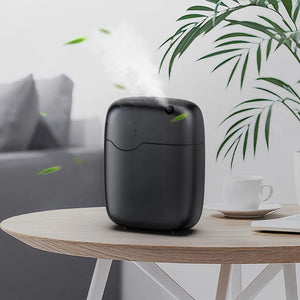
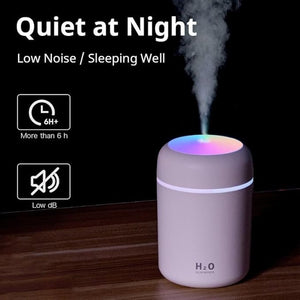

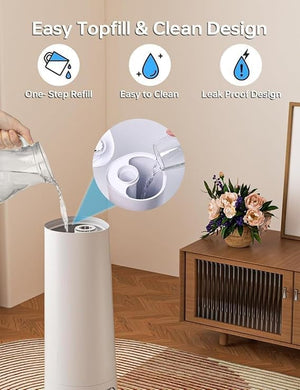
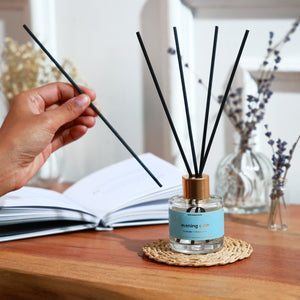
Why it lies: five devices make five separate bubbles. Square feet only add up if the spaces join, and if they joined you would not need five devices.
Measure attention instead. Five Boonds run six hours a day need a 300ml tank each per day — 5 × 365 = 1,825 fills a year. A Vaayu's 400ml at 90+ days is 365 ÷ 90 ≈ 4.
And measure consistency. One source is one scent at one intensity on one schedule. Five sources drift, and two scents in a connected space must share a note or you get a seam.
2. Now notice that the metric recommends something absurd. Nobody thinks five reed bottles solve an open 2,200 sq ft ground floor, and they do not. Coverage is a radius, not an area you can bank. Five sources in five places give five overlapping-or-not bubbles, with seams, gaps and doorways between them.
3. Measure rooms actually scented instead. Count the discrete volumes you want held, not the square feet you want to claim. Five closed rooms need five sources and always will. One connected 2,200 sq ft floor needs one source that reaches across it.
4. Measure hours of attention a year. Arithmetic: a Boond holds 300ml for about six hours, so five of them run six hours a day is 5 × 365 = 1,825 fills a year; at two minutes each that is 3,650 minutes, or about 60.8 hours. Two Sukoons at 16–18 hours per 500ml, run six hours a day, need a fill every 16 ÷ 6 ≈ 2.7 to 18 ÷ 6 = 3.0 days, so 244 to 270 fills a year between them — roughly 12 to 14 hours. A Vaayu is 365 ÷ 90 ≈ 4 fills a year, about 20 minutes.
5. Measure consistency, which is what people actually notice. One source means one scent, one intensity and one schedule. Five sources means five fill dates, five states of empty-or-full, and often five different fragrances — and two scents meeting in one connected space need to share a note or you get a seam where they meet.
6. The Megh is not the compromise. At ₹3,499 for about 215 sq ft it is 3,499 ÷ 215 = ₹16.27 per sq ft, the worst line in the range on this metric and the wrong purchase for reach in any case. Its 6 litres buy roughly 100 hours of runtime and some humidity in a dry month. It is a runtime and humidity machine, never a coverage upgrade.
7. And the condition on the machine column. SOSA does not currently sell a separate Vaayu refill oil. The 400ml supplied in the box — four Hotel Collection fragrances at 100ml each — is the cold-air supply available today. Confirm current refill availability with SOSA before ordering if long-term supply matters to you.
Composed and handmade in small batches in Pune, and a portion of every order supports girl-child education through Nanhi Kali.
Part one — why coverage per rupee is the wrong metric
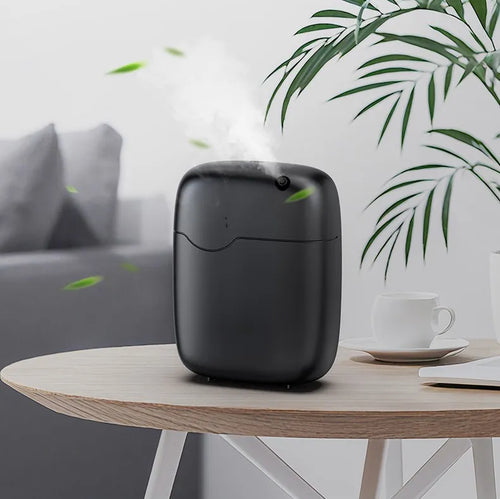
The calculation is seductive because every product page gives you the two numbers it needs. Price is published, coverage is published, and dividing one by the other feels like the sort of thing a careful buyer does. The flaw is that coverage describes a single device's reach around itself, and reach is not a quantity you can accumulate by buying more devices. Two machines in two rooms do not create one field of twice the area; they create two fields, with a wall, a doorway and a pressure difference in between. The metric quietly assumes the thing you are trying to buy — a continuous scented volume — already exists.
 Boond₹899 · ~150 sq ftA coverage-per-rupee figure is a one-off number describing a permanent obligation, and the obligation scales with unit count in a way the price does not. Arithmetic: a Boond holds 300ml and runs about six hours a fill, so five of them used six hours a day want five fills a day — 5 × 365 = 1,825 fills a year, which at two minutes each is 3,650 minutes, or 60.8 hours. Two Sukoons are far better behaved: 500ml at 16–18 hours on low, run six hours a day, is a fill every 2.7 to 3.0 days, so 122 to 135 fills each and 244 to 270 between them — about 12 to 14 hours a year at three minutes apiece. A Vaayu's 400ml at 90+ days is 365 ÷ 90 ≈ 4 fills, roughly 20 minutes a year. The cheapest setup per square foot is by a distance the most expensive one in hours.
Part two — the metric applied honestly, and where it lands
Here is coverage per rupee worked out across every sensible setup, together with the column the metric cannot produce. Read the last column first; it is the one that describes your actual house.
| Setup | Total price | Coverage the spec sheets imply | Coverage per rupee | What you actually get |
|---|---|---|---|---|
| Five reed diffusers, 130ml ★ | ₹6,545 | 5 × 250–300 sq ft of open volume = 1,250–1,500 | ₹4.36–₹5.24 per sq ft — the metric's winner | Five rooms held constantly, no electricity, and no ability at all to cross an open plan |
| One Vaayu | ₹11,999 | 2,000–3,000 sq ft as one connected volume | 11,999 ÷ 3,000 = ₹4.00 · ÷ 2,000 = ₹6.00 | One volume, one scent, one schedule, four tank fills a year |
| Two Sukoon | ₹3,798 | 2 × 270–320 = 540–640 sq ft | 3,798 ÷ 640 = ₹5.93 · ÷ 540 = ₹7.03 | Two rooms held well on demand; a seam between them; two tanks every 2–3 days |
| Five Boond | ₹4,495 | 5 × 150 = 750 sq ft | 4,495 ÷ 750 = ₹5.99 | Five small bubbles and 1,825 tank fills a year. The metric's second favourite; my least |
| One Megh 6L | ₹3,499 | ~215 sq ft — less than the ₹1,899 Sukoon | 3,499 ÷ 215 = ₹16.27 — the worst line here | One room, ~100 hours of runtime between fills, and humidity. A runtime machine, never a coverage upgrade |
| The honest caveat: this table is built to be distrusted. Coverage figures are manufacturer specifications for a single device in an open volume and do not add across separate machines — the summed figures in column three are the metric's own assumption, not a claim by SOSA, and the reed figure uses SOSA's editorial guidance that a bottle's useful ceiling is roughly 250–300 sq ft of connected open volume rather than a rated coverage. Real reach varies with ceiling height, air exchange, absorption and season. Every division shown is arithmetic on verified August 2026 prices. And the Vaayu row carries the standing condition: no separate Vaayu refill oil is sold at present, and the water-based Hotel Collection for ultrasonic machines is a different product that must never be used in a Vaayu. No health, air-quality or commercial claim is made anywhere. | ||||
Vaayu · one connected floor₹11,999Shop →  Sukoon · one room₹1,899Shop →
 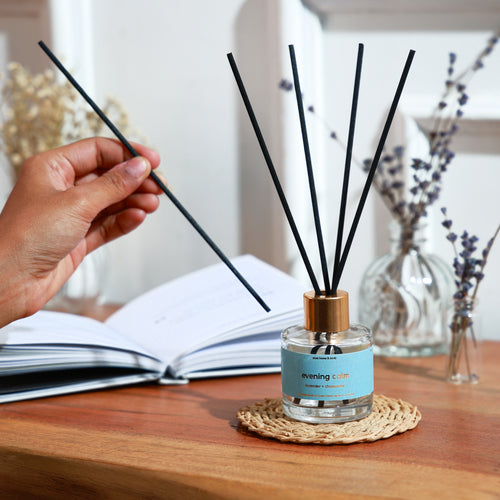 Evening Calm · one bedroomfrom ₹799Shop →
Part three — the three things worth measuring, and when many beats one
The first honest metric is rooms actually scented, and it is a count rather than an area. Walk the house as you normally live in it, doors where you keep them, and write down each volume you want held. A hall, living and dining that run together is one entry on the list. A study with the door usually shut is another. Four bedrooms are four more. Now the purchase almost writes itself: one source per entry, sized to that entry. A 2,200 sq ft connected ground floor gets one machine because nothing smaller crosses it; a 140 sq ft bedroom gets a ₹1,249 bottle because that is the format a small closed room was built for. This is the metric that stops people buying five of anything, because five identical devices almost never match five differently-sized volumes.
The second is hours of attention a year, and it is the one that decides whether the setup survives contact with real life. Arithmetic, gathered: five Boond units run six hours a day come to 1,825 tank fills a year, about 60.8 hours at two minutes each. Five reed diffusers want 5 × 52 = 260 flips a year at roughly two minutes, plus about 15 to 19 refills at five minutes, which is close to 10 hours. Two Sukoons come to 244–270 fills, roughly 12 to 14 hours. A single Megh run eight hours a day gets 100 ÷ 8 = 12.5 days per fill, so 365 ÷ 12.5 ≈ 29 fills a year — and remember it is holding one 215 sq ft room while it does that, less than the ₹1,899 Sukoon covers. A Vaayu is about four fills and twenty minutes. None of these is a moral fact; a person who enjoys the ritual should weight this column at zero, and several do.
The third is consistency, which is the one guests and returning family actually register. A single source produces the same scent at the same intensity every day, and a machine with 1h, 4h, 8h and 24h timers and a key-lock produces it at the same times too. Five sources produce a house that is strong in one corner, empty in another and different next Tuesday. And where several sources sit in one connected space, the pairing rule bites: two fragrances must share a note or the doorway between them reads as a third smell. When does many beat one? Whenever the volumes are genuinely separate — a house of closed rooms, a property on two floors with a door at the stairs, a rented flat where you cannot mount anything. In those cases five small sources are not a compromise; they are the correct architecture, and the machine is the wrong purchase however good its coverage figure looks. And for anyone weighing the machine seriously, one standing condition applies: SOSA does not currently sell a separate Vaayu refill oil, so ask us where supply stands before you order rather than after.
Part four — the three metrics, scored across every setup
The same setups as Part two, judged on the measures that actually predict whether you will be happy in six months. Note how completely the ranking changes once square feet stop being the unit.
| Setup | Rooms actually scented | Hours of attention a year | Consistency |
|---|---|---|---|
| One Vaayu ★ | One connected volume, however many named rooms it contains — and nothing behind a closed door | ≈ 0.33 (4 fills × 5 min = 20 min) | One scent, one intensity, scheduled and key-locked |
| Five 130ml reed diffusers | Five closed rooms, held constantly | ≈ 10 (260 flips at 2 min + ~17 refills at 5 min) | Good per room; five compositions can seam where rooms open onto each other |
| Two Sukoon | Two rooms, on demand, with timers | ≈ 12–14 (244–270 fills at 3 min) | Good while both are filled; drifts as soon as one is not |
| Five Boond | Five small rooms, six hours at a time | ≈ 60.8 (1,825 fills at 2 min) | Poor — five tanks, five states, five chances to be empty |
| One Megh 6L | One room of ~215 sq ft — less than a ₹1,899 Sukoon covers | ≈ 2.9 (29 fills at 6 min, from 100 ÷ 8 = 12.5 days) | Very good within that one room; it is a runtime and humidity machine, never reach |
| One Vaayu + one bottle per closed room | Everything — the open volume and every room with a door | ≈ 8–10 combined | The best available, and what most large homes end up doing |
Versailles
I get sent spreadsheets. Genuinely — a customer will email a table of our own products with a cost-per-square-foot column worked out, and ask which line I would take. It is a flattering thing to receive and I have never once been able to answer it as asked, because the column is measuring something that does not exist in a house. You cannot buy square feet of fragrance. You can buy sources, and each one holds the volume it stands in.
The version of this that costs people money is the five-small-units plan, because it is the one the metric recommends most enthusiastically and the one that collapses fastest. Nobody keeps filling five tanks. Within a month it is three, within two it is one by the sofa, and the conclusion drawn is that scenting a large home does not work — when what did not work was an arrangement no one could sustain.
So the questions I ask now are duller and better. How many separate volumes do you have, with the doors where you actually keep them? How many minutes a year are you willing to spend? And would you notice if the hall smelled different from the dining room? For most large homes the answer those three produce is one machine in the open part and a bottle behind each door — which is neither the cheapest line on anyone's spreadsheet nor the most expensive. And I will say the standing thing once more: we do not currently sell a separate refill oil for the Vaayu, so ask us where that stands before you spend. Everything is made in India, and a part of every order funds a girl's classroom through Nanhi Kali.
Frequently asked questions
- One machine vs five reed diffusers — the multi-year arithmetic, with one column honestly left open.
- Is a cold-air diffuser worth it for a large home? — the two thresholds, in cubic metres.
- How much to budget for a large home and who doesn't need a Vaayu — the tiers, and the counter-case.
- Cost vs coverage vs convenience — this page and the eight around it, in one place.
- Brand: the SOSA founder story.
SOSA Vaayu specifications (verified from the live product page, August 2026): ₹11,999 (the product page displays a rounded ₹12,000). Waterless cold-air nebulisation — pressurised air atomises undiluted fragrance oil into a dry nano-mist; no water, no heat, residue-free. Coverage up to 1000m³, about 2,000–3,000 sq ft. 400ml refillable tank, 90+ days per fill at a mid intensity setting. Bluetooth app plus onboard buttons, 1h / 4h / 8h / 24h timers, adjustable mist intensity, auto-stop and key-lock. Under 38 dB. DC 12V / 1A, 5W. 165 × 80.5 × 215 mm, 0.9 kg, black or white. Freestanding or wall / HVAC mount. CE, RoHS and SGS certified. Ships with four SOSA Hotel Collection fragrances at 100ml each (400ml in total) in one of three combos chosen at checkout. SOSA does not currently sell a separate Vaayu refill oil; the 400ml supplied in the box is the fragrance available at the time of writing, and buyers who need long-term supply should confirm current refill availability with SOSA before purchasing. The cold-air oil supplied with the Vaayu is a different product from the water-based Hotel Collection sold for ultrasonic machines (15ml ₹299 · 100ml ₹999 · 300ml ₹1,799), which must not be used in a Vaayu despite sharing scent names. Other SOSA machines: Boond 300ml ₹899 (~150 sq ft) · Sukoon 500ml ₹1,899 (270–320 sq ft) · Megh 6L ₹3,499 (~215 sq ft — a runtime and humidity machine, not a coverage upgrade) · Aangan ₹25,999 (~8,000–10,000 sq ft) · Meenar ₹38,500 (12,000–18,000 sq ft) · Safar car diffuser ₹3,999. Reed diffusers 50ml ₹749–₹849 (6–8 weeks) · 130ml ₹1,249–₹1,349 (14–18 weeks) · duo sets ₹1,498–₹1,598 · oil-only refills 300ml ₹2,399 / 500ml ₹3,499. Runtime, consumption and coverage figures are manufacturer specifications and vary with intensity setting, run hours, ceiling height, ventilation and season; any per-month or per-day figure in this guide is arithmetic on those specifications, not a measurement. Electricity costs vary by state tariff. No claim is made that scenting affects ratings, reviews, bookings, occupancy, revenue, health, mood or air quality. Free shipping above ₹499. A portion of every order supports girl-child education through Nanhi Kali. Prices subject to change — see the live product pages.