
My Clients Buy ₹5 Crore+ Properties — Should My Real-Estate Office Feel More Premium?

My Clients Buy ₹5 Crore+ Properties — Should My Real-Estate Office Feel More Premium?

★ Your own office · the one space you control completely, and the one clients return toVaayu ₹11,999 · Aangan ₹25,999 · Sukoon ₹1,899 · free shipping above ₹499A portion funds girl-child education
★ SOSA · property viewings & premium presentation
A brokerage office is the only property in your portfolio you never have to hand over. It is the natural place for a signature scent, and the easiest place to get it right
★ ★ ★ ★ ★
★★★★★
"Clients buy ₹5 crore homes from a room that smelled of nothing at all. That gap bothered me once it was pointed out."
Harish Advani Brokerage, South Mumbai
The room they return to
★★★★★
"One scent in the office and the same one in selected listings. Clients have started recognising it, which was the entire idea."
Simran Ahluwalia Boutique consultancy, Delhi
One signature
★★★★★
"1,500 sq ft office, open plan, one machine at reception on a schedule. On at nine, off at seven, nothing to remember."
Nitin Fernandes Office, Bengaluru
Programmed schedule
★★★★★
"The meeting room is where the number gets discussed. It is worth as much attention as the reception and gets a lighter setting."
Kavita Bhatt Meeting room, Gurgaon
Lighter in the room
★★★★★
"Reeds looked right on the console and did nothing for the volume. The honest comparison sorted it in one conversation."
Ravi Shankaran Office, Chennai
Reeds vs machine
★★★★★
"Bought it for the office first and only later started using it in listings, which turned out to be the sensible order."
Pallavi Nanda Consultancy, Pune
Office first
★★★★★
"Clients buy ₹5 crore homes from a room that smelled of nothing at all. That gap bothered me once it was pointed out."
Harish Advani Brokerage, South Mumbai
The room they return to
★★★★★
"One scent in the office and the same one in selected listings. Clients have started recognising it, which was the entire idea."
Simran Ahluwalia Boutique consultancy, Delhi
One signature
★★★★★
"1,500 sq ft office, open plan, one machine at reception on a schedule. On at nine, off at seven, nothing to remember."
Nitin Fernandes Office, Bengaluru
Programmed schedule
★★★★★
"The meeting room is where the number gets discussed. It is worth as much attention as the reception and gets a lighter setting."
Kavita Bhatt Meeting room, Gurgaon
Lighter in the room
★★★★★
"Reeds looked right on the console and did nothing for the volume. The honest comparison sorted it in one conversation."
Ravi Shankaran Office, Chennai
Reeds vs machine
★★★★★
"Bought it for the office first and only later started using it in listings, which turned out to be the sensible order."
Pallavi Nanda Consultancy, Pune
Office first
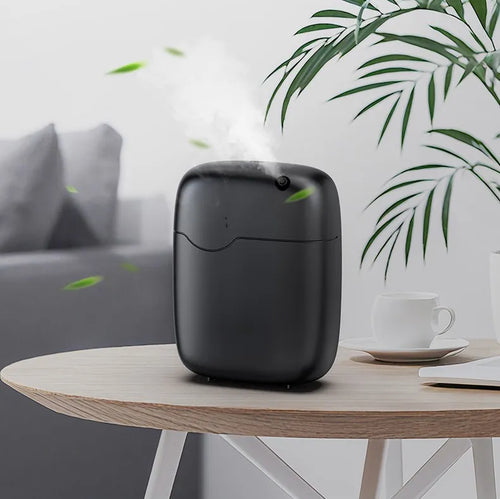
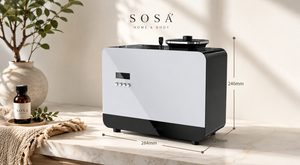
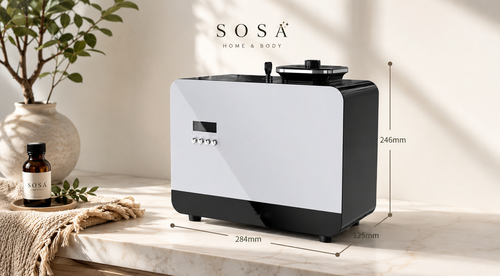
Vaayu: waterless cold-air nebulisation · no water, no heat, no dampness · under 38 dB 1000 m³ (≈2,000–3,000 sq ft) · 400ml tank ≈75 days · app + 1h/4h/8h/24h timers · key-lock 0.9 kg and smaller than a shoebox — one machine can serve a whole portfolio of listings


Founder Diaries · The Brokerage Office · Your Own Space
By Sonal Sahani · ISIPCA Versailles 11 min read Updated September 2026
Probably yes — but the word premium is doing a lot of unexamined work in that question, and if you spend against it without unpacking it you will buy the wrong things. A client who is about to commit ₹5 crore is not assessing your office as decor. They are reading it for evidence about how you operate, and almost everything they pick up on is operational rather than aesthetic: whether they were expected, whether the room was ready before they walked in or being tidied while they stood there, whether it is quiet enough to say a number out loud. Scent belongs on that list. It does not belong at the top of it, and this page is going to rank it honestly.
Quick answers — read this first
What a high-value client actually registers, roughly in order: whether they were expected and somebody was ready; whether the meeting room was prepared before they arrived; whether it is quiet enough to discuss money; the seating and the table; the temperature; somewhere to put a coat and a bag; what they are offered to drink and how it arrives; cleanliness at skirting-board and window-glass level.

Where scent sits: somewhere in the middle. Below readiness, quiet and seating; above the artwork and the coffee-table books.

Why include it anyway: it is one of the few items on the list that works continuously without anybody having to remember it on the day.

The ladder: Sukoon ₹1,899 for one cabin, Vaayu ₹11,999 for most independent offices up to roughly 2,000–3,000 sq ft, Aangan ₹25,999 for a sales gallery or a whole floor.
The short answer
Short answer: yes, but spend on the operational things first. At this value a client is reading your office for evidence about how you work, and the strongest signals are whether they were expected, whether the room was ready before they arrived, and whether it is quiet enough to discuss a number — none of which are decorating decisions.
The pick: after the free and operational items, one scent held steady — the Ritz-Carlton-inspired Quiet Luxury at ₹299 — on a machine sized to the floor area rather than to the ambition. The Sukoon at ₹1,899 for a single cabin or meeting room, the Vaayu at ₹11,999 for most independent offices, the Aangan at ₹25,999 only for a sales gallery or a full floor.
Shop: the Vaayu at ₹11,999 covers up to 1000 m³ or roughly 2,000–3,000 sq ft, waterless, with a 400ml tank lasting about 75 days, Bluetooth scheduling, under 38 dB and a key-lock. The Sukoon at ₹1,899 covers 270–320 sq ft and includes three 15ml scents. The Aangan at ₹25,999 covers up to 3,000 m³. Free shipping above ₹499.
Straight answer
My clients buy ₹5 crore properties — should my real-estate office feel more premium?
1. Start with whether they were expected. A client at this value has almost certainly been kept waiting somewhere expensive before. The thing that registers is somebody standing up, using their name, and being visibly ready — not a reception that is beautiful and unstaffed. This costs nothing and it outranks everything below it.

2. Prepare the meeting room before they arrive, not while they watch. Chairs straight, table clear, the previous meeting's cups gone, the screen off or on your own material rather than somebody else's file. A room being assembled around a client is the single most common thing I see, and it is expensive in a way no furniture can repair.

3. Make it quiet enough to say a number out loud. If a client can hear the desk outside, or the desk outside can hear the meeting, the room is not fit for the conversation it exists for. A door that seals, a rug, and something soft on one wall will do more for how serious your firm feels than any other spend on this page.

4. Then the physical basics: seating, table, temperature, and somewhere to put things. A chair that is comfortable for fifty minutes, a table with nothing sticky on it, a room that is neither cold nor stuffy when the door opens, and a place for a coat and a bag that is not the floor or the next chair.

5. Then what arrives, and how. Water without being asked, tea or coffee offered properly and brought on a tray with matching cups rather than carried in by hand in whatever was clean. This is a ₹1,500 problem that firms with ₹15 lakh commissions routinely leave unsolved.

6. Then cleanliness at the level people actually notice. Skirting boards, window glass, the underside of the glass table, the edges of the carpet. A client at this level has spent a decade looking at finished buildings and will read a dusty skirting board without ever mentioning it.

7. And then scent, which sits in the middle of the list and earns its place for one specific reason. It is among the few items here that works continuously without anybody having to remember it on the day. The Sukoon at ₹1,899 for one room, the Vaayu at ₹11,999 for most offices, on a schedule.

A portion of every order supports girl-child education through Nanhi Kali.
TL;DR: yes, but premium in an office is mostly operational rather than decorative. What registers is being expected, a room prepared before arrival, quiet enough to discuss a number, decent seating, a sensible temperature, somewhere for a coat, a drink that arrives on a tray, and clean skirting boards. Scent sits honestly in the middle of that list and earns its place because it runs continuously without anybody remembering it — ₹1,899 for one room, ₹11,999 for most offices.
SOSA Aangan · HVAC or standalone
Only when the floor plate genuinely asks for it
SOSA Aangan · HVAC or standalone ₹25,999
Up to 3,000 m³, roughly 8,000–10,000 sq ft, an 800ml reservoir, a metal body, programmable schedules and under 42 dB. This is a sales gallery, a developer's experience centre or a brokerage occupying a whole floor. It is not a 1,200 sq ft consultancy with a reception and two meeting rooms, and recommending it there would be overselling. The honest ladder runs ₹1,899 for one room, ₹11,999 for most independent offices, and this only when the volume behind the doors actually reaches five figures of square feet. Ducted mounting matters more than the headline number: on HVAC you are scenting the distribution rather than the corner.

What a high-value client actually registers

It is worth being precise about who you are trying to impress, because the answer changes the shopping list completely. Somebody buying a ₹5 crore home has almost certainly spent time in developer experience centres, private banking floors, good hotels and the offices of lawyers who bill by the hour. Your reception is not going to out-decorate any of those, and attempting it produces the specific impression of a firm spending on the wrong things. What that client is actually doing in your office is gathering evidence about competence and attention, and competence shows up in operations rather than in furniture.

1
READINESS
Whether they were expected, and whether the room was ready before they arrived
The first and largest signal costs nothing and cannot be bought. A client walks in and finds out within about fifteen seconds whether their arrival was anticipated: somebody stands up, uses their name, knows which meeting this is, and moves them towards a room rather than towards a sofa and an apology. The alternative version — a handsome reception with nobody at it, or somebody who has to ask who they are here to see — undoes a great deal of expenditure very quickly, and no amount of stone cladding compensates for it. The second half of readiness is the state of the meeting room at the moment the door opens, and this is where I see the most damage done in premium consultancies. A room being tidied while a client stands in the doorway tells them, accurately, that they were not planned for. The previous meeting's cups still on the table, chairs at angles, a whiteboard with somebody else's numbers on it, a screen showing another client's file — each of those is small and the accumulation is not. Ten minutes of buffer between appointments fixes all of it and costs nothing but discipline. And the discipline is where scent quietly connects to this section: a scheduled machine is one of the very few elements of a client's arrival that does not depend on somebody remembering it while three other things are going wrong.
2
THE ROOM ITSELF
Quiet enough to say a number, comfortable enough to stay an hour
Then the physical properties of the room, in the order they actually matter. Acoustic privacy is first and it is under-spent on almost everywhere: if a client can hear the desks outside, or suspects the desks outside can hear them, they will not talk freely about money, family or the real reason they are moving. That is a functional failure of the room, not an ambience problem, and it is fixed with a door that seals properly, a rug, and something soft on at least one wall — a curtain, an upholstered panel, a bookcase with actual books in it. Second is seating: a chair that is comfortable for fifty minutes rather than one that photographs well, because a client who is subtly uncomfortable will shorten the meeting without knowing why. Third is the table, which should be large enough for a laptop, a set of drawings and two cups without anybody having to move anything, and clean on its underside as well as its top. Fourth is temperature, which is the most commonly wrong thing in an Indian office and the easiest to fix: a meeting room that has been shut since morning is stuffy for the first ten minutes and a room that has been cooling since eight is cold enough to be distracting. Start it twenty minutes ahead, not two. And fifth is somewhere to put a coat, an umbrella and a bag that is not the floor and not the adjacent chair. That last one costs about ₹2,000 and I have seen it missing from offices with a marble reception desk.
The test I would apply before spending anything at all: sit in your own meeting room for fifty minutes with the door shut, at four in the afternoon, and do nothing. Whatever irritates you in that hour is what your clients have been quietly noticing, and it will almost never be the thing you were planning to replace.
3
WHAT ARRIVES, AND WHAT IS CLEAN
The tray, the glass, the skirting board — and where scent honestly sits
Then the two things that separate a competent office from a considered one, both of which are cheap. The first is hospitality mechanics: water offered without being asked, a proper question about tea or coffee rather than a rhetorical one, and the whole thing arriving on a tray with matching cups instead of being carried in by hand in whichever mugs were clean. A tray, six matching cups and glasses, and a small jug is a spend of a few thousand rupees, and it is the difference between being served and being handed something. The second is cleanliness at the level that experienced people actually read: not whether the floor has been mopped, which everybody does, but skirting boards, the tops of door frames, window glass, the edges of carpet against the wall, and the underside of a glass table, which is the single most reliably neglected surface in Indian commercial interiors. A client who has spent a decade inspecting finished buildings reads those without ever mentioning them. And scent belongs at roughly this point in the list — below readiness, acoustic privacy, seating and the drink, and above artwork, coffee-table books and the reception desk material. That is an honest placement rather than a modest one. What earns it a place at all is the property nothing else on the list has: it is continuous. The chairs are only right if somebody straightened them, the tray only works if somebody assembled it, but a scheduled machine is producing the same room at 9.15 on a Monday and at 6.40 on a Friday without a single person having thought about it.

Ten things, ranked, with scent where it belongs

Ten things a client buying at ₹5 crore and above actually registers in an office, in the order I would spend on them, with an honest cost against each. Scent appears at position seven, which is where it belongs — well below the operational items and well above the decorative ones. Six of the ten cost nothing or near-nothing.

Ranked honestly
What registers in a brokerage office, in spending order
Rank What it is Why it registers Cost
1. Being expected ★ Somebody stands, uses their name, knows the meeting and moves them along Decided in the first fifteen seconds, and no amount of stone cladding recovers it afterwards ₹0
2. A room ready before they arrive Chairs straight, table clear, previous cups gone, screen off or on your own material A room assembled around a client tells them accurately that they were not planned for ₹0
3. Quiet enough to discuss money A door that seals, a rug, something soft on one wall — a curtain, a panel, a full bookcase A client who suspects they can be overheard will not tell you the real reason they are moving ₹8,000+
4. Seating and table A chair comfortable at fifty minutes; a table that holds a laptop, drawings and two cups Discomfort shortens meetings without either party naming it ₹25,000+
5. Temperature and coat storage Cooling started twenty minutes ahead, and somewhere for a coat, umbrella and bag The two most commonly wrong things in an Indian office, and among the cheapest to correct ₹2,000+
6. The drink and the tray Water unasked, a real offer of tea or coffee, matching cups arriving on a tray The difference between being served and being handed something, for the price of one dinner ₹3,000+
7. Scent, held at one level One composition, low, on a schedule that runs the office hours Ranked here on purpose. It earns its place because it is continuous and needs nobody to remember it ₹1,899–₹11,999
8. Cleanliness at skirting level Skirting boards, door-frame tops, window glass, carpet edges, the underside of a glass table Read silently by anybody who has spent a decade inspecting finished buildings ₹0
9. Lighting that matches One colour temperature across the whole room rather than three bulbs bought in three years The most commonly broken free thing in a small office, and the most visible once seen ₹1,500
10. Artwork and objects One good piece rather than five ordinary ones, and a reception free of clutter Genuinely last. A client at this level is not assessing your taste, they are assessing your attention Varies
Shop this guide
Sized to the office, in three machines
The SOSA principle
A client committing ₹5 crore is not assessing your taste. They are assessing your attentionand attention shows up in whether the room was ready, not in what it cost.
Six of the ten things they register are free or nearly so. Scent is seventh, and it earns its place by running every day without anybody having to remember it.

The ladder by floor area, and why scent still earns a place

Take the sizing first, because this is where money gets wasted in both directions. Buy for the volume that doors actually enclose rather than for the square footage on the lease, and treat every closed room as its own problem. A single cabin or one meeting room at 270–320 sq ft is a Sukoon at ₹1,899: a 500ml ultrasonic, 16–18 hours per fill on low, steady, 2H and 4H timers, three 15ml Hotel Collection scents of your choice included, and three drops per tank in a workplace. It is water-based, adding 30 to 50 millilitres of water an hour to the air, which is fine in one air-conditioned room and worth keeping away from paper stock. An independent brokerage of roughly 1,200 to 3,000 sq ft — reception, an open-plan floor and two meeting rooms — is a Vaayu at ₹11,999. Waterless cold-air nebulisation of undiluted oil, up to 1000 m³, a 400ml tank lasting about 75 days, Bluetooth with 1h/4h/8h/24h scheduling, under 38 dB in a room full of phone calls, auto-stop, a key-lock so the setting survives, and 0.9 kg in a body smaller than a shoebox. The Aangan at ₹25,999, up to 3,000 m³ or roughly 8,000–10,000 sq ft with an 800ml reservoir and HVAC mounting, is a sales gallery, a developer's experience centre or a brokerage on a whole floor — and putting one into a 1,500 sq ft consultancy would be overselling, which is why I am saying so on a page about spending more.

Then the argument for including scent at all, which I want to make on its own terms rather than by association with the expensive items above it. Every other thing on the ranked list depends on a person doing something at the right moment. The chairs are straight because somebody straightened them; the room is cool because somebody started the air conditioning at the right time; the tray is correct because somebody assembled it; the client was expected because somebody read the diary. On a good Tuesday all of that happens. On the Tuesday when a deal is going wrong, two people are out at site and the phone has not stopped, some of it does not — and the client arriving at four has no idea it was an unusual day. A machine on a schedule is indifferent to that. It produced the same room on the good Tuesday and the bad one, and over a year that consistency is worth more than the modest thing it does on any single afternoon. That is the whole commercial case and I am not going to inflate it. Nothing here claims that a scented office affects an offer, a mandate, a fee or a client's decision, because there is no defensible figure for any of that in property and I am not prepared to invent one. It is presentation, in the same category as the photography on your listings and the lighting in your reception.

Then two boundaries, both of which apply with more force in your own office than in a listing. The first is that a smell with a physical cause in your own premises is a repair rather than a fragrance decision. Older commercial buildings produce specific problems: a pantry drain that has dried out over a long weekend, a damp patch where an external wall meets a floor slab, a bathroom vent that runs to a shaft rather than to outside, seepage from the floor above. Every one of those is fixable and every one of them is made worse by covering it — worse practically, because the underlying problem carries on developing, and worse professionally, because a client who eventually notices the combination has learnt something about how your firm handles inconvenient information. Find it, fix it or raise it with the landlord, and scent a space that is genuinely sound. The second is the constraint that makes this a workplace rather than a showroom: the people who work there. Consult them before installing anything, set the level with somebody whose nose has not been in the building all morning, and understand that a colleague who reacts to the scent ends the experiment rather than reduces it. An office running an expensive machine that one member of staff quietly dreads is not a premium office, whatever the reception desk is made of.

Every other thing on this list needs somebody to remember it on the day. A scheduled machine produced the same room on the Tuesday when everything went wrong.
— Sonal Sahani, SOSA

The SOSA edit

In spending order for a consultancy whose clients transact above ₹5 crore. The free rows come first because they outrank everything paid, the machine is sized to the floor plate rather than to the ambition, and the last row states what this page will not sell you.

The SOSA edit
A premium brokerage office, in spending order
Spend on What it is Why it is in this position Cost
1. Readiness ★ Being expected by name, and a meeting room prepared before the client walks in rather than around them The largest signal in the building and the only one that costs nothing. Ten minutes of buffer between appointments ₹0
2. Acoustic privacy A door that seals, a rug, something soft on one wall. A room fit for the conversation it exists for A client who suspects they can be overheard withholds the information you actually need ₹8,000+
3. Seating, table, temperature, coat space Comfortable at fifty minutes, large enough to work on, cooled twenty minutes ahead, with somewhere for a bag The physical basics. Cheap relative to a single commission and almost universally under-done ₹27,000+
4. The tray and matching cups Water unasked, a real offer, and everything arriving together rather than being handed over A few thousand rupees that changes being handed something into being served ₹3,000+
5. Sukoon or Vaayu, by floor area 270–320 sq ft for one cabin at ₹1,899; up to 1000 m³ or 2,000–3,000 sq ft waterless with scheduling at ₹11,999 Ranked fifth deliberately. It earns its place by running every day without anybody remembering it ₹1,899 / ₹11,999
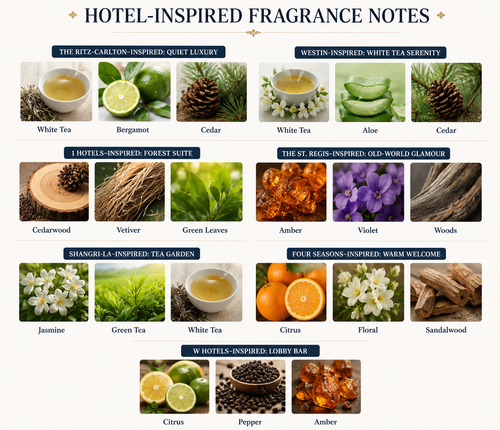
6. One scent, held The Ritz-Carlton-inspired Quiet Luxury at ₹299 — white tea, bergamot and cedar, low and unchanged The bottle is a rounding error against the furniture. The discipline of not changing it is the valuable part ₹299
Aangan — only if the floor plate asks Up to 3,000 m³ or roughly 8,000–10,000 sq ft, 800ml, HVAC or standalone, under 42 dB A sales gallery or a whole floor. In a 1,500 sq ft consultancy this would be overselling and I would say so ₹25,999
Not this: a claim about what it does to a deal Fragrance is presentation, in the same category as photography and lighting There is no defensible figure for what scent does to a property transaction, and this brand will not invent one
Honest notes for buyers: fragrance is the last step in preparing a property, never the first, and it must never be used to cover a defect. Damp, a leak, drains, smoke or anything structural is a material fact about a property: find it, fix it or disclose it. Scent a listing that is genuinely sound. On the machines: the Vaayu at ₹11,999 is waterless cold-air nebulisation — no water, no heat and no dampness — covering up to 1000m³ or roughly 2,000–3,000 sq ft, with a 400ml tank lasting about 75 days, Bluetooth app control, 1h/4h/8h/24h timers, under-38dB running, auto-stop and a key-lock, at 0.9 kg and smaller than a shoebox, so one machine can serve a whole portfolio. The Aangan at ₹25,999 covers up to 3,000m³ for sales galleries and clubhouses. The ultrasonic Sukoon, Boond and Megh are water-based and add 30–50 ml of water an hour to the air, which makes them the wrong choice for a closed or humid vacant property. A reed diffuser needs 24–72 hours to establish, so it suits a listing shown over months rather than a viewing tomorrow. A candle must be attended and put out, which rules it out of an unoccupied property. SOSA does not make a room spray for the home; the sprays in the range are car perfumes. The Hotel Collection scents are SOSA's own interpretations inspired by the world's finest hotels; SOSA is an independent Indian fragrance house, not affiliated with or endorsed by any hotel brand. A portion of every order supports girl-child education through Nanhi Kali.
SOSA Hotel Collection · seven scents
The part of the upgrade that costs ₹299
SOSA Hotel Collection · seven scents from ₹299
White tea, bergamot and cedar; white tea, aloe and cedar; cedarwood, vetiver and green leaves; amber, violet and woods; jasmine, green tea and white tea; citrus, soft florals and sandalwood; citrus, pepper and amber. Set against new seating, a better table or a partition that makes a meeting room quiet enough to discuss a number in, a 15ml bottle at ₹299 is a rounding error — which is exactly why it should be honestly ranked rather than sold as the upgrade. Nothing in the seven is sweet and black pepper is the only spice material, which is a useful property in a room people work in. Pack of 7 at 15ml is ₹1,799 against ₹2,093 singly.
SS
ISIPCA
Versailles
A note from Sonal

I was asked this question almost exactly as the title puts it, by a consultant in Mumbai whose clients transact at a level I find difficult to imagine, and who wanted to know which machine to buy. What I asked her instead was where a client puts a wet umbrella in July, and there was a pause, because the answer was the floor beside the chair. Her reception was genuinely handsome. It had a stone desk and a commissioned piece of art on the wall behind it, and it had no umbrella stand, no coat hook and nowhere to set a bag down that was not the seat somebody else would use. A stand and a small side table came to about ₹4,000. I have thought about that conversation many times since, because it is the shape of the whole problem: the expensive things were done and the free ones were not.

The other thing I would say to anybody spending against the word premium is to sit in your own meeting room for an hour. Not to inspect it — to sit in it, with the door shut, at four in the afternoon, doing nothing, the way a client does while you fetch a file. You will discover that the chair is fine for twenty minutes and tiring at forty, that you can hear the desk outside more clearly than you thought, that the underside of the glass table has not been cleaned since it was installed, and that the room takes about fifteen minutes to become comfortable after being shut all morning. None of those cost much to fix and every one of them is doing more work than the thing you were about to buy. Scent belongs on that list. It belongs in the middle of it, it costs between ₹1,899 and ₹11,999 depending on your floor area, and it is the only item that keeps working on the days when nobody has time to think about any of the others.

Everything is made and supported from Pune, and a part of every order funds girl-child education through Nanhi Kali. You get a space that smells like somewhere considered; a girl gets a classroom. That equation has always felt right to me.

Frequently asked questions

Should a real-estate office feel more premium if clients buy ₹5 crore properties?
Yes, but premium here is mostly operational rather than decorative. The strongest signals are being expected by name, a meeting room prepared before the client arrives, and a room quiet enough to discuss a number in. Those cost nothing or very little and outrank furniture, artwork and the reception desk material.
Where does scent rank against everything else in an office?
Around the middle. Below readiness, acoustic privacy, seating, temperature and how a drink arrives; above artwork, coffee-table books and the reception desk. It earns a place because it is one of the very few things on the list that runs continuously without anybody having to remember it on the day.
Which machine should I buy for my office size?
One cabin or a single meeting room of 270–320 sq ft: the Sukoon at ₹1,899, water-based, with three 15ml scents included. An independent brokerage of roughly 1,200–3,000 sq ft: the Vaayu at ₹11,999, waterless, up to 1000 m³, with app scheduling and a key-lock. A sales gallery or a whole floor: the Aangan at ₹25,999, up to 3,000 m³.
Does a more premium office win more mandates?
I am not going to tell you that, because nobody can support it. There is no defensible figure for what office presentation or fragrance does to a property transaction. What is honestly claimable is that a consistent, well-run space reads as a firm that handles details, which is presentation rather than persuasion.
Our office has a musty smell in one corner — should I scent it more heavily there?
No. A smell with a physical cause is a repair, and in a commercial building it is usually a dried pantry drain, seepage where an external wall meets a slab, or a bathroom vent discharging into a shaft. Find it, fix it or raise it with the landlord. Covering it lets the underlying problem carry on and produces a worse combination than either smell alone.
Sized to the floor, not to the ambition
₹1,899 for one room₹11,999 for most independent offices
The Sukoon is ₹1,899, covering 270–320 sq ft with steady, 2H and 4H timers, 16–18 hours per fill on low and three 15ml Hotel Collection scents of your choice included. The Vaayu is ₹11,999: waterless cold-air nebulisation, up to 1000 m³ or roughly 2,000–3,000 sq ft, a 400ml tank lasting about 75 days, Bluetooth with 1h/4h/8h/24h scheduling, under 38 dB, auto-stop, key-lock, 0.9 kg, four hotel-inspired scents supplied. The Aangan is ₹25,999 for up to 3,000 m³. Free shipping above ₹499, and a portion of every order supports girl-child education through Nanhi Kali.
See the Vaayu · ₹11,999 See the Sukoon · ₹1,899
Continue the read
More from SOSA
Editorial standards & sources
About this guide: Written by Sonal Sahani, ISIPCA Versailles-trained founder and perfumer at SOSA Home & Body, on what premium actually means in a real-estate office when clients transact above ₹5 crore: why the strongest signals are operational rather than decorative, what a high-value client registers in order from being expected through acoustic privacy and seating to the tray a drink arrives on and the state of the skirting boards, where fragrance honestly ranks against all of that, why it earns a place because it runs continuously without anybody remembering it, and how to size a machine from ₹1,899 to ₹25,999 by floor area.

Facts verified August 2026: Product facts used in this guide. SOSA Vaayu ₹11,999: waterless cold-air nebulising diffuser, atomises undiluted fragrance oil to a dry residue-free nano-mist, coverage up to 1000m³ (approximately 2,000–3,000 sq ft), 400ml refillable tank lasting up to about 75 days per fill, Bluetooth app plus onboard control, 1h/4h/8h/24h timer scheduling, adjustable intensity, under 38 dB, DC 12V/1A at 5W, 165 × 80.5 × 215 mm and 0.9 kg, freestanding or wall/HVAC mounted, auto-stop and key-lock, CE, RoHS and SGS certified, supplied with four hotel-inspired fragrances. SOSA Aangan ₹25,999: HVAC-connected or standalone commercial nebulising diffuser, coverage up to 3,000m³ (roughly 8,000–10,000 sq ft), 800ml reservoir, metal body, programmable schedules, under 42 dB. Ultrasonic machines are water-based and consume 30–50 ml of water an hour: Sukoon ₹1,899 (500ml, 270–320 sq ft, 16–18 hours on low, 3–6 drops per tank, steady/2H/4H timers, three 15ml Hotel Collection scents included), Boond ₹899 (300ml), Megh ₹3,499 (6 litres). Hotel Collection water-based fragrance 15ml ₹299, 100ml ₹999, 300ml ₹1,799, Pack of 7 at 15ml ₹1,799 against ₹2,093 bought singly; the Vaayu and Aangan take their own undiluted oil rather than these water-based bottles. Reed diffusers (separate alcohol-free line) from ₹749, requiring 24–72 hours to reach their working level. Scented candles from ₹379, scenting a room in roughly 15–20 minutes but requiring attendance. Free shipping above ₹499. Timings: a nebulising diffuser reaches a working level within minutes and a stated viewing level well inside two hours. This guide makes no claim that fragrance affects a property's price, offer level or time on market; it is presentation, in the same category as photography, styling and lighting. Fragrance must never be used to conceal a material defect. SOSA is not affiliated with or endorsed by any hotel brand. Prices subject to change — see the live product pages.
ブログに戻る