



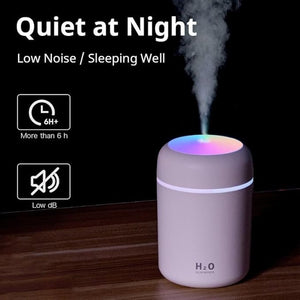
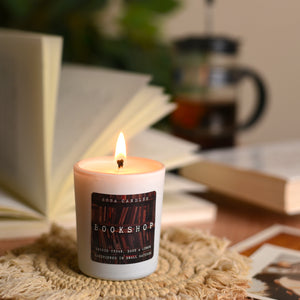
Twenty to thirty minutes: a strong smell — your own perfume, a freshly lit candle, a diffuser started in a cold room — drops below notice.
One to two weeks: a new household baseline disappears entirely. A new flat, a new sofa, a new diffuser scent.
Recovery: twenty minutes out of the building gives partial recovery; a night's sleep gives more; three days or more away gives you your nose back completely, which is why coming home from a trip is the only honest audit most people ever perform.
2. Twenty to thirty minutes for something strong you are standing in. Your own perfume, a freshly lit candle, a diffuser started in a cold room. It has not weakened at half past. You have stopped being told about it.
3. One to two weeks for a new household baseline. A new flat, a new sofa, a new diffuser scent. Most people lose a new scent somewhere between day eight and day fourteen, which is why week three produces the phone call about the product having stopped working.
4. Twenty minutes away gives partial recovery. Enough for a rough reading of the level, not enough to judge anything subtle. Out of the building, and back in through the front door.
5. A night's sleep gives more; three days gives you your nose back. Which is why returning from a trip is the only honest audit most households ever perform, and why the first thirty seconds inside the door are worth paying attention to.
6. The one thing to do with these numbers: set a dose once and write it down. Your perception falls on a schedule and the concentration in the room does not, so a dose adjusted by feel only ever moves in one direction.
A portion of every order supports girl-child education through Nanhi Kali.

Three clocks, and which one you are asking about
Almost every disagreement about how long nose-blindness takes comes from two people asking about different things. Losing a strong smell you are standing inside is a matter of half an hour. Losing the entire background of a home is a matter of a fortnight. And the first flicker of adaptation, the steep initial drop in receptor response, happens so fast that it is finished before you have taken your coat off. These are not three estimates of one figure. They are three different processes with three different recovery times, and knowing which one you are asking about is most of the answer. So: the fast clock, the medium clock and the slow clock, in that order.
The table of intervals
Every figure worth having, in one place, split between losing a smell and getting it back. The intervals are ranges rather than constants — they move with concentration, material, room size and how much you come and go — and the last column is what each interval is practically good for, since several of them are only interesting and two of them are genuinely useful.
| Interval | What is happening | Roughly how long | What it is good for | Cost |
|---|---|---|---|---|
| New household baseline disappears ★ | Central habituation to a new scent, a new flat, a new sofa or a new detergent | One to two weeks, most often between day eight and day fourteen | Knowing that week three is when people wrongly conclude a product has stopped working. Nothing has changed but you | ₹0 |
| A strong smell drops below notice | Receptor adaptation to your own perfume, a freshly lit candle, a diffuser started cold | Twenty to thirty minutes | Judging a room in the first ten minutes after entering it, and never after an hour beside it | ₹0 |
| The first steep fall in response | Receptor cells quietening while a molecule continues to arrive | Seconds to a couple of minutes | Explaining why a smell is overwhelming on the second breath and ordinary by the tenth | ₹0 |
| Leave the building and return | Partial receptor recovery. The learned filter is untouched | Twenty minutes out, then in through the front door | A rough weekly check on level. Enough to catch a dose that has crept; not enough to judge character | ₹0 |
| A night away | Full receptor recovery and the beginning of central recovery | One night elsewhere | A monthly audit, and much better than the twenty-minute version | ₹0 |
| Three days or more away | The learned filter decays. Your nose is genuinely reset to your own home | Three days upwards; a week is comprehensive | The only honest audit most households ever perform, and it lasts about thirty seconds on the doorstep | ₹0 |
What resets it, and the one consequence worth acting on
Recovery is the half of this subject that actually helps, and it has three settings. Twenty minutes out of the building restores a useful fraction of receptor sensitivity and gives you a rough reading — adequate for noticing that a level has crept, inadequate for judging whether a scent suits a room. Leave properly rather than nominally: a balcony that shares air with the sitting room is not out, and moving to the bedroom is not out either, since the whole flat is one adapted space. A night elsewhere is a meaningful step up, because it gives complete receptor recovery plus the first of the central recovery, and it is the reason a spare room at a friend's house on a Saturday turns your own hallway into information on Sunday. Three days or more is the real reset. By then the learned filter has decayed enough that you meet your own home roughly as a visitor does, which is why returning from a trip is the only accurate audit most households ever carry out. It is also a brief one — perhaps thirty seconds on the doorstep before the fast clock starts again — so it is worth deciding in advance to pay attention. And a note on why the intervals move: adaptation forms fastest around something perfectly constant, so a scent that rises and falls, or a flat that gets a genuine twenty-minute cross-draught every morning through two openings on opposite walls, stays perceptible noticeably longer than one held flat all day. Airing the room is not fragrance maintenance, but it does keep your own nose in the conversation.
The second thing worth knowing is what these intervals mean for judging a room at all, because most domestic arguments about fragrance are really arguments about when the judging happened. The first ten minutes after entering a space are the only period in which your assessment of it is worth anything, and after an hour of sitting in it you are simply not a witness. That has practical consequences for anybody trying a new scent: judge it when you come in from outside, not at the end of an evening, and judge it several times across the first week rather than once on the first night. It also explains a domestic pattern that causes a surprising amount of friction — the person who has been at home all day and the person who has just walked in are giving genuinely different reports of the same room, and the one who has just arrived is right. Before any of that, though, take a reading over clean air. A closed room does not stop producing smell, it stops removing it, so anything you assess in an unaired flat is your scent plus whatever has accumulated since the windows were last open. Two openings for twenty minutes, a mug of water down every floor drain and unused shower so the U-bend seal cannot evaporate and vent the drain into the room, and the washing machine door and drawer left open between washes. All free, all more consequential than any dose adjustment, and all of it work that fragrance cannot do — a scent laid over a source produces two smells rather than one, and the household least able to detect the result is yours.
Then the single practical consequence, which is the only reason this page has a commercial section at all. Since your perception falls on a schedule and the concentration in the room does not, a dose adjusted by feel can only travel in one direction. So set it once, in the first week, while your judgement still works — and write it down. On the bottle, in pen, with the date. The Hotel Collection is composed at three to six drops per tank, and the dose is per tank rather than per litre, since you are scenting the mist and not the water — so a 300ml Boond at ₹899 takes the same number of drops as a 500ml Sukoon at ₹1,899, and the larger machine buys hours and coverage rather than intensity. A written number turns an unanswerable question into a settled one: when you find yourself standing in the room wondering whether it is enough, the answer is the number on the bottle rather than the evidence of a nose that stopped reporting eight days ago. The second half of the same idea is to prefer a run that stops. The Sukoon has steady, 2H and 4H timers on a 500ml BPA-free tank rated for 270–320 sq ft, 16–18 hours per fill on low at 30–50 ml/h against 9–12 on high, a 2.4MHz cool-mist plate, a remote, auto shut-off and three 15ml scents of your choice — and a two-hour run produces a repeatable result while an open-ended one produces a level nobody in the house can measure. If you already own a diffuser of any make, none of that requires spending anything: pick a number, write it down, use whatever timer you have, and leave it alone. On the constraints, briefly: the Hotel Collection is water-based and for ultrasonic machines only — the Sukoon, the Boond and the Megh at ₹3,499 — not a reed diffuser and not the waterless Vaayu at ₹11,999, which takes its own undiluted oil. Rinse the tank between scents; never substitute raw essential or carrier oils.
The SOSA edit
This is a page of numbers rather than of purchases, so the table is a method instead of a shopping list. Five of the six rows cost nothing and the sixth is optional. Nobody needs to buy anything to act on any of the intervals above.
| Step | What it is | Which interval it uses | Cost |
|---|---|---|---|
| 1. Decide the dose in week one ★ | Choose the number of drops while you can still perceive the result, rather than in week five when you cannot | The one-to-two-week clock. Your judgement has an expiry date and this is it | ₹0 |
| 2. Write the number on the bottle | In pen, with the date. The dose, the machine and the room | Turns every later moment of doubt into a lookup rather than a guess made with a broken gauge | ₹0 |
| 3. Judge a room in its first ten minutes | Assess when you come in from outside, never after an hour of sitting in it | The twenty-to-thirty-minute clock. After that you are not a witness to your own room | ₹0 |
| 4. Weekly: twenty minutes out, then back in the front door | Out of the building rather than into another room, and in as a visitor arrives | Partial receptor recovery. Enough to catch a level that has crept | ₹0 |
| 5. Annually: the first thirty seconds home from a trip | Three days away or more, and attention paid on the doorstep before you unpack | Full recovery. The most accurate reading of your own home you will take all year | ₹0 |
| 6. Optional: a timer instead of a standing run | Steady, 2H and 4H settings, so a room rises and falls rather than holding one level all day | Habituation forms fastest around a constant, so a scent that stops stays perceptible longer | ₹1,899 |

Versailles
I wanted this page to have no product in it, and it very nearly does. The question of how long nose-blindness takes has an answer made of intervals rather than of purchases, and I think people are owed the intervals plainly, because almost every bad decision in home fragrance is made by somebody who does not know them. Twenty to thirty minutes for your own perfume. One to two weeks for a new scent in a house. Three days away to get any of it back. Those three figures would prevent most of the emails I get, and none of them require you to spend a rupee.
The one thing I would ask you to do with them is dull and it works. Choose your dose in the first week, write it on the bottle with the date, and then stop making the decision again. A dose set by feel in week five is set by an instrument that stopped reporting in week two, and it can only ever move upwards. I would honestly rather you did that with a competitor's diffuser and a pen than bought anything from me on the strength of this page. If you happen to be choosing a machine anyway, buy one with a timer on it, because a scent that rises and falls stays perceptible to its own household for far longer than one held flat — and that is a specification rather than a preference.
Everything is made and supported from Pune, and a part of every order funds girl-child education through Nanhi Kali. You get a home that smells like somewhere you chose; a girl gets a classroom. That equation has always felt right to me.
Frequently asked questions
- Why do I only notice my home's smell when I come back from a trip? — the three-day interval, used as an annual audit.
- Why do I keep adding more drops to my diffuser? — what happens when the intervals are not known.
- Should I change my home fragrance regularly to stop going nose-blind? — whether alternating actually helps.
- Nose-blindness at home: why you cannot smell your own house, and what to do — the pillar guide.
- Brand: the SOSA founder story.
Facts verified August 2026: Diagnostic facts used in this guide: a closed room accumulates what it cannot exchange, so cross-ventilation needs two openings rather than one; a drain's U-bend water seal evaporates in roughly two to four weeks of disuse and then admits sewer gas, which is corrected by pouring water down the drain; microbial growth in fabric and on surfaces accelerates above about 60% relative humidity, and Indian monsoon indoor humidity commonly runs 80–95%, which is the one situation where ventilating on a wet day can import moisture rather than remove it; an air-conditioner's cold, wet evaporator coil and filter grow biofilm that is blown into the room on start-up; textiles adsorb cooking aerosol and body oils and re-release them for weeks; and olfactory adaptation makes a constant household smell undetectable to its residents within about a fortnight while visitors still perceive it. Timings: a scented candle scents a normal room in roughly 15–20 minutes, a Sukoon ultrasonic diffuser reaches a steady level in about 20 minutes from cold, and a reed diffuser needs roughly 24–72 hours. SOSA products and prices: Sukoon 500ml ₹1,899 (270–320 sq ft, 16–18h on low, 9–12h high, 30–50 ml/h, 2.4MHz cool mist, remote, steady/2H/4H timers, BPA-free, auto shut-off, includes three 15ml Hotel Collection scents of your choice); Boond 300ml ₹899; Megh 6-litre ₹3,499; waterless Vaayu ₹11,999 (up to 1000m³); Aangan ₹25,999. Hotel Collection water-based fragrance 15ml ₹299, 100ml ₹999, 300ml ₹1,799, Pack of 7 at 15ml ₹1,799; dose 3–6 drops per tank. Reed diffusers (separate alcohol-free line): Morning Freshness from ₹749, Garden Bloom and Evening Calm from ₹799, Fresh Brew and Mountain Breeze from ₹849; 130ml from ₹1,249; duos from ₹1,498; 300ml refills ₹2,399. Scented candles: Bookshop 80g ₹379, Amber Rose 130g ₹599 and 220g ₹799, Smoked Oudh 130g ₹449, ceramic jar candles ₹949, Pure Calm wax melt set ₹854. Free shipping above ₹499. SOSA does not make a room or linen spray for the home. The Hotel Collection scents are SOSA's own interpretations; SOSA is not affiliated with or endorsed by any hotel brand. Prices subject to change — see the live product pages.