


How Do I Make My Home Smell Expensive for a Dinner Party Without Overpowering the Food?

How Do I Make My Home Smell Expensive for a Dinner Party Without Overpowering the Food?

★ Hosting dinner · cooking smells, open kitchens and the hour before people arriveCandle ₹379 · reed ₹749 · Boond ₹899 · Sukoon ₹1,899 · free shipping above ₹499A portion funds girl-child education
★ SOSA · when people are coming over
You cannot fragrance your way out of a fried-onion kitchen. You can, however, clear it and then put something clean on top — and the timing is the recipe
★ ★ ★ ★ ★
★★★★★
"Biryani for eight and I was panicking about the smell. Extractor through cooking, windows wide for twenty minutes, then the diffuser. The living room was completely clear by the time they sat down."
Nandini R. Dinner party, Hyderabad
Air, then scent
★★★★★
"My kitchen opens into the living room. Told me to keep fragrance out of the dining area entirely while people eat, which I had never considered. It was right."
Imran Q. Open kitchen, Mumbai
Nothing at the table
★★★★★
"The bit that helped: turn it on an hour before, off when guests arrive. The room holds it and nothing competes with the food."
Shalini D. Hosts often, Pune
On early, off at 8
★★★★★
"Twelve people in a small 2BHK. The advice was less fragrance, more airflow — the room was going to get warm regardless. Completely correct."
Gaurav L. 12 guests, Delhi
Less, not more
★★★★★
"Same scent at the entrance and the living room so the flat reads as one place. Small thing, made it feel considered."
Ritika S. Entrance + living, Bengaluru
One signature
★★★★★
"Frying happens. Twenty minutes of proper cross-ventilation afterwards does more than any product, and then the product actually works."
Harish M. Fried food, Chennai
Cross-ventilate
★★★★★
"Biryani for eight and I was panicking about the smell. Extractor through cooking, windows wide for twenty minutes, then the diffuser. The living room was completely clear by the time they sat down."
Nandini R. Dinner party, Hyderabad
Air, then scent
★★★★★
"My kitchen opens into the living room. Told me to keep fragrance out of the dining area entirely while people eat, which I had never considered. It was right."
Imran Q. Open kitchen, Mumbai
Nothing at the table
★★★★★
"The bit that helped: turn it on an hour before, off when guests arrive. The room holds it and nothing competes with the food."
Shalini D. Hosts often, Pune
On early, off at 8
★★★★★
"Twelve people in a small 2BHK. The advice was less fragrance, more airflow — the room was going to get warm regardless. Completely correct."
Gaurav L. 12 guests, Delhi
Less, not more
★★★★★
"Same scent at the entrance and the living room so the flat reads as one place. Small thing, made it feel considered."
Ritika S. Entrance + living, Bengaluru
One signature
★★★★★
"Frying happens. Twenty minutes of proper cross-ventilation afterwards does more than any product, and then the product actually works."
Harish M. Fried food, Chennai
Cross-ventilate
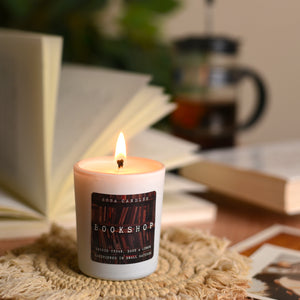
Candle: scent in the room in 15–20 minutes · Sukoon: about 20 minutes from cold A reed diffuser needs 24–72 hours — the wrong buy when guests arrive tonight Ventilate first · fragrance is the finishing layer, never the cover-up


Founder Diaries · Home Fragrance · Hosting Dinner
By Sonal Sahani · ISIPCA Versailles 11 min read Updated August 2026
"Expensive" is not a vague quality and it is not achieved by spending more. In a room it comes down to three things, all of which you can control: restraint, so the scent is a trace rather than a level; dryness, and specifically the absence of sugar, which is the single note that makes a room read as cheap; and consistency, so the smell belongs to the building rather than to the evening. None of those cost money. What they cost is the willingness to use less than you want to. The food constraint then follows almost automatically, because all three push in the same direction.
Quick answers — read this first
What expensive actually is: restraint (a trace, not a level), dryness with no sweetness in it, and consistency across the space and across visits.

Why sweetness is the problem: sugar in the air is the one thing that reads as cheap in a room. Nothing in the seven Hotel Collection scents is sweet — no vanilla, no caramel, no tonka — which is precisely why they read the way they do.

With food: three drops rather than four, machine off before the plates land, and nothing at all in the dining area.

The pair: the Ritz-Carlton-inspired Quiet Luxury before, the St. Regis-inspired Old-World Glamour after. ₹598 for both at 15ml.

The honest part: the homes that smell most expensive usually have less fragrance in them, not more.
The short answer
Short answer: use less than you think, choose something dry with no sweetness in it, and run the same thing every time you host. Three drops rather than four, the machine off before the food arrives, and nothing in the dining area at all. Restraint is the component people skip, and it is the one that does most of the work.
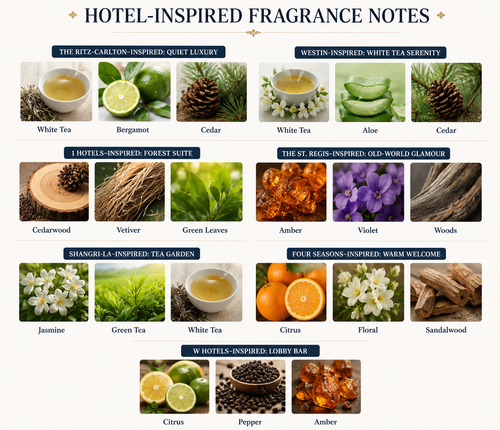
The pick: the Ritz-Carlton-inspired Quiet Luxury — white tea, bergamot and cedar, ₹299 — for the hours before dinner, and the St. Regis-inspired Old-World Glamour — amber, violet and woods, ₹299 — once the plates have gone. ₹598 for the pair, which is less than most single candles.
Shop: Hotel Collection 15ml ₹299, 100ml ₹999, 300ml ₹1,799 at about ₹6 per millilitre; Pack of 7 at 15ml ₹1,799 against ₹2,093 singly, a saving of ₹294. The Sukoon is ₹1,899 for 270–320 sq ft with steady, 2H and 4H timers and three 15ml scents of your choice included. Free shipping above ₹499.
Straight answer
How do I make my home smell expensive for a dinner party without the fragrance getting in the way of the food?
1. Cut the dose before you change the scent. Three drops rather than four. Almost every home I have been in that smelled cheap was running something perfectly good at twice the level it needed. Expensive is a trace. Cheap is a level.

2. Choose something with no sweetness in it at all. Vanilla, caramel, tonka, praline and fruit sugar are the materials that make a room read as a shop rather than a home. None of the seven Hotel Collection scents contain any of them, which is not an accident.

3. Run the same one every time you host. A scent your guests have met before belongs to the building. A new one each time belongs to the evening, and that is the difference between a home with a smell and a home with a diffuser.

4. Then the food constraint, which follows from all three. Machine on ninety minutes before, off on the 2H timer before the plates land, and nothing whatsoever in the dining area. Three drops, not four.

5. The pair I would buy: the Ritz-Carlton-inspired Quiet Luxury at ₹299 before, the St. Regis-inspired Old-World Glamour at ₹299 after. ₹598 for both, one machine, a minute at the tap between them.

6. And the honest note: the most expensive-smelling homes I have been in have less fragrance in them, not more. Clean linen, an aired room and one quiet scent beats anything you can buy at volume.

A portion of every order supports girl-child education through Nanhi Kali.
TL;DR: expensive is restraint, dryness and consistency — a trace rather than a level, nothing sweet, and the same scent every time. Three drops before dinner, the machine off before the food lands, nothing in the dining area. The Ritz-Carlton-inspired Quiet Luxury before and the St. Regis-inspired Old-World Glamour after, ₹598 for the pair.
The Ritz-Carlton-inspired · Quiet Luxury
The bottle for the hours before people sit down
The Ritz-Carlton-inspired · Quiet Luxury ₹299 / 15ml
White tea, bergamot and cedar — the most restrained of the seven and, for this particular question, the most useful. It is composed a register below where it could sit, which is exactly the quality this page is asking for: it does not announce itself, it does not accumulate over three hours, and there is nothing in it a guest could mistake for an air freshener. The bergamot keeps the top clean, the white tea is the least assertive floral material in perfumery, and the cedar underneath is what stops it evaporating into nothing. Three drops on low, ninety minutes before people arrive. ₹299 for 15ml, ₹999 for 100ml, ₹1,799 for 300ml at about ₹6 per millilitre.

The three components of expensive

People ask this question expecting a scent recommendation and the scent is the smallest part of the answer. I have been in homes running a genuinely excellent fragrance that smelled cheap, and homes running almost nothing that smelled like money, and the difference was never the bottle. It was the dose, the composition's sugar content and whether the smell had been there before. Those three components are separable, they are all controllable, and two of the three are free. Take them in order of how much difference they make, which is not the order most people would guess.

1
RESTRAINT
A trace, not a level — and this is the component people skip
The first and largest component costs nothing and is the hardest to accept, because it feels like getting less for your money. A room that smells expensive is a room where you notice the scent when you arrive and then stop noticing it, and where you would struggle to name what it is if asked twenty minutes later. A room that smells cheap is one where the scent is legible the whole time you are in it and you could describe it accurately on the way home. That is a difference of dose, not of quality, and the same bottle produces both results depending on the number of drops. Three is the dinner-party number. Four is already a lot with food in the house. Six, which the Hotel Collection permits, is for an empty flat that has been shut for a week, not for an evening with people in it. The reason restraint reads as expensive is worth understanding rather than just obeying: a strong scent is evidence of effort, and visible effort is what separates the aspirational from the assured. A five-star lobby is scented at a level most people would call barely-there if they measured it, and it works precisely because you cannot tell whether it is fragrance or simply what the building smells like. Ambiguity is the goal. The moment a guest can identify the product category — 'that is a diffuser' — the effect is finished, and no amount of quality in the composition brings it back. Under-dose, always. You can add a drop next time; you cannot take one out of a room.
2
DRYNESS
Sugar is the single note that reads as cheap in a room
The second component is about material rather than quantity, and it is the one where the range does the work for you. Sweetness in air is the tell. Vanilla, caramel, tonka, praline, sugared fruit — these read as cheap in a room almost regardless of how well they are made, and they do it for a specific and slightly unfair reason: they are the materials that dominate the mass-market end of the category, so a nose has learned to associate them with cars, corridors and supermarket aisles. They are also the materials that behave worst over time. Sweet notes are heavy and persistent, they cling to soft furnishings, and they accumulate. A vanilla that is charming at eight o'clock is cloying at eleven, and the reason is that the room has been quietly adding to it for three hours while your nose has been quietly adapting. Dry materials do not do this. Woods, tea, citrus, vetiver and clean ambers stay roughly where you put them. None of the seven Hotel Collection scents contain anything sweet. No vanilla, no caramel, no tonka, no sugar of any kind. White tea, bergamot and cedar; white tea, aloe and cedar; cedarwood, vetiver and green leaves; amber, violet and woods; jasmine, green tea and white tea; citrus, soft florals and sandalwood; citrus, pepper and amber. Black pepper is the only spice material anywhere in the collection — no cinnamon, no clove, no cardamom — and that absence is deliberate rather than a gap in the line. It is the main reason the collection reads the way it does in a room.
3
CONSISTENCY
The same scent, this time and next time, is what makes it belong to the house
The third component is the one nobody thinks of as part of 'expensive' and it may be the most powerful of the three over a year. A scent read as belonging to a building rather than to an occasion has to have been there before. That is the entire mechanism, and it needs nothing but repetition. The first time your guests meet a fragrance in your flat, it is a fragrance. The third time, it is your flat. There is no shortcut and there is no product that accelerates it — only the discipline of not buying something new every time a bottle runs out, which is a genuinely difficult discipline in a category that sells novelty. Consistency across space matters at the same time as consistency across visits: one scent through the entrance, hall and sitting room, so a guest walking through does not register a handover. Both halves are doing the same job, which is removing every cue that says a decision was made this evening. This is also the argument for buying a 300ml 300ml refill at ₹1,799, about ₹6 per millilitre against roughly ₹20 at 15ml, but only once you know which scent you are staying with. Buy the ₹299 bottle first, live with it for a month, and commit to the one that has stopped feeling like a purchase.
The uncomfortable version of all three, which I stand by: the most expensive-smelling homes I have been in have less fragrance in them, not more. Washed linen, a room that has had its air changed, a clean kitchen and one quiet scent at three drops beats any amount of product. Fragrance is the last five per cent and it only works on top of the other ninety-five.

Sweetness, and why it is the tell

A material-by-material look at what reads as expensive in a room and what does not, with the SOSA position on each. The useful column is the third one, which is about how a material behaves over three hours rather than how it smells on a blotter — because a dinner party is three hours long and almost all the bad outcomes in this category are accumulation problems rather than composition problems.

What reads as expensive
Material by material, over the course of an evening
Material family How it reads in a room Over three hours In the SOSA range
Clean woods and tea ★ Restrained, dry, hard to name — the closest thing to a building's own smell Stays roughly where you put it. Does not accumulate, does not cloy, does not go stale in curtains Ritz-Carlton-inspired white tea, bergamot, cedar · ₹299
Dry ambers and powder Warm without being cosy. Plush rather than comforting, which is the distinction that matters Slow and low. It settles into the room and keeps working after the machine stops, which is why it suits after dinner St. Regis-inspired amber, violet, woods · ₹299
Vetiver and green wood The driest register available, and the most food-tolerant thing you can run Completely stable. Occupies a different address in the nose from cooking, so it never competes 1 Hotels-inspired cedarwood, vetiver, green leaves · ₹299
Citrus Bright and clean, and the reason a dry scent does not read as severe Fades first. It is the top of a composition, so a room started ninety minutes early is past its citrus by the time guests arrive, which is correct W Hotels-inspired and Four Seasons-inspired · ₹299
Vanilla, caramel, tonka The single clearest cheap signal in a room, largely by association with the mass market Accumulates badly. Charming at eight, cloying at eleven, and it stays in soft furnishings for weeks None. There is nothing sweet in any of the seven
Cinnamon, clove, cardamom Reads as cooking in an Indian home rather than as fragrance, because that is what it is here Competes directly with dinner and loses. A thinner, colder version of the meal already in the air None. Black pepper is the only spice in the collection
Shop this guide
The two bottles this page recommends, and the machine
The SOSA principle
Expensive is a trace. Cheap is a level. The same bottle produces either resultand the only variable is how many drops you were willing not to use.
Nothing in the seven Hotel Collection scents is sweet. No vanilla, no caramel, no tonka, no sugar of any kind. Black pepper is the only spice material in the collection.

Three drops, the stop, and the pair

The dose first, because it is where the three components meet the food problem. Three drops in the tank on an evening with dinner in it, against the four I would use on an ordinary Tuesday, and against the three to six the Hotel Collection is composed for. The reduction is not caution. It is that a room with cooking in it is already carrying a scent load, and the total is what a guest experiences rather than your contribution to it. Three drops of a dry composition under a good meal is a background; four is a conversation between two smells. The dose is per tank rather than per litre, so a 300ml Boond at ₹899 takes the same three drops as a 500ml Sukoon at ₹1,899 — a bigger machine gives you hours and coverage, never intensity. Then the stop, which is not optional if you have taken this page seriously. The machine goes off before the food arrives, and the Sukoon's 2H timer is the way to make sure of it. On at half past six for an eight o'clock dinner, off by itself at half past eight. And nothing at all in the dining area itself — no diffuser, no scented candle on the table, no strongly perfumed flowers. Most of what people experience as flavour is smell, and a fragranced room while somebody eats is competing with the food for the same receptors. There is no version of expensive that includes doing that.

Then the pair, and why two bottles at ₹598 is a better purchase than one at ₹299 for anybody who hosts. The Ritz-Carlton-inspired Quiet Luxury — white tea, bergamot and cedar — is the before-bottle, and it is the most restrained thing in the range, which is exactly what the hours before dinner want. It is deliberately composed a register below where it could sit. Nothing in it accumulates, nothing in it argues, and no guest will ever identify it as a product, which is the highest compliment available in this category. Three drops from half past six, on the 2H timer. Then the St. Regis-inspired Old-World Glamour — amber, violet and polished woods — for after, and this is the half people skip. At about half past nine, when the plates have gone and somebody has asked for coffee, rinse the tank, put three drops of the amber in and set the 2H timer again. The room gets warmer and slower at exactly the moment the evening does. It is the plushest bottle in the collection and it contains nothing sweet whatsoever, which is why it can do warmth without doing dessert. Two 15ml bottles is ₹598, which is less than most single candles, and one machine runs both with a minute at the tap in between. If you would rather not swap at all, a Boond at ₹899 gives you a second machine, and the Pack of 7 at ₹1,799 against ₹2,093 singly settles every scent question you have in one purchase.

Then the ninety-five per cent, the constraints and the principle. I said above that the expensive-smelling homes have less fragrance in them, and I want to be specific about what they have instead. Washed cushion covers and washed curtains, because textiles are where a home's real smell lives and no diffuser reaches into a fabric that has absorbed six months of cooking. Twenty minutes of cross-ventilation with two openings on opposite walls before anything is switched on. A kitchen bin emptied and its lid wiped. Drains run and a sink that does not smell. Extraction on through the cooking and for ten minutes after. Nothing damp anywhere — no laundry drying indoors, no towel left on a bed. That list is free, it takes an afternoon, and it will do more for how your flat reads than any bottle on this site. Fragrance goes on top of it and cannot substitute for any part of it. On the constraints: the Hotel Collection is water-based and runs in the Sukoon, the Boond and the Megh only, never in a reed diffuser — a separate alcohol-free line with its own scents — and never in the waterless Vaayu at ₹11,999. Never put raw essential or carrier oils into an ultrasonic, since they clog the 2.4MHz plate, and rinse the tank between the before-bottle and the after-bottle. And the principle: expensive is not an ingredient you can buy. It is a level you are willing not to exceed, repeated until it stops being a decision.

A guest who can name your fragrance has met a product. A guest who only remembers that the flat felt good has met a home.
— Sonal Sahani, SOSA

The SOSA edit

In buying order for somebody who wants their flat to read as expensive on a night with food in it. The first row is free and it is genuinely the biggest lever, which is an awkward thing to put at the top of a shopping list and also true. The last row prints what the collection does not contain, since the absences are doing as much work here as the notes.

The SOSA edit
An expensive-smelling dinner, in buying order
Buy What it is When it earns its place Price
0. Use fewer drops ★ Three rather than four, on an evening with food in the house. Free, and the largest single difference on this list Always, and before any purchase. Expensive is a trace; cheap is a level; the bottle is the same either way
1. Ritz-Carlton-inspired 15ml White tea, bergamot and cedar — the most restrained of the seven, composed a register below where it could sit For the ninety minutes before guests arrive. Three drops, low, 2H timer, so it stops as the food lands ₹299
2. St. Regis-inspired 15ml Powdery violet, warm amber and polished woods — the plushest of the seven, and with nothing sweet in it After the plates have gone, from about half past nine. Three drops, 2H timer, in the room people moved to ₹299
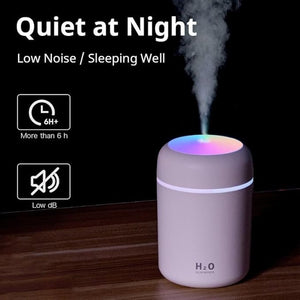
3. Sukoon 500ml for 270–320 sq ft, steady/2H/4H timers, auto shut-off, three 15ml scents of your choice included The purchase that makes the stopping automatic. The timer is the reason, not the coverage rating ₹1,899
4. 300ml refill About ₹6 per millilitre against roughly ₹20 at 15ml Only once you have chosen the scent you are staying with. Consistency across a year is the third component of expensive ₹1,799
Not in the collection: anything sweet No vanilla, no caramel, no tonka, no sugared fruit. No cinnamon, clove or cardamom either — black pepper is the only spice Printed rather than implied, because the absence is the reason the range reads the way it does in a room
Honest notes for buyers: fragrance is the last step, not the first — it layers on air that is already clean and moving, and it will not cover cooking, damp or a room that has been shut for weeks. Timing matters as much as product: a candle scents a room in fifteen to twenty minutes and a Sukoon in about twenty, which is why both work when people are arriving tonight, while a reed diffuser needs a day to three days before it is doing its job properly — it is the wrong buy for a deadline and the right buy for a room you want to hold a steady scent for months. SOSA does not make a room spray for the home; the sprays in the range are formulated and sized for a car. The Hotel Collection is water-based and runs in the Sukoon, Boond and Megh only — not in reeds, and not in the waterless Vaayu. Reed diffusers are a separate alcohol-free line with their own scents. Candles must be attended and put out before guests leave a room unattended. The Hotel Collection scents are SOSA's own interpretations inspired by the world's finest hotels; SOSA is an independent Indian fragrance house, not affiliated with or endorsed by any hotel brand. A portion of every order supports girl-child education through Nanhi Kali.
The St. Regis-inspired · Old-World Glamour
The bottle for the hour after the plates have gone
The St. Regis-inspired · Old-World Glamour ₹299 / 15ml
Powdery violet, warm amber and polished woods — the slowest and plushest of the seven, and the reason to own two bottles rather than one. Warmth in perfumery comes from ambers, resins, woods and powder; sweetness comes from vanilla, caramel and tonka. They are different families of material, not different doses of the same one, and this bottle carries the first and none of the second. That is precisely why a warm scent can run in a sitting room every evening for a year without ever suggesting a candle shop. Three drops on the 2H timer at about half past nine. ₹598 for this and the Ritz-Carlton-inspired together.
SS
ISIPCA
Versailles
A note from Sonal

When somebody tells me they want their home to smell expensive, I usually find they are describing a level rather than a scent, and the level they have in mind is too high. The rooms in this world that genuinely smell of money are barely scented at all. You notice something when you walk in, you cannot name it, and by the time you have sat down you have forgotten it is there. That is not a compromise or a restraint imposed by budget. It is the actual specification, and it is why a great deal of expensive scenting looks, on paper, like an under-delivery.

The other half of my answer is duller and it is the part I would defend hardest. Keep the sugar out and keep the scent the same. There is nothing sweet in any of the seven bottles I make, which was a decision rather than an oversight, because sweetness is the one thing in a room that a nose will file under cheap almost regardless of how well it has been composed. And then run the same one, this dinner and the next, until your friends stop noticing it and start expecting it. Two bottles at ₹598 — the clean one before, the amber one after — will do more for how your home is remembered than anything I could sell you at four times the price.

Everything is made and supported from Pune, and a part of every order funds girl-child education through Nanhi Kali. You get a home that smells like somewhere you chose; a girl gets a classroom. That equation has always felt right to me.

Frequently asked questions

What makes a home smell expensive rather than just scented?
Three things: restraint, so the scent is a trace rather than a level; dryness, with no sweetness in the composition; and consistency, so the same scent is there across the rooms and across visits. The dose matters more than the bottle, and it is free to get right.
How many drops should I use if I am serving dinner?
Three rather than four. The room already carries a scent load from the food, and it is the total a guest experiences. Switch the machine off before the plates land — the Sukoon's 2H timer does this for you — and put nothing at all in the dining area.
Why do sweet fragrances read as cheap in a room?
Partly association, since vanilla and caramel dominate the mass-market end of the category, and partly behaviour: sweet materials are heavy, they cling to soft furnishings and they accumulate over an evening, so something charming at eight is cloying at eleven. Nothing in the seven Hotel Collection scents is sweet.
Which two SOSA scents would you buy for a dinner party?
The Ritz-Carlton-inspired Quiet Luxury at ₹299 — white tea, bergamot and cedar — for the hours before, and the St. Regis-inspired Old-World Glamour at ₹299 — amber, violet and woods — for after the plates have gone. ₹598 for the pair, one machine, a minute at the tap in between.
Do I need to spend more to get a better result?
Usually the opposite. The homes I have been in that smelled most expensive had less fragrance in them, not more — washed linen, an aired room, a clean kitchen and one quiet scent at three drops. Fragrance is the last five per cent and it only works on top of the other ninety-five.
Restraint, dryness, consistency
Clean before dinner, warm after₹598 for the pair
The Ritz-Carlton-inspired Quiet Luxury and the St. Regis-inspired Old-World Glamour are ₹299 each for 15ml, ₹999 for 100ml and ₹1,799 for 300ml at about ₹6 per millilitre; the Pack of 7 at 15ml is ₹1,799 against ₹2,093 for seven singles, a saving of ₹294. The Sukoon is ₹1,899 for 270–320 sq ft with steady, 2H and 4H timers, auto shut-off and three 15ml scents of your choice included. Free shipping above ₹499, and a portion of every order supports girl-child education through Nanhi Kali.
Shop the Hotel Collection → See the Sukoon · ₹1,899
Editorial standards & sources
About this guide: Written by Sonal Sahani, ISIPCA Versailles-trained founder and perfumer at SOSA Home & Body, defining what makes a room smell expensive rather than merely scented — restraint over dose, the absence of sweetness as the single clearest quality signal in air, consistency across space and across visits — and how each of those three constraints happens to be exactly what a room with food in it needs.

Facts verified August 2026: Timings in this guide: a scented candle puts noticeable fragrance into a normal room in roughly 15–20 minutes; a Sukoon ultrasonic diffuser reaches a steady level in about 20 minutes from cold; a reed diffuser needs roughly 24–72 hours for the oil to travel the reeds and the room to settle, so it is not a same-day solution. SOSA products and prices: Sukoon 500ml ultrasonic diffuser ₹1,899 (270–320 sq ft, 16–18h on low, 9–12h high, 30–50 ml/h, 2.4MHz cool mist, 7-colour LED, remote, steady/2H/4H timers, BPA-free, auto shut-off, includes three 15ml Hotel Collection scents of your choice); Boond 300ml ₹899; Megh 6-litre ₹3,499; waterless Vaayu ₹11,999 (up to 1000m³); Aangan ₹25,999; Meenar ₹38,500. Hotel Collection water-based fragrance 15ml ₹299, 100ml ₹999, 300ml ₹1,799, Pack of 7 at 15ml ₹1,799 / 100ml ₹5,999 / 300ml ₹10,799; dose 3–6 drops per tank. Reed diffusers (separate alcohol-free line): Morning Freshness from ₹749, Garden Bloom and Evening Calm from ₹799, Fresh Brew and Mountain Breeze from ₹849; 130ml from ₹1,249; duos from ₹1,498; 300ml refills ₹2,399. Scented candles: Bookshop 80g ₹379 (~15–18 hours), Bookshop + Cozy Corner ₹664 (~30–36 hours), Amber Rose 130g ₹599 (~25–30 hours) and 220g ₹799 (~40–50 hours), ceramic jar candles ₹949, Pure Calm wax melt set ₹854. Free shipping above ₹499. SOSA does not make a room or linen spray for the home — the sprays in the range are car perfumes. The Hotel Collection scents are SOSA's own interpretations; SOSA is not affiliated with or endorsed by any hotel brand. Prices subject to change — see the live product pages.
ブログに戻る
